


European cold-rolled, hot-dipped galvanized coil prices fall on low demand
Domestic prices for cold-rolled and hot-dipped galvanized coil moved down in Europe in the week ended July 13 due to limited demand.
Platts assessed CRC in Northern Europe at Eur950/mt ex-works Ruhr and assessed HDG in the region at Eur1,015/mt ex-works Ruhr, down Eur25 and Eur5 on the week, respectively, according to S&P Global Commodity Insights data.
Market sources estimated achievable prices for CRC at Eur940-970/mt ex-works Ruhr.
One source also said that if a producer got an opportunity to sell 5,000 mt, prices could move down to around Eur900/mt ex-works.
Domestic HRC prices have been heard in a wide range from Eur980/mt ex-works Northern Europe to Eur1,050/mt ex-works Northern Europe.
A producer said that a deal for HDG has been settled at Eur1,000/mt delivered Northern Europe, the equivalent of Eur980/mt ex-works. Another trader confirmed the price as a tradable value.
Another steelmaker reported a transaction at Eur1,025/mt ex-works Northern Europe and estimated achievable prices at Eur1,020-1,050/mt ex-works.
Tradable values were estimated within a Eur1,020-1,060/mt ex-works range by three sources.
Trading activity remained muted despite anticipation that restocking would start in July. Production cuts across Europe, as well as some reported demand recovery from the automotive industry, was expected to support domestic downstream coil prices.
“Automotive industry is definitely doing better, they have enough components to produce cars so they need steel. At least now,” a German source said. “But the recovery will not bring demand anywhere close to normal level, unfortunately.”
Offers of imported CRC in Northern Europe have been heard at Eur850/mt CFR Antwerp.
In South Europe, Platts assessed CRC at Eur885/mt ex-works Italy July 13, down by Eur15 week on week. HDG was assessed at Eur915/mt ex-works Southern Europe, down by Eur5 week on week.
Tradable values for domestic CRC have been heard at Eur880-890/mt ex-works Italy, while HDG was heard at Eur900-930/mt ex-works Italy.
— Maria Tanatar

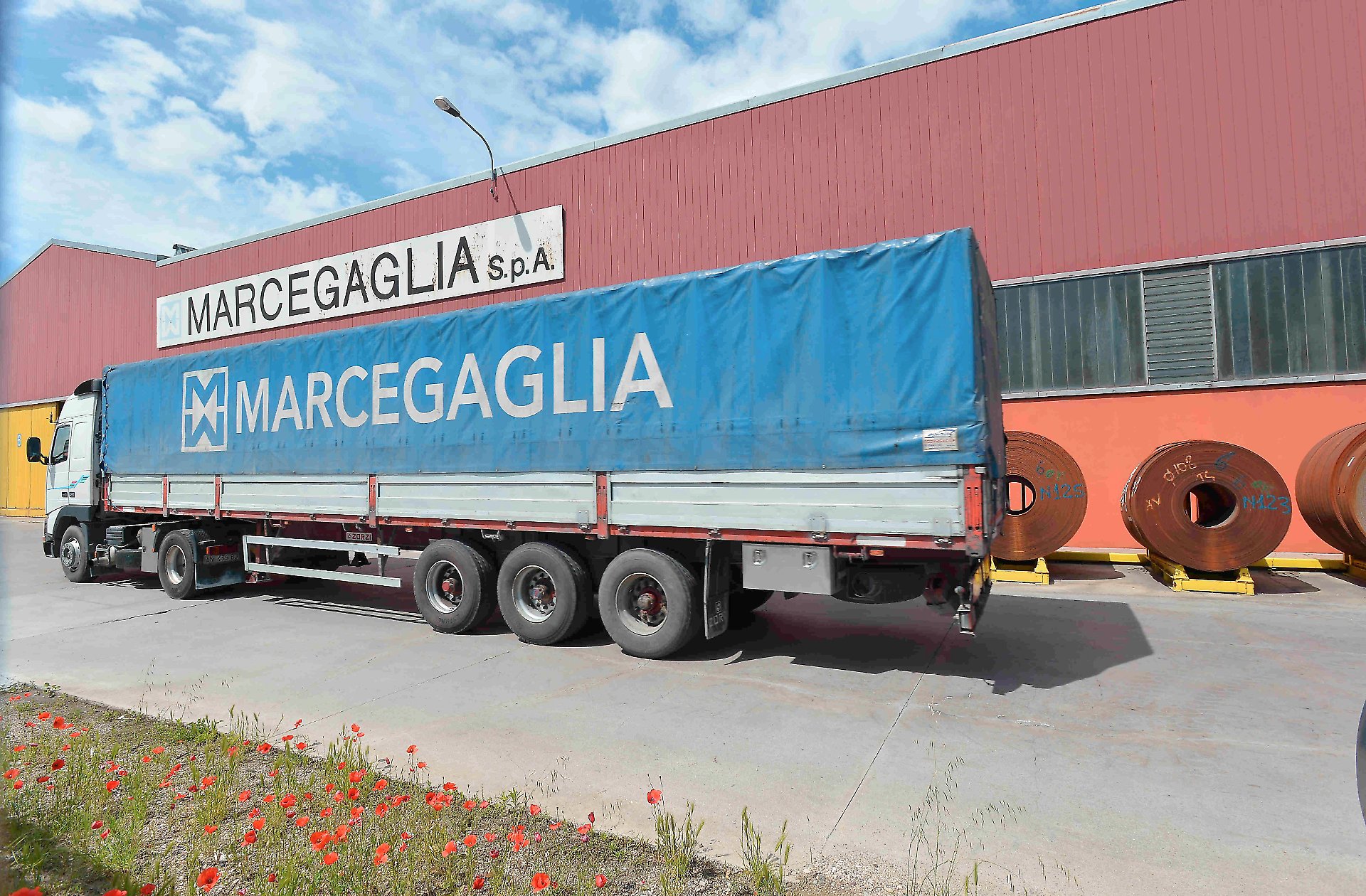
Italian re-roller Marcegaglia enters crude steel market with Outokumpu stainless longs buy
Re-roller Marcegaglia Group has agreed to acquire most of the stainless-steel long products division of Finnish steelmaker Outokumpu, the two companies said in a statement July 13, in the Italian group’s first foray into producing crude steel.
The transaction will see Marcegaglia take over Outokumpu’s 450,000 mt/year electric arc furnace mill for specialty steels in Sheffield, UK, as well as a wire rod rolling plant and bar production facility at the same site. It will also take on a US bar production plant in Richburg, South Carolina, and wire rod hot rolling and drawn wire production assets in Fagersta, Sweden.
The Eur228 million ($228.48 million) deal does not include Outokumpu Long Products AB operations in Degerfors and Storfors, Sweden, which will continue operations under Outokumpu, which will evaluate their future, the Finnish group said.
The parties expect to complete the transaction by the end of this year, following clearance from competition authorities.
“Thanks to this important transformational investment, our group further strengthens its special steels business through two strategic lines,” Antonio and Emma Marcegaglia, respective president and vice president of Marcegaglia, said in the statement. “The first concerns stainless steel flat products, where a partial upstream integration of the value chain is achieved with a view to shortening and stabilizing supply chains; the second one, significantly expanding the production of long stainless-steel products and further enriching the range of products and types of steels. The operation is further aimed at consolidating our position in international markets by acquiring additional market share in both Europe and North America.”
For the first time in its history, Marcegaglia is investing in primary steel production while Outokumpu will now focus on its core business of flat stainless steel products.
“This divestment marks the accomplishment of the turnaround program for the long products business in the past two years…The sale is a natural step for Outokumpu in line with our strategy to focus on our core business, stainless steel flat products,” Heikki Malinen, President and CEO at Outokumpu, said.
Long products sales accounted for approximately 8% of Outokumpu’s Eur810 million of sales in 2021.
Investment bank Jefferies said it viewed the transaction as positive as it completes the exit of a non-core business at an attractive multiple (4.9 times 2021 adjusted EBITDA) considering the entire stainless complex over-earned in 2021.
Monthly alloy surcharges on nickel-bearing stainless steel products in Europe moved lower for the second successive month in July as nickel prices retreated from an unprecedented price spike in March. Outokumpu’s alloy surcharge for 304-grade cold drawn bars stood at Eur4,723/mt for July, down from Eur5,224/mt in June and from Eur5,485/mt in May
— Annalisa Villa

European steel hollow sections prices stable with HRC costs at ‘rock bottom’
Prices for steel hollow sections in Northern and Southern Europe were stable in the week to Wednesday July 13, with market sources believing there could be limited restocking of the product at the end of the month.
Fastmarkets’ weekly price assessment for steel sections (medium), domestic, delivered Northern Europe, was €1,140-1,200 ($1,144-1,204) per tonne on Wednesday, stable week on week.
Traders believed that costs for hot-rolled coil, the feedstock for sections production, have reached rock-bottom and they expected the HRC market to stabilize this month.
Fastmarkets’ daily calculation of its steel hot-rolled coil index, domestic, exw Northern Europe, was €851.25 per tonne on Wednesday, up by €5 per tonne from €846.25 per tonne a week earlier.
This has led to increased sections trading activity this week, with the potential for some limited re-stocking at the end of July.
One trader hoped that the flattening of market levels for HRC would lead to more stable sections prices, so that distributors could start to restock.
“I think stock levels are really low, so it is necessary that we start buying,” the trader said. “With uncertain price levels in the past few weeks, it was impossible to buy. Now, it seems that there is more stability.”
Another trader said that business activity was nil this week, with nothing changing week on week. “Mills are calling [and using social media] and emails, desperate for orders,” he added.
Many mills have stopped or cut their production activity due to the seasonal summer slowdown, but sources shared concerns that such shutdowns and output reductions may last longer, and even into this year’s fourth quarter.
Fastmarkets’ weekly price assessment for steel sections (medium), domestic, delivered Southern Europe, was €1,140-1,180 per tonne on Wednesday, unchanged from one week earlier.
Market sources also expressed concerns about the possibility of Russian natural gas supplies to Germany being cut off permanently after the Baltic Sea pipeline Nord Stream 1 was shut down for 10 days for annual maintenance work.
One market participant said that if Russia’s state gas supplier, Gazprom, did not reopen the pipeline it would create a huge problem for electric-arc furnace-based and basic oxygen furnace-based mills that rely on natural gas.
“Some producers might be able to switch over directly to electricity, or maybe to oil,” he said, “but most producers are absolutely hanging on gas production. They can’t switch over in a very short time – this will need time to rebuild. This will take years.”
The restart of the Nord Stream 1 pipeline was scheduled for July 21.
Published by: Holly Chant


Market eyes post-summer restocking, reduced Russian supply: Irepas
Long products demand has disappeared almost everywhere and prices are down, forcing mills to curb output, with the market unlikely to improve in July or August, according to the International Rebar Exporters and Producers Association (Irepas). Given the low inventories, however, buyers will need to restock at some point, probably end-August or early September.
“It has become very complicated nowadays to use the word global when talking about the global long steel products market. It seems like there are different globes,” Irepas says in its July short-range outlook seen by Kallanish. “Steel mills in China are barely making money, while volumes are being suppressed both politically and by business decisions.”
In the EU, however, demand has rebounded amid the risk of energy shortages in the fourth quarter and is higher than usual in the holiday season. EU demand and prices are probably higher than anywhere else, but safeguard measures are preventing necessary imports. Other areas in the world have a big cost advantage as steel products are much lower in price and are giving benefit also to downstream industry and investors, Irepas observes.
US demand is also firm but rebar prices, which have until now held their ground, are expected to come down. “With the expectation that all prices will come down, future sales have become impossible,” Irepas says. Import cost prices have meanwhile started to go up in parallel with scrap prices. “In short, the US has become an even more difficult market for imports. Naturally, domestic mills with faster deliveries dominate the market,” it adds.
Although scrap prices have rebounded, meanwhile, the market remains very quiet.
“The low inventory levels in the market keep steel mills’ hopes alive for the fourth quarter, in addition to the news that Russian mills have reduced their export volumes due to their very strong local currency. Prices have started to move from very low and unhealthy levels to more sustainable levels,” Irepas concludes.
Adam Smith Poland

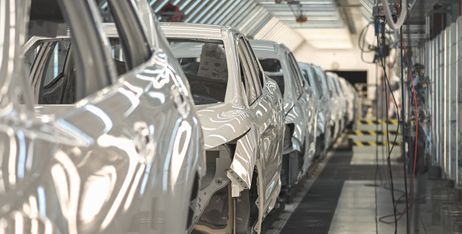
German car production keeps increasing
Output of passenger cars by German carmakers has increased notably, Kallanish learns from industry association VDA.
At 302,500 units, June brought a 19% output increase over the corresponding month of 2021, and was the consecutive month to see a year-on-year increase. This is an apparent change in trend, as production in January-June, at 1,685,800 units, was still 3% below the first six months of 2021.
VDA does not state if the recent rebound can be attributed to increased activity related to better supply of semiconductors. The recent increase is hardly surprising if seen against a base effect of very low activity last year, due to both the coronavirus plus the shortage of semiconductors.
VDA therefore suggests to take the pre-Covid year of 2019 as a comparison, and now the figure gets inverted: June 2022 is still 19% below June 2019, and the first half of 2022 is a considerable 32% below H1 2019.
Still, the recent uptick in production could anticipate a trend not yet registered in domestic sales of new cars. At 224,600 in June, new registrations were 18% below June 2021, and 33% below June 2019.
Christian Koehl Germany

Tata Europe launches low-CO2 ‘Zeremis’ steel
Tata Steel Nederland has launched “Zeremis Carbon Lite”, a steel offer with an allocated carbon footprint reduction of up to 100%, Kallanish learns.
The lower CO2 intensity is based on CO2 savings realised within Tata Steel Nederland since 2018 and is certified by independent assurance expert DNV, Tata notes. With the new product, the company says it meets a growing demand for low-CO2 steel, for instance by consumer-facing industries such as automotive, packaging and white goods.
“We see an increasing interest in more environmentally-friendly produced steel in the markets we serve. This is most keen in our consumer-facing customers,” says Tata Steel Nederland chief executive Hans van den Berg.
The initial offering of Zeremis Carbon Lite is a 30% reduction in CO2 intensity benchmarked against the European average for steel products, for example hot rolled coil or cold rolled coil. If customers have higher CO2 emission reduction targets, additional CO2 reduction certificates can be allocated to ensure these targets are met. This even includes CO2 neutral targets, the company claims.
The independent assurance by DNV is designed to ensure that Tata Steel’s methodology used to calculate CO2 emission savings is robust, and that the CO2 emission savings are calculated and allocated in an appropriate way. DNV performed a limited assurance engagement in accordance with the International Standard on Assurance Engagements 3000, Tata says.
Christian Koehl Germany
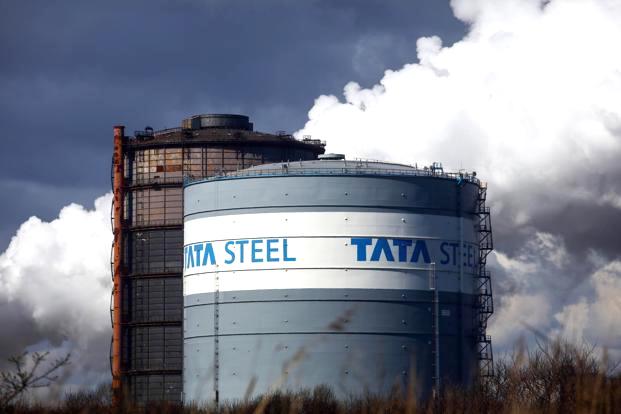
Tata Steel Nederland offers carbon footprint reduction to customers
Tata Steel Nederland said July 12 it has launched an incentive for customers to reduce carbon footprint up to 100% through Zeremis Carbon Lite advancement, as it works toward transforming operations to produce greener steel.
The launch of Zeremis Carbon Lite will see the company meet a growing demand for low-CO2 steel by consumer facing industries, Tata Steel said in a statement.
Zeremis Carbon Lite offers a 30% reduction in CO2 intensity benchmarked against the European average for steel products, for example hot-rolled coil or cold-rolled coil. “The launch of Zeremis Carbon Lite is an important step since passing on our savings to our customers, helping us to accelerate our transformation to become a more sustainable steel producer,” Tata Steel Nederland Chairman Hans van den Berg said.
The lower CO2 intensity is based on CO2 savings realized within Tata Steel Nederland since 2018 and is certified by independent assurance expert DNV.
Tata Steel targets a CO2 emission reduction of at least 30% by 2030 – when it commissions its first DRI installation – and to emit 75% less CO2 around 2035, the company said in a statement.
“We firmly believe green steel is the future. We will be making steel in a different way before 2030, with less impact on our immediate surroundings and neighbors,” van den Berg said.
Platts assessed hot-rolled coil in Northern Europe at Eur855/mt ex-works Ruhr July 12 up Eur5/mt since July 11, according to data from S&P Global Commodity Insights.
The HRC price has stabilized after several months of downwards trend. This falling price trend in Europe since late March is seen to have come to an end due to a change of approach by domestic mills that stopped giving discounts to stimulate buying and instead started to reduce production to balance supply and demand, market sources said.
Steel demand from the automotive industry has been below usual levels, with continuing component shortages limiting production.
— Catherine Brown
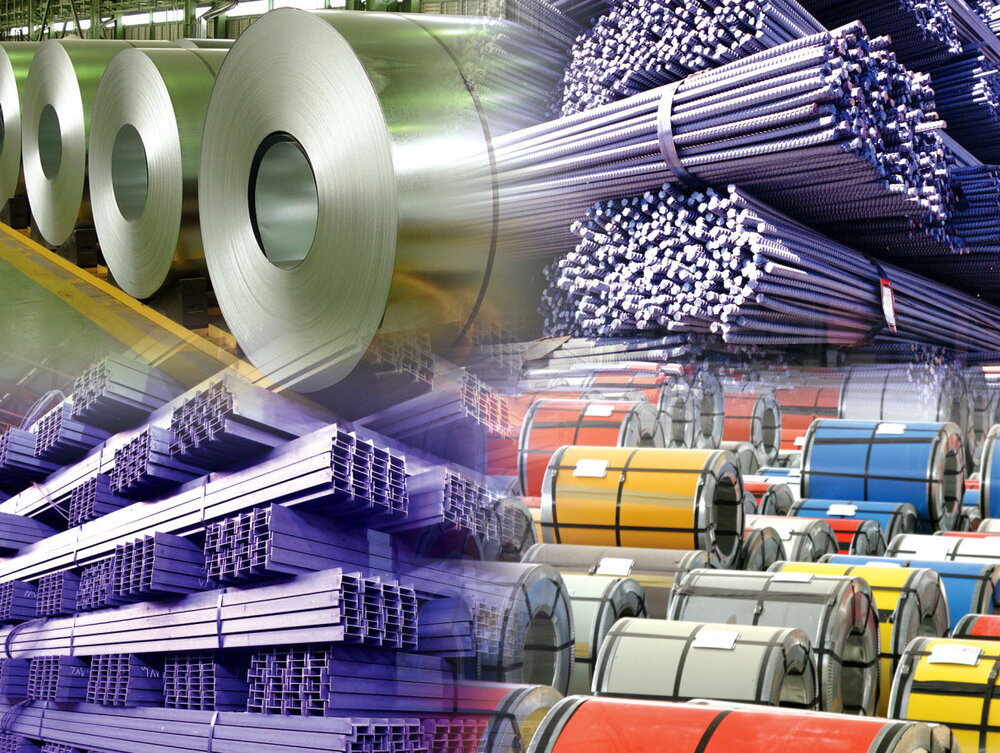
UK Steel urges government to provide policy conditions for decarbonization
Steelmakers’ association UK Steel has called on the UK government to continue ongoing conversations to achieve parity in electricity costs between domestic steelmakers and their European Union counterparts, introduce a carbon border adjustment mechanism and support the industry’s decarbonization by buying low-carbon emissions steel, the association’s director general said July 12.
Speaking following the launch in London of the association’s report “Net Zero Steel: a vision for the future of UK steel production,” Gareth Stace told S&P Global Commodity Insights that despite current changes in government, a consultation with government on the costs of renewable energy for the sector is expected to occur “any day now.” Network costs will be discussed and possibly reviewed as a next step.
This follows successful consultations between the energy intensive sector and government on carbon costs earlier in the year, Stace said.
Net-zero steel production — involving greater use of electric arc furnaces, blast furnaces equipped with carbon capture, utilization and storage technology and hydrogen production — will be considerably more electricity-intensive than traditional steel production, according to the “Net Zero Steel” report.
“EAFs require three times more grid electricity to produce the same volume of steel as a blast furnace,” UK Steel says in the report. It is seen therefore essential to achieve parity of electricity prices and energy efficiency funding this year if the government’s decarbonization targets for the sector are to be met, retaining the sector’s international competitiveness at the same time.
There are two key targets for the UK steel sector, the report points out: the Climate Change Committee’s recommendation in its 6th Carbon Budget for 2033-37 that all ore-based steelmaking should be near zero emissions by 2035; and secondly, the government’s 2050 net-zero target, which could require the steel sector to reduce its emissions by over 95%.
Govt may decide on CBAM ‘in autumn’
A decision on a CBAM may meanwhile be taken by the UK’s new government as soon as this autumn, Stace said.
According to the decarbonization timetable drawn up by the report, a CBAM or product standards need to be implemented in the UK from 2026, along with “green” public procurement and carbon pricing for targets to be met.
Creating a ‘green’ steel market
Government involvement will be crucial in creating and establishing a market for low-carbon emissions steel, but not by interfering in pricing, as it is expected the market will find its own price levels, according to Stace.
“We hope the government will support the market by public procurement of steel,” he said. “This could be by it saying it will only buy a certain type of steel.”
Stace noted, however, that any blast furnaces not already using CCUS by the time this kind of procurement occurs could find it difficult to comply with the requirements.
Mike Thompson, chief economist of the Climate Change Committee, an independent statutory body established to advise the UK government, said during the launch event the government recognizes that decarbonization will involve higher costs and steel prices and that a level playing field needs to be created so that these costs can be passed on “to be spread throughout the economy.”
“But to get the public on our side we have to minimize costs,” he added.
Thompson also noted that CCUS or CCS may not be the cheapest way to decarbonize. However, these may still be the best solution for the UK blast furnaces operated by Tata Steel UK and British Steel – which together produce 96% of the UK steel sector’s greenhouse gas emissions – and so should still be used, he maintained.
Against scrap export curbs
Improved scrap utilization and quality was highlighted in the “Net Zero” report as another priority from 2022 to help decarbonize the UK steel industry. The UK currently exports more than 8 million mt of its steel scrap arisings of more than 11 million mt/year. However UK Steel – unlike some other industry quarters – declared itself against scrap export curbs at the event.
Frank Aaskov, UK Steel’s energy & climate change policy manager, said that the UK, as “a free-trading nation” was unlikely to introduce “draconian measures” such as taxing scrap exports, even though these have recently been adopted by some other nations. Rather, he said, the industry should implement better scrap sorting techniques to improve overall availability of higher-quality scrap.
Stace reinforced this idea, adding that to limit scrap exports would be “a non-market way” and that UK steelmakers would prefer to work more closely with scrap processors to improve local availability.
Steelmaker sources present at the event indicated that given continuing world overcapacity, it is highly unlikely that the UK will boost its steelmaking capacity in the foreseeable future.
The UK steel industry currently produces around 7 million mt/year of steel, and is both a significant exporter and importer. Around 45% of its production is exported: it therefore imports around 60% of its steel products requirement of around 11 million mt/year, according to UK Steel.
— Diana Kinch
EU HRC prices inch up on slow demand revival, production cuts
Domestic hot-rolled coil prices inched up across Europe on July 12 as buyers gradually started restocking and as mills cut output.
Platts assessed HRC in Northern Europe at Eur855/mt ex-works Ruhr July 12, up by Eur5 day on day, according to S&P Global Commodity Insights data.
A producer reported deals settled between German mills and buyers at Eur850/mt ex-works Ruhr and a transaction for HRC from other Northern European steelmaker at the equivalent of Eur850-860/mt ex-works. Another source reported deals at the equivalent of Eur855/mt ex-works.
Tradable value was reported at Eur850-860/mt ex-works Ruhr/Northern Europe.
One steelmaker was reported to have moved its HRC offers up to Eur890-900/mt ex-works Northern Europe, and market sources expected that other producers would follow.
Northern European buyers were expected to start restocking for September by the end of July. Although demand had not jumped, market sources noted that more buyers have been interested in making deals.
“Demand is not booming, but it is visibly better as buyers realized that the prices have reached bottom,” a producer said.
“The market seems to reach the lowest price at which the buyers realized that they would not get lower prices,” another source said. “If prices moved down further the mills would have been in trouble due to high costs.”
Some European steelmakers, including HBIS Serbia, Acciaierie d’Italia and ArcelorMittal Dunkirk in France, have planned blast furnace stoppages in July-August to balance supply and demand. Italian electric-arc furnace-based producer Arvedi also planned to fully stop its Cremona mill for the month of August. ArcelorMittal Bremen in Germany has introduced short-time work.
Other steelmakers were reported to operate at minimum production rates and plan longer summer maintenances.
The reduction of flat steel output supported the domestic prices, sources said.
In addition, car manufacturers were reported to show a higher interest in flat steel, according to some market participants.
HRC in Southern Europe was assessed at Eur775/mt ex-works Italy July 12, also up by Eur5 day on day.
Official offers have been reported at Eur800/mt ex-works Italy, and achievable prices have been evaluated by market sources at Eur750-800/mt ex-works Italy. A source reported an offer of HRC at Eur750/mt ex-works, but the information was not widely confirmed.
Unlike distributors in Germany, Italian buyers planned to wait until late August-early September for restocking, following the traditional market cycle, sources said.
“Stocks in Italy are not as high as those in Germany,” a trader said. “So the fact that Italian buyers prefer to wait might result in a problem in September due to effects from production cuts.”
— Maria Tanatar
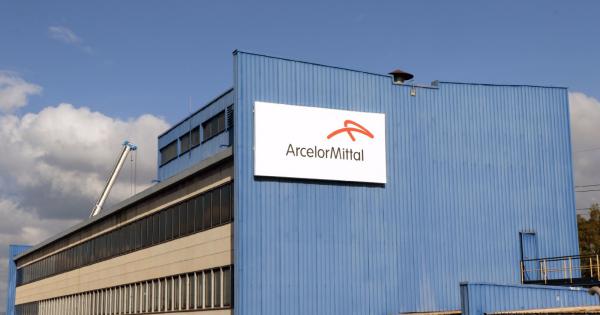
Steelmaker ArcelorMittal confirms Dunkirk blast furnace halted from July 12
A 1.5 million mt capacity blast furnace at ArcelorMittal’s Dunkirk, France, steelworks is being idled July 12, following a run down of operations, a company spokesperson said.
The furnace is being shut due to weak market conditions, S&P Global Commodity Insights previously reported. The closure will leave hot metal capacity of 5.7 million mt/year operational at the site.
The furnace’s expected restart date has not yet been announced.
European steelmakers Acciaierie d’Italia and HBIS Serbia have announced other blast furnace closures in recent days.
Platts assessed hot-rolled coil in Northern Europe at Eur850/mt ex-works Ruhr July 11, stable since July 6, according to data from S&P Global.
The HRC price has stabilized after several months of downtrend. The falling price trend in Europe since late March is seen to have come to an end due to a change of approach by domestic mills that stopped giving discounts to stimulate buying and instead started reducing production to balance supply and demand, market sources said.
Steel demand from the automotive industry has been below usual levels, with continuing component shortages limiting production.
— Diana Kinch