

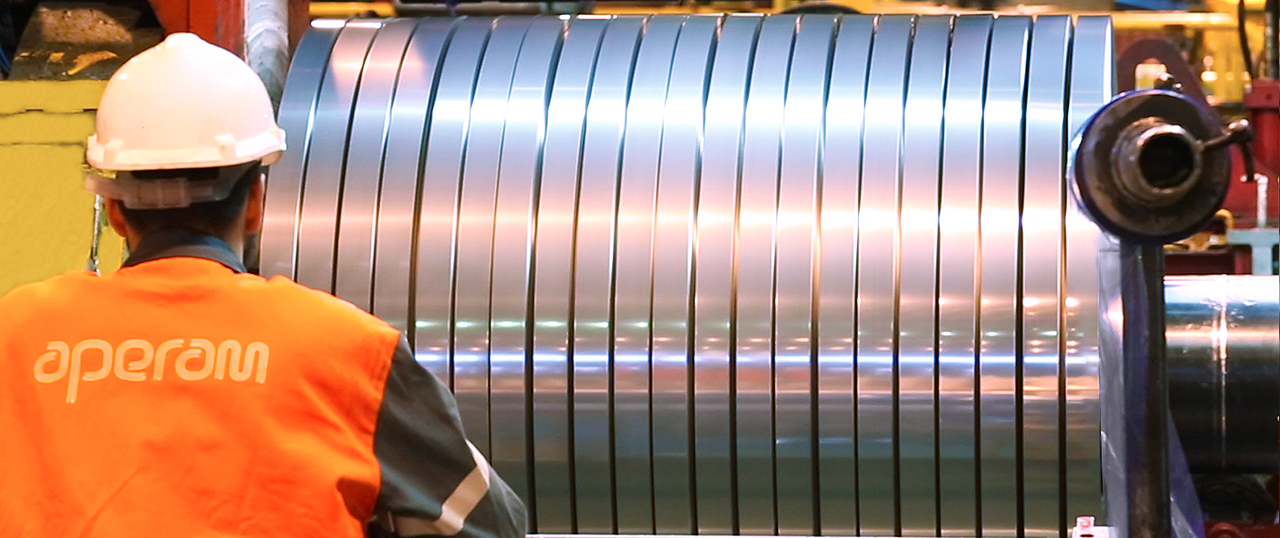
Aperam gets EU green light for acquisition of recycling group ELG
Aperam’s proposed acquisition of German stainless steel and alloys recycling group ELG has been approved by the European Commission, the Luxembourg-based stainless steel producer said Nov. 26.
The completion of the acquisition is expected in the current quarter, the company said.
In May, Aperam announced it had agreed the acquisition of Duisburg-based ELG Haniel, which is active in recycling, processing and trading of stainless steel and nickel- and titanium-based superalloys scrap globally, delivering 1.3 million mt/year of material.
The acquisition “will put Aperam at the core of the circular economy and enable capturing value in the global recycling industry,” the company said at the time, adding that “investing in sustainable recycling will further improve Aperam’s leading environmental footprint and support the company’s CO2 reduction targets.”
The transaction will also enable Aperam to improve its input mix and to expand into the supply of raw materials, the company said.
Aperam has a production capacity of 2.5 million mt/year of flat stainless steel in Brazil and Europe.
— Andy Blamey


Eurofer requests registration of HDG steel from Turkey, Russia
The European Steel Association (Eurofer) has filed a registration request against hot-dip galvanized steel coil imports from Turkey and Russia that could make retroactive any duties set in a dumping case opened by the European Commission (EC) five months ago.
The association said in a letter sent to the Commission, seen by S&P Global Platts, that it is concerned with the significant increase in dumped imports from Russia and Turkey since the initiation of the investigation on June 24.
Noting estimated average dumping margins of approximately 18% for Turkey and 33% for Russia in the investigation period, Eurofer said the average monthly imports after the initiation of the case on June 24 – from July to September 2021– also showed an increase of 24% in comparison to the average monthly imports during the investigation period.
“The imports are likely to continue increasing, and to undermine the remedial effect of any measures imposed in this case, unless the Commission disciplines imports via registration,” Eurofer said in the letter.
A Eurofer spokesperson declined to make further comment on the registration request letter when approached by Platts Nov. 26.
The EC opened an investigation into hot-dip galvanized coil imports from Turkey and Russia on June 24, alleging imports of certain corrosion-resistant steels originating from these countries were being dumped.
Pre-disclosure of the investigation is expected on Dec. 24, while provisional measures, if any, will be imposed by the EC until Jan. 24, 2022, informed industry sources told Platts. Definitive measures could be announced on July 20, 2022.
The EU’s dumping probe on Turkish HDG has already begun to raise some concerns among European buyers in recent months, while EU quotas continue to limit Turkish mills’ export volumes, as Platts has reported.
— Cenk Can

Germany, Netherlands get big steel export quotas for post-tariff US market
Germany and the Netherlands have gained rights to substantial steel export quotas to the US from Jan. 1, 2022, after the US ends its current regime of Section 232 import tariffs on steel from the EU under a bilateral deal, according to documents posted on the US Department of Commerce website. Sweden and Austria’s quotas are also viewed as apparently favorable in some products.
The EU’s largest steel producer Germany gained a lion’s share of the region’s total annual tariff-rate quotas, or TRQs, for export to the US, at 3.33 million mt. Germany will have the right to export a total 907,893 mt of a wide variety of products, a listing showed. Its quotas include 121,185 mt annually of tinplate, 86,221 mt of plate in cut lengths and 85,676 mt of line pipe exceeding 406.4 mm in outside diameter.
Italy, the EU’s second biggest steel producer, with total quotas of 360,477 mt was left substantially behind Germany, and overtaken by the Netherlands’ total quotas of 507,598 mt. The Netherlands is home to Tata Steel’s major IJmuiden steel mill — a traditional exporter of hot rolled coil to the US.
The Netherlands’ annual quota for sales of hot rolled sheet to the US has been set at 122,529 mt, with hot rolled plate in coils at 72,575 mt, and tinplate at 195,794 mt.
The TRQ system will replace the existing 25% tariff that former US president Donald Trump imposed on EU steel imports under Section 232 legislation in March 2018. The aggregate annual import volume under the TRQ is set at 3.3 million mt under 54 product categories and allocated on an EU member state basis, in line with the 2015-2017 historical period, the US Department of Commerce said.
“The split up is a simple calculation which brings the TRQ closer to the traditional EU export flows to the US (per Member State),” said a spokeswoman for European Steel Association Eurofer.
Section 232 tariffs, however, continue to be imposed by the US on steel imports from other countries and regions, although bilateral talks on an alternative trading arrangement are currently underway between the US and Japan.
AD duties continue
According to one German plate market source however: “The tonnages are not a lot for Germany. Salzgitter still has a hefty antidumping duty, Dillinger might benefit from that. Industeel as well though the quota for Belgium is not a lot. Same for NLMK in Denmark.”
The plate source was referring to the cut to length or processed plate duties on some European platemakers: the US slapped AD duties on various producers in 2017.
Austria’s annual TRQ for hot-dipped flat rolled products is of 22,903 mt and for oil country pipe and tube goods 85,114 mt. Earlier this month, the country’s US quota levels were described by Herbert Eibensteiner, CEO of steelmaker Voestalpine, as “a good fit for Austria”. Eibensteiner said Voestalpine had continued exports to the US despite a “high administrative burden” to get exemptions for its shipments and an annual duty bill on pipe exports to the US oil and gas sector of Eur40 million ($45.23 million).
Among some of the larger country quotas are: Sweden’s quotas of 76,750 mt for cold rolled sheet and other products, of 32,320 mt of hot rolled plate in coils and 20,293 mt for hot rolled sheet. Belgium’s quotas include 24,463 mt for cold rolled sheet and other products, 26,610 mt hot rolled sheet, 13,108 mt for plate in cut lengths and 11,680 mt flat rolled stainless steel products.
The Czech Republic’s TRQ will allow annual exports of 28,741 mt of standard rails, 16,043 mt hot rolled bars, 14,317 mt of line pipe not exceeding 406.4 mm in outside diameter. For plate in cut lengths, France gains a TRQ of 73,869 mt, Denmark gains a TRQ of 11,024 mt and Finland of 18,220 mt. France also gains a 50,278 mt of hot-rolled bars.
Greece gains a 68,531 mt TRQ for line pipe exceeding 406.4 mm in outside diameter. Luxembourg gains an 86,395 mt quota to send angles, shapes and sections to the US, as well as a 38,016 mt quota for sheet piling.
Turkey rebar trade
One trading source did not expect the total annual quota of 67,248 mt for EU-origin rebar imports into US to have a significant effect on the Turkish rebar exports market.
“One of the players undercutting Turkish rebars to USA is Tosyali Algeria,” he said, adding that while Tosyali rebars do bear a 25% tariff on exports to the US, they don’t also have anti-dumping and countervailing duties, so buyers in the US are already booking rebars ex-Algeria.
“It was long known that the quota for Europe in US will be around 90,000 mt so no impact,” he added.
Quarterly administration
Commerce clarified on its website that the TRQ will be calculated for each year of the measure and administered on a quarterly basis. Any unused TRQ volume from the first quarter of the year, up to 4% of the allocated quota for that quarter, will roll over to the third quarter. Any unused TRQ volume from the second quarter of the year, subject to the same limit, will roll over into the fourth quarter, and any unused TRQ volume from Q3, subject to the same limit, will roll over into Q1 of the following year.
“The TRQ will be allocated on a first-come, first-served basis for each product category from each EU member state. The US will provide on a public website updated information on the utilization of the quarterly quota for each product category, including information on the transferred unused TRQ volumes from one quarter to another,” it said.
— Diana Kinch, Laura Varriale and Rabia Arif
German sheet fabricators lambast carmakers
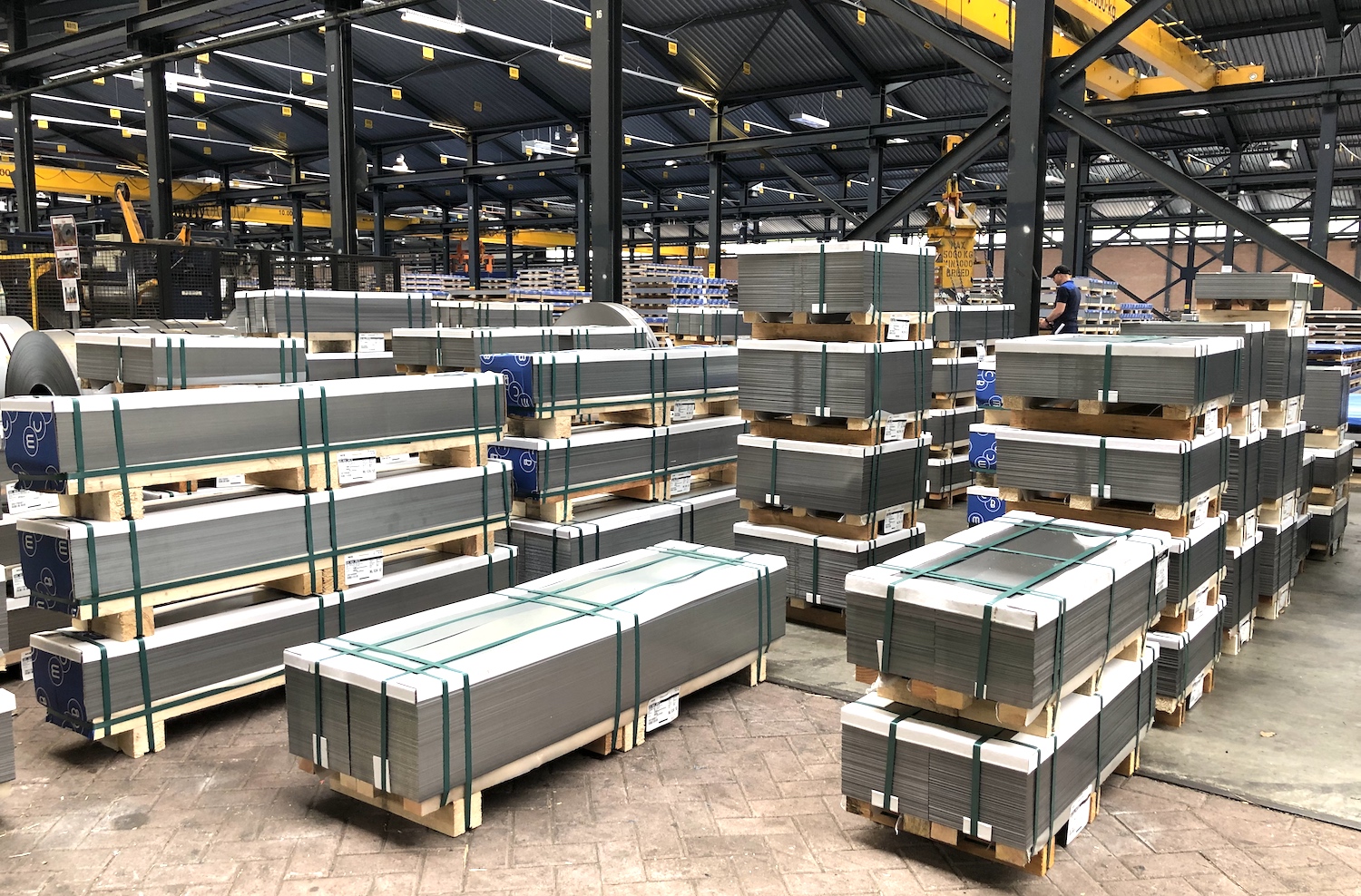
Production stoppages at carmakers’ assembly lines are currently causing massive fluctuations in call-off orders at sheet-forming German automotive suppliers. Their association, IBU, which represents around 240 predominantly medium-sized companies nationwide, has issued an urgent statement addressing the problem, following a survey among its members.
“OEMs are cancelling call-offs at short notice, not caring about problems for the supplier,” Kallanish hears from Bernhard Jacobs, managing director of the association. In terms of reliability, most members gave their customers a poor “E” rating, while more than 20% even opted for an “F” in the survey.
Production at almost 90% of participants in the poll is currently affected. Some 50% of participants in the IBU flash survey are so-called Tier 2 suppliers. Just under 20% fall into the Tier 1 category, and a similar number are Tier 3 parts suppliers.
About 70% of participants complain that manufacturers are not willing to share additional costs caused by production stops, with the exception of a few. The consequences are short-time work and wage losses for the employees of supplier companies.
Especially annoying for suppliers is that they have often accepted high purchasing prices for sheet and coil in order to remain able to supply their customers. “Although it must be clear to every customer that it is inevitable that rising costs must ultimately be passed through the supply chain,” Jacobs says.
Christian Koehl Germany


FEAG procures ArcelorMittal XCarb green steel
Energy sector electrical components supplier FEAG will save more than 2,000 tonnes of CO2-equivalent emissions by purchasing 1,000 tonnes of steel with “XCarb” green steel certificates, says ArcelorMittal.
The certificates will enable the FEAG Group to significantly reduce its own Scope 3 emissions and those of its customers.
An example of the XCarb initiative is the capture of hydrogen-rich waste gases from the steelmaking process. These gases are injected into the blast furnace to reduce the use of coal, Kallanish notes.
FEAG utilises a range of cold rolled steel from ArcelorMittal, including electro-galvanised and hot-dip galvanised material. The firm recently started procuring ArcelorMittal’s “Jetskin” coil which is coated with zinc using Jet Vapor Deposition (JVD) technology. “We plan to increase our use of more sustainable materials such as Jetskin,” says FEAG Sankt Ingbert unit chief executive Dr Karsten Wünsche. “This will enable us to move away from electro-galvanised and hot dip galvanised steels.”
FEAG is the first customer that ArcelorMittal Downstream Solutions – Steel Service Center Edenkoben has provided with XCarb green steel certificates. The steel will be delivered throughout 2022.
Adam Smith Germany
Shortages support Italian pig iron import offers
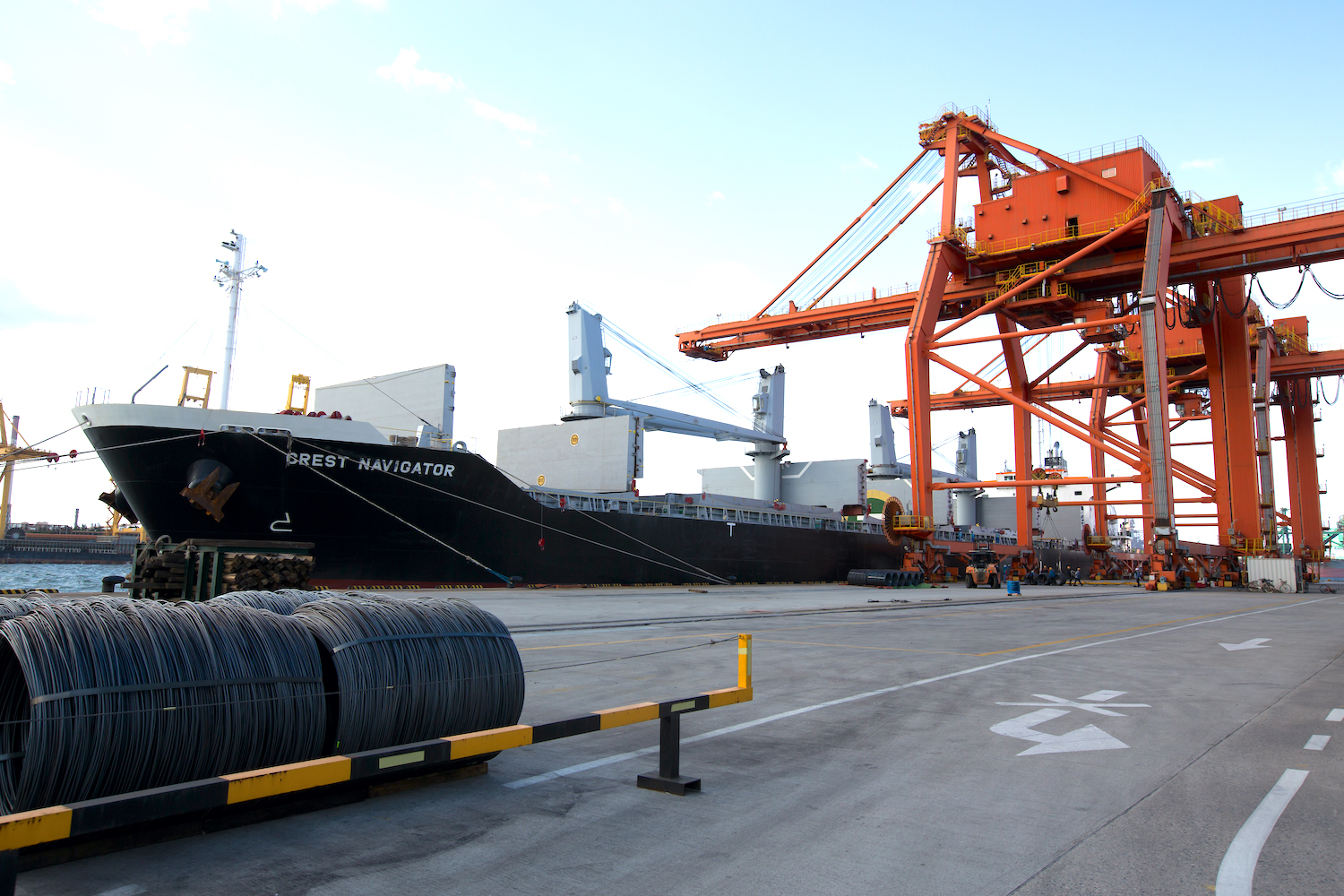
Italian pig iron prices remain flat, with some producers not quoting due to persistent shortages. Demand from distributors who buy directly from CIS producers is lively and, this week, pig iron makers are expected to go back to quoting at least $590-600/tonne cfr Italy, Kallanish learns from market participants.
Stocks at the Port of Marghera, the main steel hub in Italy, are average. Last week, mills continued to purchase 1,000-2,000 tonnes from Marghera at the equivalent of $585-600/t cfr. In November, distributors have bought large tonnages of pig iron at $580-585/t cfr Italy. The country will be receiving between 60,000t and 80,000t of pig iron purchased in November, sources believe.
No Brazilian material has been sold in Italy so far this month. Brazilian offers are hovering at $570-580/t cfr but only for larger, 30,000t vessels.
Meanwhile, Italian billet prices remain at €600-620/t ($677-688) ex-works and no billet exports were heard last week.
Natalia Capra France
German steel production likely to reach 40mt
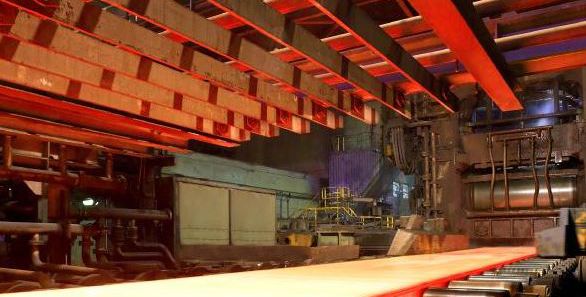
Crude steel output at German mills from January through October this year rose 15% over the first ten months of 2020 to 33.56 million tonnes, according to figures provided by steel federation WV Stahl.
In the reporting month of October, production at oxygen-route mills rose by 13% to 2.52mt, whereas that of EAF mills sank by nearly 5% to 1.13mt. This apparently odd development can be attributed to strong activity at EAF mills in autumn 2020, which were faster and more flexible than BOFs to respond to the rapid demand resurgence following lockdowns.
While WV Stahl refrains from making interpretations or forecasts, a clearer word comes from the chief economist of steel recycling federation BDSV, Daniela Entzian. “We are optimistic that steel production will again reach 40 million tonnes this year, which is also good news for the demand for scrap,” Kallanish heard her say during BDSV’s annual meeting on Thursday (see separate story).
One factor in favour of higher production in the fourth quarter is the restart in October of the biggest blast furnace at thyssenkrupp’s works in Duisburg, following a reline.
Christian Koehl Germany

Global bottlenecks hurt German scrap market: association
The German scrap industry is suffering from global bottlenecks and semiconductor shortages, despite strong demand from home and abroad, Daniela Entzian of German steel recyclers federation BDSV tells Kallanish.
“The problems are particularly hard for the automotive manufacturers, which to a large extent contribute to the volume of new scrap,” she noted during a Thursday meeting. “However, so far this problem has not been reflected in the order books of the steel industry.”
Trade barriers due to the revision of the EU’s Waste Shipment Ordinance are also making the scrap industry worried, she added. “In its new proposal published on 17 November, the European Commission does not differentiate between mixed or hazardous waste and raw materials recycling. This will create competitive disadvantages compared to primary raw materials that are imported with a high carbon footprint.”
According to the association, EU scrap suppliers also face serious competitive disadvantages compared to competitors from countries in which secondary metals are not subject to the waste regime. An example is the US, the second-largest scrap exporter in the world after the EU.
“Currently, over 20 million tonnes/year of steel scrap are sold from the EU to third countries,” BDSV said. “In order to be able to use these quantities in Europe, capacities have to be expanded and manufacturing processes changed.”
In November, the European Commission revised the EU Waste Framework Directive which proposes far-reaching restrictions on international trade in scrap. “We reject these restrictions on international trade because this leads to lower scrap prices within Europe and economic restrictions make recycling no longer possible,” BDSV observed.
At the same time, the global volume of scrap supply is increasing and in 2030 will break the 1 billion tonne barrier, the association observes.
“Export restrictions are therefore completely unnecessary,” said BDSV president Andreas Schwenter. “The restrictions on the cross-border scrap trade will lead to rising CO2 emissions and undermine climate protection efforts, because climate protection doesn’t stop at borders.”
Svetoslav Abrossimov Bulgaria

European hot-rolled coil market moves sideways, remains under pressure
Buyers’ interest in purchasing new material continued to be muted in the European hot-rolled coil market as flat steel stock levels remain sufficient, sources told S&P Global Platts Nov 25.
Though most expect the market to remain stable, the availability of material from suppliers is a factor that market participants say could prevent any substantial price increase on the spot market.
“All buyers know this and don’t request much – for big buyers and big tonnages, actual deals are still in the range of Eur850-870/mt EXW Italy. Eur900/mt is only accepted for small lots,” said an Italian supplier, adding that Eur920-940/mt CPT South Germany ex-Italy and ex-Eastern Europe was also possible.
A German stockholder said they bought HRC at Eur920/mt delivered Germany from Eastern Europe and considered this the currently cheapest option.
Most sources put workable levels for HRC from Western European mills in the high Eur900s/mt EXW Ruhr, depending on volume.
Stockholding sources said that their inventory levels are sufficient and given most want to keep levels down for year-end, they are not in a rush to buy material.
The latest data provided by German steel stockholders’ association BDS showed that in October, flat products stocks grew as much as 4% in the month to the end of October, reaching 1.34 million mt, while sales volumes of flat steel fell.
“Some steel service centers have increased stock with cheap material and their 2021 contracts allocations are giving them enough material, that’s not gonna stop Jan 1,” said the stockholder.
“As long as auto is so weak, we will see the pressure. The main reason prices are holding up is the Black Sea region and Eastern Europe, they increased prices this October,” said the source.
The exposure of Eastern European mills to the automotive industry is overall smaller than Western European tier-1 mills that continue to struggle with volume cancellations by the automotive supply chain.
— Laura Varriale
Vitkovice Steel returns to profit after several years
Vitkovice Steel has bounced back into profit after several loss-making years, posting a CZK 25 million ($1.1m) net profit in the nine months through September. This was supported by strong steel demand and production efficiency improvement. The firm says the outlook is also positive despite rising utility prices.
Last year Vitkovice posted a CZK 267m loss. This was still better than previous years. The previous time the firm posted annual profit was in 2017 but this was due purely to high exchange rate profit from revaluation of shareholder loans. Before that, the firm last registered profit in 2008.
“The circumstances faced by steelmaking are still full of risks, from the EU climate package up to the growth of prices of utilities and emission credits, but the strong revival of demand for steel products plays into our hands,” Vitkovice Steel general manager and chairman Dmitrij Scuka says in a note seen by Kallanish. “Now we are doing our utmost to improve the favourable conditions in order to strengthen our position of a leading steel plate producer.”
Efficiency has been improved by modernising procurement logistics, streamlining production planning, and introducing a new software for rolling, the Czech steelmaker says.
Vitkovice Steel chief financial officer Radek Strouhal says: “We believe that the market conditions will continue to be positive for steelmakers. Steel, as a 100% recyclable material, should play a leading role in the economic and environmental approach to the development of society.”
Vitkovice has a 755,000 tonnes/year capacity plate mill and seldom-used 170,000 t/y heavy sections mill. The firm switched to sourcing merchant slab when it shut down its 950,000 t/y electric arc furnace-based meltshop in 2015.
Adam Smith Germany