


Spain’s Sidenor to halt steel production for 20 days as electricity prices soar
Spanish steel group Sidenor will halt steel production for 20 days, or about one third of the remaining working days in 2021, due to soaring electricity prices, the company said Oct. 11.
Sidenor specializes in long steel products and operates four steel production units in the Basque and Cantabria regions of Spain with over 1.5 million mt/yr capacity as well as a forging unit, two bright steel units and two scrap collection and processing units.
The company’s 740,000 mt/yr Basauri plant will be the most affected because of the production cut, although other plants will also feel the impact progressively, it said.
Spanish power prices have hit record highs due to soaring gas prices. Spain’s large power consuming industries received subsidized prices due to interruptible contracts phased out in 2020.
Electricity costs jumped to Eur227/MWh in October, from Eur60/MWh a year earlier, and are expected to rise further to Eur284/MWh in November, Sidenor said in a note on its website.
High electricity prices were adding Eur200 in costs for each mt of steel produced, Sidenor said.
In March, the steelmaker signed a power purchase agreement with energy group Naturgy to acquire 350 GWh per year of renewable energy, equivalent to producing around 600,000 mt/yr of steel, according to S&P Global estimates.
— Gianluca Baratti

Arvedi accelerates Servola cold rolling area investment
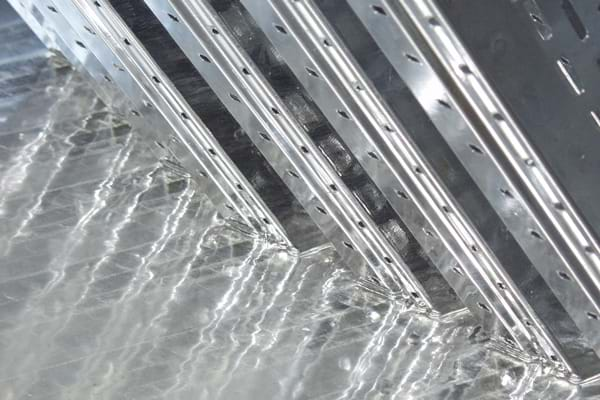
Italian steelmaker Acciaierie Arvedi is investing in two strip processing lines at its Ferriera di Servola plant in Trieste, north-east Italy. Equipment maker Danieli will supply the two mills next year and they are scheduled to go into operation by end-2022, Kallanish learns from Danieli.
The hot-dipped galvanising line will process 200,000 tonnes/year of coils of a weight up to 30 tonnes and will operate at a speed of up to 200 meters/minute. “The furnace will handle cold-forming, structural, micro-alloyed and hot-rolled strip steel grades,” Danieli reveals in a note. “The 0.15-0.25-mm strips will be processed using only the radiant tubes section, not with the direct-flame section. Thanks to low-NOX burners and a DeNOX/waste gas heat-recovery system, the plant will operate at the lowest emissions levels.”
The lines will be integrated into a digital predictive quality system that enhances control through each production step, it adds.
Arvedi is massively investing in the conversion of Ferriera di Servola, boosting the cold-end area. This comes after the shutdown, which begun this year, of the hot-end, former pig iron plant for which dismantling will be completed by the end of the year.
Arvedi is looking to invest a total of €320 million ($369m) for the plant conversion supported by government investment entity Invitalia, the region of Lombardy and the region of Friuli Venezia Giulia.
Servola currently has a pickling line and cold rolling mill. Arvedi already secured a “green loan” of €240m from a pool of banks. The funding is in line with the Green New Deal for Europe, the European plan that promotes industrial sustainability and circular economy (see Kallanish passim).
Natalia Capra France

EU shredded ferrous scrap prices soften for October contracts
October ferrous scrap prices across Europe fell sharply on month, but recyclers were expected to push for higher prices amid the rising international market, market participants said Oct. 11.
In Northern Europe, the Platts October assessment Oct. 11 for domestic shredded scrap was at Eur380/mt delivered, down from Eur397.50/mt in September.
Some September shredded scrap contracts agreed after the Platts index was published on Sept. 10 were heard to have settled lower than Eur397.50/mt delivered, with sources citing deals and workable levels around Eur380/mt delivered in September. Thus, prices for October were considered to be largely unchanged relative to the later deals heard in September.
In October, the Platts Northern Europe domestic shredded scrap index was at $439.77/mt delivered in US dollar terms, while the Platts shredded scrap bulk export Rotterdam index was at $425/mt FOB Oct. 8, a spread of $14.77/mt.
The spread between the domestic and export prices has steadily narrowed from August, when it was as high as $87.79/mt.
Turkish deepsea import ferrous scrap prices have recently risen sharply from a recent low of $433/mt CFR Sept. 24-28. Platts assessed Turkish imports of premium heavy melting scrap 1/2 (80:20) Oct. 11 at $463/mt CFR, up $5.50/mt on day. Shredded prices have roughly remained around $15-20/mt above HMS 1/2 (80:20) prices.
The sharp hike was fueled by high bulk freight rates and concerns over supply of higher-quality ferrous scrap in the coming months, as scrap collection rates usually slow down into the winter. Rising energy costs have led a number of Turkish mills to buy deepsea cargoes for as far ahead as second half November shipment. Market sources said mills were looking to secure their raw material costs, with energy prices unclear over the winter period.
South EU shredded prices also fall sharply
In Italy, prices remained firmly above the Northern European market, but E40 shredded scrap also fell sharply on month in Italy and Spain.
Platts’ assessment for Southern European shredded scrap was at Eur400/mt delivered for October contracts, down sharply from Eur432.50/mt from September.
“The Turkish import market is better so [domestic scrap] prices are not expected to go down, also taking into account that there is no good quality scrap,” an Italian recycler said. “I know steelmakers want to offset higher energy costs paying by far less for the scrap, but we will not allow this as the international market is recovering.”
In Spain, some sellers were holding shredded scrap offers as high as Eur425/mt delivered.
Some Italian recyclers were heard to sell into the shortsea Turkish import market, finding more attractive prices than in the domestic Italian market for grades such as HMS, for which supply is more ample.
Italian mills were heard to target Eur720/mt EXW for domestic rebar, amid rising energy costs, while Platts assessed TSI Northwest Europe Rebar at Eur772.50/mt ex-works Oct. 6, down Eur17.50/mt on the week.
— Viral Shah, Annalisa Villa
Celsa set to improve profitability in 2021
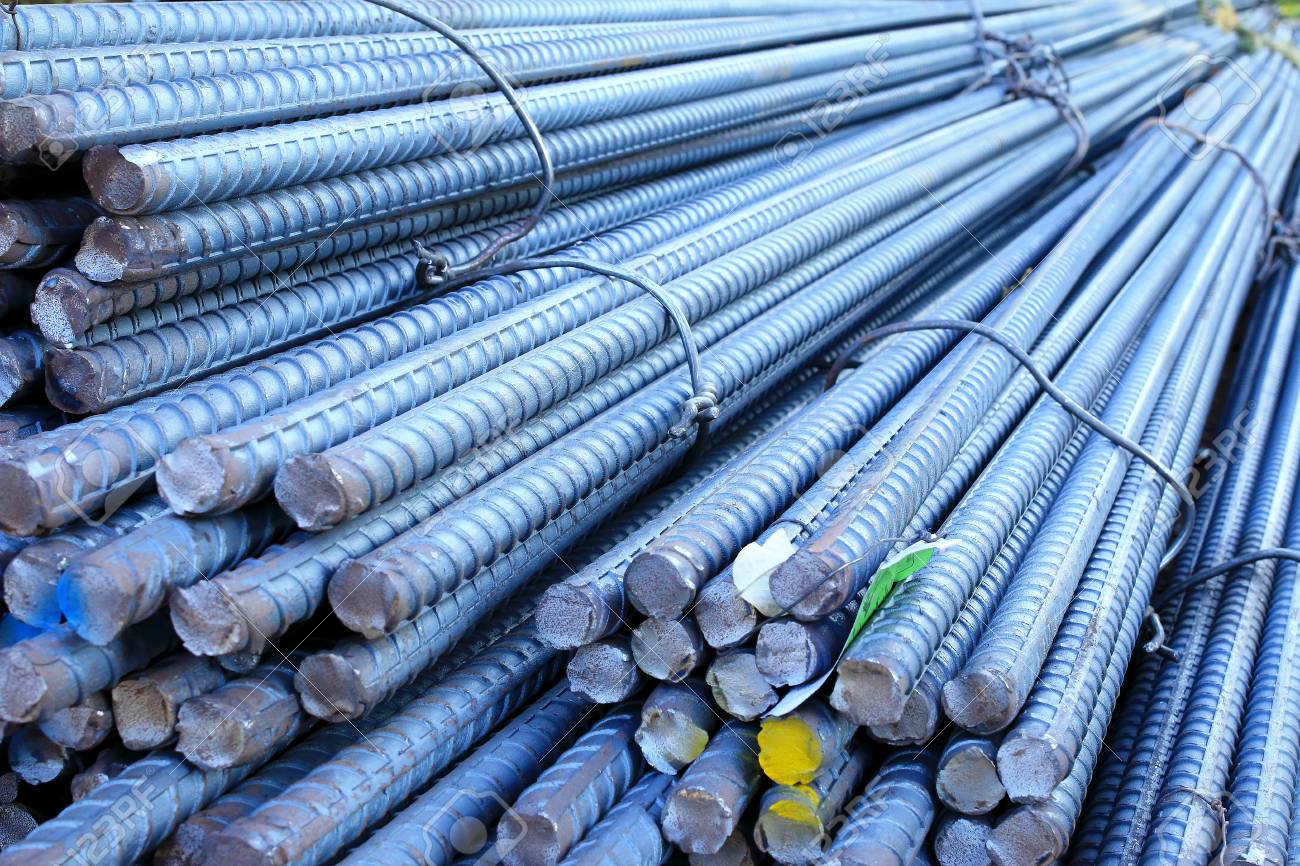
Spanish longs supplier Celsa says that it will see a leap in both sales and profits in 2021, Kallanish notes. According to the Group`s chairman and ceo Francesc Rubiralta, the turnover will be an expected €5.2 billion ($5.31 billion) and Ebitda could be €600 million this year, a boost in sales revenues of over 57% and in earning of almost €300m or 100%, year-on-year.
“Celsa is on track to surpass the pre-pandemic sales this year and even reach the highest turnover in our history,” Rubiralta says. The business improvement will be possible after major changes in the international steel trade and environmental awareness that augur good long-term prospects for the company due to its competitive advantage in terms of sustainability and vertical integration.
“Celsa has avoided rising raw material costs because 93% of the steel it produces comes from scrap metal collected by the group itself, and as its furnaces are electric, it emits 20 times less CO2 than its competitors, which is currently key with the price of emission rights quadrupled compared to the pre-pandemic,” the executive explains.
However, the Spanish government rescue fund to help overcome the impact of the Covid-19 crisis (Sepi) is necessary to alleviate Celsa`s loss of solvency, Rubiralta continues. The ceo, who does not specify the amount requested, estimates that the good prospects for the future should serve as a guarantee to obtain the go-ahead for the rescue and regain solvency and be able to “sit down and negotiate” the refinancing of its existing debt with main creditor banks. The group’s debt in Spain reached €2.7 billion, after investing more than €1.7 billion between 2001 and 2019. Celsa stopped paying off its long-term debt in the first year of the pandemic, saving about €200 million to date, financial media El Economista suggests.
“Our strategic plan until 2028 includes investments of €100m in Spain and units abroad and involves expanding markets, including exports to China since 2022. Celsa`s steel is already green and we are very well-positioned to capitalize on what is coming,” Rubiralta adds.
Todor Kirkov Bulgaria

Liberty secures funding for Rotherham restart in October
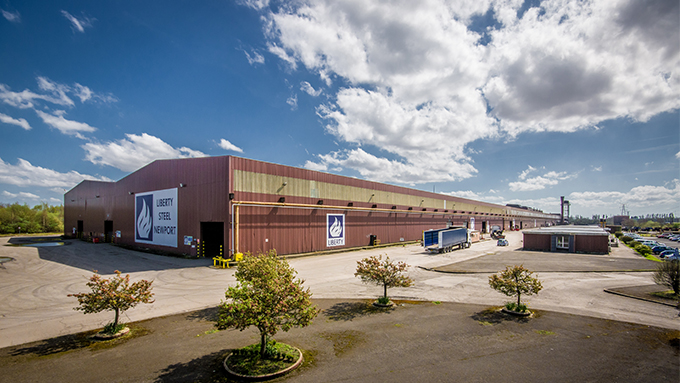
GFG Alliance will inject £50 million ($68m) of new funding into Liberty Steel UK (LSUK) to enable the restart of the UK unit’s core Rotherham electric arc furnace. Production ramp-up will begin this month, with a view to reaching a 50,000 tonnes/month rate “as soon as possible”, a GFG spokesperson tells Kallanish.
The move sets the foundation for LSUK’s longer-term refinancing and expansion of Rotherham’s capacity to create a 2 million tonnes/year “GREENSTEEL” plant, the firm says. “There is a significant opportunity to expand recycling of scrap steel for growth markets such as infrastructure and engineering,” it adds.
Investment plans in Rotherham, reviewed by industry consultants, will boost production capacity, increase employment and introduce new products. “LSUK’s downstream operations remain core to LSUK’s asset base and will provide downstream capacity for Rotherham’s output, enabling increased shift opportunities at the Thrybergh and Scunthorpe mills,” GFG observes.
The fresh funding will also enable LSUK’s speciality steel division, SSUK, formed of Stocksbridge, Narrow Strip and Performance Steel, to run focused production campaigns for key customers.
Funds will be allocated to LSUK through a new separate corporate entity Liberty Capital. LSUK will run as normal with funding for growth in working capital approved through Liberty Capital. This arrangement will ensure fast and effective deployment of the £50m in initial funds in the UK, enabling LSUK to restart its operations, GFG says.
“The next stage in our global refinancing will be in Europe where a significant number of new lenders are expressing interest in refinancing our steel assets,” says chief restructuring officer Jeffrey S. Stein.
Adam Smith Germany
Acciaierie d’Italia restarts 2 BFs after maintenance
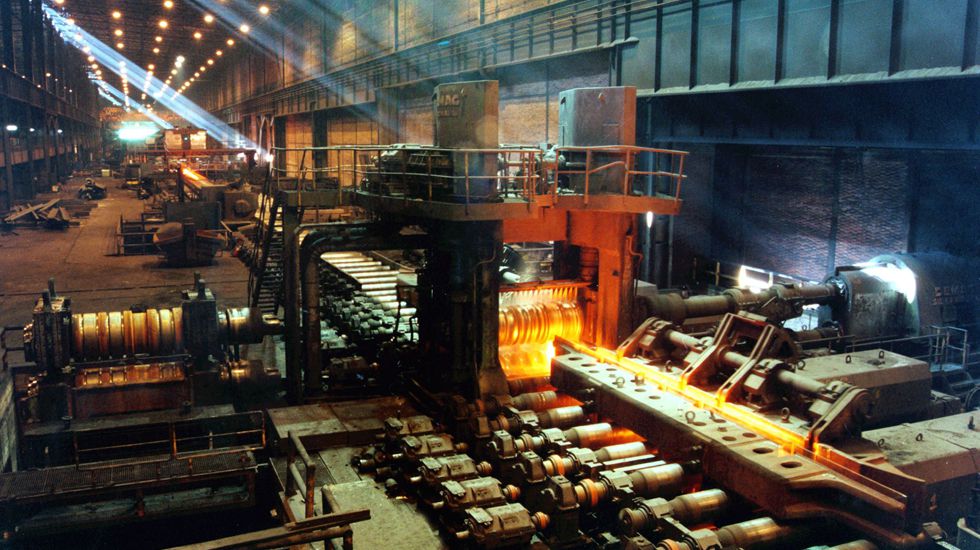
Acciaierie d’Italia, the joint venture between ArcelorMittal and state-owned Invitalia, has restarted blast furnace no. 1 and 4 at its Taranto steelworks after a stoppage last week due to maintenance works, a company source confirms.
The steelmaker will produce 6 million tonnes of steel in 2022, and expects to reach 4.4mt this year. Acciaierie d’Italia restarted blast furnace no.4 at Taranto in June, after restarting no.2 in February. In June the Taranto plant resumed production with three blast furnaces (BF no.1, 2 and 4). Meltshop no.1 and BF no.4 were idled in March for maintenance (see Kallanish passim).
The Italian coils sector is closely monitoring the ramp-up of Taranto’s production. The steelmaker’s recent judiciary turmoil, global pandemic, frequent production stoppages and production slowdown have contributed to the country’s short supply of hot-rolled coils. The current HRC tightness is easing in Italy as more imported material has been purchased over the past months. HRC prices have fallen compared to the beginning of September, reaching €900-930/t ($1,040-1,074/t) base ex-works for service centre quality material.
Natalia Capra France
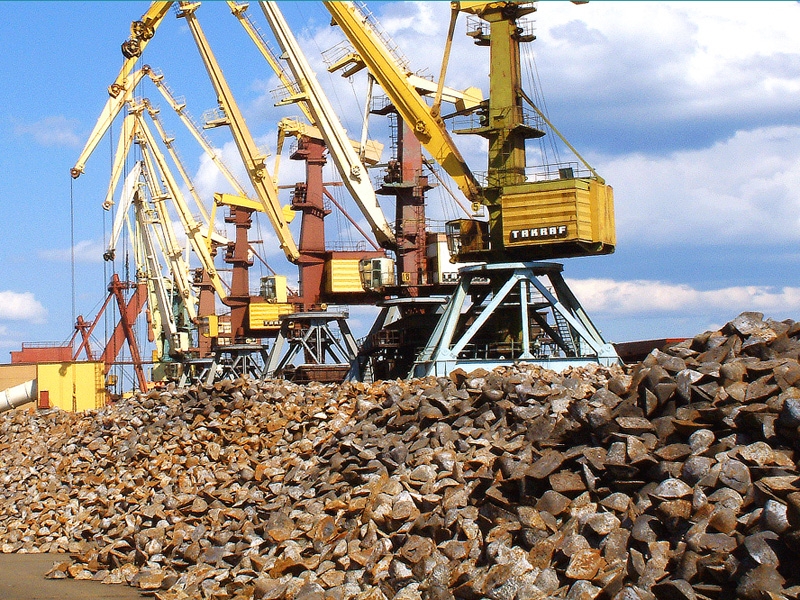
Iron ore prices roar higher on market return
Seaborne iron ore prices jumped on Monday as the return of China from the October holiday led to more spot cargo bookings.
The Kallanish KORE 62% Fe index leapt $15.15/tonne to $136.88/dry metric tonne cfr Qingdao. The Kallanish KORE 65% Fe index gained %13.76/t to $158.35/dmt cfr, and the KORE 58% Fe index increased $18.36/t to $108.83/dmt cfr. A total of 170,000t of Carajas Fines shipped on 8 October traded at $160/t. A total of 120,000t of PB Fines and 80,000t of Yandi Fines traded at floating prices.
On the Dalian Commodity Exchange, January 2022 iron ore settled up CNY 22/t at CNY 771/t ($119.57/t), while on the Singapore Exchange November 62% Fe futures settled up $10.79/t at $135.44/t. The same contract for 65% Fe and 58% Fe futures settled up $10.15/t at $157.15/t, and up $7.03/t at $96.99/t respectively.
Chinese scrap and billet prices have also been strong. Grade 6mm+ heavy scrap delivered to mills in the Yangtze River Delta increased CNY 15/t to CNY 3,772/t on Monday. In Tangshan, billet prices were up CNY 20/t on Saturday and then stable through Monday at CNY 5,330/t.
Steel market sentiment has strengthened as China returned from the October holiday. End user demand has picked up due to seasonally stronger construction activity. Steel output meanwhile is also recovering from late-September’s multi-year low (see related article).
Sentiment had improved sufficiently that a number of spot iron ore deals began to emerge. Benchmark 62% Fe iron ore is now at its highest level since 7 September.
Cleveland-Cliffs charges into scrap with $775m acquisition
US flat-rolled and iron ore producer Cleveland-Cliffs has entered the scrap market – in a big way – with its $775 million buy of Ferrous Processing and Trading Company (FPT), Kallanish learns from a company statement.
FPT represents about 15% of the domestic merchant prime scrap market spread over 22 facilities, Cleveland-Cliffs says. About 90% of the company’s revenues come from its Midwest locations in Ohio and Michigan.
“Cleveland-Cliffs is entering the scrap business as a major player through the acquisition of a large scrap company,” says ceo Lourenco Goncalves. “Even more importantly, FPT has a very meaningful presence in prime scrap. With all the new flat-rolled EAF capacity coming online in our market over the next four years, prime scrap will only become more and more scarce.”
Nucor and US Steel both recently announced 3m short tons of new EAF capacity apiece.
“The acquisition of FPT will enhance our ability to buy back prime scrap directly from our clients, cutting the middlemen and improving the margin contribution from scrap for both Cleveland-Cliffs and for the manufacturing and service centre clients that will be able to sell scrap directly back to us,” Goncalves adds.
The buy is expected to close in the fourth quarter.
Dan Hilliard USA
Coal-based steelmaking to persist despite green rhetoric: Eurocoke
Despite the green steelmaking rhetoric in Europe, the region’s steelmakers will remain dependent on coal for some time to come, while producers in developing economies will continue investments into new coal-based capacity. So said speakers at last week’s Eurocoke Summit in Amsterdam.
The green hydrogen-based direct reduction-electric arc furnace route can reduce carbon emissions by 97% versus the conventional blast furnace-oxygen converter route; however, there is a huge obstacle to this. Green energy is needed on a scale hitherto unseen, Stahlinstitut VDEh executive board member Dr Hans Lungen pointed out at the event attended by Kallanish. Another challenge is the limited availability of DR-grade iron ore pellet, which is highly-beneficiated versus BF feed.
A shorter-term alternative to direct carbon avoidance is to follow the smart carbon usage pathway, an example of which is the Hisarna ironmaking process installed at Tata Steel IJmuiden. This produces carbon-rich process gas that can be used effectively for carbon capture, utilisation and storage (CCUS) at an EU coastal plant, Lungen observed.
Tata Steel IJmuiden Hisarna Pilot Plant technology manager Johan Van Boggelen said the International Energy Agency has pointed out that a majority of global steelmaking will still be somehow dependent on carbon by 2050. This does not mean the conventional integrated process will remain dominant, but CCUS will increase.
“These firms who say they will use hydrogen won’t do so immediately,” he observed. The transition phase will involve the use of natural gas which will require some form of carbon capture. Green steelmaking will require the development of hydrogen storage infrastructure, which will take ten years to build.
Direct smelting through Hisarna is a good alternative, Van Boggelen said, having demonstrated carbon emissions can be cut by 50% without carbon capture, by using 50% scrap feedstock charge and biomass instead of coal. The next step will be to introduce natural gas into the process. Coupled with CCUS, this can result in negative emissions.
The touted use of biomass on a large scale, meanwhile, will require processes to upgrade it to high levels of decarbonisation, while the issue of what to do with increased DRI slag also needs to be considered, Van Boggelen commented. Much of the BF slag currently produced is reused in the cement industry, but this is not possible with DRI slag.
H&W Worldwide Consulting principal consultant Dr. Neil Bristow meanwhile said the challenges of meeting hydrogen production and transport “have been underplayed”.
Europe will be at the forefront of the decarbonisation push. India, South America and Southeast Asia will however see BOF-based steelmaking grow to 2035, requiring increased coking coal. These regions have insufficient scrap supply, while there is not enough BF pellet or hydrogen supply globally to ensure their decarbonisation. Growing steel demand can only be met through more integrated steelmaking investments.
“That’s going to mean that demand for coking coal, even if Europe declines, is still going to develop strongly outside of Europe,” Bristow concluded.
Adam Smith Germany
India mulls steel price hikes on costlier coal
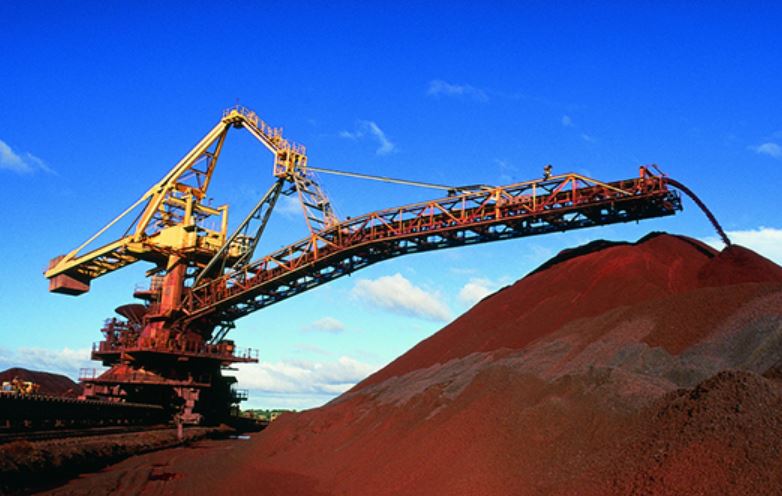
Rising coal prices coupled with a shortage of coking coal and thermal coal are forcing Indian steel mills to consider a steel price hike for the next quarter. Indian steel giants like JSW Steel and Jindal Steel and Power (JSPL) anticipate a cost-driven price hike.
Kallanish notes from customs data that Indian coking coal imports plunged 26.18% on-month to 3.21 million tonnes in September, while iron ore imports fell 35% to 2.32mt. The fall in coking coal imports amid soaring prices, coupled with the expected increase in steel demand during India’s festive seasons, indicates a steel price increase in the coming period.
“The steelmaking-to-energy giant, which relies mostly on imported thermal and coking coal, sees seaborne prices as likely to remain elevated for one or two more quarters,” JSW Steel marketing director Jayant Acharya told local media.
“Coal is having an impact on costs and that will have a bearing on the price of steel for the next few quarters,” he adds. “Benchmark thermal coal prices have more than doubled since the start of the year to more than $200/tonne, with sharp increases in the last few weeks due to a global squeeze on supply.”
The majority of integrated steel plants in India are dependent on thermal coal supply for their power requirement. Owing to supply issues, prices of thermal coal have increased four times above the normal rate, says JSPL.
“A tonne of coal, which was in the range of INR 4,000-6,000/tonne ($53.40-80.10/t), is now costing INR 8,000-12,000/tonne,” JSPL managing director V R Sharma told media.
“Steel in India at present is in the range of INR 50,000-55,000/tonne. The shortage of coal has led to an increase in its prices, which will have an impact on steel that may also go up due to this unprecedented rise,” Sharma concluded.
Sayed Aameer India