

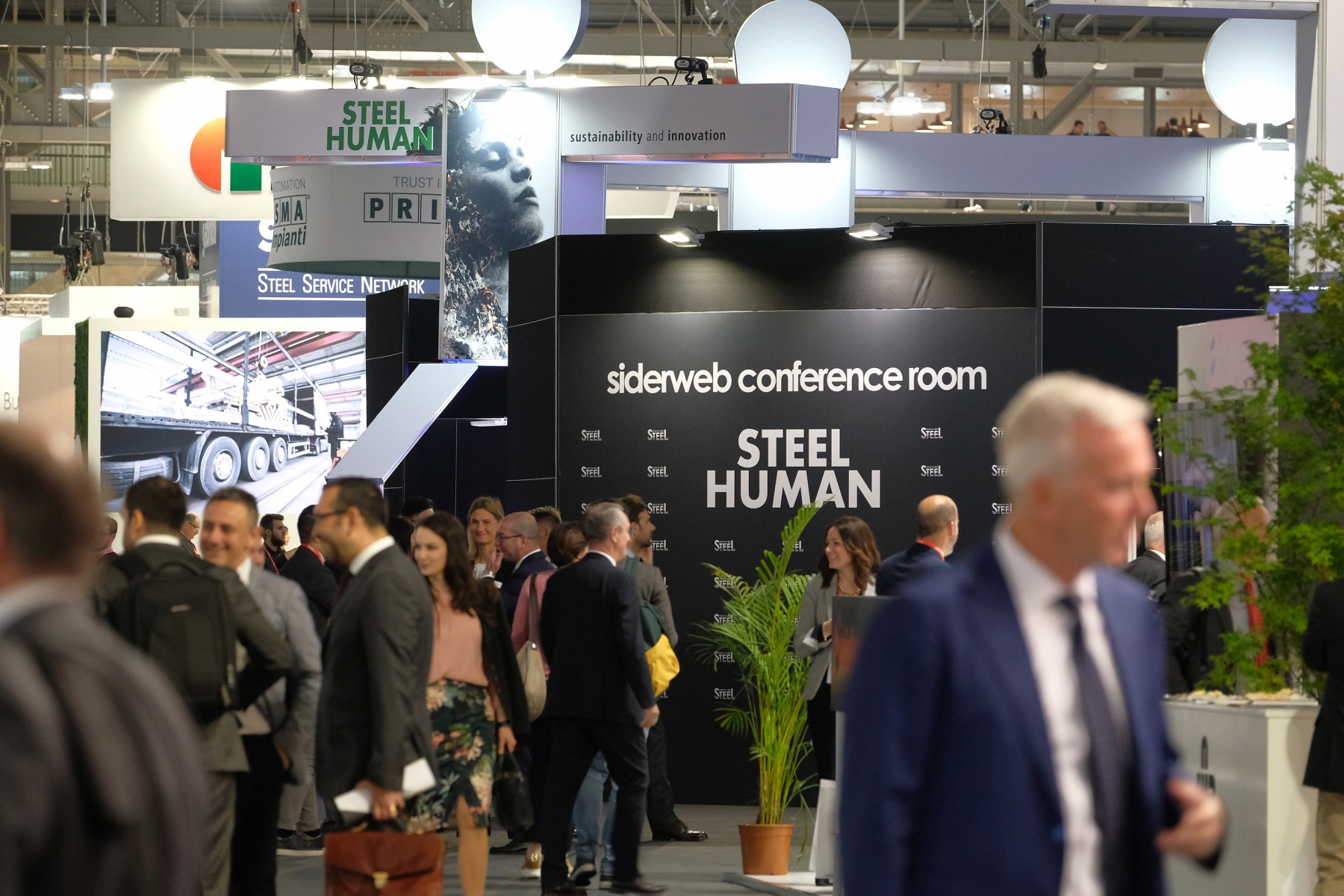
Made in Steel participants speculate on Arvedi listing
The closing for Arvedi’s acquisition of stainless steel mill Acciai Speciali Terni (AST) will happen in January 2022, Arvedi founder Giovanni Arvedi said at this week’s Made in Steel event attended by Kallanish. He did not however comment on speculation among sources that Arvedi is mulling a stock exchange listing.
Arvedi revealed that a business plan for AST will be disclosed after the closing takes place. So far, he stated, the parties are still at the “signature” phase and added that his plan is to enhance the mill’s domestic and international competitiveness.
Thyssenkrupp agreed to sell AST to Arvedi last month (see Kallanish 16 September). While no purchasing price was revealed, Arvedi is said to intend to retain the entire workforce of 2,700 people and invest a considerable sum in the steelmaking environmental footprint.
AST generated sales of around €1.7 billion ($2 billion) in fiscal year 2019/2020. Thyssenkrupp said it is examining a possible minority shareholding in the firm.
Natalia Capra France

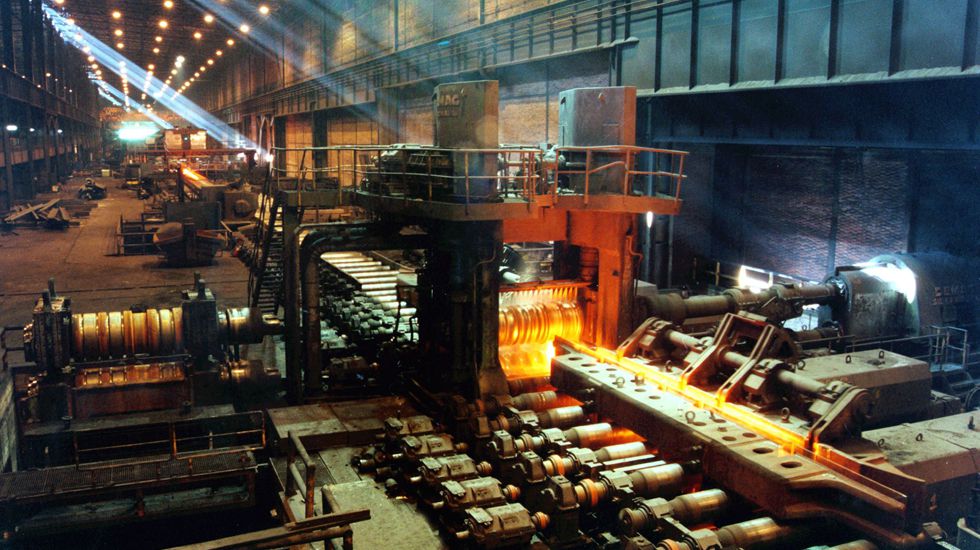
ArcelorMittal implements energy surcharge for EU longs
ArcelorMittal is telling its European clients in the long products segment that it is implementing a €50/tonne ($58) surcharge on new contracts due to surging energy costs, Kallanish learns from market sources.
The company is understood to be informing customers that it can no longer bear the increased energy costs alone. The steelmaker has been hit by the rally in both electricity and natural gas prices in recent weeks, which have added over €120/t to production cost, according to sources. Electricity prices are up to €160-200/Mwh from the usual €55/Mwh, while gas is at €100/Mwh versus €20/Mwh.
In addition to energy prices, European carbon emissions allowances have also reached new record-high prices of €64/t, severely impacting production costs for steelmakers across the continent. Moreover, ArcelorMittal’s ferroalloy suppliers have also levied surcharges of their own. The new energy surcharge is expected to remain in place until energy prices return to “normal levels”, ArcelorMittal tells customers.
While the surcharge will effectively raise ArcelorMittal’s longs prices, it is not a price increase per se. The market is still assessing the latest scrap price volatility to understand if the recent longs pricing downtrend has already reached its end.
Emanuele Norsa Italy
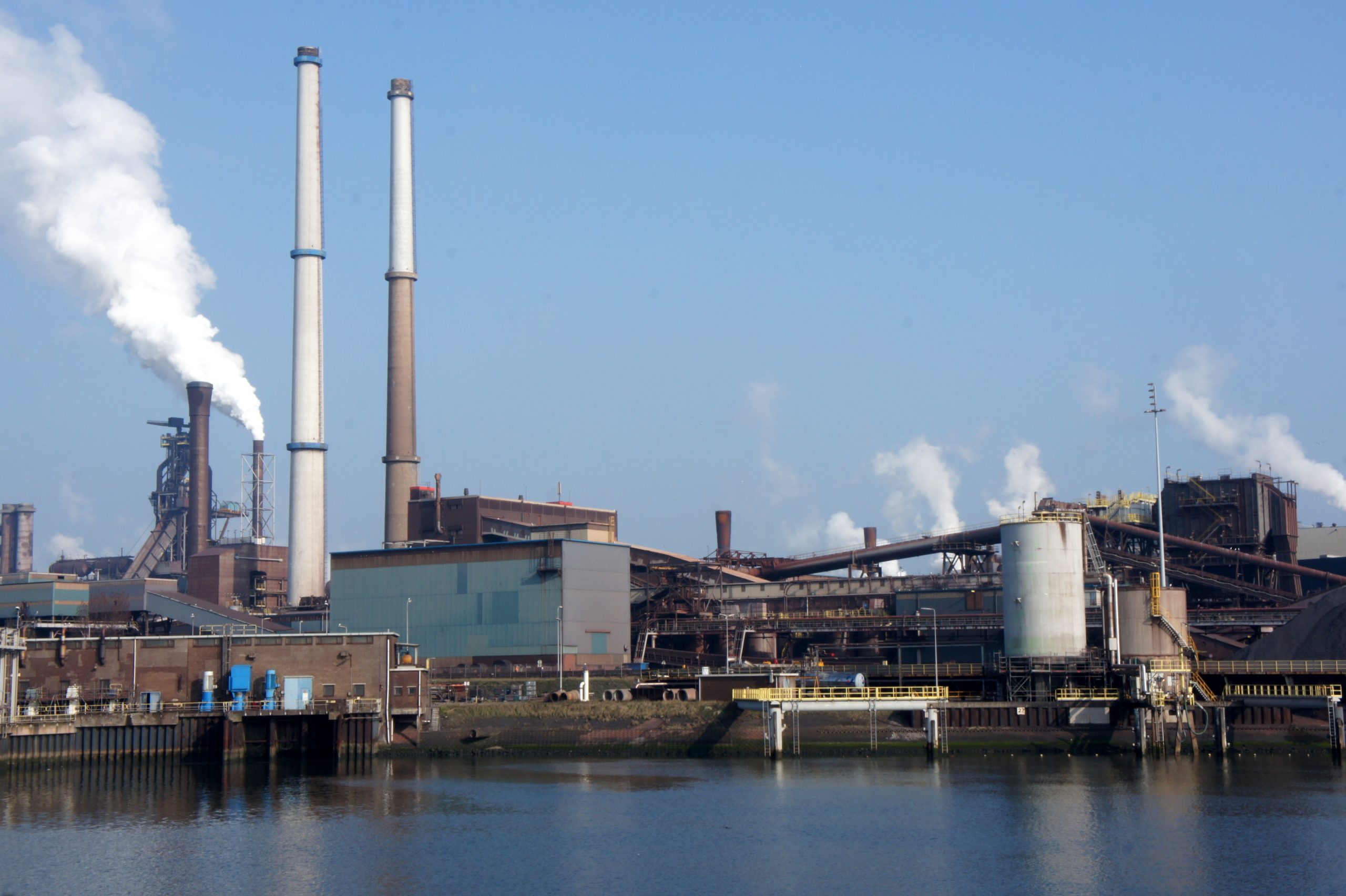
Tata Steel Netherlands splits from British counterpart
Tata Steel Netherlands said Oct. 1 it has reached agreement on the split from Tata Steel Europe and will now continue independently.
In the new structure there is no longer an operational Tata Steel Europe organization, instead Tata Steel Netherlands and Tata Steel UK operate side by side as two independent companies.
The two will continue to cooperate on a small number of activities, including serving joint customers, but the directors and the supervisory board of Tata Steel Netherlands now have full responsibility for Tata Steel Netherlands.
The split represents a historic moment, after 22 years of working with British colleagues.
Tata Steel Netherlands consists of two business units – IJmuiden and Downstream, which comprises Tubes, Plating, Colors, Distribution and Building Systems.
Tata Steel Netherlands recently also announced the choice for the hydrogen route as part of its sustainability strategy. In a few years’ time, IJmuiden will be a substantially different and more sustainable steel company, it said.
— Ekaterina Bouckley


117 participants at the EUROMETAL Steel Net Forum Iberia
EUROMETAL together with AÇOMEFER and UAHE organized a Steel Net Forum Iberia in Lisbon the 29th and 30th of September 2021.
The Steel Net Forum in Lisbon addressed the challenges of steel distribution and steel service centers in the Iberian market.

EU price volatility fading, end-use activity uncertain: EUROMETAL conference
The European steel sector has seen a surprisingly fast recovery in activity over recent months, after having been able to control the Covid-19 pandemic. The new economic reality, however, requires new solutions from both producers and the distributors’ chain.
Steel prices will see certain fluctuations in the following months, but the cycle of volatility is seen coming to an end, Kallanish heard during Thursday’s EUROMETAL Iberia Steel Net Forum in Lisbon.
“We have learned from the pandemic. Now we have to be careful while evaluating prices and demand following recent movements in China,” EUROMETAL president Fernando Espada said at the event. “China is taking drastic decisions, which in turn lead to uncertainty in the market. The reduction of its production has led to a correction in the global market. The offers will not be the same, so you have to find a balance.”
According to EUROMETAL data, steel user sectors have improved their performance so far this year, except for the automotive industry. “The steel industry is changing in search of creating greater added value and sustainability of its products. We must look with optimism at the structural changes caused by the CO2 reduction plan, emphasising the digitisation of processes based on new business management,” Espada added.
Meanwhile, Eurofer director of market analysis Alessandro Sciamarelli said the worst of the economic recession is over, supported mainly by the recovery of construction activity. Growth in steel-consuming sectors, however, remains uncertain in the second half-year due to higher energy prices and global supply chain disruptions.
Eurofer nevertheless foresees steel demand will be moderately positive during 2021 and 2022, with the construction sector set to be the best-positioned. Construction output is expected to rise by 11.2% in 2021, following the 4.2% drop seen last year. The recovery will continue also in 2022.
“Consumption is set to increase 11.2% this year and continue to recover in 2022,” Sciamarelli explained. The automotive industry has been hit by the microchip shortage and subsequently saw demand reduce across Europe, weakening the sector’s position in the global market. “Car production is estimated to rise 15.3% in 2021 and to grow further by 7.9% next year. The outlook, however, remains uncertain due to the current semiconductors crisis, lower consumer demand and the implementation of EV standards,” Sciamarelli added.
According to Eurofer, the impact of the EU Next Generation economic recovery plan will become apparent by mid-2022.
Todor Kirkov Bulgaria
Revista InfoAcero Septiembre 2021
En el siguiente enlace pueden acceder a la edición de Septiembre de la revista INFOACERO
A continuación destacamos algunos de sus contenidos:
1. Opinión – D. Manuel García – Junta Directiva de la UAHE.
2. Evolución del Índice de Precios de Productos Siderúrgicos – UAHE
3. Información Asociativa: Jornada UAHE (Madrid, 25 Noviembre).
4. Programa XVII Fórum de la Distribución de Productos Siderúrgicos (Castelldefels, 28 Octubre)

Start-up meets industry: Productivity Symposium on October 7th in Neu-Ulm

Concept AG, in cooperation with Bansbach GmbH, invites you to the “Productivity Symposium 2021” at the Classic Oldtimer Factory in Neu-Ulm. The aim of this event is to mediate between start-ups and established companies in order to bring together tech know-how and industrial competence. Around 30 start-ups present themselves during the entire symposium and have the opportunity to meet with decision-makers.
So far, many companies have hardly come into contact with digital start-ups. Conversely, young founders would like to have connections with established companies, but they do not yet have contact persons there. In order to close this gap, the Productivity Symposium was launched by the management consultancy Concept AG with the support of the auditing and tax consultancy company Bansbach. They want to make innovative developments known to medium-sized companies and promote the exchange between young experts and decision-makers.
Jens Fabrowsky, Vice President Automotive Electronics for Semiconductors and Components at Robert Bosch, has agreed to be the keynote speaker. His lecture is: “How does AI help in production today and tomorrow?”. Joachim Erdle (Head of Corporate Finance at LBBW / BW Bank), Regina Brückner (Management of the Brückner Group), Hannes Hinteregger (Avedon Capital Partner) and Dr. Harald Balzer (CEO of Concept AG) will participate in the panel discussion. After the final lecture by Fabian Bodensteiner (CEO amobs.io GmbH) “Enrich your working life”, the “Bansbach Elevator Startup Award” will be presented.
Around 250 participants and 30 start-ups are expected this year. KALTENBACH.SOLUTIONS will also be represented with an information booth. After more than four years on the market, the company moves safely in the world of start-ups as well as in the world of industry and can combine specific tech know-how with extensive expertise for the benefit of customers in the steel industry.
Registration and detailed information on the Productivity Symposium 2021 at: https://concept.ag/productivity-symposium/

Spanish distributors express positive outlook, but electricity concerns
Spanish steel distributor representatives have expressed optimism about the long-term growth prospects of the steel sector, in light of the expected post-pandemic economic recovery and construction and infrastructure sector demand growth.
Meanwhile, the uncertainty in the automotive sector due to the shortage of components, as well as high prices of inputs and electricity is worrying distributors, delegates told Kallanish on the sidelines of the EUROMETAL Steel Net Forum Iberia in Lisbon on Wednesday.
“We have had a recovery at a higher level than expected in the sector,” one participant comments. “There has been strong post-Covid-19 demand for material, both from construction companies and individuals.”
According to another Spanish steel distributor, however, this momentum may be slowed by high electricity costs, which neared their all-time high in September. “Electricity costs have impacted the steel production chain. High steel prices have carried across the entire industry. So, the energy factor continues to hamper competitiveness against companies abroad,” he says.
A representative from a service centre expressed concern that if distributors do not uniformly maintain sales margins, the good results achieved by the supply chain so far this year will be in vain. “Efforts in maintaining margins should be a priority for all distributors, as they are for steelmakers,” he comments.
This proposal, however, is difficult to implement across the board, since contracts are also influenced by other factors. “Some companies opt for higher sales volume by reducing their margin, while others are forced to maintain lower margins due to their regional proximity to mills,” the service centre source adds.
Todor Kirkov Bulgaria

EU extends China, Taiwan stainless CR flats duties
The EU has extended for a further five years anti-dumping duties on imports of stainless steel cold-rolled flat products originating in China and Taiwan, following the completion of an expiry review of existing measures.
The review was initiated in August 2020 following an application by European steelmakers’ association Eurofer, Kallanish notes.
For China, Shanxi Taigang Stainless Steel Co. and Tianjin TISCO & TPCO Stainless Steel Co. are levied with a 24.4% duty, other Chinese cooperating companies have 24.6% and all other Chinese companies have 25.3%. For Taiwan, Chia Far Industrial Factory Co. is levied with 0% tariff and all other companies with 6.8%.
The products fall under HS codes 7219 31 00, 7219 32 10, 7219 32 90, 7219 33 10, 7219 33 90, 7219 34 10, 7219 34 90, 7219 35 10, 7219 35 90, 7219 90 20, 7219 90 80, 7220 20 21, 7220 20 29, 7220 20 41, 7220 20 49, 7220 20 81, 7220 20 89, 7220 90 20 and 7220 90 80.
In Europe the product is produced by integrated producers transforming stainless steel scrap and alloying elements after melting, hot rolling and cold rolling. In China and, to an increasing extent, Taiwan, producers rely on the use of virgin raw materials, which are transformed into nickel pig iron before being melted, hot rolled and cold rolled, the European Commission observes.
EU consumption of the products fell 14% in the 1 July 2019 to 30 June 2020 review investigation period (RIP) to 3.197 million tonnes versus 3.73mt in full-year 2018. Imports from China surged 67% on the same basis to 12,546t, while intake from Taiwan surged 78% to 171,656t. Domestic production capacity was 4.57m t/year in RIP, with utilisation at 68%, down from 81% in 2018. Domestic sales volumes were 2.33mt in RIP, with market share of 72.9% versus 72.8% in 2018.
The separate EU anti-dumping probe continues into stainless CR flats originating in India and Indonesia.
Adam Smith Germany
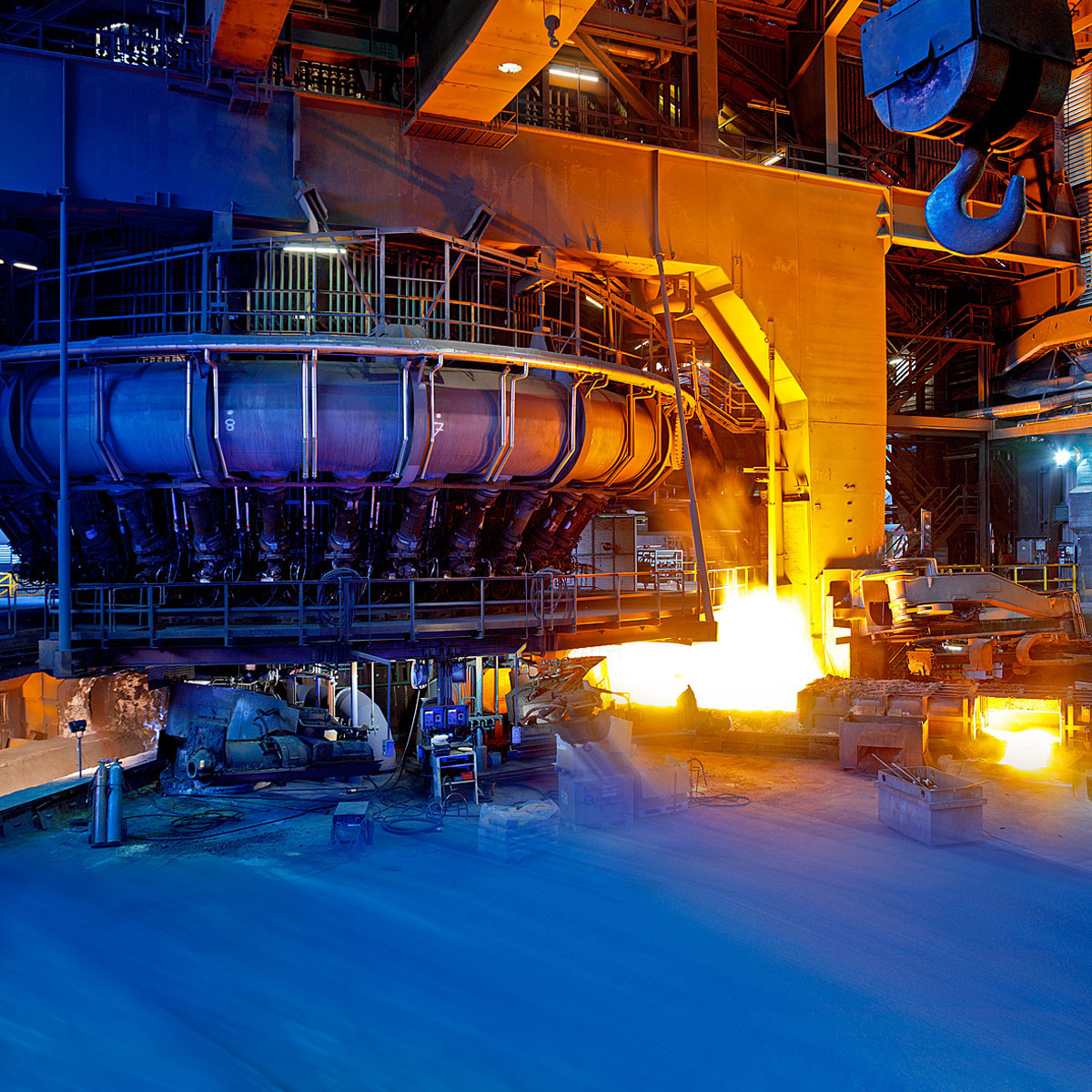
Invitalia to invest further in Acciaierie d’Italia
The Italian state is increasing its investment in local steelmaker Acciaierie d’Italia, formerly known as ArcelorMittal Italia.
The government’s investment agency, Invitalia, has been authorised by the Italian Parliament, Camera dei Deputati, to invest further equity and issue funds of up to €705 million ($830m). This follows the approval of the “Grandi navi a Venezia” decree, which relates mainly to shipping in Venice but also touches on Taranto.
The further capital injection means to ensure production continuity for the Taranto steelmaking plant, considered a strategic national interest, the text of the decree says.
This further investment adds to over €1 billion of funds that Invitalia will gradually inject into the steelmaker over the next three years. In May 2022 it will become the majority shareholder of Acciaierie d’Italia with a 60% share. ArcelorMittal Italia will hold 40% of the company (see Kallanish passim).
The Grandi Navi a Venezia decree also authorises Invitalia to implement a feasibility study through a new company with the objective to build in Taranto a direct reduced iron plant. This will feed future electric arc furnaces and reduce the plant’s carbon emissions.
Natalia Capra France