

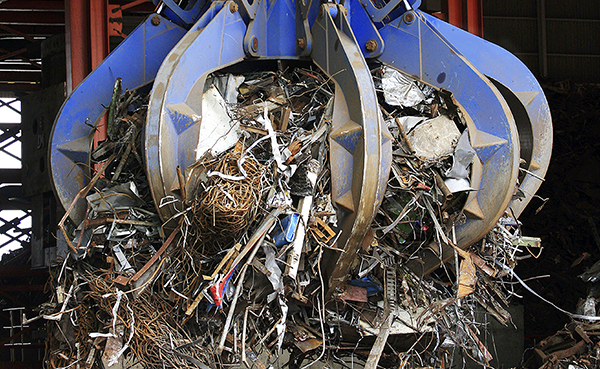
French stainless scrap prices increase
Stainless steel scrap prices in France are increasing slightly compared to September, in line with international price hikes amid see-sawing nickel values this month.
Mills are now paying €1,630-1,650/tonne ($1,893-1,916) ex-works for grade 304 to be delivered in October. Buyers pay €20-40/t for transport depending on point of delivery and departure, sources say.
Grade 316 is hovering at €2,330-2,350/t ex-works on average, market participants tell Kallanish. This grade has increased approximately €100/t on September levels due to short availability and increasing prices of raw materials.
Demand is considered to be at good levels in France as finished stainless flat and tube product prices are also hiking in line with the tight supply of coils in Europe.
Nickel prices for cash buyers were at $19.850/t on 16 September and reached $19,235/t on 13 October, Kallanish notes.
Natalia Capra France


Energy costs likely to raise German steel prices
As a consequence of skyrocketing electricity prices, some steelmakers in Germany and its neighbouring countries are getting explicit about lifting their steel prices.
While, for example, Austria’s voestalpine was still reserved last week with commenting on its pricing policy in general, Swiss Steel came forward with wording the obvious. “We are currently examining various ways of reacting to the cost increase,” a spokeswoman tells Kallanish upon request. “This will inevitably lead to a corresponding increase of our steel prices,” she qualifies.
In a press interview, meanwhile, Swiss Steel chief executive Frank Koch stated that the group is pondering implementing a surcharge for energy that is linked to the fluctuation of market prices for energy.
Such considerations are still dismissed by Salzgitter. Surcharges as a tool for pricing “already failed in earlier times for iron ore and scrap,” a Salzgitter spokesman reiterates. However, with only one electric arc furnace mill among its production assets – the sections mill in Peine – Salzgitter feels less pain than Swiss Steel group, which produces entirely using EAFs, in Switzerland, Germany and France.
Like Swiss Steel with its special bar qualities, it will be also the makers of rebar that feel the cost sting the hardest. Feralpi has announced production stoppages in Italy, but not for Germany, where rebar sells better altogether. According to one mill source, rising energy prices should lift the rebar production cost by close to €20/tonne ($23). “We believe that mills will hand down this hike to the benders and other customers,” he says.
Christian Koehl Germany
Italian stainless scrap prices climb again
Italian stainless scrap prices are increasing again by €50/tonne ($57) compared to September due to hiking nickel prices.
Scrap sales volumes in Italy are said to be sustained by a good level of demand. Some long mills, however, forecast that scrap prices will fall, dragged down by “a quieter market” this month.
304 grade is sold at €1,700-1,750/t delivered. Sales values for 316 also hiked significantly, reaching €2,380-2,400/t delivered. This grade is in short supply, sources suggest.
Nickel levels for cash buyers were at $18,870/t on 11 October, Kallanish notes.
Natalia Capra France

EUROMETAL President at Made in Steel 2021

Fernando Espada, President of EUROMETAL, participated in the session “STEEL VISION: preparing fro tomorrow’s Steel” at the Made in Steel conference, Tuesday the 5th of October 2021.
Barbara Beltrame (Confindustria ), Gianpietro Benedetti (Gruppo Danieli), Mario Caldonazzo (European Steel Association – Eurofer) and Fernando Espada (EUROMETAL), interviewed by Stefano Ferrari and Lucio Dall’Angelo, debated on the evolution of supply chain in the next few years, the new aspects of internationalization, how will operators have to change and on which levers will it be necessary to focus for production and distribution.
EU extends China wire rod anti-dumping duty
The EU has retained its anti-dumping duty on imports of wire rod from China (PRC) after completing an expiry review requested by Eurofer last year.
The duty applies to products under HS codes 7213 10 00, 7213 20 00, 7213 91 10, 7213 91 20, 7213 91 41, 7213 91 49, 7213 91 70, 7213 91 90, 7213 99 10, 7213 99 90, 7227 10 00, 7227 20 00, 7227 90 10, 7227 90 50 and 7227 90 95. The rate is 7.9% for Valin Group and 24% for all other Chinese companies.
The move extends the duty originally imposed in 2009 and then extended the first time in 2015. The review investigation period (POI) of the latest probe covered 1 July 2019 to 30 June 2020. The duties have been extended despite the European Commission conceding that wire rod imports from PRC have almost “disappeared.”
“While Chinese imports accounted for 5% market share and 1.1 million tonnes in the original investigation period, they have, based on information from Eurostat, virtually disappeared from the Union market. In fact, imports from the PRC decreased from 556 to 75 tonnes over the period considered,” the Commission says in its findings monitored by Kallanish.
“The company with the 7.9% duty rate is related to the ArcelorMittal group and according to the complainants does not produce significant quantities of wire rod any longer. However, the other Chinese exporting producers also ceased to sell into the Union. The wire rod market appears to be very price sensitive and the 24% price increase caused by the anti-dumping duty in force made Chinese exporters to lose interest in the Union market,” the Commission concludes.
EU production of the products in question was 18.3 million tonnes in the POI, down 9% from 2017, with capacity up 6% to 27.3m t/year and utilisation down to 67% from 78%. Consumption in the bloc meanwhile fell 8% to 18.82mt.
Adam Smith Germany
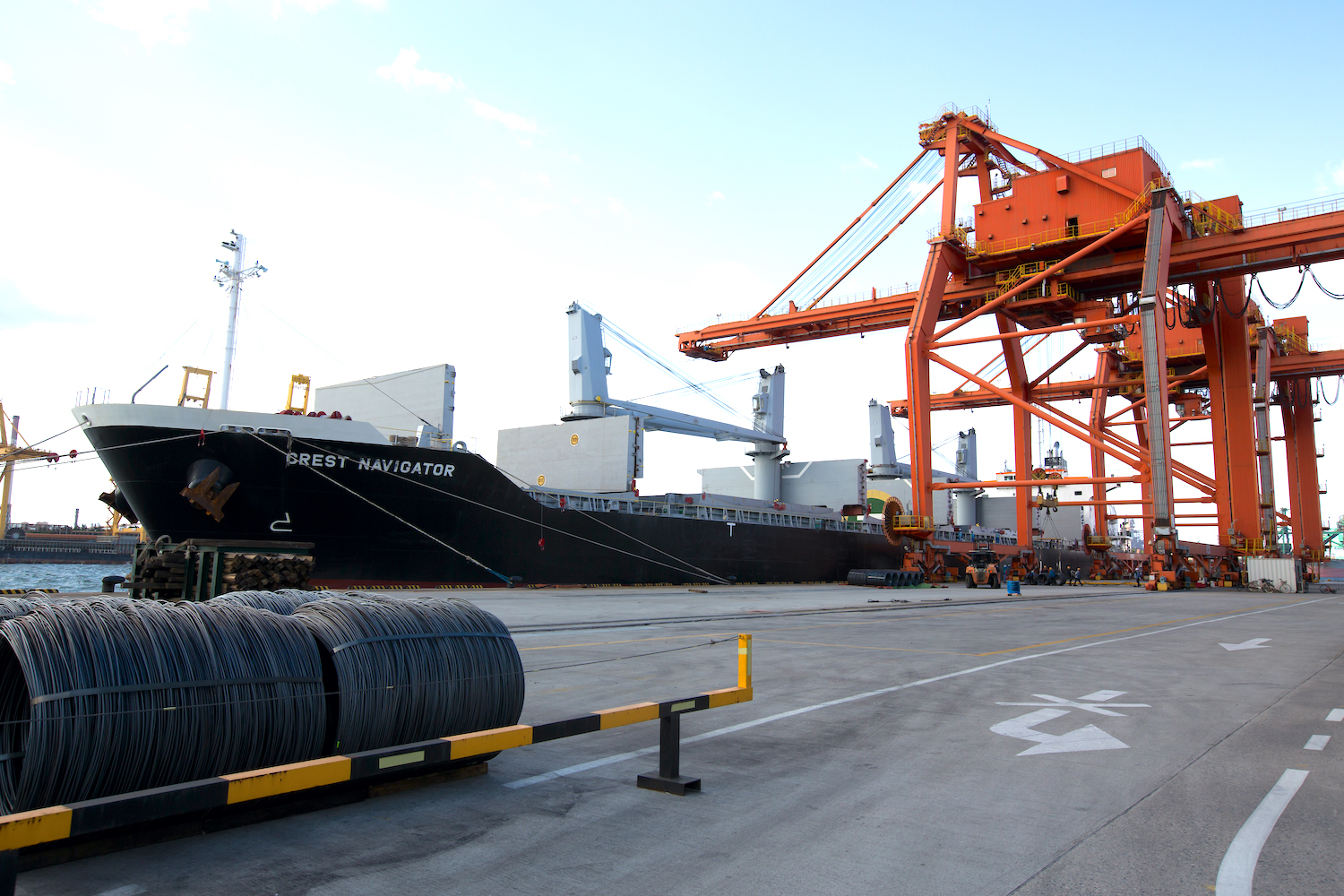
Worldsteel lifts demand forecast on developed economies recovery
Worldsteel has revised up its forecast for global finished steel demand thanks mainly to developed economies outperforming earlier expectations by more than developing economies.
Global steel demand will grow by 4.5% on-year in 2021 to 1.85 billion tonnes, after 0.1% growth in 2020, worldsteel says in its latest short-range outlook (SRO).
Developed economies, like the US, EU and certain Asian nations, have managed to minimise the impact of the latest Covid-19 infection wave on economic activity in 2021, using more targeted and localised lockdowns. After falling by 12.7% in 2020, developed economies’ steel demand will increase 12.2% in 2021 and 4.3% in 2022, reaching its pre-pandemic level, worldsteel says.
However, supply chain bottlenecks and the services sector still lagging behind are preventing a more robust recovery.
“The Chinese economy recovery has slowed since June, leading to a steel demand contraction of 13.3% in July and then 18.3% in August,” worldsteel director general Edwin Basson said during Thursday’s virtual SRO press conference attended by Kallanish. “The sharp deceleration is partly attributable to small waves of infections and the government cap on steel production. No growth in Chinese steel demand is expected in 2022.”
Steel demand in developing economies, excluding China, also recovered in 2021, aided by the recovery in commodity prices and international trade. However, new Covid-19 waves combined with low vaccination levels have restrained this recovery.
“Russia’s export duties for steel are in favour of the domestic steel sector, which we expect to continue to do well mostly due to state-funded construction activities in 2021,” Basson told Kallanish. “We expect Russia, Ukraine, Kazakhstan and other CIS countries to continue their positive recovery.”
Steel demand in Latin America has shown a surprisingly strong recovery in 2021 thanks to the construction and automotive sectors. However, in 2022, the region could see markedly weakened momentum as it will struggle with compounded structural issues including high inflation, heightened fiscal deficits and political uncertainty.
In 2022, global steel demand will see a further increase of 2.2% on-year to 1.89 billion tonnes, worldsteel says. The current forecast assumes that, with the progress of vaccinations across the world, the spread of variants of the Covid-19 pandemic will be less damaging and disruptive than seen in previous waves.
Svetoslav Abrossimov Bulgaria
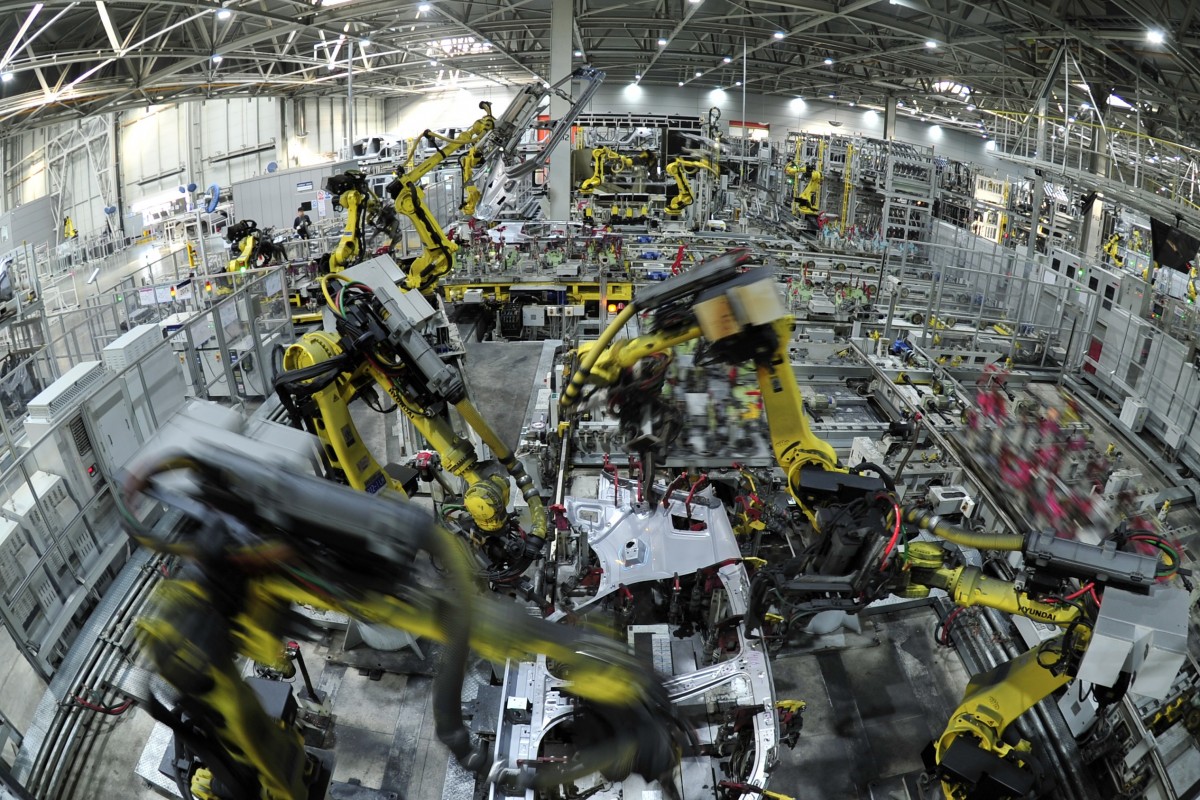
Disruptions constrain automotive rebound, pent-up demand dissipating: worldsteel
The global automotive sector has rebounded strongly since the initial Covid-19 lockdowns last year but supply chain disruption is constraining further growth, worldsteel says in its latest short-range outlook (SRO).
“Those disruptions include not only semiconductor shortages, but also lack of containers, lack of shipping and lack of harbour capacities in some cases,” worldsteel director general Edwin Basson told Kallanish during Thursday’s SRO briefing. “This is a structural sign of a global economy that is trying to get back to the previous way of operating and there are still some problems that must be fixed in the system. Hopefully, by the early part of next year this will happen.”
In the US, light vehicle production regained its pre-pandemic level by the third quarter of last year, but it has been trending down since then, partly because of supply chain disruptions, worldsteel says.
“In the EU, a strong recovery is underway, and the European automotive sector is expected to rebound by 15.3% on-year in 2021,” the association comments in a note. “However, it is still far below its level when the manufacturing recession first started in 2018. The EU’s automotive sector faces uncertainty with component shortages and a weak prospect of demand due to general economic uncertainty.”
In China, automobile production soared in the first half of this year. In particular, new electric vehicle (EV) production increased by almost 200% from January to August 2021, accounting for 11.2% of total vehicles produced in the same period.
With pent-up demand dissipating, the growth in automotive production in 2022 will decelerate, though high order backlogs will provide some support, worldsteel says.
In general, the construction sector has remained more resilient than the manufacturing sector to the Covid-19 pandemic shock, the association observes. However, in many developing economies, construction activity was severely disrupted by a total stoppage of projects.
In 2021, the global construction sector is expected to show a robust recovery fuelled by low interest rates and governments focusing on infrastructure projects as part of their recovery plans, it adds.
Svetoslav Abrossimov Bulgaria

EU HRC prices flat, Italy fears logistical issues from virus measures
European HRC prices were heard stable in the market Oct. 14 amid greater availability in the market, with buyers now suddenly able to purchase volumes for the fourth quarter.
In Southern Europe, market participants mentioned healthy demand amid rising stock levels, which would restore some balance to the supply chain. Italians were bracing themselves for possible transport issues, with the Italian Green Pass proof-of-vaccination document set to be enforced on Oct 15 sources told S&P Global Platts.
“On Oct. 1, material was customs cleared and now its all coming to the market,” a German distributor said. “Stock levels will go down because demand will pick up. Stockholders are reducing prices levels.”
The discrepancy between West and Eastern European HRC prices was also still a hot point of discussion, with one UK-based trader having heard of spot prices from Eastern producers between Eur800-900/mt. In West Europe, prices were heard between Eur1000-1040/mt delivered Europe, but the trader expects this price level to soon dip below Eur1,000/mt once automotive contracts are concluded.
With the European steel market now making room for carbon surcharges, ArcelorMittal confirmed they will incorporate a gas surcharge of Eur50/mt to be applied to all new price agreements. The new cost is expected to be withdrawn once energy prices resume to “normal levels,” the company said in a statement Oct 6.
While most market participants have come to terms with the new costs and have put structures in place to accommodate its new position in the overall cost structure, some sources have felt the move is too sudden.
“Mills should have been investing [in green steel] already. I think they should have done this years ago,” a Benelux buyer said. “But now carbon is a hot item.”
In the Italian market, HRC offer prices were heard at Eur995/mt ex-works Italy, with workable prices between Eur930-940/mt ex-works Italy.
With Italy’s ‘Green Pass’ set to be enforced by Oct 15, an Italian service center feared it would become more difficult for truck drivers to enter his premises for collections and deliveries.
Italy is set to become the first European country to require a digital or paper proof of vaccination, immunity or a negative test in the past 48 hours — known as the green pass. This will become mandatory in all public and private work spaces.
— Amanda Flint

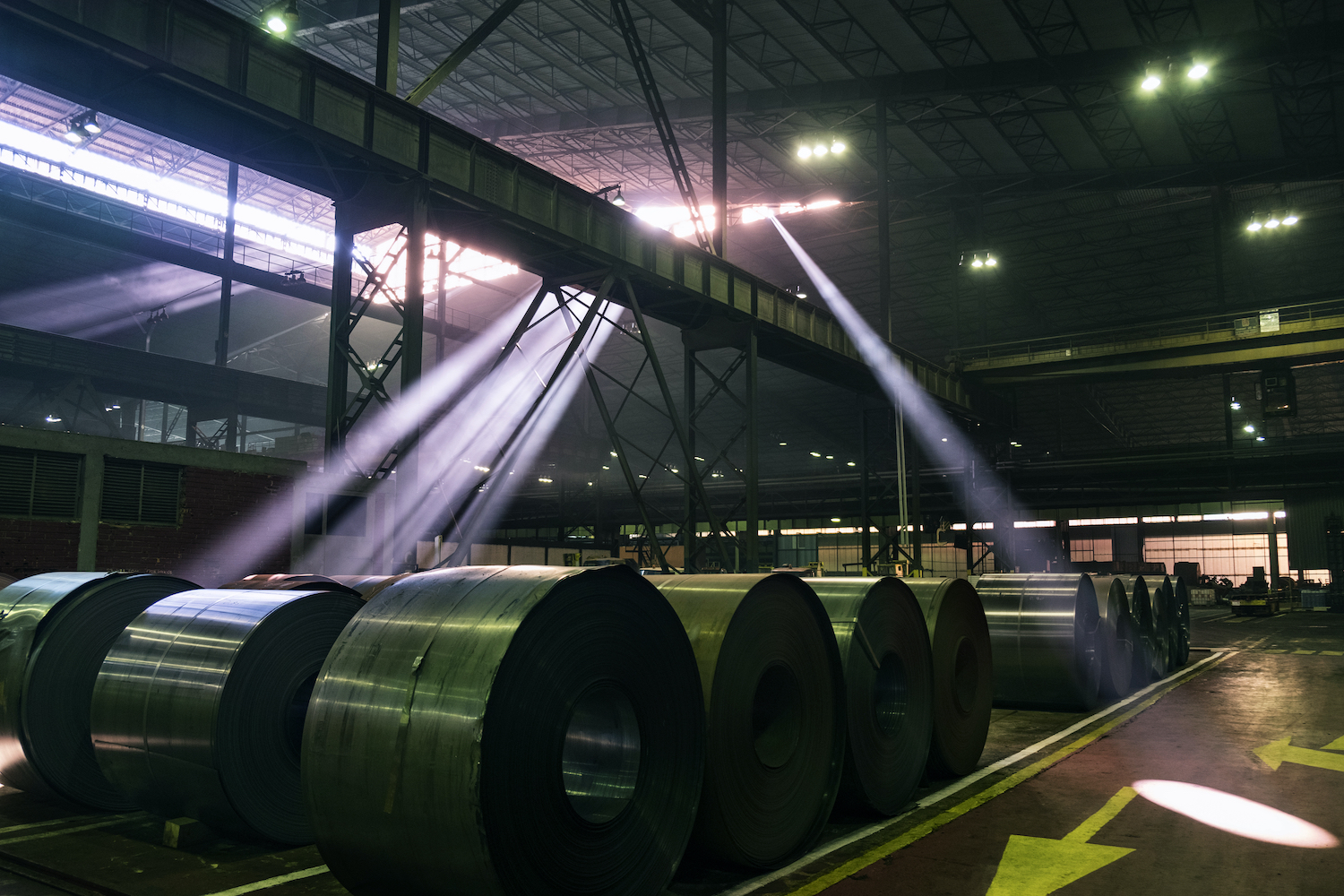
Worldsteel cuts its global steel demand outlook on Chinese slowdown
Global steel demand in 2021 was expected to increase 4.5%, lower than previously forecast due to China’s economic slowdown, the World Steel Association said Oct. 14 in its Short Range Outlook for 2021 and 2022.
China, which produces more than half the world’s crude steel, was forecast to close 2021 with demand down 1% to 985.1 million mt, compare with a previous outlook of 3% growth.
No growth in steel demand in China was expected in 2022, with the real estate sector remaining depressed in line with the government policy stance on rebalancing and environmental protection.
Meanwhile, steel demand outside China was expected to return to its pre-pandemic level in 2021, earlier than previously forecast thanks to the stronger economic recovery, with worldsteel increasing its reviewed forecast.
The world, excluding China, is expected to grow by 11.5% in 2021 to 870.3 million mt and up by 4.7% in 2022 to 911.3 million mt instead of the previously expected increase of 9.3% in 2021 to 849.1 million mt and rise of 4.7% in 2022 to 889.5 million mt.
“2021 has seen a stronger than expected recovery in steel demand, leading to upward revisions in our forecast across the board except for China,” Al Remeithi, Chairman of the worldsteel Economics Committee, said.
“Strong manufacturing activity bolstered by pent-up demand is the main contributor. The developed economies have outperformed our earlier expectations by a larger margin than the developing economies, reflecting the positive benefit of higher vaccination rates and government support measures. In the emerging economies, especially in Asia, the recovery momentum was interrupted by the resurgence of infections.”
In the developed economies, more targeted and localized lockdowns helped to minimize the impact of the latest infection waves on economic activities in 2021. However, supply chain bottlenecks and the lagging services sector were preventing a more robust recovery.
There was an expectation that by 2022 a reduction in supply chain bottlenecks, continued pent-up demand and rising business and consumer confidence, will strengthen the recovery momentum, the association said.
After falling 12.7% in 2020, steel demand will increase by 12.2% in 2021 and 4.3% in 2022, reaching its pre-pandemic level.
In the developing economies, excluding China, steel continued to recover in 2021, sustained by the recovery in commodity prices and international trade.
However, new COVID-19 waves combined with low vaccination levels and a slow recovery in international tourism restrained developing economies, but for next year, as vaccinations progress, conditions in the developing economies are expected to improve, worldsteel said.
— Annalisa Villa

Higher stainless price increases lift Outokumpu profit expectations
Stainless steel supplier Outokumpu confirms it is expecting third-quarter Ebitda to be above Q2. This exceeds previous expectations.
The supplier notes that stainless steel prices have “increased more than expected”. The company sees delivered volumes growing 8% on-quarter in Q3, with realised prices set to be higher than expected.
“Outokumpu had earlier expected its third-quarter adjusted Ebitda to be at a similar level compared to the second quarter of 2021 (Q2/21: EUR 223 million)”, the company explains.
According to Kallanish reference transaction prices, stainless steel HRC has jumped a further €800-1,000/tonne ($923-1,154) in Europe since June.
Emanuele Norsa Italy