

SSAB optimises transnational data flow
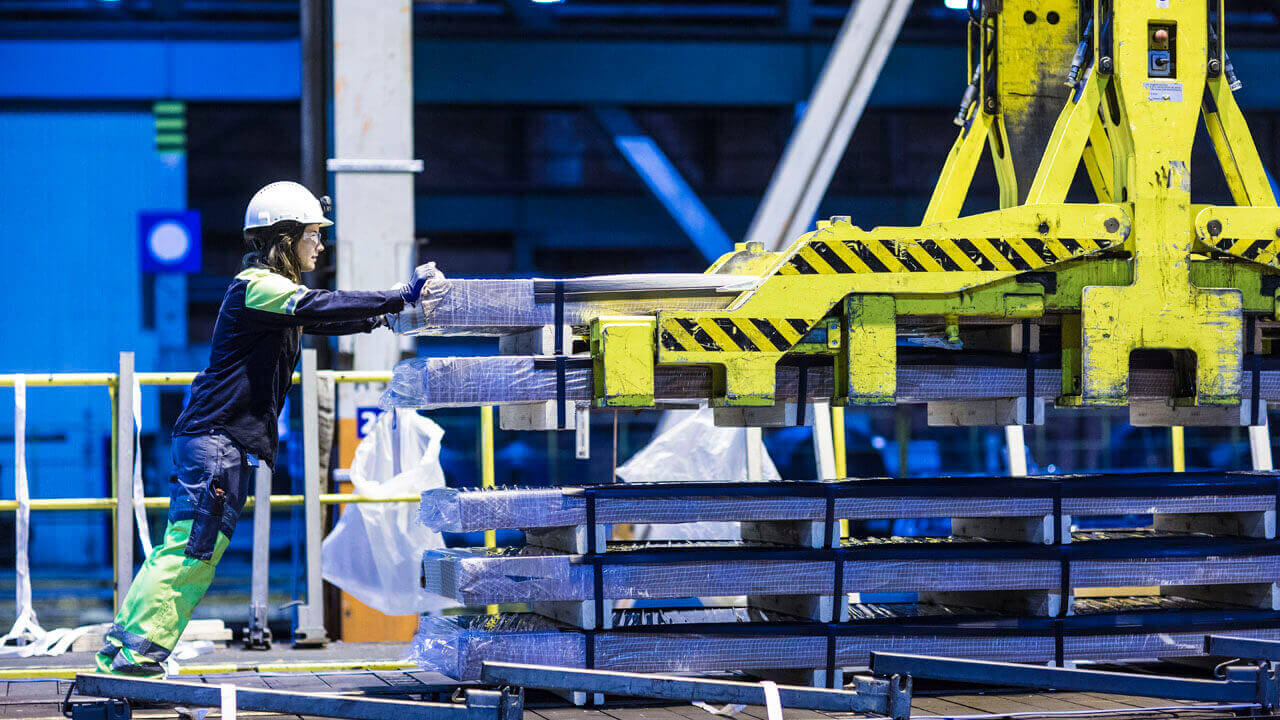
SSAB Europe has placed an order with SMS group covering the transnational networking of digital solutions for a stronger exchange between its four production sites in Finland and Sweden.
The steelmaker has signed a contract with SMS’ subunit SMS digital for the digitalisation of its production processes on the way to a “learning steelworks,“ the plantbuilder says. SSAB will thus benefit from an improved, holistic flow of information of all plant data across the four locations Luleå and Borlänge in Sweden as well as Raahe and Hämeenlinna in Finland, SMS states.
SMS DataFactory can be used as a data hub for seamless access to systems such as predictive plant monitoring, production planning as well as for quality and energy management, Kallanish learns from the plantbuilder.
By means of cloud technology, SMS will make available to SSAB the uniform, cross-plant data management system within the next two years. The heart of the solution is the SMS DataFactory which has been in use by several leading steel producers under the name SMS QuinLogic PDW. It will provide SSAB a holistic view of the production locations, combined with an intelligent exchange of multi-site findings, SMS explains.
Activities will start at the Hämeenlinna site in Finland, followed by Borlänge, Raahe and finally Luleå. For linking the locations with each other, the next step will be to set up the IT and cloud infrastructures.
Christian Koehl Germany


ArcelorMittal to expand Magnelis production in Spain
ArcelorMittal is evaluating the upgrade of its galvanizing line No.1 at its Avilés plant in Spain, Kallanish learns from the Asturian Government. The project foresees implementing technology for the manufacture of “Magnelis,” a unique product with a metallic coating protecting the steel against corrosion. ArcelorMittal already produces it at its galvanizing line No.2 since 2017.
“ArcelorMittal posted a request for environmental impact assessment and substantial modification of the industrial complex subject to integrated environmental authorization to adapt the galvanizing line No. 1 for the manufacture of a new galvanized steel product for industrial use, whose characteristic is a composition coating with a higher content of aluminium and magnesium, which improves its corrosion resistance,” says a note in the Asturian government’s official gazette, BOPA.
The planned investment follows the growing demand for this specific product from sectors such as construction, racking, electrical equipment, and HVAC, agriculture, civil engineering and solar energy.
Todor Kirkov Bulgaria
Aperam increases September alloy surcharges
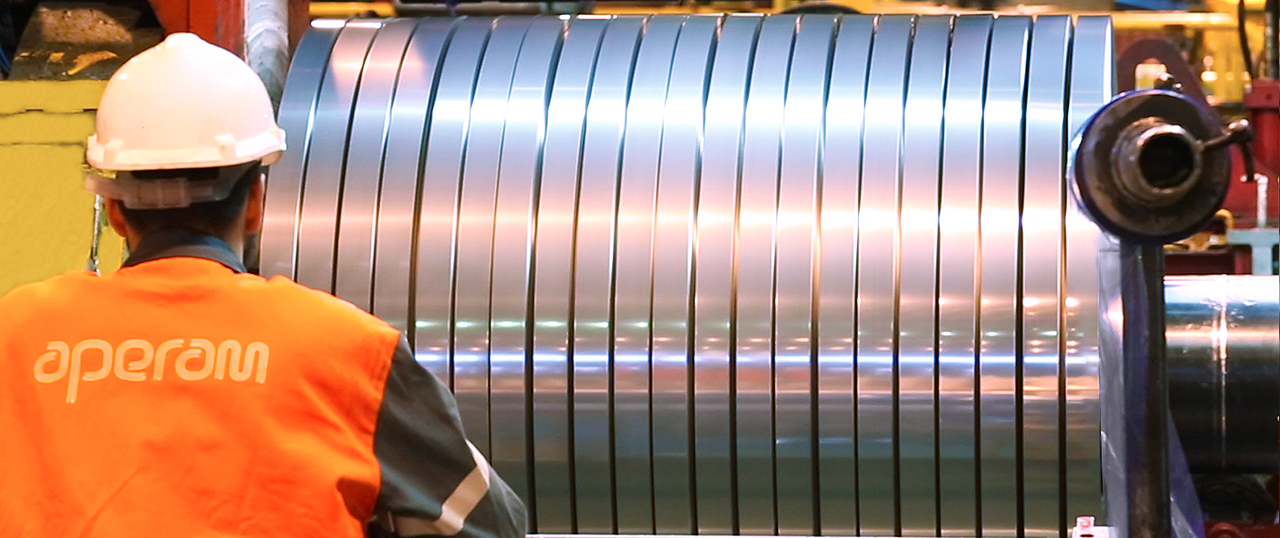
French stainless steel producer Aperam has increased September alloy surcharges for its austenitic range of flat stainless steels for Europe by over €100/tonne ($117) on average versus August, Kallanish learns from the company.
The surcharge for grade 304 (1.4301) has gone up significantly from €2,056/t this month to €2,159/t effective 1 September. For grade 316 it has increased from €3,167/t to €3,319/t. Grade 309S, a heat-resistant stainless steel used in high-temperature applications, has seen its surcharge hiked from €2,752/t to €2,912/t from 1 September. The surcharge for the most popular ferritic grade, 409, has also risen from €823/t to €833/t, the company reveals.
Offers for nickel cash buyers were at $18,611/t on 25 June and reached $19,225/t on 25 August, Kallanish notes.
Natalia Capra France
Semiconductors to reduce automotive output by 9m
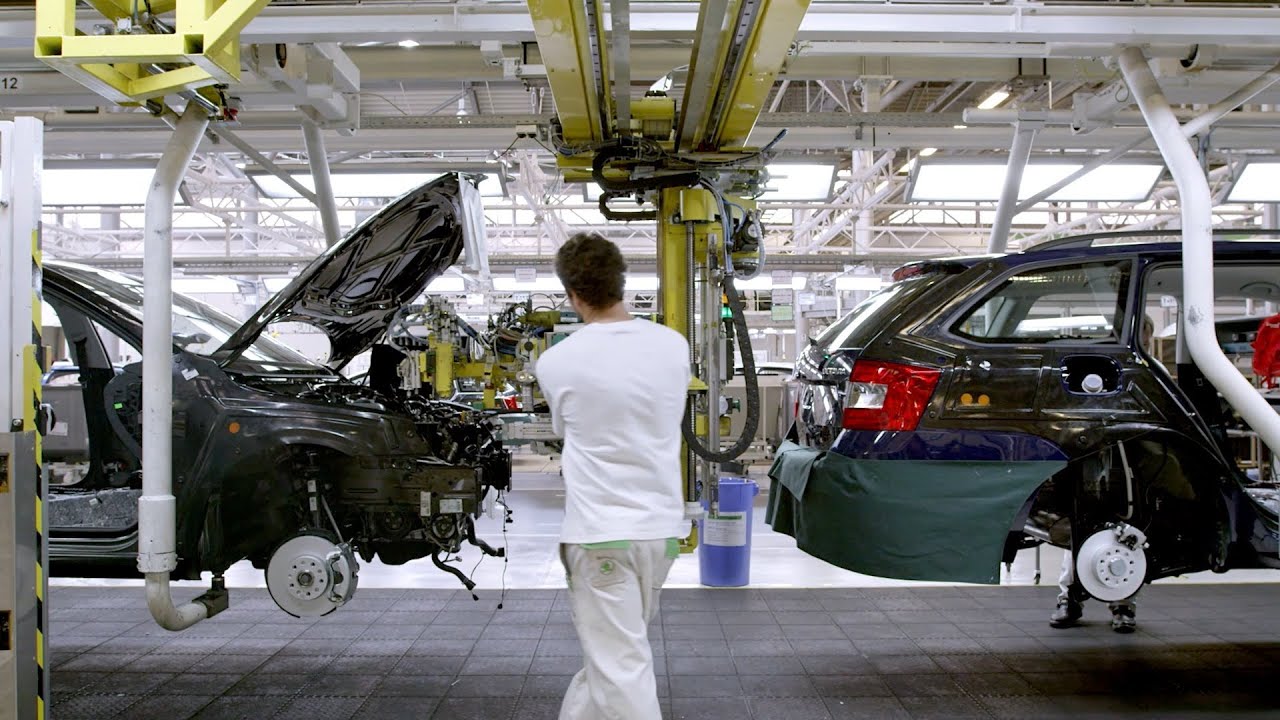
Almost 9 million fewer vehicles will be produced in 2021 due to the global shortage of semiconductors, according to a study by the Boston Consulting Group (BCG).
In the first quarter of 2021, the production losses of global automakers amounted to approximately 1.4 million units, Kallanish notes. Production fell the most in Europe by 428,990 vehicles, China by 364,774 and North America by 354,442 vehicles.
In the second quarter, production fell by another 2.6m units, with the most in North America – 866,924 units, Europe – 743,100 and China – 419,600.
The most significant losses of production in the first half of this year were suffered by automakers Ford with a drop of more than 700,000 vehicles, Stellantis with almost 600,000 units and Renault Nissan-Mitsubishi, with a drop of more than 415,000.
In the third and fourth quarters the fall will be from another 3-5m units, BCG observes.
“The shortage of chips in the global market arose as a result of the Covid-19 pandemic of a new type,” the consulting group says. “This provoked a significant increase in demand for household computers and intelligent medical equipment against the background of forced quarantine closures of car factories around the world and a drop in demand from automakers.”
The lifting of restrictions and the rapid recovery of production in the automotive industry coincided with the reorientation of chip manufacturers to consumer electronics and there was a shortage, according to BCG. “Shipments of chips are gradually resuming, but the pandemic continues to make its own adjustments.”
“A more active recovery in production in the third quarter is not due to the outbreak of the delta strain. We expect the supply of microchips to reach a level where it will be able to meet the demand of the industry, no earlier than the second half of 2022, ” claims BCG’s chairman in Russia and CIS Vladislav Butenko.
Svetoslav Abrossimov Bulgaria
UK’s July auto output falls 38% y-o-y amid semiconductor ‘pingdemic’
The UK’s auto manufacturing output fell 37.6% year on year in July amid the ongoing global shortage of semiconductor chips, the COVID-19 “pingdemic” creating staffing issues and summer shutdowns, the Society of Motor Manufacturers and Traders (SMMT) said on Aug. 26.
The sector manufactured 53,438 units in July, the lowest level for the month since 1956.
According to the SMMT data, auto production for the UK domestic market fell 38.7% on the year to 8,233 units in July, while manufacturing for export dropped 37.4% over the same period to 45,205 units.
The percentage of vehicles manufactured for export remained relatively static at 84.6%, compared with 84.3% in 2020, with SMMT saying that overseas buyers had “continued to be attracted to the wide range of high-quality cars made in Britain, including the latest alternatively-fueled models.”
Despite the low overall volume, the positive aspect was the higher percentage of electric vehicles manufactured in July.
Of the total vehicles produced in the month, 26% were either battery electric (BEV), plug in hybrid (PHEV) or hybrid electric (HEV), the highest share on record.
In the first seven months of the year, the UK manufactured 552,361 units, up 18.3% from the same period in 2020, with the latter being affected by the initial COVID-19 lockdowns.
However, SMMT said the seven-month volume was 28.7% lower than the same period on 2019.
It added that UK auto manufacturers had produced 126,757 EVs since the start of 2021.
Semiconductor shortage
SMMT CEO Mike Hawes said the July figures “lay bare the extremely tough conditions UK car manufacturers continue to face.”
He noted that, while the “pingdemic” impact was expected to decrease as self-isolation rules changed, the global shortage of semiconductors showed little signs of abating.
Ducker Research and Consulting managing director Abey Abraham told the International Magnesium Association’s 2021 Annual World Magnesium Virtual Conference on Aug. 24 that the semiconductor shortage was forecast to impact global automotive production through 2023, with the forecast for 2021 likely to be reduced further despite pent up demand.
“The UK automotive industry is doing what it can to keep production lines going, a testament to the adaptability of its workforce and manufacturing processes. The government can help by continuing the supportive COVID-19 measures currently in place and boosting our competitiveness with a reduction in energy levies and business rates for a sector that is strategically important in delivering net-zero [emissions],” Hawes said.
— Jacqueline Holman

Czech Liberty Ostrava sees steel product volume rising 47% in 2021
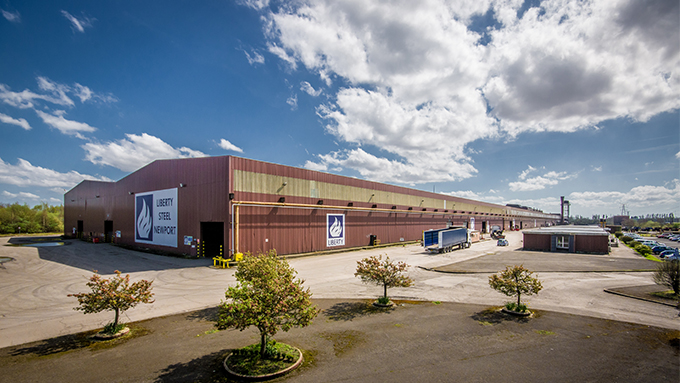
Czech steelmaker Liberty Ostrava, part of GFG Alliance, said Aug. 26 it expects to increase 2021 production 47% year on year following a four-year high in steel product volume shipped in the second quarter.
The company is in the process of increasing its production toward 2.5 million mt for the year, up from around 1.7 million mt in the COVID-19-impacted 2020, it said in a statement.
In the second quarter, its steel product volume was 684,000 mt shipped, up 12% from Q1, and its highest quarterly volume since 2017. The company is fully booked to run at full capacity, it said.
This volume increase meant Liberty Ostrava’s Q2 EBITDA increased 35% to Koruna 2.6 billion ($121 million), its best quarter since 2011.
“The continued improvement in the production performance has been underpinned by Liberty Ostrava´s flexibility, which allows it to switch its product mix between long and flat steel products depending on market dynamics,” the company said.
“This adaptability has meant the plant has been able to effectively maximize returns from the strong flats market over the last six months.”
Liberty Ostrava is an integrated steel business with an annual production capacity of about 3.6 million mt/year serving primarily construction, machinery, and oil and gas industries. The company is a domestic leader in the manufacture of road barriers and tubes. In addition to the Czech market, it supplies products to more than 40 countries.
— Gianluca Baratti
Turkish longs producers bemoan weak demand, high freight
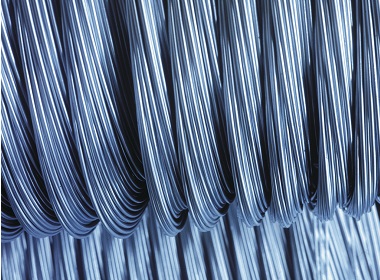
Turkish long steel producers have been forced to decrease their prices further after the expected demand recovery failed to materialise throughout August.
Mills’ rebar prices, which stood at $690-700/tonne fob a week ago, are now pegged at $680-690/t fob Turkey actual weight. Wire rod offers meanwhile decreased to $780-800/t fob and merchant bar quotes fell to $710-730/t fob. However, there are also offers at lower levels from some long steel producers depending on their production costs and utilisation levels.
A Turkish rebar producer tells Kallanish: “We have sold a small cargo to Israel this week, containing rebars and wire rods. That’s all. In a falling market, all buyers are halting purchases. In Asia, even as demand recovers, the biggest issue is the freight rates which have increased to $70-80/t from $45-50/t. On the other hand, India offers competitive prices in the region. The situation is becoming critical.”
A wire rod producer, who is more bullish, expects to see a revival in the market as of next week after the end of the summer holidays.
Although there are inquiries, albeit limited, Turkish long steel producers are seen having difficulties in converting them to sales. Consequently, they are trying not to pass up firm bids, even if they are at a lower price compared to their offers.
A merchant bar producer is heard to have accepted to sell angles at $685-690/t fob after offering the material at above $700/t fob.
“Scrap has to settle first,” says a producer. “When scrap prices continue to fall, buyers expect lower long steel prices and halt their purchases.”
Mills, however, are hoping to seen an improvement in rebar demand before initiating their scrap purchases (see separate story).
Demand for long steel products in Turkey’s domestic market, meanwhile, is not any different. The market is highly dependent on exchange rates and domestic buyers have no confidence in the market. A rebar mill sold at $660/t ex-works in the domestic market on Wednesday. Decreasing prices and the stronger lira are causing demand to come to a standstill.
Burcak Alpman Turkey
British Steel plans profile service centre at Skinningrove
British Steel will invest £26 million ($35.7m) into a new service centre at Skinningrove to process an extended range of value-added profiles for the forklift industry, the firm tells Kallanish.
The is the single largest investment for more than 30 years in its Special Profiles business and forms part of a £100m investment this year to improve the steelmaker’s manufacturing and environmental performance, it adds.
The new service centre will include cut-to-length lines, product milling, machining and warehousing operations. The advanced milling and machining capability will also mean the company can offer profiles with world-leading tolerances of just 0.1mm, British Steel says.
British Steel’s profiles are supplied globally to make components for a wide range of market sectors, such as the forklift and earthmoving industries. “Our investment means we’ll have world-class products manufactured to the tightest of tolerances,” says British Steel commercial director for special profiles David Waine. “It will enable us to explore new growth opportunities for our forklift mast products in Europe, North and South America, India and Asia. And although our primary product offering will be for forklift mast production, we expect to be able to expand this to include other product applications too.”
The steelmaker is seeing strong demand for its products, particularly those used in the mining and construction sectors as well as the demanding application of high-reach trucks.
“With the market growth and demands we’re anticipating, our investment is coming at just the right time,” Waine adds. “It will deliver new key capabilities that use technology nearly two decades more advanced than anything available anywhere in the world.”
Work on the new facilities will begin by year-end, with commissioning expected to start in August 2023.
The new Skinningrove facility will replace the services currently offered at the company’s site in Darlington, which stores and cuts profiles to customer requirements. This location change and processing capability expansion brings logistical, cost and environmental benefits, the firm concludes.
Adam Smith Germany

N. Europe HRC market lower, buyers uncertain about future pricing
North European hot-rolled coil prices were heard lower Aug. 25 as cheaper imports encroached on domestic steel territory, with foreign HRC prices heard at Eur975/mt CIF Antwerp and CRC imports heard at Eur1100/mt ex-works Ruhr. Sentiment has been mixed recently, with market participants uncertain of future pricing developments, sources told S&P Global Platts.
One source was expecting a greater HRC pricing split between north and south Europe, with imports much cheaper than domestic market prices.
“Can be seeing lower prices in the new year. There’s lots of uncertainty, I don’t know the demand viability over the next week,” a European mill source said. “All big customers have big order books, automotive demand is still good, but positions are taken away because of problems with suppliers, so some days there is no [auto] production.”
The market was also wary of other potential declarations about import duties, fueling the uncertainty. Ongoing logistical concerns, including a shortage of truck drivers and ships, added to the unwillingness among buyers to purchase material, with credit issues also a factor.
North European HRC prices were assessed down Eur5/mt to Eur1135/mt ex-works Ruhr and in Southern Europe prices were assessed stable at Eur1040/mt ex-works Italy.
— Amanda Flint
China slump slows global output growth in July
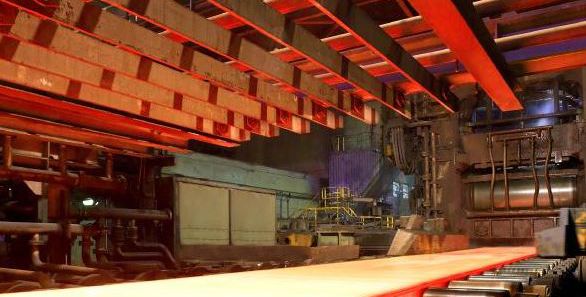
Crude steel production in the 64 countries reporting to the World Steel Association (worldsteel) grew 3.3% on-year in July to 161.7 million tonnes. Growth slowed considerably from previous months as Chinese production declined for the first time in 16 months, by 8.4% to 86.79mt, Kallanish notes.
Global output fell 4% from June.
Indian output nevertheless rose 13% on-year in July to 9.85mt, while Japanese and South Korean production grew 33% and 11% respectively to 8.01mt and 6.13mt. Vietnamese output surged 62% to 2.23mt.
EU27 crude steel production meanwhile rose 30% to 13mt, thanks to a 25% surge in German output to 3.02mt and estimated 29% growth in Italian production to 2.25mt. Output in France and Spain is meanwhile estimated to have risen 47% and 88% respectively to 1.34mt and 1.3mt.
Compared to June, however, EU output fell 2%.
The UK saw output rise an estimated 15% on-year in July to 675,000t.
Turkish production grew 2.5% to 3.23mt.
US production surged 38% to 7.48mt, rising for the fifth consecutive month, while Brazilian output rose 14.5% to 3.01mt.
CIS production grew 11% to 9.23mt, with Russian output estimated up 13% to 6.67mt and Ukrainian production confirmed up 7% to 1.88mt.
Global crude steel production in January-July thus grew 12.4% on-year to 1.17 billion tonnes, slowing from 14.4% growth after six months.
Adam Smith Germany