

Samuel expands auto steel processing presence in Mexico
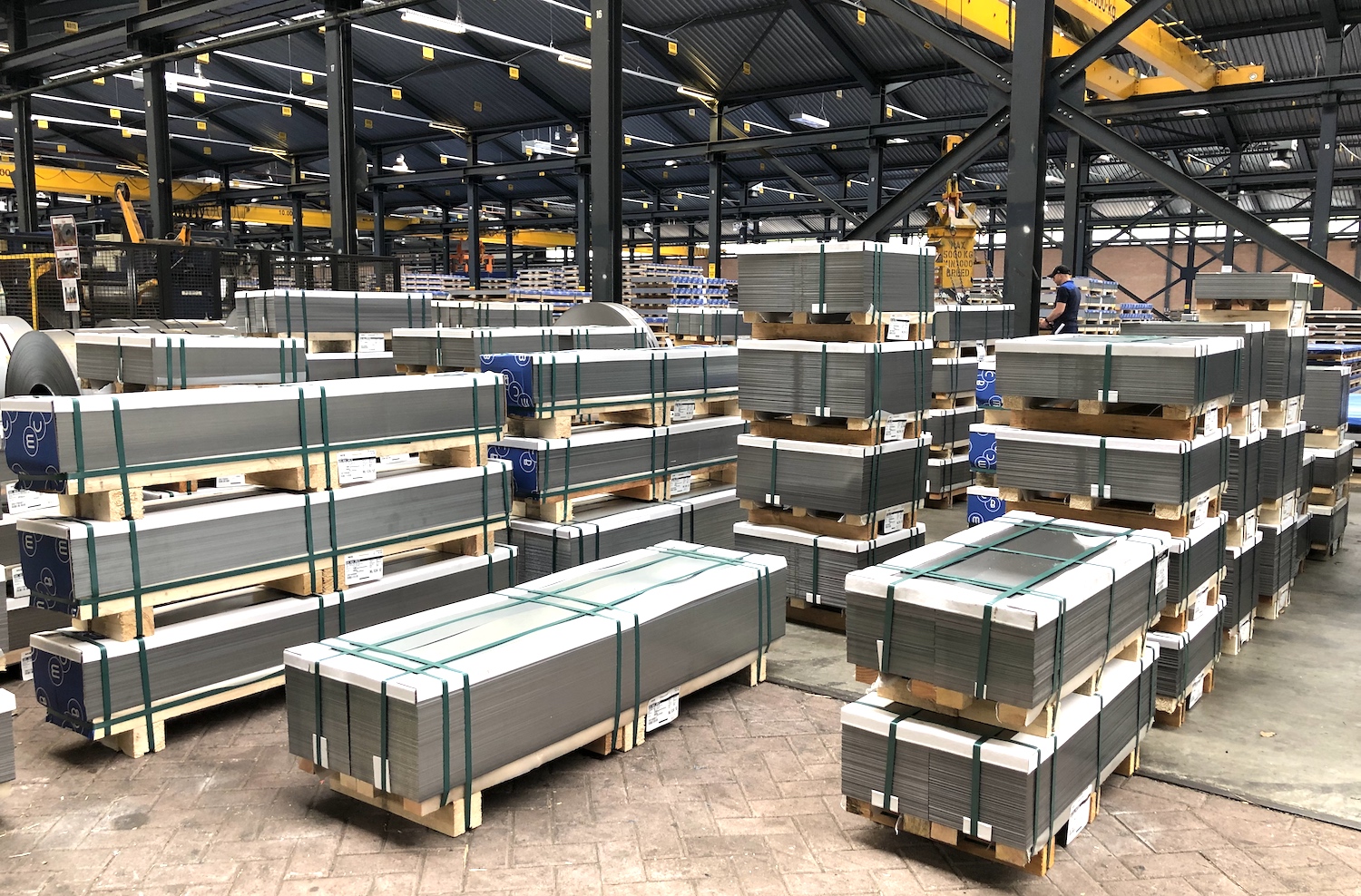
North American service centre chain Samuel, Son, & Co is opening a new auto-focused facility in Querétaro, Mexico, Kallanish learns from a company release.
Construction of the 140,000 square-foot facility will be done by year-end, and full production will be reached in January. Its output will complement Samuel’s existing facility in Monterrey.
“Over the last five years, Samuel has invested more than $150 million to extend the capacity and capabilities we offer to automotive OEMs and Tier One suppliers across North America,” says Samuel automotive vice president Luis Ponte. “The automotive industry is rapidly expanding in central Mexico, and we’re looking forward to being a part of it. Our investment in Querétaro will allow us to deliver a new level of support for the many expanding global automotive programs based in the region.”
Audi, Chrysler, Ford, General Motors, Toyota, Nissan, Mazda, Honda, and Volkswagen all have assembly plants in the region, according to North American Production Sharing Inc. Moreover, Steel Dynamics Inc’s new Sinton, Texas, plant is also targeting the Mexican automotive market.
Dan Hilliard USA

Sweden’s SSAB to deliver fossil-free steel to Mercedes-Benz
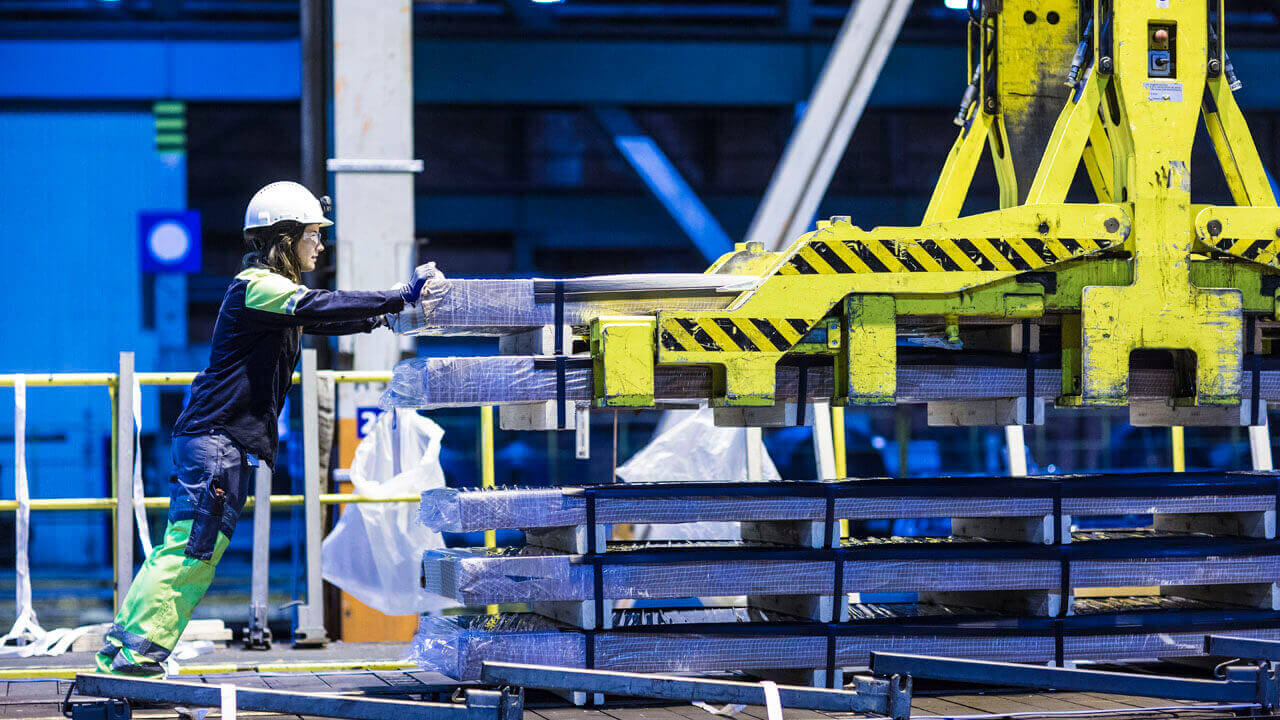
Luxury German carmaker Mercedes-Benz expects to produce the first prototype parts for its vehicles’ body shells made of Sweden’s specialty steelmaker SSAB fossil-free steel in 2022, part of the car manufacturer’s plan to achieve zero emissions across its entire value chain by 2039 at the latest, the company said Sept. 1.
“In 2026, SSAB [via the HYBRIT project] plans to supply the market with fossil-free steel at a commercial scale after the conversion of its Oxelösund blast furnaces to an electric arc furnace and by using HYBRIT technology, which replaces coking coal, traditionally needed for iron ore-based steelmaking, with fossil-free electricity and hydrogen,” the company said in a statement.
On Aug. 18, the HYBRIT project, whose stakeholders are Sweden’s specialty steelmaker SSAB, iron ore pellet producer LKAB and power producer Vattenfall, manufactured the world’s first fossil-free steel and delivered it to the Volvo Group.
“We are extremely happy to welcome Mercedes-Benz as a partner for fossil-free steel products,” said SSAB CEO Martin Lindqvist in a statement. “Together, we are building an entirely fossil-free value chain all the way to the end customer.”
In June, a HYBRIT pilot plant in Lulea, Sweden, produced the world’s first sponge iron reduced using fossil-free hydrogen gas. The successful completion of tests proved it was possible to use fossil-free hydrogen gas to reduce iron ore instead of using coal and coke to remove the oxygen, it said at the time.
In July, SSAB said its green hydrogen pilot plant successfully produced 100 mt of iron in initial output since starting in the second quarter and prototype steel to be delivered this year for vehicles. The company, at the time, said it was considering fast-tracking its Lulea blast furnace-based steelworks to be carbon emissions free, ahead of plans by ArcelorMittal to offer hydrogen-based steel.
— Filip Warwick


India sells 120,000 mt of HRC to Turkey in a month with competitive prices
The gap between domestic mills’ and imported hot-rolled coil prices has remained wide in Turkey, despite recent declines seen in domestic mill offer prices, Turkish buyers have focused on cheaper imports in recent months.
According to the latest monthly Turkish Statistical Institute data observed by Platts, Indian mills, which were not traditionally one of Turkey’s HRC suppliers, sold significant HRC tonnages to Turkey with competitive prices again in July.
Turkish buyers imported 120,000 mt of HRC from India in July, although no HRC cargo was imported from India in the same month the previous year.
Turkish buyers’ imports of HRC from CIS countries, which are traditionally Turkey’s largest HRC suppliers, also remained strong year on year in July, the latest TUIK data showed.
HRC imports from Russia reached 167,400 mt in that month, stable on year, while imports from Ukraine jumped on year to 50,100 mt, more than double on year.
Turkish buyers’ imports from Asian suppliers also rose in July. Turkish buyers’ HRC imports from Japan reached 60,500 mt in that month, sharply up from 14,200 mt imported from that country in the same month the previous year, while imports from South Korea roughly tripled on year to 34,100 mt. Turkish buyers also imported 27,100 mt of HRC from China in July.
HRC imports from one of Turkey’s traditional European suppliers, France, totaled 18,600 mt in July, sharply down from 71,800 mt imported in July 2020, while Turkish buyers HRC imports from other European suppliers remained notably low year on year.
Turkey’s overall HRC imports thus totaled 524,500 mt in July, higher than 439,800 mt imported in the same month the previous year, Platts observed from the latest TUIK data.
— Cenk Can
Steel export duty extensions unlikely, says Russian official
The Russian Ministry of Industry and Trade sees no prerequisites for extending export duties on metals into 2022, it confirms to Kallanish.
Russia has temporarily imposed an export duty on steel and some other metals of 15% from 1 August to 31 December, for a minimum rate of $54/tonne for HBI and $115/t for most steel products (see Kallanish passim). This will be valid only for supplies outside the Eurasian Economic Union (EAEU).
Earlier, the country implemented a ferrous scrap export duty increase from €45/t to €70/t ($85/t) until the end of the year.
“Today, I do not see any prerequisites for this [duty extension], because prices in the ferrous and nonferrous metallurgy sector have begun to decline and the market has started to cool down,” says deputy industry minister Viktor Yevtukhov. “There are no prerequisites, but how the economy will develop, we cannot now predict anything, not even how the Covid-19 pandemic will behave. It seems that everything is not bad.”
“For some items, prices on the external market are already lower than ours, but we are always late; for 1.5-2 months a price gap always occurs in the growth of prices and in their reduction,” he adds.
However, unlike non-ferrous and ferrous metallurgy products, prices for ferrous scrap on the Russian market are not falling, the deputy minister observes. “This is due to the significant demand both in the domestic and foreign markets,” he comments. “If we see that the price is growing and there is not enough scrap, then I do not exclude that we can offer a temporary ban for some period.”
Earlier, the Russian Steel Association said the introduction of additional duties on steel and non-ferrous metals carries serious risks for steelmakers (see Kallanish passim). Russian steelmaker MMK estimated it may lose around $150 million due to the export duties. Severstal expects to lose $250m.
The Russian Association of Electrometallurgical Enterprises (AEMP) had asked Russian authorities to postpone the introduction of additional duties, but without success.
As for Russian stainless steel exports, the additional duties will impact only a fraction, since most of them are delivered to EAEU countries, according to national special steel association USSA.
Svetoslav Abrossimov Bulgaria

KALTENBACH.SOLUTIONS joins EUROMETAL as Associate Member
Kaltenbach.Solutions GmbH will become an associate member of Eurometal as of September 2021.
KALTENBACH.SOLUTIONS is an international company and strives for long-term cooperation with companies in the steel stockholding and processing industries. As a full-service provider with decades of experience in engineering, KALTENBACH.SOLUTIONS has succeeded in connecting the world of steel with the digital world. It’s unique strategies guarantee customers their measurable success and create sustainable added value.
KALTENBACH.SOLUTIONS develops and provides innovative web- and AI-based industry solutions to increase performance in the field of operations. Implementation is simple and inexpensive, as there are no costs for project management or employee training. Within a short time, our customers receive scientifically sound data which is used to calculate their performance potentials and to answer strategic questions.

US adjusts Buy America requirements
The US government is tweaking its definitions for Department of Defense Buy America requirements, Kallanish learns from a note in the Federal Register.
The definitions at issue are “domestic end product” and “domestic construction material.”
Domestic end products will now be excluded unless the “end product is manufactured in the United States, and the cost of iron and steel not produced in the United States, or a qualifying country, constitutes less than 5% of the cost of all the materials used in the end product.”
Domestic construction material will also now carry the “less than 5%” qualifier.
The Department of Defense is already operating under a 50% domestic material requirement unless “the offered price of material of domestic origin is unreasonable or inconsistent with public interest.”
The changes were made at a historic time for US steel pricing. Hot-rolled coil is within spitting distance of $2,000/short ton – or a dollar per pound – and rebar is close to cresting $1,000/st.
Dan Hilliard USA
Majestic to open service center at Nucor Hickman in Arkansas
Majestic Steel plans to open a new service center and processing facility on the Nucor Hickman campus in Arkansas to better serve customers in central and southern regions of the US, Majestic said in a statement on Aug. 30.
“The on-campus site will provide close proximity to production and Nucor’s new galvanized line currently under construction; creating greater supply chain optimization, operational efficiencies, and inevitably shorter lead times for customers in the area,” the company said.
The new 515,000-square-foot facility is expected to be fully operational by the end of 2022, Majestic said.
During the company’s second quarter conference call in July, Nucor CFO James Frias said the installation of the new galvanizing line at the Hickman sheet mill remained on schedule to come online at the end of 2021.
— Justine Coyne

Emirates Steel signs with Tata Consulting Engineers for new flat steel plant
Emirates Steel, the leading integrated steel mill in the Middle East, signed a “general designer” contract with Tata Consulting Engineers, Abu Dhabi, for its new fully automated first-of-its-kind hot-rolled coil (HRC) mill in the MENA region. The agreement aims to conduct a comprehensive evaluation and study all phases of the project, S&P Global Platts learned from a Emirates Steel statement.
The agreement, which lasts for 10 months, intends to evaluate and analyze all phases of the project, discuss logistics and environmental issues, define the state-of-the-art technical and solutions, and determine budgets and business cases, among others, the company said.
“A major developmental project, such as our new flat steel plant, necessitates having an accurate and intense study for all aspects of the project. This is extremely important for our growth plans which aim to promote our position as a leading integrated steel manufacturer across the MENA region and drive our vision to be among the top global steel producers,” said Saeed Ghumran Al Remeithi, CEO of Emirates Steel.
Emirates Steel recently announced its plans to construct its new flat steel products plant, expanding its wide-range high-quality products portfolio.
Upon completion, the new plant is set to boost Emirates Steel’s production capacity to exceed 5 million mt per year.
“Thanks to the latest technologies, the new plant will have the lowest carbon footprint in the region,” Emirates Steel noted.
Abu Dhabi National Energy Company PJSC (TAQA), one of the largest listed integrated utilities in the region, announced a partnership with Emirates Steel on Aug. 3, to develop a large-scale green hydrogen project enabling the first green steel produced in MENA region, as Platts has previously reported.
— Cenk Can

Indian, Russian coil offers weigh on EU market
Over recent weeks European traders and sources have confirmed that their domestic market has received competitive hot rolled coil offers mainly from Russia and India.
Sources say Indian suppliers are heard to be offering October HRC shipments at somewhat below €900/tonne ($1,061) cfr southern Europe, Kallanish notes.
Buyers are likely to calculate the need to pay the 25% safeguard measure on top of this price by the time the material reaches Europe, but these offers are nevertheless attracting some interest. Indian HRC quotas were exhausted rapidly in July and the same is expected to happen in early October as new quotas become available.
Even more competitive at the moment seem to be Russian offers. A trader says one mill was offering HRC at €900/t cfr southern Europe for October-November shipment from northern Russia, to which the anti-dumping duty will need to be added.
“Even with the existing AD duties on Russian HRC added, most of the mills are competitive in today’s market,” the trader opines. “Russian suppliers are currently hungry for orders as the new export taxes imposed by the local government have significantly reduced their order books. We calculated, nevertheless, that after paying the export taxes, Russian mills are still making a potential $300/t profit on HRC sales.”
Emanuele Norsa Italy
German steel production recovery remains hesitant
In spite of the overall increase in output versus the first period of lockdown in 2020, crude steel production at German mills went down for the second successive month. In July, it came to 3 million tonnes, after 3.4mt in June and 3.7mt in May, according to steel federation WV Stahl figures.
This short-term trend is only partly explained by the summer slowdown. In the comparable year 2019, the dip from June to July was less steep, from 3.4mt to 3.2mt, Kallanish observes. One big factor this year will be the reline of thyssenkrupp’s blast furnace No 1, which takes out a good 200,000 t/month of output.
In the year-on-year comparison with 2020, July production went up by 25%. Since the start of the year, production has totalled 23.6mt, an increase of 19% year-on-year. On an annualised basis for 2021, this would result in 40.5mt and thus remain below the pre-crisis year 2018 level of 42.4mt, WV Stahl notes.
Christian Koehl Germany