

French longs prices may increase on pricey scrap
French rebar and other long steel prices are seen increasing this month by €10-15/tonne ($11-17), in line with increasing scrap values in the country, sources tell Kallanish.
Sales activity, like in all other European countries, however, is plodding along due to the holiday season across the continent and, specifically, in importers of French longs such as the Benelux and Germany. Distribution and end users are seen going back to purchasing in the coming days for September delivery before mills shut down for the August summer break.
Some import sales from Spanish and Italian producers have been reported over the past few days. Their prices are in line with domestic values as rebar makers in these countries are also keeping their values at high levels.
So far, domestic rebar is sold in France at €740-760/t ex-works. This includes €260-270/t size extras. Buyers in the south add between €40-50/t of transport to have material delivered from the north of the country.
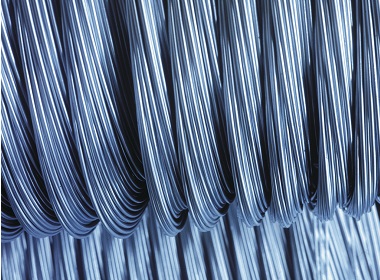
Meanwhile, strong demand is reported for drawing- and mesh-quality wire rod, for which some tonnages have been taken out of the market due to the fire at the Thy-Marcinelle plant in Belgium (see Kallanish passim). Prices for drawing-quality wire rod in northern European countries are stable month-on-month at €900/t ex-works, and €30-50/t less in Italy.
In France and the Benelux area scrap prices are increasing by €15/t on average for the high grades.
Natalia Capra France


Mills eye $2,000/st hot-rolled in US
Eye-popping US sheet numbers are still holding strong – and they may indeed continue to rise for the foreseeable future, Kallanish hears from market sources.
On Monday, Kallanish put hot-rolled at $1,800-1,820/short ton, with cold-rolled at $2,000-2,050/st. All prices are ex-works, domestic mill.
By the end of the year, domestic producers would like to see hot-rolled at the $2,000/st mark, several market sources said.
It’s “always probable” that mills will shoot for the moon in a positive pricing environment, says a Midwest service centre buyer.
A West Coast buyer says the $2,000/st figure is “within [the mills’] crosshairs, and $1,800/st is now a firm floor. Import pressure remains minimal, though some cold-rolled and coated material is now coming from overseas, he says.
A Gulf Coast tube trader says the continued run-up in skelp pricing is having a trickle-down effect on the troubled energy tubulars market.
“Hot-rolled keeps rising, making it even harder than yesterday to buy,” he says.
Dan Hilliard USA
Some higher HRC offers emerge in northwest Europe
While opportunities to buy coil in Europe in the second half-year remain scarce, some offers seem to be in the offing, at slightly higher prices than the latest peak reached in June.
Two weeks ago, the market leader mill group came out with another price push for hot rolled coil to €1,200/tonne ($1,421). New offers now, apparently from other western European mills, are said to be at €1,240-1,250/t, Kallanish learns from one market player. These offers are not yet widely heard on the market, as most players keep bemoaning an absolute absence of any offers all, not even at June’s price.
The new offers come from mills “from Sweden to Italy”, the one source says without getting more precise. Some came in last week, and some are not even official yet, “and will be announced only next week once volumes are defined”, he says, pointing at wide differences between mills in their allocation planning.
In fact, while many mills reject any orders for this year, those new opportunities would be for delivery between October and December. Apparently, only HRC has a new price attached, while newly released volumes of cold-rolled and galv remain at June’s price target of €1,350.
Christian Koehl Germany
Competitive HRC import offers reach Europe, market uncertain
In recent weeks some competitive hot rolled coil import offers have surfaced in the European market, serving to increase the uncertainty already in the market, Kallanish learns from sources.
Indian suppliers have over-used tax-free import allocations, but their offers in some cases continue to be competitive even with the 25% tariff added. Traders report offers from India at as low as €880/t ($1,042) cfr southern Europe, to which the safeguard tax would be added.
“Some competitive prices in the market keep being heard, but the reduction in offers has triggered buyers to enter into a wait-and-see mood,” a trader notes.
Another trader hears offers from Japan at some €1,050/t cfr southern Europe for HRC. Turkish suppliers meanwhile are reported this week quoting at some €960-1,000/t cfr, inclusive of anti-dumping duties. “We heard of a Turkish supplier offering at €990/t cfr southern Europe, but these offers could soon be off the market as soon as Chinese authorities limit HRC exports,” a trader comments.
Emanuele Norsa Italy
EU long steel prices remain firm, July scrap contracts continue to climb
July ferrous scrap prices across Europe rose sharply for the third consecutive month to new record index highs, as strong demand for premium ferrous scrap grades continued to support prices, market participants said.
Shredded scrap contracts for July settlements were largely heard ranging from Eur440-Eur460/mt delivered to the mill in Northern Europe, although some sources cited workable levels as high as Eur475/mt delivered.
In Northern Europe, Platts’ June assessment for domestic shredded scrap was at a record high of Eur432.50/mt delivered.
Across most grades, market sources cited a rollover from June prices to Eur10/mt up on the month. However, one German supplier had noted that “two German mills have increased prices by Eur50/mt for new cuttings,” highlighting the strong demand for higher quality scrap grades.
Material feed into shredders was reported to be tight, allowing for a continued higher premium for shredded scrap prices over heavy melting scrap grades. Supply was not a concern for heavy melting scrap grades, with substantial volumes sold into the deepsea export market and Turkey the main buyer.
Steelmaker sources lamented the fact that it remains difficult to find raw materials and said that most prices had increased for the scrap monthly contracts by around Eur10/mt on the month. However, they added that they were managing well to make a margin amid a strong finished steel market.
Finished steel prices firm
Platts assessed Northwest European hot-rolled coil down Eur3/mt to Eur1,178/mt July 8 ($1,394.93/mt) ex-works Ruhr, but prices were still firm at multiyear highs. Flat steel buyers held back from buying, with imports more desirable because of lower prices and similar lead times to domestic sellers.
Long steel market sentiment also remained strong. Northern European customers were only buying rebar as per their requirements ahead of the summer holidays, sources told Platts.
“Rebar supply is good, but I am not doing long-term contracts because it’s too dangerous,” one Benelux-based distributor source told Platts. “I am only selling [to end-users] what is immediately available with mills.”
The distributor also noted that with incoming Russian export duties on finished steel, prices for rebar might move higher, with any downward price correction not expected until September.
“The extension of the safeguard is a positive factor,” one European mill source said. “I also heard that Turkish rebar quota is already full for the third and fourth quarters but it’s not anything unusual. It is not that the market got flooded. It happens every quarter.”
About 3,409 mt, or 5.5%, of the total July-September quota of 61,938 mt for Turkish-origin rebar imports into the EU, which became active July 1, remained available. 68 mt was awaiting allocation as of 6 pm London time on July 8.
Riva fire impact limited
In late June, Belgian long steel producer Riva Thy-Marcinelle had halted production for two weeks following a fire at its Charleroi mill, sources said June 23. Riva was heard to have reassured its clients in a letter in which it said that the mill could deliver from stocks and that they were planning to restart production very soon.
The mill had restarted production during the week ended July 2, market sources said, noting that Riva’s absence had a limited impact on rebar pricing.
Another distributor source in the Benelux region reported that dealings with Riva were back to normal but the mill will be undergoing summer maintenance in the near-term.
“The demand will stay but deliveries will be postponed till after summer. This happens every year, so it is not significant,” he said and cited a deal value for 150 mt of rebar at Eur825/mt delivered.
Rebar offers into Western and Central Europe, including Germany, were at Eur915-Eur920/mt delivered, while one seller source noted indicative mill offers for domestic rebar in Northwest Europe around Eur850-Eur920/mt delivered.
“If we look at the fundamentals in Europe, there is still a large demand of steel, while steelmaker production is now limited following all the production cuts, and on top of that, Far East market prices are moving up so I am confident prices will continue to be strong,” a European long steel buyer said.
Platts assessed TSI Northwest Europe Rebar at Eur830/mt ex-works July 2, up Eur40/mt since June 4, when the index stood at Eur790/mt delivered.
Eurozone construction companies signaled stronger optimism regarding the year-ahead outlook for activity, the strongest since June 2019, according to the latest IHS Markit Eurozone Construction PMI. IHS Markit is subject to a merger with S&P Global pending regulatory approval.
The IHS Markit Eurozone Construction Total Activity Index was unchanged on the month at 50.3 in June, “indicating a marginal expansion in construction activity, which means that Eurozone construction activity has expanded in each of the latest four months.” An index figure below 50 suggests a fall in activity month on month.
Southern European shredded scrap also hikes
In Spain and Italy, prices remained firmly above the Northern European market, with E40 shredded scrap heard at Eur460/mt delivered to the mill in Spain and at Eur470-475/mt delivered to the mill in Italy, although some sell-side sources cited shredded scrap prices as high as Eur520/mt delivered in Italy.
Platts’ assessment for Southern European shredded scrap was at Eur447.50/mt delivered for June contracts.
Platts assessed South Europe export rebar at Eur715/mt FOB July 2, down Eur5/mt on the week, but remaining at multiyear highs.
Turkish deepsea import ferrous scrap prices have remained largely rangebound between $495-$509/mt since the beginning of June. Platts assessed Turkish imports of premium heavy melting scrap 1/2 (80:20) July 8 at $495/mt CFR, down $3/mt on the week.
— Viral Shah, Rabia Arif, Annalisa Villa

European HRC demand still steady as panic buying leaves market
European hot-rolled coil prices were heard slightly lower July 8 as buyers waited to determine the viability of future pricing, with imports more desirable because of lower prices and similar lead times to domestic sellers, sources told S&P Global Platts.
Market participants warned that although cheaper imports were available, there would be risks with clearing material on time.
“Indian HRC material will incur a duty — even if imports are cheaper, you never know what you’ll need to pay in the end. If you miss the initial day of bringing material into Europe, you will pay 25% duty,” a Benelux service center source said.
Domestic lead times continue to be lengthy, with spot transactions not guaranteed delivery before November-December, whereas some imports could be delivered as soon as late October.
HRC import prices from the Far East were heard between Eur1,050-1,090/mt CIF Antwerp.
In the Italian market, there was mixed sentiment on pricing, with some sources quoting varying HRC prices in the range of Eur1,090-1,150/mt ex-works Italy.
One Italy mill source said although import prices were almost Eur200/mt cheaper than local suppliers, he did not see why prices would go down.
“There is no panic anymore, but demand is still constant and present on a daily basis,” the mill source said. “Buyers will try to purchase imports as much as possible, knowing the limited quotas available.”
An Italy-based trader also agreed that demand was good, despite there being no more panic among customers.
“Market is doubtful in which direction it will go. Service centers are trying to postpone purchases and they reduce a bit their selling prices,” the trader said. “Their margins are so big that they can lose a few euros.”
Prices were still heard to be firm, with EU mills unlikely to reduce their prices because of long delivery times and a keen transition toward boosting investment in carbon-free steel.
— Amanda Flint
Beltrame Romania to build eco-friendly longs mill
Merchant bar maker Beltrame will build an eco-friendly rebar and wire rod mill in Romania that will significantly cut greenhouse gases and suspended dust particle emissions. The facility will be built around the concept of a circular economy, minimising waste and water consumption through a treatment and recirculation system.
Kallanish learns from the company that the greenfield investment will be around €300 million ($354). A feasibility study is under way for the rolling mill, which will include a 100MW photovoltaic park.
The new facility will have a yearly production capacity of approximately 600,000 tonnes of rebar and wire rod, generating 250 new direct jobs locally and almost 1,000 indirect jobs.
“The challenge of the steel industry is to align with the environmental objectives set by the EU Green Deal, although the zero-emission or ‘green steel’ target is impossible to be achieved with existing technology,” says AFV Beltrame country manager in France and Romania Carlo Beltrame.
“I think today greenwashing is very common, with the simple result of inflating the word ‘green’ and/or zero-emission. The project developed by Beltrame Group will establish unprecedented progress in the steel industry due to the design and innovative technologies, which make it possible to minimise pollutant emissions generated during production activity,” he continues. “Through this investment, the group shows its commitment to achieving environmental goals and harnessing local resources.”
The new plant will boost domestic production, improving the country’s trade balance. The Romanian construction sector’s rebar and wire rod consumption is expected to increase over the next decade thanks to private and public investments in the country’s infrastructure. Current consumption from the construction industry is between 1.4-1.5 million tonnes/year. Romania is a net rebar importer.
Beltrame owns the bar and speciality steel Donalam Călărași plant. This supplies hot-rolled bars for use in oil & gas, agricultural machinery and equipment, large mechanical equipment and hydraulic equipment.
This year, Donalam is expected to double its turnover compared to 2019, reaching €130 million ($153.4m). The company sells about 120,000t of steel bars annually.
Natalia Capra France
Mechel-Service increases first-half shipments
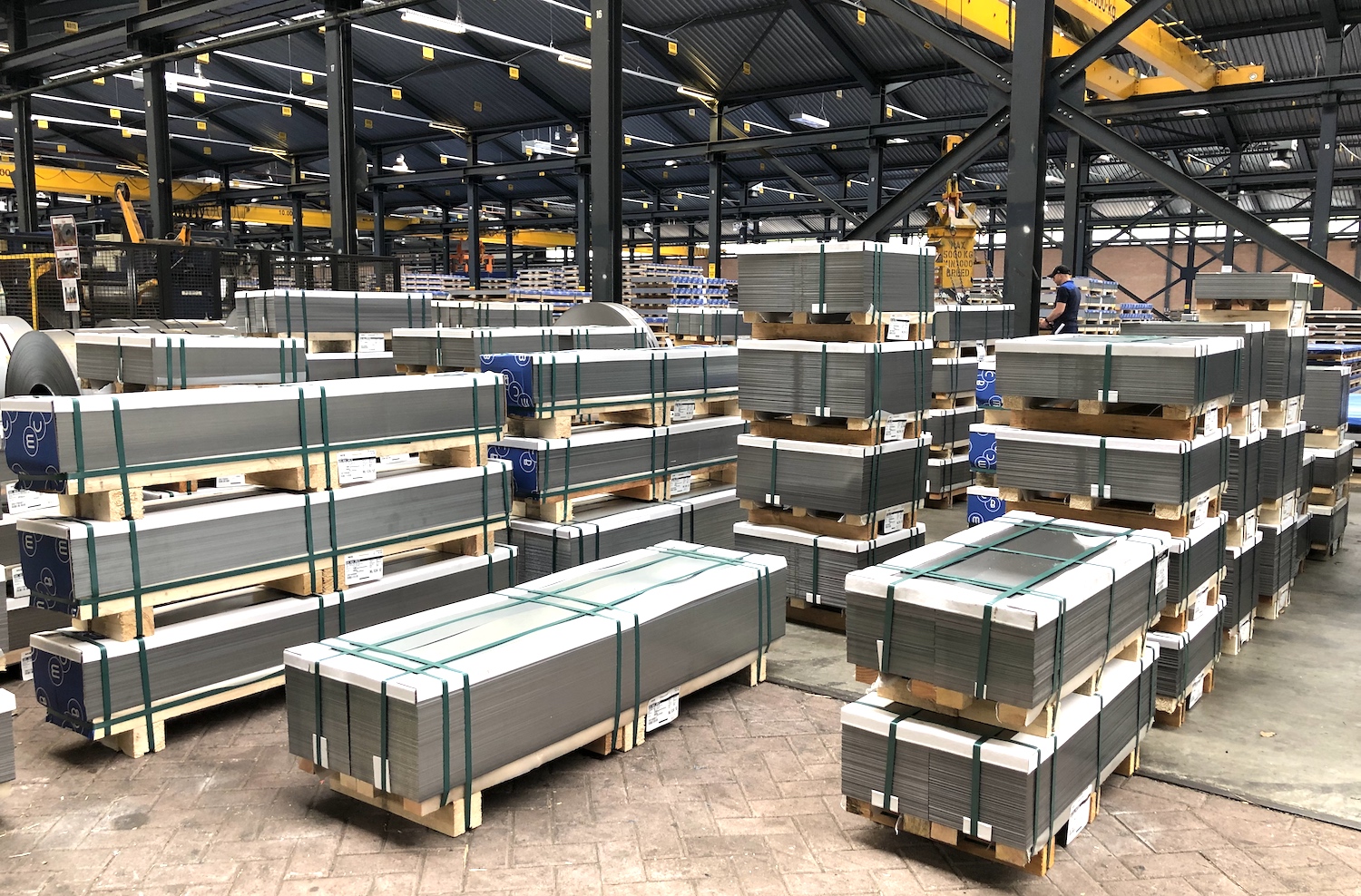
Mechel’s trading arm, Mechel-Service, posted a 10% on-year increase in shipments in the first half of 2021 to 797,000 tonnes, the company says.
Sales of hardware products grew by 135%, structural shapes by 44%, beams by 36%, and reinforcement and wire by 4% and 27%, respectively.
“This year we plan to increase our presence in the hardware and wire rope market and expect to continue creating sub-sorting warehouses in the regions, equipping covered hardware warehouses,” says Mechel-Service general director Leonid Polyansky. “We will continue our work to consolidate our share in the beam … market.”
Earlier, Mechel-Service supplied 5,000t of steel for the construction of an ice palace in the Russian city of Omsk (see Kallanish passim). It also supplied steel for the construction of the Kontinental Hockey League (KHL) Avangard hockey academy in Omsk.
Mechel-Service posted a 4% on-year increase in shipments in 2020 to 1.52 million tonnes despite the impact of the Covid-19 pandemic. The company continued to supply large infrastructure projects in Moscow, housing construction, construction of bridges and sports facilities.
Parent company Mechel saw first-quarter sales of long products fall 7% on-quarter and 13% on-year to 564,000t. Despite lower sales and output, revenue rose 10% on-quarter and 13% on-year to RUB 76.1 billion ($1.04 billion), while profitability rose to 24%.
Svetoslav Abrossimov Bulgaria
European Commission slightly reduces Turkish HRC anti-dumping duties
The European Commission has issued the confirmation of definitive anti-dumping measures against EU imports of Turkish hot rolled coil. Duties have been slightly reduced from the provisional measures implemented in January.
Definitive duties are now imposed at a level of 4.7-7.3%, depending on the source; provisional measures had been set at 4.8-7.6%, Kallanish notes.
The biggest reduction was applied to Erdemir, for which duty is now set at 5%, against a level of 5.4% set in the provisional decision.
Despite the relatively low level of duties imposed, the effect of the AD measures has already impacted trade of HRC from Turkey to Europe. According to Eurofer data, this year Turkish suppliers are set to import some 1.5 million tonnes of HRC into Europe, 1.2mt less than in 2019. Overall HRC imports from all non-EU sources could reach a new record level of 8.7mt in 2021, above the recent peak registered in 2018 at 8.5mt.
Emanuele Norsa Italy
EU steel sections prices gain as mills hold back
European domestic steel sections prices gained another week up to July 7, as sources cited limited supply.
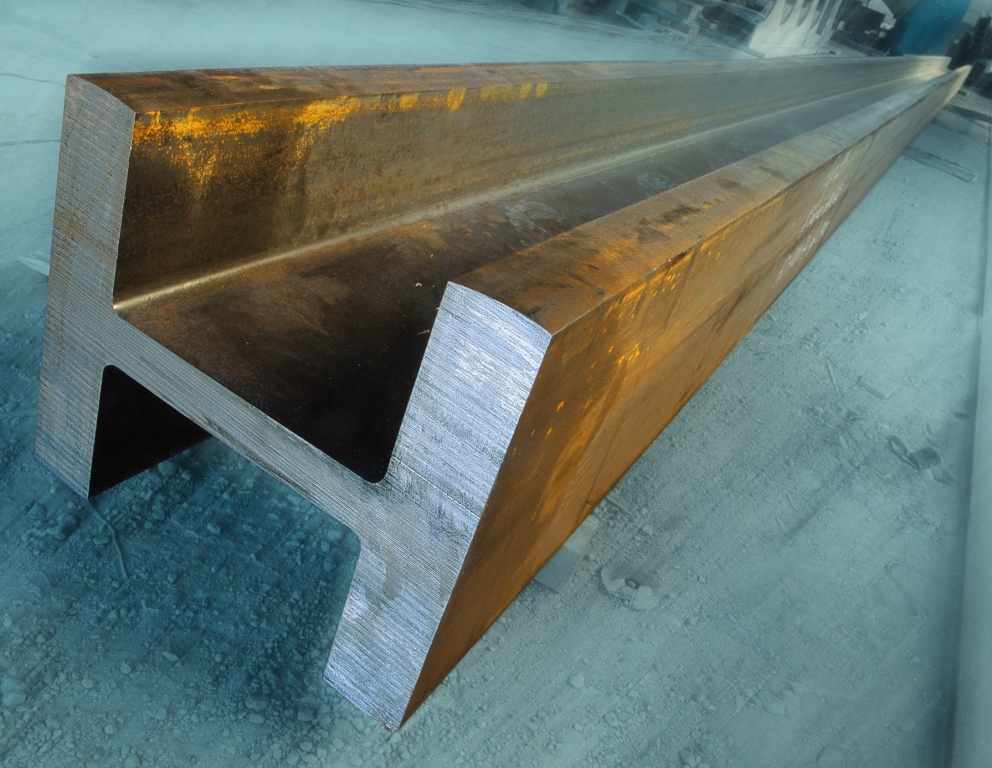
S&P Global Platts’ European medium sections price (category 1, S235 JR) was assessed at Eur1,030/mt delivered July 7, up Eur15/mt week on week.
Domestic medium section prices continued to inch up to historically high levels as sources noted limited supply in the market.
One distributor source based in the Benelux region noted that most mills are currently holding back offers for beams, while some are only selling limited quantities. The source put a tradable value for Category 1 medium sections at Eur1,060/mt delivered.
Another Benelux-based distributor source put a tradable value at Eur1,000/mt delivered, with some mills targeting Eur1,100/mt delivered. Most mills are only selling to their regular customers and holding back offers from the spot market, he added.
The source said he does not expect prices to change a lot during the holidays as France and Belgium are set to enjoy an extended summer holiday period in late July and early August.
“Mills here are quite comfortable,” he said. “They pretend they have sold most part of September already. But most mills will close for two to three weeks in July and August for holidays. So, I don’t think their orderbooks are that good. I think European mills will produce less material and get higher margin.”
One European mill source also noted that market sentiment is still strong and there is not much slow down in demand expected in the near term as seasonal holidays vary from country to country.
— Rabia Arif, Staff