

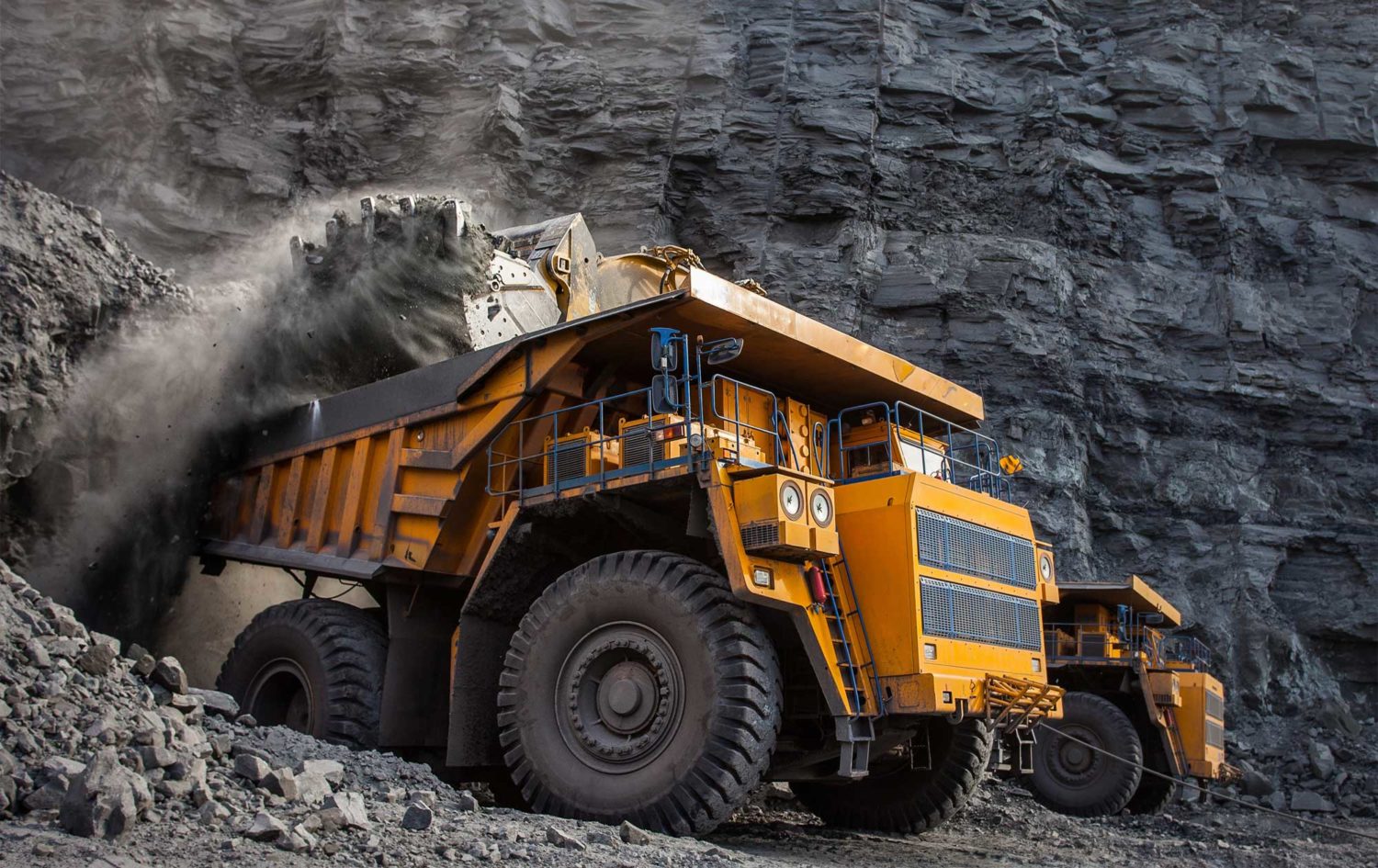
Europe steel-raw materials spreads continue to rise in June, Q2 hits record
The European hot-rolled coil steel and raw materials price spread continued to rise in June, with higher spot coil pricing and new mill offers compensating rising last month’s rise in met coal, iron ore and scrap costs.
The Northwest European HRC-steel raw materials spread increased to Eur761/mt ($913/mt) in June, from Eur716/mt in May, according to estimates by S&P Global Platts on July 1. In the second quarter, the European HRC spread averaged a new record high Eur695/mt, up 61% from Q1, on the back of record steel prices.
Steel margins have remained strong, building from a low of Eur193/mt in June 2020. Spot-based HRC spreads tracked during much of 2020 were well below operating break-even, based on industry data.
An HRC-raw material spread of Eur250/mt is said to be close to typical operating breakeven for commodity grade steel at regional blast furnace mills, operating facilities at higher capacity utilization. In 2019, the spread averaged around Eur241/mt.
The rise in spot prices for commodity-grade HRC over the second quarter were said to be not yet fully absorbed into sales and deliveries for a range of coils, with steel plate and some long-steel prices lagging coils.
Those factors limited the scope of indicative steel mill margins based off underlying spreads using spot HRC and main raw materials prices, setting mills up for a more cautious second-half due to higher raw materials costs, according to procurement executives.
Iron ore, scrap and coking coal costs delivered in Northwest Europe and basis Rotterdam port rose sharply during the month. Spot HRC prices remained strong, falling in the last few days of June.
Actual steel margins depend on realized steel sales volumes, and the mix of pricing and terms in sales and contracts.
The effects of managing inventory and quotation periods on top of additional costs in running operations after disruptions last year continue to lag on steel company margins and earnings, with company guidance and analysts expecting stronger prices and orders since Q4 2020 to be reflected more in Q2 and Q3 results.
China, US spreads
In China, the spread between HRC export prices and iron ore and coking coal costs fell to $390.94/mt in June, from $478.28/mt in May.
Lower steel prices and high raw materials costs squeezed indicative margins, during a period of steel price volatility in Chinese domestic markets. The China HRC export spread was lower than June’s average at $345.52/mt on July 1.
US HRC to shredded scrap spreads reached a record of $1232.16/st in June, from $1,1164.61/st in May. Stronger US steel prices outpaced a rise in Midwest shredded scrap pricing.
In Europe, higher steel prices continued to outpace a basket of reference steel raw materials costs, with iron ore and met coal costs with scrap per ton of crude steel moving up to Eur397/mt in June, from Eur363/mt in May, according to Platts estimates.
The latest Platts HRC-raw materials spread of Eur761/mt for June was the highest since at least April 2016 — when the spreads were first tracked by Platts. June saw a new record for spot HRC steel, averaging at Eur1,158/mt ex-works Ruhr, up 7.2% from May.
Steel mills increased official price offers on new orders further in June, with reported increases slowing from earlier in the year.
EU mills ran at higher pig iron and steel rates in May than a year earlier and compared with April, factoring in recovery from the COVID-19 pandemic, according to World Steel Association data.
EU pig iron rates were 36% higher at 6.82 million mt in May, and for January-May were 11% up at 32.9 million mt, from a year earlier.
Iron ore prices in China, used as a benchmark for global seaborne contracts, rose to $214.55/dry mt CFR China in June, up 4.3% from the prior month.
Coking coal prices on a delivered net forward basis into Rotterdam rose 31% from May to average at $192.66/mt CFR Rotterdam in June.
With the rebound in Australian prices, Platts estimates took into account changes in price relativities for US coking coals and PCIs to the Premium HCC FOB Australia benchmark for pig iron costs.
Northern Europe
Regional northern European shredded scrap prices rose 10% to Eur432.50/mt delivered basis in June, as European scrap costs rose to a new high, from an earlier peak in May.
Platts steel to raw material price spreads are indicative margins that do not account for inland logistic costs, power, natural gas or other blast furnace and steel-making inputs such as ferroalloys, anodes and refractories. Costs to operate sintering and coke plants are not included.
Break-even levels in Europe are partly dependent on logistics costs and raw material configurations.
Platts European HRC spreads are based on commodity-grade flat steel specifications. Contract steel sales may have additional grade and specification-based premiums, and terms may lag spot indexes.
Producers with higher grade steel portfolios may be less exposed to commodity-grade steel margins against underlying steel raw materials costs.
— Hector Forster

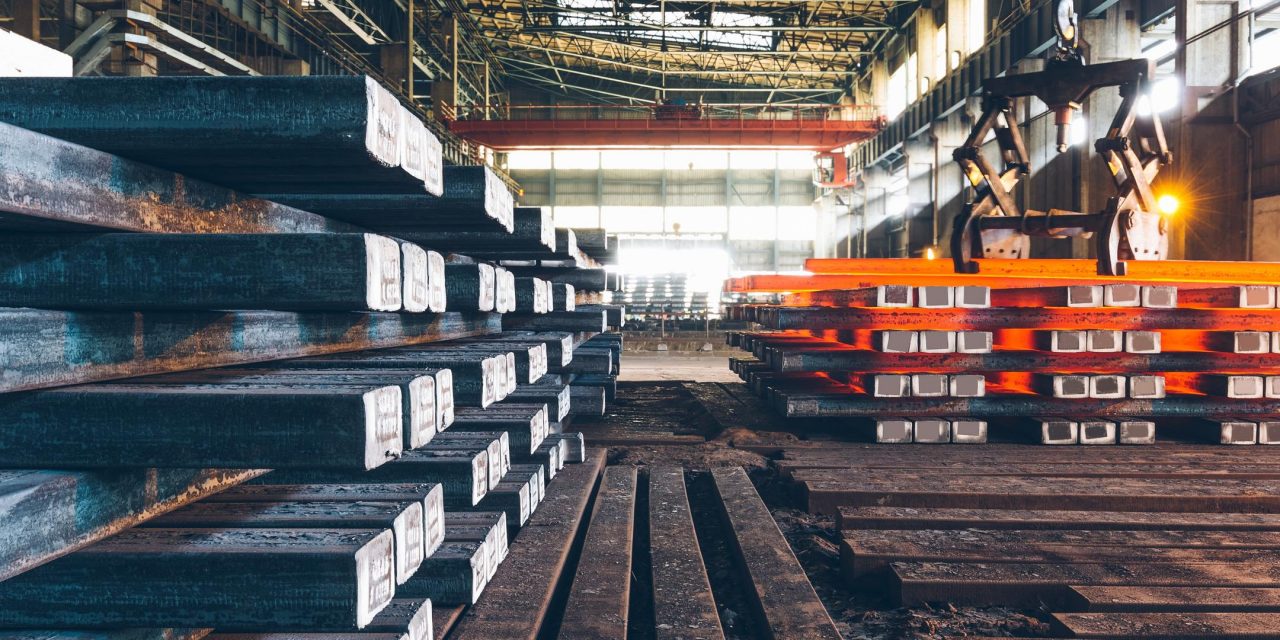
US mill executives expect Sec. 232 tariffs to remain in place amid EU talks
The US and EU earlier this month committed to working together to address issues stemming from the Section 232 tariffs on steel and aluminum.
But US steelmakers and groups representing the industry don’t expect the metals tariffs to go away completely without implementation of another trade measure, industry executives said at a press conference the Association for Iron and Steel Technology hosted June 30.
“We are talking with the EU to try to find a workable solution here, but you can’t just do away with the [Section 232 tariffs] without replacing it with something,” said Philip Bell, president of the Steel Manufacturers Association. “The EU itself has extended its safeguards for another three years so it would be very unreasonable for them to expect the US not to have something in place to replace the 232s and … that needs to be something that prevents import surges from occurring.”
Bell said he applauds President Joe Biden’s administration for taking a “very measured, total government approach” to the 25% import tariffs on steel that former President Donald Trump put in place March 2018.
“I do think we will see some kind of breakthrough,” Bell said about bilateral talks with the EU. “We need the EU’s help because they have to deal with their own excess capacity and they also have to help us deal with global excess capacity.”
While the Biden administration has committed to discussions with the EU, there is no commitment in place to end the tariffs by the end of this year, said Kevin Dempsey, the CEO of the American Iron and Steel Institute.
Additionally, the Biden administration has committed to maintaining a viable steel industry in the US and that cannot happen if the tariffs are removed, Dempsey said.
“Until we resolve that global overcapacity problem driven by foreign government subsidies, we’re going to face the threat of recurring surges in imports,” he said. “Whenever there is a demand shock, as we’ve seen in the past, the excess steel will flood into the most open market and that’s why it’s critical we maintain an effective measure that prevents new surges.”
Cleveland-Cliffs CEO Lourenco Goncalves said while the tariffs are in place for an indefinite period of time, Section 232 was never supposed to stay in place forever, but the issues that led to its implementation will not go away until solutions are reached to address global excess steel capacity.
“Section 232 was a stop-gap; an emergency measure put in place, and rightfully so, to stop the bleeding and then let’s organize and see where the problem really is,” Goncalves said. “The problem right now is abundantly clear, it’s overcapacity, it starts in China, but it does not end in China.”
Trade tensions heighten for scrap
With electric arc furnace steelmaking on the rise globally, demand for scrap, particularly from China, is going to continue to increase going forward and may bring with it its own trade disputes as countries look to reign in exports, industry executives said.
Russian Prime Minister Mikhail Mishustin signed off June 25 on a decree that will raise the country’s export duty on steel scrap to Eur70/mt or 5%, whichever is greater, up from Eur45/mt, or 5%, currently. The new rate will come in force 30 calendar days from the signature date and will remain in effect for 180 days.
Additionally, the EU has talked about limiting its scrap exports because of the carbon footprint of exporting scrap abroad, Bell said.
With $16 billion in new capacity investment coming online in the US, almost all of it EAF-based, this is going to put even more pressure on US scrap prices, particularly for prime grades, he said.
“With these Russian restrictions that are going to force Turkey to look elsewhere for scrap and guess where they’re going to look, they’re going to look here and that could drive prices up as well,” Bell said.
The US has tools at its disposal to address issues that arise in scrap, whether that would be filing challenges to the restrictions with the WTO, or the implementation of Section 301 tariffs to retaliate against these actions, he said.
Noting the lack of action that has resulted from the OECD Steel Committee in addressing global excess capacity since its creation five years ago, Goncalves said governments need to take a more aggressive approach to issues surrounding scrap.
“I am afraid if you use the same approach that we used to try to resolve the steel overcapacity to resolve the problem of scrap you end up with exactly the same outcome: zero,” he said.
While US scrap supply will continue to be squeezed by increasing demand, one benefit is the mills that are expanding are largely vertically integrated and have their own raw materials operations, Dempsey said. Additionally, an abundant supply of natural gas in the US provides other alternatives for EAF steelmakers, he added.
“I think it’s really critical that we’re looking to develop and increase alternative iron unit supplies in the US now with a number of gas-based [direct reduced iron] facilities in the US,” he said. “I think given our large supply of natural gas and availability of iron ore, further development of that natural resource will be a critical part of the solution for the US.”
— Justine Coyne

EU safeguards increase wind sector cost pressure: WindEurope
WindEurope, the voice of the European wind energy sector, believes the confirmation of EU steel safeguard measures for a further three years will add to cost pressure for wind turbines and component manufacturers.
The sector uses mainly heavy plate for the fabrication of steel wind towers and non-grain-oriented electrical steel for motors and generators.
“Steel prices have increased dramatically over the past year,” WindEurope chief policy officer Pierre Tardieu says in a note seen by Kallanish. “In some cases they have doubled. Steel is the single most important raw material for the European wind industry. Higher steel prices increase the costs of making towers, gearboxes, nacelles, transformers, and offshore foundations. Last week’s decision to extend steel safeguard measures is unhelpful for a rapid and cost-effective energy transition to renewables.”
WindEurope believes that in the medium-term additional costs may be passed down the supply chain to developers, though this will make it more difficult to deliver continued reductions in electricity prices.
“The economic sustainability of the European wind industry is at risk. Higher costs mean less capital available to invest in state-of-the-art manufacturing and research & development. Under-investment in these areas could cause the European industry to lose the global race for technology leadership in wind energy,” Wind Europe comments.
Emanuele Norsa Italy


Europe HRC market quiet with all eyes on quota release July 1
The European hot-rolled coil market remained quiet with the market looking forward to the July 1 release of import quotas, sources told S&P Global Platts June 30.
Sources said that even though there is anticipation that most of the import material has already been sold that will be cleared at ports from July 1, it would provide a view of how much material is entering buyers’ stocks.
“[June 30] will be a run on volumes at ports. Question is – what will fall under duty, and if yes what agreement is struck on who’s paying? There is an expectation that by [July 2] some country-specific quotas will be filled,” said a German service center source.
The source added that the Russian export duty that will also come into effect July 1 is likely to be workable in Europe and imports from Russia might still be competitive.
In the Northern European domestic market, trading remained quiet with mills booked for spot availability for the remainder of this year and the market not ready yet to start price negotiations for Q1 2022.
Sources expect price fluctuations to continue over the summer as trading is expected to be quiet. Though some expect some more competitive import offers, European mills are unlikely to move positions due to their full order books and backlogs.
“I think mills will rather curb production than lowering prices. [Price] Fluctuation will be there but not on a broader scale,” said a German buyer.
In the Italian market, sources reiterated that buyers were sitting on their hands and import volumes were too small to put serious pressure on domestic prices amid the ongoing supply tightness.
“We don’t either have much to offer, but customers are in wait-and-see mode as summer is starting and most of the needs are already booked,” said a Southern European buy-side source.
The daily Platts assessments for HRC slipped again June 30 to Eur1177.50/mt EXW Ruhr, down Eur2.50/mt, and to Eur1120/mt EXW Italy, down Eur5/mt.
— Laura Varriale
Italian longs market enters standoff
Italian distributors of long products are reporting significantly reduced activity. Buyers are said to have cut their purchases because of continuous steep price increases, particularly in longs, which have slowed end-user activity.
Despite the sluggish market, all distributors have already reached their financial targets and will achieve record earnings this year. After very strong activity in May, German demand for imported long products is now slowing down as lower volumes, particularly of beams, are being sold to Germany, sources tell Kallanish.
Merchant bar contract prices are at €450-470/tonne ($534-558) base ex-works, with very few transactions at €500/t base ex-works. Including size extras, prices are at €870-920/t ex-works.
The first category of sections in producers’ asking prices is now at €600/t base ex-works. Including size extras, values are at €980-990/t ex-works but transactions are lagging behind at €950/t ex-works or less.
At present, clients prefer to buy from large distributors rather than producers who continue to compensate for slow domestic sales with strong exports to other European countries.
Natalia Capra France

Export ban to damage EU scrap sector: Assofermet
Italian trade association Assofermet warns that any form of European scrap export ban could trigger a collapse in scrap values and would irreversibly compromise the entire scrap value chain.
In a letter sent to Kallanish, Assofermet invites the European Commission to boost the structural use of scrap as a means of decarbonising EU steelmaking. In Europe, only 42% of crude steel is produced from the electric arc furnace route, while 58% still derives from the integrated and more polluting route.
The association is troubled by a yearly excess production of scrap which is not absorbed by local steelmakers. In 2020, out of a total 101 million tonnes of scrap collected, only 77.8mt were used by European steelmakers, while the remaining 23.5mt were exported to third countries, Assofermet observes.
In order to keep and use the entirety of European scrap output, the EU should proceed to a major restructuring of the local steelmaking sector. This would imply the closure and replacement of most blast furnaces with new EAFs, with significant investments and a well-defined structural medium- and long-term shift for the steel industry.
The association however mentions the Italian market as being unique in Europe. Last year EAFs produced 84.7% of steel in the country versus only 15.3% from the sole integrated producer in Italy, Acciaierie d’Italia in Taranto.
Domestic demand for scrap is approximately 20m t/year, considerably higher than national generation, which forces mills to import scrap from other European countries. In 2020 Italian producers bought 4.9mt of European scrap. Italy also exported 0.45mt to countries outside the EU, Assofermet concludes.
Natalia Capra France
Kardemir raises third quarter long steel sales target
Major Turkish integrated long steel producer Kardemir is planning to sell 563,000 mt of steel in the third quarter, 10,000 mt higher than its sales target of 553,000 mt for the second quarter.
The company’s Q3 target was, however, notably 84,000 mt lower than its sales target for the same period the previous year.
Kardemir set its Q3 billet sales target at 173,000 mt, up 3.6% on quarter, while the company’s Q3 rebar sales target stands at 142,000 mt, flat on quarter.
Kardemir’s sections sales in Q3 are expected to reach 109,000 mt, while the company’s sales target for wire rod in the period stands at 139,000 mt, both relatively stable on quarter.
Kardemir is in the process of expanding its value-added product range, having placed an order with SMS group for the modernization of its rod mill to produce more compact coils specifically for transport and container shipping. Commissioning is set for the beginning of 2022.
— Cenk Can

US Sheet buyers watch another hot-rolled record emerge
US sheet players confirm that hot-rolled coil is now operating north of $1,700/short ton – yet another new, record high, Kallanish reports.
A source at one top-tier mill says “multiple transactions” have been done north of $1,700/st for hot-rolled, as well as at $1,950-2,000/st for cold-rolled coil and galvanised substrate.
A Midwest service centre source believes that published indices will shortly establish that number as a firm floor – especially considering there will be no industry-wide shutdown this Fourth of July holiday.
The twin hammers of Covid-19 and the semiconductor shortage have spurred auto producers to play catch-up since the end of last year, leading to the historic run-up in sheet pricing.
Multiple sources have been predicting a quick, sharp drop over the past several months as record after record falls. As a result, virtually no buying is being done on a speculative basis, a West Coast buyer said late last week.
On Monday, Kallanish raised its hot-rolled assessment to $1,700-1,750/st and its cold-rolled assessment to $1,900-1,950/st. All prices are ex-works, domestic mill, transactional pricing.
Dan Hilliard USA
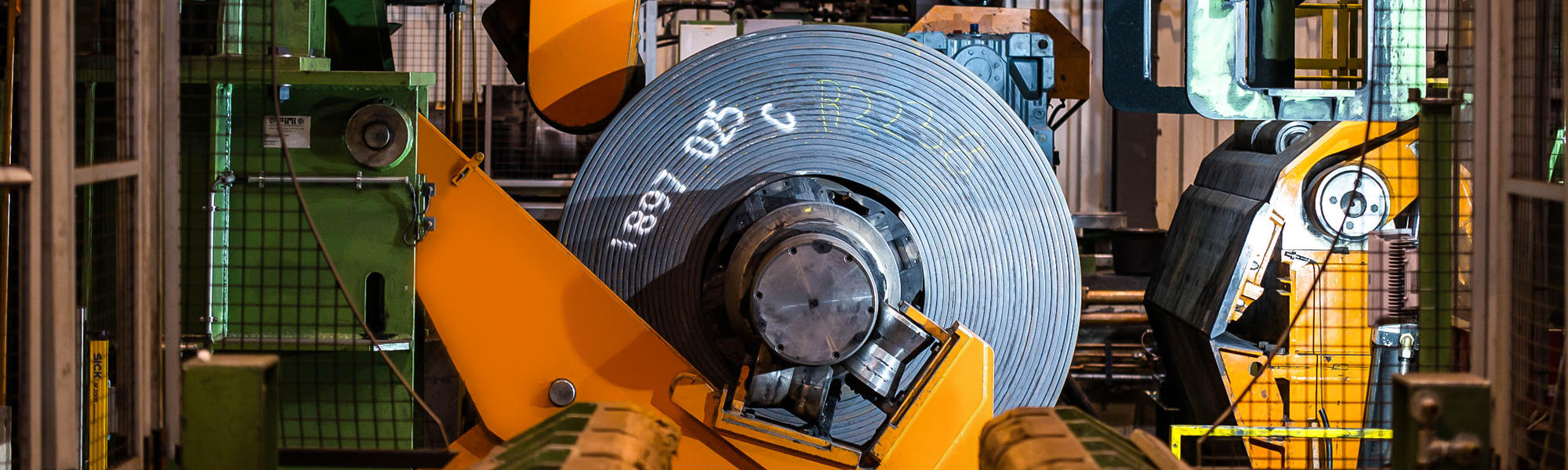
Strike, low output hit Spain’s Celsa Atlantic
Celsa Atlantic, the rolling and processing mill in northern Spain controlled by Celsa group, is suffering this week from a set of strikes affecting overall production.
Local trade unions confirm that almost all workers at the mill participated in the 24 hour-long strike held on Monday. A second 24-hour strike will be implemented on 30 June and further 16-hour strikes have been called for 3 and 10 July.
Unions have called the strikes to demonstrate against the fact that the mill’s management has not agreed a new collective labour agreement since 2019, Kallanish notes.
In a statement, unions also express concerns over the future of the plant as they calculate production is now at 50% of the installed 1 million tonnes/year capacity, despite demand being strong. Market sources have nevertheless pointed out that the current production level has been stable for the last five years at least, indicating therefore that it is not something linked with a strategy change within the company.
“One of the demands of the labour committee is the utilisation of the parts of the facilities that are stopped and a real investment plan that will guarantee the future of the factory,” trade unions say.
Celsa Atlantic produces light long products for the construction sector, rolling mainly billet sourced from the group’s EAF mill in France.
Emanuele Norsa Italy
Hopes surface for Magona restart
Liberty Steel’s Italian re-rolling plant, Magona in Piombino, is expected to resume some activity by the end of July if the steelmaking group’s restructuring plan is successful.
Liberty plans to merge its Liège-Dudelange and Magona coil processing plants into the Liberty Galati organisation (see Kallanish 29 June). The Romanian steelworks will become their primary hot rolled coil provider, to ensure sustainable feedstock supply.
The idea of creating “a downstream cluster” stems from the strong demand, high margins and full order books that Liberty is registering at all its coil processing units, sources in Italy say. The steelmaker is trying to repay the outstanding debt that Liege has with ArcelorMittal Fos-sur-Mer, so that the latter can resume supplying HRC to its re-rolling plants, including Magona.
The last operational line at Magona, coating line no. 2, will be idled on 30 June as the plant has consumed its entire HRC stocks. Reduced supply from Magona has worsened the hot-dipped galvanised coil shortage in Italy, with prices reaching €1,400/tonne ($1,666) base ex-works for small tonnages and prompt delivery, Kallanish notes.
Meanwhile, Liberty Galati is registering strong financial results and has raised its 2021 production target after it achieved in Q1 its best quarterly performance since 2008. Revenue in Q1 was RON 1.77 billion ($428 million) and Ebitda was RON 256m. In full-year 2020 revenue and Ebitda were RON 4.7 billion and RON 187m respectively (see separate article).
Magona has a capacity of 600,000 tonnes/year. It counts one pickling line, two rolling mills, two galvanising lines and one coating line. One other galvanising line was idled in 2010.
Natalia Capra France