

EU steel import safeguards extension divides market opinions
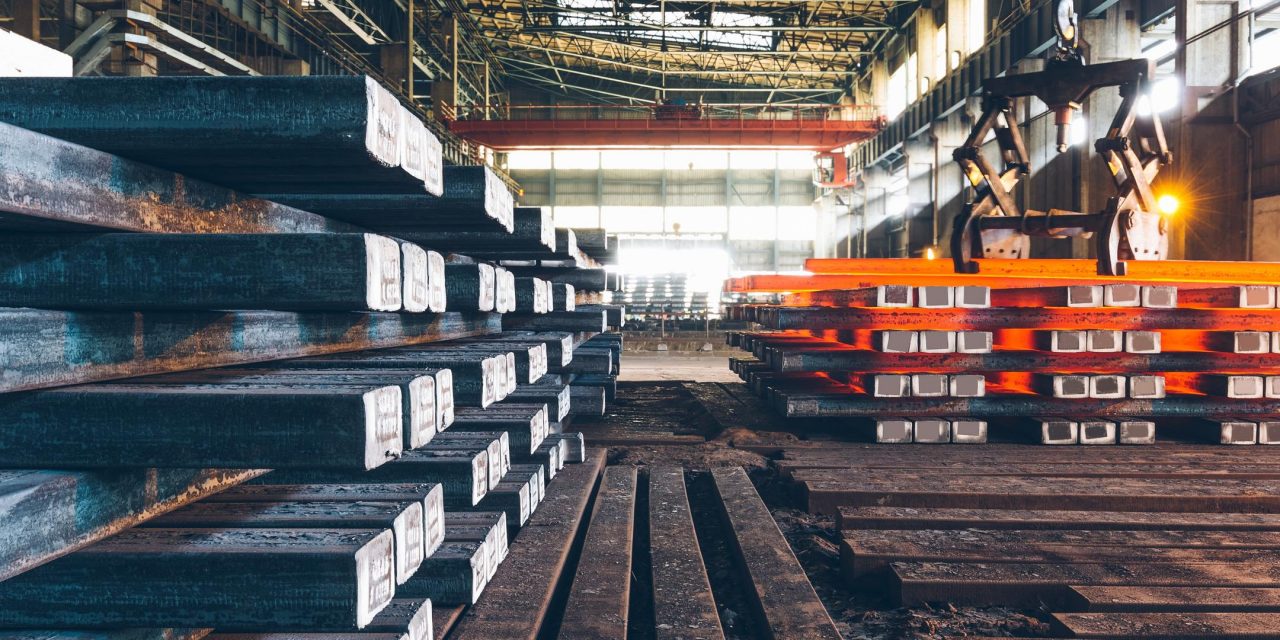
The European Commission has formally published rules governing steel import safeguards into the European Union for the next three years: leaving safeguards in place for all 26 steel product categories, subject to annual review. The extended safeguard, which pits traders and consumers against mills, will officially run from July 1.
Largely expected by the market, the new regulations differ from the previous system in that the annual tariff rate quotas used to govern imports will henceforth be expanded by 3% annually, instead of the previous 5% annual increase.
The EC has extended the safeguards due to what it perceives is a continuing “fragile financial situation of the Union steel industry.” The EC notified the World Trade Organization on June 11 of its intention to extend safeguards, which was approved by member states on June 18.
The European federation of steel producers, Eurofer, welcomed the extension. “The conditions that required the launch of the safeguard initially are still very much present – including global steel overcapacity and US Section 232,” said Axel Eggert, Eurofer director general.
The current safeguards were put in place July 2018 to protect the EU market against trade flow deviation following the US’ imposition of Section 232 tariffs on steel imports in March of that year.
‘End of free trade’
While widely expected and welcomed by steelmakers, the extension has not found favor with traders, who foresee further upwards pressure on prices in a market suffering from acute material tightness in some product areas.
“I understand that this decision is made to support mainly the steel industry and not the end users,” one EU trader said. “It will keep the price very high and feed steel price inflation, and volatility. If you add onto this all the anti-dumping investigations you could think that we’re living the end of free trade, where everybody wants to protect his steel industry; as we know already this doesn’t work.”
One Italian steel buyer called the extension “a disaster… EU mills won’t be able to offer all the products we need…this year has been an awful year for their service with unbelievable delays and abnormal speculation: we are really worried for coming months.”
Both flat and long steel products prices reached their highest-ever in Europe this year, as they also did in the US. Steel buyers have been vocal on the prices increases but also on the difficulty in finding material.
Prices at historical highs
According to Platts’ price analyzer, prices in EU moved to their highest historical level. On June 21 Platts Benchmark Ruhr ex-works hot-rolled coil price reached a record Eur 1,190/mt, easing just slightly to the June 28 assessment of Eur1,187.50/mt. EU rebars also reached their highest ever level in June, to Eur 817.5 mt delivered.
Euranimi, a Brussels-based steel consumers’ association that represents the “middle of the supply chain” (importers, distributors, traders and processors), said that “it finds incomprehensible that the EU chooses to ignore what is going on downstream and sticks to a protectionist logic that is no longer justified in a context of blatant material shortage and exceptionally long delivery times that are the cause of ever-increasing prices.”
“The economic reality of this decision will be that countless European steel processing companies, that are already today in dire need of material, will receive only a fraction of their steel requirements, delivered to them much later and at a much higher price. Euranimi fails to understand why such measure is deemed to be favorable to the European economy.”
In its safeguards document the EC argued that “the Commission found that the steel prices increases recently observed on the Union steel market cannot be imputable to, or be the result of, the Union steel safeguard because similar such high prices also prevail on worldwide markets and large volumes of free-of-duty TRQs remain nevertheless unused available under the safeguard.”
Concerning the material shortages, it said that “the problems of supply experienced after demand rebounded were transitory and that the return to operation of idled facilities by the Union industry, which is underway, should thus help ensuring that normal pre-pandemic steel supply conditions are re-established in a reasonably short timeframe.”
— Annalisa Villa, Amanda Flint, Rabia Arif


Europe HRC price gap widens as Italy sees more imports, higher stocks
North European HRC prices were heard slightly lower June 28 following a recent increase in mill offers last week, with the pricing gap between North and South widening as more imports entered the Italian coils market, sources told S&P Global Platts.
North European HRC prices were assessed Eur2.50/mt lower at Eur1,187.50/mt ex-works Ruhr June 28, and in the Italian market, HRC prices were stable at Eur1,130/mt ex-works Italy.
The pricing gap between Northern and Southern Europe now stands at almost Eur60/mt, and is expected to increase as more imports initially booked during April-May are expected to enter the Italian market during the summer, giving the impression of higher stocks.
The announcement of a Eur30/mt increase on HRC from ArcelorMittal was not a complete surprise to the market, with higher offers from mills already heard several days prior.
“Before ArcelorMittal announced this [offer increase], sellers were selling for Eur1,200/mt and higher,” a German mill source said. “The problem is no one has anything to sell.”
The mill source added Q4 transactions were possible between Eur1,170-1,200/mt for 3000 mt, though there were limited volumes available, with customers now inquiring for Q1 volumes.
Despite the cautiousness exercised among buyers, sell-side market participants remain optimistic that European steel prices will see no downside due to the lack of available steel, limited stocks and the fact suppliers remain well-booked for the next half of the year.
One German car manufacturer was heard to have restarted production, according to the same mill source, which suggested that the automotive slowdown would not last long.
“The auto issue, nothing dramatic, full order books, have problems with raw materials. But Volkswagen stopped their vacation and they are not trying to produce,” the mill source said.
In the Italian market, prices were heard to be stable after falling Eur5/mt June 25, with high storage levels and an influx of newly arrived imports another bearish factor.
“There are a lot of orders from imports that will arrive in the summer,” an Italian service center source said. “For the moment, Italy mills aren’t interested to sell cold-rolled coil and hot-dipped galvanized, but in my opinion the situation could change in Q4.”
— Amanda Flint

Shortages push up EU stainless flats prices
European stainless hot and cold rolled coil prices are continuing to increase together with values for sheet and other coil derivatives including tube, market sources tell Kallanish.
The shortage, particularly for flat products, is worsening due to very high demand and very low import tonnages. Producers in Asian countries are only selling to their traditional customers, accepting no new clients. Limited CRC and HRC sales windows are opening and closing fast from Asian producers, particularly from Taiwan. This is failing to compensate for short supply from European producers.
The sector is going through a period of “open prices”, sources observe. Sellers of both coils and sheets are not quoting, but nevertheless still bagging a large number of orders that bear no quotes. Since base and alloy values are changing constantly almost every week, it has become widely accepted for prices to be specified shortly before the time of delivery.
At present, buyers in all European countries consider the most important thing is securing supply to satisfy their full order books. Prices are not a concern. All coil increases are or will be applied to derivatives before delivery. A source comments that such an “open price” market anomaly has now become normal.
A source says mills are putting customers on waiting lists due to shortages. “It is the first time that something like that happens,” he comments. “If a customer asks for 1,000 tonnes, the mill will allocate 300 tonnes. Prices for coils are calculated on base plus alloy surcharges but producers do not know what base prices and alloy surcharges will be in three to four months, so they give indicative prices that will certainly change, or prefer not to quote at all.”
Stocks in Germany are said to be particularly low. Southern and Eastern European distributors and sellers however report a similar situation in their own respective markets.
CRC for October and November delivery is quoted at €3,300/tonne ($3,940) and about €120-130/t less for HRC – this is for larger tonnages, sources say.
While volumes have not particularly increased compared to previous years, margins and prices remain high throughout the value chain. Most companies will this year exceed their annual financial targets, sources agree.
Natalia Capra France

Liberty restructuring advances, Galati assumes downstream coil plants
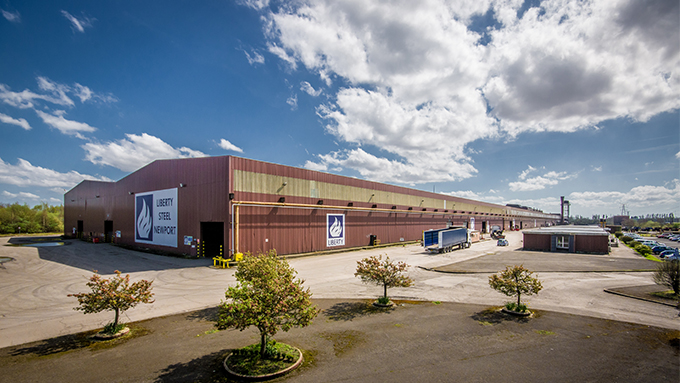
GFG Alliance says restructuring steps taken so far will enable it to pay back creditors following the collapse of lender Greensill Capital. Among other things, the group has focused on securing feedstock supply for its European downstream coil plants and is selling non-core UK units.
Since being set up in May, Liberty Steel’s Restructuring and Transformation Committee (RTC) has evolved a new strategy. Liberty will be focused on core business units, including InfraBuild and Liberty Primary Metals Australia (LPMA) in Australia, and the Liberty Ostrava and Galati steelworks in Europe.
Liberty plans to merge its Liège-Dudelange and Magona coil processing plants into the Liberty Galati organisation. The Romanian steelworks will become their primary hot rolled coil provider, to ensure sustainable feedstock supply. The closer link to the downstream plants will allow Galati to offer a wider product range to customers in Central and South Eastern Europe, Liberty says.
The first supplies of HRC from Galati are expected to arrive at the downstream plants within the next few weeks, allowing them to restart their lines soon afterwards.
Renaud Moretti, chief executive of Liberty Steel Downstream in Europe, will now report into Paramjit Kahlon, Liberty ceo of Primary Steel and Integrated Mining.
Liberty continues to assess a sales process for its UK aerospace and special alloys steel business in Stocksbridge, which would allow it to focus on developing Rotherham into an electric arc furnace-based 2 million tonnes/year capacity plant. The UK operation is also seeing personnel changes and exploring the future of the Engineering business (see separate story).
Besides securing financing from White Oak Global Advisers to repay LPMA’s Greensill debt and reaching an agreement with Greensill Bank’s administrators for an amicable resolution, Liberty has submitted refinancing memoranda for its European operations.
In a note sent to Kallanish, Liberty chief restructuring officer Jeffrey S. Stein says: “We are aware of the significant challenges facing the group but are pleased that we are making good progress to refinance, repay creditors and refocus the group on our core assets. Much remains to be done but we are optimistic that a vibrant, well-funded, profitable and sustainable business will emerge as we systematically restructure and transform the group.”
Adam Smith Germany
Aperam increases July alloy surcharges
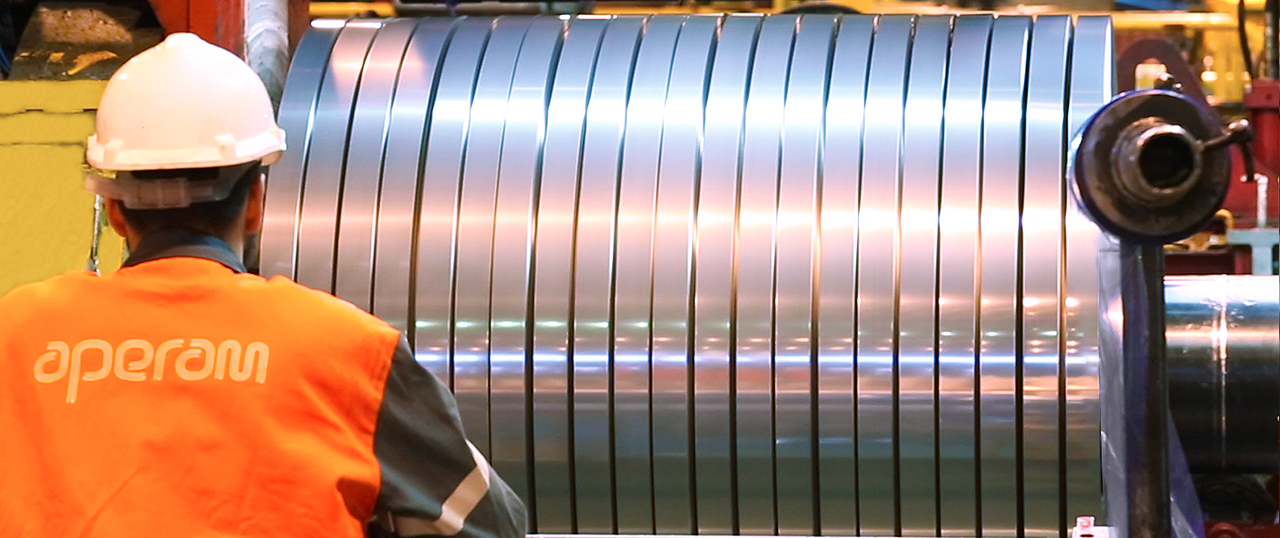
French stainless producer Aperam has increased July alloy surcharges for its austenitic range of flat stainless steels for Europe by €70/tonne ($83) on average versus the previous month, Kallanish learns from the company.
The surcharge for grade 304 (1.4301) has gone up from €1,865/t in June to €1,910/t effective 1 July. For grade 316 it has increased from €2,675/t this month to €2,928/t next month. Grade 309S, a heat-resistant stainless steel used in high-temperature applications, has hiked from €2,509/t in June to €2,558/t from 1 July. The surcharge for the most popular ferritic grade, 409, has risen from €725/t in June to €764/t, the company reveals.
Offers for nickel cash buyers were at $18,611/t on 25 June. Values were at $17,125/t on 25 May, Kallanish notes.
Natalia Capra France

Kanzlerkandidatin der Grünen bei ArcelorMittal in Eisenhüttenstadt

Klimaneutrale Stahlproduktion ist ein wichtiges Thema bei ArcelorMittal. In Deutschland treibt der weltweit führende Stahlhersteller mit der Strategie „Steel4Future“ die Transformation an seinen vier Produktionsstandorten in Bremen, Duisburg, Eisenhüttenstadt und Hamburg mit ehrgeizigen Initiativen voran.
Während eines Besuchs bei ArcelorMittal Eisenhüttenstadt machte sich die Grünen-Vorsitzende und Kanzlerkandidatin Annalena Baerbock vor Ort ein Bild von den Transformationsplänen für den Industriestandort in Ostbrandenburg.
Neben politischen Gesprächen mit der Geschäftsführung, dem Betriebsrat und der IG Metall Brandenburg hatte Baerbock auch Gelegenheit, Stahlwerker*innen des größten Produktionsstandorts von ArcelorMittal in Ostdeutschland zu treffen.
Für die beiden Flachstahlwerke Bremen und Eisenhüttenstadt hat ArcelorMittal ein Konzept vorgelegt, um dort noch vor 2030 rund 3,5 Millionen Tonnen Stahl klimaneutral zu produzieren und so mehr als fünf Millionen Tonnen CO2-Emissionen pro Jahr einzusparen. Dafür sollen an beiden Standorten je eine Direktreduktionsanlage für Eisenerz und ein Elektrolichtbogenofen neu gebaut werden, um jeweils einen Hochofen bereits bis 2026 abzulösen und grünen Wasserstoff einzusetzen. Die CO2-Minderung wird zunächst mit Einsatz von Erdgas und – sobald in ausreichender Menge und zu wettbewerbsfähigen Kosten verfügbar – grünem Wasserstoff geplant. Zum Aufbau der erforderlichen Infrastruktur mit grünem Wasserstoff durch Elektrolyse beteiligt ArcelorMittal sich in der Region am Aufbau des Wasserstoffclusters Ostbrandenburg.
Annalena Baerbock, Bündnis 90/Die Grünen: „Einige Unternehmen haben sich schon auf den Weg zur Klimaneutralität gemacht. Aufgabe der kommenden Bundesregierung muss es sein, diesen Unternehmen wie der gesamten Wirtschaft einen verlässlichen Rahmen für den Umbau zu geben. Mein Vorschlag ist daher ein Pakt zwischen Industrie und Politik, in dessen Zentrum Klimaschutzverträge stehen. Dieser Industriepakt ist ein zentrales Element des Aufbruchs in eine sozial-ökologische Marktwirtschaft und fördert die Kräfte des Marktes. Er setzt einen Rahmen und gibt Beschäftigten sowie betroffenen Regionen Sicherheit. Er garantiert Unternehmen, die sich der klimaneutralen Produktion verschreiben, die notwendige Planungssicherheit für den Umbau.“
Reiner Blaschek, CEO ArcelorMittal Flachstahl Deutschland: „Wir wollen in Deutschland eine Vorreiterrolle übernehmen, bereits ab 2026 bis zu 50 Prozent der CO2-Emissionen reduzieren und die klimaneutrale Produktion damit deutlich vor dem Ziel der Bundesrepublik erreichen, bis 2045 klimaneutral zu sein. Dazu sind enorme Investitionen notwendig, die wir nicht allein stemmen können. Die Förderabsichten der Bundesregierung sind hilfreich, nun muss auch die EU zustimmen. Doch das allein wird noch nicht reichen: wir brauchen auch Kunden für grünen Stahl, der mit höheren Produktionskosten verbunden sein wird. Hierzu ist ein Ausgleich der höheren Kosten notwendig, bis sich ein Markt für grünen Stahl etabliert hat.“
Dirk Vogeler, Betriebsratsvorsitzender: „Der Besuch von Annalena Baerbock ist ein wichtiges Signal, dass die Politik unsere Pläne ernst nimmt und unterstützt. In der Stahlindustrie liegt der größte Hebel zur Erreichung der Klimaziele. Wir benötigen die Förderung von Investitionen. Die Unternehmen sollen sich an diesen Kosten beteiligen. Außerdem müssen erhöhte operative Kosten abgefedert werden, damit klimaneutraler Stahl eine Chance hat. Deutschland muss Industriestandort bleiben. Stahl ist einer der wichtigsten Grundstoffe für industrielle Produktion. Wir dürfen uns nicht von anderen Ländern abhängig machen. Das ist ein Grundstein für den Erhalt unserer Arbeitsplätze.“
Quelle und Foto: ArcelorMittal Germany Holding GmbH
BDSV stellt klar: Klimaschutz wird aus Schrott gemacht!

Für die Bundesvereinigung Deutscher Stahlrecycling- und Entsorgungsunternehmen e. V. (BDSV) greift die hauptsächlich wasserstoffbasierte Strategie der Bundesregierung und der Stahlhersteller zur Herstellung von grünem Stahl viel zu kurz. Bundeswirtschaftsminister Peter Altmeier hatte jüngst auf der Wasserstoffkonferenz mit dem Stahlverband WV Stahl und IG Metall verkündet, dass die Bundesregierung und die Stahlkocher in Deutschland beim Umbau der Schwerindustrie zu einer klimafreundlicheren Produktion aufs Tempo drücken wollen. Die BDSV kritisiert, dass im überarbeiteten Handlungskonzept Stahl der Bundesregierung der Einsatz von Stahl- und legiertem Stahlschrott zur Reduzierung der CO2-Emissionen eine völlig untergeordnete bis gar keine Rolle spielt.
Während die Bundesregierung Steuergelder hauptsächlich in wasserstoffbasierte Stahlproduktion steckt, investiert die Stahlrecyclingbranche seit mehr als einem Jahrhundert ihr privates Geld in direkten Klimaschutz. Jede Tonne Stahlschrott, die in der Stahlproduktion eingesetzt wird spart 1,67 t CO2, jede Tonne Edelstahlschrott sogar 4,3 t CO2. Mit dem Einsatz von 93,8 Mio. t Stahlschrott konnten in der EU im Jahr 2018 allein 157 Mio. t CO2 eingespart werden, was den CO2-Emission aller Automobile in Frankreich, Großbritannien und Belgien entspricht. Dieses beeindruckende CO2-Einsparpotential außer Acht zu lassen ist nicht nur unverständlich, sondern unklug, will man das ambitionierte Ziel der Klimaneutralität auch in der Stahlproduktion bis 2050 tatsächlich erreichen. Stahl- und Edelstahlschrott ist beliebig oft ohne Qualitätsverluste recyclebar und spart vor allem Primärressourcen wie Erze und Kokskohle, deren Abbau und Transport ebenfalls sehr CO2-intensiv sind.
Derzeit prüft das Institut Fraunhofer IMW in Rahmen eines Forschungsprojekts im Auftrag der BDSV die mögliche Beteiligung der Stahlrecyclingbranche an einem EU-ETS System, um den Schrotteinsatz zu fördern. Eine weitere Lösung hierfür könnte eine gesetzlich festgeschriebene Mindesteinsatzquote von Stahlschrott in der Stahlproduktion sein. Das würde nicht nur den Einsatz von Sekundärrohstoffen fördern, sondern auch die Wettbewerbsfähigkeit der Stahlrecyclingwirtschaft erhöhen.
Freie Märkte für Recyclingrohstoffe: Stahlschrott ist kein Abfall, sondern ein Klimaschutzprodukt
Darüber hinaus fordert die BDSV eine Unterscheidung von Sekundärrohstoffen und Abfällen ohne Wert im Rahmen der Revision der EU-Abfallverbringungsverordnung (Verordnung Nummer 1013/2006 über die Verbringung von Abfällen). Derzeit drohen Handelshemmnisse für Sekundärrohstoffen durch die geplante Verschärfung der Vorschriften für die Verbringung von grün gelisteten Abfällen in Drittländer. Denn Stahlschrott ist kein Abfall, sondern ein Klimaschutzprodukt. Zudem können durch den weltweiten Handel mit Recyclingstahl können Rohstoffkreisläufe geschlossen werden und damit Primärrohstoffe ersetzt werden. Eine Exportbeschränkung wäre klimapolitischer Unsinn.
Die gravierenden Folgen von Exporthemmnissen wären weniger Sammlung und Aufbereitung von Schrott, weniger Investitionen auch in Forschung und Entwicklung und der Verlust einer wirtschaftlichen Basis für das Stahlrecycling, wenn sich Schrottpreise nicht mehr frei am Weltmarkt bilden. Die Stahlrecyclingunternehmen wären in ihrer Existenz bedroht.
Quelle: BDSV – Bundesvereinigung Deutscher Stahlrecycling- und Entsorgungsunternehmen e.V. / Vorschaubild: Pixabay, Foto: dokumol

Rebar shortage constrains Spanish construction sector
Spanish rebar suppliers tell Kallanish that domestic producers are short of material for some qualities, while lead times are continuously growing.
Meanwhile, Spain’s construction and infrastructure company association, Seopan, affirms that the rise in prices of steel products is seriously affecting all companies in the sector, both in public and civil works. According to Seopan, long steel prices are up 78% since the beginning of 2021.
“As prices rise, there is a shortage of certain rebar qualities, the supply of which is in many cases conditional on the acceptance of offers with weekly price adjustments,” Seopan observes. “The situation puts in danger the economic balance in the sector, as contracting companies have to face price increases of more than 100% and this may jeopardise the fulfilment of construction works,” the association warns.
Meanwhile, Spanish rebar suppliers confirm the situation could even worsen as large mills enter a two-week programmed maintenance period.
“Large mills have no availability of two of the qualities most sold by distributors until end-July,” one trader says. “Steelmakers lead times are reaching almost 20 days and this makes the situation yet more difficult.”
According to another market participant, suppliers are not considering imports as a short-term solution, given there is currently no significant price differential between entries and local rebar levels. “We have very strong demand for rebar,” he comments. “High prices pressure end-users to postpone their purchases instead of importing steel. This situation is set to last and to have repercussions on construction sector activity.”
Rebar is currently sold domestically in Spain at €480/t ($574) base. Including €262/t size extras, latest transaction values are at €742/t (€888) ex-works. Some offers have also been heard at €760/t delivered for 16mm rebar.
Todor Kirkov Bulgaria

Italy plate prices soften as market confronted with cheaper imports
The European plate market saw a slight divide between north and south, with North European prices still firm on low availability and longer lead times, while the Italian market is seeing a slight downturn, sources told S&P Global Platts June 25.
In the Italian market, sources noted some softening of plate prices, with material in Italy still plentiful amid a plethora of cheaper imports now available to customers.
“Plate prices are going back, and re-rollers are offering more,” an Italian trader said. “This is the only product where the gap between Italy and the rest of Europe is widening.”
Despite this, Italian producers are still in a slightly more advantageous position to offer for spot, with some volumes still available for as early as July, with mills now trying to sell for August.
“The main advantage of Italy is the short lead times and the fact that [Italian producers] offered to everybody and not just their big customers,” a German distributor said. “Whereas [German producers] are longer in lead times and they concentrate on projects and big customers.”
The same source said that while some Italian mills were offering Eur1,050/mt ex-works Italy for 200 mt, they would be willing to negotiate to between Eur1,010-1,015/mt for requests of 1,000 mt.
Prices at Eur1,000-1,020/mt ex-works Italy are still workable for sales to German customers, an Italian mill source said. However, stockholders were heard to be more interested in import prices, with offers from Indonesia heard at Eur910/mt CIF Italy Ports.
“Stockholders will book imports now especially if they think of these are peak prices,” the mill source said. “Using [imports] as leverage against mills.”
North European plate prices increased Eur10/mt over the week to Eur1100/mt ex-works Ruhr June 25, while Italian plate prices dropped Eur5/mt to 1025/mt ex-works Italy.
— Amanda Flint
Chinese stainless rallies on higher raw material prices, robust demand
Stainless steel prices in southern China’s Foshan spot market continued to rise on the month in June, on the back of higher raw material costs and healthy demand.
S&P Global Platts assessed grade 304, 3 mm thick hot-rolled coil at Yuan 16,500/mt ($2,556/mt) ex-warehouse June 25, up Yuan 350/mt on the month.
Grade 304, 2 mm thick cold-rolled coil was assessed at Yuan 17,800/mt ex-warehouse, up Yuan 1,200/mt on the month.
The increase in June was mainly supported by strong raw material prices and healthy demand in both domestic and export markets and well-balanced supply-demand fundamentals, said a China-based trader. Some mills had raised their new list prices for domestic sales, but there are rising concerns about how sustained the market would be after rising so much, he said. “It might not be a surprise to see some corrections in July,” said a second trader.
Platts assessed nickel-free grade 430/2B CRC 2 mm thick at Yuan 9,625/mt ex-warehouse, up Yuan 200/mt on the month.
Nickel prices have been stronger in June. The official nickel cash price on the London Metal Exchange settled at $18,192/mt on June 24, up $905/mt on the week and $828/mt month on month.
Separately, Platts assessed 304-grade 2 mm 2B stainless CRC at $2,850/mt CFR East and Southeast Asian ports June 25, up $50/mt week on week. The increase mainly reflected higher mills’ offers and rising domestic market in China.
— Dai Yuelin