


Hybrit prepares hydrogen storage facility
Hybrit, the SSAB, LKAB and Vattenfall joint venture aimed at developing fossil-free steelmaking, has started construction of a rock cavern storage facility for fossil-free hydrogen next to its pilot facility in Lulea, Sweden.
The facility is expected to be operational from 2022 until 2024 and is set to play a pivotal role in large-scale hydrogen production, LKAB tells Kallanish.
“Storage provides the opportunity to vary demand for electricity and stabilise the energy system by producing hydrogen when there’s a lot of electricity, for example in windy conditions, and to use stored hydrogen when the electricity system is under strain,” says Andreas Regnell, head of strategy at Vattenfall and chairman of the board at Hybrit.
Later in 2021, the Hybrit pilot facility is expected to start producing fossil-free sponge iron for the manufacture of fossil-free steel. “The initiative has the potential to reduce carbon dioxide emissions by 10% in Sweden and 7% in Finland. The steel industry today accounts for 7% of total global carbon dioxide emissions,” Hybrit explains.
Emanuele Norsa Italy

AMKR eyes Europe, Turkey pig iron export expansion
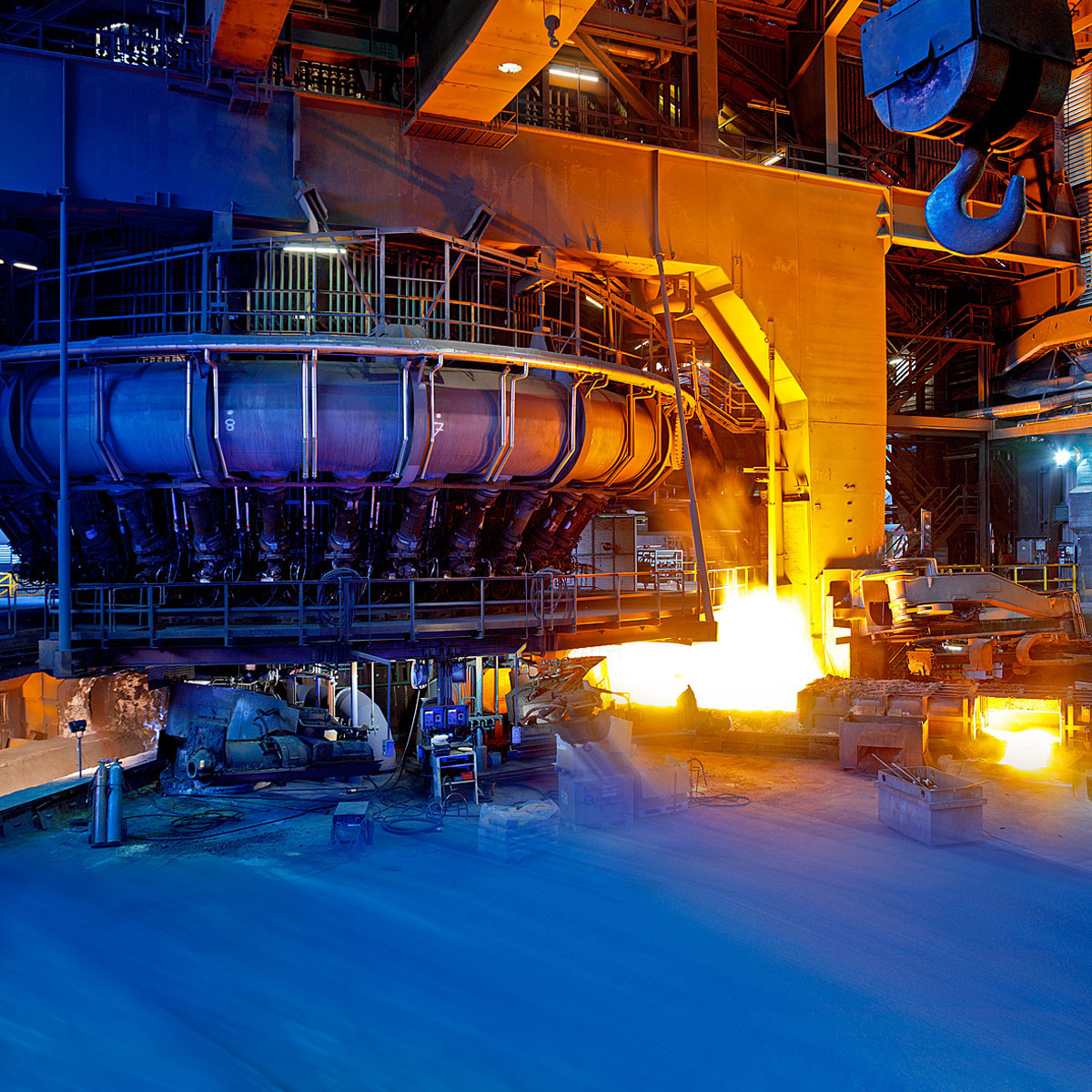
ArcelorMittal Kryvyi Rih (AMKR) is eyeing an expansion of pig iron supplies to buyers in Europe and Turkey, says chief executive Mauro Longobardo.
“After maximising volumes for own production, we do not exclude the expansion of supplies to these buyers, because these markets are the closest geographically,” he observes in an interview published on AMKR’s website. “In addition, we do not exclude deliveries to non-CIS markets, like North and South America, and Asia.”
According to Longobardo, the volumes of merchant pig iron will depend on the order book for finished products and semi-finished products, which in turn depends on steel demand.
The company’s investments during the next three years are expected to total around $600 million, Kallanish notes. They include the construction of an iron ore pellet plant, reconstruction of blast furnace No.9 and the upgrade of the exhaust gas treatment system in BOF shops. The plan is to complete the projects by the end of 2023.
Thereafter, the firm can consider further investments, aimed at increasing efficiency of steelmaking and rolling capacities, and the development of new products with high added value, Longobardo observes.
AMKR expects its own pellet production will lead to higher productivity. In 2024 it plans to operate with one pellet plant with a capacity of 5 million tonnes/year and one sintering plant of more or less the same capacity.
In 2021, the enterprise does not forecast any problems related to reliability of equipment. However, the international market situation is difficult to forecast, the ceo observes. “According to the current outlook, maybe we will see a stable year without drops and decreases like in 2020,” Longobardo notes. “But, considering last year’s experience, it is still possible that the situation might change drastically within weeks.”
Svetoslav Abrossimov Bulgaria

Italian HRC rally continues, market leader hikes again
Italian hot rolled coil producers are still not quoting this week as the market grapples with continued short supply. Some re-rollers are consequently understood being forced to reduce production this month. Domestic as well as imported prices for coil and coil derivatives keep skyrocketing, sources tell Kallanish.
The latest contracts for HRC are hovering at €880-900/tonne ($1,046-1,070) base ex-works. Some traders sold at port last week at €860/t. Today, this price is impossible to find for service centre material. HRC bought by re-rollers is slightly lower quality and therefore cheaper.
ArcelorMittal is meanwhile said to be increasing its prices again this week. HRC now starts for southern Europe at €920/t, while cold rolled coil is priced at €1,040/t base ex-works. The company is quoting €1,075/t for hot-dipped galvanised coil, sources say.
While demand significantly weakened last week as a result of the previous price increases implemented by ArcelorMittal, it is now resuming. However, the limited material availability is hampering producers’ ability to respond to requests.
Only one domestic HRC producer is seen quoting for June-July casting, while other producers are already offering for August-September. When producers resume quoting again next week, asking prices for domestic HRC are seen reaching €950/t base ex-works, Kallanish hears.
Natalia Capra France
ArcelorMittal invests in shot blasting at Essen
ArcelorMittal’s steel distribution centre in Essen is increasing its performance with a new shot blasting device, Kallanish is told by the company.
The investment of around €600,000 ($710,000) is the branch’s response to increasing customer demand for blasted material, ArcelorMittal states. “The investment strengthens our location with a more extensive range and improved delivery time for blasted steel beams,” comments branch manager Andrea Meissler.
Previously, the steel beams were processed by central capacities or external service providers. In an earlier investment step, the warehouse was equipped with comprehensive LED lighting.
The new Gietart-type high-performance blasting unit is capable of processing beams up to a profile of HEM 1000 and a length of up to 20 metres. The integrated filter reduces dust emissions to below 1 mg/m³. Noise emissions are also minimised: the sound insulation ensures a noise level well below 80 decibels.
With the new blasting plant, the house optimises the marketing of steel beams of all common dimensions in grades S235 and S355 in Germany. Gietart is a unit of Kaltenbach located in Hengelo, the Netherlands.
Christian Koehl Germany

French stainless scrap increases slightly
Stainless steel scrap prices in France are increasing slightly in April, but only for certain categories due to see-sawing nickel prices.
The market is however said to be quiet as uncertainty persists due to Covid-19 related restrictions. Stainless flat and tubular products are in high demand, and the coil shortage continues with lead times from mills stretching through September.
Mills are paying €1,300-1,320/t ($1,540-1,563) ex-works for grade 304, up by €20/t ($23) month-on-month. Buyers pay €20-30/t for transport, sources say.
This month, offers for grade 316 are hovering at €1,600-1,650/t ex-works on average. Like last month, this grade is in tight supply and is sold quickly, market participants tell Kallanish.
Meanwhile, nickel prices for cash buyers were at $16,349/t on 5 March and reached $16,001/t on 1 April.
Natalia Capra France
Liberty Steel resumes production at Rotherham
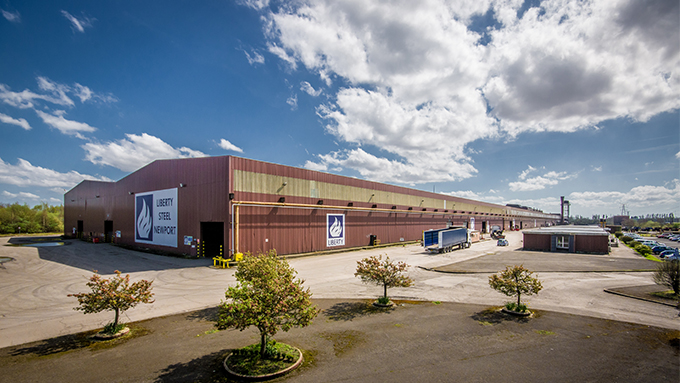
Liberty Steel has resumed partial production at its Rotherham plant following a period of intermittent operations since 12 March, a company spokesperson tells Kallanish.
The firm says it has “also agreed a few manufacturing campaigns in other units, including the Stocksbridge furnace, and the Stocksbridge, Thrybergh and Brinsworth rolling mills”. This indicates that these units are currently idle and also plan to restart production soon. The spokesperson declined to confirm this, however.
“We are grateful for the support from our customers and suppliers in enabling the restart and in supporting our self-help measures such as matching our current stock to customer orders, and working with customers to achieve terms that will bring in cash earlier,” Liberty Steel says.
The group continues to work on securing additional working capital to replace the funding gap left by the collapse of major lender Greensill Capital, and is making use of the UK furlough scheme.
Sanjeev Gupta, the executive chairman and chief executive of Liberty parent GFG Alliance, said earlier the group has received substantial interest from sources looking to refinance its debt, which is in the “many billions”. He also explained the group is in talks over a formal standstill agreement with Greensill’s administrators.
GFG said it would “vigorously” defend any legal action against Liberty Steel following the filing by Credit Suisse of an application through Citigroup in the UK insolvency court to wind up Liberty Commodities Ltd.
UK business secretary Kwasi Kwarteng said the UK government wants to see what new financing GFG can arrange before taking any action to support its UK plants. But officials are prepared to let Liberty Steel collapse into administration before stepping in.
Adam Smith Germany
Eurozone manufacturing index reaches 24-year record
The IHS Markit Eurozone Manufacturing PMI index in March reached a new 24-year record, confirming the positive trend in the region’s manufacturing sector.
“The eurozone’s manufacturing economy performed extremely strongly during March, with operating conditions improving to the greatest degree in nearly 24 years of data collection,” Markit says.
The March index reached 62.5, up from February’s 57.9. Levels above 50.0 indicate expansion in the sector; the EU manufacturing index has now remained above 50.0 for nine consecutive months, Kallanish notes.
The German index reached the highest level of 66.6, followed by the Netherlands (64.7) and Austria (63.4). Spain (56.9) and Greece (51.8) registered the lowest levels, but these nonetheless continue to indicate that the sector is expanding.
“Driving the upturn has been a marked improvement in business confidence in recent months, with expectations of growth in the year ahead running at record highs in February and March,” says Chris Williamson, chief business economist and Markit. “This has not only boosted spending but has also led to rising investment and restocking, as firms prepare for even stronger demand following the vaccine roll-out.”
“The picture is blighted, however, by record supply chain disruptions, which will likely be exacerbated further by delays arising from the Suez Canal blockage. Prices are already rising at the fastest rate for a decade as demand outstrips supply, resulting in a sellers’ market for many goods,” Williamson adds.
March data also confirms that manufacturing production in the eurozone is likely to have surpassed the pre-Covid-19 peak. “Hiring has already accelerated markedly as producers seek to build additional capacity to meet higher demand,” Markit concludes.
Emanuele Norsa Italy
Europe HRC market more import-reliant due to short domestic supply
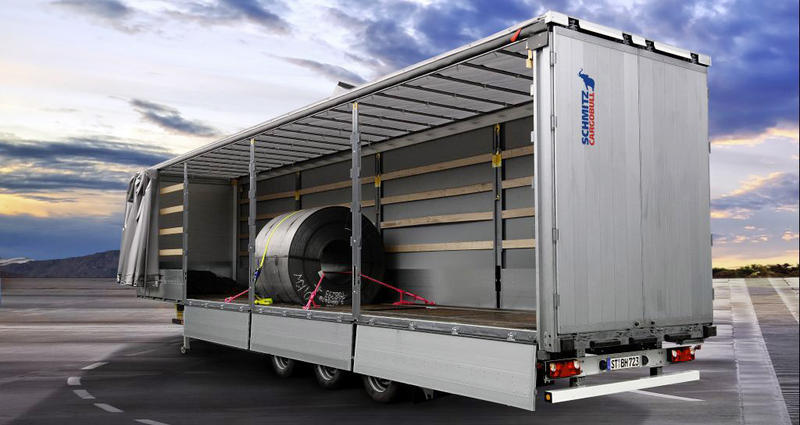
European HRC prices were heard to be approaching Eur900/mt April 6, with the market still uncertain of price movement following the Easter holiday, however, sources were confident of further increases in the near-term.
Supply difficulties remain a fixture in a market desperate for more capacity to return, though participants have said it is unclear when ramp-ups will happen, sources told S&P Global Platts.
Pricing clarity was vague, with sources unable to offer precise tradable values due to limited offers from EU mills.
“I am not sure the Eur900/mt will be reached, but mills are quoting this. We are speaking of lead times of September/October and people are in a rush to cover their needs, [paying] not far from the Eur900/mt price,” a Benelux trader said.
Buy-side and distributor sources said they were actively looking at imports, hoping for a respite from the short supply in the domestic market. However, offers have been few and far between from Far East suppliers.
An Italian trader cited HRC prices at Eur820/mt CIF Italy Ports ex-India and Korea, while a Benelux trader also said Eur820/mt CIF Antwerp was possible from Indonesia. For cold-rolled coil, prices were heard between Eur1000-1100/mt CIF Italy Ports and CIF Antwerp from Turkey and India.
“I am always looking for imports – if import restrictions will stay in the market, then there is no reason why [prices] should become weak,” a German distributor source said. “There are few [import] offers and only long lead times for shipment July-August, then winter will come.”
Uncertainties around anti-dumping duties on Turkish material was also making it difficult for European importers, coupled with limited material arriving in from Asia.
“We don’t know if the anti-dumping duty will be applied or not – we’re chasing to see what the possibilities are from the Far East,” the same Benelux trader said.
— Amanda Flint

India set to exceed HRC quota allowance as EU steel supply struggles
Ongoing shortages across all steel products in the EU has fueled the exigency for steel from overseas, with the European market increasingly more desperate for material. While many market participants have found import offers difficult to acquire, those fortunate enough to book from India have had to incur duty fees for exceeding the quota allowance, European Commission data showed April 6.
Indian import material currently awaiting allocation at European ports stands at 203,058 mt, exceeding the initial quota balance of 162,982 mt by 40,076 mt. Meanwhile, Turkish steel awaiting allocation stands at 29,065 mt out of the 317,278 mt initial balance.
Once a quota balance dips below 10%, importers are obliged to deposit with customs authorities a 25% bank guarantee to cover any potential duty liability.
Indian hot-rolled coil import prices were heard between Eur820-850/mt CIF Italy Ports and as high as Eur1100/mt CIF Antwerp for CRC material.
A German distributor said he was surprised to hear the quota allowance had been exceeded, but had doubts the bulk of the material would be arriving into North Europe.
“I don’t think this material will come into Antwerp [port], it will come to the South, they are more desperate than us,” the distributor said. “They [Italy] are more desperate than us, they rely heavily on the import market and they are not getting anything, so paying the duty means the situation is desperate.”
In the last month, India has been a prolific presence in the import market, only retreating for a few weeks before coming back to the market with new offers last week.
An Italian trader said he was avidly listening to Indian imports before the import quota was exhausted. He added that with the cut to the Chinese tax rebate due this month, it was likely less imports would enter the EU, exacerbating the European supply agony, particularly in Italy.
“There is no material in the market. Most service centers were betting on lower prices and they didn’t buy, and now they have no choice but to book and pay the penalties [on imports],” an Italian buyer said.
— Amanda Flint, Laura Varriale
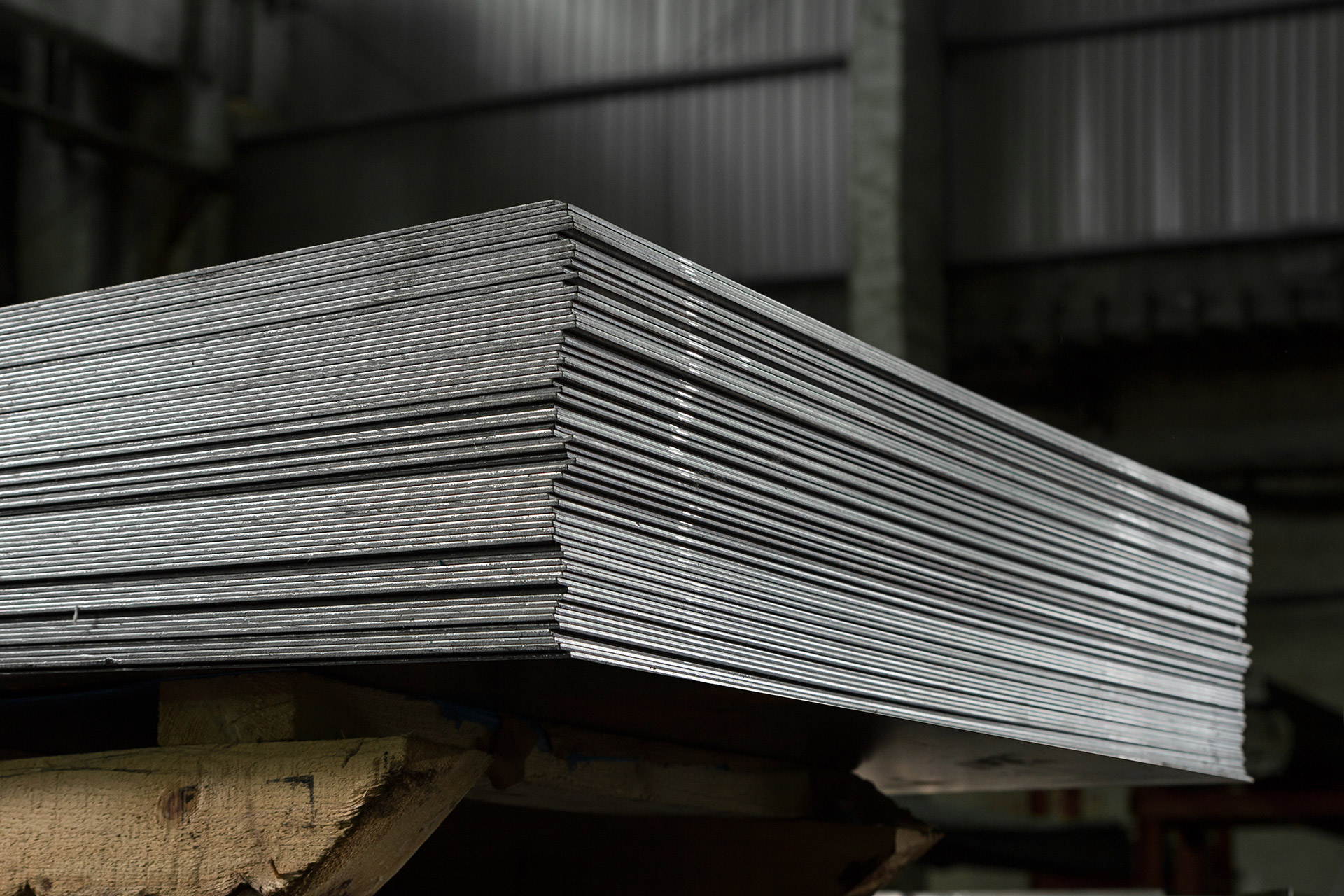
German processors stand defiantly against safeguards
In a statement to the EU Commission, the German associations of sheet formers IBU and cold rollers (FVK) are protesting against a possible extension of safeguard quotas for steel imports.
“The feared flood of imports has not realised, import quotas are falling, global steel capacities are manageable. There is no danger for the EU steel industry – it is even benefiting from the steel shortage,“ the associations say in a release seen by Kallanish.
“Continuation would not be WTO-compliant, as there is no ‘threat of serious injury’ to the industry,” says IBU Managing Director Bernhard Jacobs. “The steel industry’s arguments are based on misinterpretation and non-consideration of data,” he argues.
The statistics show a low for rolled steel imports in 2020, and the declines were already apparent before Covid-19 arrived, Jacobs and Martin Kunkel, managing director of FVK, argue.
The member companies of IBU and FVK produce around 7.5 million tonnes of steel components annually. The German steel processing sector encompasses some 3.5 million jobs – 10 times more than the mills, the associations point out. “It cannot be the EU’s interest that we are at risk simply because we cannot meet our needs through freely traded imports,” they say in their joint stament.
Christian Koehl Germany