

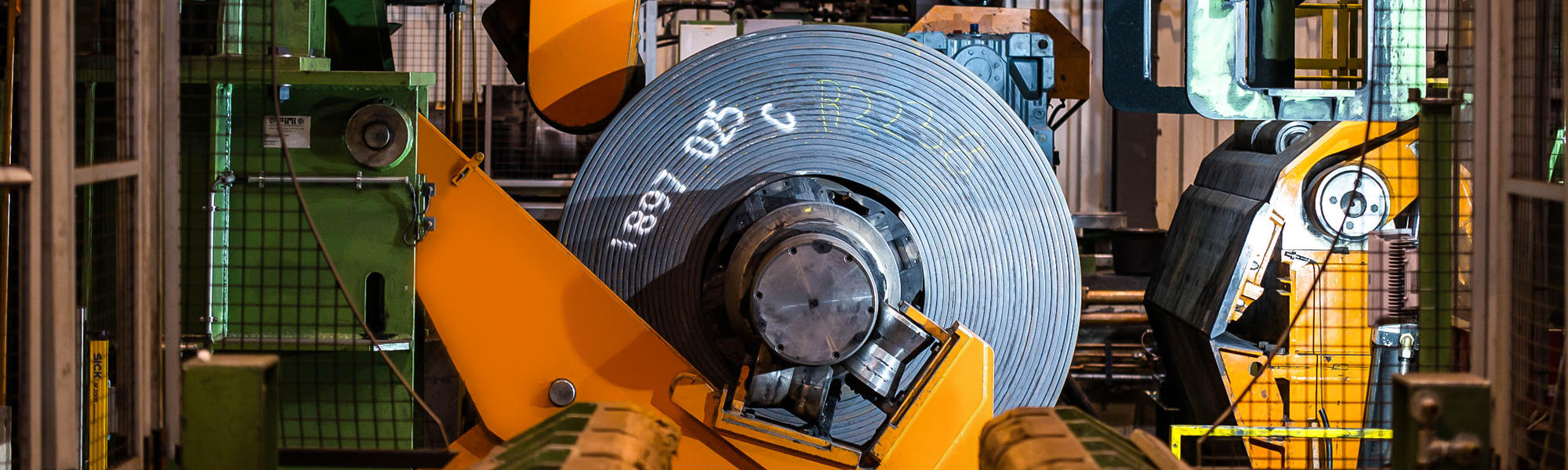
Greek coil re-roller delays restart
Hellenic Steel, the Greek coil re-roller that was acquired by Jordan International at the end of 2019 is yet to re-start production, Kallanish learns from sources.
When the acquisition was finalised, the company had planned to re-launch output during 2020, but the target could not be achieved. Now the priority is to relaunch first the tandem rolling mill during the second half of this year.
The plant should have the capacity to manufacture 350,000 tonnes/year of finished products. It has the capacity to produce cold rolled coil, hot-dip galvanized coil and tinplate using hot rolled coil as the feed material.
Emanuele Norsa Italy


Turkey further increases scrap imports in February
Turkish scrap imports continued to rise in February by 16.4% on-year to 2.07 million tonnes. February imports, however, did not differ much from January imports at 2mt, according to Turkish Statistical Institute (TUIK) data monitored by Kallanish.
Almost 95%, or 1.97mt, of the February imports were obsolete scrap. The Netherlands was the main supplier at 432,447 tonnes, up 50.7% on-year. The US followed with 271,672t, down 29.6% on-year. Belgium more than doubled supply to 184,995t in February. Despite the increased export duty on scrap from 31 January, Russia provided 141,227t in February, up 11% on-year.
France delivered 194,927t, down 38.2%. Lithuania more than doubled supply to 115,876t in January. Romania sourced 106,975t, up 30.2%, and Belgium supplied 98,063t, down 44.2%. France delivered 128,444t, up 4.2% on-year versus only 6,574t last year. Denmark sourced 104,825t in February, versus only 31,146t last year. Romania’s supply remained almost unchanged at 88,371t. Israel almost doubled supply to 77,080. Lithuania supplied 61,402t and Germany sourced 53,614t, down 40.5% and 22.4% respectively on-year. Croatia increased deliveries significantly by 82.9% to 53,099t in February. Bulgaria delivered 52,333t versus only 15,502t last year.
The average value of total scrap imports increased to $406.5/t in February from $294/t in February 2020 and $338.7/t in January.
In January-February, Turkish scrap imports increased 17.2% on-year to 4.08mt. The Netherlands was the largest supplier with 641,498t, up 22.5% on-year. It was followed by the US with 466,663t, down 33% and the UK with 419,372t, up 36%. Russia supplied 352,534t, up 41%.
Turkish imports of HS code 720711 billet, meanwhile, more than trebled to 389,862t in February. This was, also, up from 149,781t in January.
Russia more than doubled supply to 185,628t in February. Ukraine followed with 104,645t versus only 33,103t last year. Qatar, Oman and Azerbaijan sourced 48,000t, 37,343t and 6,484t respectively versus zero last year. Albania, which provided almost zero last year, delivered 4,792t in February.
Two-month HS code 720711 imports more than doubled to 539,643t. The largest supplier was Russia with 294,042t.
Turkish rebar exports surged 25% on-year to 573,291t in February (see Kallanish passim).
Burcak Alpman Turkey
Turkey’s steel exports to EU fall 20%, exports to the US slump
Turkish steel exports to the EU, one of their main markets, declined 20.2% on year in the first two months of the year, due to ongoing protection measures, while exports to the US declined more sharply, by 48.5% on year, amid Section 232 tariffs, the Turkish Steel Producers’ Association (TCUD) said, without citing tonnages.
The European Commission opened an investigation at the end of February to determine whether the current system of EU steel import safeguards should continue after June 30, as reported.
TCUD said the removal of EU import safeguards and the US tariff is crucial for Turkish steel exporters.
Despite Turkish steel producers’ attempts to diversify their export destinations, mills’ overall steel exports declined by 9.4% on year to 2.6 million mt in the first two months of 2021, while revenue generated from these exports increased by 9.1% on year to $1.6 billion, amid higher steel pricing globally.
Despite the decline seen in Turkish mills’ export volumes, steel import volumes into Turkey, rose notably in February amid the sharp increase seen in domestic steel consumption.
According to the latest TCUD data, domestic finished steel consumption rose by 15% on year in February to 2.8 million mt, while steel imports increased 19.5% on year to 1.3 million mt. The value of these imports reached $874 million, up by 40.5% on year.
This increase raised Turkish steel producers’ concerns about the protection of the Turkish steel market from imports.
As a counter measure to the EC’s imposition of provisional antidumping duties of 4.8%-7.6% on imports of HRC from Turkey on Jan. 7, Turkey started a dumping investigation against HRC imports from the EU and South Korea on Jan. 9, the results of which are not expected to be announced until H2.
— Cenk Can

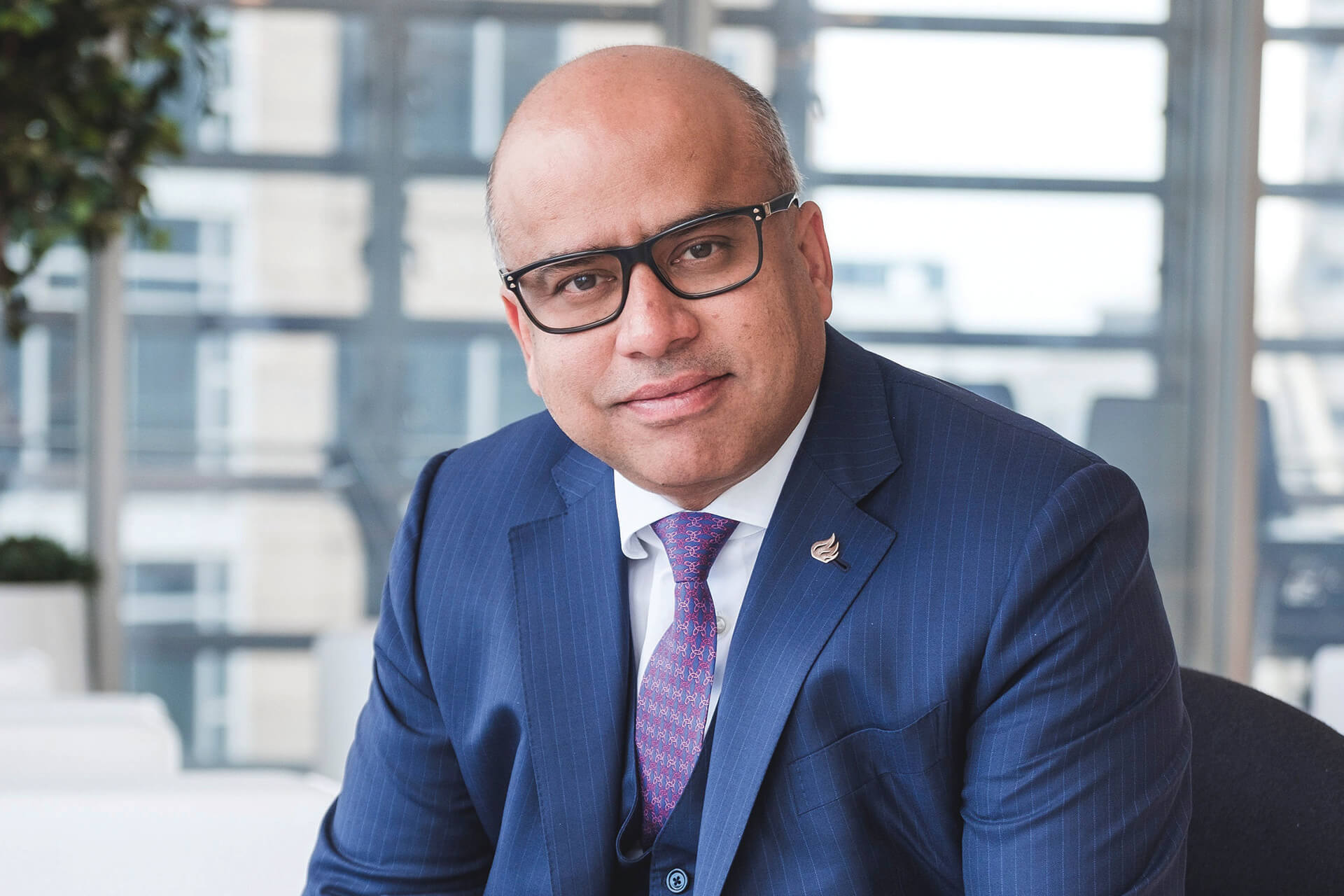
Der strauchelnde Stahlmagnat
Einst als „Retter der britischen Stahlindustrie“ gefeiert, kämpft Sanjeev Gupta gegen den Kollaps. Um die Greensill-Pleite kommen neue Ungereimtheiten auf.
Sanjeev Gupta gilt als einer, der aus dem Nichts ein globales Unternehmensimperium geschaffen hat. Doch genau dort könnte es nun auch enden: im Nichts. Gupta dirigiert Stahlwerke und andere Betriebe, insgesamt 35.000 Mitarbeiter in 30 Ländern, aber nun steht er am Rande der Insolvenz. Der Mann, der noch vor kurzem versuchte, die Stahlsparte von Thyssen-Krupp zu übernehmen, kämpft ums finanzielle Überleben. Er droht in den Insolvenzstrudel um Greensill Capital hineingezogen zu werden. Derzeit versuchen externe Berater, den Wert seiner Unternehmen abzüglich der Schulden zu ermitteln. Sie kommen auf mickrige Summen, die britischen Stahlwerke haben sogar einen Negativwert.
Guptas Schuldenberg ist sichtbar geworden, als seine Hauptfinanzierungsquelle Lex Greensill vor ein paar Wochen Insolvenz anmeldete. Greensills Anwälte sagen, dass Guptas Familienholding GFG Alliance Greensill bis zu 5 Milliarden Pfund (5,8 Milliarden Euro) schulde. Andere sprechen von 3 Milliarden Pfund.
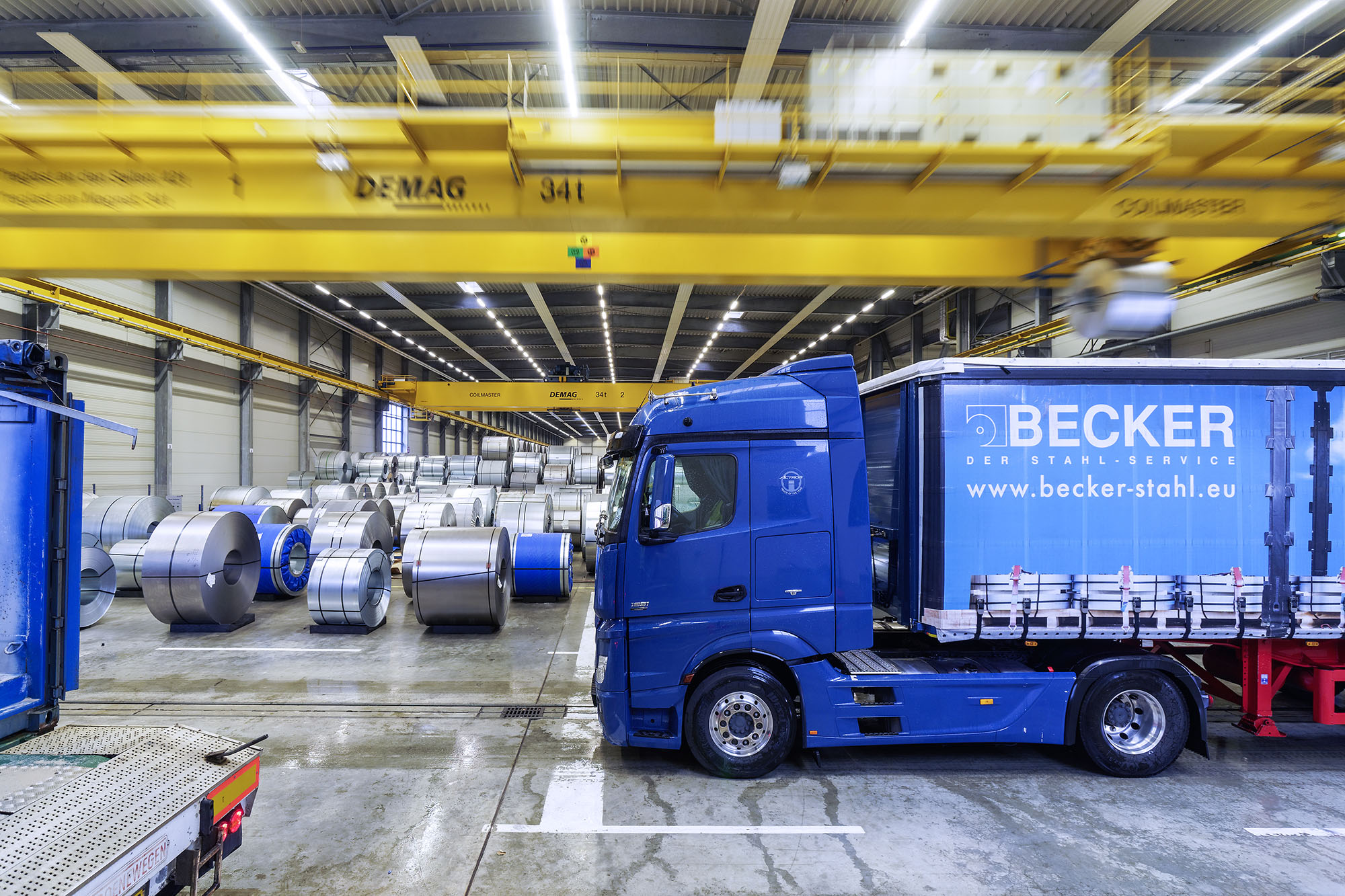
Becker-Stahl increases slitting line productivity with upgrade
Germany’s Becker-Stahl Service has improved slitting line productivity after Danieli Fröhling completed a successful revamp of the shear and the exit guide, Kallanish notes.
The project included supply of a new gearbox and a fully automatic mandrel changing device. All the new equipment was designed in-house and pre-assembled at Danieli Fröhling’s workshops in Meinerzhagen, Germany.
The revamp has ensured dramatically improved slitting line productivity, Danieli observes. The revamped slitting shear was empowered to cut 50% thicker strips, increasing production by 50%. This enables the customer to produce a wider range of products while complying with the market’s more demanding requirements, the technology supplier adds.
The production diameter of the mandrel can be changed in less than three minutes, improved from the originally contracted five minutes. This means Becker Stahl is able to change the mandrel diameter, coil by coil, without affecting production. High flexibility is therefore achieved while shortening the delivery time of products to customers.
Becker-Stahl Service is one of Europe’s largest coil service centres. It supplies wide band, slit strip, rectangular plate, blanks and trapezoid blanks. In 2020 it shipped around 900,000 tonnes of steel products and some 140,000t of raw materials. Almost 50% of all deliveries go to the automotive industry and about 25% of shipments are for export, delivered to customers throughout Europe.
Svetoslav Abrossimov Bulgaria
Xijun Cao named British Steel CEO
British Steel President Xijun Cao will assume the additional role of CEO in early April, replacing Ron Deelen who stepped down at the end of March, although he will continue to work closely with the business.
“I’m honored to be leading the next stage of British Steel’s transformation and look forward to helping my colleagues build on their achievements during the last 12 months,” Xijun Cao stated.
In March last year China’s Jingye Group bought British Steel pledging a GBP 1.2 billion ($1.53 billion) investment to modernize the mill. The steelmaker is the second largest UK steel producer with a crude steel capacity of about 3 million mt/year. The company makes more than 1,450 specifications of long steel products including wire rod, sections, special profiles and rail. The headquarters are at the integrated steelworks in Scunthorpe, North Lincolnshire, where there are four blast furnaces, two of which are currently operative.
Recently the company stated that its investing GBP 100 million this year to improve manufacturing and environmental performance. The company with this fresh investment will help finance a new billet caster, a scrap pre-heating facility, cranes and a new environmental emission control system.
Since the acquisition British Steel went back in black and launched new products, introduced 24-7 operations at its Teesside and Skinningrove mills and resumed operational control of Immingham Bulk Terminal.
— Annalisa Villa
French longs exports plummet in 2020
French steel exports to non-EU countries increased on-year in December 2020 after declining in the previous months, Kallanish learns from new data released by national steel association Fédération Française de l’Acier (FFA). Steel shipments however decreased significantly in 2020 compared to 2019.
French exports of flat and long steel to countries outside the EU28 went up by 15.5% year-on-year in December to 134,000 tonnes. Flats exports increased 19.6% to 128,000t, compared to 107,000t in December 2019. Longs exports however declined 33.3% to 6,000t, compared to 9,000t a year earlier, the association reveals.
In 2020 French long and flat product exports to non-EU countries decreased on-year by 20% to 124,000 t/month. Exports of flats fell 16.5% to 111,000 t/m, while longs exports plummeted 40.9% to 13,000 t/m, the association concludes.
In February French crude steel output was down 8.8% on-year to 1.12 million tonnes.
Natalia Capra France

Swiss Steel selects Metalshub as procurement platform
Swiss Steel has selected cloud-based platform Metalshub for its raw material procurement activities, Kallanish hears from the maker of special bar qualities.
Metalshub will be used for purchasing a significant proportion of raw materials and will be integrated with the existing ERP system of Swiss Steel’s four European business units, Ascometal, Deutsche Edelstahlwerke, Ugitech and Steeltec.
The steelmaking group says it is in the process of driving forward the digitalisation of its processes and activities by implementing a digital procurement solution. “While efficiency and compliance are key drivers for introducing digital procurement solutions, Swiss Steel is also supporting the development of more liquid and transparent raw material markets,” says vice president corporate purchasing Gerd Oehm. “Metalshub is enabling us to become more efficient while creating a liquid spot market for our required raw materials.”
Düsseldorf-based Metalshub has more than 1,100 companies registered on its digital platform. It recently won the Saarland mills Saarstahl and Dillinger as major clients (see Kallanish 16 February).
Christian Koehl Germany
ArcelorMittal specifies costs of DRI conversion in Germany
The conversion of ArcelorMittal’s German integrated mills in Bremen and Eisenhüttenstadt to make direct reduced iron will result in steel production costs that are around 60% higher than they are today.
The company is therefore pleading “for the necessary [political] support and access to funding, to make the implementation of our plans happen,” Kallanish reads in a press release.
The group also put a figure to the technology conversion at the plants, which it says requires investments in the range of €1-1.5 billion ($1.17-176 billion). It also specifies that the conversion will involve the construction of electric arc furnaces at both sites, and an innovative DRI pilot plant in Eisenhüttenstadt.
This year, two blast furnaces – one in Bremen and one in Eisenhüttenstadt – will be converted to inject natural gas, reducing the use of coal in the iron ore reduction process (see Kallanish passim).
At a later stage, hydrogen is to be made available as part of the regional North German Clean Hydrogen Coastline network. The sponge iron produced at the Bremen DRI unit will initially supply the steelworks in Bremen and Eisenhüttenstadt, until the regional hydrogen cluster in East Brandenburg can also supply the Eisenhüttenstadt site with sufficient hydrogen.
In the transition phase, the additional hydrogen required in Eisenhüttenstadt will be generated from natural gas with the help of a pyrolysis plant that will be built on the steel plant’s premises.
Christian Koehl Germany

UK government awaits GFG refinancing, prepared for collapse
The UK government wants to see what new financing GFG Alliance can arrange before taking any action to support its UK plants. But officials are prepared to let Liberty Steel collapse into administration before stepping in, says UK business secretary Kwasi Kwarteng.
“It’s an important national asset and what we have to do is distinguish between Liberty Steel and the company that sits above it, which is called the Gupta Family Group,” Kwarteng told BBC radio on Tuesday. The government’s top priority is to make sure the group’s UK plants continue operating, he added.
When asked if the government wants to let Liberty collapse so that it separates from GFG, Kwarteng said officials are “looking at all plans at the moment”. But they want initially to see how GFG can refinance its debt, Kallanish notes.
The government rejected GFG’s request for a £170 million ($235m) emergency loan because of concerns over the group’s opacity. “We are custodians of taxpayers money and there were concerns over the very opaque structure of the GFG group, and we feel that if we gave the money there is no guarantee that money would stay in the UK and protect our British jobs,” Kwarteng commented.
The business secretary also said UK net zero legislation has “changed the dynamics in terms of government’s relationship to parts of the economy”, making government intervention in the private sector more acceptable in some circumstances.
The GMB union said it would seek an urgent meeting with Kwarteng, following the government’s rejection of GFG’s emergency loan request, to discuss a “Plan B” that would include public ownership of Liberty’s UK businesses.
Adam Smith Germany