


Industry has decarbonisation technology, needs policy support: Primetals
The technology required for steelmaking decarbonisation is already available, but policy support is needed to make the transition economical, says Primetals head of sales direct reduction Christian Böhm. Moreover, a potential lack of feedstock for direct reduced iron production could pose a problem after 2030.
In order for hydrogen steelmaking to be successful, an economical supply of “green/yellow” electrical power and hydrogen is required. This means electricity costing $0.02-0.03 cents per kWh and hydrogen at $1-2 per kg. Prices must become competitive versus natural gas, according to Böhm.
There also has to be adequate iron ore feedstock supply. DRI-electric arc furnace route producers require high-grade materials, which may be in short supply following the expected commissioning of substantial new DRI capacity in the coming years.
There should be sufficient iron ore fines and DR-grade pellet availability until 2030. “But what comes after, it’s a crystal ball, we can only guess; but based on the number of direct reduction facilities and electric arc furnaces proposed, it will surely be a problem,” Böhm said at this week’s International Iron Metallics Conference 2021 attended by Kallanish.
The transition will be gradual and done in steps. This will first see the optimisation of existing plants, followed by the transition phase and then the final “green” steel phase. It will take time to change the mindset of people, Böhm pointed out. Moreover, carbon emissions need to be made costly to incentive this transition.
Around two thirds of global steelmaking is done through the basic oxygen furnace route. This route will still account for 55% of steelmaking in 2050, Böhm suggested. It is unlikely the world will achieve zero carbon per tonne of liquid steel by 2050, “but at least we will be very close”, he commented. The final phase will see a 70-80% CO2 reduction versus today.
“Technology is not the point, it’s the economics. We need the framework conditions to have these technologies being applied,” Böhm concluded.
Adam Smith Germany

Ore-based metallics demand to continue growing: IMH
The availability of merchant pig iron in the global market is driving the reduction of CO2 emissions, as it supports one of the most ecologically friendly steelmaking routes, the electric arc furnace, says Industrial Metallurgical Holding (IMH) vice president Sergey Frolov.
China is set to continue raising its EAF capacity, indicating pig iron, HBI/DRI and other metallics supply issues in the future. To offset the high content of residual elements and impurities in ferrous scrap used in EAFs, higher volumes of virgin metallics will be needed, both to increase quality of steel and to reduce pollution, he said at this week’s International Iron Metallics Conference 2021 attended by Kallanish.
The demand outlook for merchant pig iron and other metallics therefore remains positive. WSD forecasts 2 billion tonnes of steel to be produced globally by 2025, with the biggest share of it made by EAFs. The share is expected to increase from 29% in 2019 to 53% in 2070 amid the ongoing reduction of carbon footprint and other pollution.
IMH significantly increased its pig iron exports to China in 2020, a trend that started in mid-2019. The firm exported 58% of all its pig iron to Asia in 2020, up from just 9% in 2019 and 2018. The US reduced its intake from 56% in 2019 to 19% in 2020. Turkey took a 10% share, down from 15% in 2019, and the EU took 11%, down from 19% in 2019.
The EAF route produces four times less carbon per tonne of steel compared to BOF-based production, Frolov said. In the last five years, in line with the US and EU, China has been increasing its share of environment-friendly steelmaking technologies, raising the share of EAFs from 6% in 2014 to 9% in 2019. This means a production of 47 million tonnes in 2015 versus an estimated 128mt in 2021. The EU’s share of EAF-produced steel rose from 39% in 2014 to 41% in 2019, Frolov noted.
UK government mulls supporting Liberty ‘in its entirety’
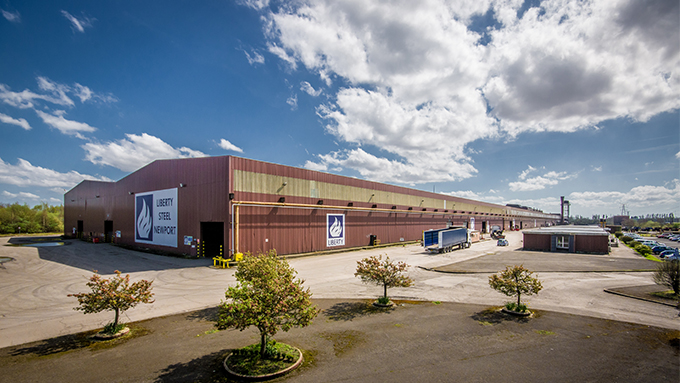
Westminster is looking at supporting Liberty Steel in England and Wales “in its entirety”, UK business secretary Kwasi Kwarteng said in the House of Commons on Thursday.
Pressed by some members of parliament on how much government ministers knew about Liberty lender Greensill Capital’s financial situation before its collapse, Kwarteng said an investigation is now under way, Kallanish notes.
In terms of government intervention in Liberty, “it is not appropriate now, given where we are, to disclose anything of that kind, but of course this is an ongoing situation that we’re monitoring very closely”, the business secretary said. However, he later added that Liberty has many units spread across England and Wales and “we’re looking very closely at what specific assets, what specific jobs are necessary, and we hope to support the company in its entirety”.
Kwarteng stressed there is a future for UK steel. The government’s plans will require around 5 million tonnes of steel in the next decade, and it “absolutely a commitment of mine” to ensure the UK has a viable steel industry to support this demand, he added. He refused, however, to be draw in to revealing specifics on what commitments the government had made to ensure local content in UK projects.
In terms of uncompetitive energy prices, Kwarteng said work had been commissioned to tackle this issue and that he is in contact with the UK Chancellor to see what can be done to address this problem.
Adam Smith Germany

European Commission letter to EUROMETAL
Please see a link to a letter from European Commission Executive Vice-President Valdis Dombrovskis, addressed to EUROMETAL.

Koch to become Swiss Steel chief in July
Frank Koch will become chief executive of Swiss Steel Group from 1 July, Kallanish learns form a company note.
Koch’s appointment was announced in principle late last year, although the date for the start in the position was not clearly given (see Kallanish passim). Koch was hired by Swiss Steel while holding the top post at Germany’s Georgsmarienhütte Negotiations between the two SBQ steelmakers apparently dragged on, as initially 1 January 2022 was given as the date for his transfer.
Since 2008, Koch has been responsible for various functions within GMH. Earlier, he was employed by thyssenkrupp units, and also with Deutsche Edelstahlwerke, which are now part of Swiss Steel.
Christian Koehl Germany

Circular economic impact to supress steel demand: worldsteel
Circular economic impacts will supress an estimated 483 million tonnes of steel demand by 2040, with “remanufacturing” seen growing as increased raw materials costs make steelmaking more costly, says worldsteel director, safety environment and technology Andy Purvis.
Remanufacturing – returning a product to at least its original performance levels – will extend the service life of steel, which reduces demand for new steel. At €14 billion ($17 billion), the value of remanufacturing is a lot less than other circular economy activities, particularly recycling, but it has growth potential. It is generally well-suited to high-value technical products, Purvis said at this week’s International Iron Metallics Conference 2021 attended by Kallanish.
Besides raw material costs, another remanufacturing growth driver will be the use of new fiscal instruments that could improve remanufactured goods’ competitiveness, such as carbon pricing and tax reduction. Moreover, regulatory and social trends are expected to support greater acceptance.
There are barriers, however, such as unfavourable customer attitudes towards perceived “second-hand” products, and step changes in drivetrain technologies. The internal combustion engine remains king, and the move to electric vehicles will represent a discontinuity – there will be no market for existing combustion engines as the market goes through this transition, Purvis pointed out. Electric drivetrains will meanwhile be less steel intensive in the future.
Despite this, new simpler drivetrains represent one of the highest potential new products for manufacturing, as do wind turbines.
Worldsteel expects the value of remanufacturing to grow, albeit from a low base. In 2018 European auto remanufacturing was estimated at around €8 billion, versus the €500 billion gross value of the German carmaking sector. Its value could however grow to €30 billion by 2050. The total size of the four remanufacturing sectors could grow to €29-47 billion by 2050.
The cumulative volume of retained steel from remanufacturing to 2050 is seen at 20-31mt. The total circular economic impact on steel demand is therefore small but with potential to grow, Purvis concluded.
Adam Smith Germany
EU steel sections prices increase as mills raise offers
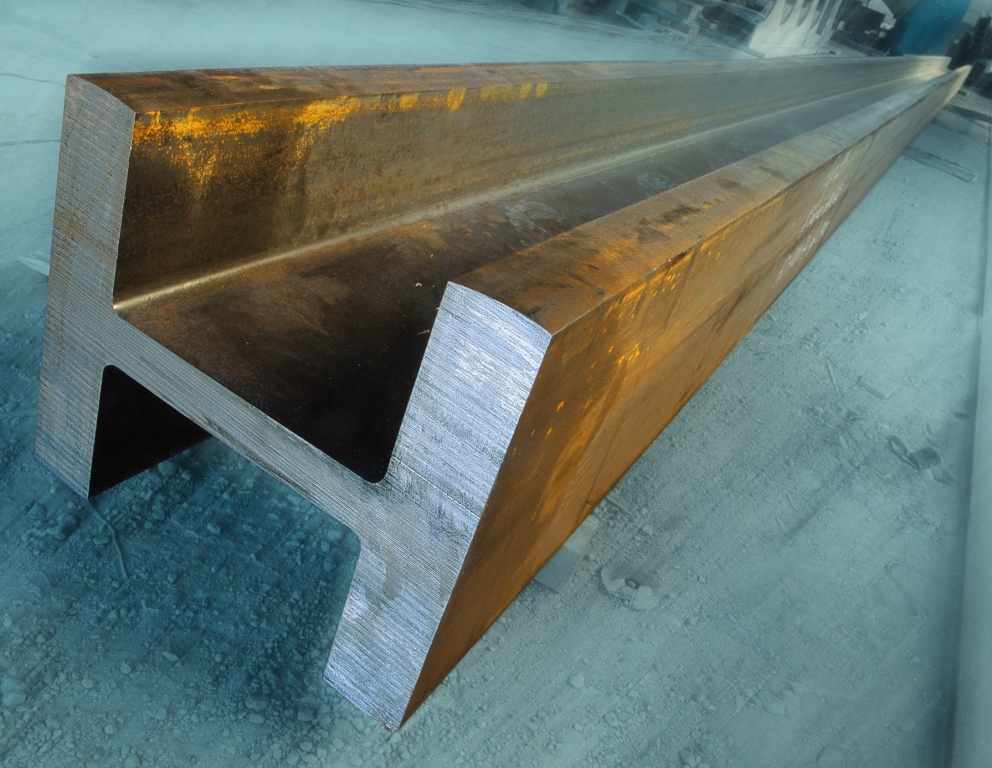
European domestic steel sections prices increased over the week to March 24, as producers raised offers following increases in domestic EU scrap prices.
Platts’ European medium sections price (category 1, S235 JR) was assessed at Eur735/mt delivered March 24, up Eur15/mt on week.
One European mill source told Platts that they have increased their mill offers to Eur740/mt delivered. “This week we are not accepting anything below that level. We are seeing some demand at these levels. But buyers are only buying what they strictly need,” he said.
One distributor source in the Benelux region reported a deal for 1,000 mt at Eur740/mt delivered, adding that demand is good at the moment.
Another distributor source, however, noted that prices are almost stable putting a tradable value for medium sections at Eur710-Eur720/mt delivered.
“Mills in Europe expect scrap prices to go up in April, but I am a bit surprised because international scrap is going down a lot,” he told Platts.
Platts assessed Turkish imports of premium heavy melting scrap 1/2 (80:20) March 24 at $415/mt CFR, down sharply from a recent high of $462.50/mt CFR on March 8.
In Northern Europe, S&P Global Platts’ March assessment for Northern European domestic shredded scrap was Eur365-370/mt delivered, up on the month from Eur330-335/mt delivered in February.
The source also expects demand to slow down a little in the near term as Easter holidays approach. In addition, with the month of Ramadan expected around mid-April and different levels of lockdowns currently being imposed in various European countries, he thinks that the market might get a little quieter.
— Rabia Arif

OECD Steel Committee to speed work on subsidies database
The OECD Steel Committee plans to accelerate creation of a comprehensive database on government support to steel producers in large steel-producing economies, the committee said March 24.
Such subsidies and other support measures have led to distortions in steel trade flows and contributed to trade tensions, the OECD says.
OECD members have agreed to resume collecting subsidy data on the world’s largest steel-producing jurisdictions, including jurisdictions where recent data on increasing production has raised concerns about potential government support, the committee said in a March 24 statement.
State-owned enterprises, with their activities in domestic and international steel markets, are potentially creating market distortions, the committee said. Members now aim to better understand the market context of cross-border investments by SOEs and to shed light on the financing and support measures provided to them. The organization did not confirm which countries received subsidies and how much.
European countries have singled out Turkey and China as receiving state help for their steel mills. SOEs are an important component of the Chinese economy. It is not also clear if the OECD database includes state aid to help companies decarbonize. The European Union has outlined a well-publicized green deal to help companies achieve carbon neutrality by 2050 and is now working to put in place a carbon adjustment mechanism for imported steel products into the EU.
The OECD reiterated the importance and need for steelmaking capacity reductions, while supporting workers affected by plant closures. The latest available data from the OECD shows that global steelmaking capacity increased to 2.45 billion mt in 2020. In addition, the gap between global steelmaking capacity and crude steel production increased to 625.4 million mt in 2020.
The OECD committee underlined that a number of planned capacity increases are premised on expectations of strong increases in future demand, with many investments supported by governments and not driven by market considerations.
Analysts contacted by S&P Global Platts said overcapacity definitely exists but is not “felt by the market at the moment,” as there is a shortage of steel products in some areas, causing some prices to reach historical high levels.
On this point, an OECD spokesperson said: “Product prices have increased recently, but the extent to which they have differs across steel products and regions. Prices of key steelmaking raw materials have also increased sharply, which has worked to weaken average profit margins in the steel industry.
“Also important is to note that structural overcapacity remains very high in the industry, and needs to be addressed to promote longer-lasting stability and viability of the global steel market.”
The OECD Steel Committee met virtually March 18-19 and March 22-23. The committee has 25 members (Austria, Belgium, Canada, the Czech Republic, Finland, France, Germany, Hungary, Italy, Japan, Korea, Luxembourg, Mexico, the Netherlands, Poland, Portugal, the Slovak Republic, Slovenia, Spain, Sweden, Switzerland, Turkey, the UK, the US and the EU). In addition, five associates (Brazil, Kazakhstan, Romania, Russia and Ukraine) and seven participants (Argentina, Bulgaria, Egypt, India, Malaysia, South Africa and Taiwan) bring their perspectives to the committee’s work. A number of other economies also participate in some steel committee meetings as invitees.
— Annalisa Villa
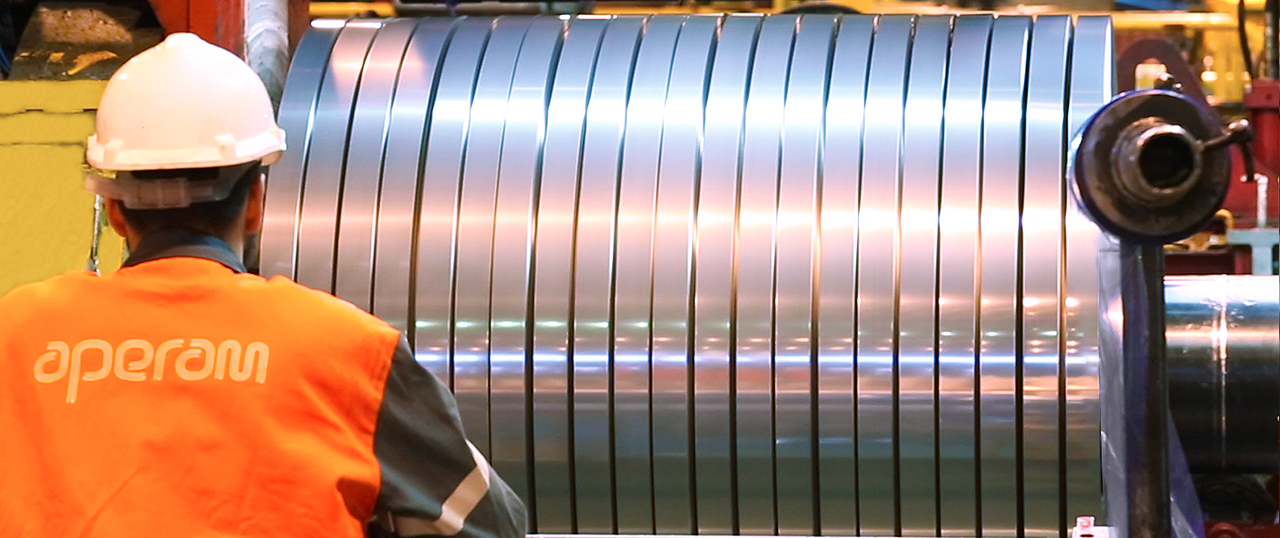
Aperam decreases April alloy surcharges
French stainless producer Aperam has slightly decreased its April alloy surcharges for its austenitic range of flat stainless steels for Europe by over €20/tonne ($23) compared to last month, Kallanish learns from the company.
The surcharge for grade 304 (1.4301) has gone down from €1,846/t in March to €1,822/t effective 1 April. For grade 316 it has gone from €2,629/t this month to €2,607/t for April. Grade 309S, a heat-resistant stainless steel used in high-temperature applications, has decreased from €2,511/t in March to €2,452/t next month. The surcharge for the most popular ferritic grade, 409, has risen however from €635/t this month to €690/t from 1 April, the company reveals.
Nickel prices for cash buyers have steadily decreased in recent months. Offers for cash buyers were at $19,352/t as of 24 February and reached $16,526/t on 23 March, Kallanish notes.
Natalia Capra France

Italian government tells ArcelorMittal funds will come
The Italian government is actively working to authorise as soon as possible the payment of the first instalment of €400 million ($472m) towards the relaunch of the Taranto steelworks, says state investment vehicle Invitalia.
This comes in response to ArcelorMittal’s announcement this week of further production cuts at the Taranto site following Invitalia’s failure to provide funds within the agreed timeline (see Kallanish 23 March).
ArcelorMittal signed last year a binding agreement with Invitalia to form a 50-50 public-private partnership to operate Taranto. Invitalia agreed to invest in ArcelorMittal’s Taranto operating subsidiary, AM InvestCo, in two tranches. The first investment of €400m was to be made by 5 February 2021.
In a letter to ArcelorMittal obtained by Kallanish, Invitalia states: “With regard to your specific allegations, we reiterate that the amount to be used for the investment must be provided to Invitalia by the Ministry of the Economy and Finance.” The signatory of the letter, Invitalia chief executive Domenico Arcuri, adds the firm is waiting for the assessment of the responsible ministry.
Meanwhile, ArcelorMittal Italia has reportedly told unions it will not go through with the further production cuts announced this week, although this has not yet been put in writing.
Natalia Capra France