


French plate shortage continues, Italian prices hike
The short supply of French heavy plates is hampering sales and slowing the market. The current shortage is connected to coil’s limited availability and the priority given from the country’s largest steelmaker to coil-making from slabs, distribution sources tell Kallanish.
Prices for plates have been pushed up steadily over the past weeks in France and grade S275 is being sold by distributors at over €800-810/tonne ex-works ($951-963/t).
“I sell a large range of plates and I normally have a 10% lack of availability. This month the share of unavailable material has gone up to 80%,” one source comments.
Meanwhile, across the border, Italian S275 is now at €700/t ex-works on average in the latest contracts and €15/t more for the higher 355 grade. The gap in price between Italian and French material is mostly due to later Italian availability, which is offset by weak and fluctuating demand. Last month plate contracts for S275 were at €640-650-660/t ex-works on average and produces had short lead-time. In March, prices have been pushed up thanks to a surge in demand at the beginning of the month. This has suddenly lengthened lead-time, pushed back to May for some producers. Italian plate re-rollers are selling high volumes to France at French prices, sources say
Despite having been the sick product of the Italian steel industry, plates producers have compensated for the unreliable domestic demand with exports to Europe. One producer says that in 2020 plates sales have slightly grown compared to the previous year but domestic prices remain too low in light of the high values of imported slabs.
CIS slab was sold last week by a Ukrainian producer to Turkey at the expected level of $750/tonne cfr, netting back to $730/t fob Black Sea (see Kallanish 17 March).
Natalia Capra France


European HRC market moves higher amid low supply
European hot-rolled coil prices were heard higher in the market March 17, with most sources quoting theoretical prices due to the lack of available tonnage among mills. Mills were heard to be wrapping up bookings for Q3 and now looking at securing orders for Q4, sources told S&P Global Platts.
One European seller said despite the advice of his mill to not sell and preserve tonnage, he was still making small deals in order to maintain working relationships with his legacy customers.
“We have no binding contracts, so usually we’ll deliver 10,000 mt, but that’s now being cut by 90% to 1,000 mt,” the mill source said. “We don’t speak about prices.”
In the last few days, sources noted difficulty quoting workable prices that could be supported by tangible deals made in the market even as stockholders in Europe are desperate to replenish their inventories.
“I thought this trend wouldn’t last, but now it wont change until after July,” the mill source said.
Market participants were also staying away from imports given rising freight costs and a shortage on containers.
Import prices were heard at Eur755/mt CIF Antwerp from Vietnam and for CRC material heard at Eur930/mt FCA Antwerp.
“We don’t get any freight offers anymore. Even if you take the material immediately, depending on origin, you can’t be sure how it will get shipped,” a German trader said. “You cannot fix the ocean freight; nobody knows how this market will develop.”
In the Italian market, a service center source said price levels spoken about in the market were theoretical given the lack of supply and advocated for an easing on import restrictions.
“How can we [be] for restrictive measures for imports when the most important EU suppliers take so long for deliveries?” the source said.
— Amanda Flint


Sweden is Europe’s green steel hope as LKAB, Ovako progress
Lower cost European green hydrogen supplies and higher steel prices may be key to Europe’s road to low-emissions steelmaking as the European Commission highlighted Sweden for being quick off the mark.
One year after Ovako and Linde installed hydrogen-based steel reheating into a Swedish mill, and miner LKAB invested into biofuel-fired iron ore pellets to help enable low-emissions DRI production at the HYBRIT joint venture pilot plant, Sweden’s hydrogen projects won praise from EC President Ursula von der Leyen.
New hydrogen direct reduction iron (DRI) plants in northern Sweden may be Europe’s anchor for cutting steel sector carbon emissions to zero, from renewable energy such as hydroelectric power abundant in Scandinavia.
“The steel industry is responsible for up to 9% of global emissions, and companies in Sweden have to and want to bring down their carbon footprint to zero – with water vapor the only by-product,” von der Leyen said on March 16 at an energy conference in Berlin. “Their way to achieve this is clean hydrogen. Hydrogen, derived from renewable energy, such as hydroelectric power. A resource that is as abundant in Scandinavia as high-quality iron ore.”
For blast furnace-based steel producers in Sweden and across Europe, many are targeting commissioning DRI plants and electric arc furnace (EAF) mills to make steel, helping lower emissions. State-owned miner LKAB, which supplies iron ore pellets to several steel groups operating in Europe, wants to eventually deploy direct reduction of iron ore into iron through new DRI plants, and transition from pelletizing over the next two decades.
For DRI plants seeking hydrogen as the primary energy feed, the availability of electrolyzers and renewable power is a concern for the industry built on plentiful and cheap natural gas supplies.
Green steel costs
The EC expects green steel to cost around Eur100/mt ($119/mt) more to produce, and this may be addressed by new taxes such as the Carbon Border Adjustment Mechanism, and investments, incentivizing them through broadening the scope of the EU’s Emissions Trading System to include more sectors. The reference December 2021 EU Allowance carbon futures exceeded Eur40/mt in trading this year, building on a price recovery in late-2020.
“Green steel costs around Eur100/mt than traditionally carbon-heavy produced steel. So clearly, we have to prevent cheap products from abroad from undermining our efforts,” von der Leyen said. “Carbon must have its price – because nature cannot pay the price anymore.”
A 1 million mt/year DRI plant with green hydrogen would require around 54,000 mt of hydrogen and 1.9 million btu of natural gas for heating the hydrogen, based on estimates by S&P Global Platts.
“Expansion of steelmaking based on DRI produced with natural gas is ideal, as it can transition to hydrogen gradually by increasing the proportion,” said Joachim von Scheele, global director of commercialization at Linde, in an interview.
New investments at steel mills, such as coke oven gas and hydrogen injection into blast furnaces, and adapting industrial heating systems to use hydrogen may be more easy to finance.
Industrial gas supplier Linde, in a world’s first, supplied green hydrogen and oxygen to ferrous scrap-based producer Ovako’s Hofors mill for heating steel bar for rolling. The hydrogen replaced LPG in industrial trials started in March 2020, helping Ovako cut product emissions.
“There are multiple processes in the steel mills where hydrogen can be used, and the steelmakers should evaluate these across the production chain,” von Scheele said. “What is viable might differ dependent location and size, and over time. The same is true for hydrogen supply – what is right for one, is not necessarily right for everyone.”
Fossil fuel cuts
The steel industry will likely first try to reduce fossil fuel consumption, before adopting hydrogen to any greater extent, von Scheele said.
Linde is working on projects for large Proton Exchange Membrane (PEM) electrolyzers, expected to have a capacity far exceeding its 24MW PEM electrolyzer and green hydrogen pipeline supply project at the Leuna Chemical Complex in Germany. This plant is set to start in the second half of 2022.
The company is in talks with multiple steel producers. Linde supplies hydrogen to German steelmaker Salzgitter’s main integrated plant for annealing and hot-dip galvanizing, and is a partner in the WindH2 wind power project with E.ON and Salzgitter. The initiative started this month generates green hydrogen from two 1.25 MW capacity PEM electrolyzers, with hydrogen replacing carbon in iron ore smelting.
Other companies with major future investments in hydrogen and green steel include Thyssenkrupp Steel and SHS Group with projects in Germany, and Liberty Steel, which plans to install DRI and EAF plants in Romania and Czech Republic, respectively.
The EU has an annual production capacity target for green renewables-based hydrogen of 1 million mt by 2024 and 10 million mt by 2030.
The commission has set a goal by 2050 for renewable hydrogen technologies to be deployed at scale to reach all hard-to-decarbonize sectors in the economy.
“We want European companies to heavily invest in expensive technologies to make steel green,” von der Leyen said.
Costs for green hydrogen for DRI remains high, based on electrolyzer efficiencies and securing renewable power, while blue hydrogen, using natural gas and carbon capture and storage (CCS), is more competitive with natural gas DRI. The ability to sequester carbon depends on location and policies, with the EC supporting green hydrogen import projects to build up future volumes.
”Price and availability of green hydrogen depends on availability of green power. Unfortunately, this is an issue at many places, which hopefully will be resolved over time,” said Pravin Mathur, Linde’s executive director for metals, combustion and energy, in an interview. “Linde is developing both green and blue hydrogen options. Blue hydrogen CCS is very location specific, not every steel mill will have the opportunity to sequester based on their location.”
— Hector Forster

ISTA proposes 1-year ‘safeguard holiday’ for quotas amid EU steel shortage
The International Steel Trade Association has proposed to lift the import safeguard quota for 12 months from July amid the current material shortage in Europe, a March 18 letter by ISTA sent to the European Commission said.
The letter is a response to the current review by the EC of the safeguard quotas that are due to expire by the end of June.
“The last six months provide a strong case for the view that the quota system is not only unnecessary but its inflexibility has contributed to price hikes, shortages, and an uneven flow of supply as shipments are held or advanced according to quota availability: the very distortion in trade flows which the measure claimed it would avoid,” ISTA said in its letter, seen by S&P Global Platts.
The association said that the “safeguard holiday” could be reviewed if circumstances change.
Buy-side sources asked by Platts supported the proposal as they scramble for material.
European mills however have urged the EC to extend safeguards measures.
“The EU steel safeguard is a factor of stability in a volatile market,” European steel producer association Eurofer told Platts. “The quotas were not reduced when demand collapsed in spring last year when the Covid-crisis broke out, neither are they to be increased or eliminated now. The quotas are not a tool to micro-manage volatility in the market. Instead, they have a preventive function looking at the risk of trade disruption because of global excess capacity and within this context the deflection pressure caused by US S232.”
The EC introduced steel safeguards on 26 product categories in July 2018 after steel imports surged in 2017-18 and the US’ March 2018 imposition of Section 232 taxes on steel imports, which caused trade deviation. As Section 232 is set to stay for now – although consumer groups have been rallying against it – the EC will have to make a decision how to adapt the safeguard policy. The investigation has been requested by 12 EU member states.
A decision on the review is expected at end May.
EU Customs and Taxation data showed that in the current January-March quota period the vast majority of quotas for product groups are unlikely to be filled. For hot-rolled coil only imports from India have received the “critical” status meaning that only 500 mt can still be imported until the end of March without a 25% duty. In the cold-rolled coils product group only Ukrainian material has been 100% filled with the last allocation date March 8. In the coated coils category 4a, the South Korean quota has been exhausted, as has the UK quota for category 4B. In the plate, rebar and wire rod product groups, Russian material has been filled, while Turkish-origin rebar has reached the “critical stage” with 2,685 mt remaining to be imported duty-free.
European domestic steel prices particularly for flat steel products have been rallying towards all-time highs with the Platts daily HRC EXW Ruhr assessment seen a continuous upward trend since summer 2020 from its lowest point at Eur395/mt on June 22. By December 2020 material shortages have become so apparent that prices rallied heavily up from Eur554/mt EXW Ruhr on Dec 1 to Eur790/mt EXW Ruhr on March 18, short Eur20/mt of its highest assessed value, seen in 2008.
European steel sources have described the current steel shortage across the continent as “desperate”, while European mills struggle to keep up with orders, having months of delivery delays. Imports have also been heard as uncompetitive, which is seen as the main factor why quotas have not been filled. As of late however, more buyers put the emphasis on volume availability than price as of late.
— Laura Varriale
Steel Dynamics anticipates record first quarter
Steel Dynamics Inc (SDI) may break a quarterly earnings record in the first quarter, Kallanish learns from company guidance.
SDI expects to earn $1.88-1.92/diluted share in Q1 – or 1.94-1.98/share if the $0.06/share ($18 million) associated with its Sinton, Texas, flat-rolled mill construction is discounted.
By comparison, SDI earned $0.88/share in Q1 2020 – or $187m.
“First quarter 2021 profitability from the company’s steel operations is expected to be significantly higher than sequential fourth quarter results, driven by flat roll metal spread expansion, as strong demand continues to support flat roll steel prices,” the company says.
The trend will likely continue well into the second quarter, SDI adds.
“Domestic steel demand remains strong, with the automotive and construction sectors leading the momentum. Order entry continues to be robust as strong demand, coupled with continuing historically low flat roll steel inventories underpin higher steel selling values,” it says.
Mini mill competitor Nucor announced earlier this week that it also expects Q1 2021 to produce record profits for the company.
Dan Hilliard USA
Russian steel output continues to increase
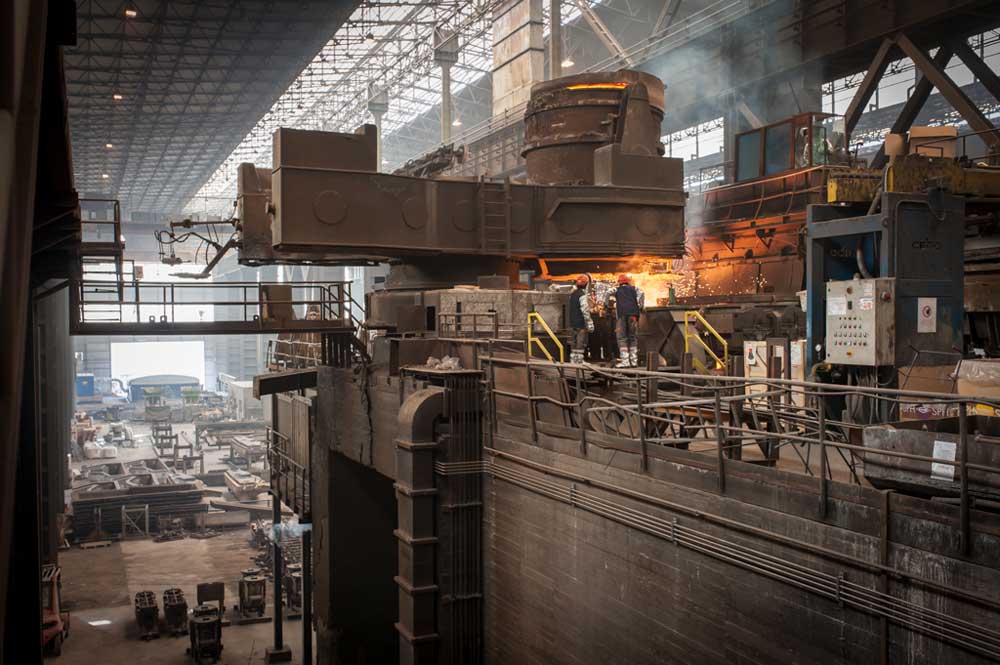
Russian steelmakers produced 4.96 million tonnes of non-alloy semi-finished steel in February, up by 5.3% on-year, according to national statistical service Rosstat data monitored by Kallanish.
In January, output is estimated to have reached 5.33mt, more than 7.5% on-year (see Kallanish passim).
January’s finished steel output was up by 2.1% on-year at 1.56mt. However, pipe production decreased 9.8% to 840,000t.
In 2020, Russian crude steel production reached 73.4mt, up 2.6% over 2019 (see Kallanish passim).
Fitch Ratings forecasts Russian demand in 2021 to increase by 4-6% on-year. This comes amid growth in construction volumes thanks to government support, the implementation of infrastructure investment projects, and the gradual recovery of the automotive industry.
The agency believes the negative effect of the new wave of Covid-19 will be much more moderate versus last spring, as the Russian government aims to avoid another lockdown.
ING bank says that “reduced global demand for oil, which has led to Russia’s OPEC+ commitments and is resulting in an ongoing circa 10% on-year drop in oil output” is a risk factor that could further hamper any industrial recovery in Russia.
“The metals sector is showing uneven performance in recent months, suggesting high dependence on the volatile global mood,” ING adds.
Svetoslav Abrossimov Bulgaria
Coil scarcity will stay around in NW Europe
The shortage of coil products in northwestern Europe will not be overcome soon, observers tell Kallanish. In fact, many fear that relief will not be seen until rather late this year.
Delivery times of integrated mills, in normal times between six and 12 weeks, have now stretched to easily five months, and quite a few mills have stopped taking orders for the third quarter already.
“The next four months or so will be really rough for all steel buyers,” says a source at a company which itself has filed for insolvency, pulled along by big customers that went bankrupt earlier. “I did not foresee such a scarcity, and I think it has partly to do with the recent export of European slabs to Southeast Asia,” he explains.
“Some German mills have limited capacity available for the third quarter, they only want to book contract quantities at the moment, and even then with fewer quantities than usual,” a Benelux manager tells Kallanish. The available stocks at the distributors, as dealers and service centres, are decreasing more than they are increasing due to new incoming material., he observes. As a result, scarcity has become so extreme that no availability options are given in offers. If the customer waits too long to order, he runs the risk of the material no longer being available.
One Austrian source sees a wide range of lead times, stretching from May until after August, depending on the conditions of the deal. And, in line with the Benelux manager, he sees no relief of availability until the fourth quarter.
Christian Koehl Germany
Steel e-commerce comes with complications: conference
Digital solutions for the steel industry can only be partly copied from established ventures, steel IT start-up representatives said at the “Zukunft Stahl” conference held last week by Handelsblatt and Euroforum.
“I don’t see any horizontal platform like an ‘Amazon for steel’ coming,” Simon Zühlke of Berlin-based online trading platform Vanilla Steel said at the even attended by Kallanish. On the one hand, steel is too complex a product, he argued. On the other, it takes a domestic platform to win trust. “The industry won’t accept a platform that was initiated outside of Europe,” Zühlke observed.
He does not however argue with Vanilla Steel, which specialises in excess and cut-out material, being nicknamed “an Ebay for steel”. “What we saw with, for example, Zalando in the B2B sector will also happen in the B2C segment, where steel is sold: there is a change of generations happening, and it has been accelerated by Covid-19,” he commented.
He concedes that online trading will not replace offline negotiations altogether. The more complex a product is, the less it is suited to be sold online, which will be the case for much automotive steel, he pointed out. “But it will be different for commodities on a spot basis,” of which more than two thirds are still sold offline today. “For these, the e-commerce platforms will prevail as the market place,” he concluded.
Christian Koehl Germany
ArcelorMittal accelerates ‘green’ steel certification
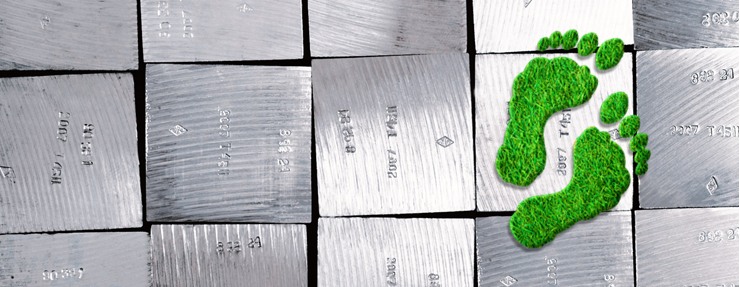
ArcelorMittal is accelerating its commitment towards becoming a zero-carbon emissions steelmaker by 2050 with the launch of a decarbonisation initiative called “XCarb”.
In a virtual conference on Wednesday attended by Kallanish, chief executive Aditya Mittal said XCarb responds to the necessity to bring all the company’s decarbonisation activity together “under a new global umbrella brand”.
ArcelorMittal is working to create its XCarb “green” steel certificates through the primary blast furnace route. It will also issue a new labelling for XCarb recycled and renewable steel made from scrap and renewable energy through the electric arc furnace route.
The steelmaker is looking at two technology routes for decarbonisation, the “Smart Carbon” and “Innovative” DRI route. Smart Carbon involves the use of bio-mass, bio-waste and carbon capture utilisation and storage technology. The two options are not competing and are both being considered, Kallanish notes.
The decarbonisation initiatives in ArcelorMittal Europe range from transforming biomass into bio-coal to projects such as Carbalyst. This converts blast furnace waste gas into bioethanol and reinjects waste gases from the steelmaking process into the blast furnace to reduce coal use.
These investments will be transformed into XCarb green steel certificates using “a conversion factor that represents the average CO2 intensity of integrated steelmaking in Europe”, Mittal explained.
The scheme therefore provides customers with the opportunity to buy certificates attached to their physical orders of steel, enabling them to report a reduction in their Scope 3 carbon emissions, he added. By 2022 ArcelorMittal will be able to sell 600,000 tonnes of green steel.
The other initiative involves labelling recycled and renewable steel with “XCarb recycled and renewably produced” products for customers. This will apply only to flat and long steel products made through EAFs from scrap, and using renewable electricity, resulting in a footprint as low as 300kg of CO2 per tonne of finished steel.
XCarb stands for decarbonisation, or excluding carbon, Mittal revealed.
Natalia Capra France
ArcelorMittal studies DRI production in France
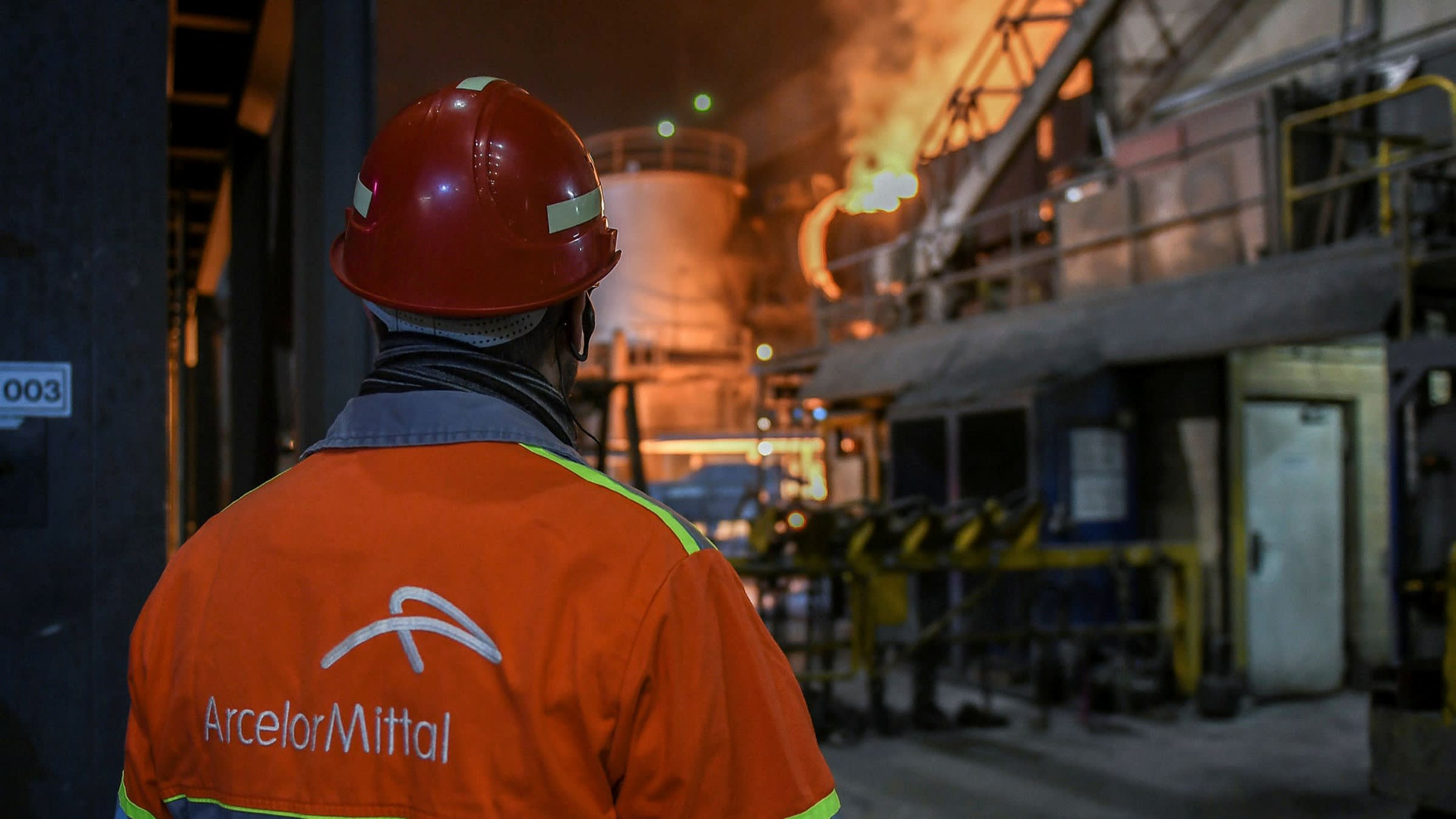
ArcelorMittal is also considering decarbonising its French facilities by using the direct reduced iron route, new chief executive Aditya Mittal during a virtual event on Wednesday. The group said earlier this month it plans to build DRI plants in Germany.
“With natural gas DRI steelmaking, your carbon footprint is much lower,” Mittal commented at the event attended by Kallanish. “You do have a cost saving relative to the emission which is significant. At this point in time, we are looking at various DRI projects both in Germany and in France where we can feed DRI into our existing installations, reducing the carbon footprint … We do believe that those projects should be economically viable.”
The project feasibility will also depend on how much government funding the group can obtain. “We do believe there is an economic case for installing DRI based facilities in our existing locations,” Mittal added.
The company is working on both innovative DRI routes and the “Smart Carbon” route to decarbonise its steelmaking. These technologies, however, are in the process of development. “If there are technology breakthroughs in the Smart Carbon route then perhaps the discussion will shift and we will realise that we can do much more on the Smart Carbon route, but where we stand today, we are investing in both routes,” Mittal explained. “At this point in time it is too early to call which route will dominate the decarbonisation process of steelmaking.”
In France ArcelorMittal is working with Air Liquide to develop a DRI and hydrogen connected carbon capture and storage facility in Dunkirk, Mittal added.
ArcelorMittal Germany intends to build a large-scale industrial DRI plant in Bremen and what it calls an innovative DRI pilot plant in Eisenhüttenstadt, in combination with electric arc furnaces. Using green hydrogen, a capacity of up to 3.5 million tonnes/year of steel will then be produced with significantly fewer CO2 emissions (see Kallanish 5 March).
Natalia Capra France