

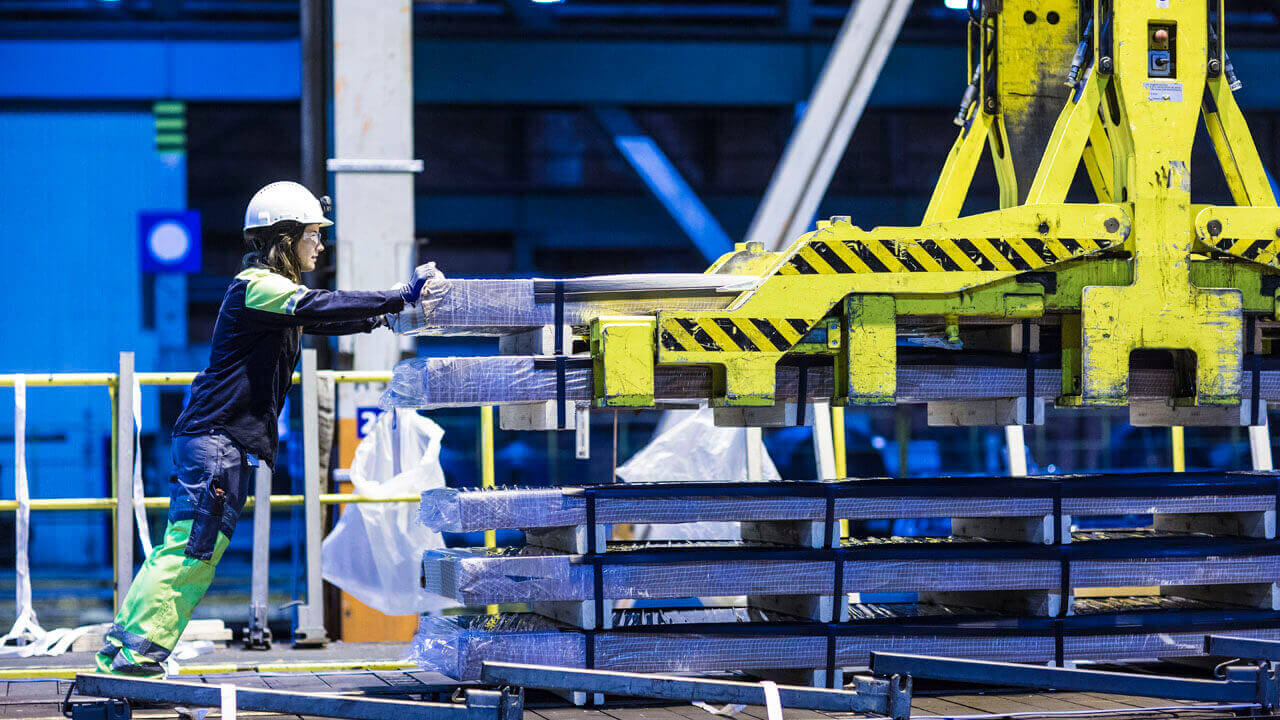
European industrial production returns to pre-pandemic levels
European industrial production has reached its highest level since the Covid-19 pandemic hit the continent, according to the latest data published by Eurostat.
The monthly index for industrial production in the EU – with 2015 as the base year – jumped back to 104.6 in January. This is almost in line with the level of 104.8 registered in January and February 2020, before the start of the pandemic, Kallanish notes.
Overall, the recovery of the sector in January was by 0.7% month-on-month, confirming the positive trend reported in the entire supply chain.
Compared with January 2020, the biggest recovery in activity was registered by Ireland (+27% y-o-y), followed by key countries such as Poland (+5% y-o-y) and Belgium (+3% y-o-y). German industrial production was down some 3%, while the worst performing country was Portugal, with a 6% drop.
Emanuele Norsa Italy


TMK to enter stainless flats production
Russian pipemaker TMK will begin the production of stainless flat rolled products, with the support of the Ministry of Industry and Trade, says the press service of the President of Russia.
The design capacity of the proposed complex is up to 500,000 tonnes/year, Kallanish notes. Total investment is over RUB 100 billion ($1.36 billion). The production site will be in the city of Volzhsky, but the timing of the project has not been specified.
“Today, there is no production of flat products from stainless and corrosion-resistant steel grades in the country,” TMK chairman Dmitry Pumpyansky said during a meeting between Russian President Vladimir Putin and representatives of the business community.
Consumption in the Russian market of stainless flat products is about 300,000 t/y, of which 95% is imported, Pumpansky added.
“This is an impossible situation for our country, and all these years the implementation of this technologically complex project has always been constrained by the length of the construction period and vague prospects for recoupment,” he observes. “Today, our new calculations, taking into account the above activities on removing barriers in industrial construction and at the same time using available state support measures, show a significant reduction in construction time and a quite acceptable payback.”
TMK is confident that, as a result of these joint activities, Russia will become a leader in the production of special steels and alloys for all industries.
The pipemaker acquired earlier this month 86.54% of shares in Chelpipe, one of Russia’s leading large-diameter and OCTG pipe producers (see Kallanish passim).
TMK’s 2020 consolidated revenue declined 28% on-year to RUB 222.6 billion ($3 billion). The company expects pipe consumption to remain stable in 2021.
Svetoslav Abrossimov Bulgaria
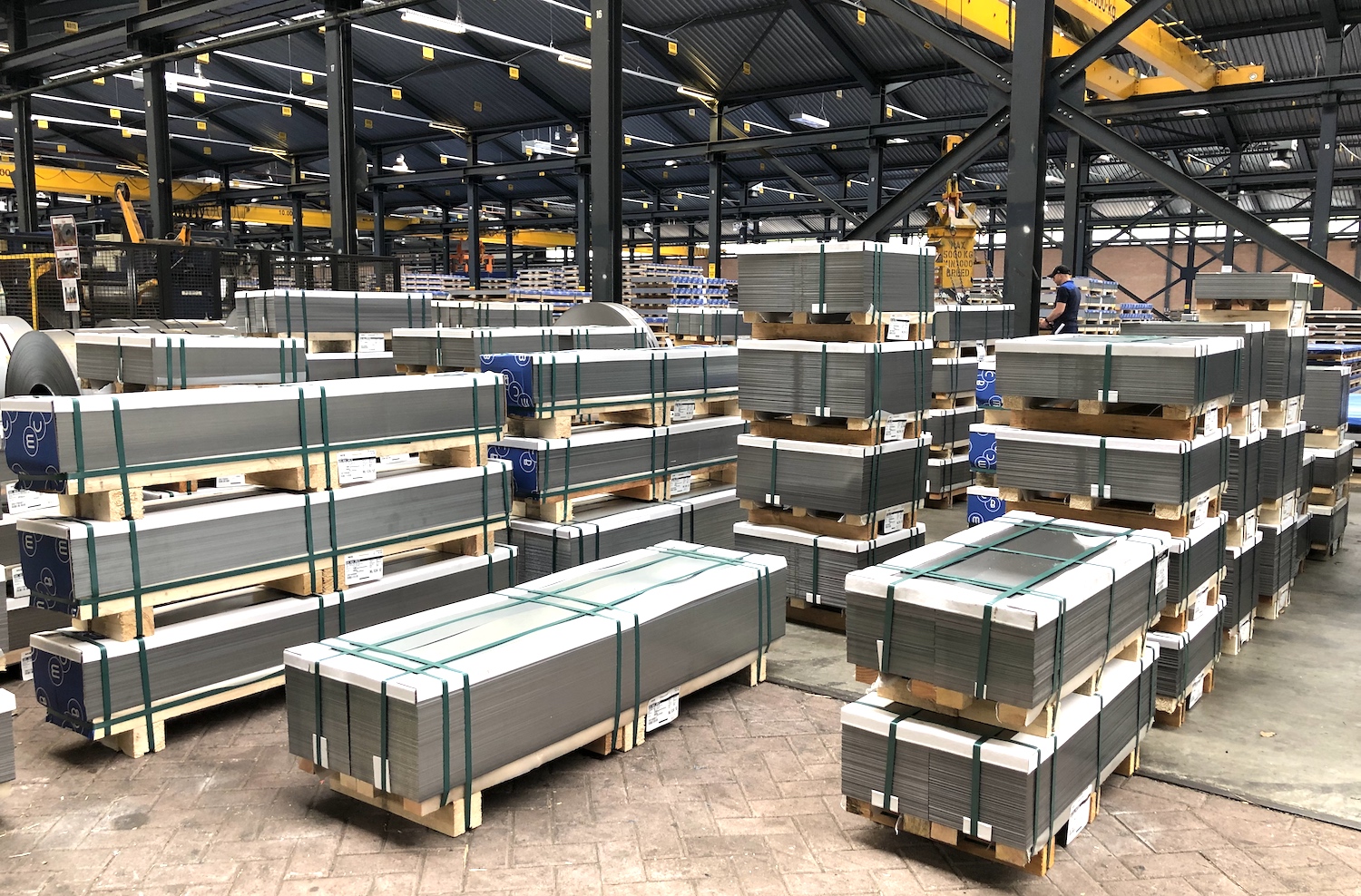
V-shaped recovery in 2021 to support steel demand: Celsa
A strong V-shaped recovery is expected in the global economy in 2021, following the shrinkage seen in 2020 due to the COVID-19 pandemic, which is expected to support steel demand and prices, Alexander Gordienko, international sales manager of Celsa Group said at the Irepas conference on March 15.
“The global economy has outperformed the expectations in 2020 and contracted only by 3.5%, reflecting stronger-than-expected momentum in the second half of 2020. Advanced economies suffered the most with 4.9% decrease, while emerging markets performed better with reduction in GDP OF 2.4%,” the manager said.
Economies are expected to show a strong V-shaped recovery this year, depending on access to vaccines and government policies and stimulus packages, Gordienko said, adding that in line with the expected V-shaped recovery in global economies, world steel demand is also expected to grow notably in 2021.
As for long products, the sales manager said despite the decline expectations for long products consumption in 2020 amid the pandemic, overall global longs consumption reached 905 million mt, increasing by 0.7% on year.
“Wire rod and merchant bars consumption increased by 2% and 3.2% on year, respectively, while consumption of sections and rebar decreased by 3.2% and 0.6% on year, respectively,” Gordienko noted.
The recovery seen in the global demand as of the second half of 2020, pushed all steel prices up, with no current signs of going down, the manager said, adding that especially wire rod prices reached historically high levels.
“Mills have recuperated the spreads from the historical lows of 2020. Will they manage to hold to the increases? Will fiscal support create a new super-cycle in commodities? These kind of questions and some uncertainties like the success of vaccination and US infrastructure spending will determine the market direction in 2021, the international sales manager said.
— Cenk Can

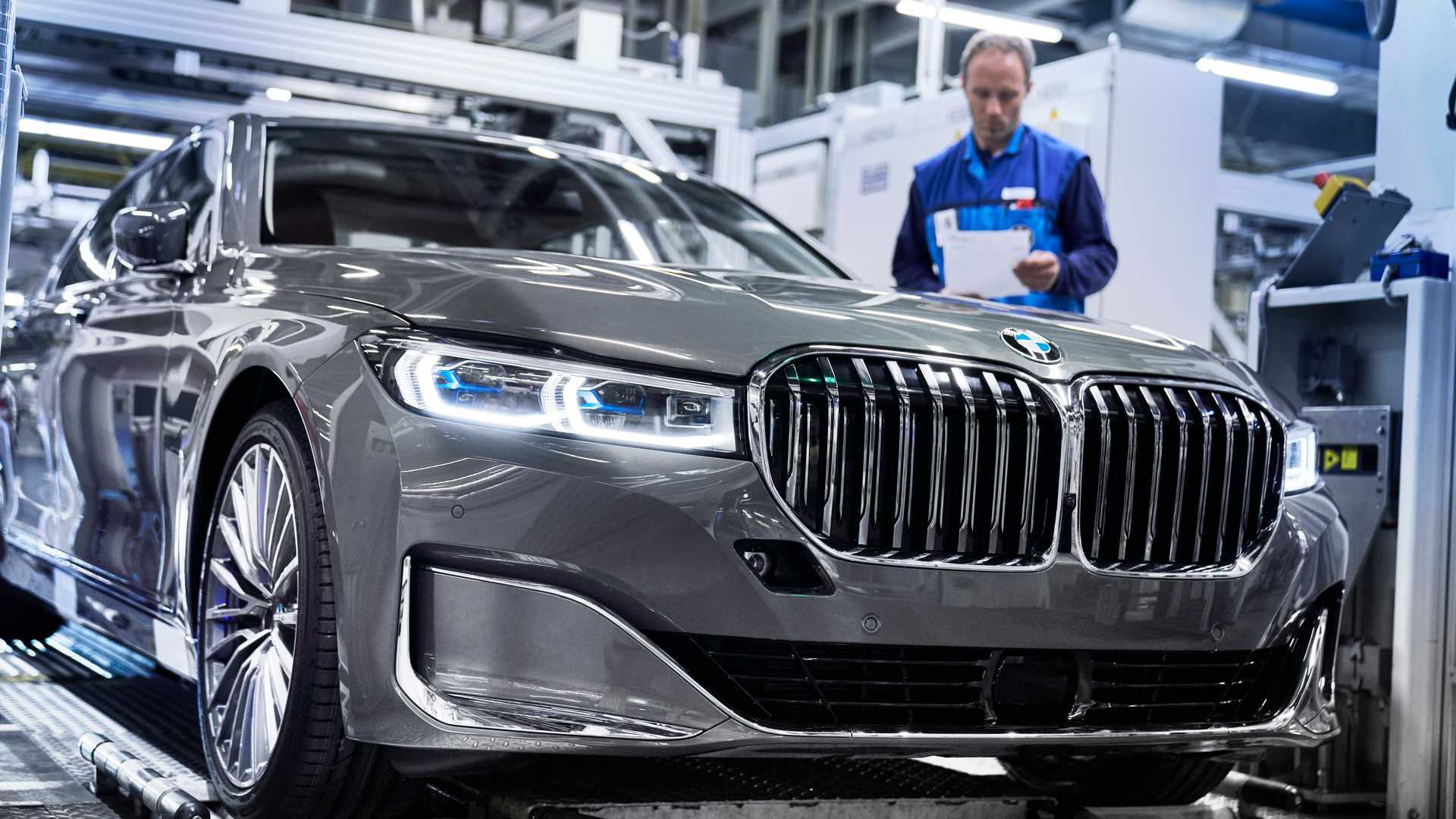
BMW invests in zero-emissions steel technology firm Boston Metal
Automaker BMW Group has invested in US metals technology company Boston Metal, joining existing investors BHP and Vale in CO2-free steel production technology.
BMW through its US-based venture capital fund BMW i Ventures invested into Boston Metal — formally known as Boston Electrometallurgical Company — to help facilitate lower emissions supplies, the company said on March 12.
“Over the coming years, Boston Metal plans to expand the new method for steel production on an industrial scale,” BMW said in a statement. “The investment is part of the BMW Group’s far-reaching sustainability activities aimed at significantly reducing CO2 emissions across the supplier network.”
BMW said it systematically identifies the raw materials and components in its supplier network with the highest CO2 emissions from production, including for steel.
BMW targets a 2 million mt/year reduction in CO2 by 2030 compared with current levels, according to Andreas Wendt, member of the board of management of BMW AG responsible for its purchasing and supplier network.
“It is important to us that our partners are firmly committed to sustainable action and use production technologies with low -carbon emissions,” Wendt said. “The use of green power also has a major impact. We are already working with suppliers who use only green power for the steel they produce for us.”
BMW’s European plants processes more than 500,000 mt/year of steel, it said. BMW has a goal to further increase its percentage of recycled raw materials by 2030 and wants to safeguard raw materials supplies through use in a circular economy.
Boston Metal is developing electricity-based molten oxide electrolysis (MOE) technology for emissions-free steel and metals production, using inert anode technology. This could replace iron from the blast furnace steelmaking route using metallurgical coal and coke. If electricity from renewables is used for this new process, steel production via MOE would be carbon-free, it said.
Boston Metal will build demonstration facilities for this process over the next few years, and further develop it for industrial-scale use.
“Our investors span across the steel value chain, from the upstream mining and iron ore companies to the downstream end customer, and validate Boston Metal’s innovative process to produce high-quality steel, cost-competitively, and at scale,” Tadeu Carneiro, Boston Metal CEO said in the statement.
BMW had already worked with Boston Metal prior the investment. The start-up works with companies to tailor the MOE technology for specific alloys, feedstocks, and business needs.
Boston Metal said BMW joined its $60 million Series B fundraising, which was oversubscribed, with investments of $6 million from Brazilian miner Vale, alongside capital from BHP Ventures, Energy Impact Partners, Piva Capital, and Devonshire Investors, the private investment firm affiliated with FMR LLC, the parent company of Fidelity Investments. Existing investors are Breakthrough Energy Ventures, Prelude Ventures, OGCI Climate Investments, and The Engine.
The Series B will allow Boston Metal to validate its patented inert anode technology at industrial-scale and deploy its molten oxide electrolysis process with customers, starting with high-value ferroalloy production and later advancing toward steel applications.
— Hector Forster

Global stainless steel production down 2.5% in 2020: ISSF
Global stainless steel melt shop production fell 2.5% to 50.90 million mt in 2020, figures released on March 15 by the International Stainless Steel Forum showed.
Output was down in most regions monitored by the ISSF, with the exception of China, which saw an increase of 2.5% to 30.14 million mt, while production from countries in the ‘Others’ category — Brazil, Indonesia, Russia, South Africa and South Korea — rose 6% to 5.86 million mt.
Production in Asia, outside of China, saw steepest fall, of 19% to 6.43 million mt. US output fell 17% to 2.14 million mt. Europe registered a decrease of 7.1% to 6.32 million mt.
Global melt shop production in the fourth quarter of this year was, however, up from Q3 levels as well as from Q4 of 2019 at 14.13 million mt from 13.53 million mt and 12.42 million mt, respectively.
— Annalisa Villa
Italian legal body rules Taranto can continue production
The Italian Council of State has ruled that ArcelorMittal Italia will not have to shut down the hot-end of the Taranto plant within the timing given by the Apulia regional tribunal. This is a temporary decision pending the court hearing on 13 May, Kallanish learns from sources and ArcelorMittal Italia.
Last month the Tribunale Amministrativo Regionale (TAR) Puglia gave the company 60 days to shut down the hot-end at Taranto due to excessive emissions (see Kallanish 15 February). ArcelorMittal and Invitalia, 50-50 partners in the joint venture controlling the former Ilva steelworks, appealed immediately against the closure order.
The Council of State “ordered the suspension of the ruling of the TAR Lecce n.249/2021 with the consequence that ArcelorMittal is not forced to start the procedure to idle the hot end area of the Taranto plants,” ArcelorMittal comments. “The production activity of the plant is going to continue as normal.”
Production, however, remains restricted to below 50% of capacity, a major factor behind the coil supply shortage in Italy that is driving up prices.
Natalia Capra France
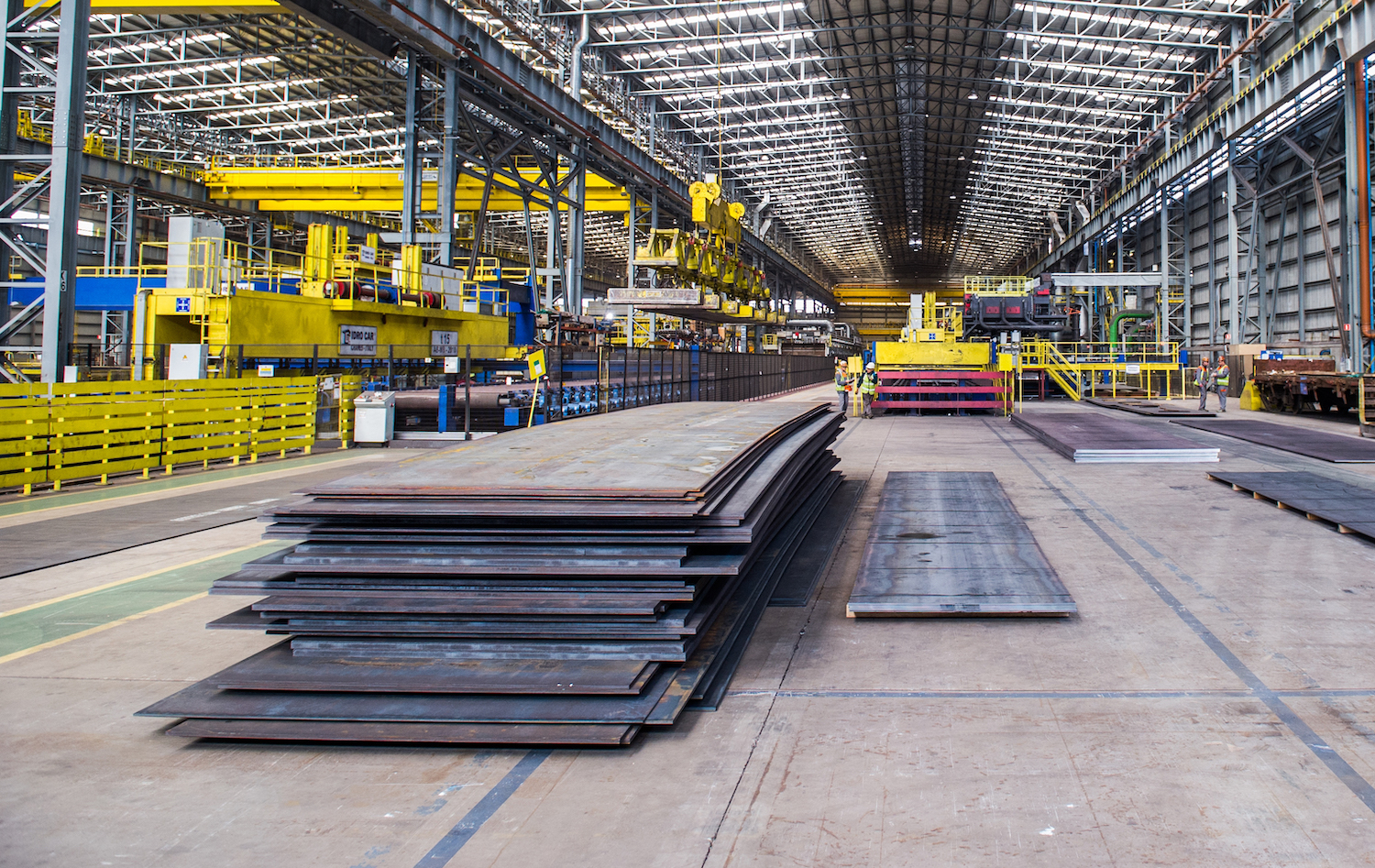
European plate prices increase on improved demand, squeezed stocks
European plate prices were heard higher in the market March 12 following renewed project demand, further increases in slab prices from the Black Sea, as well as dwindling stock levels, sources told S&P Global Platts.
Italian producers were becoming more optimistic on their offer prices, with offers heard in the vicinity of Eur700-710/mt ex-works Italy.
An Italian plate mill source said orders were starting to come in regularly, with further increases “very likely” given steadily increasing slab prices, as well as a performing euro currency.
Meanwhile, German stocks were heard to be low, with latest supply levels at less than 390,000 mt.
A European mill source said they were looking to offer minimum Eur50/mt higher than the current plate prices seen from Italy and Germany, given the longer order books and costlier slab prices.
However, contrary to others in the market, the same source noted lackluster demand for plate, particularly in North Europe.
“The market is not really picking. Purchasing managers are hesitating to buy volume at this price level as the ex-stock price is not following at the same speed,” the mill source said. “Buying from stock is still cheaper than ex-mill.”
Lead times from plate mills were similar to those of regular coils products seen at the end of May-June.
“I hope plate prices will follow the upward trend. At present time, we can monitor that in the market there is no effort to book,” the mill source lamented.
On the inverse, a German distribution source was seeing more luck on the demand side, claiming there was a noticeable improvement in demand from projects.
A second Italian mill source was also of the same view, adding, “there is more activity ongoing and buyers are raking in material because they haven’t had enough on stock.”
Sources noted there would soon be stronger restocking on plate than in coils, with the shortage on the former considered more pertinent.
German producers were heard offering Eur700/mt ex-works Ruhr, with workable levels heard between Eur670-680/mt ex-works.
“The overall demand for plate is now finally recovering across Europe,” the mill source said.
— Amanda Flint
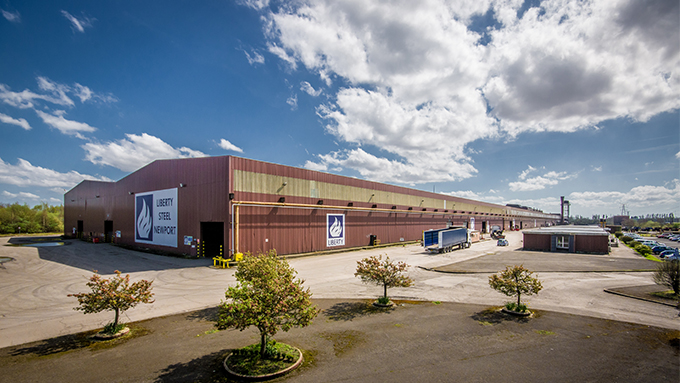
Liberty Steel allays European mills’ HRC supply fears
Liberty Steel tells Kallanish its coil rolling mills in the Benelux and Italy have solved the issue of hot rolled coil supply shortages using the normal commercial dispute procedure.
Sources mentioned last week that ArcelorMittal stopped supplying HRC to Liberty Steel’s Magona and Liege-Dudelange rolling mills. Trade unions at the Liege-Dudelange site subsequently expressed serious concern over the future of the Benelux rolling mills.
“We can confirm a temporary issue with one of our HRC suppliers to Liberty Liege-Dudelange and Liberty Magona has been successfully concluded using our normal commercial dispute procedures,” a Liberty spokesperson says.
Authorities in Europe have been quick to respond to unions’ concerns, expressing their support. In Luxembourg, for example, where part of the Liege-Dudelange unit is located, the local government told unions they are ready to give support to the plant in case of liquidity problems or temporary layoffs.
Earlier last week other European governments, such as in France, also expressed their intention to support the local units of the Liberty Steel group if problems escalate.
The resurfacing issues of supply at Liberty Steel’s coil rolling units are set to bring further uncertainty to an already tight coil market in the continent, particularly for hot-dip galvanized coil. Back in early December, Liberty confirmed delivery delays from Magona and Liege-Dudelange as a consequence of supply issues. New delays could arise in the coming months, sources comment.
Emanuele Norsa Italy
CO2-Abgabe auf bestimmte EU-Importe
Am Mittwoch verabschiedete das Parlament mit 444 Stimmen bei 70 Nein-Stimmen und 181 Enthaltungen eine Entschließung zu einem WTO-konformen EU-CO2-Grenzausgleichssystem.
In der Entschließung wird betont, dass die höheren Bestrebungen der EU in Bezug auf den Klimawandel nicht zu dem Risiko der Verlagerung von CO2-Emissionen führen dürfen. Die Verlagerung der Produktion und verstärkte Einfuhren aus Ländern mit einer weniger ehrgeizigen Klimapolitik würden die weltweiten Klimaziele untergraben.
Die Abgeordneten sprechen sich daher dafür aus, bestimmte Waren, die von außerhalb der EU importiert werden, mit einer CO2-Abgabe zu belegen, wenn diese Länder nicht mehr Ehrgeiz in Bezug auf den Klimawandel an den Tag legen. Eine solche Abgabe würde weltweit gleiche Wettbewerbsbedingungen sowie einen Anreiz für die Wirtschaft der Union und die Handelspartner der Union schaffen, ihre Wirtschaftszweige im Einklang mit den Zielen des Pariser Abkommens zu dekarbonisieren.
Die Abgeordneten betonen, dass das Abkommen mit den WTO-Regeln vereinbar sein muss und nicht als Instrument zur Förderung von Protektionismus missbraucht werden darf. Es sollte daher ausschließlich Klimaschutzzielen dienen. Die neuen Einnahmen sollten als Teil eines Korbs von EU-Eigenmitteln verwendet werden, um über den EU-Haushalt die Ziele des Grünen Deals stärker zu unterstützen, fügen sie hinzu.
Verknüpfung mit einem reformierten EU-Emissionshandelssystem (EHS)
Der neue Mechanismus sollte Teil einer umfassenderen Industriestrategie der Union sein und alle Einfuhren von Produkten und Rohstoffen erfassen, die unter das EU-EHS fallen. Die Abgeordneten fügen hinzu, dass im CO2-Grenzausgleichssystem als Ausgangspunkt (bereits ab 2023) und nach einer Folgenabschätzung die Energiewirtschaft und energieintensive Industriezweige wie Zement, Stahl, Aluminium, Ölraffinerien, Papier, Glas, Chemikalien und Düngemittel erfasst werden sollten, die nach wie vor in erheblichem Umfang kostenlose Zuteilungen erhalten und nach wie vor 94 % der Industrieemissionen in der EU ausmachen.
Die Verknüpfung der CO2-Bepreisung im Rahmen des CO2-Grenzausgleichssystems mit dem Preis für Zertifikate im Rahmen des EU-EHS werde dazu beitragen, die Verlagerung von CO2-Emissionen zu bekämpfen, so die Abgeordneten weiter, die jedoch betonen, dass der neue Mechanismus nicht dazu führen darf, dass Anlagen in der EU doppelt geschützt werden.
Nach der Abstimmung sagte der Parlamentsberichterstatter Yannick Jadot (Grüne/EFA, FR): „Die CO2-Grenzausgleichssystem ist eine großartige Gelegenheit, Fragen des Klimas, der Industrie, der Beschäftigung, der Widerstandsfähigkeit, der Souveränität und der Verlagerung von Unternehmen unter einen Hut zu bringen. Wir müssen aufhören, naiv zu sein und überall den gleichen CO2-Preis zu fordern, unabhängig davon, ob ein Erzeugnis in oder außerhalb der EU hergestellt wird. Nur so können wir sicherstellen, dass auch die umweltschädlichsten Branchen sich an der Bekämpfung des Klimawandels beteiligen und Innovationen in Richtung Kohlenstofffreiheit entwickeln. Dies ist unsere beste Chance, die Begrenzung der globalen Erwärmung auf 1,5 °C einzuhalten und gleichzeitig unsere Handelspartner dazu zu drängen, ebenso ehrgeizig zu sein, um Zugang zum Binnenmarkt zu erhalten.“
Nächste Schritte
Es wird erwartet, dass die Kommission im zweiten Quartal 2021 einen Gesetzesvorschlag für eine Kohlenstoffabgabe als Teil des europäischen „Green Deal“ vorlegen wird, sowie einen Vorschlag, wie diese Einnahmen zur Finanzierung eines Teils des EU-Haushalts – als EU-Eigenmittel – verwendet werden können.
Quelle: Europäisches Parlament
11.03.2021 von Hubert Hunscheidt

A WTO-compatible EU carbon border adjustment mechanism
European Parliament resolution of 10 March 2021 towards a WTO-compatible EU carbon border adjustment mechanism