

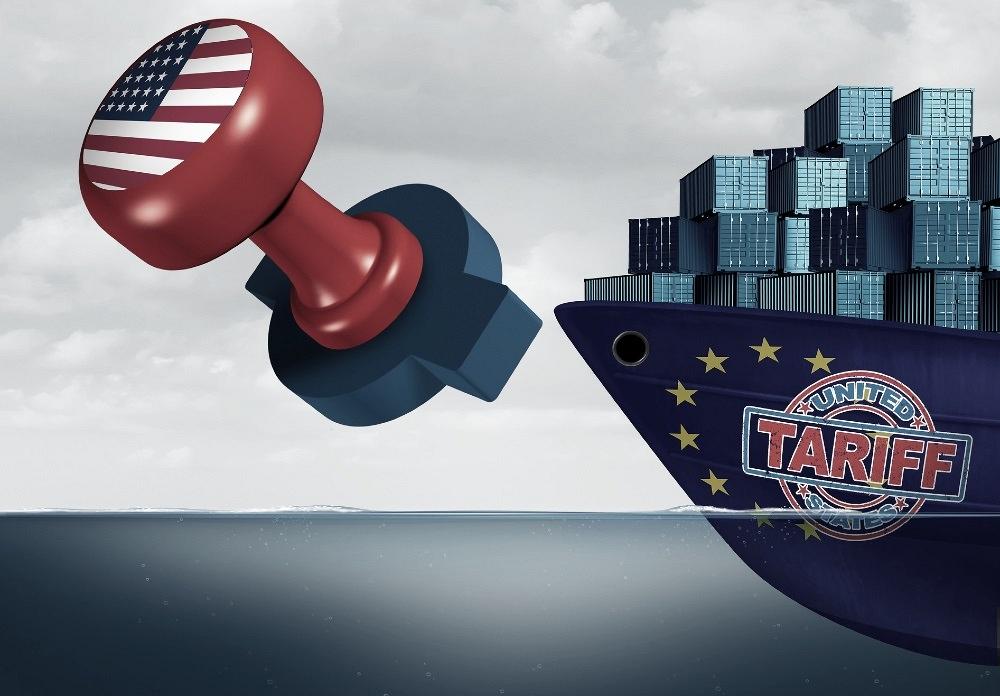
Section 232 tariffs on steel, aluminum ‘effective’: US Commerce Secretary
The Section 232 tariffs introduced on steel and aluminum imports by former President Donald Trump’s administration have been “effective,” newly appointed Commerce Secretary Gina Raimondo said March 4, signaling there is likely to be little change in the near term.
Data has showed that the tariffs of 25% on steel and 10% on aluminum, first introduced by Trump in March 2018, have been effective, Raimondo said in an interview with MSNBC. However, as President Joe Biden has stated in the past, the new administration will be doing a full review of the tariff program, she said.
“We are going to have a full review of all of these policies and decide what it makes sense to retain,” Raimondo said.
The administration will also be taking a tough approach to China’s anti-competitive trade behavior and will use a “whole of government” approach to address issues, including unfair trade practices related to metals, she said.
“[China] can’t just dump excessive amounts of cheap steel and aluminum into America,” she said. “There is no one thing, there in no one tool in our toolbox, but we have to recognize the magnitude of China’s behavior [and] the threat it imposes.”
Raimondo, who previously served as governor of Rhode Island, was sworn in to lead the US Department of Commerce March 3.
The American Iron and Steel Institute welcomed Raimondo’s confirmation March 2, noting her commitment to addressing the issues facing the US steel industry, including vigorously enforcing the US trade remedy laws and remaining aggressive in combating unfair trade practices by China and other trading partners.
“Strong enforcement of US trade laws is a top priority for American steelmakers, particularly as foreign government subsidies and other market-distorting policies and practices have resulted in significant global steel overcapacity — the impacts of which have been exacerbated by the COVID-19 pandemic,” AISI CEO Kevin Dempsey said in a statement. “A critical part of the response to the global steel overcapacity crisis must be the full enforcement of the Section 232 remedies on steel products, including action to ensure that the Section 232 exclusions process does not inadvertently allow exclusion of products that are made by domestic steel producers.”
— Justine Coyne

Commercial green steel output unlikely before 2030: report
Viable green steel production could be more than a decade away even though several of the world’s major steelmakers are already actively developing plans to adopt the process to meet carbon neutral goals as the technology needed to handle and transport liquefied hydrogen is still in its early stages.
The earliest that commercial implementation will occur is in Chubu, Japan, in about 2030 when a Nippon Steel-backed report estimates hydrogen demand will reach 110,000 mt/year, coinciding with a 2030 projection from the International Energy Agency.
Green steel, or carbon-neutral steel, would be produced using green hydrogen generated from renewable energy sources rather than fossil fuels, either as an alternative to pulverized coal injection, or PCI, material or as an alternative reductant to produce direct reduced iron, or DRI. The International Energy Agency projected that DRI based solely on hydrogen manufactured via electrolysis will occur as early as 2030.
A more straightforward process would use electric arc furnaces, provided the power was generated from a renewable source such as the sun or hydrogen fuel cells, but this is limited by ferrous scrap availability.
As a result, green steel production will depend on technologies and infrastructure for producing and handling green hydrogen on a commercial scale.
Such infrastructure would also need to include hydrogen vessels for transportation and tanks for storage. Liquefied hydrogen, or LH2, needs to be kept at a stable minus 253 degrees Celsius, just 20 C short of the atom-stopping minus 273 C, also known as absolute zero. This is far colder than LNG, which needs to be kept at minus 163 C, and existing equipment used for LNG may not be interchangeable with hydrogen as a result.
Japan’s Kawasaki Heavy Industries built the Kobe LH2 Terminal (Hy touch Kobe) in December 2020 and an LH2 vessel the Suiso (hydrogen) Frontier for a 12-month pilot project by the CO2-free Hydrogen Energy Supply-chain Technology Research Association, or HySTRA, to establish a hydrogen supply chain between Japan and Australia. However, this will use gray hydrogen, as the gas was first produced in early February from Latrobe Valley coal in southeastern Australia.
“Prospective green ironmaking technologies are interesting, but are in an early stage of development, which will continue through the 2020s and 2030s, before we see larger-scale take up in the 2040s,” BlueScope Steel CEO Mark Vassella said on Feb. 23. According to Australia’s Bluescope, the cost of using hydrogen via renewable energy is about six times higher than natural gas.
Australia’s mining giant BHP has divested, or has looked to divest, thermal and lower-quality met coal assets as part of its decarbonization efforts, while its counterpart Rio Tinto has already exited the coal business. Given investor antipathy, new steelmaking technology developments and carbon neutral targets, investment in met coal is dwindling.
Zero carbon goals
Rio Tinto and BHP have also signed memorandums of understanding with Asian steelmakers such as Japan’s Nippon Steel and JFE Steel, respectively, to develop processes that cut or eliminate greenhouse gases from steelmaking.
Nippon Steel released a report entitled “Summary of Activities for Hydrogen Utilization in Chubu in 2030” on Feb. 19 that removed the steel sector from the scope of major end-users in Chubu such as power generation and petro-refining/petrochemical, citing “technological developments…expected to take place after 2030.”
The findings showed that if hydrogen was priced at Yen 30 [28 cents]/normal cubic meter, or Nm3, in 2030, the negative price spread to switchable costs was projected at Yen 20 billion/year.
Other green steel agreements include China Baowu Steel Group Corp., which signed a five-year MOU with BHP in November 2020 to develop low carbon technologies for integrated steelmaking.
China released a draft of stricter iron and steel capacity replacement measures on Dec. 16 that included the development of electric arc furnaces and other lower emission steelmaking facilities targeted at helping China reach carbon neutrality by 2060.
More details are expected to be released during the Chinese People’s Political Consultative Conference that begins March 4 and the 13th National People’s Congress on March 5 in Beijing.
In South Korea, steelmaker Posco wants to decarbonize its steelmaking by 2050 by using green hydrogen to replace coal, estimating it will need 3.7 million mt/year. It also plans to become a major producer and supplier of hydrogen, making 5 million mt of green hydrogen by 2050. To meet its goals, the steelmaker said March 2 it will invest Won 10 billion to harness hydrogen for steelmaking.
India plans to launch a green hydrogen energy mission over 2021-22 that could see its domestic steel industry move towards decarbonization and open up new opportunities, especially for green steel.
“The pace of development of low-carbon hydrogen will be heavily dependent on policy and regulatory support. To commit to a hydrogen-powered future, policy needs to provide regulatory certainty that can reduce the risk of investing in clean hydrogen production, infrastructure, and applications. To-date, we have seen the bulk of investment into low-carbon hydrogen happening in regions like Western Europe and Australia, where policy makers have pursued ambitious targets and support mechanisms,” said Zane McDonald, senior analyst of transportation technology, policy and technology and scenario at S&P Global Platts Analytics.
— Clement Choo
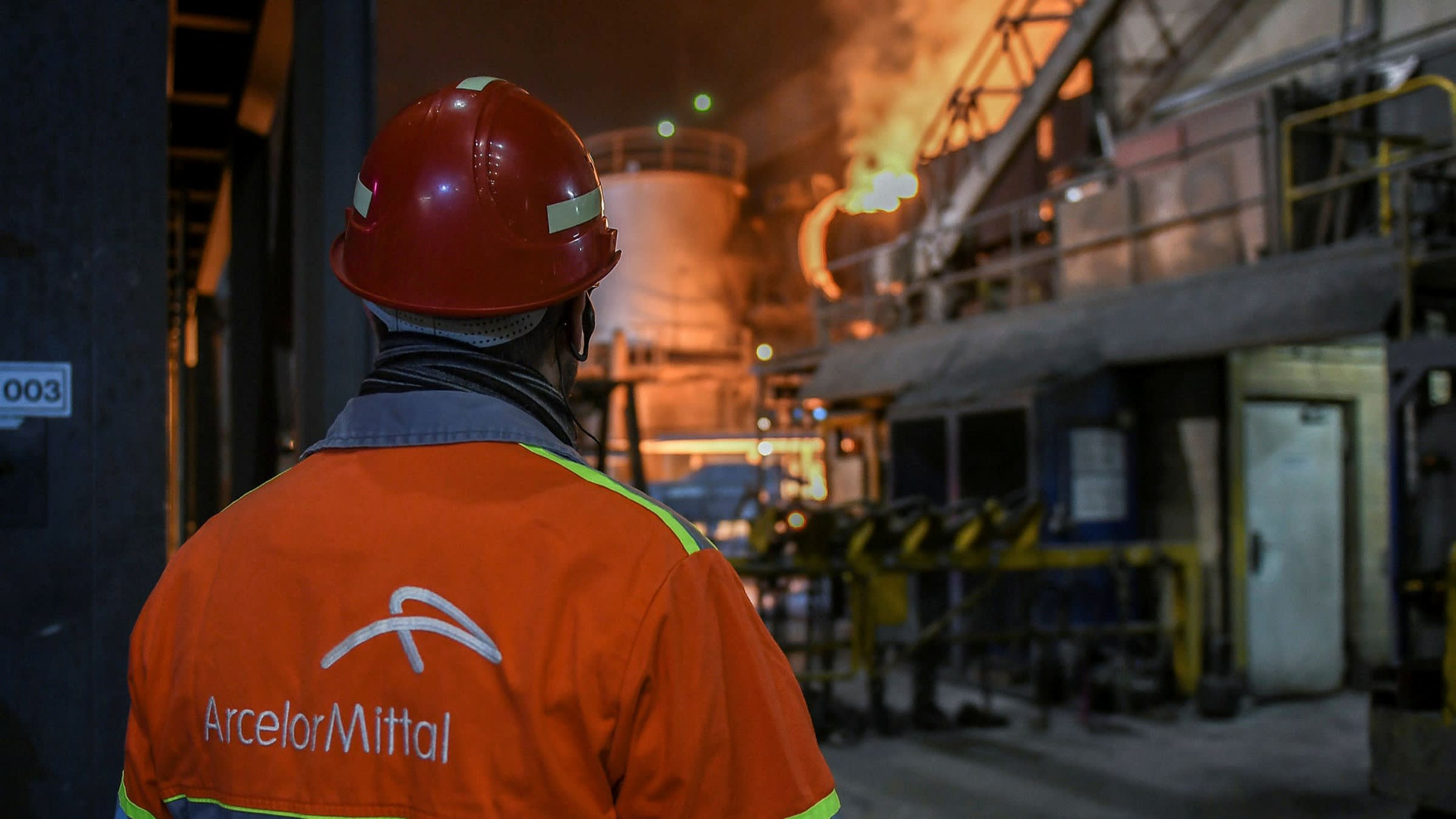
ArcelorMittal restarts upgraded blast furnace B at Ghent, Belgium
ArcelorMittal has restarted its 2.3 million mt/year blast furnace B at Ghent in Belgium, which it said is now one of the most advanced blast furnaces in the world following upgrade work.
The BF was idled in September for relining and had been scheduled to restart by mid-February, but poor weather delayed the restart by two weeks, the company said March 3.
The restart means ArcelorMittal is now back to pre-COVID production levels, with furnaces that were idled in France, Spain, Germany and Italy in response to the COVID-19 pandemic all back online.
There are two blast furnaces at the Ghent site with a total capacity of 5 million mt/year of flat steel products.
The company noted that the Ghent relining project would make an important contribution to its commitments to reduce CO2 emissions by 30% by 2030 compared with 2018 levels.
“ArcelorMittal Ghent plans to replace fossil carbon with green and circular carbon, and green and circular hydrogen. ‘Fresh’ raw materials will increasingly be replaced with waste products, in an environmentally and economically feasible way,” the company said.
“The Torero project, which will be commissioned in 2022, allows us to pre-treat waste wood from container parks to produce biocarbon suitable for the blast furnace process. We also have two projects running with plastic waste that could be injected into the blast furnaces in the form of powder or gas. We are also working on the possibility of replacing fossil carbon with hydrogen,” it added.
The company noted the support it had received from the Flemish government and added that for the steel industry’s transition to be successful, “supportive policy to ensure a global level playing field, access to renewable energy at affordable prices, energy infrastructure and access to sustainable finance” would be required.
— Annalisa Villa

Gestamp turns to 100% renewable energy in Spain
Gestamp says all its production facilities, and research and development centres in Spain will operate with 100% renewable energy from January 2022, Kallanish notes.
To meet the target, the Spanish-headquartered supplier of components to the global automotive sector has signed a long-term agreement with energy company Naturgy.
According to the ten-year deal, Naturgy will supply Gestamp with 203 gigawatt hours per year from solar and wind sources. The company expects to reduce gas emissions by 50,000 tonnes of CO2/year, a 13% reduction of its total carbon footprint resulting from electricity usage.
“This agreement is a very important milestone for Gestamp as part of an ambitious strategy in sustainability to move forward to a low-carbon economy,” comments Gestamp executive director Francisco Riberas. “The strategy involves a more efficient use of raw materials and supplies and represents another step forward in the company’s long-standing commitment to achieving the highest sustainability standards throughout the entire production chain.”
The company has 21 production lines and two R+D centres in Spain. The electricity consumed in all these facilities represents 18% of Gestamp’s global consumption.
Todor Kirkov Bulgaria

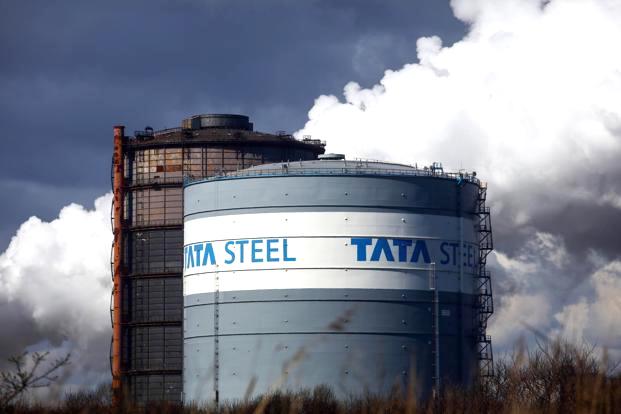
Tata Steel shrinks European executive committee
Tata Steel says its chief commercial officer for Europe and other members of the executive committee are leaving their posts. New executives are not being hired, Kallanish notes.
Chief commercial officer Karl Haider is set to leave at the end of March to pursue a career outside of the company. At the same time, Ernst Hoogenes, chief technical officer, is retiring from his post.
At the end of April, Tom Farquhar, executive director human resources, will also be leaving the company.
As a result, the company’s European executive committee will be smaller, with ceo Henrik Adam and cfo Sandip Biswas taking over the responsibilities of the departing executives for the time being.
Emanuele Norsa Italy
E-commerce platform Metalshub facilitates cross-border financing
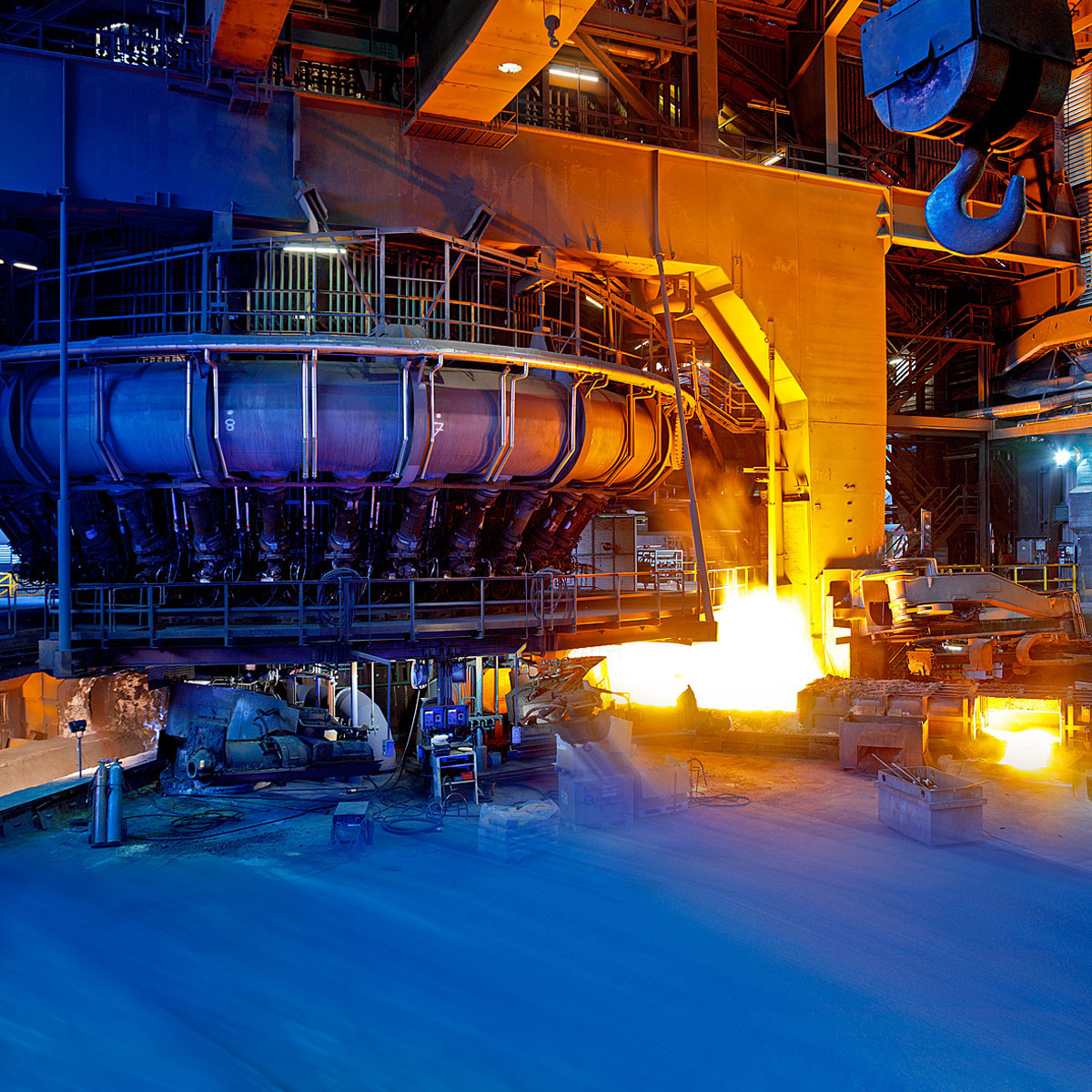
Metalshub, the German-based trading platform for ferroalloys, has completed a pilot-run of its in-house trade finance solution between a Belgian and a Czech entity.
This means it will soon be possible to securitise and transfer trade receivables of transactions that were concluded on the Metalshub platform, Kallanish understands. In the form of electronic promissory notes, eNotes, the securitised trade receivables can be sold for a negotiable discount rate to investors that proceed to hold the notes until maturity, Metalshub says.
“Promissory notes are an internationally recognised financial instrument that enables companies and individuals to secure financing on the legal basis of an unconditional promise to pay,” explains Frank Jackel, managing director at Metalshub.
Digitalisation and the use of blockchain technology are promising solutions to help close a critical gap in trade financing worldwide, claims Metalshub. The firm has teamed up with Swiss-based fintech company FQX for the solution.
Founded in 2016, Metalshub now has more than 1,000 companies using the platform, including more than 200 foundries and steel mills that have digitised their purchasing processes this way. In 2020, more than $300 million in purchasing volume was concluded through the platform.
Christian Koehl Germany
EU starts registration of India, Indonesia stainless CRC
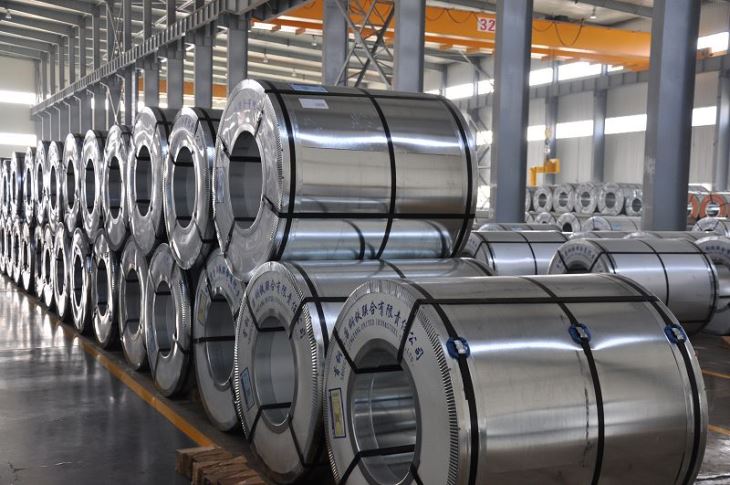
EU authorities have made it a requirement to register stainless steel cold rolled coil imports from India and Indonesia. The measure is part of the ongoing investigation into potential anti-dumping duties on the product, Kallanish notes.
In an official note, the authorities explain that imports of investigated products continue to increase even after the investigation was opened officially in early October 2020.
“On the basis of these statistical data, the [European] Commission found that the average monthly volume of imports of stainless steel cold-rolled flat products from the countries concerned in the period from October 2020 to January 2021, i.e. after initiation of the anti-dumping case, was 17% higher than the average monthly imports during the investigation period and 6% higher than the same period of the preceding year,” the statement explains.
As anticipated, the ongoing AD investigation is examining the period of imports from July 2019 to June 2020. The EU already has AD duties in place for stainless CRC from China and Taiwan.
According to Eurofer data, India supplied into the EU less than 100,000 tonnes of stainless CRC in 2020, the lowest level since 2016. Indonesia, on the other hand, almost trebled its exports to the EU since 2018, reaching a record level of almost 110,000t last year.
Emanuele Norsa Italy

Tsingshan upends nickel markets and stainless costs
The forecast of increased supply of nickel matte from Tsingshan caused nickel prices to fall sharply on Thursday. The new process being used however could tighten nickel pig iron (NPI) supply, Kallanish notes.
Three-month nickel on the London Metal Exchange dropped as much as 8.5% to $15,945/tonne on Thursday, reaching its biggest intraday loss since December 2016. The most-traded June nickel contract on the Shanghai Futures Exchange ended 6% lower at CNY 130,510/t ($20,180.61/t), posting its biggest intraday loss since May 2020.
Chinese private nickel and stainless steel producer Tsingshan Group signed a high-matte nickel supply agreement with Huayou Cobalt and Zhongwei on 1 March and announced the deal on 3 March. According to the agreement, Tsingshan will supply 60,000 tonnes of high-matte nickel to Huayou Cobalt within one year from October 2021 and provide 40,000t of the same product to Zhongwei.
Tsingshan was the first company to produce NPI from nickel laterite ores. Now it is taking NPI and further processing it to high-matte nickel products with a 75% nickel content. It says it will adjust production of NPI and nickel matte according to market developments.
NPI and battery grade nickel markets have hitherto functioned separately. If this new process becomes the norm, growing EV battery demand could mean NPI supply being diverted away from stainless steelmaking.
Huayou also participated with Tsingshan in the investment of a nickel smelter in Indonesia. Huayou said it would also produce some high matte from nickel pig iron.
The announcement has meanwhile alleviated market concerns about the shortage of battery-grade nickel supply. ”Tsingshan’s mass production of nickel matte triggered a supply-side adjustment. The supply bottleneck for nickel sulphate has been broken. There’s limited room for nickel prices to increase,” Huatai Futures says in a note.
In order to meet demand for nickel for power batteries, Tsingshan began trial production of high-matte nickel in Indonesia in July 2020, and saw formal production begin at the end of last year. With more facilities commissioned in Indonesia, Tsingshan aims to produce 600,000t of contained nickel equivalent in 2021, 850,000t in 2022 and 1.1 million tonnes in 2023.
By Kallanish Team
Greensill crisis may affect Whyalla DRI/EAF conversion: reports
Australian steel producer Whyalla steelworks’ equipment revamp has been called into question by issues with financing at parent company GFG Alliance, Kallanish notes from local media.
Credit Suisse has suspended activity at a number of supply chain funds linked to Greensill Capital, a major lender to Liberty Steel (see Kallanish passim). The Whyalla operations are part of the global Liberty Steel network. Greensill Capital is an investment arm owned by Australian Lex Greensill. Australian Workers Union state secretary Peter Lamps is quoted as saying the union is concerned about the potential fallout from the Greensill issues on GFG Alliance and its operations.
”Our integrated operations at Whyalla, which include the mining assets and the steelworks, are in the black,” GFG said in a statement on Wednesday. The recovery of the construction steel market and the surge in iron ore prices caused the producer to make a profit last year.
Whyalla plans to replace its 1.2 million tonnes/year capacity blast furnace with a direct reduced iron plant and electric arc furnace. Iron ore and scrap feedstock will come from GFG subsidiary Simec Mining and local scrap suppliers. This upgrade is expected to be completed in 2024, with GFG targeting construction of facilities over three years starting from 2021. The capacity of the Whyalla steelworks will be doubled at that time.
By Kallanish Team
Polish steel bar maker Cognor expects Poland’s steel output to grow slightly
Polish steel billet, bar and rebar producer Cognor, which ran flat out throughout 2020, said March 3 it expected Polish and EU GDP to rebound this year supporting Poland’s crude steel production, which it believed could grow slightly on the year.
The electric arc furnace (EAF)-based company said blast furnace-based steelmakers faced difficulties this year from increasing CO2 permit prices, while EAF mills would continue utilizing their capacity to the maximum.
Polish steel consumption growth may improve due to returning demand from the EU auto sector, Cognor said.
The company said that last year Poland plunged into recession for the first time in almost 30 years with its GDP contracting by 2.8% year on year compared with 4% growth in 2019.
The Polish steel industry responded to the recession with an almost 11.9% reduction in crude steel output to 7.9 million mt, largely in line with the 11.8% cut in the EU’s total.
Steel demand from the automotive industry was the worst affected last year, with EU protectionist measures proving inadequate to offset the fall in local steel output, according to Cognor.
Despite this, Cognor kept its overall steel sales stable on the year and sustained its maximum capacity utilization rate of 100%.
Last year, the company shipped to customers almost 505,000 mt of finished products, up 6% on the year. Rebars comprised 46% of this total. Its finished steel output inched up by 0.5% to 487,100 mt.
External billet shipments dropped 14% from 2019 to 160,000 mt sold in 2020.
The company’s revenue declined by 9% year on year, but its pre-tax earnings (EBITDA) and net profit were significantly higher.
2020 saw steel scrap prices weaken, while iron ore prices rose sharply, enhancing the advantage of EAF mills over blast furnace mills.
EAF producers had this cost position advantage throughout 2019-20, and in Q4 2020 the favorable difference widened further.
— Ekaterina Bouckley