

ArcelorMittal hikes EU longs as positive momentum returns
ArcelorMittal started informing customers from the end of last week of a new price increase for spot commodity grade long products – wire rod, rebar and beams – sales, Kallanish learns from sources.
The price hike is effective from Friday last week for all new orders and is being implemented by the group’s sales team. Offers are being hiked €30-45/tonne ($36-54) depending on the markets and products.
A source close to ArcelorMittal notes that sentiment and demand have picked up again in northern and Eastern Europe after a short-lived period of uncertainty. Further hikes could be envisaged in the coming weeks, he adds.
Demand is reported to be good for construction long products, with order books well filled at mills in northern Europe. Wire rod availability seems to be particularly tight.
The Kallanish northern European rebar price series corrected downwards a little in February, while Italian prices dropped more significantly. However, better sentiment is returning in most EU markets as the construction peak season begins.
Emanuele Norsa Italy

Iron ore hits new high
Seaborne iron ore prices surged on Wednesday alongside other ferrous futures, reaching new historic highs. Market participants are focussed on new environmental, tax and other policies which could emerge from political meetings starting in Beijing on Thursday.
The Kallanish KORE 62% Fe index gained $1.18/t to $175.79/dry metric tonne cfr Qingdao, a new historic high. The Kallanish KORE 65% Fe index gained $1.09/t to $199.29/dmt cfr, and the KORE 58% Fe index increased $1.07/t to $163.23/dmt cfr. 170,000 tonnes of PB fines sold at a floating price.
On the Dalian Commodity Exchange May iron ore increased CNY 19/t to CNY 1,152/t ($178.34/t), while on the Singapore Exchange April 62% Fe futures settled up $1.19/t at $170/t. The same contract for 65% Fe and 58% Fe futures settled up $1.49/t at $194.05/t, and up $0.68/t at $156.93/t respectively. In Tangshan, billet prices jumped CNY 140/t to CNY 4,410/t, the highest since 14 September 2011.
Iron ore prices have been supported by another rally in ferrous futures (see separate article). This was driven largely by deeper production restrictions in Tangshan. Short-term production restrictions have a small incremental impact on market supply. Underlying the price movement however is also speculation that China will move more aggressively to cut pollution from the steel industry by reducing output.
Iron ore miners meanwhile have been boosted by the suggestion that VAT on miners could be cut from 13% to 9%. This would be in order to support China’s goal of supplying 45% of the country’s needs. If confirmed, the policy is likely to be announced over the coming two weeks of political meetings.
Suppliers request cash upfront from Liberty Steel
Some raw material suppliers to Liberty Steel’s European and UK operations are limiting their exposure to the company, and in some cases demanding cash in advance before making sales.
Scrap suppliers to Liberty Speciality want cash upfront before delivery, while others — including iron ore suppliers — are doing the same to rolling lines and limiting their exposure to the company.
Certain mainstream credit insurers have not been offering cover on Liberty for some time, given the entity’s loose corporate structure and opaque financing — which the company has said in recent years it would address. Other large credit insurance policies expire imminently, and will need to be renewed, which could be difficult in light of recent news.
The need to pay cash for raw materials could hasten a liquidity crunch, with the insolvency of a primary lender — Greensill Capital — meaning that Liberty will have to refinance working capital at some point as that facility unwinds.
Liberty parent firm GFG Alliance “has adequate current funds and its plans to bring in fresh capital through refinancing are progressing well”, the firm said. “We are benefiting from a recovery in steel and aluminium markets, which means that most of our businesses are running at near full capacity to meet high demand and are generating positive cash flows.”
Liberty itself has also changed terms on UK buyers in the last week or so. The company has moved from 60 days after end of month terms to 30 days from delivery date, a significant reduction, which some suggest points to its need for cash.
Buyers complained that the move was announced in an offer, rather than in a letter explaining the reasoning.
Leadership at the company’s Liege-Dudelange galvanising lines recently told some customers that the sites still needed to deliver orders confirmed for May 2020, given a delay on substrate from their primary supplier. But the company has recently finished renegotiations with some buyers after it looked to cancel contracts at the end of last year, citing rising costs and supply issues.
By Colin Richardson


Derichebourg agrees Ecore acquisition
French recycler Derichebourg has agreed the acquisition of Luxembourg-based Ecore Group. Ecore owns French scrap merchant GDE.
Derichebourg intends to buy a 100% shareholding in Ecore. The acquisition will be completed after the go-ahead from the competition authority, a source close to Derichebourg tells Kallanish.
GDE Ecore counts 68 sites in France and employs 1,339 workers for a turnover in 2019 of €1.16 billion ($1.39 billion). GDE is also purchasing two industrial sites from Suez Group, located in Blainville sur Orne and Saint-Sulpice sur Risle in Normandy.
Ecore controls all activities in the recycling chain, from end-of-life material collection to the marketing of new secondary raw materials. It recently bagged a large contract with shipbuilder Chantiers de l’Atlantique for the collection and recycling of 20,000 tonnes of ferrous and non-ferrous waste (see Kallanish 11 January).
Derichebourg has a turnover of almost €2.5 billion and employs 4,600 workers. Its services cover the collection, management, recycling and recovery of end-of-life equipment and consumer articles, recoverable materials and industrial waste, including end-of-life vehicles. Each year it recycles 3.1 million tonnes of ferrous material.
Natalia Capra France
Italian coil buyers see momentum holding until summer
The ongoing positive momentum for coil prices across Europe is seen continuing at least until the summer, according to major Italian coil processors.
During a webinar organised by Siderweb, Giovanni Carpino, managing director of coil re-roller Liberty Magona, said all indicators point towards price increases or stabilisation until September.
Coil suppliers are already quoting for June output and demand is very strong at the moment, he added at the event attended by Kallanish.
After the summer break, though, some uncertainty could impact the market, together with the slowdown in demand recovery expected by Eurofer, he added. The decision on safeguard measures beyond June will also have an impact on the trend.
“Currently, HDG products are benefitting from the best demand within the coils market,” Carpino explained. Liberty Magona supplies hot-dip galvanized coil and pre-painted coil.
Similarly, Eufrasio Anghileri, head of distributor and service centre Eusider, believes the current positive momentum will continue until June. He added that stocks at distributors and service centres are low and that a change in direction for prices is not expected at least until stocks are well replenished. This is something that is not happening now due to strong demand from customers.
According to the latest release from distributors’ association Eurometal, EU service centre stock levels in December were on average at 91 days’ worth of sales, 23 days lower than in December 2019.
Emanuele Norsa Italy
End users voice their opposition to safeguard extension
A coalition of downstream steel users has issued a strong statement against the extension of EU safeguard measures beyond June.
In a letter seen by Kallanish, the steel users note that since the second half of 2020, the entire manufacturing sector in Europe has been hit by surging steel prices and longer delivery times. This is, they say, due to insufficient domestic supply of steel products.
“Due to the safeguard measures currently in place, reduced competition from third countries means that import alternatives aimed at easing cost and lead-time pressures on European manufacturers have been limited,” the letter notes.
It concludes that extending safeguard measures beyond June would add to the uncertainty and adverse market conditions that steel users are already facing at present.
The letter was signed by associations grouping, among others, European carmakers, home appliances producers, construction equipment manufacturers, the agricultural machinery association and wind energy technology suppliers.
A heated debate over the extension of the safeguard system has taken place since the end of last year. The European Commission officially opened a review process last week, but the outcome of it remains uncertain. Steelmakers are supporting the extension of the measures, but distributors, traders and users are increasingly voicing their opposition.
A decision is expected by June.
Emanuele Norsa Italy
EU steel import safeguards unlikely to extend for more than one year: WTO
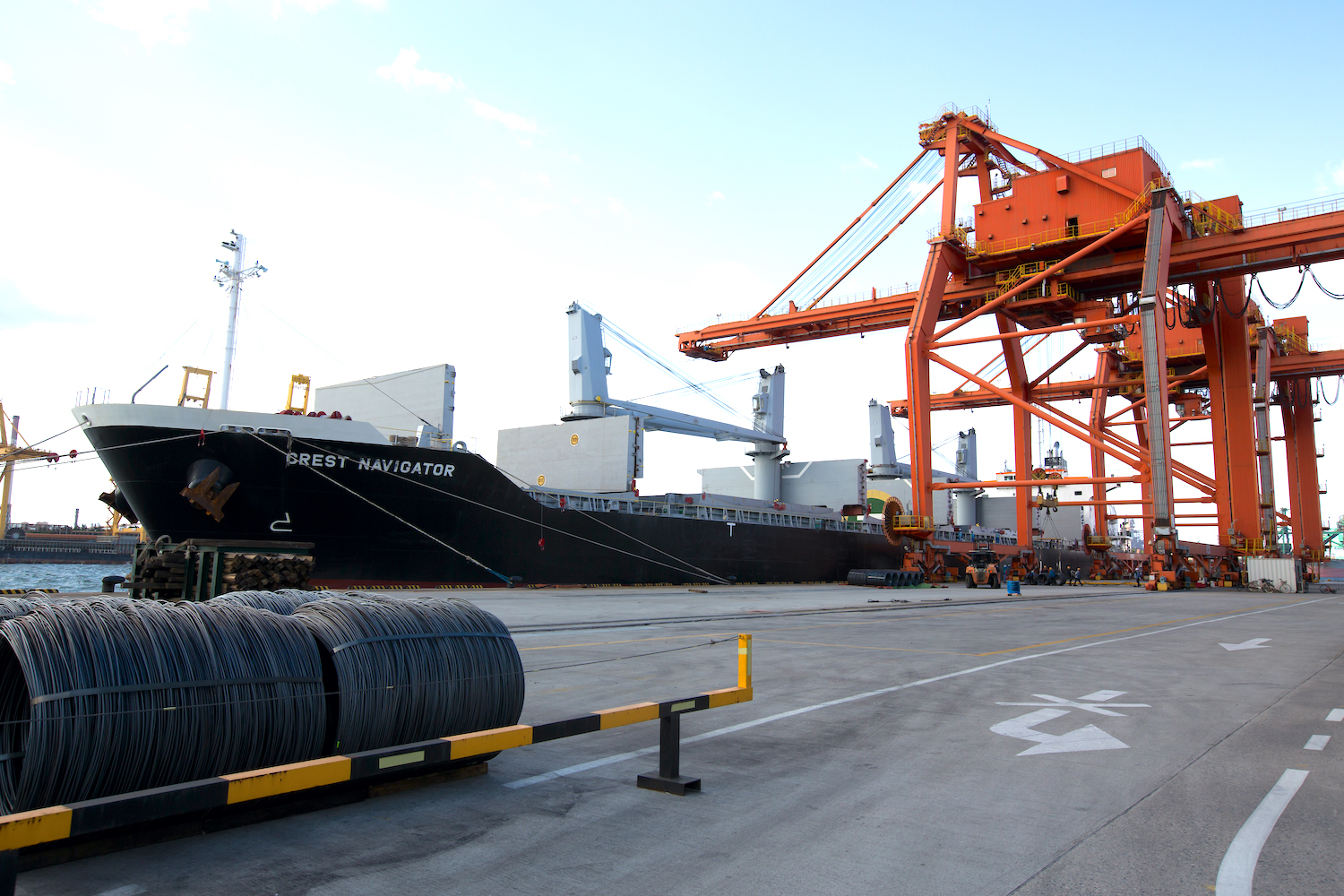
The European Commission is unlikely to extend its current three-year steel imports safeguards system for more than one year, unless European Union steel producers can prove they continue to suffer or could suffer serious injury from imports, the World Trade Organization said March 2.
Measures imposed for more than a year must be progressively liberalized, and third country exporters to the EU could be offered compensation for any extension, the WTO said in response to inquiries from S&P Global Platts.
The WTO highlighted its position on safeguards following the EC’s launch Feb. 26 of an investigation to determine whether current EU steel import safeguards – based on a tariff-rate quota system – should continue after the current system expires on June 30. The investigation has been requested by 12 EU member states, in view of “continuous significant import pressure from third countries and….the fact that global overcapacity remains at a very high level.”
Consumer associations including carmakers’ group ACEA and WindEurope say an extension would be unjustifiable given recent declines in import levels and skyrocketing steel prices, adding layers of uncertainty and volatility to an already nervous EU steel market.
“A WTO Member shall apply safeguard measures only for such period of time as may be necessary to prevent or remedy serious injury and to facilitate adjustment,” according to the Agreement on Safeguards on the WTO website. “The period shall not exceed four years.” Extension – up to a total maximum of eight years’ duration – can be made only if products are “imported in such increased quantities, absolute or relative to domestic production” as to cause a “significant overall impairment in the position of a domestic industry that produces like or directly competitive products.”
Falling exports
The EC introduced steel safeguards on 26 product categories in July 2018 after steel imports surged in 2017-18 and the US’ March 2018 imposition of Section 232 taxes on steel imports, which caused trade deviation. Imports subsequently fell from a share in the EU market of 22.5% in 2018 to 19.7% in 2020, a reduction of more than 9 million mt of imports, according to EU-based steel business consultant Georges Kirps.
Over the same period, however, EU mill supplies into the EU steel supply chain also fell by as much as 17-18 million mt, bringing overall EU steel market supplies to fall by 19% over the last two years, while real consumption fell by an estimated 14% only, according to Kirps. Now that the market has rebounded, supported by government stimulus in a COVID-19 recovery effort, this has resulted in a supply and demand “mismatch,” a tightness of certain product types, very long delivery mill lead times, and steel product price increases, he said.
Platts’ assessment of domestic hot rolled coil prices ex-Ruhr has risen 54% over the past 12 months to 13-year highs, rebar is up 39%, while flat steel stocks in the German steel distribution system are at 33-year lows, stock association BDS reported last week.
“Significant disruptions in steel supply chains … in European industry and construction,” could be aggravated by an extension of safeguards, Kirps told Platts, amid current signs of “toxic ingredients of a highly speculative steel bubble with latent and considerable risk of imploding sooner or later.”
Compensation requests
In March 2020, Turkey, traditionally a major steel exporter to the EU, initiated a WTO dispute complaint challenging the EU’s original decision to impose the safeguard measure on steel. This is currently still under review by a panel set up the following August, the WTO said.
The EU’s proposed adjustments of the safeguards in June 2020 following a Second Review investigation triggered responses from India, Russia, Turkey and Switzerland, seeking ways to achieve the objective of Article 8.1 of the WTO Agreement on Safeguards, covering trade compensation for the adverse effects of the safeguard and a “substantially equivalent level of concessions,” the WTO said. Concessions could include countries’ imposition of their own tariffs or restrictions, it said.
In November 2020 came a further request from Switzerland for consultations after the EU notified of its plan to adjust tariff-rate quotas.
Kirps believes extension of the EU steel safeguards would increase numbers of compensation requests or retaliation measures by trade partners, particularly as the EU steel industry has maintained its own, significant, export share steady at around 12% of EU mills’ steel deliveries between 2018 and 2020, “despite an increasing protectionist environment. Retaliation measures eventually could hamper a significant part of the business pie of EU steel,” the consultant said.
— Diana Kinch

German steel mill employers dismiss 4% pay increase for workers in first round
German steel mill employers group AGV Stahl said March 2 it has dismissed trade union IG Metall’s proposal to increase steelworkers’ pay by 4%.
At the first round of negotiations of the collective agreement talks for 70,000 steelworkers in Northwest Germany, employers said achieving a compromise is looking to be “extremely difficult.”
“IG Metall is recognizing that the steel industry has suffered dramatic losses caused by the pandemic, at times threatening a company’s existence,” AGV Stahl said in a statement. “But a 4% pay increase by referring to better capacity utilization — by far not at all companies — is not enough.”
The employers said that a deal “anywhere near” a 4% pay rise would be impossible.
“It’s going upwards for a few months now,” Knut Giesler, head of IG Metall North-Rhine Westphalia and head negotiator, said in a separate statement. “Steel demand has increased significantly since the end of 2020. Steel prices are going through the roof so that 2021 will be a good steel year.”
Steel prices have risen heavily since Q4 2020, to a multi-year high at Eur740/mt EXW Ruhr, according to the daily Platts Northern European HRC assessment March 1. First financial reports on Q4 2020 at steelmakers show balance sheet improvements after heavy losses in the first quarters of 2020, but mills have expressed uncertainty on the economic outlook.
The talks with employers started March 1 and usually take several rounds before an agreement is reached. The current negotiations cover agreements for workers in North-Rhine Westphalia, Lower Saxony and Bremen, while talks for the Saarland state and eastern Germany have separate negotiations scheduled later.
The existing terms of collective agreements covering all 88,000 steelworkers nationwide ended on Feb. 28, which also marks the end of restrictions on worker strikes. Talks for other regions will be scheduled at a later date.
IG Metall is now allowed to stage so-called “warning strikes” which are short-notice and have usually limited impact on production output but are used by the union to put pressure on employers.
The two sides will come together again in the second negotiation round on March 15.
— Laura Varriale

Higher nickel prices drive Taiwanese stainless steel higher
Taiwanese stainless steel producers have raised offers in March amid rising global nickel prices. The strong raw material prices are supporting the positive expectations of Taiwanese stainless producers, Kallanish notes.
Yieh United Steel (Yusco) has lifted its domestic sales prices for stainless 304 hot rolled and cold rolled coil products by TWD 5,000/tonne ($179/t). It has added TWD 2,000/t to stainless 316L products and TWD 1,500/t to stainless 430 products. Export offers for stainless 304, stainless 316L and stainless 430 products will increase by $150-200/t, $80/t and $70-150/t respectively.
Another major stainless steel producer, Walsin Lihwa, also lifted stainless 304, stainless 316, stainless 200 and stainless 400 domestic offers by TWD 5,000/t, TWD 7,000/t, TWD 2,000/t and TWD 1,000/t respectively.
Taiwanese steel mills say the increase was because prices of precious metals such as nickel and copper remain high after the Lunar New Year. In order to reflect the cost, the mills have decided to adjust their prices to keep up with market performance.
The average price of nickel on the London Metal Exchange (LME) in February was between $18,500/t and $18,600/t, around $700/t higher than in January. Although nickel only accounts for about 8% of stainless steel material composition, it accounts for up to 50% of stainless steel production cost, a local steel contact observes.
On Tuesday, the LME nickel price was up 0.6% to $18,682/t at the 5pm close. It touched $20,110/t on 22 February.
By Kallanish Team
Colakoglu to make special steels at world’s largest VOD plant
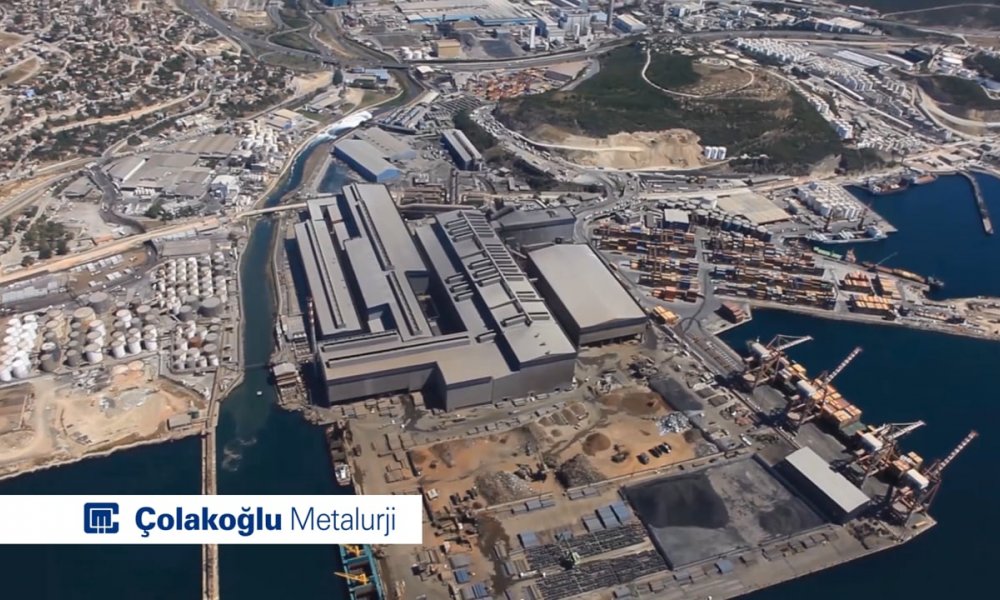
A VOD (vacuum oxygen decarburization) plant supplied by Primetals has received the final acceptance certificate from Colakoglu, one of Turkey’s largest steelmakers, Primetals said Feb. 26.
With a heat size of 295 mt, the VOD plant is the largest worldwide and Colakoglu will be able to produce special steels like IF grades, ULC grades and stainless steels, the company noted. The plant was upgraded from an existing vacuum degassing plant also supplied by Primetals.
“This will help Colakoglu to broaden its product range and enter additional markets,” Primetals said.
Immediately after start-up, for the first time in Turkey, stainless steel grades 304 and 304L were produced by Colakoglu.
Colakoglu operates an electric arc steel plant in Dilovasi, western Turkey. The main products there are slabs for a hot rolling mill, and billets for producing rebar and rock bolts.
The company currently has bar output capacity of 1 million mt/year and HRC production capacity of 3 million mt/year.
Colakoglu is aiming to raise its HRC output capacity by 50% with a new annealing furnace investment, as Platts has reported.
The company’s HRC production capacity will reach 4.5-5 million mt with this investment as of the second quarter of 2022, CEO Ugur Dalbeler told Platts.
— Cenk Can