


EUROMETAL Sentiment Tool is now operational
EUROMETAL began collecting the date of its first survey.
As reported about a month ago, EUROMETAL is launching the new market sentiment tool for its members and stakeholders.
Operators in the steel business are always keen to understand the general perception of the market regarding activity, stocks, and prices.
To meet this need, EUROMETAL introduced a new fully compliance tool to gather insights from members and subscribers on current market trends. This user-friendly tool will allow industry participants to share their opinions.
Once a month, EUROMETAL will publish a summary of the responses. The report (per sector and geographical area) will present the combined opinions and previous data, aiding the market in forming a comprehensive view of trends.
How to participate?
In a first phase, the Sentiment Tool was open to EUROMETAL members and subscribers.
An email entitled EUROMETAL Steel Distribution Market Sentiment Survey was sent today via info@eurometal-survey.net.
In the first phase, you will be asked to validate your contact, sector and market. Participation will only take a few seconds. Your participation is secret and will not be shared in any way.
Check your email and participate in this opinion poll.

European HRC prices largely flat despite mills’ attempts to raise offers
Several sources said that European mills were aiming for a price increase of around €20 ($22) per tonne for HRC with lead times early in the fourth quarter.
Offers from some integrated mills in northern Europe for such material were heard at €650-670 per tonne ex-works or delivered.
But sources said that €630-640 per tonne ex-works for September-delivery coil was still “negotiable.”
Italy-origin coil for September delivery was heard offered to Germany at €650-660 per tonne delivered.
“Mills try to raise prices, but distributors take a wait-and-see mode,” a buyer in the Benelux area said.
But sources said that most mills still have not closed order books for September-delivery coil, so a price increase was still uncertain.
“Order books for September still need to be filled, [most] mills need orders, so this push for an increase doesn’t look realistic,” a buyer source in Germany said.
Fastmarkets calculated its daily steel hot-rolled coil index domestic, exw Northern Europe at €632.50 per tonne on Thursday, up slightly by €0.83 per tonne from €631.67 on Wednesday July 10.
The index was up by €1.37 per tonne week on week but down by €2.92 per tonne month on month.
Industry sources once again claimed that steel output cuts could be “a real game changer” for the oversupplied European HRC market, but integrated suppliers have not confirmed any equipment stoppages so far.
Meanwhile, in Southern Europe, Fastmarkets calculated its corresponding daily steel hot-rolled coil index domestic, exw Italy at €626.25 per tonne on Thursday, down by €2.50 per tonne from €628.75 per tonne on Wednesday.
The index was up by €2.50 per tonne week on week but down by €5.00 per tonne month on month.
In Italy, September-delivery HRC was offered by a local supplier at €640-650 per tonne delivered, which corresponds to €630-640 per tonne ex-works.
Buyer sources estimated achievable prices at slightly lower levels – €620-630 per tonne ex-works.
But trading in Italy was sluggish, with mainly hand-to-mouth booking for small tonnages reported in the week.
The import HRC market was also silent; key Asian suppliers – Vietnam, Japan, Taiwan – have exceeded their allocation for third-quarter deliveries, Fastmarkets reported.
Offers of HRC from Turkey were available at €610 per tonne CFR, including the anti-dumping duty.


EU long steel market remains mostly steady even as mills announce price increase
The Northwest European market for rebar and medium sections remained mostly steady in the week ended July 10 even as some mills raised offers . Some sources said that demand has improved and is expected to be better in the summer.
“Demand has improved,” another distributor source said. “Some companies will continue in summer and demand is expected to be better this summer. Mills have announced an increase of 10 euros for beams and merchant bars.”
Whether the higher offers will be accepted by buyers remains to be seen, sources said.
“Market is quiet due to summer holidays,” another distributor source said. “There is not much action, and no buying at the moment.”
Platts assessed the price of Northwest European rebar stable on the week at Eur615/mt ex-works.
Tradable values were heard at Eur615/mt ex-works Benelux.
Meanwhile, Platts assessed the price of European medium sections stable on the week at Eur750/mt delivered Benelux.
Workable levels were reported at Eur740-770/mt delivered Benelux.
Devbrat Saha


European HRC prices remain unchanged amid persistent demand lull
European domestic prices for hot-rolled coil remained stable July 12 as low demand and muted trading activity persisted.
“Market is very weak,” a Germany-based service-center source said. “There is a lot of pressure on prices.”
Sources said that they do not expect any changes in the market until after the summer holidays, and that any attempt to increase prices is futile.
“Euopean mills can‘t increase prices, “ an Italy-based distributor source said. “There maybe some re-stocking in September, but until then, I don’t see any changes.”
Platts assessed Northwest European HRC stable on the day at Eur625/mt ex-works Ruhr on July 12.
Tradable values were heard at Eur610-630/mt ex-works Ruhr.
Meanwhile, Platts assessed domestic HRC prices in Southern Europe stable on the day at Eur625/mt EXW Italy.
Tradable values were heard at Eur620-630/mt EXW Italy, and offers were heard at Eur640/mt ex-works Italy.
Buying interest for carbon-accounted HRC was heard still muted as well. Offers for premium were heard at a minimum Eur100/mt for CO2 content around 1mt, and at Eur150-200/mt for CO2 content around 0 mt, both under scopes 1-2.
Platts assessed the carbon-accounted premium for HRC in Europe stable on the day at Eur125/mt July 12.
Interest in imported HRC also remained dull, due to longer lead times and the risks from safeguard duties.
“If the local mills are offering HRC at Eur620/mt ex-works, nobody would want to buy imports at Eur600/mt CIF,” another service-center source said.
Platts assessed imported HRC in Northwest Europe stable on the day at Eur595/mt CIF Antwerp.
Offers were reported at Eur600-610/mt CIF Antwerp, including anti-dumping duties, for material originating from Turkey. Tradable values were heard at Eur590-600/mt CIF Antwerp, including anti-dumping duties, for material originating from Turkey.
Platts assessed imported HRC in South Europe stable on the day at Eur600/mt CIF Italy.
Offers were reported at Eur610-620/mt CIF Italy for material originating from Indonesia and at Eur610-620/mt CIF Italy, including anti-dumping duties, for material originating from Turkey.
Devbrat Saha
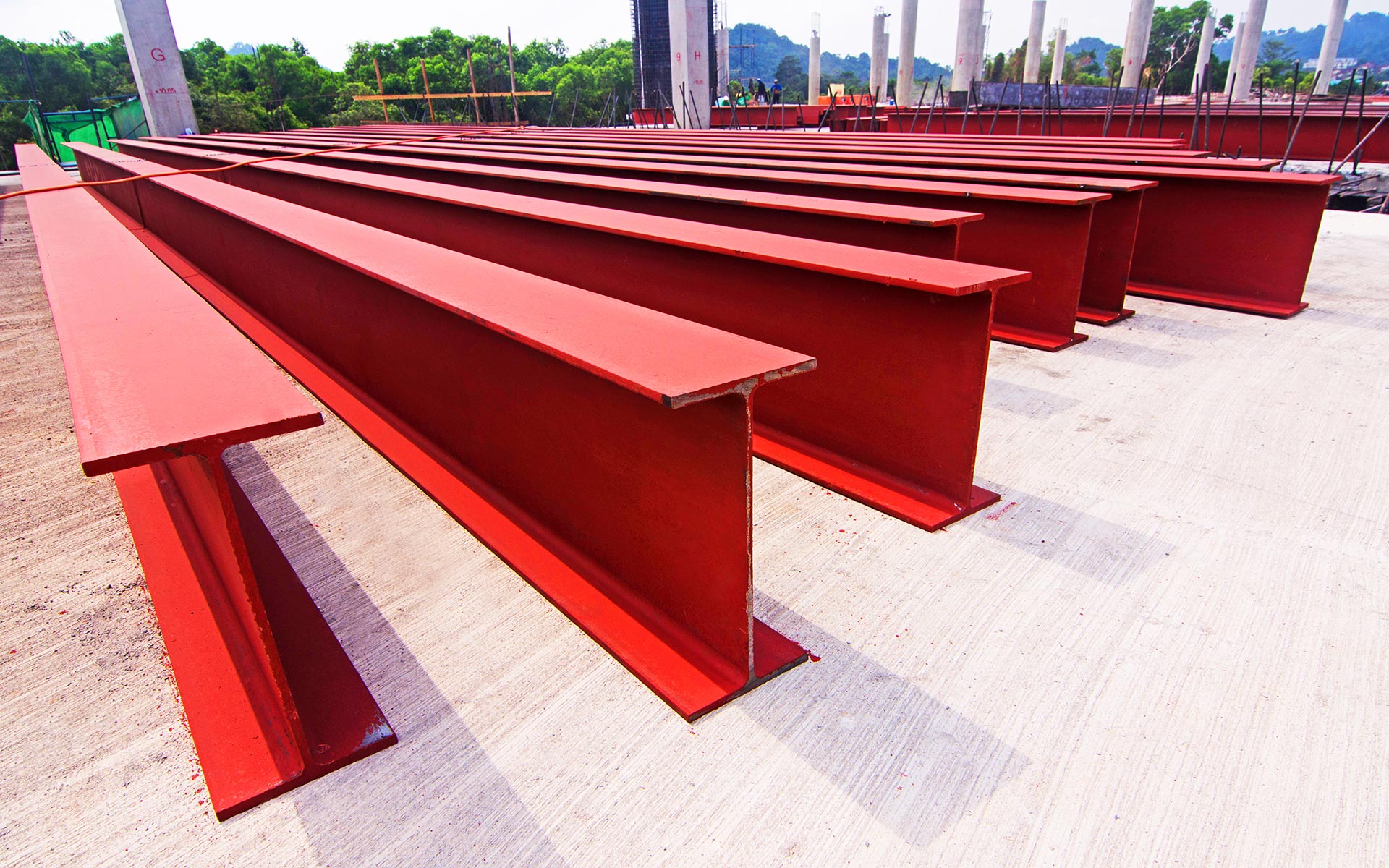
French longs prices rise slightly
Long steel prices in France are experiencing slight increases or remaining flat, depending on each segment, with activity still subdued, as reported by various distributors and buyers. There is however a slight increase in apparent demand for rebar and beams, due to the Olympic Games in the Paris area and a technical restocking, Kallanish notes.
Prices have been raised this month by both Spanish and local longs producers, which is reflected in contracts. The increases in prices, on average €10/tonne ($10.8), are relatively moderate, sources point out. Stockists are making some purchases ahead of the August mill stoppages, while the distribution sector remains cautious in its buying approach. According to two sources, construction volumes continue to be low, with no sign of improvement.
The average delivered value for domestic rebar stands at €625/t this month. Merchant bar prices are experiencing slight increases in deals compared to last month, with prices at around €660-670/t delivered.
Sections are seeing renewed apparent demand, which is bolstering prices. Producers have successfully boosted values by approximately €20/t since the start of June. The estimated range for the first category of sections is around €760-770/t delivered.
Spanish producers have contributed to the price hikes in beams and merchant bar by also increasing their offers in France. According to reports, their willingness to compromise on prices has faded compared to recent months.
With the production disruption at Liberty Ostrava, sales opportunities in Europe have opened up for mills in the region. One producer confirms his longs order book has been satisfactorily filled.
The French construction crisis is continuing, as reported by national construction federation Fédération Française du Bâtiment (FFB). By the end of April, year-on-year, new building permits and new residential construction fell by 10.2% and 10%, respectively. In the first quarter, there was a significant decline in sales within the private property sector, with a drop of 29.9%. Similarly, sales of private properties experienced a sharp decline of 25.9% compared to the previous year.
Natalia Capra France

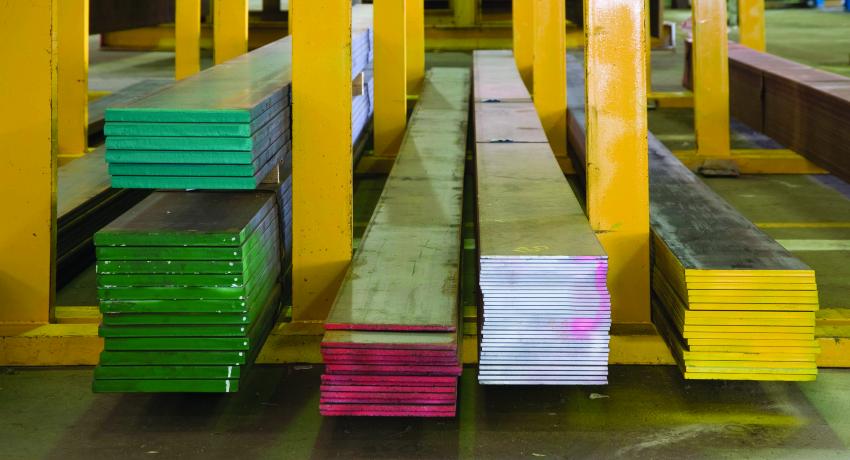
Italian merchant bar, sections prices tick up
Sources report that Italian merchant bar prices are showing a slight increase after steelmakers implemented a €30/tonne ($34) rise for July, Kallanish notes.
According to multiple buyers and sellers, the market continues to be sluggish. Despite a few increases in contract prices, sales volumes remain low. Merchant bar values currently range from €290-310/t base ex-works or delivered, with slight variations depending on the contract. However, material from other EU countries is priced slightly lower, at around €20/t less. With the inclusion of size extras, prices are currently fluctuating at around €700-730/t.
Section producers have also decided to raise prices by €20/t for July contracts. Beams are in demand compared to other long products, and supply is limited. According to sources, prices for the first category are expected to be at around €770-790/t delivered, which includes a €20/t increase. Some sellers agree this price is effective, but it needs to be consolidated.
Merchant bar and section producers are extending their summer shutdowns this year. Certain facilities are currently idle, while others will temporarily halt operations for approximately 5 weeks before resuming production in early September. Despite July’s dismal market start, there appears to be considerable demand for section sales because of the low stock levels across the value chain and low supply due to stoppages.
Natalia Capra France

EU frees up some Egypt HRC quota tonnage
Egypt has seen 10,175 tonnes of its EU hot rolled coil third-quarter safeguard quota made available, despite having oversubscribed its 141,850t quota cap immediately after the current period opened, Kallanish notes.
As of 2 July, Egypt had 176,626t awaiting allocation for customs clearance. Whether the correction stems from withdrawals from quota declarations or other factors was unclear at the time of publication. The European Commission has implemented a blocking period for Egypt’s quota between 11 July and 11 August. Total awaiting allocation as of 11 July was 339t.
Vietnam, Japan and Taiwan have fully utilised their Q3 caps under the “other countries” HRC quota, each shipping 141,850t.
About 357,750t is still available under the other countries quota of 945,665t for Q3.
The US, Libya, and Canada have 100% of their other countries HRC quota caps available.
India has utilised 74% of its HRC quota. Turkey and Australia have each filled 18%.
South Korea, the UK, Serbia, and Switzerland had low quota utilisation rates, ranging from 3% to 12%.
The European Commission capped the maximum volume a single country can export under the other countries TRQ to 15% per quarter to stabilise the market, it said earlier. This category’s early quota exhaustion had led to market imbalances and increased import pressure.
The Italian Customs Agency (ADM) introduced an experimental procedure for tariff quotas starting from April, allowing importers, if quotas are exhausted, to cancel or adjust their import operations without incurring additional duties.
| Origin | Quota 1.7-30.9.2024 | Imported | Balance | Awaiting allocation | Avaliable TRQ, % |
| Russia | not applicable | – | – | – | – |
| Türkiye | 475,174 | 84,143 | 391,031 | 570 | 82 |
| India | 301,704 | 222,210 | 79,494 | – | 26 |
| Korea, Republic of | 188,405 | 11,369 | 177,037 | 4,128 | 92 |
| United Kingdom | 157,608 | 4,972 | 152,636 | 1,099 | 96 |
| Serbia | 167,257 | 18,215 | 149,041 | 1,322 | 88 |
| Other countries, inc | |||||
| Egypt | 141,850 | 131,675 | 10,175 | 339 | 7 |
| Vietnam | 141,850 | 141,850 | – | – | 0 |
| Japan | 141,850 | 141,850 | – | – | 0 |
| Taiwan | 141,850 | 141,850 | – | – | 0 |
| Australia | 141,850 | 26,046 | 115,804 | – | 82 |
| Switzerland | 141,850 | 4,183 | 137,666 | 165 | 97 |
| United States | 141,850 | 461 | 141,389 | 1 | 100 |
| Libya | 141,850 | – | 141,850 | – | 100 |
| Canada | 141,850 | – | 141,850 | – | 100 |
| Total other countries | 945,665 | 587,914 | 357,750 | – | 38 |
| Total | 2,235,812 | 928,823 | 1,306,989 | – | 58 |
Source: EU TARIC, as of 11 July. Calculated by Kallanish
Elina Virchenko UAE

ArcelorMittal France tests MPI automotive steel blank line
ArcelorMittal France has inaugurated its Multi Part Integration (MPI) line assembled at its Montataire research centre, a line specifically designed for the production of automotive steel.
This laser ablation and welding facility will test different manufacturing processes and shapes of laser-welded blanks (LWB), also referred to as tailored blanks. It will produce prototypes for ArcelorMittal Tailored Blanks, the steelmaker’s division that supplies laser-welded and unwelded blanks to the automotive industry worldwide. In Europe, it has sites in Belgium, France, Germany, Slovakia, Spain and the UK, Kallanish notes.
The new MPI line caters to the requirements of automakers for simplified assembly and modular design in electric driving. An LWB is a sheet that combines different grades. Each grade can have different thicknesses and coatings. “The separate grades are laser welded together to create a single sheet of steel which has the best grade in the best place for strength and deformation. Each sheet can be hot or cold-stamped to give the part its final shape,” the steelmaker explains in a note. The result is a tailor-made solution employed in automotive manufacturing, specifically for the body-in-white and closures of a vehicle.
The new MPI now being tested at Montataire incorporates press hardened steel (PHS) grade and laser welding technology. This allows for the creation of a component that can be fine-tuned to meet various crash requirements and accommodate different types of motors.
The technology offers numerous benefits, such as reducing the number of structural parts and shaping steps, as well as minimising the surface area of the workshop. It also helps in reducing assembly times and weight, thanks to the utilisation of new-generation steel grades. The new line’s features will allow for the development of new laser welding processes on large blanks, ArcelorMittal concludes.
Natalia Capra France

Tubemaker Wiederholt sources CO2-reduced steel from ArcelorMittal
Wiederholt, a German producer of precision steel tube, and ArcelorMittal have signed a memorandum of understanding to use CO2-reduced steel in production, Kallanish learns from the steelmaker. Both companies have been working together for several decades.
As part of the partnership, Wiederholt intends to source hot-rolled steel from ArcelorMittal with CO2 savings of up to 65% compared to traditional production methods.
The CO2 reduction will be achieved through “XCarb Green Steel certificates” and steel with the “XCarb recycled and renewably produced” label. According to ArcelorMittal, at least 75% recycled scrap is used in the production of this steel. The CO2 savings that Wiederholt can pass on to its customers are verified by environmental product declarations (EPDs), the steelmaker says.
Wiederholt’s precision steel tube is mainly used in the automotive industry, including shock absorbers, camshafts, steering parts, cardan shafts and stabilisers. It has committed to becoming carbon neutral in Scope 1 and 2 emissions by 2030, in accordance with the Greenhouse Gas Protocol.
Separately, ArcelorMittal Germany has announced that its Duisburg long products mill has been certified by organisation ResponsibleSteel, following a two-year audit by inspection company GUTcert.
Christian Koehl Germany

European HRC market remains quiet, prices broadly unmoved
Trading in the spot HRC market across Europe was close to nil on Friday. Buyers have been cautious with making new bookings, due to uncertainty over the price direction after the summer months.
Besides, most buyers have sufficient stocks and no immediate need to book new volumes, Fastmarkets heard.
“Consumption remains low; we can work with the level of stock we have. [The level of stock] is still quite high at some distributors and steel service centers, and we see fierce competition downstream,” one buyer in Europe told Fastmarkets.
For September-delivery HRC, integrated steelmakers in Europe mainly maintained offers at stable levels of around €630-650 ($684-706) per tonne ex-works, while tradeable values for such material were heard from buyer sources at €620-630 per tonnne ex-works.
For October delivery, some suppliers are targeting price hikes of around €20 per tonne, but market fundamentals are unsupportive of any price rise, according to sources.
“The market is oversupplied. Mills need to fill order books and this talk about price rises is not convincing – there is not enough demand,” a second buyer said.
Fastmarkets calculated its daily steel HRC index domestic, exw Northern Europe at €632.13 per tonne on Friday, down slightly by €0.37 per tonne from €632.50 on Thursday.
The index was up by €1.13 per tonne week on week but down by €3.08 per tonne month on month.
In Southern Europe, Fastmarkets calculated its corresponding daily steel HRC index domestic, exw Italy at €626.00 per tonne on Friday, down by €0.25 per tonne from €626.25 per tonne on Thursday.
The index was up by €1.90 per tonne week on week but down by €5.88 per tonne month on month.
The Italian market was also quiet, with buyers mainly keeping at sidelines.
September-delivery HRC was still being offered by a local supplier at €640-650 per tonne delivered, which corresponds to €630-640 per tonne ex-works.
Buyer sources estimated achievable prices at no higher than €620-630 per tonne ex-works, with sporadic trades reported at €620-625 per tonne ex-works in the week to Friday.
New import HRC offers were scarce. Key Asian suppliers – Vietnam, Japan and Taiwan – have exceeded their allocation for third-quarter deliveries, Fastmarkets reported.
Offers of HRC from Turkey were available at €610 per tonne CFR, including the anti-dumping duty.
From Japan, offers were heard at €600-610 per tonne CFR, for September-shipment coil.
Two sources reported an offer from South Korea at $660 per tonne CFR to Southern Europe.