


Blechexpo: Plate prices seen increasing, demand improves
Plate sellers are expecting price increases in the first quarter of 2026 to be driven by a sharp decline in imports into Europe and ongoing infrastructure projects, sources at last week’s Blechexpo trade fair in Stuttgart told Kallanish.
For S275 material, sources expect prices to reach around €700/tonne ($819/t) ex-works for southern Europe and €30-40/t more for northern Europe, where prices remain slightly higher.
Demand is described as improving, with producers’ lead times currently extending into December. European plate mills are seeking to restore profitability, as margins have been under sustained pressure in recent months.
One seller at the trade show noted that achieving Ebitda margins of around 7-8% would be “at least acceptable”, adding that “we’re not asking for the moon”.
Demand for plate in northwestern Europe did not see a substantial revival after the summer break but it is said to be improving in October. Prices in northern European countries are hovering between €650-670/t ex-works, while in Italy, producers are asking for €650/t for S275 material, with current transactions between €630-630/t ex-works.
Another producer said plate sales are now strong after a period of uncertainty. “We will close the year well and rebalance our finances in the fourth quarter,” he commented.
Market sources downstream, however, remain cautious, emphasising that any price increases should be moderate and implemented gradually to allow customers time to adapt.
Natalia Capra France


EU Steel Distribution: Confidence slips slightly, but activity stabilises
The latest EUROMETAL Market Sentiment Survey for October 2025 shows a mixed picture for Europe’s steel distribution sector. While current activity appears to have stabilised, forward-looking indicators suggest that confidence in a recovery remains fragile.
After September’s tentative signs of improvement, October’s results show a sector still cautious, with no strong upward momentum and a wait-and-see approach dominating behaviour.
Current activity remains stable
The assessment of current activity remained stable in October, holding at similar levels to September. While still modestly negative and below the neutral line, this marks the second consecutive month without further deterioration — a potential sign that the market may have found its floor after the sharp summer downturn.
Near-term outlook softens again
Expectations for activity in the next quarter declined slightly in October, reversing part of the cautious optimism seen in September. While not a dramatic shift, the trend reflects ongoing uncertainty and weak demand fundamentals heading into Q4.
Inventory strategies unchanged
The stock volume outlook remains consistent with previous months. Distributors are largely maintaining defensive inventory strategies, with most respondents expecting stock levels to remain stable in the near term. This cautious approach signals continued risk aversion across the sector.
Price expectations continue upward trend
October marks the third consecutive month of rising price expectations among European steel distributors. Following the dip in Q2, sentiment has steadily improved, and October shows the strongest positive outlook since early spring.
While price sentiment is not yet decisively bullish, the trend indicates that more respondents are beginning to expect moderate price increases in the coming months. This shift may reflect signs of tightening supply, stabilised demand, or anticipation of restocking cycles in Q4.
Key Takeaway
While there are early signs of improvement in price sentiment, the October 2025 data continue to reflect a market constrained by weak demand and low visibility. Current activity has stabilised, and inventories remain steady — both indicators of a sector in a holding pattern.
However, the continuation of upward price expectations is notable and could signal the beginning of a more positive trend — if demand fundamentals start to improve. Until then, caution remains the dominant mood across Europe’s steel distribution sector.
This analysis is based on the EUROMETAL Market Sentiment Survey, reflecting the views of 214 industry participants for October 2025.

Interested in our Sentiment Tool? Contact us.
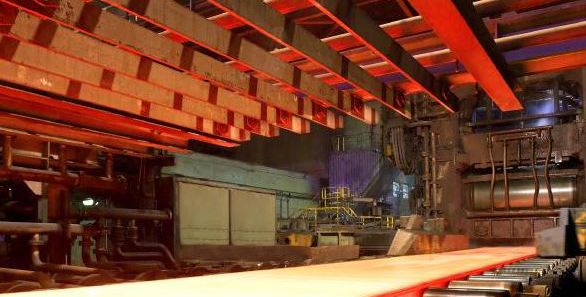
Fire at thyssenkrupp Steel in Duisburg in the Bruckhausen plant area
A fire broke out on the evening of October 24, 2025, at the hot strip mill of thyssenkrupp Steel’s Bruckhausen plant in Duisburg, Germany.
The incident occurred around 10:15 p.m. and was quickly brought under control by the plant’s emergency services, supported by the professional fire department of Duisburg.
No injuries were reported, and the NINA warning app has since issued an official all-clear.
The fire occurred in a facility that produces flat steel for critical downstream applications, including the automotive sector. As one of Europe’s largest flat steel manufacturers, thyssenkrupp Steel’s Duisburg site employs nearly 13,000 people, with an additional 500 trainees.
Authorities have been kept informed, and no broader disruptions have been announced as of now.
Source: thyssenkrupp-steel.com

Metinvest confirms initial interest in acquiring idled Liberty Galati steel plant
Metinvest has confirmed a preliminary interest in Romania’s 3 million mt/year integrated iron and steel works Liberty Galati.
The Ukrainian mining and steel company confirmed to Platts, part of S&P Global Commodity Insights, it is examining the feasibility of such an acquisition and the potential synergies with its business, but added it has not yet put in a bid.
Given the Romanian state’s exposure to around Eur400 million of Liberty Galati’s cumulative debt, in mid-September the government set up the Committee for Protecting the State Interests at the Galați steel plant, according to its website.
The committee has been investigating a loan granted to the producer for the restart of its blast furnace No. 5, which came online earlier this year, but for a short period only. It has also been assessing the intentions of potential investors interested in acquiring or supporting the production activities of the steelmaking asset.
It did not specify those companies or persons, but local media mentioned Dorinel Umbrarescu, the owner of Romanian construction group UMB, as another candidate.
The state’s interest is to maintain the domestic steel industry functioning because the entire construction sector in Romania relies heavily on metal production, and also because Romania will have additional gas production from 2027, and so it would be illogical not to produce key metal components domestically, Prime Minister Ilie Bolojan said during his last month’s press conference.
In September, the plant’s administration notified the unions that technical unemployment would continue through October, with prospects for production to resume being slim, according to the Romanian government’s website.
The restructuring plan for Liberty Galati, approved by creditors and confirmed by the Galati Court in August 2025, is meant to help the steel mill avoid insolvency and implies securing the financing, and collaboration with potential investors.


Blechexpo: EU CRC market braced for strong impact from new trade regime, anti-dumping investigation
Stakeholders said that new trade policies and and a pending anti-dumping investigation into CRC imports were driving positive market expectations for 2026, even though they acknowledged that real demand is not expected to grow.
On September 18, the European Commission initiated an anti-dumping (AD) investigation targeting CRC originating in India, Japan, Taiwan, Turkey and Vietnam. The probe affects more than half of all EU CRC imports.
In 2024, those five countries accounted for 65.2% (1.9 million tonnes) of the total 3 million tonnes of CRC sold into the EU.
“In our opinion, if there were to be a shortage of material next year, it will be cold-rolled coil,” a German buyer told Fastmarkets on the sidelines at Blechexpo.
CRC prices in Northern Europe have moved slightly higher in mid-October, prompted by positive views among sellers after the new EU regime for 2026 was announced on October 7.
The German buyer source said that domestic mills were “not interested in selling big volumes of cold rolled coil, at least for commodity steel grades”, adding that suppliers preferred to use CRC to produce galvanized material.
“Producing CRC is expensive in Europe. And [CRC] has been import-dominated for years,” a second German buyer said.
Sources said that most EU mills use the batch annealing process to make CRC, which is very energy-intensive.
And only three suppliers could make CRC via continuous annealing, which is more energy-efficient, sources said
While trade restrictions and lower imports were seen as supportive factors for the market, weak end-user demand – particularly from key sectors such as automotive – is expected to offset much of that positive impact, sources said.
“We don’t expect our business with the automotive sector to grow,” a third German buyer said.
Buyers also questioned the sustainability of any potential price increases, given the low levels of demand.
According to a report published by the European Association of Automotive Suppliers (CLEPA) in March 2025, almost half do not expect to be profitable in 2025.
And a Benelux-based seller said that domestic prices CRC were unlikely to “shoot up” because of potential product shortages caused by the new import measures.
According to the seller, there is an “underestimation” of the ability for local mills to “fill the gap” left in the market by lower import volumes.
“There is a big part [of CRC] that is used to produce very basic quality value galvanized coil, which we won’t need to do if the price of CRC increases,” the seller said. “It depends on the balance that you make.”
Fastmarkets’ weekly price assessment for steel cold-rolled coil domestic, exw Northern Europe was €670-690 per tonne on Wednesday, compared to €660-670 per tonne the previous week.
For January delivery, local suppliers told Fastmarkets they were looking to get €730-750 per tonne ex-works for CRC.

European heavy steel plate prices largely steady despite upward pressure in Italy
“Although these levels have not yet been realised in current spot transactions for the remainder of 2025,” a buyer said.
Fastmarkets’ weekly price assessment for steel domestic plate, 8-40mm, exw Southern Europe was €590-620 ($685-719) per tonne on Thursday, unchanged week on week.
Transactions at €620-630 per tonne exw were reported in the week, but the data was received after the pricing session had ended and so were not included in Fastmarkets’ final assessment.
In Northern Europe, domestic commodity-grade steel plate prices narrowed down in the week to Thursday amid ongoing muted trade.
Fastmarkets’ weekly price assessment for steel domestic plate, 8-40mm, exw Northern Europe was €650-680 per tonne on Thursday, narrowing down by €10 per tonne from €650-690 per tonne a week earlier.
Steel plate was imported in Germany at about €700 per tonne delivered, sources said.
And some market participants said that sentiment had recently improved in anticipation that prices and demand will be bolstered by the EU’s Carbon Border Adjustment Mechanism (CBAM) and safeguarding reforms.
“Sentiment remains cautiously firm, with Northern European producers already signaling a €20 per tonne price increase for 2026 production, suggesting confidence in steady demand and tighter supply expectations going forward,” a source told Fastmarkets.
Activity remained limited in Northern Europe, however, amid ongoing weak demand in the region.
Thyssenkrupp idles BF9 at Duisburg on weak demand, import pressure
This information was also confirmed by the company’s spokesperson on the same day.
“Thyssenkrupp Steel has taken blast furnace 9 at the Hamborn plant out of operation,” the spokesperson said. “This is the company’s response to the further consolidation of structural changes in the European steel market. In particular, overcapacity and – to an increasing extent – the pressure of imports are significantly blunting the competitiveness of domestic production.”
The company did not comment on the date of possible restart.
BF 9 has capacity of 1.7 million tonnes per year of pig iron, according to Fastmakrets’ information.
Thyssenkrupp’s Duisburg facility has a designed production capacity of around 11.7 million tpy of pig iron from four blast furnaces (BFs) and produces around 11 million tpy of crude steel per year.
Steel shipments from thyssenkrupp’s steel assets amounted to around 9 million tonnes over the past three years, according to Fastmarkets data.
By the end of 2024, thyssenkrupp already announced plans to cut steel output by 2.5 million tpy, with 11,000 jobs likely to be lost, consequently, Fastmarkets reported.
Market brief
There was a short-lived rebound in apparent demand for flat steel at the end of July and into early August, related to restocking activity, expectations of the implementation of Europe’s Carbon Border Adjustment Mechanism (CBAM) and the introduction of new, tougher, steel safeguard measures to limit import trade flows in 2026.
But in September, prices have stabilized and European mills have struggled to push through increases because of insufficient end-user demand.
In mid-October, shortly after the European Commission had proposed a new, stricter trade measures to replace steel safeguards, European mills started to announce price rises for the first quarter delivery hot-rolled coil.
Under the new plan, only 18.3 million tonnes per year of steel would enter the EU without being subject to tariffs. Steel shipments exceeding that volume would face duty at 50%.
For comparison, carbon steel imports into the EU in 2024 amounted to 26.36 million tonnes, up by 6.4% from 2023’s 24.78 million tonnes, according to European steel association Eurofer.
On October 13 leading European steelmaker ArcelorMittal has raised its offers for HRC scheduled for delivery in December by €20 ($23) per tonne to €630 per tonne ex-works or delivered, depending on the region, sources told Fastmarkets on Monday October 13.
Meanwhile, for January delivery, offers were as high as €650 per tonne ex-works or delivered.
During the steel trade fair Blechexpo, held in Stuttgart on October 21-24, other European mills followed the move, aiming for €620-630 per tonne ex-works for Janaury delivery HRC.
According to both buyers and sellers, the introduction of CBAM and new trade regime was anticipated to heighten uncertainty, thereby limiting new imports or aligning import prices more closely with those in Europe. Consequently, domestic HRC prices were projected to rise.
It remains to be seem if the market can fully absorb the increase, considering lack of real demand.
“We do expect an increase for the first quarter delivery coil, but the question is, how much and for how long it will last since demand from end-users is not rising,” a buyer in Germany said.
Fastmarkets’ daily steel hot-rolled coil index domestic, exw Northern Europe was €600 per tonne on October 23, up by €2.86 per tonne from €597.14 per tonne on Wednesday October 22.
The index rose by €8.75 per tonne week on week and by €21.25 per tonne month on month.
Earlier in October, ArcelorMittal idled one BF at the Fos-sur-Mer plant in France after an accident, halving steel output at the site for at least one month, Fastmarkets reported.
These stoppages along with lower imports could result in some supply tightness in the first quarter 2026 and therefore support a domestic price rebound, sources said.
The market for imported HRC has been very quiet lately because most of the overseas suppliers are offering HRC with delivery in the first quarter of 2026.
Therefore, prices for these tonnages will be subject to EU’s CBAM.
Turkish offers were indicated at €530 per tonne CFR, inclusive of the anti-dumping duty. According to a local buyer, when factoring in CBAM charges, which are estimated at €55 per tonne, along with unloading and delivery costs, the effective price would approach European levels, at approximately €620–630 per tonne delivered.
Meanwhile, offers from Indonesia were reported at around €470 per tonne CFR, excluding CBAM-related expenses.