

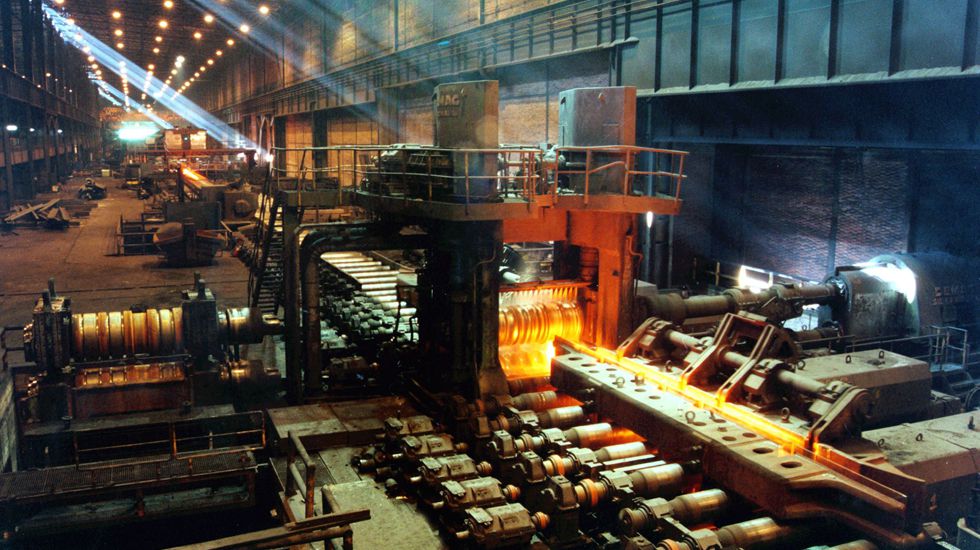
ArcelorMittal Spain restarts long steel production at Gijon
ArcelorMittal’s Spanish subsidiary has restarted long steel production at its Gijon plant in Spain after strike action was called off, the company said Dec. 10.
Talks with unions over a productivity plan for the site, which has a capacity of 900,000 mt/year, were ongoing, it said.
A lockout was called by ArcelorMittal as response to a strike by workers which left it unable to safely continue production to the required standard, it said Dec. 3, halting production of steel rails and rods.
Workers from two unions had called an intermittent strike on Nov. 25 in protest at a proposed new productivity plan which would potentially include 44 job losses. The action involved two-hour strikes divided between the start and end of each shift.
Local daily La Nueva Espana reported Dec. 8 that the proposed job losses had been put on hold as part of the discussions to restart production.
In the wake of the COVID-19 pandemic, the company applied for temporary lay-offs for its entire Spanish workforce, numbering more than 8,000 workers.
However, the country’s National High Court (Audiencia Nacional) overturned the company’s lay-off application on Dec.2.
ArcelorMittal in Spain told S&P Global Dec. 4 it disagreed and will appeal the ruling at the Supreme Court (Tribunal Supremo.)
Despite a tightening of COVID-19 restrictions from October, the company’s other plants in Spain were generally operating normally, albeit with reduced demand and with the exception of one sinter, which is currently offline.
ArcelorMittal’s two furnaces, with a combined capacity of 5 million mt/yr are still in operation site as is the sheet steel production site at Aviles and the coking batteries.
The 2.7 million mt/year A furnace was halted in April amid low demand but then restarted on Oct. 26 to cover production while its Gent, Belgium smelter is being remodeled, although the Gent smelter is due to restart in January, according to the company.
At the low point, the mills were running at about half of capacity, amid a 25% slump in steel demand across the sector. ArcelorMittal’s output is seen around 40% below 2019’s.
A recent recovery has been tempered by news of some temporary closures at auto sites belonging to Ford and Volkswagen, which directly affect ArcelorMittal’s Asturias production.
— Annalisa Villa, Gianluca Baratti

Steel supply tightness in EU to linger, auto to boost 2021 demand: Jefferies
Steel supply is expected to remain tight in the European steel market in the first half of 2021 as automotive demand will boost demand, although levels will only catch up to pre-pandemic levels by 2022, according to an analysis by equity research firm Jefferies.
In a note published Dec. 10, Jefferies said the continued supply shortage will likely lead to higher steel prices. The carbon steel market is expected to outperform stainless and OCTG in 2021.
The report described 2020 as “the most disruptive year since 2009, with ex-China apparent demand declining an estimated 13%.”
“The stimulus and V-shaped recovery put it at odds with nearly every other market, growing an estimated 8% in 2020 to leave global demand down 2%,” the report said. “We forecast a more synchronized rebound in 2021, albeit one where China lags.”
Jefferies is forecasting European demand to rise 8% in 2021, led by a 15% recovery in automotive. However, the car industry is likely to reach 2019 levels only in 2022, it said. Construction, the biggest end-user market of steel in Europe, is expected to grow by 5% next year.
The anticipated announcement of preliminary antidumping duties for Turkish HRC imports into the EU, which accounted for 28% of the EU’s 2020 HRC imports so far, is expected to tighten the supply situation further.
HRC prices have surged more than Eur200/mt in Europe since June, according to S&P Global Platts indexes EXW Ruhr and Italy, with sources reporting severe supply tightness on the spot market as mills offer limited material due to production curbs and scant availability of import material.
— Laura Varriale
ArcelorMittal signs investment agreement with Italian government
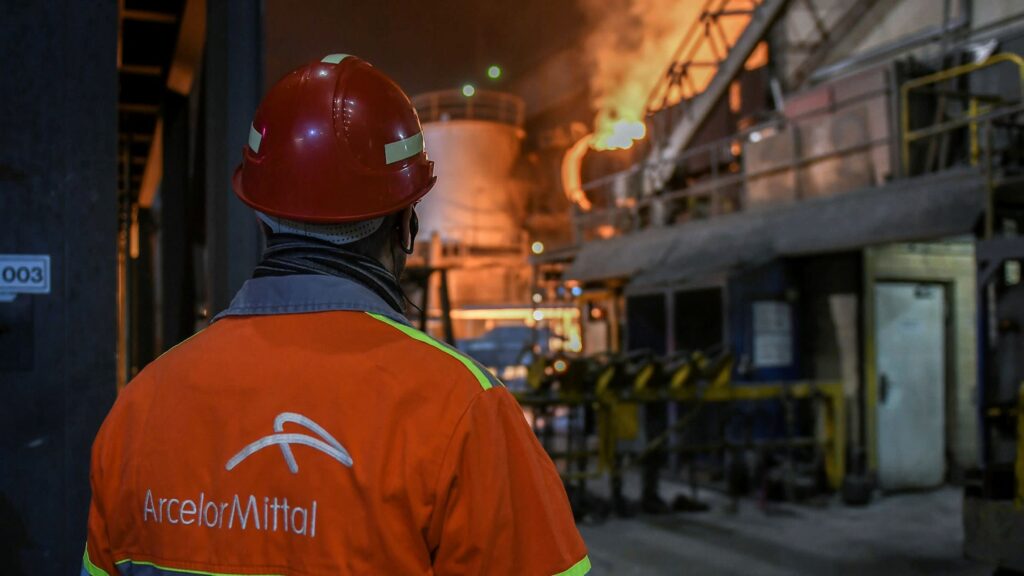
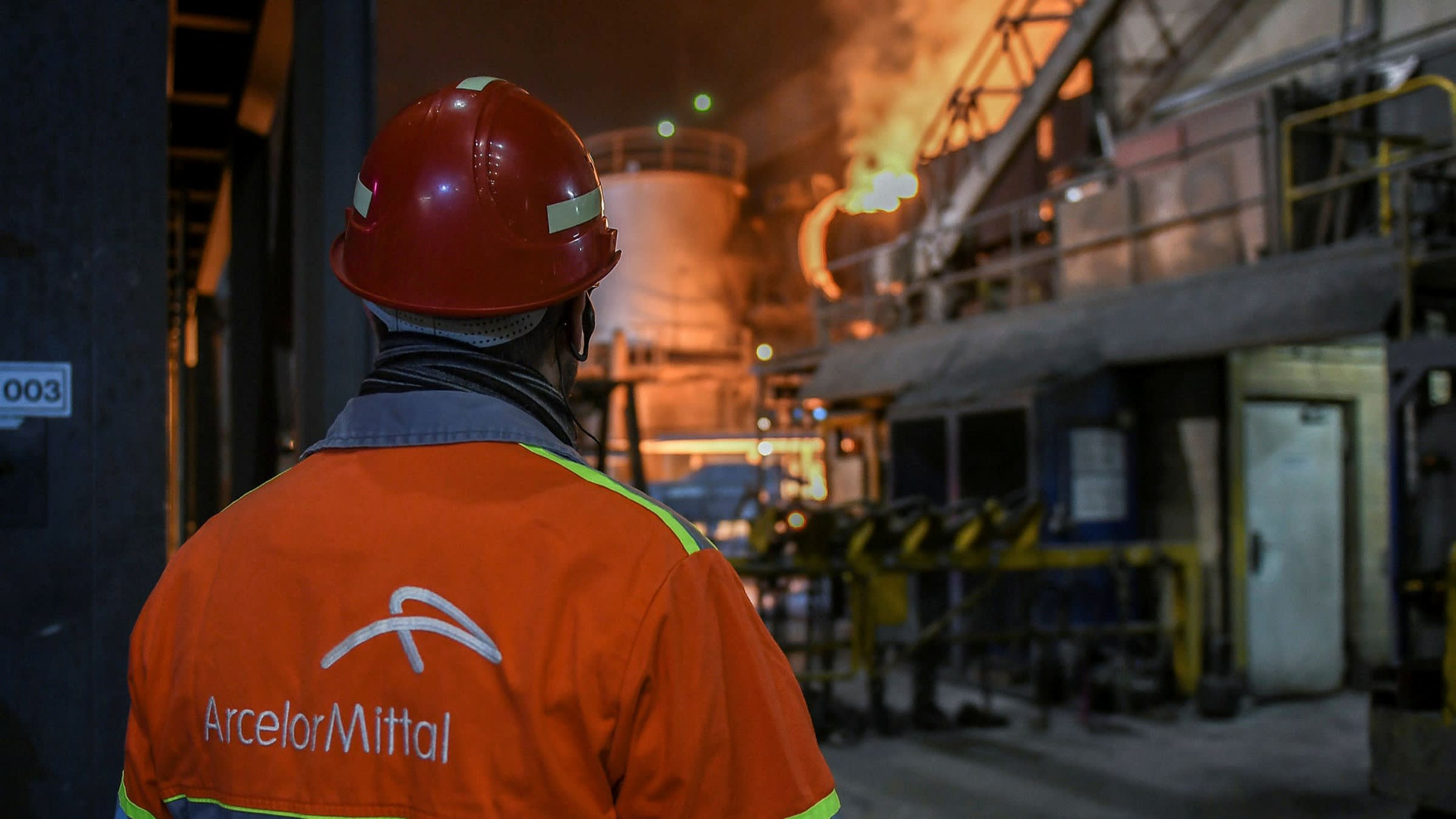
ArcelorMittal announced late Dec. 10 that it has signed a binding agreement with Invitalia, Italy’s agency for investment promotion and enterprise development, forming a public-private partnership for the former Ilva steel operations.
The Investment Agreement will result in a recapitalization of AM InvestCo, an ArcelorMittal’s subsidiary that signed the lease and obligation to purchase agreement for Ilva’s business back in 2018.
Invitalia will invest in AM InvestCo in two tranches: the first investment of Eur400 million will be made by Jan. 31, 2021 (subject to EU antitrust authorization), providing Invitalia with joint control of AM InvestCo. The second tranche of up to Eur680 million is payable on closing of AM InvestCo’s purchase of Ilva’s business by May 2022, at which point Invitalia’s shareholding in AM InvestCo would reach 60%.
ArcelorMittal will also invest up to Eur70 million, to the extent necessary to retain a 40% shareholding and joint control over the company, according to a company press release.
AM InvestCo and Invitalia agreed to invest in lower CO2 steelmaking technologies, including the construction of a 2.5 million mt/year electric arc furnace. The industrial plan, which is similar to the one planned in March targets reaching 8 million mt/year of production in 2025.
According to the press note, AM InvestCo’s governance would be based on the principle of joint control starting with Invitalia’s first investment. Sources close to the deal told Platts that the governance of the new company will have a board with six members, three per partner, with the chairman chosen by the Italian government and the CEO by ArcelorMittal. Current CEO Lucia Morselli is expected stay in her position.
It is understood that this is the first time a government will have a stake in an ArcelorMittal holding, at least in Europe.
The current steelmaking operation, AM Italia, will close this year with production of around 3.3 million-3.2 million mt of crude steel, union sources told Platts. As the sheet steel market has improved since the end of October, AM Italia is planning to restart a third blast furnace in January with around 2 million mt/year of design capacity. The restarted furnace, BF2, will partially offset the one-week BF4 maintenance outage at the end of this year.
AM Italia employs around 10,700 workers, the key reason the Italian government wants to keep the company in operation. ArcelorMittal agreed to buy Ilva in 2018 under a lease-and-purchase agreement for Eur1.8 billion and to invest another Eur2.4 billion to clean up and modernize the plant, which has been dogged by environmental issues.
Following legal issues with the Italian state, ArcelorMittal in early March reached an agreement with Italian authorities over the future of the former Ilva group, amending the existing lease and purchase agreement. The agreement left ArcelorMittal with the right to withdraw from its Ilva purchase by the end of November 2020, which was extended to Dec. 11.
— Annalisa Villa
Relations with the UK: Commission proposes targeted contingency measures to prepare for possible “no-deal” scenario
While the Commission will continue to do its utmost to reach a mutually beneficial agreement with the UK, there is now significant uncertainty whether a deal will be in place on 1 January 2021.
The European Commission has today put forward a set of targeted contingency measures ensuring basic reciprocal air and road connectivity between the EU and the UK, as well as allowing for the possibility of reciprocal fishing access by EU and UK vessels to each other’s waters.
The aim of these contingency measures is to cater for the period during which there is no agreement in place. If no agreement enters into application, they will end after a fixed period.
President von der Leyen said: “Negotiations are still ongoing. However, given that the end of the transition is very near, there is no guarantee that if and when an agreement is found, it can enter into force on time. Our responsibility is to be prepared for all eventualities, including not having a deal in place with the UK on 1 January 2021. That is why we are coming forward with these measures today”.
The Commission has consistently called on all stakeholders in all sectors to prepare for all possible scenarios on 1 January 2021. While a “no-deal” scenario will cause disruptions in many areas, some sectors would be disproportionately affected due to a lack of appropriate fall-back solutions and because in some sectors, stakeholders cannot themselves take mitigating measures. The Commission is therefore putting forward today four contingency measures to mitigate some of the significant disruptions that will occur on 1 January in case a deal with the UK is not yet in place:
- Basic air connectivity: A proposal for a Regulation to ensure the provision of certain air services between the UK and the EU for 6 months, provided the UK ensures the same.
- Aviation safety: A proposal for a Regulation ensuring that various safety certificates for products can continue to be used in EU aircraft without disruption, thereby avoiding the grounding of EU aircraft.
- Basic road connectivity: A proposal for a Regulation covering basic connectivity with regard to both road freight, and road passenger transport for 6 months, provided the UK assures the same to EU hauliers.
- Fisheries: A proposal for a Regulation to create the appropriate legal framework until 31 December 2021, or until a fisheries agreement with the UK has been concluded – whichever date is earlier – for continued reciprocal access by EU and UK vessels to each other’s waters after 31 December 2020. In order to guarantee the sustainability of fisheries and in light of the importance of fisheries for the economic livelihood of many communities, it is necessary to facilitate the procedures of authorisation of fishing vessels.
The Commission will work closely with the European Parliament and Council with a view to facilitate entry into application on 1 January 2021 of all four proposed Regulations.
Readiness and preparedness for 1 January 2021 is now more important than ever. Disruption will happen with or without an agreement between the EU and the UK on their future relationship. This is the natural consequence of the United Kingdom’s decision to leave the Union and to no longer participate in the EU Single Market and Customs Union. The Commission has always been very clear about this.
Background
The United Kingdom left the European Union on 31 January 2020. At the time, both sides agreed on a transition period until 31 December 2020, during which EU law continues to apply to the UK. The EU and the UK are using this period to negotiate the terms of their future partnership. The outcome of these negotiations is uncertain.
The Withdrawal Agreement remains in force. It guarantees the rights of EU citizens in the UK, as well as our financial interests, and protects peace and stability on the island of Ireland, amongst many other things.
Public administrations, businesses, citizens and stakeholders on both sides need to prepare for the end of the transition period. The Commission has worked closely with EU Member States to inform citizens and businesses about the consequences of Brexit. It published almost 100 sectoral guidance notices – in all official EU languages – with detailed information on what administrations, businesses and citizens have to do to prepare for the changes at the end of the year.
Since July, the Commission has been carrying out a virtual “tour des capitales” to discuss Member States’ readiness plans.
The Commission has also launched a number of awareness-raising campaigns and intensified its stakeholder outreach over recent months. It provided training and guidance to Member State administrations, and will continue to organise sectoral seminars with all Member States at technical level, to help fine-tune the implementation of readiness measures, in particular in the areas of border checks for persons and goods.

Apollo/Swoctem retracts acquisition proposal: Klöckner
Klöckner & Co has received an acquisition proposal from UK-headquartered steel trader Apollo/Swoctem, the German-based distribution group confirms in an ad-hoc announcement.
“In response to market rumours, the company states as follows: Apollo/Swoctem have submitted a non-binding indication of interest to the company, but have retracted it vis-à-vis the company, confirming that they will not pursue the transaction further at this stage,” Klöckner says.
“Irrespective of these developments, Klöckner & Co continues to implement the successful Surtsey project, which is focused on accelerating the company’s digital transformation and fostering restructuring initiatives,” it continues.
In August, Klöckner & Co said it expected upcoming acquisitions to accelerate its digitalisation process (see Kallanish passim).
The company recovered from the deep net loss of €111 million ($130m) it saw in the second quarter, to almost break even with a net loss of €5m in Q3.
Shipments rose from 1.07 million tonnes in Q2 to 1.242mt in Q3, but this is still -13% less than in Q3 2019.

Metinvest Italy foresees distribution demand, inventory levels rising

The head of Metinvest Western Europe, Roberto Re, expects much healthier demand from Italian and wider European distributors in 2021. Inventory levels should gradually recover, which will contribute to increased apparent steel demand.
During the Kallanish Europe Steel Markets 2020 virtual conference on Wednesday, Re said European distributors have faced two tough years in 2019 and 2020. Reduced demand has forced them to cut their inventory levels to release some working capital and weather the storm.
The situation has deteriorated in 2020 with the effects of the global Covid-19 pandemic. Stockholders sharply reduced their purchases, reflecting the depressed level of sales to end-users. Consequently, inventories of flat steel products, already -20% lower year-on-year in 2019, reached extremely low levels by mid-2020.
However, the sudden re-emergence of demand from end-users, particularly the automotive industry, has forced the distribution sector to look for additional supply. This supply has nevertheless been reduced following drastic production cuts as a consequence of the pandemic. “Demand recovery in late 2020 will become a driver for restocking, which we already saw in November,” Re said.
He remains optimistic regarding demand for the next three years. In the short term the Italian market will see fairly strong apparent consumption, together with high prices. In the medium and long term, the future of the former Ilva, now ArcelorMittal Italia’s sales strategy and position in the market will determine any Italian market price development and supply.
EU safeguard duties ending in June will represent another important element for the Italian market in the medium term. Potential mergers and acquisitions for the main Italian players, such as Arvedi, Marcegalia, ArcelorMittal and also Metinvest, may also reshape the second-largest steel market in Europe, Re concluded.

ArcelorMittal: EU remains under threat from rising imports
EU steel imports from Turkey have dropped -20% on-year in 2020, but Turkey’s swift post-Covid-19 steel output recovery threatens the bloc with higher imports from this origin in the coming months, says Laurent Plasman, Head of Operational Marketing, ArcelorMittal Europe Flat Products.
This is because Turkey’s economy remains vulnerable to currency exchange fluctuations and inflation.
Despite the recovery starting in the third quarter, the eurozone’s GDP is expected to fall -7.4% in 2020, rising by 4.2% in 2021, according to the European Commission. The recovery will be “…bumpy and patchy,” Plasman said at the Kallanish Europe Steel Markets 2020 virtual conference on Wednesday.
The eurozone suffered unprecedented demand output disruptions this year, with the automotive industry being worst hit among end users. Real steel demand plunged -58%, with automotive losing -67% in both southern and northern Europe.
As major steel producers idled their blast furnaces to mitigate losses, they were unprepared for a swift rebound in demand elsewhere, thus creating a vacuum of supply. This continues to drive prices as demand surges on to pre-pandemic levels.
Although the negative impact of the Covid-19 pandemic on global steel demand is significant, the demand reduction will amount to only -2.4% globally in 2020 to 1.73 billion tonnes. The pandemic impact has been mitigated chiefly by China’s strong recovery. China’s steel demand is projected to grow 8% on-year in 2020 to 0.95 billion tonnes, and remain at this level in 2021. Global demand may rise up to 4.1% on-year in 2021, Plasman noted.
China has been recovering strongly since February, having overcome the Covid-19 effects first, and despite a strong contraction in Q1 should reach 1.9% GDP growth in 2020, and 8.2% in 2021, according to the most recent IMF forecast. But Chinese overcapacity remains an issue, with 200 million tonnes estimated by the government, which is likely to be 300mt in reality.

EU prices to rise, imports fall further: Assofermet

European steel prices are likely to rise further in the coming months due to various factors restricting material availability coupled with a recovery in demand, according to Assofermet Acciai president Tommaso Sandrini.
The European steel market is in a state of panic, with participants perceiving there is insufficient material to satisfy demand. Many are questioning, “are we back in 2008?” Sandrini said at the Kallanish Europe Steel Markets 2020 virtual conference on Wednesday. European mills are fully booked for the first quarter, with some offering only limited April material.
This is the result of trade defence measures blocking imports and production being concentrated at a limited number of mills. Moreover, the Covid-19 pandemic has led to drastically reduced production, while consumption in recent months has recovered to pre-pandemic levels.
Almost all major hot rolled coil exporters into the EU are blocked, the safeguard revision earlier this year halved the available HRC quota, and the anti-dumping probe is preventing any negotiations with Turkish suppliers. “So, the main message is imports will go down,” even further in the coming months, Sandrini observed.
Ten blast furnaces meanwhile remain idled in the EU, meaning around 17% of installed capacity is unavailable. Regional production in 2020 will decline to even below 2009 levels.
The EU market has meanwhile been de-stocking since 2019 when it reduced inventory by 8 million tonnes, followed by a further 11mt expected in 2020. These two years together surpass the destocking of 16mt recorded in 2009. “So, the system is short of steel at the moment,” Sandrini explained.
Going forward, mills are likely to increase production significantly in the coming months, but the effects will not be felt before the second quarter. The expiry of safeguard duties or their extension in a “…lighter” format should allow for some import opportunities. The slowdown in automotive and white goods demand will be offset by higher construction demand, driven by EU stimulus measures.
In the longer term, the EU system of protection will have to be rethought completely, as it will be impossible for a carbon border adjustment to co-exist with existing trade defence measures, Sandrini concluded.

Prices to remain high for now: Antonio Marcegaglia

Italian re-roller chief Antonio Marcegaglia expects some downward price adjustment in the coming months, but levels will remain elevated.
“When and how much is not yet clear; I believe it may happen, but not overnight – it will take a few more months,” he said at the Kallanish Europe Steel Markets 2020 virtual conference on Wednesday. Even if prices soften, they will not go back to pre-Covid-19 levels, particularly as raw materials are forecast to remain high.
After a sudden and unsustainable price drop in the second quarter, prices of steel products, particularly hot rolled coil, have grown significantly since Q3. They have spiked in Q4 as a result of a material shortage and long lead times, both in Europe and internationally. This has been caused by a demand recovery and simultaneous production cut by many players, who aim to keep output low for some time, Marcegaglia continued.
Protectionist measures will continue to play an important role in the future, and steel prices will settle to sustainable levels in the coming years. A partial recovery in global trade is possible under the incoming Biden administration. However, imports are falling substantially as markets will remain more regionalised, with prices differing significantly from country to country.
Raw material costs remain high, with iron ore spiking again. China will meanwhile continue to grow and demand huge quantities of raw materials and semi-finished products, Marcegaglia concluded.
British Steel launches new sections grade
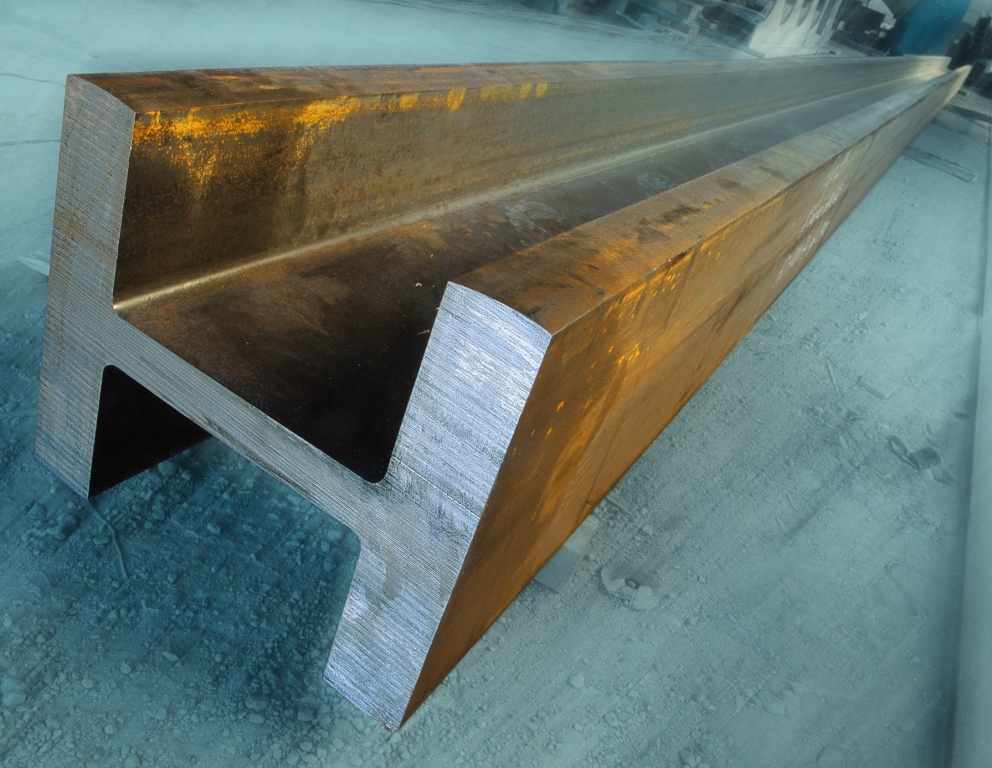
British Steel has started offering a new high-strength structural steel grade for the construction industry. Sections made from the new S460M grade are designed for use in multi-storey and high-rise buildings, the steelmaker says.
This is the first product launched by British Steel since the steelmaker was acquired by Jingye Group in March. It has higher tensile and yield strength than existing grades, the firm points out. Its benefits include less weight and lighter foundations, which reduce overall building costs; increased space within the building as the sections are lighter; and less carbon in direct proportion to the weight saving.
“As the UK’s only manufacturer of structural steel sections, we’re delighted to deliver a new high-quality steel grade at such an important time for the construction market,” British Steel chief executive Ron Deelen says in a note sent to Kallanish. “S460M provides the optimum balance between cost and weight, along with improved environmental performance – British manufacturing at its best.”
Steel for the S460M grade is manufactured at the company’s Scunthorpe steelworks before being rolled into structural sections at its Teesside Beam Mill where an extra shift, creating 40 jobs, was introduced earlier this year. The sections are produced according to EN 10025-4.
Last month British Steel said it plans to increase production at its Skinningrove special profiles mill next spring (see Kallanish passim). To support this move, it is hiring 66 new workers, of which 41 will be based at Skinningrove. It also secured a £50 million ($66m) working capital facility to support plans to expand production and sales over the coming months.