

NLMK foresees 7%-9% drop in Russia’s 2020 steel demand
Russian mining and steel company NLMK believes Russian steel demand may contract by 7%-9% or by 3 million to 4 million metric tons this year to a range of 39-40 million mt versus 2019, Ilya Gushin, the company’s VP of sales, told journalists Nov. 9.
Despite current normalcy thanks to solid demand for both iron ore and steel products, a few sectors, such as tourism, commercial aviation, and cruise ship building, remain inactive and with such big chunks of businesses off, economies are still experiencing macroeconomic shock comparable to that of some of the history’s great depressions, said Gushin.
Cumulatively, the 2020-21 period is likely to see a zero change in the world’s GDP as it is forecast to fall by 4%-5% this year and recover by the same 4%-5% in the next, he noted.
World steel consumption and GDP correlate by about 80% with each 1% GDP growth generating a 2%-3% rise in steel demand. However, in the post-crisis year of 2021, due to time needed for the injured and paused industries to spring back to life, steel demand is likely to only respond with a 1% increase for each 1% gain in GDP, or 4%-5% in total, in line with GDP movement, according to Gushin.
This year, the 4% fall in the world GDP may reduce steel demand by 2% as a steeper fall will be offset by a strong performance in China, which in Q1 registered its first GDP decline (-7%) since 1992, but has since recovered quickly thanks to the government’s significant stimulus measures and is likely to become the only country with a positive GDP change this year.
Construction and infrastructure have buoyed economies this year, because even with tough virus containment measures, most countries continued to operate in these sectors.
NLMK expects Russian steel consumption to fall by 7%-9% from 2019. It could have fallen more if not for the mortgage interest rates cuts, which stimulated residential property demand. These fell to 7.9%, down from 9.9% in 2019.
Russia’s rebar and hot-rolled coil consumption are expected to decline the least this year – by 0.5%-0.6% each, while the steepest drops are to be seen in steel pipe and pre-painted coil uses, which are forecast to shrink by 16% and 7%, respectively, according to NLMK.
Steel imports have fallen to about 12% of the Russian market, down from 14% in 2019. Although incremental, this does help major local steelmakers keep their market shares unchanged during the significant demand contraction. In Russia, NLMK now covers 16% of demand versus 12% in 2009.
It owns blast furnace- and electric arc furnace-based steelworks in Russia; rerolling mills in the US and Denmark, and part-ownership in rerolling and coating facilities in Belgium, France and Italy. NLMK makes a wide range of flat and long steel products.
— Ekaterina Bouckley

EU service centers see steel flats shipments drop 16% in January-September
Shipments of flat steel products from EU service centers dropped 16% in the first nine months of 2020 on the year, service center and distributor association EUROMETAL reported Nov. 9.
During the same period, EU multi-product and proximity steel stockholding distribution registered lower shipments for almost all products in its portfolio, with total volumes down 12% year on year.
In September, strip mill products shipments were up by 3.7% on the year, compared with a drop of 1.5% in August.
When expressed in terms of days of shipments, stocks at EU steel service centers (SSCs) reached 59 days in September 2020, compared with 73 days in September 2019.
While EUROMETAL does not specify volumes, the association releases an index for stock levels with the average of 2015 equivalent to 100. On this basis, stocks for September 2020 were at 94, compared with 114 in September 2019 (average 2015 = index 100).
Multi-products
Total steel product shipments decreased 2.1% year on year.
Only merchant bars, hot rolled flats and cold rolled flats had a positive trend.
The stock volumes index of EU multi-product and proximity steel stockholding distribution was at 83 in September 2020, compared with a significantly higher index of 92 a year before (average 2015 =Index 100).
When expressed in terms of days of shipments, stock volumes leveled in September 2020 at 68 days of shipments, compared with 74 days in September 2019, the association said.
— Annalisa Villa

AI solution to reduce ArcelorMittal Duisburg costs
ArcelorMittal Duisburg has commissioned AI company Smart Steel Technologies to introduce its “SST Temperature Optimization AI” software, Kallanish hears from the companies.
At the Duisburg long products mill, the software is integrated live in the production process to ensure precise temperature control from BOF to continuous casting. The mill will thus minimise temperature buffers and lower the temperature in production, leading to permanent energy cost savings and reduced CO2 emissions costs, ArcelorMittal claims.
Integration of the software will take three months. The project goal will be achieved after a test phase of another three months.
Berlin-based Smart Steel Technologies already secured contracts earlier this year with ArcelorMittal Germany’s strip mills. At Eisenhüttenstadt, it introduced its “SST Casting Optimization AI” and “SST Surface Inspection AI” software products, which were also later adopted in Bremen.

EU Service Centres surpass pre-pandemic activity in September
European flat steel service centres (SSC) registered in September a level of sales above the one registered in September 2019. They thus reached pre-coronavirus levels for the first time since the pandemic begun to spread through Europe in late February.
Strip mill product shipments from SSC rose 3.7% year-on-year in September; in August, volumes were still some -1.5% down y-o-y. Despite the recovery in September, aggregated January-September shipments remained down -16.1% y-o-y, according to the latest Eurometal numbers.
The boost for SSC was mainly fuelled by the recovery in the automotive sector. Multi product and proximity steel distributors continued to face some challenges, however.
September shipments for all steel products from general distributors decreased -2.1% y-o-y. “Only merchant bars, hot-rolled flats and cold-rolled flats had positive trends in September,” Eurometal says in a note sent to Kallanish.
Despite the slower performance in September, nine-month shipments for multi-products distributors were down only -11.9% y-o-y, confirming that the pandemic impact was less severe for this sector.
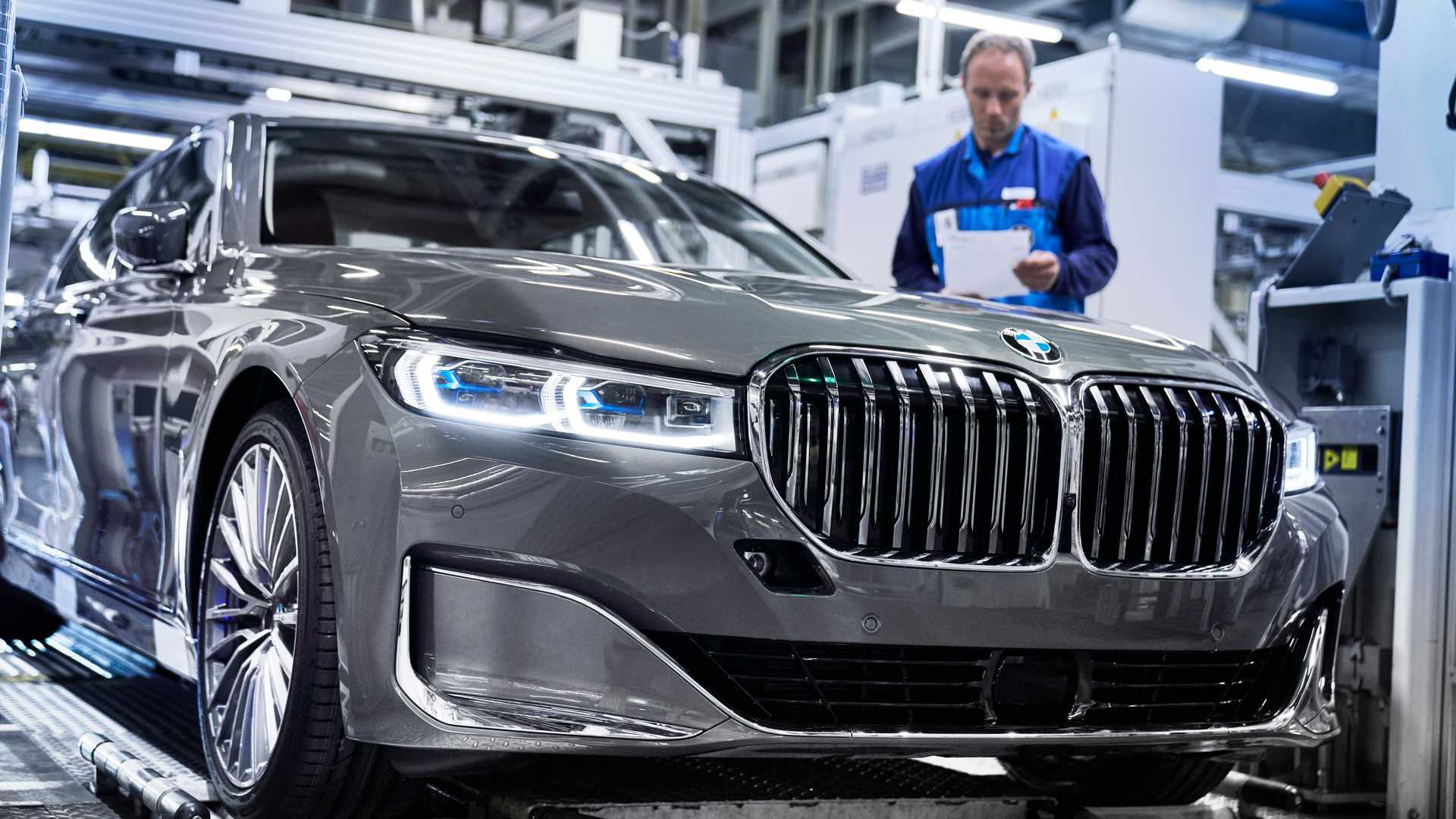
Eurofer improves EU automotive forecast, foresees delayed recovery
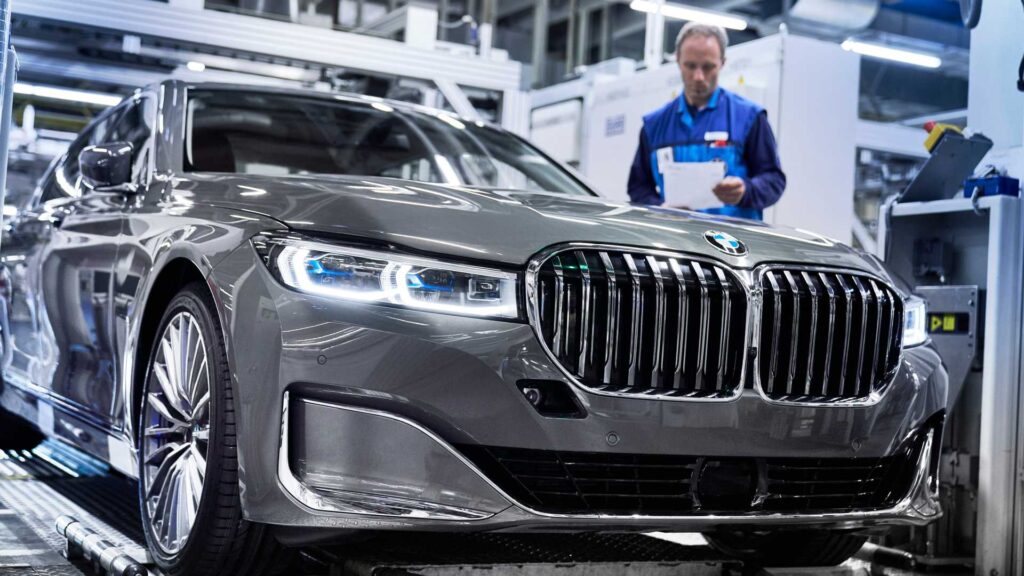
European steelmakers’ association Eurofer has revised up its EU automotive sector output forecast for 2020 to a -20.6% on-year decline, compared to -26% in the previous forecast. This, however, remains the most severe drop on record. Output should rebound 18.1% in 2021.
EU automotive output fell on-year for the seventh consecutive quarter in Q2, by -44%, after falling -14.5% in Q1. It was hit by a combination of already weakening demand for new passenger cars in Europe and in key export markets such as the US, China and Turkey, uncertainty around WLTP and model changes, and the outbreak of the Covid-19 pandemic.
Some production sites re-opened already in late April, and gradually the sector returned to almost normal activity around mid-June all over the EU, leading to new orders and a restart in output, albeit at low levels. Disruption in the supply chain due to lockdowns and blockages in transport across EU countries have made it very difficult to ensure the supply of materials and components to the industry, Eurofer says in a report monitored by Kallanish.
“Assuming that from the third quarter onwards normal business conditions return, it will take time before new orders translate into new deliveries due to persistent transport and supply chain issues, which will remain in place for some time,” Eurofer comments. “In addition, demand for new cars from consumers is expected to remain very weak at least until the macroeconomic picture and consumer disposable income improve. This is another source of uncertainty.”
“In 2021, provided that the industry has been able to restore its production to normal levels, and with WLTP distortions having faded out by then, the launch of new models – many of them electric vehicles – could be a supportive factor, combined with some improvement in real wages and labour market dynamics on the demand side,” the association continues. “However, subdued car demand from major markets such as the US, China and Turkey will remain a challenge for EU car exporters.”

EU plan to start HRC import registration draws Turkish mills’ reactions
News that the European Commission accepted Eurofer’s request and will soon announce that HRC imports from Turkey will be subject to registration, a prerequisite for the imposition of retroactive antidumping duties, drew Turkish mills’ and some European buyers’ reactions.
Veysel Yayan, general secretary of the Turkish Steel Producers’ Association (TCUD), told Platts on Nov. 6 that although they didn’t receive any formal notice yet from the EC, they will not be surprised if the EC will make a decision in this regard.
“Eurofer knows no limit in protectionism,” Yayan said adding that the EC is trying to block imports from Turkey.
Ugur Dalbeler, CEO of major Turkish steelmaker Colakoglu, also told Platts Nov. 6 that, despite some news that the EU will soon start import registration of HRC imports from Turkey, no information about it reached them yet.
The EC launched an anti-dumping investigation into imports of certain hot-rolled flat products from Turkey in mid-May following a request by European steelmakers’ group Eurofer. The preliminary decision in the investigation is expected to be announced on Dec. 23 to be imposed on Jan. 14, 2021. A retroactive duty, however, can be collected on previously imported HRC from Turkey as of the time that the EC begins registering the imports, which could limit Turkish HRC exports by raising concerns among European buyers.
“The Turkish situation is an important factor for Italy, where a lot of big companies depend on them for hot-rolled coil,” an Italian service center source told Platts Nov. 6.
“In the last few weeks, some buyers decided to take a position with Turkish sellers, considering to cover the duty risk with a good price, but now with this new [import registration] situation, the real risk will be taking the duty. I think they [Turkish sellers] will decide to increase their prices to customers, in order to cover part of the damage,” the Italian source said, adding that he expects a bullish week with mills and service centers determined to increase their prices as long as [Turkish] imports remain absent.
The EC also started a countervailing duty (CVD) investigation on June 12 against allegedly subsidized HRC imports from Turkey based on Eurofer’s appeal in this regard, as Platts has reported.
The EC, which announced safeguard measures on Oct. 30 with a tariff-rate quota on steel imports from the UK into the EU from Jan. 1, 2021, also lowered other quota volumes as of January 2021, including Turkey’s.
According to the EC notice, the import quota for Turkish HRC imports has been reduced to to 313,791 mt from 337,391, while the quota for Turkish rebar imports was lowered to 58,826 mt from 75,123 mt for the quarter starting Jan. 1, 2021.
With the new quotas, Turkish mills can only ship around 1.3 million mt of HRC to the EU region within a year, a sharp year-on-year decline in export volumes, according to Platts’ calculations.
— Cenk Can, Amanda Flint

Stahlmarkt Consult questions steel shortage

As delivery times for coil keep stretching, and mills appear to be extremely well-utilised, consultant Andreas Schneider addresses how this corresponds with sluggish steel demand. German consumption this full year is estimated to be barely 30 million tonnes, which is the lowest in 11 years.
Supply and demand have been out of sync for several months now, and what looked like a temporary phenomenon in summer has continued into autumn, Schneider writes in an article on his website Stahlmarkt Consult.
“The question here is to what extent the mills are deliberately keeping supply tight in order to strengthen their starting position for price negotiations,“ he says. The technical reasons often cited as the reason for the slow increase in production in the complex process of blast furnace control are convincing for a period of some weeks, but not over many months, he argues.
One explanation is that inventories were drastically reduced during the first Covid-19 lockdown period, so that the current need for restocking is driving repurchasing activity beyond the demand of downstream users, Kallanish understands. According to the statistics office, order intake at mills in August were approximately on the previous year’s level, although there has been not much of a recovery at industries like pipes or mechanical engineering.
Especially in view of the forthcoming contract and price discussions for 2021, many market participants are wondering how long the unusual situation will continue, Schneider writes.
German fabricators regain optimism following initial pandemic shock

The economic impact of the coronavirus caused a -19.1% on-year drop in first-half-of-2020 production in Germany’s steel and metal working industries.
According to their association, Wirtschaftsverband Stahl- und Metallverarbeitung (WSM), the second quarter saw a relative recovery. While production in April was down -35.5% year-on-year, the difference by July had reduced to -16.7%, meaning a 25% rebound, WSM chief economist Holger Ade points out.
This development is also reflected in the sentiment of the member companies, whose expectations after a deep dive in April had returned to breakeven by the end of June, Kallanish hears. Ade notes that during the financial crisis in 2009, it took seven months before optimism recovered.
Utilisation at the companies, which had already dipped last year before the pandemic by 10 percentage points from 2018 to 78.1%, was at 68.7% in Q2. That figure is relatively high given the nearly complete temporary production stop at carmakers. WSM therefore believes the automotive lockdown has hit supplier firms with a delay, meaning inventories piled up in Q2 and production may have been kept low going forward.
For the full year, WSM expects an output drop of -12-15%. It emphasises that the dip in 2009 was considerably deeper, at -25%.
China to improve tax rebates for steel exports
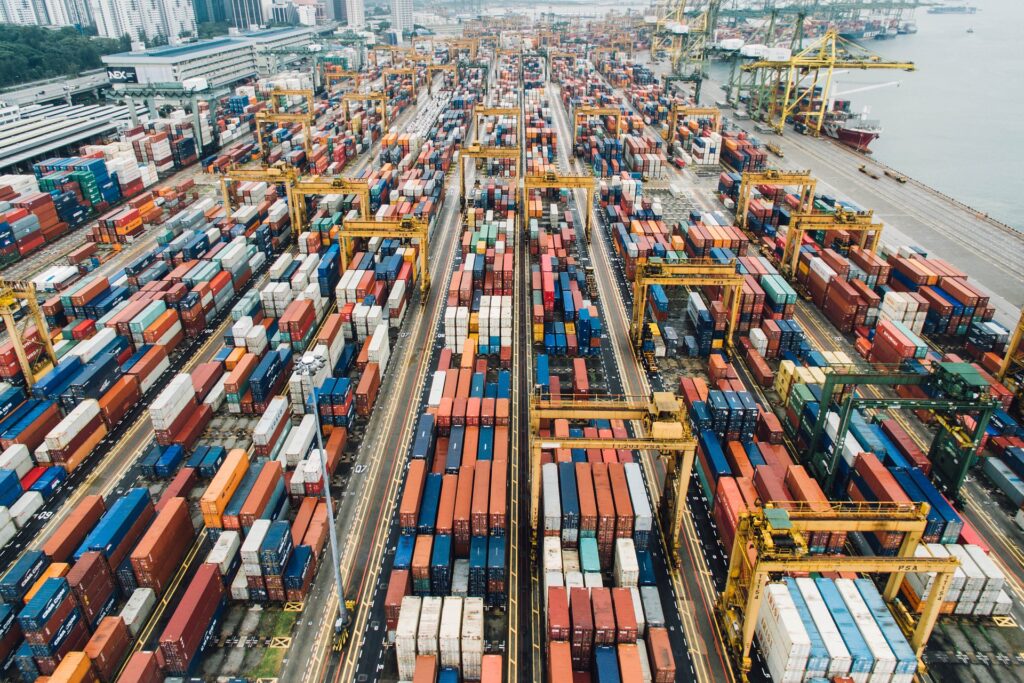
The Chinese Ministry of Commerce and the Ministry of Ecology and Environment are studying new export tax rebate policies to promote steel exports, Kallanish notes from a China Business News report.
Tong Yanchao, the director of the Project Division of the Department of Atmospheric Environment at the Ministry of Ecology and Environment, recently revealed China will introduce tax rebate measures in the near future. These will provide export tax rebates to steel companies that have completed ultra-low emissions transformations.
The new policies are expected to encourage steel companies to accelerate the completion of ultra-low emissions transformations to obtain financial support, while reducing environmental pollution. Details have not been revealed, but analysts say this would imply differential rebates depending on whether or not companies meet emissions standards.
China’s overall exports have grown despite the impact of the Covid-19 pandemic. Chinese steel exports, however, have declined due to a loss of competitiveness. According to data released by the General Administration of Customs, China’s steel exports were 40.39 million tonnes in January-September, a year-on-year decrease of -19.6%. The average export price was $822.07/tonne, down -0.9%.
At the same time, steel imports have grown rapidly. This year, China imported 15.07mt of steel, an increase of 72.2% year-on-year, and the average import price was $813.24/t, down -31.5%.
Due to strong steel demand, Chinese steel consumption has become a pillar supporting the global steel market. More and more foreign steel producers are seeking to export to China to digest their production, and Chinese products are less competitive due to high prices. A Chinese steel market participant says tax rebates for companies that have completed the transformation will also help reduce pressure from their heavy investments.

Outokumpu to cut 10% of workforce, mostly Europe
Outokumpu is starting the negotiation processes to cut its total global workforce by some 1,000 units (some -10%) by the end of 2021.
In a note seen by Kallanish, the company notes that negotiations will commence immediately. Most cuts will be in Finland (270), Germany (250) and Sweden (190). Further reductions are also planned across European and Americas operations.
“Due to the challenging market situation with continuing high import pressure in Europe and the Covid-19 pandemic impacting the global economy, it is crucial to ensure the company’s cost competitiveness by reducing fixed costs, of which personnel expenses are significant part,” Outokumpu observes.
The company posted recovering results in the third quarter compared with Q2, but they remained below Q3 2019. Q3 net loss was €63 million ($74.5m), against a loss of €27m in Q3 2019.
Looking ahead the company remains cautious for Q4. “As communicated previously, the Covid-19 pandemic is expected to have a significant impact on the stainless steel industry throughout 2020, and increases uncertainty. Outokumpu expects its stainless steel deliveries for the whole group to remain stable in the fourth quarter compared to the third quarter,” the company comments.
The firm’s American business is developing in the right direction, while in Europe persistent pressure from Asian imports is still seen by the company as a threat.