

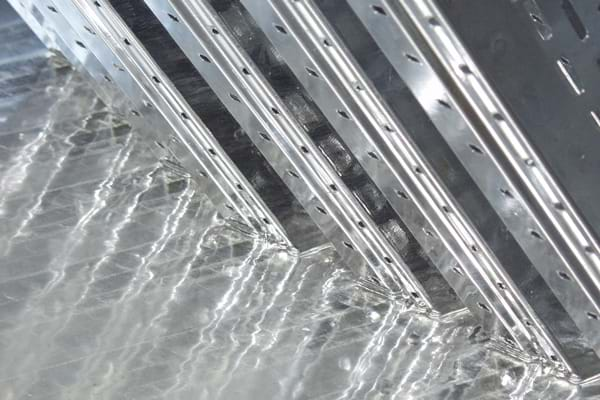
HDG market up on supply shortage, automotive demand uncertainty
The European hot-dipped galvanized market was heard higher Nov. 4 as limited supply and further offer increases from mills props up prices, although automotive demand has had some market participants scratching their heads due to poor car sales among European consumers, sources told S&P Global Platts.
The Platts TSI HDG index was assessed at Eur621/mt ex-works Ruhr Nov. 4 Eur16/mt higher week on week and in Southern Europe, HDG rose Eur6/mt on the week and was assessed at Eur586/mt ex-works Italy.
An Italian mill source was not confident that automotive production would be able to align with the lack of car sales seen during the pandemic, and said the industry was overproducing.
“This is the question we’re asking – the sales just don’t match the production rates,” the mill source said, adding that even with automotive producers offering large discounts on the purchase of electric vehicles, he didn’t see this boosting car sales.
“Car sellers are trying to push sales through [subsidized] leases, so customers don’t need to take out 20,000-30,000 euros,” the source said.
In the construction sector, the same mill source said producers were struggling amid a lack of long-term contracts.
“[The construction sector] recognizes there is no material available and they know lead times are long — I heard that mills are talking between January and February,” the same source added.
An Italian trading source said demand was normal, except for the automotive industry which was “hysteric”. The source attributed higher prices to a “lack of offers, no import, big delays and long delivery times.”
A market-leading European mill was heard to have offered over Eur640/mt ex-works for first offers of 2021.
A Benelux service center source said that automotive demand was still strong but was not certain if it was progressing at the same pace as it had in the last two months.
A European mill source also cited tradable values between Eur610-615/mt ex-works Ruhr for hot-dipped galvanized material, quoting tight supply and full mill order books for the end of the year.
“We’ve seen the schedules for April – we’re completely booked. There’s not a lot of open tons to sell and [the price] should reflect that,” the source said.
— Amanda Flint

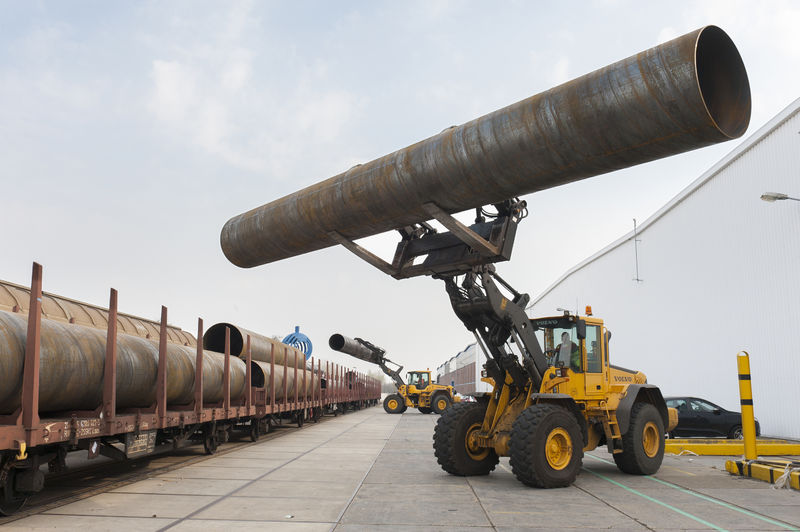
EU demand boosts Turkish pipe exports in September
Turkish welded pipe exports increased 27.5% on-year to 219,788 tonnes in September, according to Turkish Statistical Institute (TUIK) data monitored by Kallanish. This was also up from 139,328t in August. Their average value, however, dropped to $630/tonne from $695/t in September 2019 and $637/t in August 2020.
The most-exported product was rectangular hollow sections whose shipments increased 48% on-year to 118,803t. Romania was the largest destination with more than trebled intake on-year at 41,085t. Iraq sourced 18,545t, up 31.5% on-year. The UK took 16,705t in September, up 22% on-year, and Belgium sourced 7,909t, up 35.5%.
Georgia sourced 4,243t, down -8.4%, and Israel sourced 3,276t, up 42.6% on-year. The Netherlands took 3,220t and Spain took 2,678t, up 0.6% and 29.2% respectively. Yemen sourced 2,476t in September versus zero last year. Germany’s intake increased from 1,325t last year to 2,171t in September.
Exports of welded tube under 406.4mm diameter meanwhile increased 23.2% on-year to 63,086t in September. Romania was again the largest destination, with more than doubled intake at 12,730t. The UK took 5,795t, down -4.3%. Italy’s intake was more or less flat at 3,788t. Belgium almost doubled its intake to 3,768t. Iraq more than doubled its intake to 3,465t.
Germany took 3,382t, down -4.2% on-year. Greece sourced 2,818t in September, up 84.4%. Israel took 2,727t, down -6.2%, and Poland sourced 2,222t versus 1,975t last year. Algeria, which sourced almost zero last year, took 2,139t in September.
In January-September, Turkish welded pipe exports increased 4.3% on-year to 1,314,535t. Rectangular hollow sections had the largest share in welded pipe exports with 602,116t.


Organisers write off 2020 Wire+Tube show, eye 2022
The Wire+Tube twin fair, which was rescheduled from April to December, has now officially been cancelled altogether.
Normally, the fair takes place in early spring on even years in Düsseldorf. After this year’s event was cancelled due to the anticipated Covid-19 lockdown in April, organisers soon decided to give it another try in December. However, several big German players like thyssenkrupp and Böllinghaus called off their attendance weeks ago. The announcement of a second lockdown in Germany in November was the final blow.
“Our hygiene and infection protection concept gave the hope for a successful event,” explains Wolfram Diener, chief executive of Messe Düsseldorf. “Due to the increasingly critical pandemic situation in Germany and our neighbouring European countries, however, the situation had to be completely re-assessed.”
The events will return to their normal schedule from 2022, the official announcement of Düsseldorf Messe company reads. A spokesman from an interest group of German wiremakers appreciated the decision. “Any trade fair means effort and extra work for a participating company, so it’s hard to remove fairs from their regular time slot, and move them too close to other fairs,” he tells Kallanish.
New lockdowns spare European steel operations, for now
As of this week, most of Europe’s largest economies have entered a month-long soft lockdown, to tackle the ongoing second wave of the coronavirus pandemic, Kallanish notes.
While demand from end users is expected to be hit by the new limitations, steel producers are yet to be directly impacted in any of the major European countries.
German, Italian, French, Spanish and British authorities are all implementing restrictions in their countries. However, they are targeting as little economic disruption as possible after the first lockdowns in March/April caused considerable economic damage. Construction, manufacturing and overall industrial operations should continue.
The first lockdowns brought some steelmaking and processing operations in Europe to a standstill. This time around, this is not expected to happen.
Last time around, a number of steelmakers temporarily idled blast furnaces and steelmaking activities to align output to demand. Since then, production has recovered in line with demand and order books at steelmakers and processors seem to be strong enough to sustain production throughout November.
A northern European steel trader said the new lockdown is likely to be less strictly followed as compared with the last one, as “…there seems to be a high level of Covid fatigue around.” He added that the lockdown “…will have less of an impact on scrap collection this time around. However, against that we are anyway entering winter which will impact in Europe but more strongly in the Baltic which has been an active scrap exporter over the summer.”
Despite indications the steel sector should not be directly hit by the limitations, uncertainty remains over future end-use demand. In southern Europe, for example, scrap dealers confirm that mills are continuing to buy only the minimum volumes needed to operate, avoiding any sort of stockpiling due to uncertainty.
In France, the first country in Europe to go into soft lockdown, general demand for steel remains at good levels. In Italy, on the other hand, the market has been extremely slow during the last two weeks as the country went into wait-and-see mode in anticipation of the lockdown. However, a serious supply shortage for flat products is sustaining prices and demand in Italy.
As for the steel using sectors, construction activity is not set to be hit by the new limitations. In fact, more and more public spending in European countries will be pumped into the sector to fuel the recovery. As for automotive demand, this could take a new hit at end-use level, therefore further impacting the steel and manufacturing sectors in the first quarter of 2021.
Alessandro Sciamarelli, director for market analysis at Eurofer, noted last week that a rebound in market confidence was tangible in June and July, but a further slowdown was expected in October due to the second pandemic wave. Eurofer lifted its outlook for steel demand in Europe last week to a -14.6% year-on-year drop for 2020, but confirmed that many factors are still uncertain and the recovery going into 2021 could be slower than anticipated.
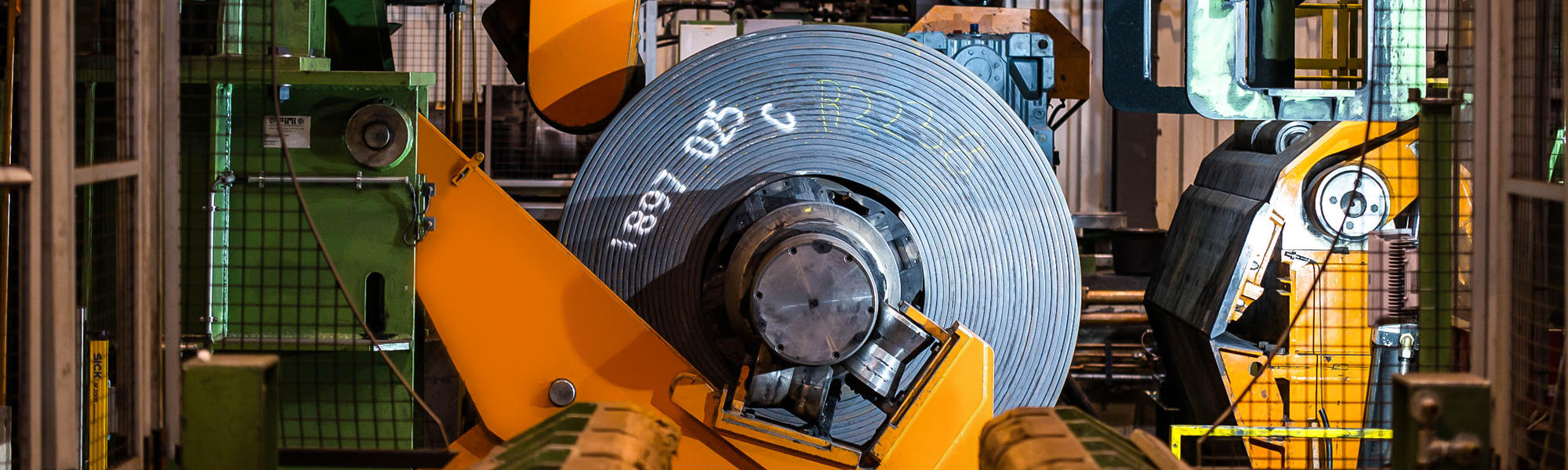
EU to start Turkish HRC import registration
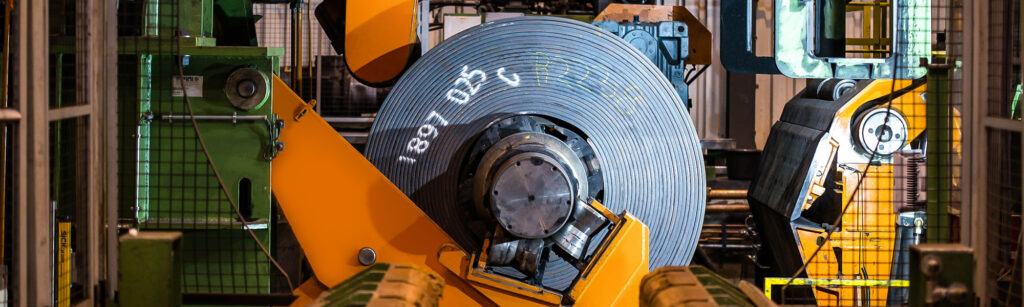
The European Commission will soon announce that Turkish hot-rolled coil imports are subject to registration.
The move is a prerequisite for the imposition of retroactive anti-dumping duties, should the continuing investigation into the country show dumping practices have occurred.
A pre-disclosure of the investigation decision is expected by 23 December, with any provisional measures to be applied from 14 January, although a retroactive duty can be collected on previously imported material from the moment the commission begins registering the imports. The deadline for a definitive duty is 13 July 2021.
Market participants this week said that if a provisional duty is imposed — as it is in most cases — it is expected to be around 8-9pc, with some saying each Turkish mill will have a different rate. There has been talk that sellers have offered to pay the duty, partially or in full, to entice purchases by European buyers.
The move could exacerbate the supply tightness in Europe further and will aid European mills in the continuing contract negotiations.
Turkey is also subject to an anti-subsidy investigation at the moment, the outcome of which is expected by 18 February with any provisional measure to be applicable from 12 March.
By Lora Stoyanova


EU’s Brexit safeguard quota adjustment penalises Turkey: TCUD
Turkish steel mills face a further contraction in steel exports following the EU’s new safeguard quota adjustment to account for Brexit from 1 January 2021. Turkish steel producers believe the EU has deducted too large a volume from Turkey’s quota.
Turkish Steel Producers Association (TCUD) general secretary Dr Veysel Yayan tells Kallanish: “By putting Brexit at the forefront, the EU took the opportunity to further cut quotas. New quotas are not determined on the basis of our export volumes to the UK. The cut amount has nothing to do with our export volumes to the UK, specifically for HRC and rebar. Our exports to the UK are much lower.”
“We are concerned that the EU’s restrictive approach will continue. Since they are limiting the quotas so much, it means the EU is disregarding free and fair trade. It means they have entered a closed economy period,” Yayan adds.
The EU has reduced Turkey’s first-quarter-2021 rebar quota of 75,000 tonnes to 58,926t, and the second-quarter quota of 75,000t to 59,480t.
Turkish steel exports to the bloc will therefore be further restricted in 2021. According to Eurofer, Turkey took first place in the EU’s finished steel imports in 2018, providing 6.2 million tonnes. Of Turkey’s exports that year, 33% went to the EU, but this decreased to 25% following the implementation of quotas.
Yayan also recalls that, while the EU has protected itself from imports, there has been a significant increase in Turkey’s steel imports from the EU.
Last week the European Commission said it has recalculated the volume of Tariff Rate Quotas (TRQs) as part of its steel safeguard measures effective 1 January 2021 to consider the UK a third country following Brexit.

Klöckner benefits from rising prices in autumn

Klöckner & Co has recovered from the deep net loss of €111 million ($130m) it saw in the second quarter, to almost break even with a net loss of €5m in Q3.
Shipments rose from 1.07 million tonnes in Q2 to 1.242mt in Q3. This is -13% less than in Q3 2019, but “…so-to-speak good news after the drop of far more than -20% in Q3,” says chief financial officer Guido Kerkhoff, who will soon become chief executive.
During a conference call attended by Kallanish, outgoing ceo Gisbert Rühl noted that the distribution group benefited from positive price effects during Q3, especially in the USA. In Q2, material special effects had cost the group €72m, but this cost was only €2m in Q3. Revenue came to €1.279 billion, down -18% on the corresponding 2019 period.
Rühl noted that the quarter was also characterised by a shortage of material after many blast furnaces were temporarily idled. Commenting on further price developments, he remained vague, saying that “…we have already seen a big surge.”
On e-commerce activities, he said that revenue from the group’s own online platform, klöckner.i, will reach €300m in the full year, and is bound to reach €1 billion in 2021. Klöckner’s open e-market, Xom, which by now gathers 55 supplier companies, is expected to reach €130m in revenue this year, and some €600m next year.

Knauf Interfer concentrates activities in Netherlands
Knauf Interfer, Germany’s second-largest steel distributor, is concentrating its activities for Benelux, the UK and Ireland at its Eindhoven site in the Netherlands, Kallanish hears from the company.
Interfer Staal in Eindhoven has been part of the group, formerly known as Stinnes Interfer, since 1992, and has since grown to become a hub for northwestern Europe. Customers from five countries will now have one bureau to talk to that will deal with their inquiries.
The new organisation will be accompanied by a considerable expansion of the product portfolio, the company emphasises. This will include straightened sheet, high-tensile grades, tailored products for industrial applications, and especially thin-gauge cold-rolled sheet, says the site’s managing director, John Verberne.
Knauf Interfer, headquartered in Essen, in 2019 achieved a revenue of €690 million ($802m) with 1,400 employees in Europe.
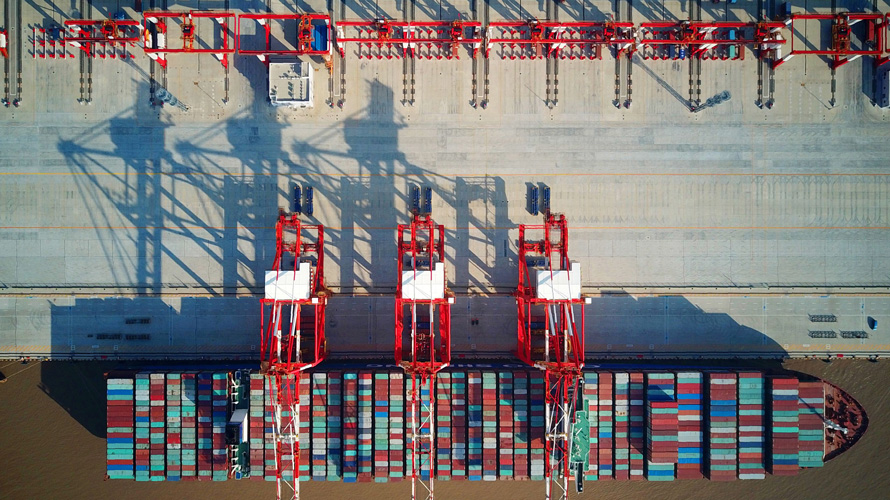
Turkish steel exports to EU fall 25%, EU updates import quotas
Turkish mills’ steel exports to one of their traditional main steel export markets, the EU, declined 24.9% year on year in the first three quarters of the year, due to trade barriers, although steel imports from that region rose in that period, the Turkish Steel Producers’ Association (TCUD) said at a statement dated Nov. 2, without citing the tonnages.
The European Commission, meanwhile, announced safeguard measures on Oct. 30 with a tariff-rate quota on steel imports from the UK into the EU from Jan. 1, 2021.
The Commission also updated the countries quota volumes as of January 2021, including Turkey, with the Oct. 30 notice, S&P Global Platts observed.
According to the notice, the import quota for Turkish rebar imports has been lowered to 58,826 mt from 75,123 mt for the quarter starting Jan. 1, 2021 and the quota for Turkish hot-rolled coil sheet imports has been reduced to to 313,791 mt from 337,391 mt for that period.
Other changes announced by the EU to the safeguard measures on Oct. 30 include the exclusion from safeguards for imports from Turkey for large welded tubes.
The EU will consider feedback on the announced changes within five working days of the announcement.
Veysel Yayan, general secretary of Turkish Steel Producers’ Association (TCUD) told Platts on Nov. 2 that the EC notice shows that the EU is trying to block steel imports into the EU region as much as possible.
World Trade Organization members have agreed to the establishment of a dispute panel to review a complaint filed by Turkey regarding the EU’s safeguard measures on imports of certain steel products on Aug. 28, as Platts has reported. Yayan told Platts Nov. 2 that the result of the panel is expected to be announced within six months from the start of the panel and they thought the decision would be in favor of Turkey.
As of the first nine months of the year, Turkish mills’ overall steel exports declined by 9.1% to 15 million mt, due to trade measures, while imports into Turkey rose by 8.9% to 10 million mt, as steel consumption in Turkey rose by 14.9% to 21.9 million mt in that period, despite the COVID-19 pandemic, according to the latest TCUD data.
Steel production in Turkey exceeded last year’s performance in January-September 2020, amid the rise seen in domestic steel consumption, despite the pandemic.
— Cenk Can

Stahlmarkt paradox: Versorgungsnöte im Nachfragetal

Stahlverarbeiter reiben sich verwundert die Augen: Während der Stahlbedarf in Deutschland in diesem Jahr auf den tiefsten Stand seit elf Jahren fällt, ist aktuell die Stahlbeschaffung im Marktsegment der Flachprodukte eine herausfordernde Aufgabe. Berichte über äußerst lange Lieferzeiten mischen sich mit der Sorge, die benötigten Stahlmengen nicht rechtzeitig zu bekommen. Ursache dieses Zustands ist eine asynchrone Entwicklung von Angebot und Nachfrage in Kombination mit zurückgehenden Importmengen. Was zunächst nach einer kurzen sommerlichen Episode aussah, scheint sich im Herbst zu verfestigen.
Deutscher Stahlbedarf mehr als 20% unter „guten“ Jahren
Nach dem neuesten Short Range Outlook des Weltstahlverbandes worldsteel trifft die Corona-Krise den deutschen Stahlmarkt nicht ganz so schlimm wie noch im Juni befürchtet. Statt um 20% soll die Nachfrage in diesem Jahr „nur“ um 15,3% auf knapp 30 Mio. Tonne fallen. Dies sind 25% weniger als 2018. Die Gegenbewegung im kommenden Jahr fällt etwas stärker aus als ursprünglich angenommen. In Deutschland sollen dann 33,7 Mio. Tonnen verbraucht werden. Dies sind immerhin 2,4 Mio. Tonnen mehr als nach der vorigen Prognose. Fakt ist aber auch: Der Bedarf des kommenden Jahres unterschreitet ein „gutes“ Niveau, das für Deutschland bei ca. 40 Mio. Tonnen angesetzt werden kann und zuletzt 2017 überschritten wurde, um mehr als 15%. Der Weg aus dem Nachfragetal wird nach aller Voraussicht lang und beschwerlich.
Demnach müsste eigentlich genug Stahl vorhanden sein, um den aktuellen Bedarf zu decken. Viele Rückmeldungen aus dem Markt signalisieren aber, dass das aktuell vor allem bei Flachstahl nicht der Fall ist. Am lautesten sind die Klagen über Versorgungsnöte in der automobilen Wertschöpfungskette. Von Stahlwerken genannte Lieferzeiten reichen bereits bis weit ins Jahr 2021, Zusatzbedarfe können oft nur unter größten Mühen gedeckt werden. Stahleinkäufer müssen am Spotmarkt derzeit mit saftigen Preisaufschlägen rechnen. Für 2021 stehen auch im Vertragsgeschäft Ankündigungen von deutlichen Preiserhöhungen im Raum.
Angebot und Nachfrage: Erholung in unterschiedlichen Geschwindigkeiten
Ursache dieser paradoxen Situation ist, dass sich Angebot und Nachfrage seit Monaten nicht synchron entwickeln. Die Produktion in einigen Stahlabnehmerbereichen hat sich schneller wieder erholt, als es im Frühjahr zu befürchten war. Dies ist besonders in den Bereichen der Automobil- und Zulieferindustrie zu beobachten, die von der starken Entwicklung des chinesischen Marktes profitieren. Die deutsche PKW-Produktion hat sich nach dem Stillstand im April wieder berappelt. Von einem Boom kann allerdings keine Rede sein: auch zwischen Mai und September lagen PKW-Erzeugung und –export mehr oder weniger deutlich unter den Vorjahreswerten. Allerdings waren in der Krise die Vormaterialbestände vielfach auf ein Minimum reduziert worden. Die nun fälligen Aufstockungen treiben die Stahlnachfrage über den eigentlichen Bedarf hinaus. Nach den Zahlen des Statistischen Bundesamtes lagen die Auftragseingänge der Stahlindustrie im August ungefähr wieder auf Vorjahresniveau, auch wenn in Abnehmerbranchen wie dem Maschinenbau oder den Rohrwerken weiterhin kaum eine Belebung zu beobachten ist.

Weniger schnell erholt sich die Erzeugung des hochofenbasierten Oxygenstahls, der in Deutschland die Basis der Flachstahlerzeugung bildet. Nach den von der Wirtschaftsvereinigung Stahl veröffentlichten Zahlen wurden in Deutschland im August und im September auf dieser Route ca. 16% weniger Stahl als im Vorjahr produziert. Damit ist der zwischen April und Juli erlittene Einbruch erst ungefähr zur Hälfte wieder aufgeholt. Dagegen stellten die schrottbasierten Elektrostahlwerke im September bereits wieder mehr Stahl als im Vorjahresmonat her.
In wichtigen Erzeugerländern der EU wie Polen, Frankreich, Österreich und Italien lag die Rohstahlerzeugung im September noch um ca. 20% unter dem Vorjahr. Dies ist insofern ernüchternd, als Hersteller für einige dieser Länder für September das Hochfahren von Hochöfen angekündigt hatten.
Die aus den zwei Erholungsgeschwindigkeiten resultierende Enge in einigen Segmenten des Stahlmarktes wird dadurch verschärft, dass auch Importe aus Drittländern aktuell kaum für Entlastung sorgen. Die EU-Stahlimporte werden in diesem Jahr voraussichtlich den tiefsten Stand seit 2015 erreichen. Neben den Preisrelationen am Weltmarkt, die einen Export in die EU in den vergangenen Monaten wenig attraktiv machten, sind dafür auch die verschiedenen importbeschränkenden Maßnahmen der EU verantwortlich.
Wie lange noch?
Auch mit Blick auf die bevorstehenden Vertrags- und Preisgespräche für 2021 stellen sich viele Marktteilnehmer die Frage, wie lange die ungewöhnliche Situation noch anhält. Von der Importseite ist kurzfristig keine Entlastung zu erwarten, da sich der asiatische Markt im Oktober noch in fester Verfassung zeigt. Dies kann sich jedoch auch schnell ändern. Zumal wenn am europäischen Markt die Preise weiter anziehen, dürfte sich der Importwettbewerb trotz der bestehenden Beschränkungen wieder intensivieren.
Zunächst liegt der Ball aber bei den EU-Herstellern. Hier stellt sich die Frage, inwieweit diese das Angebot gezielt knapp halten, um ihre Ausgangsstellung für Preisverhandlungen zu stärken. Die häufig als Grund für den langsamen Produktionsanstieg genannten technische Gründe beim komplexen Prozess der Hochofensteuerung wirken jedenfalls über einen Zeitraum von einigen Wochen überzeugender als über viele Monate. Angesichts der hohen Kosten des Herunter- und Hochfahrens von Hochöfen ist es aber nachvollziehbar, wenn entsprechende Entscheidungen mit Vorsicht getroffen werden. Denn nicht nur vor dem Hintergrund des wieder zunehmenden Corona-Drucks muss die Tragfähigkeit des Nachfrageaufschwungs kritisch hinterfragt werden. Andererseits müsste die angespannte Ertragslage vieler Hersteller einen starken Anreiz dafür bieten, jede gewinnbringende Tonne Stahl auch an den Markt zu bringen. Zumal die Gefahr groß ist, dass sich frustrierte Kunden früher oder später dann doch Drittlandanbietern zuwenden.
Klar ist: wenn die vorliegenden Nachfrageprognosen nicht vollkommen daneben liegen, wird in der EU in nicht allzu ferner Zukunft wieder das strukturelle Überangebot durchschlagen und die Versorgungsprobleme werden sich auflösen. Die Crux ist, dass sich der Zeitpunkt dieser Wende nicht genau vorhersagen lässt. Damit hilft derzeit nur, den Markt eng zu beobachten, und an einer weit vorausschauenden Bedarfsplanung sowie einer breiten Lieferantenbasis zu arbeiten.
Der Beitrag stammt vom Leverkusener Stahlmarkt-Berater Andreas Schneider, StahlmarktConsult.
Foto: StahlmarktConsult und Fotolia
Der Gastkommentar spiegelt die Meinung des Autors wider, nicht notwendigerweise die der Redaktion von marketSTEEL.
Autor: von Andreas Schneider
03.11.2020