


UK longs importers adapting to quota system, demand sufficient
UK-based longs buyers have been trying to adjust to the recently introduced quota system which now makes it harder for them to source products from non-EU destinations. “Generally demand is good. Most stockists have kept themselves well covered through the end of the year,” one source mentioned.
Local prices for UK rebar are at GBP 420-425/mt (€465-470/mt) CPT, local wire rod prices are at GBP 435-445/mt (€481-492/mt) CPT, while local merchant bar prices are standing at GBP 465-475/mt (€515-526/mt) CPT, for December and early January deliveries, SteelOrbis has learned.
In the import segment, ex-Spain rebar offers to the UK are currently at €440/mt CIF northern Irish port for December shipment. Sources report that Turkish mills are aiming for $465/mt (€395/mt) FOB, which seems to make it difficult to achieve any rebar sales to the UK for now. The average freight charge is around GBP 20/mt (€22/mt) from Turkey to UK ports without any additional charges, and the estimated time of arrival is approximately 15-20 days, SteelOrbis understands. As a result, the offers may be considered workable, but unfortunately Turkey is limited to only 16,297 mt of exports to the UK in the first quarter of 2021.


Final closing for Ilva purchase scheduled for 2022
The final closing by ArcelorMittal of the lease and purchase agreement for the steelmaker formerly known as Ilva is now scheduled by May 2022, subject to various conditions, ArcelorMittal says in a note seen by Kallanish.
On 4 March ArcelorMittal announced that AM InvestCo and the Ilva Commissioners had signed an amendment agreement to the original lease and purchase agreement for Ilva. The amendment outlines the terms for a significant equity investment by Italian state-sponsored entities into AM InvestCo. This forms the basis of a new partnership between ArcelorMittal and the Italian government.
This equity investment, to be captured in an investment agreement, is to be executed by 30 November. The amendment agreement is structured around a new industrial plan for Ilva, which involves investment in lower carbon steelmaking technologies. The Italian government has recently designated Invitalia to negotiate with AM InvestCo. In the event that the investment agreement is not executed by end-November, AM InvestCo has a withdrawal right, subject to an agreed payment, the company says.
Meanwhile, ArcelorMittal Italia is committing to settling all outstanding debts, which is improving negotiations with the government. Due to the current pandemic crisis and the fall in global steel demand the company is producing at minimum capacity. Some sources believe it will end the year with a production of approximately 3 million tonnes.
It is also extending temporary layoffs for a further 13 weeks starting from 16 November at its Taranto steelworks. The new furloughs affect 8,140 employees including production workers, office workers and managers at the company’s main steelworks in Taranto (see Kallanish 23 October).

EU demand remains below pre-crisis levels: ArcelorMittal
ArcelorMittal’s production, shipments and sales recovered in Europe during the third quarter, but did not return to pre-Covid-19 crisis levels.
In June-September crude steel production was up almost 12% on-quarter to 7.9 million tonnes, but it still remained some -25% below Q3 2019. Steel shipments also recovered strongly, but remained down -15% on-year, Kallanish notes.
“Demand and activity levels have gradually improved, as lockdowns eased through 2Q 2020 and into 3Q 2020, particularly with automotive and manufacturing restarts,” the steelmaker says. “As a result, the company resumed some steel-making capacity in France, Spain and Germany, with some of the restarts required to ensure continuity of supply to customers during the planned major reline of a blast furnace at Gent, Belgium that began late August 2020.”
“Nevertheless, demand has not yet recovered to pre-crisis levels,” the group points out.
Sales in Q3 in Europe surpassed $7 billion, -20% down on Q3 2019 but up 21% on-quarter. Thanks to the recovery of sales prices, in particular, spreads and average steel selling prices in Europe recovered, but the company still registered an operating loss of $342 million.
“Given that inventories in the system are relatively lean, recovering demand has seen steel spreads return to more normalized levels from the unstainable lows seen at the end of 2Q’20,” the company explains.
ArcelorMittal shipments remain depressed, eyes further structural adjustments
ArcelorMittal says it is developing options for further structural cost improvements to prepare for the post-Covid-19 operating environment. This follows the closure in October of the Krakow plant’s hot-end. Further details will be provided with the full-year 2020 results in February.
Steel shipments fell -13% on-year in the third quarter to 17.5 million tonnes, but this was up 18% from Q2 as economic activity recovered across all regions following the Covid-19 impact. Crude steel output fell -23% on-year to 17.2mt but own iron ore output rose 9% to 14.8mt.
Consolidated sales fell -20% on-year in Q3 to $13.27 billion, although these rebounded 21% from Q2. Ebitda fell -15% on-year to $901 million but attributable net loss narrowed 52% to $261m.
The on-quarter sales rebound was primarily due to higher steel shipments, with a better sales mix – higher automotive volumes share – largely offsetting lower selling prices. Moreover, mining sales increased on-year and on-quarter thanks to higher iron ore prices.
“The easing of lockdown measures has seen activity levels improving since 2Q 2020; nevertheless, demand remains below normal and the pace and profile of recovery is uncertain,” ArcelorMittal says in a report seen by Kallanish. The company has begun to restart hot idled capacity as market demand improves on a region by region basis; however, concerns around second wave impacts persist.
“The experience of the last 6-7 months has, through necessity, forced the business to operate differently in particular with a leaner cost structure,” the company continues.
In the nine months through September steel shipments dropped -20% on-year to 51.8mt and crude steel output fell -25% to 52.7mt. Sales declined -29% to $39.09 billion, Ebitda was down -40% to $2.58 billion and net loss more than trebled to $1.94 billion.

Deutsche Bank, steel plantmaker Primetals link ESG, currency hedging
Financial institution Deutsche Bank and steel equipment manufacturer Primetals Technologies have established a framework linking ESG and currency risk hedging, Germany-based Primetals said Nov. 5.
The framework agreement enables Primetals to hedge its currency risk with forex options over a period of four years, linking them to sustainability targets.
“Measuring the success of our sustainability targets by our financial products illustrates the high regard for sustainable value creation at Primetals Technologies,” said Yoshiharu Ikeda, Chief Financial Officer of Primetals.
According to Primetals, financial products that meet ESG criteria have seen increasing demand as investors want to combine a return of profit more closely with personal or institutional values.
“As steel production accounts for up to ten percent of global greenhouse gas emissions, providers of decarbonization and automation solutions such as Primetals Technologies are at the center of this development,” Primetals said.
The sustainability targets include the proportion of total sales of projects sold that aim to reduce greenhouse gas emissions for customers, revenues relative to research and development expenditure that result in improved resource efficiency and promotion of a safe and healthy work environment.
At the end of July 2020, Deutsche Bank devised criteria for the classification of ESG financing, aligned to the new EU Taxonomy Regulation.
Any currency hedges executed by Primetals will need to meet the agreed targets and the company will have to pay a predefined sum to a non-governmental organization if it fails to do so.
External independent consultancy Environmental Resources Management will appraise and certify whether the targets are adhered to for the entire life of the option.
— Laura Varriale

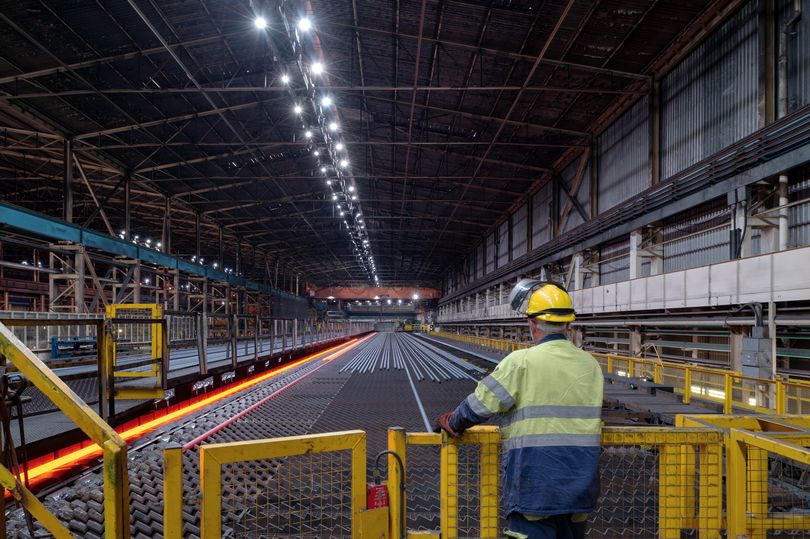
Liberty Steel to deliver its first ‘green’ rebar
Liberty Steel UK is set to ship its first orders of sustainably produced steel reinforcing bar (rebar) after securing full Cares and sustainability approval this week, the company stated on Nov. 5.
Liberty started production of its “GreBar” in October, with the company set to deliver around 10,000 metric tonnes of it before the end of the year
Liberty is aiming to challenge the UK’s current reliance on imported rebar and target future infrastructure projects. Half of the 1.2 million mt of rebar used annually in the UK is sourced from abroad while the HS2 rail project will require nearly 1 million mt. Upgrades and replacement of existing residential and transport infrastructure will also fuel future demand, the company stated.
Liberty’s mill has the capability to produce rebar in sizes 25 mm, 32 mm, 40 mm and 50 mm in Grade B500C. The company is planning to also make 20 mm diameter product.
“The UK government has pledged to ‘build back better’ from the pandemic and our rebar offering made through Liberty’s GREENSTEEL process offers customers the chance to use high-quality steel produced sustainably by a UK business,” Peter Gate, commercial director of rebar for Liberty Steel UK said.
“..We have placed particular emphasis on developing the capability to provide 50 mm rebar, which will give customers a broader UK market offering in this size and help drive design and cost efficiencies in construction,” he added.
Liberty’s Rotherham mill will ramp up production of GreBar over the coming months, with ultimate capacity to reach 300,000 mt/year.
— Annalisa Villa

German company launches price indices for ferroalloys

Metalshub, the digital trading platform for metals and ferroalloys based in Düsseldorf, Germany, has launched its first price indices, it tells Kallanish.
The platform has started publishing price indices on 5 November for ferrosilicon, ferrochrome, ferromolybdenum, ferrovanadium, ferromanganese and manganese metal. The six indices will be the company’s first move into the price data arena, with others expected to be added later. They are based exclusively on real negotiation and transaction data, Metalshub notes.
It highlights a strong trading liquidity that the platform has generated since going live in 2017. According to its managers, the marketplace features a list of around 1,000 member companies and generates more than 900 bid/offer data points per month. The value of legally binding contracts concluded over the platform was around €100 million ($118m) in 2019, and is expected to reach €200m this year, despite the market disruptions caused by the Covid-19 pandemic.

Turkey’s January-September scrap imports hit 16 million mt, up 15%
Turkish mills’ scrap bookings from their global suppliers increased year on year in the first three quarters of 2020, with imports especially from the US rising significantly with the support of demand recovery as of July. The on-year rise was despite some mills’ temporary stoppages and output cuts during the second quarter due to the COVID-19 pandemic.
Turkish mills’ crude steel output rose by 2.6% on year to 25.9 million mt in January-September, as the rise in crude steel production reached as high as 16.6% on year, with a strong market recovery as of June.
Turkish mills’ imports of ferrous scrap totaled 16.1 million mt in the nine-month period, 15% higher on year. The US remained Turkey’s largest scrap supplier by far in January-September at 3.4 million mt, 27% higher than the same period the previous year, S&P Global Platts observed from the latest Turkish Statistical Institute (TUIK) data.
Turkish mills’ scrap imports from the Netherlands rose by 19% year on year to 2.18 million mt in the first nine months of 2020, while imports from the UK totaled 1.69 million mt, slightly higher than the 1.67 million mt imported in the same period of 2019.
Turkish mills also imported 1.72 million mt of ferrous scrap from Russia in January-September, higher than 1.55 million mt imported in the same period the previous year.
Imports from Belgium totaled 1.22 million mt through September, while imports from Romania and Lithuania totaled 865,600 mt and 689,000 mt, respectively.
Denmark shipped 566,600 mt of ferrous scrap to Turkey in that period, while France exported 401,000 mt.
Other ferrous scrap suppliers to Turkey in January-September were: Germany (367,200 mt), Bulgaria (259,900 mt), Israel (279,400 mt), Sweden (264,400 mt) and Italy (202,300 mt), the latest data showed.
— Cenk Canf
EU steel sector weighs new covid restrictions
European steelmakers are still weighing the effects of the new coronavirus lockdowns that were put in place in most European countries. This week Germany and Italy joined Belgium, France and Spain in the list of European countries that have declared second lockdowns.
Restaurants, bars, cultural and leisure centers have been shut down to curb a second coronavirus wave, but factories have been kept open. Executives of steelmakers that have large production sites in different countries noted that so far the mills mostly affected are the one where virus levels are higher, as in France and Spain. However, “the disruptions are not close to March levels,” a Spanish source said.
“If we look at the restriction across most of the European countries, the steel sites and in general industries are still open. The problem is in the day-to-day work if a few workers test positive a line can stop. Most of the steel plants have put in place a safe environment in which people can work but workers have families and their lives outside the steel sites and they can become infected [and then] a line can stop suddenly, disrupting orders,” an executive from an Italian mill commented.
“We still have enough people at the plant, not a lot of shifts are full and that could have an effect on the shipment of material so a shorter workforce is bad – this will extend lead times, but we are better prepared. In February-March we didn’t know what was happening, what we could do. Everyone panicked a little bit. This is less the case now,” a source from a Belgium-based mill commented. “Most of the companies are seeing what very big financial [risks] you need to make to shut down production so everyone starts to be more creative than in the first days. in my view a second wave will have an effect on production but not as much as the first time.”
Overall, market sources are cautious about the coming weeks. They do not expect the huge supply chain disruptions from lockdowns and transportation blockages in transport across the EU countries as seen in March, but doubts about steel demand are starting to rise.
Steel order bookings are reported to be still relatively good but it’s not yet clear this will last. “We had two good months in September-October and were worried about the COVID evolution and the lockdown situation and they’ll have an impact on steel consumption for sure – its already a big question,” a Benelux service center source commented.
“We are fully open and working – we were working really at 100% and more. We are terribly busy but we’ll need to see what the next weeks will bring. This isn’t clear. Sales might go down slowly. It’s unpredictable but we’re ready to continue. We are still active so we’re ready to serve customers but if they close down then we’ll need to adapt to this. At this moment we’re ready to work at 100%.”
In the automotive sector, one of the key industries for steel, demand for new cars is expected to remain low at least until the macroeconomic picture and consumer disposable income situations improve, as the main car producers see auto sales falling this year, European steel federation Eurofer said in its latest outlook.
German luxury carmaker BMW warned on Nov. 4 that new pandemic restrictions would “severely” hit business in the months ahead. “The level of risk due to the negative impact of the pandemic is assessed as high,” it said. “If the corona pandemic takes an even more serious course and the global economy experiences a perceptible downturn, the risk exposure could be considerable, particularly on the demand side.”
As underlined by the World Steel Association in its recent outlook, the construction sector remained more resilient to the COVID-19 shock as many governments focused on implementing public projects. European long steel producers said that demand construction-oriented rebar and wire rod has been good, also considering the seasonal factor, but again it is not yet clear how long this positive momentum will last.
— Annalisa Villa, Amanda Flint
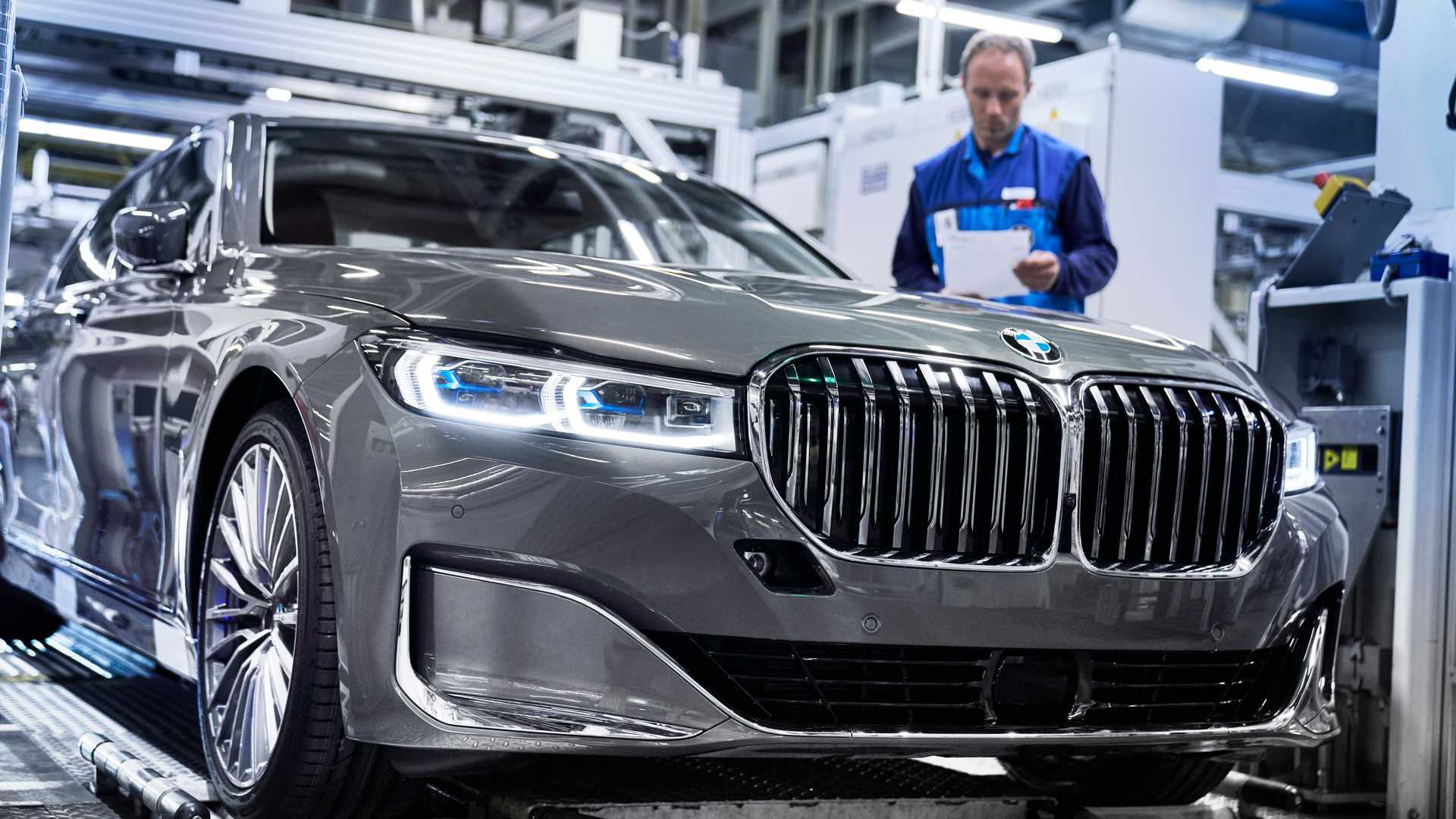
BMW sees renewed coronavirus risk to Q4 sales after strong Q3
BMW Group said Nov. 4 its vehicle sales increased in the third quarter but warned that a resurgent wave of coronavirus infections is the biggest risk for the global economy and will impact its business into 2021.
BMW said auto sales increased 8.6% in Q3 to 675,592 units from the year earlier, while nine months sales fell 12.5% to 1.64 million units, in an earnings report. Against the general trend was BMW’s 37% increase in electrified car sales over the first nine months of the year.
Europe, BMW’s biggest auto market, saw a 19.7% decline in overall auto deliveries over the nine-month period, with the US down 26%. China, where the group operates through joint venture BMW Brilliance Automotive, was up 6.4%.
The auto industry, a major user of steel and aluminum, as well as a growing consumer of battery metals, has seen sales hit by lower demand this year across many regions and segments. BMW expects potential for weaker fourth-quarter sales due to coronavirus-related disruptions, and full-year sales to be lower than in 2019.
“The coronavirus pandemic is far from over, the current rate of infection, especially in Europe, makes this abundantly clear,” BMW CEO Oliver Zipse said in a statement. “The virus will remain the biggest of many risks for the global economy in the foreseeable future. New lockdowns could severely impact our business development in the fourth quarter and early 2021.”
Prior to the coronavirus outbreak, BMW envisaged a slight increase in auto sales in 2020, and the spread of the coronavirus slowed BMW’s worldwide vehicle sales.
“We now expect global sales in 2020 to be much lower than last year,” BMW added.
Lower vehicles production and sales led European flat steel prices to fall earlier this year, as declines in productivity weakened demand for premium steel raw materials such as iron ore pellets and higher quality met coke and coking coal.
Volkswagen Group on Oct. 29 said auto deliveries fell 18.7% to 6.5 million units in the first nine months of 2020, and full-year sales would be “significantly below” 2019’s 11 million units.
VW did not break out Q3 deliveries in its interim report. Calculations by Platts using earlier company data may have seen group volumes little changed on Q3 2019 deliveries.
Daimler AG on Oct. 23 said group unit sales fell 8% to 772,700 units in Q3, from the year earlier, and highlighted a significant decrease in all of its auto categories for the full year.
Groupe Renault said Oct. 23 it sold 806,320 vehicles in Q3, down 6.1% from a year earlier.
PSA Group saw consolidated sales 12.7% lower at 589,000 units in Q3 on a year earlier, mainly due to a slowdown in Europe, in a Oct. 28 report.
— Hector Forster