Tata Steel signs Dutch pact on decarbonisation, health
Tata Steel Nederland (TSN) has signed a non-binding joint letter of intent (JLoI) with the Dutch government and the province of North-Holland outlining a framework for integrated decarbonisation and health measures at its IJmuiden site.
The agreement marks the first step in TSN’s transition to low-carbon steelmaking and efforts to improve the living environment around its operations, Kallanish notes.
The JLoI sets out ambitions for reducing CO₂ emissions and environmental impacts but is not yet binding. Both sides will continue negotiations toward a tailor-made agreement in the coming months, with a final investment decision subject to approval by Tata Steel’s board, according to an official statement from TSN.
The Dutch government intends to support the initiative with up to €2 billion ($2.35 billion), while TSN has applied for an additional €0.3 billion from the EU Innovation Fund. The remainder will be financed through cash flow, project debt and parent company support.
Tata Steel ceo and managing director T.V. Narendran said the deal followed two years of discussions.
“There are a lot of issues to resolve and work to be done before us,” he said, citing engineering readiness, regulatory approvals, policy clarity, and permit processes. He added that TSN is working to improve its financial performance to sustain the scale of the investment.
The project’s first phase involves decommissioning blast furnace #7 and coke and gas plant 2 and building a direct reduction plant (DRP) and electric arc furnace (EAF). Initially operated on natural gas, the DRP will later integrate carbon capture and storage, followed by a switch to biomethane or hydrogen as they become viable.
These measures could cut annual scope 1 CO₂ emissions by up to 7.2 million tonnes from the current 12.6mt baseline.
To address health and environmental concerns, TSN will implement dust, noise and odour reduction projects, including covering iron ore yards and slag cooling areas, and adding windbreaks and enclosures at pellet and sinter facilities. These shorter-term measures are expected to be completed before 2030. The company also plans to boost scrap use to 30% from 17% in 2019, enhancing circularity and lowering emissions.
Both sides have agreed conditions that could terminate negotiations, including changes to Dutch CO₂ levies, energy tariffs or steel slag policies, as well as TSN’s responsibility to resolve legacy liabilities from its coke and gas plants.
Burak Odabasi Türkiye

IREPAS in Munich : Protectionism and China
The 93rd meeting of IREPAS (the International Rebar Exporters and Producers Association) was held in Munich on September 28-30 in conjunction with the SteelOrbis Fall’25 Conference.
There were 123 representatives from 49 different producers among the 406 registered delegates from a total of 56 different countries. There were also 79 registrations representing 41 different raw material suppliers.
At the opening of the conference, Murat Cebecioglu, chairman of IREPAS, said that demand is still very weak in the global longs market and the situation remains difficult as mills are cutting back on production and protectionist measures are continuing full speed ahead, while China and other countries in Asia are exporting a lot, putting pressure on prices.
The IREPAS chairman added that there is very severe competition in the market, and every producer is fighting with its last penny in order to keep operating.
On the last day of the conference, producers of long steel products, as well as traders and raw material suppliers, shared the conclusions reached at their special committee meetings regarding the current situation in the markets with the general participants at the event.
Raw Material Suppliers at IREPAS: Global trade conditions are “devastating” due to uncertainty
Jens Björkman, the chairman of the raw material suppliers committee, said that, in the recent period, global trade conditions have been extremely difficult, describing the situation as “devastating” amid the current uncertainty. Pointing out that trade barriers and uncertainties continue to weigh heavily on the market, particularly with the US tariffs forcing some countries to find alternative destinations, he added that this shift has created pressure on other markets, including Turkey. Regarding the protectionism in the market, he stated that there are rumors that the EU will impose some duties on Asian materials due to the huge inflows of cheaper steel from the region. Meanwhile, noting that China, which is the main exporter of cheap steel, has signaled plans to reduce steel production and exports in 2025 and 2026, albeit the actual outcome remains uncertain, he said that, in the longer term, larger investments in EAF-based production are expected, supported by stable electricity supply and growing domestic scrap availability. China has also announced a cut of about 90 million metric tons in its steel production in 2025.
Highlighting that the planned green transition in the steel industry is increasingly being questioned, with many investments being cancelled and projects being delayed, Mr. Björkman stated that the EU’s move toward electric furnace-based production has now been postponed by at least three to four years. He underlined that, if carbon emission trading in Europe and the related pricing system are fully implemented, emission reduction technologies will need to be installed more widely. However, he said that, instead of hydrogen-based DRI, natural gas could be used in the short term. In addition, the raw materials committee chairman said EU waste shipment regulations treating scrap as waste will create more bureaucracy, especially for non-OECD countries needing formal approvals to buy European scrap, while OECD trade remains unaffected. Regarding the concerns over domestic scrap oversupply, he stated that Europe already faces excess supply overall, but certain grades like clean automotive scrap could face shortages. This imbalance, he explained, is why EU steel producers push to keep scrap within Europe.
Looking at Turkey, Björkman noted that the recent increase in freight costs has become a burden for suppliers, leading prices to increase slightly in Turkey, though how long this situation will last remains difficult to predict. Regarding the changes in Turkey’s inward processing regime, the committee chairman stated that Turkish mills, who are already struggling amid high costs, may become less competitive in the short term as scrap prices may increase slightly, leading the mills to reduce production.
Meanwhile, stating that raw material demand in the GCC market is expected to focus more on DRI/HBI, which remains limited in supply, he emphasized that larger volumes will be needed in Europe to support flat steel production and the green transition, though a mix of DRI/HBI and scrap is likely to be used.
Traders at IREPAS: Protectionist measures will continue for foreseeable future
F.D. Baysal, the chairman of the traders committee, said that China’s exports have increased at a much higher pace than its production. He stated that there are no expectations for production cuts in China and that its domestic stock levels remain at normal levels. In response to questions on how China is reacting to trade barriers, he explained that Chinese producers have begun investing in production facilities in other regions, including Africa and South America.
Looking at Turkey, Mr. Baysal said that the high cost of energy remains a key challenge for Turkish mills. He noted that, in order to save energy and comply with CBAM regulations, Turkish producers have started investing in solar and renewable energy sources, which are expected to reduce production costs. Meanwhile, saying that there are no clear plans in the EU to ease green transition requirements, though delays remain a possibility, he commented that CBAM will eventually be enforced, but significant work is still needed to establish reference levels for both European and overseas mills. He added that, despite uncertainties, European producers are already moving from blast furnaces to EAFs and investing in renewable energy sources such as solar to balance costs and meet future carbon requirements.
Commenting on protectionist measures, the committee chairman stated that the Trump administration’s tariffs, reaching 75-100 percent in some cases, have nearly halted steel imports into the US, while Canada and Mexico have also imposed strong protective measures, leaving the North American market heavily restricted. Stating that he believes that protectionist measures will continue for the foreseeable future, Baysal said that further barriers against cheaper Asian steel are likely, but stressed that free trade remains the best option, though current trends are moving in the opposite direction.
Regarding prices, he highlighted that the current spread between rebar and scrap prices stands at around $200 or slightly less. He suggested that this points to a likely regression in scrap prices. He also compared production methods, stating that blast furnaces currently hold a cost advantage of about $25/mt over electric arc furnaces as the latter depend on electricity prices, though these are lower in countries like the US. On freight, Baysal noted that container freight rates have come down from post-Covid highs of around $4,000 to about $1,200, adding that he does not expect them to fall further.
Producers at IREPAS: Chinese exports and protectionism squeeze global steel industry
Murat Cebecioglu, chairman of IREPAS and also chairman of the producers committee, said that, as demand is very limited, everybody is trying to protect what is theirs. “We can sell to the EU only once every three months because of the quota and it fills up as soon as the quota is opened. Because of China we cannot sell to many places. Chinese exports are hurting everyone,” he explained. The committee chairman pointed out that China is the main driver, exporting heavily at low prices, exerting pressure everywhere amid generally limited demand. Many countries are imposing protective measures not only on China but also on some other Asian countries, considering that the Chinese are quick to move their production elsewhere to avoid trade barriers.
Regarding Turkish mills’ capacity utilization rates, Mr. Cebecioglu pointed out that, under current market conditions, utilization rates are not at decent levels and, with protectionist measures still in place, Turkey has limited space to export, with only a few countries left, and competition is very tough in those countries. He also added that the countries to which Turkey used to export have become exporters themselves and this affects Turkish production in return. Turkey’s steel production capacity stands at around 60 million mt, but the country is currently producing just 38 million mt. In addition to trade measures, China is exporting heavily all around the world and, as it is difficult to give low prices to compete with the Chinese, in the end Turkish mills have to cut production, he remarked.
Commenting on China’s work plan for the steel industry in 2025-26, the IREPAS chairman underlined that the Chinese are always coming up with some kind of plan, but it is yet to be seen how much of it will be implemented and how they will proceed. This work plan, he noted, consists of many things; regulations, environmental constraints, shutting of inefficient mills, and technological upgrading for green steel and low carbon production. In the end, future competition will depend on being cleaner, he stressed. He also commented that, if this Chinese work plan goes through, it will mean that there will be export regulations, leaving room for Turkish mills to breath.
Talking about the mega projects in the GCC region, Cebecioglu said that demand is quite good in the region and GCC-based mills are also exporting to the EU and North African countries, where they are very competitive against the Turkish mills. As GCC mills have lower costs compared to Turkish mills, they have the upper hand in prices in terms of costs.


Official CBAM benchmarks not confirmed until 2026
Key benchmarks for calculating specific steel import cost exposures under the upcoming fiscal stage of the Carbon Border Adjustment Mechanism (CBAM) will likely not be officially unveiled until the first quarter of 2026, McCloskey learns from private European Commission correspondence.
In a letter from Gerassimos Thomas, director-general for the Taxation and Customs Union of the European Commission, the Commission representative outlines that CBAM benchmarks “will be based on the respective [European Union Emissions Trading System] benchmarks,” which “are being updated for the period 2026-2030.” The letter is dated from the start of this week and was seen by McCloskey on 1 October.
Gerassimos said that he expects that the benchmarks for the EU’s carbon market “will only be adopted in early 2026. This means that a final list of CBAM benchmarks may only be available at that moment.”
Benchmarks for the EU carbon market track free allowance allocation to the different installations covered by the scheme to prevent carbon leakage, or companies leaving the European Union to set up operations in jurisdictions without a carbon pricing mechanism. As the CBAM is phased in from 2026 to 2034, installations across Europe will gradually receive fewer and fewer free carbon allowances until these are phased out entirely by 2034.
European steel importers have been operating under the expectation that the CBAM benchmarks – which are multiplied against the free allocation-tracking CBAM factor and then deducted from the total embedded emissions – would be presented before the end of this year. This was premised upon the European Commission’s Steel and Metals Action Plan, recent consultations on the technical aspects of CBAM, and its commitment to releasing implementing acts on the benchmark rules in the fourth quarter.
Importantly however, the Commission’s commitment to clarifying the rules defining the benchmarks is not necessarily a commitment to releasing the specific values themselves, and could be limited to outlining correspondence between the two systems.
Gerassimos’ letter aligns with McCloskey’s previously reported response from European Climate Commissioner Wopke Hoekstra to Filip Turek – a Czech member of the European Parliament – in early September about the ETS-CBAM benchmark codependence, undermining European steel importers’ expectations that official CBAM benchmarks would be available before 2026
As a core part of the formula for calculating the extent of embedded emissions liable to CBAM-covered imports like steel, importers require these ETS-CBAM benchmark values to forecast their specific and itemized cost exposure to the carbon leakage mechanism, and manage their finances on current import purchases.
Steel importers have already been deterred from bringing material into Europe on existing exposure uncertainties, avoiding material with lead times beyond the start of 2026, and in some cases signaling a preference to clear material in Q4 even if subject to out-of-quota duties of 25%.
If release of the benchmarks is pushed further into Q1, then importers could be facing the same barriers of uncertainty for another quota period – either pushing import purchases back further, or taking another hit on out-of-quota duties.
As the European Commission is also currently preparing its long-term replacement for the EU’s steel safeguard system, with strong speculations and steelmaker lobbying for an intensification of out-of-quota duties to 50% and possible implementation from January, the European import market could see an even heavier CBAM burden than it is already shouldering.
McCloskey has wide-ranging databases on upcoming green steel projects worldwide in our Green Steel Profiles, but even if importers can source the cleanest steel globally for European import, they cannot truly know the opportunities of capitalisation without clarification on CBAM and its calculation benchmarks.
Benjamin Steven Journalist, Steel


EUROMETAL President speaks at PUDS conference on Steel Processing in Katowice
On 29 September, EUROMETAL President Alexander Julius participated in the high-level conference “Processing Means Distribution”, hosted by the Polish Steel Distributors Federation (PUDS) at the Silesian Museum in Katowice.
The event marked a significant moment for PUDS, which announced the inclusion of “steel processing” — reflecting the growing importance of value-added services and processing in the steel supply chain.
delivered a keynote presentation focused on the evolution of steel distribution in Europe, highlighting how processing is no longer just a complementary service, but a core strategic activity that increases value for both steel suppliers and manufacturing customers.
He also introduced EUROMETAL’s mission and work, with particular attention to the economic and industrial value of distribution and processing for the EU manufacturing base, the role of steel distributors in the implementation of EU sustainability tools such as CBAM, CSRD, ESPR, and ETS and EUROMETAL’s advocacy work in Brussels, including the Steel Derivatives initiative, aimed at protecting EU industry from unfair competition and carbon leakage.
The event offered a valuable platform for exchange between Polish stakeholders on how to strengthen the role of steel processors within a more integrated and sustainable distribution model.
EUROMETAL congratulates the newly elected President of PUDS and EUROMETAL Board Member Piotr Sikorski and applauds the initiative to evolve the federation’s scope. We also extend our sincere thanks to former PUDS President Iwona Dybał for more than a decade of excellent collaboration and commitment to strengthening the role of steel distribution in Poland and Europe.



EU HRC producers struggle to fill Q4 order books; buyers cautious, sitting on high stocks
European hot-rolled coils prices were broadly unmoved on Tuesday September 30, with suppliers facing challenges in filling fourth-quarter order books amid subdued demand. A proposal for new steel trade measures to replace existing safeguards is expected in early October, sources told Fastmarkets.
November-December delivery HRC was on offer at €590-610 per tonne ex-works from integrated mills in Northern Europe. But sources pointed out that local suppliers were not actively pursuing higher offers for fourth quarter delivery HRC.
“[HRC] offers at €600 [per tonne ex-works] and higher are of the table at the moment. Buyers did not accept,” a steel-service center in the region said.
“Buyers still have sufficient stocks – they booked more coil domestically and overseas in the third quarter, amid bullish moods and CBAM/safeguards concerns,” a mill source said.
The European Commission is expected to publish a legal proposal on new trade measures to replace existing safeguards on October 7, so in line with the previously indicated timeline, several sources familiar with the matter told Fastmarkets.
Achievable prices were reported by buyers in Germany and Benelux area at €570-580 per tonne ex-works.
One German buyer said, that for big volumes [5,000 tonnes and above] it would be possible to negotiate prices below €570 per tonne ex-wokrs, “but nobody was looking to buy big lot [of HRC].”
“Mills have empty order books for December, while buyers don’t need tonnages,” a German buyer said.
Fastmarkets’ calculation of the daily steel hot-rolled coil index, domestic, exw Northern Europe was €577.50 per tonne on Tuesday, down by €0.42 per tonne from €577.92 per tonne on Monday September 29.
The Northern European index was down by €1.25 per tonne week on week and down by €0.83 per tonne month on month.
Fastmarkets’ daily steel HRC index, domestic, exw Italy was calculated at €550.00 per tonne ex-works on Tuesday, down by €0.63 per tonne from €550,63 per tonne on Monday.
The Italian index was up by €1.25 per tonne week on week and up by €8.33 per tonne month on month.
Trading remained slow in Italian market, and local participants estimated achievable prices for HRC in the nation at €540-550 per tonn ex-works. One source claimed that for large tonnages mills were ready to step down to €530 per tone ex-works.
Official offers were hoovering at around €570 per tonne ex-works, but no sales at such levels were reported.
Overall sources expressed doubts about possibility of uptrend in the upcoming weeks.
“Mills need to sell November, December production, while buyers are not really desperate for volumes,” a local buyer said.
“We will see what quotas look like in October [Q4 allocations open on October 1], calculate inventories and see what needs to be booked,” they added.
Offers for overseas coil were stable on Tuesday. HRC from Turkey was available at around €520-530 per tonne CFR, including the EU anti-dumping duty, for December arrival.
From India, offers were reported at €520-530 per tonne CFR for November-shipment coil.
The lowest offers were reported from Indonesia at €490-500 per tonne CFR. Several sources noted there was a room for €10-15 per tonne discount for a large volumes.


Germany’s Klöckner divests from eight US distribution sites
Klöckner & Co., a Germany-based producer and distributor of steel and non-ferrous metals, has announced the sale of seven distribution sites located in the US and run by its subsidiary Kloeckner Metals Corporation to US-based steel producer Russel Metals.
The sites are located in Austin and Houston (Texas), Charlotte (North Carolina), Dubuque (Iowa), Jacksonville and Pompano Beach (Florida), and Suwanee near Atlanta (Georgia). In a separate transaction, one additional distribution site in Amarillo, Texas, will be sold to Service Steel Warehouse.
Guido Kerkhoff, CEO of Klöckner & Co. emphasized that these divestments represent “decisive milestones in the consistent execution of our strategy”. He underlined that the company aims to focus on value-added processing and fabrication services, while reducing dependency on cyclical commodity distribution.
This move aligns with the company’s strategic program “Klöckner & Co: Leveraging Strengths – Step Up 2030”, which prioritizes:
- Growth in service center business
- Expansion in processing and fabrication solutions
- Sustainable, profitable operations in North America and Europe
- Financial impact of divestment
By reallocating capital away from distribution, Klöckner & Co can strengthen its higher-value portfolio, according to the company’s press release. Excluding the eight divested sites, the share of sales from value-added and service businesses rose to 86 percent in the first half of 2025, compared with 81 percent including them.


EU HRC producers struggle to fill Q4 order books; buyers cautious, sitting on high stocks
November-December delivery HRC was on offer at €590-610 per tonne ex-works from integrated mills in Northern Europe. But sources pointed out that local suppliers were not actively pursuing higher offers for fourth quarter delivery HRC.
“[HRC] offers at €600 [per tonne ex-works] and higher are of the table at the moment. Buyers did not accept,” a steel-service center in the region said.
“Buyers still have sufficient stocks – they booked more coil domestically and overseas in the third quarter, amid bullish moods and CBAM/safeguards concerns,” a mill source said.
The European Commission is expected to publish a legal proposal on new trade measures to replace existing safeguards on October 7, so in line with the previously indicated timeline, several sources familiar with the matter told Fastmarkets.
Achievable prices were reported by buyers in Germany and Benelux area at €570-580 per tonne ex-works.
One German buyer said, that for big volumes [5,000 tonnes and above] it would be possible to negotiate prices below €570 per tonne ex-wokrs, “but nobody was looking to buy big lot [of HRC].”
“Mills have empty order books for December, while buyers don’t need tonnages,” a German buyer said.
Fastmarkets’ calculation of the daily steel hot-rolled coil index, domestic, exw Northern Europe was €577.50 per tonne on Tuesday, down by €0.42 per tonne from €577.92 per tonne on Monday September 29.
The Northern European index was down by €1.25 per tonne week on week and down by €0.83 per tonne month on month.
Fastmarkets’ daily steel HRC index, domestic, exw Italy was calculated at €550.00 per tonne ex-works on Tuesday, down by €0.63 per tonne from €550,63 per tonne on Monday.
The Italian index was up by €1.25 per tonne week on week and up by €8.33 per tonne month on month.
Trading remained slow in Italian market, and local participants estimated achievable prices for HRC in the nation at €540-550 per tonn ex-works. One source claimed that for large tonnages mills were ready to step down to €530 per tone ex-works.
Official offers were hoovering at around €570 per tonne ex-works, but no sales at such levels were reported.
Overall sources expressed doubts about possibility of uptrend in the upcoming weeks.
“Mills need to sell November, December production, while buyers are not really desperate for volumes,” a local buyer said.
“We will see what quotas look like in October [Q4 allocations open on October 1], calculate inventories and see what needs to be booked,” they added.
Offers for overseas coil were stable on Tuesday. HRC from Turkey was available at around €520-530 per tonne CFR, including the EU anti-dumping duty, for December arrival.
From India, offers were reported at €520-530 per tonne CFR for November-shipment coil.
The lowest offers were reported from Indonesia at €490-500 per tonne CFR. Several sources noted there was a room for €10-15 per tonne discount for a large volumes.


EU Steel Distribution: Sentiment stabilises in September, but recovery remains elusive
The latest EUROMETAL Market Sentiment Survey for September 2025 reveals a tentative stabilisation in market sentiment across Europe’s steel distribution sector. While the mood remains cautious and far from optimistic, the sharp declines seen in July appear to have bottomed out — with most indicators either flatlining or showing slight improvement.
This month’s data reflects a sector that is still under pressure, but possibly adjusting to the challenging environment by adopting a more measured stance. Price expectations, in particular, show a modest recovery — although still not enough to suggest a strong rebound.
Assessment of current activity
After July’s sharp downturn, sentiment regarding current activity has returned to levels seen in early summer. While still modestly negative, September shows a slight upward correction, hinting that the sector may be adjusting to the weak demand environment or seeing signs of stabilisation. The improvement, however, is marginal and should not be overstated — activity remains below the neutral line.
Outlook for future activity
The forecast for the coming quarter has also nudged upward in September, reversing part of the pessimism recorded in July. The trend suggests that expectations are no longer worsening, and some respondents may be cautiously optimistic about Q4. Nevertheless, sentiment remains fragile, and the overall mood continues to reflect low confidence in near-term recovery.
Stock position outlook
The stock volume outlook remains consistent with previous months: largely unchanged. The central positioning of responses and minimal variation across the past five months indicate continued risk aversion. Distributors are maintaining defensive inventory strategies, avoiding overstocking in an uncertain demand environment.
Price expectations
In contrast to other indicators, price sentiment shows the clearest sign of improvement. September marks the second consecutive month of recovery from the sharp dip seen in May and June. While still hovering around neutral, the trendline points upward — suggesting that expectations of stabilising or even slightly rising prices are beginning to take hold. This may reflect better supply-demand balance or seasonal effects.
While the market environment remains difficult, the September 2025 EUROMETAL Sentiment Survey suggests that the worst may be behind us — at least for now. Caution still dominates distributor behaviour, but the absence of further deterioration is notable. If these stabilising signals continue into Q4, the European steel distribution sector could enter 2026 in a more resilient position.
This analysis is based on the EUROMETAL Market Sentiment Survey, reflecting the views of 217 industry participants for September 2025.
Interested in our Sentiment Tool? Contact us.
German analyst expects weaker prices in October
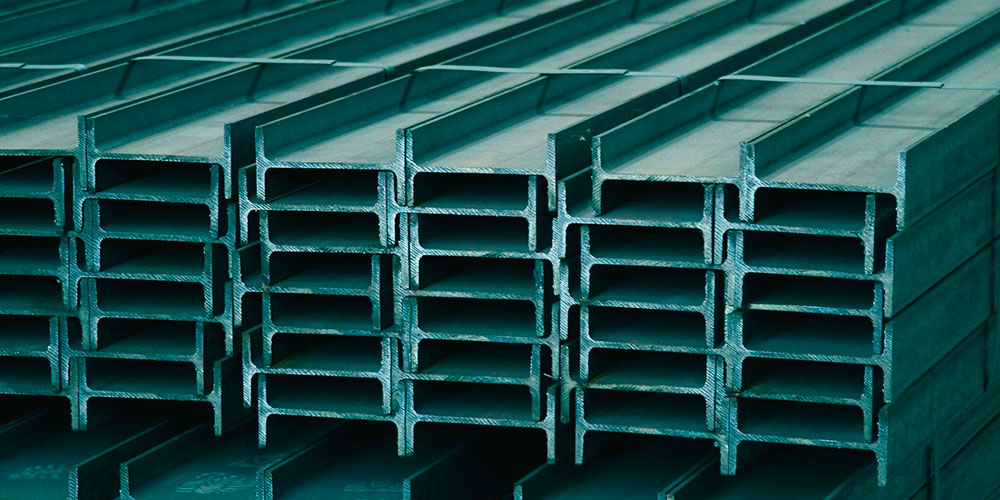
Prices for most flat and long products should soften going forward, by 1-3% until the end of October, according to German analyst Peter Fertig of MBI Research.
From its current level, hot rolled coil will drop by 3%, Fertig says based on MBI Research’s quantitative forecast model in his latest report.
Kallanish learns this is somewhat more pessimistic than his previous report earlier in September, which assumed a drop of 1%. This also applies to plate, which was seen stable in the previous report, but now is expected to drop by 3%.
A positive trend is seen for cold-rolled and galvanized coil, but the potential for an increase has also diminished, from +3% to now +1%. As for the current prices in Germany, he notes €575/t ex-works ($675) for HRC, €657/t for CRC, and €680/t for hot-dip galvanized coil. In competition with the EU mills, he cites prices for Chinese material at $482/t for HRC, and $540/t for CRC, both FOB China.
For long products, Fertig predicts a drop by 3% for rebar and wire rod, and by 1% for merchant bar. For current domestic prices for long products, he suggests €599/t for rebar, down from €612/t previously and €671/t for wire rod, down from €684. This compares with Chinese export prices of $441/t for rebar, and $472/t for wire rod.
Christian Koehl Germany

Revista InfoAcero Septiembre 2025
En el siguiente enlace pueden acceder a la edición de Septiembre de nuestra revista Infoacero septiembre 2025
Destacamos a continuación algunos de sus contenidos:
- Opinión – D. José Horcajo- Junta Directiva UAHE
- Índice UAHE: Evolución precios de aprovisionamiento Septiembre 2024 – Julio 2025
- Siderurgia: Previsiones sector siderúrgico Eurofer (informe 3er trimestre).
- Información Asociativa: Conferencias UAHE Septiembre 2025
- Próximos eventos: 21º Forum Productos Siderúrgicos, 8 Octubre (Castelldefels) // Advanced Manufacturing // Green Steel Strategies
- Colaboración ASCEM –“Acero para el siglo XXI”- D. Joan Carles Codina– Secretario Jurídico ASCEM
- Colaboración RRHH – “La formación continua: pasado, presente y futuro” D. Agustín Barroso– Director RRHH HIEMESA