


Italy’s Marcegaglia Group secures 2,000th crane produced by Germany’s Liebherr
The official delivery ceremony for a mobile harbor crane (MHC) was held yesterday, July 8, at Italian steel producer Marcegaglia’s Ravenna plant, as reported in the company’s official press release. It is the fifth MHC to support its coils quay loading and unloading activities.
The LHM 600 crane was built by Liebherr group, an important German manufacturer of heavy machinery and equipment, as well as the first inventor of the mobile crane in the 40s. Liebherr and Marcegaglia have a long-lasting collaboration, so much so that the German company took the opportunity to celebrate the installation of their 2,000th crane produced, which coincided with the delivery to Marcegaglia’s Ravenna plant.
“One of our group’s strengths is the great logistical efficiency, also thanks to our significant presence in the port of Ravenna. Since 2001, we have also included the Liebherr family and the Liebherr Group as part of our vast network of strategic suppliers, with whom we have established solid relationships of reliability, loyalty, sharing of objectives and values” Antonio Marcegaglia, president and CEO of Marcegaglia Steel, said.
His words were also shared by Patricia Rüf, third generation of the Liebherr family and member of the board of directors of the Liebherr-International AG holding company, who stated, “I wanted to be present here in Ravenna to underline the solid bond of partnership we have with Marcegaglia, a family business like ours, and with which we have been collaborating successfully for over twenty years.”
Italy’s Marcegaglia group is a world leader in steel processing, and its production focuses in particular on tubes, coils and sheets. Marcegaglia annually produces about 6.5 million mt of finished products and employs about 7,800 people.


France calls for stronger EU tariffs on Chinese imports to protect industry
French finance minister Eric Lombard has urged the European Union to broaden and strengthen tariff measures against Chinese imports, warning that China’s production dominance across key sectors could severely damage Europe’s industrial base.

European HRC market slow; mills offer discounts to battle imports
European hot-rolled coil prices were largely flat on Wednesday July 9; some mills were selling aggressively to compete with cheap imports, though post-summer sentiment remains mixed, sources told Fastmarkets.
Slow consumption, seasonality and bearish expectations among buyers kept trading subdued across European HRC markets.
German mills were offering August-September delivery coil at €560-570 ($656-668) per tonne delivered, which nets back to around €550-560 per tonne ex-works.
One supplier in Germany was heard to be delaying deliveries lately due to some changes in intermediate stocks management.
In the Benelux area, offers were reported at €570 per tonne ex-works from integrated mills.
Achievable prices were estimated by buyers at €530-550 per tonne ex-works.
One major mill in Europe was heard selling HRC “very aggressively,” offering substantial discounts for bigger volumes in order to close gaps in order books, and in the face of an influx of cheap imports, sources said. Notably, two sources reported sales at €525 per tonne ex-works, for large volumes.
One source claimed that, following a series of aggressive sales in June-July, that supplier had closed order books until October.
As a result, Fastmarkets’ calculation of the daily steel hot-rolled coil index domestic, exw Northern Europe was €544.79 per tonne on Wednesday, down by €0.21 per tonne from €545 per tonne on Tuesday July 8.
The Northern European index was down by €11.04 per tonne week on week and by €61.59 per tonne month on month.
Sources pointed out that certain overseas suppliers were also selling HRC to Europe quite aggressively lately, and that put additional pressure on domestic prices.
“Indonesia is not a part of safeguards, so they are fooding the market with cheap coil, and big European buyers book as much as they can before the end of the year, to make sure they have stock when [the Carbon Border Adjustment Mechanism] starts in January 2026,” a trading source in Germany said.
Late last week, around 30,000 tonnes of Indonesian HRC were heard booked at $555 per tonne CFR Antwerp, Fastmarkets reported.
Offers from Turkey to Northern ports were heard at around €500 per tonne CFR, duty paid.
Meanwhile, the market situation in Italy was similar, with trading slowing down further ahead of summer holidays.
Fastmarkets’ daily steel hot-rolled coil index domestic, exw Italy was calculated at €520 per tonne on Wednesday, stable day on day.
But the Italian index was down by €13.33 per tonne week on week and by €67.92 per tonne month on month.
Most sources agreed that achievable values for domestic HRC were in the range of €510-530 per tonne ex-works, depending on the tonnage.
One mill source, however, said they “drew the line” at €520-530 per tonne ex-works, citing high costs for raw material and electricity.
Another source said that, considering current prices for steel scrap and electricity in Italy, €520-530 per tonne ex-works was already below the cost line for electric-arc furnace (EAF) based mills.
Lead times were around six-to-eight weeks.
Some bids were reported at €500 per tonne ex-works and even below for domestic coil, but no confirmed deals were reported at that level so far.
“Buyers are speculating on cheap import availability, but the truth is that mainly big buyers — tube makers, re-rollers — are actually booking imports now. For small, medium-sized traders, handing imports is too risky,” a supplier in the region said.
In the secondary market, 4 mm HR sheet was traded at €630-650 per tonne CPT, Fastmarkets understands, compared with the deals done at €640-660 per tonne CPT in late June for such material.
The latest deals for Indonesia origin coil were reported at €450 per tonne CFR to Italy, with total of 70,000 tonnes booked by three big buyers, Fastmarkets reported.
New bids for Indonesian coil were reported at €425-435 per tonne CFR, but no new trades at mentioned levels were reported.
One Turkish mill was heard offering HRC to Italy at €480 per tonne CFR duty paid, while another was heard offering at €500 per tonne CFR duty paid.


Stainless steel prices fall further in Europe amid summer lull
European stainless steel distributors are bracing for a difficult summer, with prices falling further in June amid slow demand and continued import competition, sources told Fastmarkets in the week to Friday July 4.
“I don’t think I’ve ever seen such a difficult period that lasted so long,” a distributor in Italy said. “Prices have undergone a constant and continuous accelerated downward motion without any type of friction or opposing force to counteract the fall.”
Fastmarkets’ monthly price assessment for stainless steel cold-rolled sheet, 2mm, grade 304, transaction domestic, delivered North Europe, was €2,350-2,420 ($2,755-2,837) per tonne on July 4, down by €50-80 per tonne from €2,400-2,500 per tonne on June 6.
Since the start of 2025, consumption in key stainless steel end-user markets has failed to improve, leading distributors to adopt a wait-and-see approach until after the summer, which is traditionally a slow period for sales.
“The news is more negative than the real situation. We have had such difficult periods in the past, too,” a distributor in Germany said. “If you look at the first six months of the year compared with last year, sales and margins are low, but in the end, everyone is moving forward. Maybe there will be positive signs in the autumn.”
While cheap imports from East Asia have continued to put pressure on prices, the weaker dollar helped alleviate some of the pressure.
On July 4, €1 was equivalent to $1.18, compared with $1.14 on June 6, according to Fastmarkets’ currency converter. This means that, in dollar terms, the assessment for grade 304 stainless steel cold-rolled sheet on July 4 had narrowed upward to $2,765-2,848 per tonne, compared with $2,734-2,848 per tonne on June 6, which was at the time equivalent to €2,400-2,500 per tonne.

Spain’s Tubos Reunidos evaluates new temporary layoff scheme
Spanish seamless tube producer Tubos Reunidos (TR) plans to implement a new temporary employment regulation (ERTE) at its Amurrio plant in Álava. The measure comes in response to continued market uncertainty caused by the geopolitical situation and the impact of US steel tariffs, Kallanish learns from the company.
The consultation period for the temporary workforce adjustment began this week with an initial meeting between the company and workers’ representatives. TR presented the required documentation to justify the measure, highlighting the need for production flexibility due to a decline in orders.
At its general shareholders’ meeting in Bilbao last week, TR explained it is adjusting its strategy to the changing market conditions, which remain exposed to geopolitical risks and are expected to worsen.
The new ERTE could affect up to 850 employees at the Amurrio site, which has already experienced temporary production adjustments. The plant was previously under an ERTE until December last year, which also extended to the Trapagaran facility in Biscay.
In January 2024, TR consolidated all production at its Álava site. This move aimed to reduce net debt and lower production costs, while improving efficiency.
Todor Kirkov Bulgaria

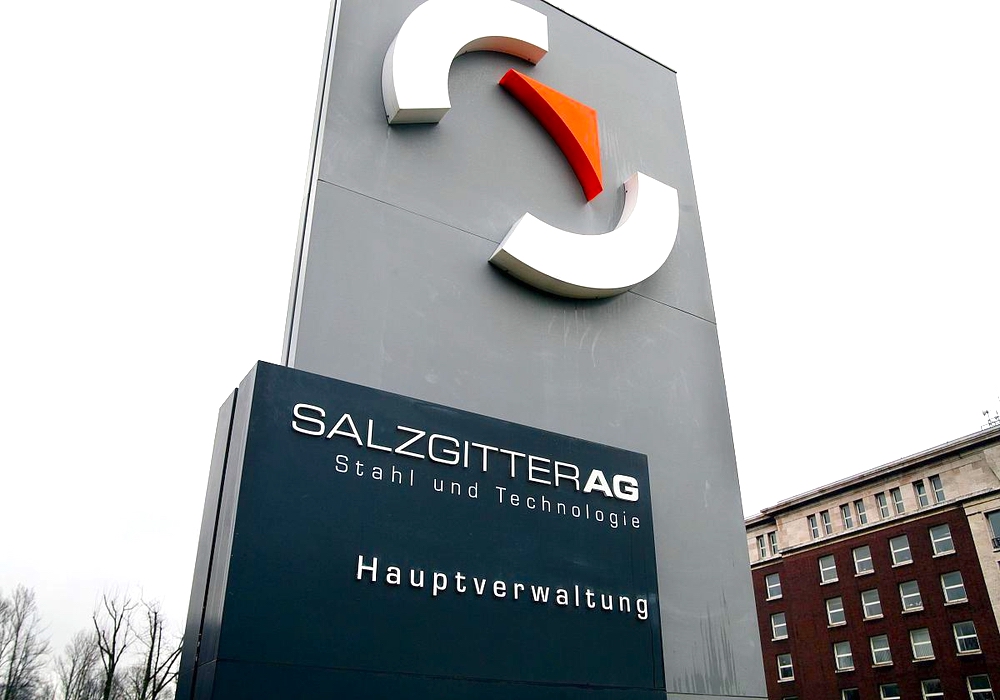
Salzgitter receives approval to supply steel for military
Salzgitter has received approval for its SECURE 500 steel grade to be used for military purposes, for example, in vehicles or protective systems, Kallanish notes.
Together with subsidiary Ilsenburger Grobblech, the steelmaker has received approval from the German Military Technical Center 91 (WTD 91) in accordance with TL (Technical Delivery Conditions) 2350-0000.
During intensive testing, weldability and behaviour under fire and blast were evaluated, among other aspects. The approval confirms the high quality and reliability of the steel and underlines Salzgitter expertise as a partner for demanding defence applications, the enterprise claims.
According to the German steelmaker, by expanding its portfolio, Salzgitter is responding to growing demand from the security and defence sector.
“Ongoing and intensifying geopolitical crises have made it clear that security and freedom in Europe should not be taken for granted. Europe must be capable of defending itself. As a steel and technology group, we see it as our responsibility to make our contribution to the defence capability of our society in the form of steel for protection and armour purposes,” says corporate communications head Thorsten Moellmann, who is also responsible for the group-wide defence task force.
“A prerequisite for protection against ballistic threats is a high level of steel hardness. The greater the hardness, the better the protection capability against ballistic attack,” the company notes.
“With our state-of-the-art heat treatment facility in Ilsenburg, we can produce extremely strong steels with outstanding surface quality and dimensional accuracy,” says Ilsenburger Grobblech director for sales Thorsten Gintaut. “Our SECURE 500 steels are quenched and tempered and feature a fine martensitic microstructure. With the granting of TL approval, these steels are now also approved for use by the German Armed Forces – this is a great success after extensive testing.”
Salzgitter is already in the approval process for additional steel grades and, following final assessment by the German Armed Forces, it will be able to offer the complete SECURE product range for military applications.
Earlier, German defence manufacturer Rheinmetall said it is considering taking over one of Volkswagen’s soon-to-be-unused plants, as the arms maker seeks additional production capacity in Germany while domestic carmakers struggle (see Kallanish passim).
VW’s Osnabrück plant is one of three that will remain unused for the next two years after the automaker decided last December to halve its production capacity in the country due to slowing car sales in Europe.
Svetoslav Abrossimov Bulgaria

South Korean exporters caught evading EU safeguards: reports
Two South Korean steel exporters have been referred to prosecutors after being accused of illegally shipping colour-coated steel sheet to the EU by allegedly falsifying documentation to avoid paying EU safeguard duties. So reports The Korea Post citing a July 7 announcement by the Seoul Main Customs Office.
The companies allegedly falsely reported their shipments as destined for non-EU countries such as Ukraine, Russia, Moldova, while sending the goods to EU member states including Romania, Poland and Belgium, Kallanish notes.
Korean exporters must obtain approval from the Korea Iron & Steel Association (KOSA) before exporting to the EU to ensure shipments are within the EU quota allocation. However, the companies under investigation allegedly bypassed this requirement by falsifying shipping documentation, while the goods in reality entered the EU market using Korea’s duty-free quota allocation, without proper authorisation.
If fraudulent exporters exhaust the quota early through false declarations, legitimate exporters will be forced to either pay the 25% safeguard tariff or delay shipments until the next quarter’s quota becomes available, incurring additional logistics costs in the process.
The Korea Customs Service suspected a significant discrepancy between the volume of steel exports to the EU reported by South Korea’s national statistics and the import figures recorded by the EU. An investigation was launched and authorities confirmed the suspicion following reports from industry sources.
Between June 2020 and February 2023, the companies are alleged to have conducted 147 such illegal shipments, sending approximately 126,000 tonnes of steel – worth an estimated KRW 230 billion ($166 million) – to the EU market.
Investigators revealed the exporters operated a coordinated scheme that included creating internal guidelines instructing staff to omit any EU country names from official shipping documents.
A Seoul Customs official called it a “serious trade crime”, noting that such practices undermine fair competition and damage legitimate steel exporters.
Korea has a tariff-rate quota for a large number of steel product imports into the EU. Imports within the quota are exempt from tariffs, while shipments exceeding the limit are subject to a 25% tariff.
| Product Number | Product category | 1.7- 30.9.2025 | 1.10- 31.12.2025 |
1.1-31.3.2026 | 1.4-30.6.2026 |
| 1.A | HR sheets | 163,078 | 163,078 | 159,533 | 161,305 |
| 2 | CR sheets | 95,726 | 95,726 | 93,645 | 94,686 |
| 3.A | Electrical sheets (other than GOES) | 257 | 257 | 252 | 254 |
| 3.B | 35,602 | 35,602 | 34,828 | 35,215 | |
| 4.A | Metallic coated Sheets | 37,974 | 37,974 | 37,148 | 37,561 |
| 4.B | 168,404 | 168,404 | 164,743 | 166,574 | |
| 5 | Organic coated Sheets | 71,881 | 71,881 | 70,318 | 71,099 |
| 6 | Tin mill products | 16,299 | 16,299 | 15,944 | 16,121 |
| 9 | Stainless CR sheets | 50,232 | 50,232 | 49,140 | 49,686 |
| 15 | Stainless wire rod | 2,404 | 2,404 | 2,352 | 2,378 |
| 22 | Seamless stainless tubes and pipes | 1,171 | 1,171 | 1,146 | 1,159 |
| 25.B | Large welded tubes | 2,924 | 2,924 | 2,861 | 2,892 |
Source: EU Taric

EU HRC prices stable on restocking hopes, but buyers remain split
European hot-rolled coil prices held largely stable July 8, with sentiment showing early signs of a shift as parts of the market begin exploring Q4 and even Q1 2026 coverage — despite ongoing weak consumption and holiday season slowdowns.
While overall liquidity remains thin, sources pointed to pockets of restocking interest and some movement in long-term procurement.
“Some buyers are now actively inquiring for November shipments, looking to cover their Q1 needs early,” a trading source said. “Those who’ve taken positions expect prices to rise — the ones saying prices won’t go up are typically not buying.”
Offers for imported HRC into Spain were heard at $580-590/mt CIF, duty paid, from Algeria, Turkey, and India. However, buyers continued to target lower levels of Eur470-500/mt CIF, depending on volume and origin.
Domestic tradable values in Southern Europe were heard at Eur530/mt ex-works Spain, with offers reported up to Eur550/mt. In Northern Europe, prices remained steady at Eur550/mt ex-works Ruhr, though sources indicated a persistent struggle with high stock levels and poor demand.
“Utilization across EU mills is still far from ideal,” a source said, citing estimates around 60% in 2024 and structural overcapacity. “There’s still a lot of restocking left — the question is how much Q1 demand is already covered. If that number is low, there’s potential for sharp price hikes.”
Participants also flagged the potential impact of higher duties in January, alongside CBAM costs, as likely to reshape the import landscape and bolster domestic prices in the longer term.
Platts assessed domestic HRC in Northern Europe at Eur550/mt ex-works Ruhr, stable day over day, and in Southern Europe at Eur530/mt ex-works Italy, down Eur5 day over day.
Platts assessed imported HRC at Eur475/mt CIF South Europe and Eur480/mt CIF Antwerp, both stable day over day.
Devbrat Saha


Steel tariffs linger as EU, UK seek deals with US; exporters in waiting mode
European Commission and UK representatives are in talks with the US to lower their steel tariffs, as the July 9 deadline was extended to Aug. 1 and US President Donald Trump announced that copper, another key metal entering the US from other countries, is set to face a new tax of 50%.
The EC and UK governments are hoping to strike deals before Aug. 1, as Trump mentioned on July 8 that talks were progressing with the EU and that he was “probably two days off” from sending a letter unveiling a new tariff rate. In the UK, steelmakers are waiting to find out if they will be able to avoid tariffs of 50% on their products.
“The deal struck between the Prime Minister and Trump two months ago is still hanging in the balance, leaving the UK steel industry in the realm of continued uncertainty,” Gareth Stace, Director-General of UK Steel, said on July 9. “It remains unclear whether, and when, our second-largest export market will fully reopen, and when our US customers can confidently place orders knowing they will receive the agreed zero-tariff rate.
“The UK steel industry urgently needs confirmation from the US administration that our tariff rate will remain at 25% while the final details of the deal are resolved, rather than escalating to 50%. While a confirmed 25% rate would offer some short-term certainty, only a swift resolution will deliver the clarity and relief we urgently require,” Stace concluded.
In May, the US and UK agreed that the US would allow UK steel and aluminum into the US free of tariffs, as part of a wider deal that already saw US export tariffs for the UK’s automotive and aerospace sectors slashed.
From June 30, the agreement — called the UK-US Economic Prosperity Deal — allowed UK motor manufacturers to sell up to 100,000 vehicles to the US at a tariff of 10%, while tariffs on UK aerospace exports have been cut to zero. In return, the UK has scrapped tariffs on beef and US ethanol imports. However, nothing has yet moved on steel and aluminum.
“Europe still has 50% export tariffs to the US; hopefully, this blanket tariff will change soon, but it is not clear when and by how much. Overall, it is very difficult to do business in this mess,” a source from an Italian mill said.
The US is the UK’s second-largest export market for steel. According to data from UK Steel, the UK exported 180,000 mt of semi-finished and finished steel to the US in 2024, worth GBP370 million. This accounted for 7% of the UK’s total steel exports by volume and 9% by value.
The US is also the EU’s second-largest export market for steel. According to data from Comex, the EU exported around 2.7 million mt of finished steel products to the US in 2024 out of a total of 16.7 million mt of exports.

US delays reciprocal tariffs deadline to August 1
The US has postponed its previously announced deadline for imposing country-specific reciprocal tariffs, extending it from July 9 to August 1, according to several media reports.
This decision has provided a short but significant window for US trading partners such as Japan, South Korea, and the EU to finalize trade agreements that could soften or eliminate the planned tariffs. The delay is seen as a diplomatic move that may reduce trade tensions and foster ongoing negotiations – especially with the EU, which has warned of retaliatory countermeasures should talks fail.
Recently, the US sent letters to 14 countries, including Japan and South Korea, announcing new reciprocal tariffs of up to 40 percent, in addition to existing sector-specific tariffs on steel and automotive products, as SteelOrbis previously reported.
The US has already secured deals with the UK, China, and Vietnam, signaling a pattern that may encourage others to come to the table before the August 1 deadline.