


BIR warns against sliding scale steel green standards
The Bureau of International Recycling (BIR) has released a new position paper calling for “a fair and science-based approach” to green steel policymaking; namely, how green steel is to be methodologically defined as the steel industry embarks on its industrial transition.
In the paper, the industry association warns against defining green steel against a “sliding scale” approach, which gives diminished accreditation for carbon emissions reductions the greater the constituent share of secondary (scrap) steel in the steel’s production.
This methodology, preferred by leading decarbonisation standards bodies in the steel sector such as ResponsibleSteel and the Low Emissions Steel Standard (LESS), is premised on a “realistic and practical” approach to decarbonisation, attempting to recognise inherent limitations in scrap availability to meet steel and green steel demand out as far as 2050 – an institutional carbon-neutrality deadline worldwide.
BIR supports methodologies on an absolute emissions approach such as the Global Steel Climate Council’s Steel Climate Standard (GSCC SCC), which BIR states “applies to all steel producers equally, focusing on actual emissions intensity across time rather than production method.” While this is not wholly inaccurate, the SCC does distinguish between flat and long steel products, setting different emissions targets for each at comparatively high thresholds as demonstrated in appendix one.
Supporters of definitions incorporating a sliding scale argue that these limitations in scrap availability risk merely redistributing embedded emissions across steelmaker product lines, and negates potential for higher-carbon blast furnace (BF) route producers to enact real emissions reductions on economic non-viabilities.
The European Commission is currently formulating low-emissions steel labels under the upcoming Industrial Decarbonisation Accelerator Act, as per the European Steel and Metals Action Plan (ESMAP), to be presented at the end of the year. McCloskey’s industry sources indicate that LESS is a forerunner in these consultations between policymakers and European steel market participants.
Under ESMAP, EU authorities recognise that the steel industrial transition is not workable without demand for green steel products such to fund decarbonisation-focused renovations among steel producers; aiming to create lead markets for green steel through official green steel definitions and their incorporation into public procurements. With public procurement representing around 15% of steel demand on the continent, steel producers – regardless of production route – will be looking to secure their piece of this pie as European climate targets approach their deadlines.
BIR does acknowledge scrap’s finite supply, but equates it to other raw materials, stating “much like iron ore, [scrap] is not scarce,” denying that this warrants special treatment for BF producers over electric-arc furnace (EAF) producers – who largely dominate scrap consumption as their primary steelmaking input.
The association adopts the same studies as the standards they criticise for their arguments, citing the possibility to reach 45% recycled steel input in global manufacturing by 2050 to counter what they term the “shortage narrative” – but BIR does not give much attention to the decarbonisation of the other 55%, or the fact that 2050 represents the carbon-neutrality deadline, not the starting line for a scrap-based transition.
BIR’s arguments are understandable in the sense that EAF producers should not be isolated from any green steel markets created and stimulated by emerging regulatory definitions – but the European Commission’s strategy focuses on incentivizing the decarbonisation of its existing industries, to which BIR has not provided an alternative solution.
Indeed, the scrap-independent decarbonisation routes available to integrated blast furnace producers – most prevalently, looking to direct-reduced iron (DRI) processes as an alternative to carbon-intensive blast furnace iron reduction – are also available to EAF producers, allowing them to reduce the scrap share in their productions on an already-competitive production route, as well as support the development of the DRI markets and the wider industrial transition via additional demand.
BIR states that the sliding scale model “contradicts the fundamental principle that green standards should reward actual emissions reductions” – yet if Europe’s existing integrated production is going to achieve actual emissions reductions, its operators will certainly require supportive demand to do so before 2050, as afforded by the incorporation of a sliding scale approach into regulatory definitions.
Appendix One: Green Steel, Standards and Thresholds
| Green Steel Standards (scrap share) | Green Steel Thresholds 2025 (t CO2e/t) |
| LESS (100%) “Near zero” | 0.12 |
| LESS (100%) A | 0.24 |
| LESS (100% ) B | 0.36 |
| LESS (20%) “Near-zero” | 0.40 |
| LESS (0%) “Near-zero” | 0.47 |
| LESS (100%) C | 0.48 |
Benjamin Steven Journalist, Steel


EU aims to finalize trade deal with US before Aug. 1, seems unwilling to compromise
As the extended deadline for the new US tariffs approaches, the European Union has been intensifying its efforts to strike a balanced trade agreement with Washington. In her speech at the European Parliament plenary debate, Ursula von der Leyen, president of the European Commission, has assured EU lawmakers that, while discussions with the US continue in good faith, the bloc is preparing for every possible scenario to safeguard its interests.
“We stick to our principles, we defend our interests, we continue to work in good faith, and we are getting ready for all scenarios,” she said.
The US has postponed its previously announced deadline for imposing country-specific reciprocal tariffs, extending it from July 9 to August 1, as SteelOrbis previously reported. This postponement provides the EU and US with a brief but critical window to finalize a deal and avoid costly trade disruptions.
In addition, Olof Gill, EU Commission spokesperson, has stated that the commission is consulting with EU member states and aims to reach an agreement that minimizes potential damage before August 1. Mr. Gill noted that an agreement in principle would provide some sort of certainty for the general trading outlook.
EU issues definitive AD duty on tube and pipe fittings from three countries
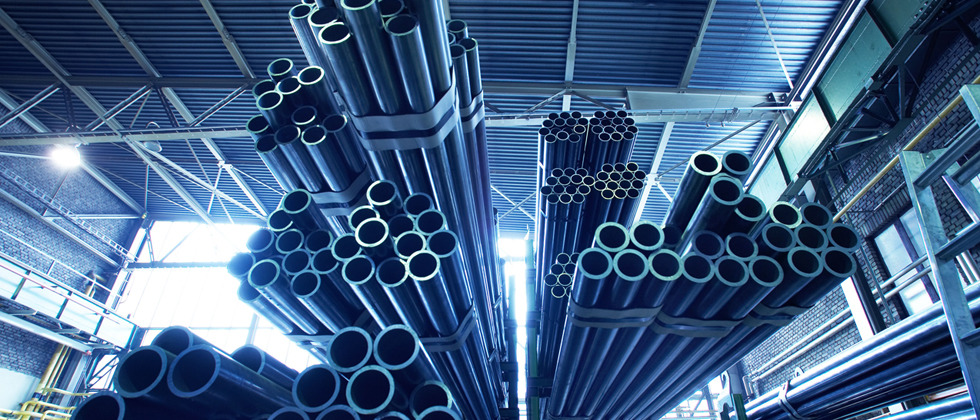
The European Commission has announced the imposition of a definitive antidumping (AD) duty on imports of certain tube and pipe fittings from South Korea, Malaysia and Russia, following an expiry review. The review covered the period from April 1, 2023, to March 31, 2024.
The EC concluded that tube and pipe fittings from the countries in question were sold at dumped prices and that the expiry of the measures on the products would likely to lead to the recurrence of dumping. The definitive antidumping duty rates are at 32.4 percent for TK Corporation and 44.0 percent for other South Korean companies, 59.2 percent for Anggerik Laksana, 49.9 percent for Pantech Steel Industries and 75.0 percent for other Malaysian companies, and 23.8 percent for all Russian companies.
The products fall under Customs Tariff Statistics Position Numbers 7307 93 11 91, 7307 93 11 93, 7307 93 11 94, 7307 93 11 95, 7307 93 11 99, 7307 93 19 91, 7307 93 19 93, 7307 93 19 94, 7307 93 19 95, 7307 93 19 99, 7307 99 80 92, 7307 99 80 93, 7307 99 80 94, 7307 99 80 95, and 7307 99 80 98.

Hydnum Steel to present citizen participation results for clean steel plant in Puertollano
Hydnum Steel will present the results of its Citizen Participation Plan on September 9 in Puertollano, where the company is developing its ultra-clean steel plant. This marks a significant step forward in a project that is advancing through final stages of administrative and technical validation, with construction expected to begin at the end of 2025.
The company has received very positive feedback from local stakeholders during a public dialogue held in May. The participation process, involving themed working groups and broad community engagement, reflects Hydnum Steel’s commitment to transparency, sustainability, and integration with the region.
Designated a Priority Project by the regional government of Castilla-La Mancha and highlighted by the World Economic Forum as a leading decarbonisation initiative, Hydnum Steel has secured €60 million from Spain’s PERTE programme for Industrial Decarbonisation.
The future plant will produce 1.5 million tonnes of steel per year using scrap and direct reduced iron (DRI), powered by renewable energy and green hydrogen. A closed-loop water recycling system and AI integration will ensure the facility operates with zero emissions and minimal environmental impact.
Hydnum Steel recently took part in EUROMETAL’s 75th anniversary conference in Luxembourg, underlining its strategic role in the European green steel transition.
EU plate, slab spot liquidity drops amid summer lull
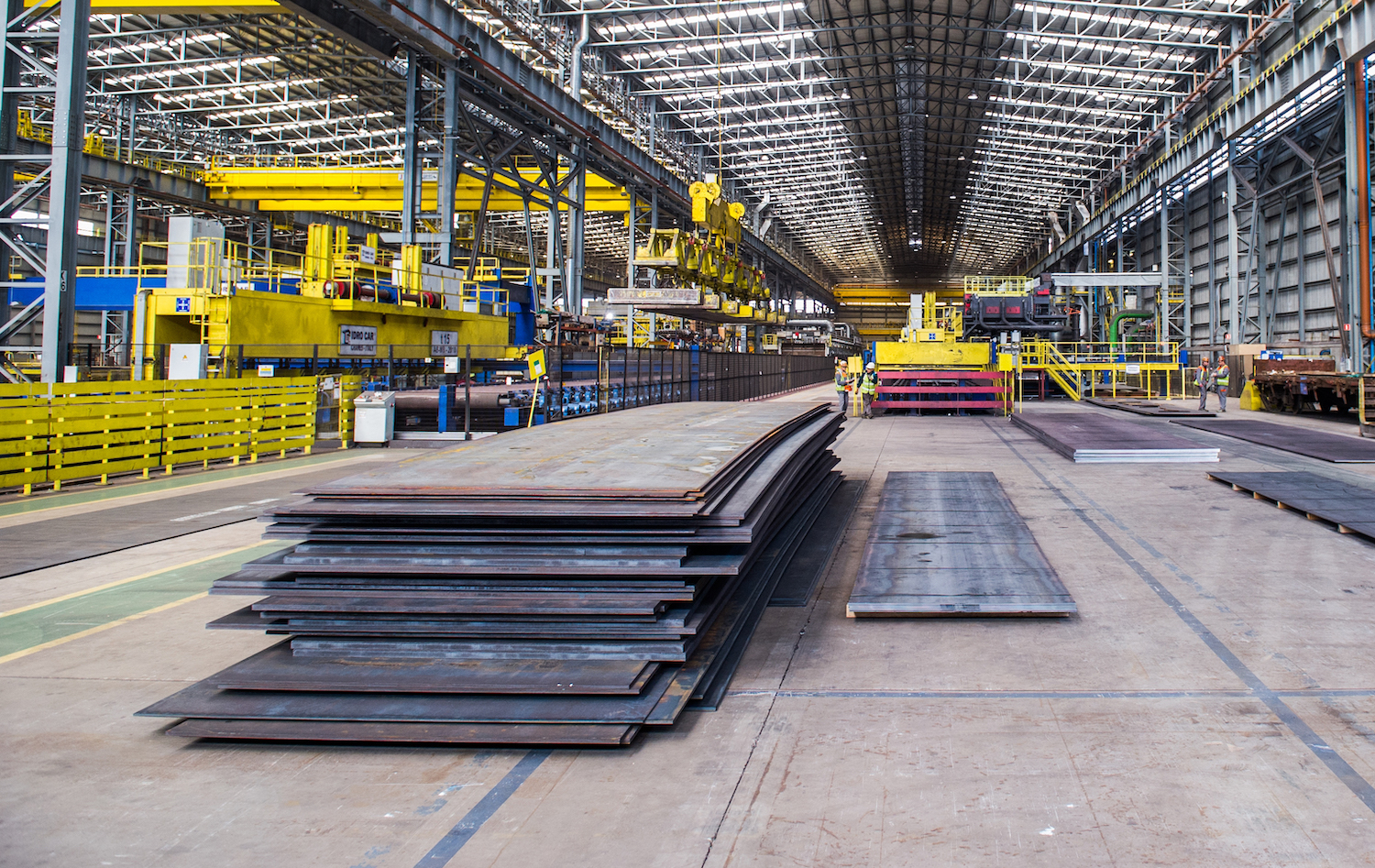
European heavy plate and slab prices remained stable July 11, as sources shared expectations for limited import interest ahead of CBAM and dwindling summer demand.
“We are having discussions for re-stocking needs, but we have to give discounts to get these orders,” one mill source said, who, despite the reduced buying interest, reported otherwise stable market conditions and forward views. “It’s not surprising, there is not so much competition in the market from imports.”
The same source also referred to minimal interest in imported plates due to the upcoming Carbon Border Adjustment Mechanism.
A trader also recognized a preference for domestic heavy plates and slabs. He said, “Imports are not pleasant and not too attractive considering unloading and transport costs. It will be similar to re-rolling.”
Looking forward, the trader said, “After summer, everyone will try to move domestic prices up, and for imports, everyone is concerned about CBAM, but unless imports have guaranteed customs clearance for this year, buyers won’t budge.”
A service center source also pointed to quieter spot conditions on the week, citing summer holidays and a general slowdown across all construction and automotive-based industries in Europe.
Platts assessed plate at Eur595/mt ex-works Italy and in Northern Europe at Eur650/mt ex-works Ruhr, both stable on the day.
Platts assessed slab at $495/mt CIF Italy, stable week over week.


US imposes 30% tariffs on EU, Mexico imports from Aug. 1
The US will impose 30% tariffs on all imports from the EU and Mexico from Aug. 1, a development that is expected to impact trade in key commodities including steel and energy, as well as automotive products.
The 30% tariffs were announced by US President Donald Trump in letters sent to the presidents of Mexico and the EU, which he posted on Truth Social July 12.
The EU and Mexico are the leading trade partners of the US.
The US is the EU’s second-largest export market for steel, while Mexico leads exports of automotive products to the US.
In the letter to Mexican President Claudia Sheinbaum, Trump said Mexico “still has not stopped the cartels,” and as a result, the US will start levying the tariffs. However, he added there will be no tariffs on Mexico if it builds or manufactures products in the US.
Similarly, Trump in his letter to EU President Ursula von der Leyen said the US had decided to end its trade deficit with the bloc and would go ahead with the tariffs, unless the EU decides to build or manufacture products in the US.
It was not clear if the current tariffs on Mexico would conflict with exemptions on trade of goods signed under the USMCA trade agreement.
Both letters mentioned that these tariffs are separate from the “sectoral tariffs” and any “good transhipped to evade this higher tariff will be subjected to that higher tariff.”
In the week starting July 7, Trump sent letters to several countries imposing a varied range of tariffs on its key trade partners, including Canada, another key supplier of commodities such as steel, natural gas, and beef.
Metals sector uncertainty
From a metals perspective, the change in tariffs brings uncertainty to steel, aluminum and copper markets, as the US already has a separate 50% tariff on each of these commodities, considered critical for the economy and energy transition.
The 50% tariffs on steel imports and reciprocal tariff threats have led the US construction industry to postpone projects due to uncertainty about prices.
Since the start of 2025, Platts-assessed TSI US HRC EXW Indiana reached a year-to-date high of $950/st on March 12, the day when Trump announced the first round of tariffs. However, prices since those highs have fallen 8.4%, reaching $870/st July 11. Platts is part of S&P Global Commodity Insights.
The EU exported about 17% of its exportable finished steel products to the US in 2024, according to Comex data.
EU steel product exports remained steady in 2024 year over year, according to S&P Global Commodities at Sea data.
From an agricultural perspective, markets in Mexico will be watching for the next developments as the country is a key importer of US corn, pork, chicken and beef.
Mexico also supplies crude oil to the US, while the US is a major supplier of refined products to Mexico.
The US runs its highest trade deficit with Mexico, according to the US Census Bureau.

Turkey gains export advantage in EU with EAF steelmaking
Barış Yılmaz, a member of the Turkey’s Stainless Industrialists and Business Association (PASİD) and general manager of Komtrade Stainless Steel, has delivered a comprehensive presentation at the Steel Industry Supply Chain International Forum in Taiwan on the production capabilities of Turkey’s steel and stainless steel industries, as well as the country’s green transformation efforts under the EU’s Carbon Border Adjustment Mechanism (CBAM), emphasizing that Turkey is above the global average in low-carbon steel production, which gives the country a competitive edge in markets with strict environmental policies such as the EU.
Stating that Turkey will pay less carbon tax under the CBAM with its production structure and planned green transformation initiatives, Mr. Yılmaz said, “With proper planning, Turkey can become one of the fastest countries in reducing carbon emissions worldwide.”
In Turkey, 70 percent of steel production is based on electric arc furnaces. This rate is above the global average and results in lower carbon emissions. According to Yılmaz, this production structure distinguishes Turkey from countries like South Korea and Vietnam, where only 25 percent and 10 percent of steel production is based on electric arc furnaces, respectively.

Program agreement signed to revitalize Piombino steel hub in Italy
During the Ukraine Recovery Conference held in Rome, a program agreement was officially signed to support the revitalization of the Piombino steelmaking hub in Tuscany. The initiative, led by a public-private partnership, represents a key step toward the reindustrialization of the area and the economic regeneration of the local community.
The agreement was signed by Metinvest Adria – a joint venture between Ukraine’s Metinvest Group and Italy’s Danieli Group – together with the Italian Ministry of Enterprises and Made in Italy (MIMIT), the Ministry of Infrastructure and Transport (MIT), the Ministry of the Environment and Energy Security (MASE), the Ministry of Labour and Social Policies, the Tuscany Region, the Municipality of Piombino, and other local institutions.
The project includes the construction of a next-generation steel plant in Piombino, with a total investment of approximately €2.5 billion, of which €1.5 billion will be allocated to cutting-edge technology supplied by Danieli. The agreement also provides for a development agreement with MIMIT, supported by a SACE guarantee (SACE is Italy’s export credit agency), which will be activated upon approval by the Ministry of Economy and Finance (MEF).
According to Metinvest Adria, the plan will create approximately 1,100 stable jobs, including both direct and indirect employment. The agreement is part of a broader roadmap that has already included the signing of a union agreement with relevant trade organizations.
As previously reported by SteelOrbis, the formalization of this program agreement marks a natural continuation of the process started with the establishment of Metinvest Adria and the subsequent development agreement signed by JSW Italy for the modernization of the existing rail production mill. The signing confirms the shared goal of transforming Piombino into a strategic European hub for green steel production.
“This is not just an industrial project,” stated Yuriy Ryzhenkov, CEO of Metinvest Group, “but a concrete example of reconstruction and international cooperation between Italy and Ukraine.”
The Piombino site is thus positioned to become a European reference point for low-emission steelmaking, leveraging state-of-the-art, energy-efficient, and environmentally sustainable technologies, while also strengthening strategic ties between the two countries.

European longs market remains weak amid sluggish demand
The sentiment in the European longs market has been mostly unchanged this week, with market players still reporting a pessimistic outlook for the coming days.
The complicated international situation – the Houthi attacks in the Red Sea, new turnarounds in US tariff policies and the euro-dollar exchange rate still being unfavorable for European sales – as well as the approach of the summer holidays are pushing operators aside and making them wait for better times.
The local Italian longs market showed new declines in rebar prices, “but believe me, no one is selling at these levels,” an Italian source at a mill commented. “It’s just that everyone is getting more and more aggressive, and it is causing a market stalemate,” he concluded. According to SteelOrbis’ information, in fact, local rebar prices in Italy have declined by a further €10/mt on the lower side this week, standing at €220-230/mt ex-works base (€485-495/mt ex-works including regular extras), even though some sources still report €240/mt ex-works base (€505/mt ex-works including regular extras). Rebar demand in the Italian market remains weak, still covered by adequate offers.
Local Italian mills and traders are still reporting logistic difficulties, with few trucks available for deliveries, very high prices and traffic jams that will start with the beginning of the summer season.
The situation is similar in the Italian wire rod segment, where prices have remained stable week on week but “the market response is very slow”, a source said. Local wire rod prices have been reported at €610-625/mt delivered for drawing quality and at €595-610/mt delivered for mesh quality.
In the eastern Europe, especially Poland and Slovakia, sources have reported a slow market for both rebar and wire rod, with rebar prices in Poland reported at around €570-575/mt delivered.
As for exports, ex-Greece rebar and wire rod prices showed no changes, remaining at €575/mt FOB and €570/mt FOB, respectively. Ex-Spain rebar prices to UK ports, instead, showed a €5-10/mt decline compared to last week, standing at €545/mt FOB. Ex-Italy rebar has been reported at €540/mt FOB.
In the import market, Turkish rebar and wire rod have been reported at €480-490/mt CFR and €490-495/mt CFR respectively, while prices for Algerian material have been reported at €510/mt CFR for both. Egyptian rebar has been reported at €490-495/mt CFR, whereas wire rod stands at €500-505/mt CFR. Malaysian and Indonesian wire rod have been reported at around €490/mt CFR in both cases.
€1 = $1.17 (European Central Bank, July 10)

German steel group receives permits for green steel production plants
German Stahl-Holding-Saar Group and its subsidiaries German steel plate producer Dillinger, long steel producer Saarstahl, and its subsidiary ROGESA have obtained federal permits for constructing a direct reduction plant and two electric arc furnace plants in Dillingen and Völklingen. The permits mark a major milestone in their transition to green steel production.
The direct reduction plant in Dillingen will supply both production sites with reduced iron pellets, while the electric arc furnaces will convert these pellets into CO2-reduced steel using scrap metal. The facilities are central components of the Power4Steel decarbonization project, making the companies the first German steelmakers to receive operating licenses for such equipment.
Stefan Rauber, CEO of Dillinger and Saarstahl, said the permits bring the company closer to achieving CO2 neutrality by 2045, with 70 percent of the production volume expected to be CO2-reduced by the early 2030s. The approval process benefited from early public engagement and cooperation with state authorities.
The Power4Steel project aims to establish climate-friendly steel production in Germany’s Saarland region through advanced environmental technologies.