


EUROMETAL calls for practical reform and steel derivatives restrictions at EU Implementation Dialogue on Rules of Origin
EUROMETAL, together with major European steel producers and industry associations, participated in the European Commission’s Implementation Dialogue on EU Rules of Origin: A Business Perspective, hosted by DG TAXUD and chaired by Commissioner Maroš Šefčovič, responsible for Trade and Economic Security.
The dialogue brought together policymakers and industry stakeholders for a constructive exchange on how to modernise and simplify the EU’s rules of origin (RoO) — a key component of customs law that increasingly impacts trade defence, sustainability policies, and access to global markets.
A strong steel industry presence
EUROMETAL President, Alexander Julius, joined a broad coalition of stakeholders from across the steel value chain — including major producers, processors, and trade associations — to deliver a unified message: rules of origin must become more practical, consistent, and fit for purpose in a changing global trade environment.
The discussion focused on aligning RoO with business realities, eliminating national inconsistencies, and ensuring rules support the EU’s climate and industrial policy goals.

Key Messages from Commissioner Šefčovič
Commissioner Šefčovič acknowledged the critical role of rules of origin and committed to a comprehensive reform process.
His main takeaways included:
- Simplification and sector-specificity: RoO should be easier to apply and adapted to the specific characteristics of each sector. A sector-by-sector approach was welcomed by all participants.
- Harmonisation across the EU: Inconsistent implementation by Member States creates major challenges. Harmonising RoO application is essential to restoring fairness and reducing internal market barriers.
- Digitalisation as a cornerstone: The upcoming Customs Reform will introduce a European Data Hub, digital product passports, and AI-driven compliance tools — with particular attention to SME accessibility.
- Strategic role of RoO in trade defence: Šefčovič confirmed that rules of origin are increasingly linked to CBAM, safeguard measures, and anti-circumvention efforts — especially in critical sectors like steel and aluminium.
- Post-2026 steel strategy: A new framework for EU steel safeguard measures is under development, with updates expected in late summer 2025. The EU will also seek closer coordination with the US on tackling global overcapacities.
EUROMETAL’s contributions
During the dialogue, EUROMETAL highlighted the complexity faced by steel distributors and service centers in complying with origin requirements, particularly when products are transformed or sourced across multiple jurisdictions.
Key recommendations included:
- Align RoO with new climate and circular economy goals, including CBAM and the definition of “green” steel.
- Develop practical rules for recycled content, “melted and poured” criteria, and value-added processing.
- Ensure digitisation efforts are interoperable and accessible to SMEs, which represent the backbone of the steel distribution sector.
- Introduce specific origin-based restrictions on steel derivatives, to prevent circumvention of EU safeguard and trade defence measures. EUROMETAL stressed that derivatives must not become a loophole undermining the effectiveness of existing protections.
EUROMETAL also stressed the need for predictable, harmonised rules that can be easily implemented across all 27 Member States — avoiding costly delays and inconsistent customs decisions.

Next steps and continued engagement
The European Commission called on all participants to submit written, sector-specific input. Feedback will inform the design of future RoO reforms and help guide customs digitalisation and trade negotiations.
Šefčovič closed the session by reaffirming the Commission’s openness to continued dialogue: “We want to get this right — and that means listening to you. Give us practical, detailed input so we can build solutions that work on the ground.”
EUROMETAL will continue to coordinate closely with its members and the broader steel community to ensure that the voice of the distribution and service sector — including concerns on steel derivatives — is fully reflected in the EU’s evolving trade and customs framework.

EUROFER calls for emergency measures as US Tariffs crush EU steel exports
The delay and ongoing uncertainty about a deal on tariffs between the EU and the U.S. further worsens the crisis for the European steel industry.
U.S. steel tariffs at 50% are adding fuel to an already explosive situation, putting the sector at risk of losing all its exports to the U.S. and facing a surge of deflected trade flows redirected from the U.S. to the EU market.
The lack of bold and timely implementation of the Steel and Metals Action Plan is further accelerating the sector’s deterioration, says the European Steel Association.
“We cannot continue with U.S. steel tariffs at 50%. As we lose our major export market, the European market is being flooded by the steel the U.S. is no longer absorbing. We are particularly disappointed by the absence of a joint EU-U.S. approach preserving EU steel exports to the U.S. and tackling trade diversion towards the EU on top of massive global overcapacity — now 5 times larger than the EU’s total steel production. This glut is destroying entire value chains, undermining industrial resilience, defence capabilities and the green transition”, said Dr Henrik Adam, President of the European Steel Association (EUROFER).
“What is even more concerning is that while the U.S. — regardless of the administration — has consistently pursued a bold industrial strategy, the EU has fallen behind. The implementation of the Steel and Metals Action Plan has yet to deliver tangible results. Any potential benefits from the last EU steel safeguard review have been entirely wiped out due to its low level of ambition and the disastrous impact of the U.S. tariffs, which is only beginning to materialise”, added Dr Adam.
Benefitting from lower energy costs, green subsidies, Buy U.S. steel policy and strong trade protection with the reactivation of steel tariffs, the U.S. steel industry first regained price competitiveness versus imports, and then has invested in 8-9 million tonnes of new capacity. The increase to 50% blanket tariffs is now expected to further boost U.S. domestic capacity utilisation securing volumes for newly built production lines by reducing imports and ramping up domestic output. In stark contrast, the EU lost 10 million tonnes of capacity in 2024 alone — its highest annual closure rate ever. Before the 50% tariff hike, the EU was the third-largest exporter to the U.S. after Canada and Brazil, accounting for around 4 million tonnes of steel exports.
Meanwhile, EU policy responses fall short. The Affordable Energy Action Plan and the Clean Industry State Aid Framework have not delivered substantial energy price relief for energy-intensive industries. The root cause — the EU’s electricity market design, which continues to deliver uncompetitively high prices — remains unaddressed, despite being central to the Draghi report.
The most important initiatives of the Steel and Metals Action Plan are expected only after summer: in September, the new ‘highly effective trade measure’ to replace the current safeguard to protect EU steel capacities, and by December, a proposal to close major loopholes in the Carbon Boarder Adjustment Mechanism (CBAM) – including resource shuffling and also export leakage, which has already been delayed.
“The game changer for a business case in Europe is not there yet. If these key measures on trade and CBAM are addressed by the European Commission as half-heartedly as energy prices, we will inevitably continue to see more capacity closures, job losses, and stalled decarbonisation projects. If that happens, there will only be losers: EU steel producers wiped out by cheap, carbon-intensive imports, and an EU transition and climate ambition that falter without solid industrial foundations”, concluded Dr Adam.


Germany’s Salzgitter steel certified for military use
Steel produced by Salzgitter has been approved for use in the defence industry by Germany’s armed forces, the company said on 8 July.
The approval allows the company to strengthen its position in the growing market for military applications.
The steelmaker received approval from the German Military Technical Center 91 (WTD 91) in accordance with TL (Technical Delivery Conditions) 2350-0000. This officially approves steel grade SECURE 500 in 6-16 mm thicknesses for military use, including vehicles or protective systems.
Salzgitter is already in the approval process for additional steel grades and after obtaining approval, plans to offer a range of products under the SECURE brand name for military use.
Growth of the European defence sector has been widely discussed in the market this year, and certification of products by the militaries of different EU states was identified as one of the issues that could slow down the process. Market participants said that although it is relatively easy for a steelmaker to alter its steel with additional heat treatment to achieve greater hardness for the needs of the defence sector, the certification process was more time consuming.
“Our SECURE 500 steels are quenched and tempered and feature a fine martensitic microstructure. With the granting of TL approval, these steels are now also approved for use by the German Armed Forces – this is a great success after extensive testing,” Thorsten Gintaut, managing director sales of Salzgitter Ilsenburger Grobblech said.
Earlier this year, two Central European heavy plate producers resumed operations partially supported by demand from the defence sector, namely Liberty Steel Galati in Romania and Częstochowa Steelworks in Poland.
In June this year, the European Commission proposed new measures to facilitate EUR800 billion of investment in the defence sector over the next four years. The investment is part of the vision set out in the White Paper for European Defence-Readiness 2030, which outlined actions needed to boost Europe’s defence preparedness.
Maria Tanatar Associate Director, Steel and Green Steel

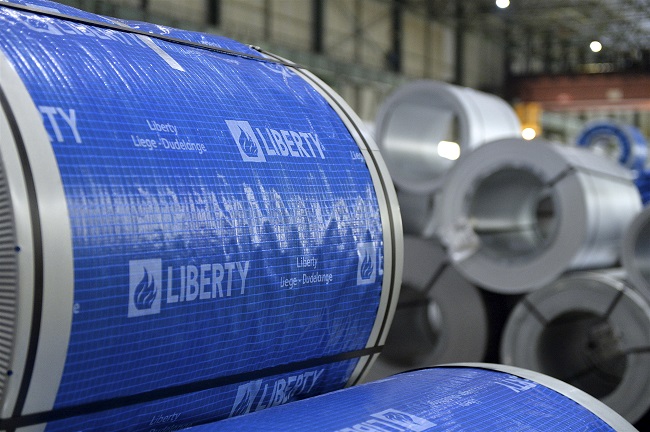
ArcelorMittal to acquire Liberty’s Belgian steel assets
Leading steelmaker ArcelorMittal’s offer for galvanised steel production lines in near Liège, Belgium, has been accepted by trustees managing the distribution of assets for Liberty Galati’s Belgian operations, following its declaration of bankruptcy back in April.
The agreement, signed today, authorises ArcelorMittal Belgium to take over all facilities at Liberty’s Flémalle plant, including hot-dip galvanising line Galva 5, repair lines, and the water treatment plant.
“The galvanising line in Flémalle will allow us to expand our ability to manufacture a high added-value product for our automotive and construction customers across Europe,” said CEO of ArcelorMittal Belgium, Frederik Van de Velde. “We look forward to working with the skilled team in Flémalle and to restoring the plant to operating at a world-class level.”
ArcelorMittal expects to finalise its acquisition in the coming weeks, and will complete approximately nine months of maintenance and investment work to restore the line as production at the site has been inactive for a prolonged period.
ArcelorMittal originally owned the Flémalle assets, but sold the plant – and many of its other European assets – to Liberty to satisfy the European Commission’s competition concerns connected to its 2018 acquisition of Italy’s Ilva, and its Taranto steelworks.
In the meantime, ArcelorMittal has been supplying steel to Flémalle during Liberty’s tenure, and is said to have been a substantial creditor of Liberty Belgium prior to its bankruptcy. ArcelorMittal has since exited its stake in Ilva – renamed Acciaierie d’Italia – effectively bringing much of the last seven years of M&A full-circle.
Liberty’s other assets are suffering from financial challenges across Europe: its Dudelange site in Luxembourg declared bankruptcy in late 2024, and attempts to find a buyer faltered back in May after Turkish steel group Tosyali Holdings withdrew from the deal, citing European safeguard amendments.
In the UK, Liberty Special Steels is also facing liquidation or sale, with its recent winding up petition adjourned for eight weeks to 16 July, in order to finalise a potential deal with a “third party purchaser.”
Benjamin Steven Journalist, Steel

ADI continues talks with potential buyers
The extraordinary administrators of Italian integrated steelmaker Acciaierie d’Italia (ADI) are continuing negotiations with interested buyers, the steelmaker said earlier this week.
The interested parties remain the same – an Azerbaijani consortium led by Baku Steel, Indian steel company Jindal Steel and the United States investment fund Bedrock Industries Management.
“The shared objective is to identify solid, sustainable and long-term industrial solutions,” an ADI spokesman said.
The ADI administration is paying particular attention to the required gas supply development for the green transition of the mill, including replacement of blast furnaces (BFs) with direct-reduced iron and electric-arc furnace (DRI-EAF) production.
ADI has been inactive in the market over the past month. In late June, Minister of Enterprise and Made in Italy (MIMIT), Adolfo Urso, told trade unions that all ADI’s blast furnaces (BFs) were at risk of closure. Italian authorities have been negotiating the sale of the plant to several potential buyers, including Baku Steel and JSW Steel.
On 4 July, the MIMIT held a meeting regarding energy supply for the decarbonization of ADI. The next meeting will take place on 8 July.
Maria Tanatar Associate Director, Steel and Green Steel

EU HRC import prices edge lower, but buying appetite limited
European hot-rolled coil import prices shifted lower July 9, as sources pointed to increased competition with bearish domestic prices and the underlying risks of safeguards, poor demand and CBAM as limiting appetite for imported material.
The flat steel market sentiment persisted largely negative toward prices and demand characteristics as the fundamental drivers remained unchanged amid the summer lull, with an increasing number of sources slowing down operations ahead of holidays across the value chain.
A North European service-center source outlined further uncertainty surrounding price direction, referring to high competition between mills as some continue to push to fill out order books for the late summer period. “Some mills are still trying to get good order books, so are dropping offers, it is very competitive,” the source said. “We have heard mill offers at Eur540-550/mt [ex-works Ruhr], while others are offering at Eur580/mt, but now it is very wide.”
A mill source acknowledged the lower offers being floated in the market but remained steadfast that it was not universal across the market. “They must fill order books for the summer period, but it is kind of crazy going down to that level, even when it’s not busy, the conclusion must be that some mills are really struggling, but we are not going down to that level,” said the source, who also shared expectations of price recovery in September.
A south European source summarized the competitiveness of the current market conditions, saying that the market “is a fight, and demand is not enough for everybody.”
Discussing the import market, market participants remained focused on the upcoming CBAM legislation, split between its potential to offer support but the short-term risk of incurring additional safeguard duties, and the diminishing differential to the domestic HRC prices. Although some in the market suggested that imports could increase significantly before 2026 as many attempt to avoid mandatory carbon-reporting requirements associated with the CBAM legislation, others remained skeptical due to the current, unfavorable market conditions.
“CBAM will add pressure to the market, but imports are very difficult and risky now,” an Italian trader said.
The North European service-center source said, “It is difficult to put a figure on the price, and it could be a challenge to import material at a good level with the price difference [to domestic] not being huge.”
Platts assessed imported HRC at Eur470/mt CIF South Europe and Eur470/mt CIF Antwerp, down Eur5 and Eur10, respectively, on the day.
Meanwhile, domestic HRC in Northern Europe was assessed at Eur550/mt ex-works Ruhr, and in Southern Europe at Eur530/mt ex-works Italy, both stable day over day.
Platts is part of S&P Global Commodity Insights.
Charles Thompson | Devbrat Saha | Riley Waters


EU long steel prices steady, but weak demand and summer lull weigh on sentiment
European domestic long steel prices remained largely stable in the week to July 9, as subdued demand and the start of the summer holiday season continued to limit market activity and weigh on sentiment.
Rebar prices in Northwest Europe held within a narrow range, with tradable values reported at Eur600-615/mt delivered in Benelux, and Eur615-630/mt delivered in Germany, depending on volumes.
“The holiday season has started, and there’s no real demand at the moment,” a distributor said. “Mills are hoping to get some orders, but most are preparing for maintenance over the next four to five weeks.”
In Southern Europe, rebar offers remained limited, with market participants focused on September delivery and few expecting significant activity until the second half of August.
Across the merchant bar and medium sections, prices showed little change, despite expectations from some mills to raise offers post-holiday.
“Some mills like Arcelor have hinted at a price increase for beams after the holidays,” a service center source said. “But we’ve seen this strategy before — take in orders first, and then hold prices steady.”
Carbon-accounted steel premiums were heard offered in the Eur20-40/mt range, though sources stressed that real demand for green-certified long products remains thin.
Platts assessed Northwest European rebar at Eur610/mt ex-works, down Eur10 on the week. Platts assessed medium sections at Eur775/mt delivered, up Eur5 on the week.
Platts assessed both carbon-accounted rebar and carbon-accounted medium sections at Eur30/mt, stable on the week.

IREPAS: Uncertainties increase in global longs market after US tariff hike
The balance between supply and demand in the global long steel products market continues to deteriorate, further exacerbated by the recent decision by the Trump administration to raise import tariffs on steel products to 50 percent. The move, introduced without prior notice, took many exporters by surprise and has added a new layer of instability. These newly imposed trade barriers – protective for a few but punitive for many – are forcing market participants to reassess their commercial strategies toward the US market.
In the meantime, buyers have adopted a wait-and-see stance, amid speculation that countries such as Mexico and Canada may seek partial or full exemptions from the measure. At the same time, discussions among suppliers, traders, and end-users have intensified over who will absorb the additional cost for shipments already en route or arriving at US ports.
The most acute difficulties are being felt by US importers, many of whom are now facing substantial losses or are being forced to cancel pending shipments. While domestic demand in the US remains stable, local long steel prices are starting to rise under the protective umbrella of the new duties. However, these prices are still not high enough to justify new import bookings. In addition, persistently high interest rates continue to weigh on investment and are slowing down construction activity. As it stands, only a few domestic producers are truly benefiting from the current situation.
Globally, competition from China and Southeast Asia has become increasingly difficult to match. Beijing’s economic stimulus efforts have failed to deliver the expected results, and long steel exports from the region remain strong, putting pressure on other Asian exporters. In Europe, cheap imported material from Asia – further encouraged by the weak US dollar – is weighing on local producers, who are also dealing with rising energy costs. Unless demand picks up after the summer break, production cuts across the region cannot be ruled out.
Amid ongoing volatility and uncertainty, the long steel market remains structurally weak. Hopes for a reduction in interest rates – both in the US and in Turkey – represent the only glimmer of optimism, though concrete signs of relief have yet to materialize. For now, July and August are expected to be transitional months, with a potential market recovery pushed back to the post-summer period.


Italy’s Marcegaglia Group secures 2,000th crane produced by Germany’s Liebherr
The official delivery ceremony for a mobile harbor crane (MHC) was held yesterday, July 8, at Italian steel producer Marcegaglia’s Ravenna plant, as reported in the company’s official press release. It is the fifth MHC to support its coils quay loading and unloading activities.
The LHM 600 crane was built by Liebherr group, an important German manufacturer of heavy machinery and equipment, as well as the first inventor of the mobile crane in the 40s. Liebherr and Marcegaglia have a long-lasting collaboration, so much so that the German company took the opportunity to celebrate the installation of their 2,000th crane produced, which coincided with the delivery to Marcegaglia’s Ravenna plant.
“One of our group’s strengths is the great logistical efficiency, also thanks to our significant presence in the port of Ravenna. Since 2001, we have also included the Liebherr family and the Liebherr Group as part of our vast network of strategic suppliers, with whom we have established solid relationships of reliability, loyalty, sharing of objectives and values” Antonio Marcegaglia, president and CEO of Marcegaglia Steel, said.
His words were also shared by Patricia Rüf, third generation of the Liebherr family and member of the board of directors of the Liebherr-International AG holding company, who stated, “I wanted to be present here in Ravenna to underline the solid bond of partnership we have with Marcegaglia, a family business like ours, and with which we have been collaborating successfully for over twenty years.”
Italy’s Marcegaglia group is a world leader in steel processing, and its production focuses in particular on tubes, coils and sheets. Marcegaglia annually produces about 6.5 million mt of finished products and employs about 7,800 people.

France calls for stronger EU tariffs on Chinese imports to protect industry
French finance minister Eric Lombard has urged the European Union to broaden and strengthen tariff measures against Chinese imports, warning that China’s production dominance across key sectors could severely damage Europe’s industrial base.