

IREPAS short range outlook: July 2025
Uncertainty spikes further in global longs market due to 50 percent tariffs in US
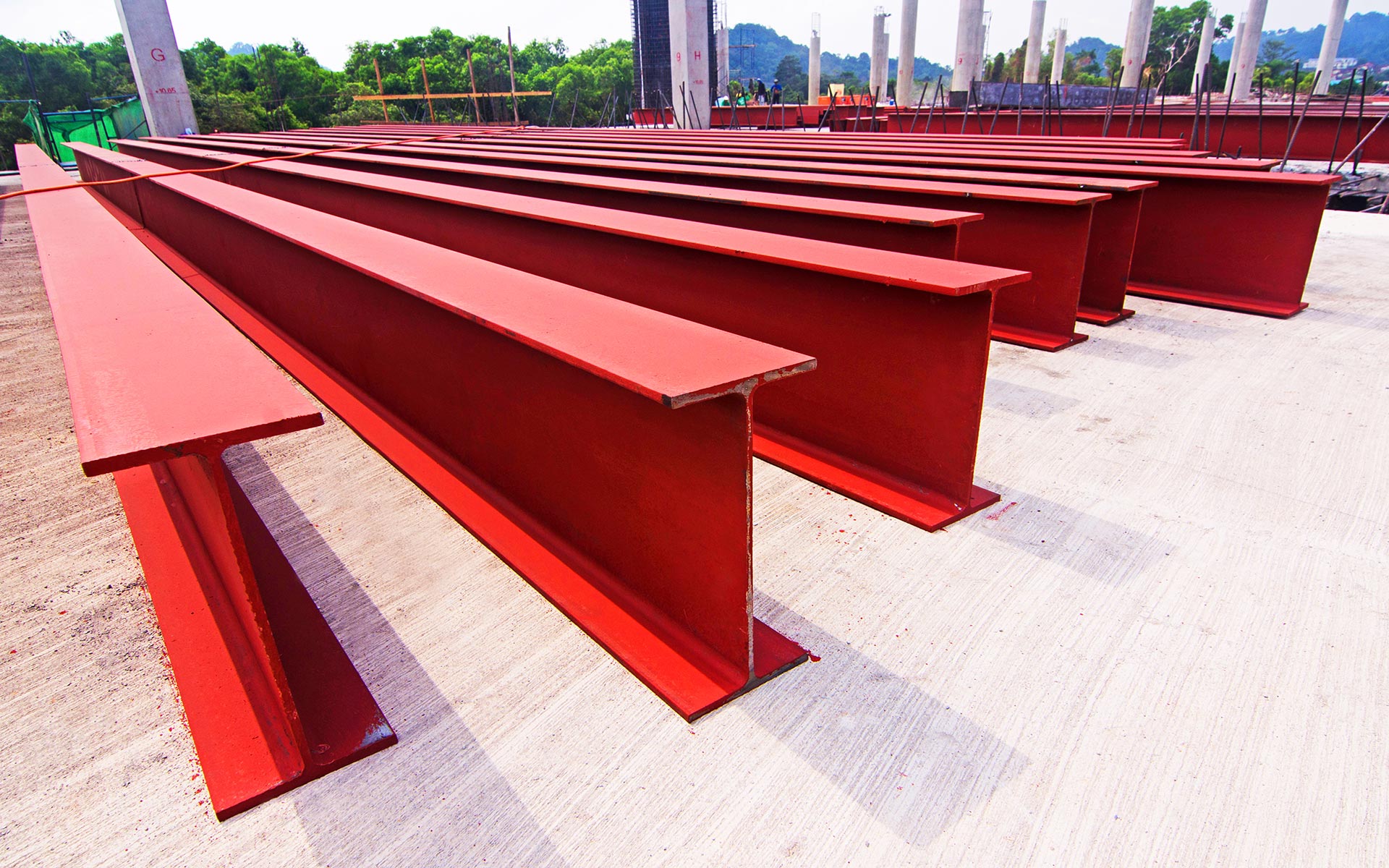
The business environment in the global long steel products market, particularly in terms of the demand and supply balance, has not improved meaningfully. Other than that, the situation has worsened as the Trump Administration’s increase of US import duties up to 50 percent caught many exporters off guard. The uncertainty created by the Trump administration by doubling tariffs is terrific for those who are protected and terrifying for those under attack. These sudden changes in duties and tariffs make exporters to the US think twice about exporting and make it very difficult to come to a decision.
Buyers wait and see as outcome of talks awaited
Rumours about talks with Mexico and Canada and other countries’ approach to the US administration to see if they can obtain an exemption in any sense have put buyers into wait-and-see mode. On the other hand, huge debates and negotiations are being carried on between suppliers, receivers, and traders about who should be responsible for the extra burden for those cargoes which arrived at US ports after tariffs were raised to 50 percent.
Importers into US face serious difficulties
Importers into the US continue to face serious challenges, especially with cargoes already on the water or ready for shipment under L/C terms. Many are forced to either absorb heavy losses or cancel shipments altogether.
Prices creep up in US due to new 50 percent tariffs, consumers frustrated
In the US, demand remains moderate, but prices have started to creep up – largely due to the protection of the newly imposed 50 percent duty on all steel imports. Despite this, domestic prices are still not strong enough to justify new import orders. Meanwhile, persistently high interest rates are discouraging new investments and slowing down construction activity. In summary, aside from a few US domestic mills benefiting from the current trade environment, most steel consumers and processors remain frustrated with the situation.
Impossible to compete with exports from China and SE Asia
Elsewhere, it is not possible to compete with exports from China and Southeast Asia. Stimulus programs to help the market in China have not been effective at all. We can assume they will keep exporting heavily, which will mainly hit the other exporters in the region.
Europe flooded with cheap imports, regional mills face high costs
The weak dollar and displaced tons from Asia have encouraged imports and so Europe is flooded with cheap imported steel, while energy costs for European mills have gone up. Buyers have taken early and extended holidays, but scrap prices stay high. European mills are not able to cover melting costs. Unless demand picks up after the summer break, production cuts are likely.
Expectations of interest rate cuts provide some glimmer of hope
There is still some hope among market players that some of the recently announced tariffs will backfire. Expected interest rate cuts may be the only positive so far. However, it seems the US Federal Reserve will wait a little longer to see the impact of tariffs on inflation. Interest rate cuts are also expected in Turkey, though demand there is still low. The only activity is seen in construction in the earthquake-hit region and in the renewal of old buildings.
Market status unstable, short-term outlook unsatisfactory
The current status of the market can be described as unstable and the competition in the market is very strong all around. It is very difficult to predict the outlook of the market under the prevailing uncertainty created in the market. The market is structurally weak. Nothing will probably drive the market during July and August until the start of September. Accordingly, the short-term outlook for the market is unsatisfactory.

EUROMETAL: Future of European steel depends on collaboration
As the European steel industry faces historic challenges, the European Federation of Steel, Tubes and Metals Distribution & Trade (EUROMETAL) lately celebrated its 75th Anniversary with a high-profile conference in Luxembourg.
The two-day event gathered over 170 industry leaders to chart a course for the future amid climate policies, trade shifts, and the transition to a low-carbon economy. The Carbon Border Adjustment Mechanism (CBAM), growth of green steel markets, trade defense and regulatory frameworks, and the evolving role of steel distribution in the industrial transition were the key themes in the conference.
Opening the event by underscoring the urgent need for industry alignment and stronger advocacy towards EU institutions as the industry navigates the challenges of CBAM, which is scheduled to take effect in January 2026, climate policy, and regional trade realignment, Alexander Julius, EUROMETAL president, said, “The future of European steel depends not only on innovation and investment, but on collaboration.”
Prominent speakers such as Henrik Adam (Tata Steel Europe), Antonio Marcegaglia (Marcegaglia Steel), Guido Kerkhoff (Klöckner & Co), Edwin Basson (Worldsteel), Axel Eggert (EUROFER), Anthony de Carvalho (OECD) and and Julian Verden (STEMCOR) shared their insights emphasizing the risks and rewards of green steel production; the necessity for clear and fair policies to support European competitiveness; and greater flexibility and specialization in distribution models as clients demand verified emissions data and customized processing solutions. Also, several experts highlighted the role of distributors in driving green demand by integrating Product Carbon Footprints into procurement and customer communications.


EUROMETAL 75th Anniversary: The evolving role of steel distribution
This article is part of a series on steel distribution association EUROMETAL’s 75th Anniversary conference 2-3 July, discussing challenges and opportunities for the sector from its policy background; trade protection; the Carbon Border Adjustment Mechanism; green steel; and the evolving role of European steel distribution.
An oft-neglected aspect of the industrial transition is the growing proximity between steel producers and end-consumers, and in some cases, a perceived isolation of the supply chain’s distributors.
Domenico Martino, Chief Operating Officer of Knauf Interfer, stated in his presentation that direct mill-to-consumer long-term supply contracts for green steel would “redefine distribution’s role,” describing distributors as somewhat hamstrung in their adaptability by the inability of financial institutions to “price-in the opportunities within our reach” when issuing business or credit ratings.
Flexibility is paramount as the steel industry undergoes a period of drastic change and volatility. Attendees at the EUROMETAL Anniversary described a reduced frequency in long-term contract periods; tightening from annual, half-yearly, or quarterly supply agreements to monthly, or purely hand-to-mouth spot market sales.
As described by Ulrich Becker from Becker Consult + Beteiligungs, sales dynamics for European distributors are becoming more volatile – the biggest factor harming distribution profitability. “Lot sizes are decreasing, but frequencies are increasing,” he said.
Becker advised that distributors should attempt to evolve by establishing unique positions in the supply-chain: “business models should be sharpened going forward.” Becker encouraged distributors to ask themselves “what is the value of the company in the wider market?”
A distributor’s size could then be either an advantage, or a disadvantage depending on the specifics of their value offerings across their product and processing lines. “Specialisation will become increasingly important,” Becker concluded.
Indeed, a major theme as the conference neared its conclusion was how distribution could best cope with the evolutions in the steel sector. Ex-President of EUROMETAL, Fernando Espada, lamented growing difficulties in getting customers to pay for distribution’s value-added services, especially given the abundance of market intelligence available to end-consumers and the encroachment of steelmakers into direct-to-consumer sales.
Becker, as well as other conference attendees, instead saw this transparency as an opportunity, giving an example from his consultations with steel end-users. Becker described one project with a large consumer that wanted to better understand how prices asked by distribution mapped to steelmaker and distributor margins – this was not framed as a threat to distributor profitability, but as an opportunity, with the consumer “more than happy” to pay for the distributor’s value-adds when communicated and explained transparently.
As such, Becker, supported by others such as DM Stahl’s Fix, recommended distribution move away from “the sourcing of steel” as its primary business model, focussing more on the specialised processing of material and embracing indexation to evidence the necessity of premiums for their value-added services.
Such an approach would seem to map well to wider economic and geopolitical trends, with demand set to grow in the sustainability, infrastructural, and defense sectors – compounded by increasing protectionism and regionality in worldwide markets and supply chains. While economists at the event – such as World Steel’s Director General, Edwin Besson – emphasised that the steel markets “are, and will remain, very open,” they did expect growing protectionism and regionality in the short-term through mechanisms like melt-and-pour clauses:
“Steel is becoming increasingly attractive around the world,” he said, “it’s moved on from being the child no one wants to talk about.”
As steel’s presence in the spotlight increases, distributors will continue to face a number of challenges, but as identified at EUROMETAL’s 75th anniversary, flexibility and agility could also afford them profitable opportunities.
Benjamin Steven Journalist, Steel


EUROMETAL 75th Anniversary: Wait or adapt to green steel uncertainty?
This article is part of a series on steel distribution association EUROMETAL’s 75th Anniversary conference 2-3 July, discussing challenges and opportunities for the sector from its policy background; trade protection; the Carbon Border Adjustment Mechanism; green steel; and the evolving role of European steel distribution.
“Climate change will dictate not just what happens in our industry, but in every industry,” said World Steel Association Director General, Edwin Basson, at EUROMETAL’s 75th anniversary event.
Indeed green steel, and its place in the wider decarbonisation of the world’s industries was at the forefront of discussions at the conference, especially as the European steel sector ends a time of transition, proceeding toward financial accountability for its sustainability goals.
However, as the steel industry attempts to meet ambitious sustainability targets, distributors continue to lack an official definition or coherent regulatory framework for green steel, limiting their potential to create or assess demand for decarbonised products, and sustaining stockholder reluctance to trade green steel without a customer lined up in advance.
Transparency opportunities
While many distributors prefer to wait for legislative guidance to generate lead markets for green steel, such as the Industrial Decarbonisation Accelerator Act scheduled for later this year under the European Steel and Metals Action Plan, some distributors are already identifying and capitalising on new opportunities afforded by the industrial transition, like Klockner CEO, Guido Kerkhoff.
In one of the day’s most interesting presentations, Kerkhoff demonstrated how Klockner’s approach to green steel marketing, focussing on Product Carbon Footprints (PCF), could be embedded into distributors’ procurement and data services, cleanly illustrating the value of green steel to consumers.
Emphasising the relative affordability of steel in comparison to other products, Kerkhoff showed that steel – in its ubiquity – premised near unparalleled reductions in the embedded emissions content of end-products at minimal cost, attracting value-generating demand for distributors by making transparent to consumers the benefits of adopting green steel over other decarbonisation routes in their supply chains.
“Sure, steel is a big part of the climate problem,” Kerkhoff said – “but I believe it is a much bigger part of the solution.”
Dr Henrik Adam, President of Eurofer, argued similarly in his own presentation, stating that “steel is not bad per se – instead it is highlighted as it is by far the most used engineering material.”
In his presentation, Kerkhoff said that Klockner’s data services found the majority of their customers could be afforded a 25% reduction in their embedded emissions “today” at a “negligible price premium,” seeing the stimulation of green steel demand as the responsibility of not just regulators, but distributors too.
For example, when looking at a passenger vehicle, Kerkhoff cited that switching to green steel from traditional steel – which accounts for 23% of total emissions of the car – would only result in a 0.7% increase in the end-product price. This was similarly evidenced for white goods, like washing machines – with steel emissions’ share at 25% and a 3.6% end-price increase; for onshore projects at 70% and 3.4%; and for offshore infrastructure at an 83% emissions share for steel against a 5.5% end-price increase on green steel inputs.
Kerkhoff was also keen to differentiate structurally between the green steel and traditional steel markets, arguing that while overcapacity continues to depress the traditional steel markets, a well-supported green steel market in Europe would actually fall into undercapacity – potentially creating strong opportunities for prepared distributors in both in terms of end-consumer demand, and import sourcing.
When challenged on whether the transparency-based PCF approach was too burdensome on the distribution sector amid regulatory ambiguities, Kerkhoff colourfully dismissed these arguments as “bulls**t:”
“At the end of the day, we must remember that steel is cheap, and that we do not produce a single ton of it ourselves,” Kerkhoff addressed his distribution colleagues. “We can and have certified everything – it absolutely can be done. It took a while, sure, but the financial cost was relatively minimal,” he confirmed.
“I believe distribution has more opportunities through transparency than we believe,” Kerkhoff said. ”There is no cheaper way – steel, in a majority of products, is by far the most affordable option to reduce total emissions.”
Cosmin Bakai, global purchasing manager of automotive OEM Autoliv, described a “dominance” of Europe in “non-greenwashed PCF green steel.” He argued that sourcing from Europe could still be competitive when accounting for logistical factors, but that European producers and regulators would have to take care not to undermine this potential against aggressive strategies from exporters like China.
Regulatory ambiguities
Antonio Marcegaglia, CEO of Marcegaglia later addressed Kerkhoff’s presentation, stating that while he acknowledged “the point that [distribution] could participate more directly in the decarbonisation of the industry – the mechanisms of protection are too confused.”
This is not a point to be dismissed lightly, as while a PCF approach does allow carbon reductions to be illustrated to consumers, new definitions or changing policies as to what constitutes green steel threaten to massively devalue material held by stockholders if it is not deemed applicable to official decarbonisation targets.
While not addressed by conference speakers explicitly, McCloskey’s discussions on the sidelines identified the Low Emissions Steel Standard (LESS) as increasingly dominant as a potential standard for green steel classification. LESS takes a site-level rather than a product-level assessment in defining to what extent a steel product is authentically decarbonised, incorporating a sliding scale that lessens the value of carbon reductions the greater the constituent share of scrap steel in its production.
As noted by multiple speakers, scrap steel availability is fundamentally tied to historic production levels and an average steel lifecycle of 40 years. Attendees expected that Europe may see a decoupling of ironmaking and steelmaking, importing hydrogen or natural gas produced direct-reduced iron (DRI) from regions with more competitive natural gas or renewable energy balances.
European authorities have recently passed new supportive mechanisms to protect European competitiveness, such as the Clean Industrial Deal State Aid Framework (CISAF) and consultations to simplify and embed export rebates into the Carbon Border Adjustment Mechanism (CBAM). Yet, as was a common theme at the conference, market stakeholders have little confidence that policymakers will be able to design legislation that properly appreciates the nuance of physical trading and manufacturing. Marcegaglia specifically criticised recent energy subsidy proposals that incorporate far-reaching claw back mechanisms, making it “almost impossible” to assess financial exposure and optimal business strategies.
“Protectionism cannot be the only answer, we cannot allow European industry to be overly isolated,” Marcegaglia said.
Much of the green steel debate centered around how far Europe should erect trade barriers to protect against deindustrialisation, with overprotection viewed as potentially isolating European exporters from global supply chains. It was suggested that European industries should become better integrated at a supranational level, such as positioning renewable energy infrastructure in the member states best-suited for renewables generation, and ensuring interoperable deployment of national industrial support mechanisms.
Eurofer’s Dr Adam also warned against relying too heavily on single paths to steel sustainability, stating that Europe “should not put all its eggs into one basket.
“[Carbon Capture Systems] were preferred, until their death,” Adam said, “but why can we not use and be credited for these strategies for the mid-term?”
European steelmakers are already postponing or cancelling their decarbonisation projects on the basis of a lack of economic viability, including the immaturity of dependent markets like green hydrogen or direct-reduced ironmaking. Many of the projects promising green steel production globally are still in their infancy, meaning distributors lack insight into both the realities of future green steel products, and how these products will be accounted under different decarbonisation frameworks.
“Of course, we should be a leader in decarbonisation,” said Marcegaglia, “but to have only recently incorporated discussions on competitiveness is completely absurd. Why are we, as Europe, listing what industries we should protect? Every industry should be protected!”
Certainly, while attendees at the conference had much to disagree on, one point of unanimous agreement was that the steel industry’s decarbonisation targets – and by extension the EU’s as a whole – would not be met in time, though this perceived slowing in progress was not once used to argue an abandonment of sustainability as a whole.
“More than anything, young people believe in decarbonisation, so it is definitely coming,” said Julian Verden, Managing Director of STEMCOR. “We’re all going to need to invest in it little by little to ensure it happens for them.”
Eurofer’s Dr Adam illustrated the other side of the coin: “we must ensure with our own hands, that our grandchildren have jobs that are not just counting money – or pouring beers.”
Benjamin Steven Journalist, Steel

EUROMETAL 75th Anniversary: CBAM “nightmare” to soon become reality
This article is part of a series on steel distribution association EUROMETAL’s 75th Anniversary conference 2-3 July, discussing challenges and opportunities for the sector from its policy background; trade protection; the Carbon Border Adjustment Mechanism; green steel; and the evolving role of European steel distribution.
Doubtless the largest change on the horizon of the European steel industry, and for its distribution sector specifically, is the upcoming definitive phase of the Carbon Border Adjustment Mechanism (CBAM), mandating the payment of carbon duties on the embedded emissions content of imported material from January.
A majority of frustrations expressed at EUROMETAL’s 75th Anniversary concerned these incoming, and uncertain, liabilities under CBAM once it enters its definitive phase. To no one’s surprise, distributors were overwhelmingly negative, describing the instrument as – alongside more colourful language – a “nightmare by nature,” “insane,” “a fiasco” and, most illustratively: “a molotov cocktail for the entire supply chain.”
While many acknowledged the necessity of CBAM in ensuring European industry does not bear the weight of global decarbonisation alone – and welcomed last-minute, patchwork amendments such as the simplification package, plans to extend CBAM’s remit to downstream products, and possible rebates for European exporters – certain legislative or reference gaps were said to be hindering the industry’s preparations for January.
For producers, this concerns gaps in the instrument potentially incentivising carbon leakage, with Eurofer Director General Axel Eggert detailing that over 70% of the almost 30 mt – or EUR50-65bn – of European steel and steel-containing products are exported to countries without comparable climate policies.
“CBAM is at a critical point, it has the potential to save, or destroy, industry in Europe,” said Dr Henrik Adam, President of Eurofer. “But it is very easy to see how this nice cocktail could become a molotov cocktail by overconsidering technical arguments, not action.”
For distributors, a lack of clarity as to the financial burdens of CBAM, as well as arduous administrative obligations, risk overwhelming their activity and profitability.
“Decarbonisation has been taken as a mantra without proper consideration for pragmatism and competitiveness,”; said Antonio Marcegaglia, CEO of Marcegaglia. “It could now be too late.”
Foreign exporters such as Turkey largely see CBAM as an opportunity if they can predict and quickly align to EU regulatory requirements: with a high-weighting of electric-arc furnace production, and abundant solar supply; exporters in adjacent regions could see strong demand from European importers stocking green steel. However, even within Europe, incumbent producers with existing low-carbon productions have struggled to turn this advantage into green premiums, as seen in the long steel market.
Most notably, the European Commission is yet to release the benchmark Emission Trading System (ETS) values for 2026-2030, a core part of the formula dictating an importer’s exposure to European carbon costs. This leaves importing distributors in the dark as to the specific costs of importing under CBAM, with material from some origins already likely to fall liable to CBAM costs.
Speaking at the event, Managing Director of trading house STEMCOR, Julian Verden, estimated from his industry sources that the benchmark value for the blast furnace route – by which the majority of the world’s steel is produced – would be around 1.4t CO2e per tonne of steel. In attempting to pass relevant carbon costs downstream, however, Verden found that his customers were “completely unwilling” to commit to variable costs, instead insisting on a fixed price structure for purchasing that has already led STEMCOR to embed an estimated CBAM premium into recent trading – despite lacking an authoritative reference.
“The get-off-the-pot moment is quickly approaching,” said Verden, describing a rush in demand to import and customs clear international steel before CBAM duties become due in January. “This year is going to be a bit of a nightmare for us all, but I do believe we’ll make it through.”
STEMCOR estimates that, assuming a benchmark for blast-furnace route production of 1.4t CO2e/t and an EU Emissions Allowance (EUA) price of EUR76, imported steel of 2.1t of embedded CO2e would see additional costs of around EUR56/t from January – though in reality the spotlight on and greater demand for EUAs should see this increase, with McCloskey’s affiliated carbon team CAMIRO forecasting prices above EUR80 from January.
Verden quashed hopes – including his own – that CBAM could be further delayed to better map to the realities of the industry, stating that from his conversations with senior CBAM authorities the upcoming transition into the definitive stage was “basically inevitable.”
Verden’s own preference would be for a hybrid of the definitive and transitional periods, seeing the Commission publish benchmark values early alongside a flat CBAM duty for 2026 and moving to payment on verified emissions in 2027, potentially launching fully in partnership with the UK’s own version of CBAM.
Benjamin Steven Journalist, Steel

EUROMETAL 75th Anniversary: Political will requires political action
This article is part of a series on steel distribution association EUROMETAL’s 75th Anniversary conference 2-3 July, discussing challenges and opportunities for the sector from its policy background; trade protection; the Carbon Border Adjustment Mechanism; green steel; and the evolving role of European steel distribution.
Distributors attending European steel distribution association EUROMETAL’s 75th anniversary conference last week identified both challenges and opportunities from the sector’s changing regulatory landscape, with many believing distribution would have to adapt its role in the steel supply chain.
Following the United States’ lead, nations worldwide are continuing to pass protectionist measures for their domestic steel industries, leading many – especially more import- dependent distributors – to question the resilience of their position in regional and global supply chains in a new era of steel market isolationism and regionality.
Distributors have certainly suffered under prevalent uncertainties so far this year. Already in what has commonly been termed a ‘crisis,’ the European steel industry has seen changes to its safeguard and anti-dumping framework; tariff offensives from the US on both steel exports and their dependent markets; an uncompetitive demand and consumption landscape; and of course the upcoming definitive period of the Carbon Border Adjustment Mechanism (CBAM) and its role in securing the decarbonisation strategy of domestic industries.
It is no surprise then that many in the distribution segment lament the concurrence of these different factors, pulled by pressures from the top and bottom of the steel supply chain. That said, while conference attendees painted a negative picture of how the European steel industry reached this point of crisis, many speakers at EUROMETAL’s anniversary were optimistic about a recent change in tone from European political authorities. Representatives from steel producers in particular identified new policymaker recognition of the issues plaguing the steel sector, with a desire to support not only steel producers, but also the distributors facilitating the processing and movement of steel to its consuming industries.
Market participants at the event shared insights into ongoing consultations on lead market generation for green steel, namely low-carbon and “Made in Europe”; labels under the Clean Industrial Deal and upcoming Industrial Accelerator Act; simplification and downstream extension proposals surrounding CBAM, and import monitoring and the proposed long-term replacement to the European steel safeguard system.
Attendees at the conference have been consulting with the European Commission (EC) to ensure that new initiatives respect the real dynamics of the steel industry and trade, but while this new protective “political will” was widely cited by relevant parties, a common theme surrounded doubts on policymakers’ powers to execute pragmatic change, stymied by an abundance of overly technical, defeatist, or naïve arguments from the European civil service.
“I see keen policymakers that are repeatedly subjected to negative arguments from their services,” said Dr Henrik Adam, President of Eurofer. “We have the political will – the question now is: do we have the power to exert real change?”
“After three days with Commission staff I am completely brain-busted, many of them cannot understand the realities of our industry,” agreed Marcus Fix of service center DM Stahl.
“Sometimes I get the impression the European Commission wants to ride a white unicorn on a rainbow,” he continued. “They lack any urgency; we need to be fast but instead we’re stuck in regulatory hell.”
Adam admitted a degree of envy for American political dynamism, though was careful to clarify that he was in support of its style rather than content:
“While I am not a fan of the new way the Americans are conducting their business, the effectiveness of its policies on American reindustrialisation is evident”, said Adam. “The sentiment is important, the point is that we often hear a “no”; from Brussels and its services.
“The US has a “can-do” attitude, but in Europe we are often missing this “will to win”.”
Benjamin Steven Journalist, Steel
EUROMETAL: European steel distribution concerned about growing mills downstream intergration
European distributors and service centers operating in the flat steel segment are facing increasing pressure as integrated steelmakers expand their direct involvement in distribution, challenging the traditional supply chain and eroding the space for independent players. This was a central theme during a recent industry panel discussion held at the EUROMETAL 75th Anniversary Conference, attended by Metal Expert.
Participants expressed concern over the growing number of mills bypassing distribution partners and reaching out directly to end users, especially during periods of weak demand. “Mills supply half a truck of one product and half a truck of another directly to customers—something that was once the stockholder’s role,” commented Fernando Espada, managing director of Tata’s Layde Steel. This behavior, according to distributors, intensifies market volatility and undermines inventory management and profitability for independent players.
The discussion highlighted a broader systemic issue: a lack of stable rules of engagement between mills and service centers. “Distributors are being squeezed not between producers and users, but by the mills’ pricing practices and volume dumping at financial period ends,” noted Marcus Fix, managing director of DM-Stahl, adding that such practices severely impact margin visibility and long-term planning.
Panelists also compared the European and US distribution models. In the US, distribution and steelmaking are largely separated, with an estimated 85–90% of service centers independently owned. By contrast, in Europe around 30% of stockholding distribution—and slightly more than 50% of service center activity—is controlled by mills. Despite differences in structure, US players showed stronger financials, with EBITDA margins averaging 6.2% over 2016–2023, compared to 3.6% in the western Europe.
While there was no unified consensus on which model is preferable, many agreed that the European model leaves independent distributors more vulnerable, especially when mills aggressively pursue downstream sales. To address this, several speakers advocated for a shift in business strategy.
“The business model of distribution should be sharpened going forward and have a high specialization,” said Ulrich Becker, senior managing partner at Becker Consult + Beteiligungs.
According to conference participants, wide specialization exposes distributors to higher stock risks and price devaluation. Narrower specialization allows better alignment with end-user needs and improves the ability to charge for value-added services.
Another recurring point was the need to redefine pricing models to better reflect the true cost of services. Distributors called for more transparent pricing that separates material costs from services like cutting, logistics, and stockholding.
“What we see is that the successful companies are those who are able to show to the customer that they are providing the additional services and that has a cost. And customers have to pay for it,” Fernando Espada added.
The panel concluded that future success for European distributors lies in building value-driven, service-focused business models, rather than relying on scale or commodity flows. As market pressures intensify, those who can clearly articulate and monetize their role in the supply chain will be better positioned to survive.
Vlad Shementov


France’s steel trade declines in January – May 2025
According to statistics released by the French Ministry of Economy, Finance and Industry, France’s steel trade weakened in the first five months of 2025, with both imports and exports of basic steel products and ferroalloys showing year-on-year declines.
Imports
From January to May 2025, France imported basic steel products and ferroalloys worth €3.15 billion, marking a 12.8 percent decrease compared to the same period in 2024.
Steel pipes and tubes: €685.21 million (-8.2%)
Cold rolled steel bars: €182.38 million (+2.4%)
Cold rolled steel strip: €229.49 million (-10.1%)
Cold drawn wire: €170.16 million (-5.7%)
Metal structures and parts: €883.36 million (-5.7%)
Exports
In the same period, France’s exports of basic steel products and ferroalloys totaled €3.24 billion, a 5.9 percent decrease compared to the previous year.
Steel pipes and tubes: €429.03 million (-7.7%)
Cold rolled steel bars: €151.46 million (-3.5%)
Cold rolled steel strip: €209.11 million (-28.1%)
Cold drawn wire: €102.01 million (-12.7%)
Metal structures and parts: €298.92 million (+0.8%)
Overall, the data reflects a downturn in both import and export activities in France’s steel sector, amid ongoing challenges in the European and global steel markets.

Sentiment mixed in European steel HRC market, trading quiet
Market participants had different expectations regarding the development of price trends in the European steel hot-rolled coil market, while trading was largely quiet on Monday July 7.
Fastmarkets’ calculation of the daily steel HRC index, domestic, exw Northern Europe, was €551.25 ($644.63) per tonne on July 7, up by €1.25 per tonne from €550.00 per tonne on July 4.
Sources from Austria and Germany reported estimates of workable price within a narrowed range of €540-550 per tonne ex-works versus a wider range of €530-560 per tonne ex-works at the end of last week, while buying activity was said to be muted for seasonal reasons.
A source from the Benelux region, meanwhile, reported achieving a price of €570 per tonne ex-works in some deals and had positive expectations for the second half of 2025.
But with only limited volumes traded at this price, this was not a sign of a reversal of the trend.
Another market source expected the price downtrend to continue, although it should slow with the market bottom being close.
And a third source said that he expected either further price drops, or for them to stabilize in a best-case scenario.
At the same time, in Italy sources estimated tradeable prices for HRC within the range of €520-530 per tonne ex-works, versus €520-540 per tonne ex-works last Friday.
Demand was described as “very weak” with some expectations for a price of €500 per tonne ex-works to be workable by the end of July.
Import prices continued to put additional pressure on domestic producers, with a large cargo of Indonesian coil reported sold at €450 per tonne CFR.
As a result, Fastmarkets’ daily steel hot-rolled coil index, domestic, exw Italy, was calculated at €526.67 per tonne on Monday, down from €530.00 per tonne on Friday.


Trump puts new 25% tariffs on imports from Japan, South Korea
US President Donald Trump has announced new 25% tariffs on US imports from Japan and South Korea, citing trade imbalances, set to take effect on August 1.
“We… have concluded that we must move away from these long-term, and very persistent, trade deficits engendered by [Korea’s and Japan’s] tariff, and non tariff, policies and trade barriers [sic],” Trump said via social media on Monday July 7.
This included screenshots of letters sent to Japanese Prime Minister Ishiba Shigeru and South Korean President Lee Jae-myung.
It would appear that a significant factor behind the new tariffs on the two Asian economic powerhouses was an attempt to curb transshipment. This is the practise of moving goods to an intermediate location, then on to a final destination, and is typically used to avoid tariffs.
“Goods transshipped to evade a higher tariff will be subject to that higher tariff,” the letters posted online said. “The 25% number is far less than what is needed to eliminate the trade deficit disparity we have with your country [sic].”
The newly announced 25% tariffs will be separate from additional sector-specific duties on key product categories, the letters added.
Trump also warned both countries against retaliating by increasing their own tariffs.
“If for any reason you decide to raise your tariffs, then, whatever the number you choose to raise them by, will be added onto the 25% that we charge [sic],” Trump said.
Both South Korea and Japan are significant exporters of steel to the US.
South Korea and Japan exported 231,455 tonnes and 62,163 tonnes of steel to the US respectively in June, representing 14.81% of the total volume of steel imported into the US that month, data from the International Trade Administration showed.
The new tariffs on South Korea and Japan announced on Monday come just two days before the end-date of Trump’s three-month pause on the reciprocal tariffs, so they have created confusion about what will happen with the US’ trading relationships on July 9.
The 90-day pause began on April 9, after the US president imposed reciprocal tariff rates for key US trading partners, with some levies as high as 50%. This was on April 2, or what Trump called “Liberation Day.”
Other trading partners could receive similar letters detailing new tariffs, with Trump reported to have told news reporters on July 4 that he would inform 10 to 12 nations a day over the next five days.
“[The tariffs] range in value from maybe 60% or 70% tariffs to 10% and 20% tariffs, but they’re going to be starting to go out sometime tomorrow,” Trump said on Friday. “We’ve done the final form, and it’s basically going to explain what the countries are going to be paying in tariffs.”