

EU HRC prices sideways, price outlooks remain split
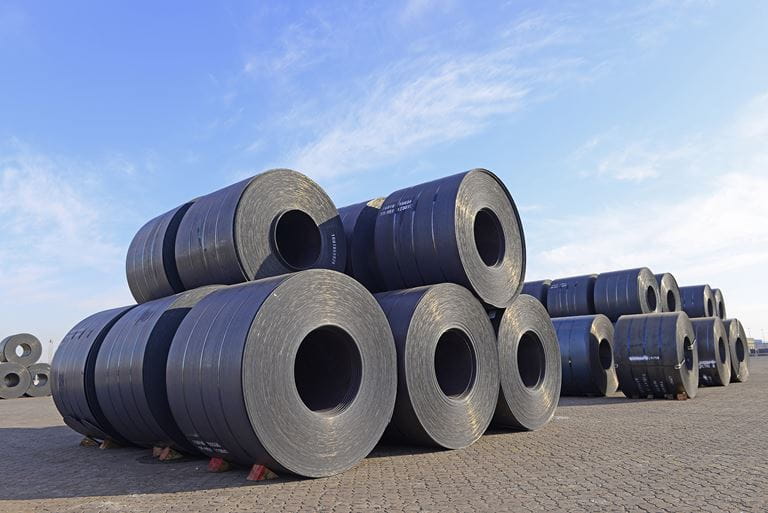
European hot rolled coil prices were flat Jan. 31, with market participants remaining mixed about the longevity of increased price levels as demand sentiment remained largely mixed.
Market sources reported tradable ranges of Eur580-600/mt ex-works Ruhr, citing the generally sideways conditions for price levels in North Europe, but reiterated how a large section of the market was growing more bullish against the backdrop of higher mill offers.
“The market is going up, driven by restocking and even mills that sell to automotive are seeing an increase in volumes,” said one German buyer. “But it is still not clear what the real consumption is, and some construction applications may only begin to pick up in Q2 or after the summer.”
Other sources argued against the bullish trends in the market, citing a continuation of high stock levels and uncertainty in the end-consumer market. “Service centers and cold rollers are sitting on huge stocks, so I’m not sure mills can get prices above Eur650/mt,” a second buyer said.
“We don’t see improvements to price levels at the moment, inventory levels are still high and there are still large volumes flowing into Antwerp,” a service-center source said. “Looking at real demand, I just don’t see an increase or prices going up, just sentiment.”
The same source reported a normalized HRC import price level of Eur575/mt CIF Antwerp, saying that compared to current EU-mill offers, prices remained competitive. Nonetheless, a large number of market participants have continued to stress a preference for domestic material, due to the recent trend of higher import offers, in part worsened by a volatile foreign exchange rate between the euro and the US dollar.
Conversations around European mill order books remained largely positive, as sources reported that several were at volume capacity until after March, and were not in a hurry to sell, despite the continued reports of higher stock levels further down the value chain.
A source from an EU mill argued that domestic production remained preferable to the import market. “Antidumping investigations are helping keep buyers on domestic,” the source said. “Imports offers are not competitive, and you can get better quality material, and clearer lead times if you buy domestically.”
“The problem at the moment is uncertainty across the market, so while prices are inching up and order intake is healthy, there is still too much uncertainty from politics.”
A second mill source said demand was stagnating, but “coil producers are absolutely in control, as Q1 is pretty much covered, so no producer is under pressure to sell cheap.”
Platts assessed the North European domestic HRC price at Eur590/mt ex-works Ruhr, and the Southern European domestic HRC price at Eur585/mt ex-works Italy, both stable on the day.
Platts assessed imported HRC prices in Northwest Europe and Southern Europe, at Eur545/mt CIF Antwerp and Eur545/mt CIF Italy, respectively, with both also remaining flat on the day.

Automotive tier suppliers fret over steel cost squeeze
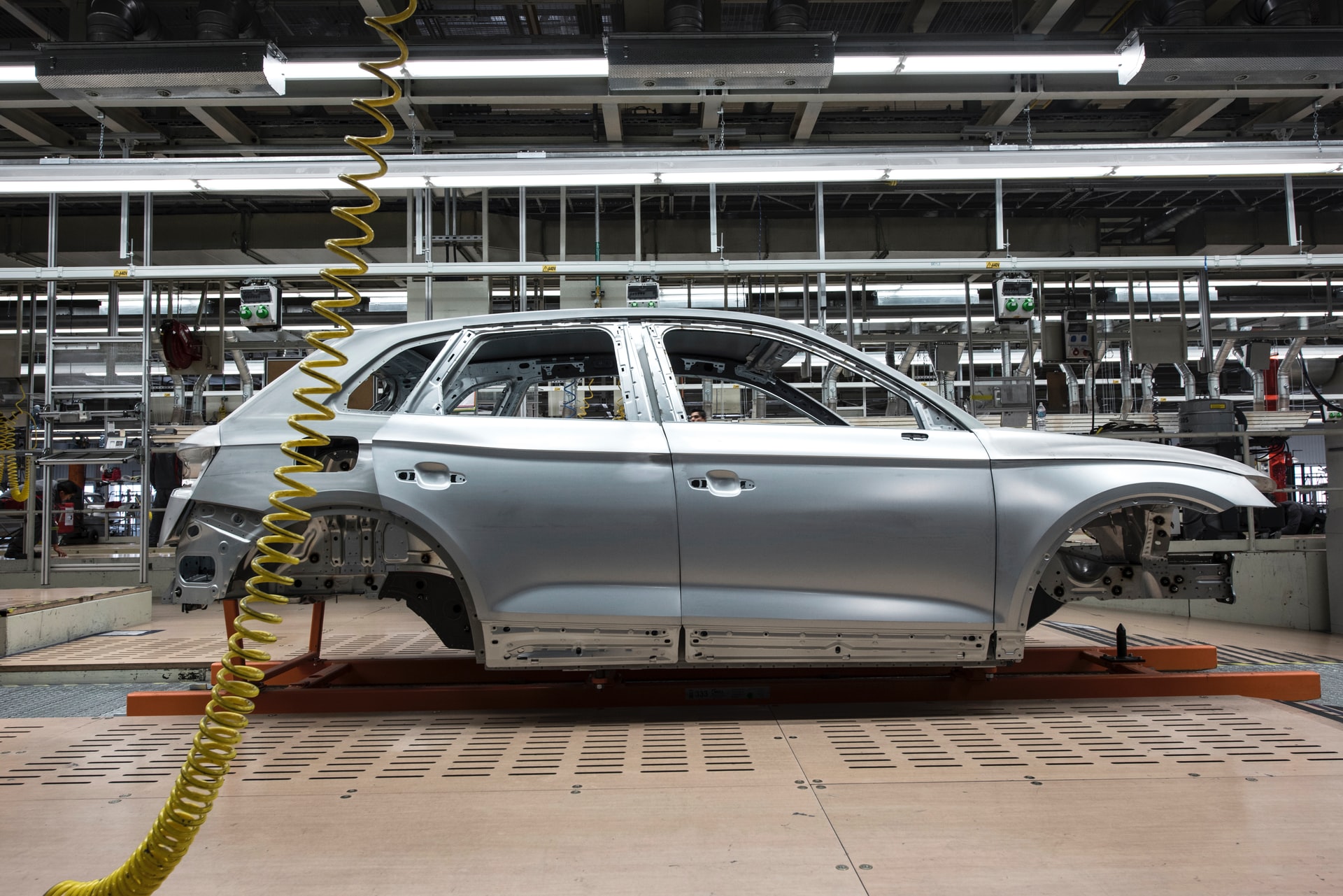
Automotive steel suppliers in northwestern Europe have reason for concern as they might again end up as losers in annual coil supply negotiations.
Most annual negotiations between steel mills and big buyers, often carmaker OEMs, have been completed.
Outstanding deals to be struck with tier suppliers further down the chain should ideally repeat the results of the deals with OEMs. “Steel should be a neutral cost factor between us [steel buyers] and the OEMs [their customers]; a 1:1 ratio would be the best case,” a manager at a tier supplier says. But this has not been the case in the last two years “and it is threatening our business”, he tells Kallanish.
A manager at one mill has already suggested that upcoming agreements on the tier level could result in somewhat higher prices than those struck earlier with the OEMs, as spot market prices climbed slightly in January. Mills might not be getting the €600/tonne plus ($622) they wanted for hot rolled coil, but a slow rise has been observed in deal prices, by €10-20, to above €570/t.
The annual contract deals so far appear to have resulted in a year-on-year reduction of €50-80/t from last year’s high level; some say the reduction has even been steeper, inching towards €100 year-on-year.
A lower y-on-y reduction – effectively meaning higher paid prices – would be bad news for the tier suppliers, who are already sufficiently concerned about their negotiations with the OEMs.
They are nevertheless receiving support from players not directly involved with OEMs. “It is unacceptable if mills concede less – y-o-y reduction – to the tiers than they did to the carmakers,” a buyer from a German service centre says. “If mills want fair deals, they should have bargained better prices with the OEMs, rather than trying to cash in on the tiers now.”
Christian Koehl Germany


Grupo Soledad enters steel industry with Aceros y Servicios acquisition
Spanish company Grupo Soledad (GS) has entered the steel sector with the acquisition of Aceros y Servicios (AyS), a Valencia-based special steel supplier and manufacturer of components for the railways, tooling, ceramics, and machinery sectors, Kallanish notes.
GS specialises in the retail distribution of tyres and spare parts for the automotive industry. Additionally, through its subsidiaries, the company manufactures components for the construction sector via Caucho Industrial Verdú (Alcoi). It also produces machinery for the recycling sector through Tallants Navarro.
“With this acquisition, the group is expanding its expertise in the special steels sector while also strengthening the production capacities of two of our companies, both of which have ambitious expansion plans in their respective markets,” Grupo Soledad states.
AyS is set to develop steel components for Alcoi, focusing on the railway infrastructure and construction sectors. These are both experiencing strong international demand due to the expansion of high-speed rail and the modernisation of conventional rail networks across Europe. Additionally, the company will manufacture machinery for ferrous recycling and industrial steel cutting blades for Tallants Navarro.
“Aceros y Servicios, alongside the new opportunities presented, will continue to create value for its customers. This will be achieved through optimisation processes in steel selection and application studies, areas in which the company has seen significant success in recent years,” Grupo Soledad adds.
Todor Kirkov Bulgaria
European long steel prices hold steady amid weak demand, seasonal slowdown
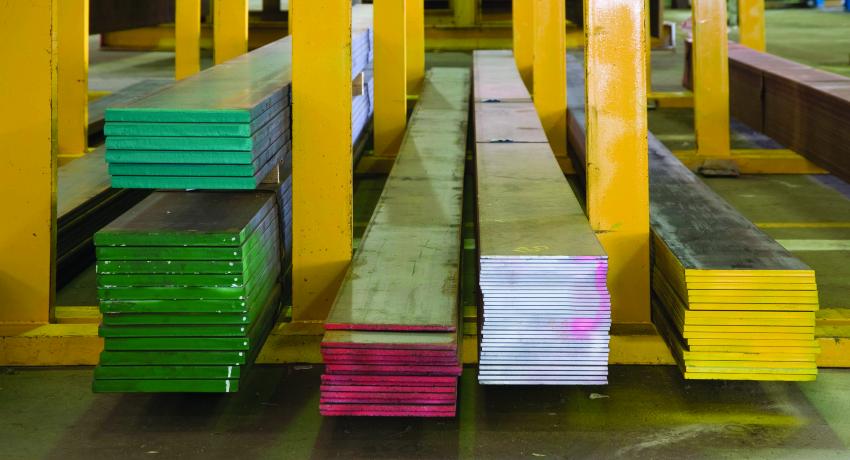
European long steel prices remained largely stable Jan. 29, as mills sought to push offers higher despite continued weak demand and seasonal market slowdowns.
Market participants reported subdued trading activity, particularly in the construction sector, which typically experiences a seasonal slowdown at this time of the year. Mills remained under pressure from high energy costs and were looking to increase prices, but sources indicated that such attempts were unlikely to succeed given the current market conditions.
A Benelux-based distributor noted that while mills were keen to push prices higher, demand remained insufficient to support significant increases.
“Prices are quite stable, although mills would like to increase them due to high energy costs. Demand is not fantastic, so I doubt prices could rise,” the distributor said.
Another source added that mills lacked the ability to implement substantial price hikes, with a potential increase of only Eur5-10/mt at best.
Platts assessed Northwest Europe rebar at Eur595/mt ex-works, unchanged on the week. Medium sections were assessed at Eur790/mt delivered Benelux, also stable on the week.
Imports continued to be a weak alternative for European buyers, with long delivery times and CBAM-related obligations adding further complexity. Offers for medium sections from Turkey were heard at Eur840-850/mt ex-Turkey in mid-January, but sources deemed these levels unworkable given current market conditions.
Interest in low-carbon steel remained subdued, despite some suppliers offering certifications. Sources indicated that while premiums of Eur30-40/mt were being quoted depending on the mill, there was no obligation for the construction sector to use green-certified material.
“For construction, it’s not the best time of the year, and demand for conventional steel is already struggling,” a distributor said.
Platts assessed both rebar and medium sections carbon-accounted premiums at Eur35/mt, stable on the week.

European HRC prices remain stable on limited import interest, market uncertainty
Domestic European hot-rolled coil prices remained largely stable Jan. 30, despite a combination of seasonal restocking, limited import interest, and ongoing uncertainty surrounding safeguard measures supporting the domestic market.
Market participants noted a continued low level of interest in imports, with many buyers opting for domestic products despite concerns over price hikes.
“There is very little import interest, partly due to the prospect of higher duties and the current price disparity with domestic offers,” a distributor source said.
Other sources cited concerns over the longer delivery times for imported material as a key factor in the decision to favor European mills.
The lack of viable import options is contributing to the upward pressure on domestic prices, as mills focus more on securing long-term contracts rather than spot orders.
“Seasonal restocking has given domestic prices some momentum, but mills are more focused on securing longer-term deals,” another distributor source said.
While orderbooks of domestic mills are looking good, concerns about demand remain.
“If demand does not pick up soon, we could see price declines, regardless of the import quota situation,” a Germany based service center source said. “The European Commission’s investigation into imports is creating uncertainty, with the outcome of the safeguard measures remaining unclear.”
The impact of geopolitical tensions, particularly surrounding the potential for increased US tariffs on European imports, continues to add to market uncertainty.
“Geopolitical issues, particularly with the US, are creating confusion,” a Southern Europe-based trader said. “However, if the situation with Russia and Ukraine were to be resolved, it could drastically improve the outlook.”
Looking ahead, there is a sense of caution among buyers.
“We are not restocking too much at the moment,” another service center source said. “The outlook for the next three months remains uncertain, so we are not willing to take risks.”
The automotive sector, a key driver of demand in Europe, continues to face challenges, with some sources pointing to declining output figures, particularly in Germany.
Platts assessed the North European domestic HRC price at Eur590/mt ex-works Ruhr, stable on the day, while the Southern European domestic HRC price also remained stable at Eur585/mt ex-works Italy.
Platts assessed imported HRC prices in Northwest Europe at Eur545/mt CIF Antwerp, down Eur5 on the day, while Southern European imports were assessed at Eur545/mt CIF Italy, up Eur5 on the day.
Platts is part of S&P Global Commodity Insights.

Northern European steel mills cut rebar output to rebalance supply-demand
Many mills in Northern Europe have paused rebar production until March in an attempt to rebalance supply-demand dynamics given the persistently poor demand and high input costs, market sources said.
Fastmarkets’ weekly price assessment for steel reinforcing bar (rebar), domestic, delivered Northern Europe, was €620-640 ($646-667) per tonne on Wednesday, down week on week by €5 per tonne from €625-645 per tonne.
Prices remained broadly stable in the Northern European rebar market, with offers reported around €630-640 per tonne while deals were reported more frequently around €620 per tonne, sources said.
Demand was reported to be subdued following restarts after the Christmas break.
“Most people bought material before Christmas and are now waiting to receive it, so there is not much demand. Most buying is hand-to-mouth, and no one is interested in imports now,” a buyer source told Fastmarkets.
“The outlook is that the market is waiting for prices to possibly increase, because production stoppages limit available capacity and encourage price rises,” he said.
Steel mills cannot reduce prices because of the rocketing costs for gas and electricity, market sources said.
Import offers for rebar into Northern Europe have been scarce due to the long timelines, slow demand and prices that were not significantly lower than the domestic prices currently available, market sources said.
Fastmarkets’ weekly price assessment for steel wire rod (mesh quality), domestic, delivered Northern Europe, was €600-620 per tonne on Wednesday, widening downward by €10 per tonne from €610-620 per tonne last week.
Wire rod producers in Northern Europe reported deals at €600-620 per tonne.


Willingness to pay green steel premiums remains low among European buyers
Sources said that a lack of willingness to pay premiums for steel with reduced carbon emissions content could be partially explained by the unfavorable economic situation in Europe.
“Since about two-three weeks [ago] we have very few inquiries [for green steel],” a mill source said. “Buyers said they are focused on survival in the current market conditions.”
Despite this, publicly listed companies that have to submit sustainability reports have been expressing more interest in green steel bookings, sources said.
“Automotive is the major green steel buyer among all steel-using sectors,” a distributor said.
Fastmarkets’ methodology defines European green steel as “steel produced with Scope 1, 2 & 3 emissions at a maximum of 0.8 tonne of CO2 per tonne of steel.”
Premiums for such steel were reported at €200-300 ($208-313) per tonne.
During the assessment week, bids for such material were reported at €70-100 per tonne.
But producers pointed out that steel with such specification was expensive to produce, and therefore “big discounts made no sense.”
“We must pay for green energy, pay for certification [of green steel products]. This can’t be cheap,” a second mill source said.
Buyer sources estimated achievable premiums for green steel with such levels of emissions to be at €100-150 per tonne.
As a result, Fastmarkets’ weekly assessment of the green steel domestic, flat-rolled, differential to HRC index, exw Northern Europe was €100-200 per tonne on Thursday, stable since December 12.
Meanwhile, Fastmarkets’ assessment of the flat steel reduced carbon emissions differential, exw Northern Europe was €30-60 per tonne on Thursday, narrowing upward by €10 per tonne from €20-60 per tonne in the prior week.
For steel produced in blast furnaces, with reduced carbon emissions of 1.4-1.8 tonnes of CO2 per 1 tonne of steel, offers for premiums were reported at €40-70 per tonne during the assessment week.
Buyer sources suggested a premium level for such specs at €30-50 per tonne, depending on the supplier.
“Not everybody needs 80-90% decarbonized steel or can afford it. Some buyers can start with 30-40% [CO2 emissions reduction],” a mill source said.

EU’s largest offshore windfarm advances amid industry decarbonisation
The European Investment Bank (EIB) will provide €400 million ($417m) in funding for the Baltica 2 offshore wind farm in Polish waters, set to be the EU’s largest wind farm with 1.5 GW capacity. This comes at a time when European industry is in desperate need of clean energy supply to secure its competitiveness amid decarbonisation, especially coal-reliant Poland.
The 50/50 wind farm joint venture between Polska Grupa Energetyczna (PGE) and Ørsted aims to commission its 107 turbines in 2027. Together with its sister project Baltica 3, scheduled for 2030 commissioning, the farms are to have total capacity of 2.5 GW and double PGE’s existing renewable energy portfolio. The strategic investment will contribute to Poland’s energy transition and security.
This comes after EIB agreed in 2023 to loan up to €610m for the construction of the 1.14 GW Baltic Power offshore wind farm, which will be the first in Poland when it commissions in 2026. The 51/49 Orlen/Northland Power JV will comprise 76 wind turbines (see Kallanish passim).
Wind power is touted to be a critical supplier of the energy required for steel industry decarbonisation as well as a major future steel demand driver. Offshore wind is an entirely new market in Poland but with huge prospects thanks to its Baltic Sea access. The country anticipates 18 GW of offshore production by 2040.
For wind turbines, over 90% of total material requirements are steel and concrete. Steel requirement is projected to fall from 140 tonnes/MW to 110t/MW by 2050 for gearbox turbines, and from 400 t/MW to 320 t/MW for direct-drive turbines, according to Energy Transitions Commission research.
Poland’s largest steelmaker, ArcelorMittal Poland, will soon need to decide whether it wants to convert its flagship Dabrowa Gornicza plant to electric arc furnace-based produciton or prolong blast furnace operation by other means. It, along with Poland’s scrap-consuming EAF-based mills in the south of the country, will need to source renewable energy distributed from wind farms in the north.
Adam Smith Poland

Austria’s December steel production falls, stable in 2024
Austria’s steelmakers decreased crude steel production in December, according to worldsteel data. Output amounted to 559,000 tonnes, down 5.9% down year-on-year, Kallanish notes.
In 2024, the country produced 7.13 million tonnes of steel, flat compared to 2023. Austria remained in 23rd place in the ranking of top global steel producers, the data show. Overall EU output in December was 7.2% more on-year at 9.6mt.
In 2024, steel production was 2.6% higher on-year at 129.5mt.
Austrian steelmaker voestalpine has successfully commissioned the profile rolling mill engineered by Friedrich KOCKS (see separate story). Following the completion of all work and successful commissioning, the new equipment is now fully integrated into the hot tube rolling mill at the Kindberg site in Styria.
Voestalpine recently said it performed well in the first half of its business year through March 2025 despite the difficult economic environment in Europe. Demand remained strong from the railway infrastructure and aerospace sectors, and for high-bay warehousing systems made from advanced steel profiles.
The group’s revenue in H1 reached €8 billion ($8.32 billion), which is 5.5% or around €500 million below the comparative period in the first half of 2023/24. Ebitda decreased by 20.5% y-o-y to €718m and was influenced by negative one-off effects including the sale of its Buderus Edelstahl subsidiary and closure of automotive operations in Germany.
The decline in volumes was partly offset by a better product mix with higher profits, while lower sales prices were partly compensated by reduced raw materials values.
Svetoslav Abrossimov Bulgaria

FFB: Recession hits French construction, outlook remains gloomy
The crisis in the French construction industry worsened in 2024, especially in the private residential sector, which was undermined by reduced new construction and the non-residential sector, French construction federation Fédération Française du Bâtiment (FFB) says in a report obtained by Kallanish.
“After an erosion of activity in 2023 (-0.9%), the construction sector entered full recession in 2024,” FFB comments. The industry, encompassing all segments, experienced a 6.6% decrease in volume last year. The number of building site openings for new construction saw a significant decline of 14.2%, following a substantial decrease of 24.9% in 2023, resulting in a historic low of 253,000 units. “You have to go back to 1954 to find such a level!” FFB exclaims.
The construction of new individual houses experienced a significant decline by 23.7%, resulting in fewer than 100,000 units. Overall, new housing activity plunged 21.9% in 2024. The production of new non-residential buildings also endured a year-on-year decline of 7.4%, with all segments reflecting a notable decrease, except for public buildings, which remained stable.
The outlook for 2025 appears gloomy, with a projected contraction of 5.6% in volume, primarily driven by challenges in new construction activities. Expected new housing activity is projected to decline by 14.2% in 2025, leading to a new low in construction site openings at 239,000 units.
Despite an anticipated macro-financial climate improvement, FFB predicts a 15% decline in individual home sales and a 30% decline in developer sales to individuals. Activity in new non-residential properties is also expected to drop by 15% in 2025, influenced by general uncertainty and unappealing credit conditions.
The French long steel market’s performance remains unimpressive as the construction industry continues to perform poorly. French long steel prices have remained stable since the beginning of January; however, there is a noticeable absence of large-volume sales, and the upward price attempts from some mills are lacking momentum.
A source within a purchasing group indicates the outlook for the first half remains pessimistic. He suggests ongoing financial difficulties faced by multiple service centres and distributors, alongside persistent margin compression.
Natalia Capra France