


European HRC prices inch upward on limited imports, improved interest among buyers
Fastmarkets calculated its daily steel hot-rolled coil index domestic, exw Northern Europe at €588.75 ($614.17) per tonne on Wednesday, up by €0.31 per tonne from €588.44 per tonne on Tuesday January 28.
The index was up by €9.25 per tonne week on week and by €23.75 per tonne month on month.
Mills in Northern Europe were almost fully booked for the first quarter of the year, and only limited volumes were available for March-delivery material, Fastmarkets understands.
HRC offers for April/May delivery were heard at €620-630 per tonne ex-works, with some rumors in the market that mills could try to achieve even higher levels.
On Wednesday, no major deals were heard in the Northern European market.
Fastmarkets’ sources estimated the workable market level at €580-600 per tonne ex-works.
A distributor source based in Germany told Fastmarkets that two to three weeks ago, it looked impossible for the market to reach such levels, but now prices were moving up slightly.
Trading has also improved slightly, according to sources.
Fastmarkets calculated its corresponding daily steel hot-rolled coil index domestic, exw Italy at €587.50 per tonne on Wednesday, up by €5.00 per tonne from €582.50 per tonne on Tuesday.
The index was up by €9.17 per tonne week on week and by €25.00 per tonne month on month.
Local sources described the Italian market as less active.
According to a buyer source based in Italy, very few transactions were heard recently.
“Stocks are currently high. Most players are waiting to see how the market would develop, especially after the new steel safeguard review is over,” the buyer said.
The source added that real consumption in Italy was expected to remain low in the next months, and only apparent steel consumption could increase on some restocking if additional safeguard measures were imposed.
An integrated mill in Italy was heard offering end-March delivery material at €610-620 per tonne delivered, which would net back to €600-610 per tonne ex-works.
According to a second buyer source, the producer has started to offer HRC at €620 per tonne ex-works.
“There is almost zero appetite for import bookings. Thus, little by little, whoever needs to buy HRC buys domestically and pays €590-600 per tonne ex-works in the most recent deals,” the second buyer said.
Fastmarkets’ sources estimated the workable market level for domestic HRC to be €580-590 per tonne ex-works.
In terms of imports, Turkey was heard offering HRC to Italy at €560-590 per tonne CFR, including the anti-dumping duty, Fastmarkets understands.
However, according to industry sources, large volumes of around 30,000 tonnes could be negotiated at lower levels. Bids for such tonnages were heard at €540-550 per tonne CFR Italy.
Asian suppliers were heard offering HRC at €560-570 per tonne CFR Italy, but interest among buyers remained limited due to the trade risks.

EU records first production growth in 3 years
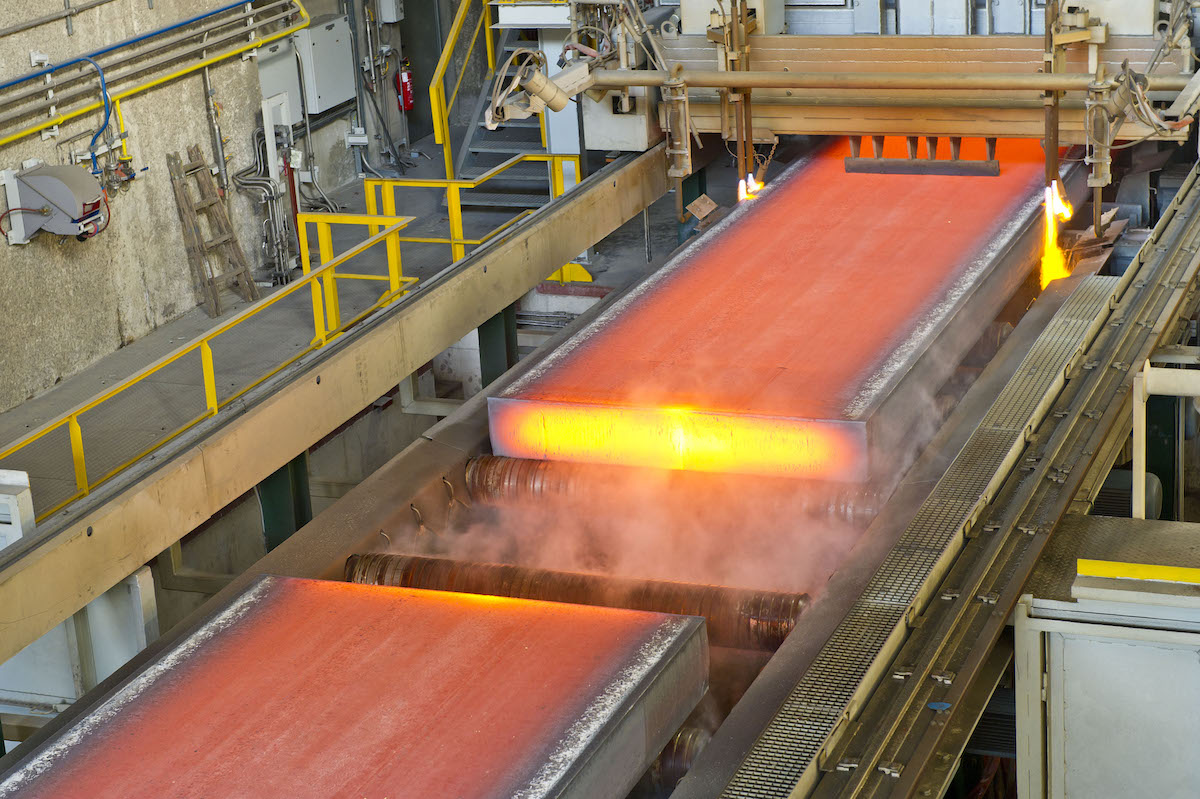
The EU recorded in 2024 its first annual crude steel produciton growth since 2021, but output still remained below the Covid-stricken year of 2020 as financial difficulties hit certain steelmakers.
EU crude steel produciton increased 2.6% on-year in 2024 to 129.49 million tonnes, Kallanish notes from worldsteel data.
Largest regional producer Germany saw production rebound 5.2% on-year in 2024 to 37.2mt, although this came from a multi-year low base in 2023. Output remained below pre-Covid tonnages; however, it surpassed 2020 and was the highest since 2019, with the exception of the post-Covid rebound year, 2021.
Second-largest producer Italy fared much worse, seeing crude steel output drop 5% in 2024 – from an already-low base – to 20.01mt, amid continuing production difficulties at the Taranto steelworks, one of Europe’s largest. This was the lowest production figure since 2009.
France saw 2024 output rise 7.6% to 10.76mt, but from a multi-year-low base, with 2023 seeing a blast furnace fire take capacity offline. Spanish output rose 3.3% to 11.82mt, the highest since 2019 except for 2021.
EU output last year was also boosted by the return to operation of the blast furnace at Ijmuiden, which boosted Netherlands output 36% to 6.37mt, the highest since 2019 except for 2021. Belgian output rose an estimated 21% to 7.1mt, also the highest since 2019 except for 2021. Polish output grew an estimated 10% to 7.08mt but from a multi-year-low base.
Amid production stoppages at various Liberty Steel plants, crude steel production fell in Czech Republic, Romania and Hungary. In the first of these countries, output plunged 25% to 2.55mt, as activity at its largest steelworks, Ostrava, ground to a halt and the plant was put up for sale.
In Romania, output dropped an estimated 16% to 1.36mt – Galati is Liberty’s only remaining operational plant in Central and Eastern Europe. Hungarian output fell to an estimated 240,000t, down 50% versus 2023 and versus 1.5mt in 2020.
European steelmakers’ association Eurofer has been lobbying relentlessly for tighter EU steel import restrictions and an EU steel and industrial policy amid increased costs and declining competitiveness in the bloc. The new European Commission, which started its term in December, is currently working on both issues.


EU Competitiveness Compass eyes cheaper energy, greater coordination
The European Commission presented its Competitiveness Compass initiative on Wednesday, which foresees a tailor-made action plan for the steel sector, as well as plans to bring down energy prices and introduce European preference in public procurement.
The initiative aims to make the EU market competitive based on recommendations issued by the much-lauded Draghi Report published last September, Kallanish notes.
Over the last two decades, Europe has not kept pace with other major economies due to a persistent gap in productivity growth, the Commission notes. It must act urgently to tackle longstanding barriers and structural weaknesses that hold it back, it adds.
The Commission wants to drive development and industrial adoption of AI in key sectors; promote advanced materials, robotics and space technologies; and remove red tape and risk that is preventing new companies from emerging and scaling up. Companies will benefit from one single set of rules wherever they invest and operate in the Single Market, the Commission says.
The Clean Industrial Deal will aim to make the EU a competitive manufacturing location while simultaneously promoting decarbonisation. An Affordable Energy Action Plan will help bring down energy prices and costs, while an Industrial Decarbonisation Accelerator Act will extend accelerated permitting to sectors in transition.
The Compass refers to a new range of Clean Trade and Investment Partnerships to help secure supply of raw materials from across the globe. Within the internal market, the review of the Public Procurement rules will allow for the introduction of a European preference in public procurement for critical sectors and technologies.
Amid the enablers identified by the Commission, a Horizontal Single Market Strategy will modernise the governance framework, removing intra-EU barriers and preventing the creation of new ones. The Commission will also introduce a Competitiveness Coordination Tool, which will work with Member States to ensure implementation at EU and national level of shared EU policy objectives.
Adam Smith Poland

EUROMETAL survey: Europe sentiment improves, inventories foreseen declining
Global sentiment in European distributors’ association EUROMETAL’s latest, January survey indicates a slight improvement in current activity, although future activity, stock level and pricing expectations remain largely unchanged.
Although the three customer segments indicated stable current activity, the global sentiment indicator also includes the perspectives of steel experts that are not accounted for in the individual customer sector categories. This contributed to the sentiment improvement, EUROMETAL tells Kallanish.
Notably, the flat steel service centres distribution segment expects slight decreases in both activity and stock levels in the next three months.
By responder activity, those serving the automotive sector see slightly improved current activity and expect a slight decline in stock over the next three months. Survey respondents serving the construction, energy, manufacturing, packaging and tube sectors also see a slight improvement in current activity. Except for construction and energy, these segments also expect a slight decline in stock.
In terms of geography, respondents in France, the Nordics and Visegrad countries see slightly improved current activity, with the latter two also expecting a slight decline in stock over the next three months. The UK+Ireland see a slight deterioration in current activity, while Turkey expects higher stock levels and activity in the next three months. Pricing is seen remaining stable all round.
EUROMETAL divides the survey replies into three sets – “customer sector”, meaning association member type; “customer region”; and “responder activity”, referring to the end-use sector served.
Adam Smith Poland

World Economic Forum recognises Hydnum plant among top decarbonisation projects
Spain’s Hydnum Steel (HS) has been acknowledged by the World Economic Forum’s (WEF) First Movers Coalition as one of the top five most innovative projects worldwide in the steel industry’s race towards a more responsible and efficient steel industry.
This recognition is aligned with key themes emphasised at this year’s WEF meeting, such as sustainability, digitalisation, and the principles of a circular economy, Kallanish notes.
During the summit in Davos, Siemens chief executive Roland Busch highlighted the value of the digitalisation that will be integrated into all phases of the Puertollano’s first “green” steel mill on the Iberian Peninsula. HS and Siemens, partners in the project, have opted for an innovative concept. After passing the technological definition phase, the basis of the project has been established in integrating the use of the Digital Twin in all the production stages, from the design to the complete start-up of the facility.
This innovation will enable real-time optimisation of energy consumption, resources and working conditions for operators, maximising efficiency and significantly reducing environmental impact.
“This will be not just a plant, it is a commitment to the future,” says HS chief executive Eva Maneiro. The ceo emphasises the integration of digitalisation, renewable energy, green hydrogen, and water conservation as transformative elements in redefining steel production standards.
“We will produce steel that will contribute to Europe’s energy independence and create purposeful jobs for our youth. Steel revolutionised the industry, and now it’s time for the industry to revolutionise how steel is produced,” Maneiro adds.
The Puertollano “green” steel mill project is designed to use fossil-free energy throughout the manufacturing process. It will gradually incorporate green hydrogen to substantially reduce CO2 emissions. The plant will have a production capacity of up to 2.6 million tonnes/year of flat steel.
The project is valued at €1.65 billion ($1.72 billion) and will create more than 1,000 direct jobs. The plant, occupying an area of 1.3 million square metres, is expected to be operational in 2026.
Todor Kirkov Bulgaria
Photo: Aceria tradicional. Archivo EFE/Mark Earthy.

Salzgitter supplies lower-emission steel for onshore wind turbines
Salzgitter has announced its subsidiary Enercon, a wind turbine manufacturer, and engineering company SMB Schönebecker Maschinenbau, part of TM Group, will cooperate to produce wind towers with lower-emission steels.
Enercon is a subsidiary of Salzgitter’s plate making unit, Ilsenburger Grobblech.
The steel tower components from the cooperation will be used in early 2025 on an E-138 EP3 wind turbine as part of the Diepholzer Bruch wind farm project in Lower Saxony, Germany. This will make it one of the first onshore wind turbines in Europe – and the first in Germany – to feature a tower made from lower-emissions steel, Salzgitter notes in a statement sent to Kallanish.
Wind turbines with a hybrid tower concept are made completely of steel, the company notes. The bottom is composed of pre-edged steel plates, and the top of conical steel sections. This type of tower offers advantages both for installation and transport, particularly in view of increasing tower heights with even larger tower base diameters, Salzgitter highlights.
In order to reduce greenhouse gas emissions in the production of heavy plates, Ilsenburger Grobblech is using physically CO2-reduced slab from sister company Peiner Träger and another European partner company. The feedstock is produced entirely from scrap in an electric arc furnace.
Christian Koehl Germany
UK industry groups flag government policy risk
Industry association UK Steel has joined other energy-intensive industry trade associations in signing an open letter to the government detailing the risks of certain policy impacts on their respective sectors, Kallanish learns.
The letter to Sarah Jones, Minister of State for the Department for Business and Trade, was spearheaded by Arjan Geveke, director of the Energy Intensive Users Group (EIUG). As well as UK Steel, other signatories includes those from the glass and ceramics sectors, chemicals and refineries, paper and mineral sectors, as well as the GMB Union.
It says while they support the government’s ambitions to boost economic growth and meet the Net Zero target, their ability to invest in decarbonisation technologies is held back by relatively high electricity costs, policy uncertainty and risk of carbon leakage. This has often made investment in the UK uncompetitive.
It notes the UK currently has higher industrial energy costs than in Europe, the US and Asia. This is something UK Steel has flagged repeatedly, calling on the government to increase the rate of compensation for network charges from 60% to 90% to bring UK network charges closer to those in key European countries.
The letter also notes that security of energy supply is critical but the rise of “intermittent technologies”, such as renewables, generating electricity and changes in geo-political circumstances, has increased risk.
Meanwhile, it also says the UK’s Carbon Border Adjustment Mechanism (CBAM) needs significant improvement to make it effective and without loopholes. Its 2027 implementation risks trade barriers and trade diversion with the EU when the bloc’s CBAM starts in 2026.
“The 12-month gap could see detrimental impacts, as higher-carbon products that would have been imported to the EU risk being diverted to the UK instead,” it says.
If the government will not bring CBAM forward to 2026, it asks it to prepare mitigation measures, particularly around trade remedies. It also wants to ensure carbon leakage policy addresses both import and export risks.
The NESO Clean Power 2030 report includes a central estimate for gas price at 101p/therm and an ETS price assumption of £142/tonne, as well as an additional £25/tonne tariff for fossil-generated power to disincentivise exports of unabated power.
“Energy intensive industries will not be able to bear these carbon costs as long as there is no effective UK CBAM without loopholes and there are no commercial decarbonisation technologies available,” the letter states.
It also expresses concern over NESO’s proposed approach to fast-tracking grid connection for Clean Power 2030 which prioritises connecting low carbon power over industrial decarbonisation projects. It calls for industrial decarbonisation to be given the same priority as electricity decarbonisation in terms of network connections.
Carrie Bone UK

Thyssenkrupp starts new electrical steel processing line
Thyssenkrupp Steel says it has enhanced its non-grain oriented electrical steel production after commissioning the new annealing and isolating line at its Bochum plant.
It invested €150 million ($156m) in the line, which has a capacity of 218,000 tonnes/year, depending on the portfolio, Kallanish understands. For strip widths of 700-1,350mm, the line enables production of 0.2mm to 1.0mm thin sheet with particularly homogeneous mechanical and magnetic properties. They are specially designed to meet the requirements of highly efficient motors used primarily in electric vehicles, the firm notes.
The rolling mill upstream of the annealing and isolating line, a double reversing stand, has already been completed. The two new units are set to be complemented by a new electrical steel inspection line and a finishing line for cutting and tailoring. The finishing line is scheduled to go on stream in 2026.
The overall investment at the Bochum site amounts to €300m. In the new plant, the structure of the cold-rolled strip is recrystallised during the annealing process. The appropriate texture can then be set, and the sheet is coated with an insulating layer after the annealing process.

Christian Koehl Germany

Italian coil prices tick higher
Coil prices in Italy are seeing a gradual increase, primarily driven by the low volume of import contracts.
According to sources, hot rolled coil values have hit €590-600/tonne ($615-625/t) base delivered. Both buyers and sellers anticipate transactions will reach €620/t base delivered in February, Kallanish hears.
Hot-dipped galvanised coil is at approximately €670-680/t base ex-works on average. Producers are requesting prices in the range of €700-720/t delivered for the commodity grade.
Current lead times are for March and April; however, some quotes are still indicating the end of February.
Cold rolled coil existing contracts are trailing behind at €650-660/t base delivered. Competitive CRC import offers are exerting downward pressure on prices, reportedly in the range of €640-650/t cfr Italy.
One producer tells Kallanish he is asking for €730/t base delivered for HDG and €720/t for CRC. He says he is achieving these levels but only for small orders.
Both buyers and sellers concur that demand has been limited in January, and consumption continues to underperform as volumes are absent. While raising current prices may contribute to revenue, it is insufficient to achieve profitability.
Compared to pre-Covid, the €150/t spread between HRC and HDG is no longer sufficient. Given elevated energy prices and various high production costs, including HRC safeguard duties that steel importing processors have incurred in recent months, HDG levels should be in the range of €770-780/t delivered. However, the market is currently not approaching this benchmark.
“We are making small steps forward with prices. Increases are slow to happen but compared to the figures we had in December, we have achieved much better values considering that demand is at its lowest levels,” a producer comments.
Current demand from eastern Europe is the most robust within the EU; however, enquiries are also emerging from other locations, including Spain, France, and notably Germany, following a long absence, two sellers agree.
Italian demand appears to be subdued, as buyers acquired significant volumes both in the domestic market and through imports during November.
Natalia Capra France

German rebar prices inch up
German mills are having a tough time achieving the intended rebar price hikes they announced before the Christmas break.
After order books were filled at base prices not exceeding €360/tonne ($375/t), in addition to size extras bringing prices to €625/t delivered, mills had targeted €400/t for new orders.
“That was pretty ambitious,” one buyer finds. “Currently, €380/t is the word, meaning mills achieve a plus of €15-20/t.”
This would be fairly in line with the price hike of €25/t announced recently by ArcelorMittal for long products in Europe (see Kallanish 14 January). While the group owns no rebar plants in Germany, the increase has been heard by German buyers.
“You do hear of those hike attempt by €20-25/t from all sides,” a northern German manager confirms. He, too, gives €380/t as a realistic base price for transactions.
Market activity is low, all players say. Some note the impact of the three-month stoppage of the liquid phase at Riva’s Hennigsdorf works, with staff on short working hours during the period.
“I guess they have sufficient billet in stock to roll for incoming orders,” one manager says. He suggests the stoppage might have the intention to help reduce oversupply. “In any case, the stoppage helps to stabilise the price,” he tells Kallanish.
Another stockholder informs customers that supplies from Riva would in any case be guaranteed from its French mills, but also recommends that orders be placed in time, in anticipation of longer lead times.
Christian Koehl Germany