


Crude steel output up in Germany, Brazil, but Russian production shrinks
Global crude steel production increased by 1% to 152.1 million tonnes in October compared with the same month in 2023, but output fell by 1.6% year on year from January to October, according to the latest worldsteel data published on Friday November 22.

Germany
Crude steel production in Germany rose by 14.7% year on year to 3.2 million tonnes in October. But while Europe’s largest steel producer reported improvements in production in October, as well as a 5% increase in output in the year to October, the Germany steel association, WV Stahl, said the “amount of crude steel produced is still at a very low level.”
The year-to-date rise from January to October was mainly driven by an 11% increase in electric or electric-arc furnace long steel production, while basic-oxygen-furnace (BOF) flat steel output rose only marginally (by 2.6%) over the period, WV Stahl said.
The rise could be explained by low production figures last year when production cuts were introduced in October and November to balance supply and demand in Europe’s steel market.
The increase could also be partially driven by increased production of semi-finished steel products for export to substitute for sanctioned Russian material.
Market sentiment and the demand outlook remains gloomy across Europe, however, with sluggish demand in the downstream markets for finished hot-rolled coil and rebar.
Announcements of planned mill closures and production cuts by major European mills prompted a stark warning from Eurofer and calls for action by the European Union (EU) and its member states.
But the European Union’s 27 member states, nonetheless reported a 2.1% year-on-year uptick in crude steel production from January to October, with 109.3 million tonnes produced during those 10 months.
Europe’s nominal crude steelmaking capacity sits well above 200 million tonnes, according to sources, but EU27 production reached just 126.30 million tonnes in 2023 overall, down from 136.30 million tonnes in 2022 and from 152.60 million tonnes in 2021, according to worldsteel data.
Brazil
The only other top-10 steel producing country with significant year-on-year gains in crude steel output in October was Brazil, with an even higher increase of 16.2%.
Steel production rose by 6% over the first 10 months of 2024 compared with the previous year.
But Brazil broke steel import records across the same 10-month period, according to figures from its national steel association Aço Brasil, published on November 21, despite the adoption of a quota-tariff policy, which was created in June to limit imports of certain materials.
And exports fell by 15.5% in the year to October reaching 8.4 million tonnes compared with 2023, according to Aço Brasil.
Inspired by the US, Brazil’s market participants are pushing to increase trade control mechanisms, with anti-dumping investigations under way for various steel products of Chinese origin.
China
Chinese crude steel production moved up 2.9% year on year in October, but fell by 3% from January to October compared with the same period in 2023.
Slow domestic consumption in the world’s largest steel producing country has led to a flood of steel exiting the country into the global market in recent months, with China’s exports of finished steel in October up 41% year on year to 11.18 million tonnes.
Cheap Chinese imports have challenged the competitiveness of European steel products and have led to an increase in trade protectionism in competitor countries elsewhere.
Russia
Russian crude steel output fell dramatically in October compared with the same month in 2023, due to weakening consumption in the country’s domestic steel market.
Major Russian steelmaker Severstal said it expects demand to drop by 5.7% compared with 2023 levels because the high key rate of the Russian Central Bank is limiting financing options and therefore demand, leading to high inventories.
Russia is also not immune to the stiff competition from Chinese steel suppliers leading to slower sales, and sanctions taken against Russia due to its invasion of Ukraine continue to inhibit trading.

Buying interest for green flat steel in Europe muted amid poor market fundamentals
European steel market participants have been digesting the recent news about several new investments in green steel projects put on hold due to challenging market fundamentals.
The economic slowdown in Europe — notably the downturn across key steel-using sectors, such as automotive and construction — weighed on the green steel market as well, slowing down the uptake of decarbonized products.
“Not the best time to pay premiums for green steel, when mills cannot even push €40 increases for gray steel due to lack of consumption,” a buyer in Germany said.
Green steel produced in European electric-arc furnaces, with Scope 1, Scope 2 (direct) and Scope 3 (indirect) greenhouse gas emissions below 0.8 tonnes of CO2 per 1 tonne of steel, has been on offer at premiums of €200-350 ($211-369) per tonne in November.
These offers have been broadly stable during the course of the year, but tradable values for the spot market were lower, sources said.
“Higher premiums of €200-350 per tonne was something mills were getting under long contracts with [original equipment manufacturers],” a buyer said.
Buyer sources estimated the achievable premiums for green steel with that level of emissions would be closer to €50-150 per tonne. Bids were reported at €50-80 per tonne during the week.
One mill source estimated achievable values at €100-200 per tonne.
As a result, the green steel premium for flat steel in Europe was stable, with Fastmarkets’ weekly assessment of the green steel domestic, flat-rolled, differential to HRC index, exw Northern Europe set at €80-200 per tonne on Thursday, stable week on week.
For steel produced in blast furnaces, with reduced carbon emissions of 1.4-1.8 tonnes of CO2 per 1 tonne of steel, premiums were reported at €40-60 per tonne.
A buyer source suggested a premium level of €0-50 per tonne for steel with emissions of 1.4-1.8 tonnes of CO2 per 1 tonne of steel.
One mill offered at a premium of €60 per tonne for steel with emissions of 1.95 tonnes of CO2 per 1 tonne of steel, but this was deemed “too high” by most buyer sources.
Another steelmaker in Northern Europe was offering a premium of €40 per tonne for steel with emissions of 1.8 tonnes of CO2 per 1 tonne of steel.
Fastmarkets’ assessment of the flat steel reduced carbon emissions differential, exw Northern Europe was €0-50 per tonne on Thursday, widening from €30-40 per tonne a week earlier.
Italian consortium intends to acquire part of the assets of Acciaierie d’Italia
The group of companies, led by Marcegaglia, is centered on plants in Novi Ligure, Racconiggia, Salerno, as well as in France.
Italian steel companies, including Marcegaglia, Sideralba, Eusider, Industrie metalli Cardinale, are uniting in a consortium to acquire certain assets of Acciaierie d’Italia. At the same time, the main plant in Taranto remains in the sphere of interests of international investors, il Giornale reports.
The consortium, led by Marcegaglia, focuses on plants in Novi Ligure, Racconigi, Salerno, and one facility in France. Nevertheless, two large companies – Indian Vulcan Green Steel and Azerbaijani Baku Steel – intend to acquire the entire Acciaierie d’Italia complex.
India’s Vulcan Green Steel already had an attempt to acquire Ilva in 2017, but lost out to ArcelorMittal. Azerbaijan’s Baku Steel, for its part, is working closely with the Italian government and is considering the possibility of supplying gas to decarbonize production through a floating regasification unit.
According to sources, both companies have been intensively inspecting facilities in Taranto and other regions. However, due to the complexity of the negotiations and technical nuances, the final decision may not be made until early next year.
The deadline for bids to acquire the assets of Acciaierie d’Italia, which is in administration, is likely to be postponed from November 30 to January 10, 2025, giving companies more time to finalize their decisions.
The sale of the company includes ten assets, of which the key ones are owned by Ilva S.p.A. and managed by Acciaierie d’Italia under a lease until 2030. According to the commissioners, the deal could bring in about €1.5 billion. These funds will be used to rebuild the company’s infrastructure and technological development: €1 billion is earmarked for equipment modernization and another €680 million for the implementation of innovative solutions.
At the same time, Acciaierie d’Italia has faced new environmental challenges. The Italian Ministry of Environment has demanded a reduction in nitrogen oxide emissions from blast furnace No. 4 in Taranto. An Ispra inspection found that the levels exceeded the permissible limits, and the company was given 30 days to resolve the issue.
The Italian consortium is positioning itself as an alternative to international players, emphasizing the importance of keeping part of the production in national hands. However, regardless of the winner, the modernization of Acciaierie d’Italia will be an important step in the green transformation of the Italian steel industry.
On October 15, 2024, Acciaierie d’Italia restarted blast furnace No. 1 at its Taranto plant. As the company said in a statement the day before, this is an important step in ADI’s recovery plan and confirms the commitment of the special commissioners, the Italian government and the company to continue to restore production activities at the steel plant.
Prior to the launch of BF No. 1, only blast furnace No. 4 was in operation in Taranto. Blast Furnace No. 5 has been out of service for several years, while Blast Furnaces No. 1 and No. 2 were shut down a few months ago.
ADI plans to reach production of 1.9-2.2 million tons of steel in 2024. However, sources believe that actual production will be lower. Blast furnace No. 2 is scheduled to restart in the first quarter of 2025.


European HRC market at standstill, prices largely flat
Weak apparent demand continued to depress sentiment in the European HRC market, with no major changes to the situation expected in late 2024-early 2025, sources said.
Offers for January-February delivery coil from integrated suppliers in the region were mainly heard at €600 ($629) per tonne ex-works.
One re-roller in northern Europe was heard offering HRC at €550 per tonne ex-works.
Buyers’ ideas of tradable values did not exceed €550-570 per tonne ex-works.
“I don’t know a single buyer who can afford to pay a price starting with ‘6’ in this market,” a distributor in Germany said.
“The European market is oversupplied; balancing output cuts are needed to alleviate the pressure on prices, but mills keep quiet,” a buyer in the Benelux area said.
An economic slowdown in the EU, notably downturn across key steel-use sectors, such as automotive and construction, was weighing on sentiment for the first quarter of 2025.
“Real demand is unlikely to recover soon. We are at the bottom of the economic cycle, with no signs of rebound in the short run,” a trading source said.
Fastmarkets calculated its daily steel hot-rolled coil index, domestic, exw Northern Europe at €560.00 per tonne on Wednesday, down by €4.17 per tonne from €564.17 per tonne on Tuesday.
The index was also down by €1.67 per tonne week on week and up by €10.00 per tonne month on month.
Meanwhile, in Southern Europe, Fastmarkets calculated its daily steel hot-rolled coil index, domestic, exw Italy at €557.71 per tonne on Wednesday, down by €0.79 per tonne from €558.75 per tonne on Tuesday.
The Italian index was also down by €1.04 per tonne week on week but up by €11.46 per tonne month on month.
Several sources told Fastmarkets that they were expecting to start negotiations for January HRC purchases in the next two weeks.
Most sources were skeptical about Italian suppliers reaching the target offers of €600 per tonne delivered (€590 per tonne ex-works).
Buyer sources estimated an achievable price level to be around €570-580 per tonne delivered (€560-570 per tonne delivered).
The market for import coil was also quiet due to a mismatch between bids and offers, sources said.
HRC offers from Asian mills for January-shipment HRC were heard in the range of €555-570 per tonne CFR, and at €590-600 per tonne CFR from Turkey.
Buyers’ ideas of a workable price for imports were voiced at €520-530 per tonne CFR.
“I would consider booking at [€520-530 per tonne CFR],” a steel service center source in Italy said.
Market sources in Spain and Portugal also estimated the workable price for import coil at €520-530 per tonne CFR, adding, however, that no such offers were available in the market.
Published by: Julia Bolotova


Eurofer warns of irreversible decline in Europe’s steel industry without urgent action
In a statement released on the same day, Eurofer highlighted what it believed to be the dire situation facing the region’s steelmakers, citing massive production cuts, plant closures, and a significant downturn in market conditions.
The association is calling for urgent and comprehensive measures to safeguard the competitiveness of the region’s industries and the sector’s green transition.
Steelmakers slash production, put green investments on hold
Eurofer’s concerns come after recent announcements from some of Europe’s largest steel producers.
Germany’s Thyssenkrupp, that country’s largest steelmaker, revealed plans to slash its steel output by 2.7-3.0 million tonnes per year due to rising production costs, increased pressure from steel imports from Asia, and a persistent imbalance between supply and demand
The company also confirmed the closure of its steel processing facility in Kreuztal-Euchen, which specializes in coil slitting, coating and pickling operations.
These moves were expected to lead to the loss of thousands of jobs in the steel sector.
In a similar move, ArcelorMittal, the world’s second-largest steelmaker, has announced that it will be putting its decarbonization plans on hold due to unfavorable market conditions
The company cited concerns over the high cost of green steel manufacture and weaknesses in Europe’s Carbon Border Adjustment Mechanism (CBAM), which would impose tariffs on carbon-intensive imports.
Declining steel consumption and capacity utilization
In light of the production cuts, Eurofer has downgraded its outlook for steel consumption in the EU’s 27 member states (EU27) for 2024, now forecasting a 1.8% reduction in demand instead of the slight recovery it predicted previously.
The association also said that EU steel production has plummeted by 34 million tpy since 2018, falling to 126 million tpy in 2023, with imports now accounting for 27% of the market share.
And it added that capacity utilization has dropped to 60% of what it was, signalling an unsustainable underutilization of Europe’s steel infrastructure.
According to the OECD, the nominal crude steelmaking capacity in Europe was more than 200 million tpy, but actual output volumes have been lagging far behind that figure in recent years.
Global steel overcapacity and competitive pressures
Eurofer’s director general, Axel Eggert, pointed to the increasingly important issue of global steel overcapacity, particularly in regions such as China and the US, which benefit from more favorable production conditions.
World crude steelmaking capacity in 2023 was estimated at 2.439 billion tpy, exceeding production by 552 million tpy, according to the OECD.
And the OECD expected an additional 157 million tpy of carbon-intensive capacity to be online by 2026.
Urgent call for action
Eggert emphasized that, without immediate action from the EU and its member states, Europe’s manufacturing base could disappear entirely.
He warned that the decline of the steel sector would have a cascading effect on other vital industries, such as the automotive sector, renewable energy, and battery production.
“How many more plant closures, job losses, and stalled decarbonization projects will it take before the EU and Member States wake up?” Eggert asked.
To address these challenges, Eurofer is calling for a European Steel Action Plan that includes swift and effective measures on key issues such as trade, the CBAM, energy prices, and steel scrap availability.
The association stressed that incremental improvements would not be enough to counteract the fundamental challenges of global overcapacity and high energy costs, which were driving Europe’s steel sector into decline.
Published by: Julia Bolotova, Holly Chant

Italian HRC mills prepare long stoppages, possible hikes
Italian hot rolled coil prices have maintained stability compared to mid-November, exhibiting a slight increase versus the beginning of the month. Demand is currently weak, and sales are being executed in restricted volumes.
Several Italian mills are set to undergo prolonged shutdowns in conjunction with the December holiday season. A producer plans to significantly reduce output this year to align demand and supply, and will temporarily halt operations at its plant for three weeks between December and January. The company will not take bookings for January and will exclusively accept orders for February due to the prolonged closure. Italian producers have largely completed their December order books, sources tell Kallanish.
The availability of materials in Italy is expected to be limited due to the impending shutdown. Acciaierie d’Italia is currently operating at a diminished capacity. Italian producers of hot-rolled coil are aiming to increase their prices to €600/t ($631/t) delivered. However, clients remain sceptical about the feasibility of this target in the current market conditions. Market participants, including both sellers and buyers, indicate a lack of interest in the import market, as import offers are primarily aligned with domestic HRC contract levels besides the risk of duties. A leading European producer is currently pricing HRC at €600-610/t base ex-works or delivered in various European markets. Current sales activity at these price points is virtually non-existent, but the absence of import alternatives leads sellers to believe that this price level will be reached in Europe.
In the coming weeks, it is expected that customers will ramp up their purchases in Italy in order to stockpile ahead of the impending closures, especially given that one producer will be unable to meet orders for January.
In Italy, service centre quality material is currently being contracted at an average price of €570/t delivered, with reports of some lower contracts around €550/t delivered. A significant number of service centres’ clients will start shutdown in the second week of December, with operations set to resume on 7 January.
Natalia Capra France


Soaring energy costs push Siderurgia Nacional to halt production
Portuguese long steel producer Siderurgia Nacional (SN), part of Grupo Megasa, has temporarily halted operations at its Seixal and Maia plants due to surging energy costs, Kallanish reports. The stoppage, initially planned to last until Friday, may be extended further.
“Soaring electricity prices have severely disrupted operations, making it impossible for the Seixal and Maia plants to maintain regular production schedules. Until now, the plants operated only when electricity costs per megawatt-hour were economically viable,” explains Megasa.
The company warns that such drastic production cuts are economically unsustainable for Portugal’s largest energy-intensive industry. SN directly employs 700 people, indirectly supports 3,500 jobs, and contributes €900 million ($947.9 million) in annual exports.
Megasa is investing in renewable energy projects to enhance decarbonisation and cost competitiveness, including the development of a photovoltaic park at the Maia plant. However, similar projects at Seixal remain stalled, pending approvals from local and national authorities. “These are strategic, forward-looking projects essential to the company and the local and national economy,” Megasa states.
The steelmaker also calls for clearer national and European energy regulations, highlighting its competitive disadvantage compared to other European countries, where energy-intensive industries benefit from tailored cost structures. Although Portugal approved legislation in 2022 to support such industries, it remains pending European Commission approval.
“Without swift action, deteriorating conditions could jeopardise the viability of Portugal’s steel industry,” Megasa warns.
Todor Kirkov Bulgaria

Stellantis, VW close plants, focus on EV’s
Stellantis is to close its Vauxhall van plant in southern England, with more than 1,000 jobs at risk, the company says.
Stellantis joins rival carmakers in cutting staff, closing sites and reducing production in a tough trading environment, Kallanish notes.
The company, which also owns the Peugeot, Citroen, Chrysler and Fiat brands, said on Tuesday it was consolidating its British light commercial vehicle production at its Ellesmere Port site in northern England, where it will invest £50 million ($63m) in a hub for electric vehicles (EVs).
The Milan Stock Exchange-listed company said it planned to move “hundreds of jobs” from Luton, just south of London, to Ellesmere Port and had begun consultations with staff and unions.
The company, created by the merger of Fiat Chrysler and Peugeot maker PSA in 2021, did not say how many jobs would be affected.
Volkswagen, Ford, Nissan and GM have previously announced job cuts in response to declining demand for electric vehicles, which consumers see as too expensive, and increased competition from China.
VW announced on Wednesday that it will sell its plant in Urumqi, the capital of China’s Xinjiang autonomous region, bowing to pressure from investors concerned about possible human rights abuses in the region.
The local plant of the German automaker was created jointly with the Chinese state-owned automobile firm SAIC Motor Corp. and will be sold to a division of state-owned company Shanghai Lingang Economic Development.
However, the manufacturer from Germany indicated that it will extend its partnership with SAIC by a decade – until 2040, VW tells Kallanish. “By extending the agreement, the partners are creating early planning security beyond 2030 in a very dynamic development phase of the Chinese automotive market. At the same time, Volkswagen and SAIC are accelerating the transformation of their joint venture company, SAIC VOLKSWAGEN, in the areas of product portfolio, production, and decarbonization. The shared goal of the partners is to achieve a leading market position for SAIC VOLKSWAGEN with the Volkswagen Passenger Cars and Audi brands in the era of intelligent, fully connected electric vehicles,” it noted.
The Urumqi facility, which employs 175 workers, does not manufacture any cars, but performs final quality checks on already assembled vehicles, which are then shipped to car dealers in the region.
The company cited “economic reasons” behind the sale as it intends to gradually reduce production capacity for internal combustion vehicles amid increased demand for electric cars.
Volkswagen is particularly struggling in China, where local car brands such as BYD now dominate. By 2030 SAIC-Volkswagen will launch a total of 18 new models, including eight new electric vehicles.
Svetoslav Abrossimov Bulgaria

CBAM ‘bureaucratic monster’ but ‘right’ tool
The EU’s Carbon Border Adjustment Mechanism (CBAM) is a “bureaucratic monster” with flaws, but also a well-intended tool, panellists said during the Kallanish Green Steel Strategies event in Brussels on Wednesday.
“It’s a bureaucratic monster,” asserted Alexander Julius, managing partner of distributor macroMETAL and EUROMETAL Presidency member.
Christoph Zinsser, head of project finance at Stegra, agreed with the definition of “monster”. He also however noted the need to stay on course for the scheme. “The biggest challenge is if uncertainty comes into this, a risk of regulation changing frequently – that would be the worst outcome, from our perspective,” he noted.
Panellists nevertheless saw it as the right tool for the task of keeping carbon-intensive steel out of the EU, but they called for changes to be made to expand the scope of products covered.
“It’s the right tool; it needs development over many years to come … There is a lot of work still to be done,” Zinsser said.
Julius warned that instead of CBAM-levied steel being shipped to the EU, steel-consuming final goods are arriving instead. “The only problem is … ready made products are entering the EU; carbon leakage is not today active, but those products are coming without regulations and without the bureaucratic environment. Those products are not under the HS codes considered by the European commission,” he said.
“If we want to avoid carbon leakage, which is a good idea, we need the protection, we need to go the whole road down. We need to also grab every single product in the value chain so that we are creating a level playing field for European manufacturing; otherwise, we are sacrificing [it],” he added. He called for coverage of the majority of HS codes in the value chain.
Zinsser also noted flaws in the mechanism, and the need for scope expansion.
“The practice [trial phase] will ultimately show all of the flaws that there undoubtedly still are,” he said.

Josu Piña Bilbao, director of business development at SSAB Europe, also agreed with calls for the scope to be extended but noted positives to the scheme.
“CBAM has sparked the investment of low-emissions steel in other regions, outside of Europe, especially countries which are interested to export to Europe. We will see a change in trade flows,” he noted.
He also touched on the topic of the potential of rebates for companies exporting from Europe, who were facing higher production costs and therefore not a level playing field.
“We are all waiting for [CBAM], so that there will be a level playing field after 2026, when importers will have to pay,” he added.
Meanwhile, Julius also noted that European producers still have their free allowances which, in most cases, should be valid past 2030, which means their carbon costs are basically not existent.
He added that CBAM will also change import flows, referring to countries such as Turkey which are 70% EAF based and therefore have an advantage when it comes to supplying the EU.
Carrie Bone UK
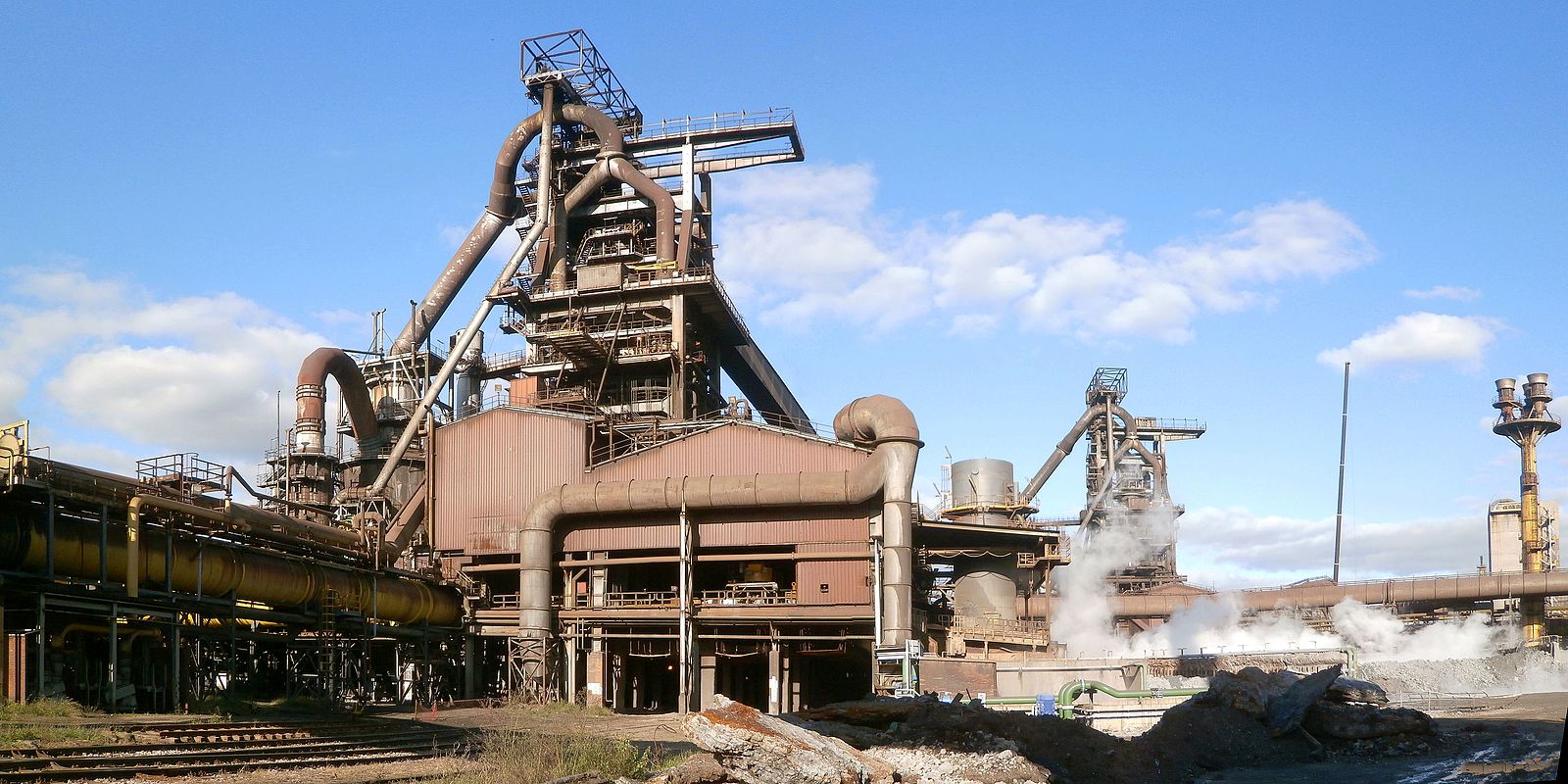
ArcelorMittal suspends final investment decision on Spanish DRI
ArcelorMittal said Nov. 26 it has delayed a final investment decision on a 2.3 million mt/year hydrogen-fed direct reduced iron plant at its Gijon cluster in Spain, citing unfavorable political, market and energy market developments, and a slow evolution of green hydrogen.
“Before taking final investment decisions it is necessary to have full visibility on the policy environment that will ensure higher cost steelmaking can be competitive in Europe without a global carbon price,” the company said.
The statement comes a day after a spokesperson told S&P Global Commodity Insights the company was awaiting guidance from the EU before making final investment decisions on decarbonizing its assets in Europe.
ArcelorMittal did not say when a final investment decision might be taken on the Spanish plant and cited “important deficiencies” in the European Carbon Border Adjustment Mechanism as a main factor, but also noted the absence of a clear domestic framework for green hydrogen as well as slow development of the technology.
“We would have liked to advance quicker, but the reality is that no regulatory framework has been drawn up that would support an economic decision for the investments,” ArcelorMittal CEO Aditya Mittal said in the statement.
Spain’s government in April approved funding from Spain’s Recovery and Resilience funds of Eur450 million ($500 million) for ArcelorMittal’s low carbon steel project at Gijon, which includes an integrated plan for the cluster of four plants.
Overall investment at Gijon was slated at around Eur1 billion, with the bulk earmarked for the DRI unit, which would replace one of the existing blast furnaces and feed a new electric arc furnace, overall reducing the plant’s CO2 emissions by 50%, or 4.8 million mt, over five years.
The DRI would also feed the company’s other EAF at Sestao, for a further 1.6 million mt/year of low carbon steel production.
ArcelorMittal said it would continue with engineering work and analysis, while construction of new EAFs at both sites would not be impacted.
The company said it might expect more clarity on regulation during 2025, citing a Spanish “industrial Green Pact” and an “Action Plan for the Steel and Metallurgic Sector,” among other measures to boost demand.
“While we have clients who want to use low emission steel, only a minority are prepared to buy an additional cost for it,” it said.
ArcelorMittal said its XCarb steel could see sales volume nearly double in 2024 to 400,000 mt.
Platts, part of Commodity Insights, assessed domestic HRC prices in southern Europe at Eur555.71/mt ex-works Italy on Nov. 25, down 19% since the start of 2024.
