

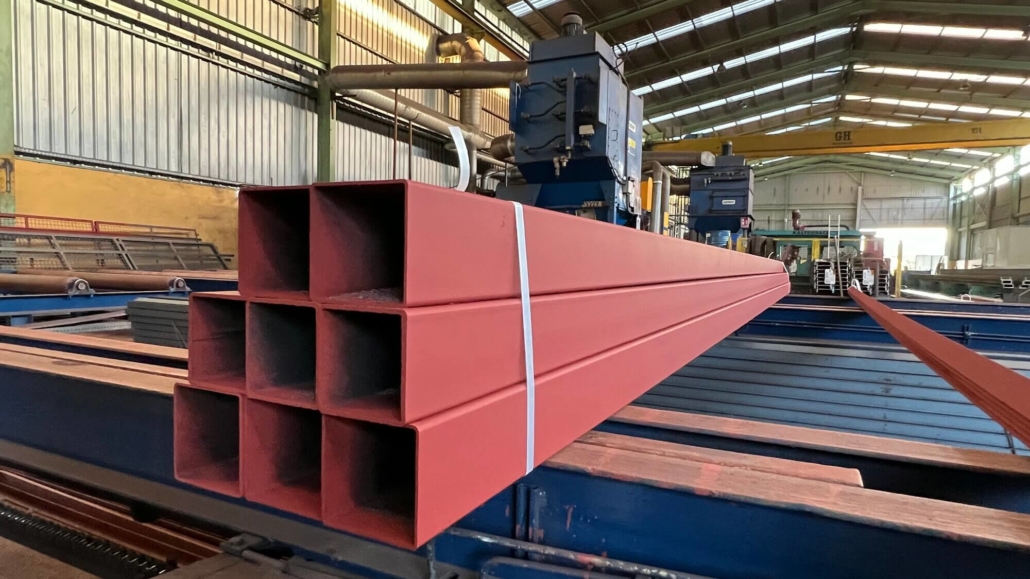
BDS: German October steel sales rise 7.4% y-o-y
German steel product sales in October climbed 7.4% year over year to 838,042 mt, data from German steel stockholders’ association BDS showed Nov. 29.
Sales were also up and 6.7% month over month.
The majority, or 61.1%, of the sales were from the flat product category at 511,858 mt, rising 6.5% year over year and 10.7% month over month, while long sales rose 5.2% year over year and 1.8% month over month to 250,255 mt, the data showed.
January-October overall sales totaled 8.2 million mt, 0.6% higher year over year. Flat sales were down 2.5% at 5 million mt, and long sales were up 2.5% at 2.4 million mt.
Platts, part of S&P Global Commodity Insights, assessed domestic HRC prices in Northern Europe at Eur550/mt ex-works Ruhr Nov. 28, down 20% since the start of 2024.
Meanwhile, stocks of German steel products totaled 1.9 million mt in October, slipping 2.9% year over year, but up 0.6% month over month, the BDS data showed.
Flat products made up 65.8% of total inventories in October at 1.3 million mt, which was 1.6% lower year over year and down. 0.7% month over month.
Long products stocks totaled 621,608 mt in October, or 32.4% of the total inventory, dropping 4.9% year over year, but up 3.4% from September.

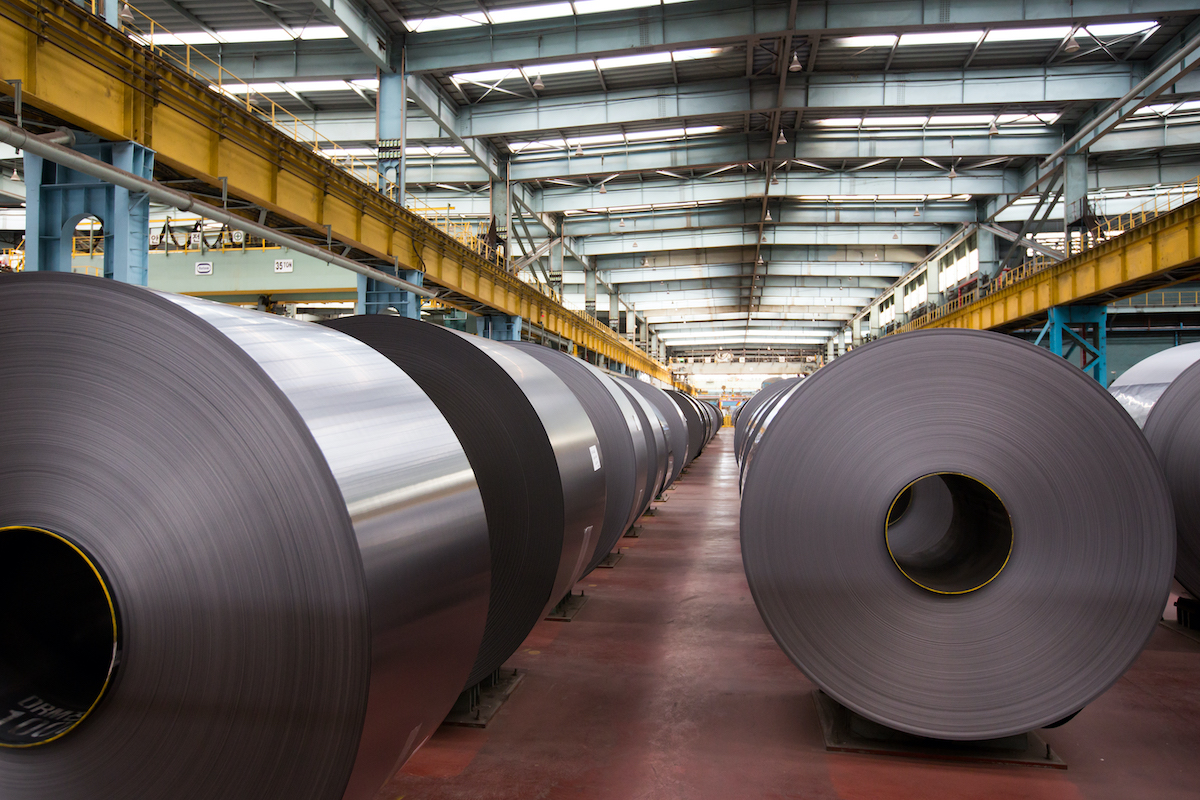
EU HRC prices stay largely unchanged on lack of restocking
Domestic European hot-rolled coil prices held largely unchanged Nov. 28, as market activity slowed due to low restocking requirements from consumers.
“The market is very slow and remains largely unchanged from last week as there is no significant restocking activity,” said a Germany-based mill source. “Customers are accepting small price increases.”
“Both the steel and manufacturing industries in Europe are facing increasing pressures, which require the support of the European Commission to overcome,” said the source, adding that European steel mills need more time and support from the government at a time where “the competitiveness of Europe is at stake.”
A slight improvement in automotive demand was highlighted as a key reason the spread between HRC and HDG has gradually widened again.
“Automotive demand is improving slightly,” the source said.
Weak demand and poor market sentiment since the announcement by a large European car manufacturer of potential factory closures and layoffs contributed to a narrowing in the spread between HRC and HDG prices over the past few weeks.
Platts assessed Northwest European HRC at Eur550/mt ex-works Ruhr on Nov. 28, stable on the day.
Offers were reported at Eur560-610/mt ex-works Ruhr.
“The situation in the European steel industry is critical but improving slightly every day,” said an Italy-based service center source. “Italian service centers need to maintain good relationships with European suppliers as the import market continues to weaken .. Importers are scouting out new import influxes from Indonesia and Turkey.”
Platts assessed domestic HRC in Southern Europe at Eur550/mt EXW Italy, stable on the day.
Platts assessed imported HRC in Northwest Europe at Eur530/mt CIF Antwerp, stable on the day.
Platts assessed imported HRC in Southern Europe at Eur525/mt CIF Italy, stable on the day.

UK HRC price increases; 2025 outlooks contingent on demand
‘We are at the bottom of the market’: service center source
UK hot-rolled coil prices rose on Nov. 28, as market participants cited ongoing negativity impacting the sector and limited buying interest.
Although spot buying interest remained minimal on the week amid stable offers, sources referred to higher tradables and shared relatively bullish outlooks for 2025, with many of them hopeful for price increases.
“It’s not all negative, prices have come up from the EU and from imports, even if demand hasn’t increased,” one seller said. “A lot of service centers have held back booking material and, on their sales side, they aren’t putting pressure on customers, so they are barely covering costs before thinking of replacement costs.”
Market participants also referred to the ongoing negativity surrounding EU mills and the potential for further cutbacks in both capacity and workforce, following announcements from steel makers ArcelorMittal and Thyssenkrupp.
“Nobody is making a profit at any level of the market, there is something fundamentally wrong, but I think we are at the bottom and if we see cutbacks then there will be conditions for EU mills to raise the price,” a distributor source said.
A service center source also suggested HRC prices had reached the floor. “Traders are struggling to get shippable quantities into the UK, and EU mills aren’t making money, so we’re seeing closures and it’s inevitable we will get more closures and cuts quite soon,” he said.
“We are at the bottom of the market, so we need more cutbacks, and it could lead to price hikes; we are already hearing of higher rates into March from some EU mills, and if imports are out of the question for Q1, EU mills will dominate the market, which could be bullish but only if demand improves,” the same source said.
Platts assessed UK HRC at GBP530/mt basis DDP West Midlands, up GBP5 on the week.
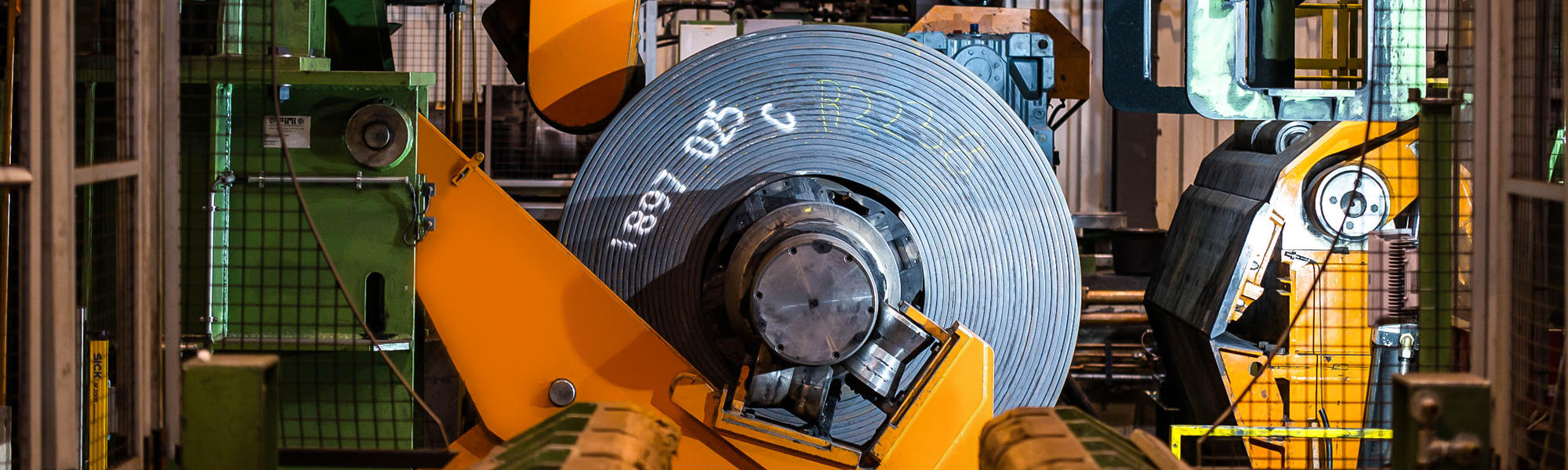
Italian re-rollers plan production cuts, coils trend higher
Multiple Italian re-rollers and pipemakers are set to execute extended production halts throughout December. Two companies tell Kallanish of their decision to suspend operations for four weeks in order to align demand with supply. Current prices and margins are meanwhile considered unsustainable.
“The purchase cost of hot rolled coil has diverged from the selling prices of tubes. The repurchase of coil is not contributing positively to our operations, necessitating a reduction in production levels,” one tubemaker comments.
The implementation by the EU of robust protectionist measures has resulted in companies that previously sourced the majority of their HRC volumes from outside the EU facing a reduction in procurement options. This has also meant an increase in HRC prices. The conditions exist for European HRC to exceed €650/tonne ($685.29) base in the medium term, the source adds.
Downstream, re-rollers and service centres are experiencing notably low margins and financial losses attributed to the elevated costs of production and HRC. Re-rollers are anticipated to raise their prices in January as they adjust to the new market conditions, following extended production cuts and reduced availability.
“Should consumption fail to recover in 2025, numerous facilities in Europe may face closure,” another tubemaker says and adds that a discount of 48 points is not sustainable. This puts commodity tube prices at approximately €700/t ex-works.
Italian coil prices are slightly higher than they were at the start of the month. Conversely, downstream, prices for derivatives have remained stable. Cutting production significantly is also a way for re-rollers to reduce production costs.
European steel producers are currently discussing potential price increases for HRC in January. One major steel producer has informed buyers that, in January, it will request an increase of €20/t. In Italy, HRC is being contracted at an average of €555-560/t base ex-works, or €570/t delivered, stable on last week.
A producer plans to significantly reduce output this year to align demand and supply, and will temporarily halt operations at its plant for three weeks between December and January. The company will not take bookings for January and will exclusively accept orders for February due to the prolonged closure. Italian producers have largely completed their December order books.
The availability of material in Italy is expected to be limited due to the impending stoppages. Acciaierie d’Italia is currently operating at a diminished capacity. Italian HRC producers are aiming to increase their prices to €600/t delivered. However, customers remain sceptical about the feasibility of this target in the current market conditions.
One leading European producer is currently pricing HRC at €600-610/t base ex-works or delivered in various European markets. Current sales activity at these price points is virtually non-existent, but the absence of import alternatives leads sellers to believe this level will soon be reached (see Kallanish 28 November).
Natalia Capra France


Green premium uptake needs regulation, clarity: Kallanish Green Steel Strategies
Green steel premiums are being achieved for some contracts, but regulation and clarity over definitions are needed to advance their uptake, panellists said during the Kallanish Green Steel Strategies event in Brussels this week.
Christoph Zinsser, head of project finance at Stegra, noted: “We have been able to secure long-term offtake agreements with a euro per tonne premium over seven years take or pay contract. So there certainly is the demand.”
He added that customers’ willingness to pay a premium has evolved over the years.
“The business case was developed on the back of the demand from the automotive industry for green steel. There has been a lot of interest, and it has evolved quite significantly over the last three years,” he asserted.
He noted this was not “widespread across different industries as we would all hope,” but he does see growing interest from the white goods and construction industry.
“There are players who certainly are interested in understanding what the possibility is. Maybe not so much for this year, today, but thinking ahead into 2027 and 2028, and leading to 2030, where can we secure supply for the future. Those discussions are very active,” he observed.
Zinsser also flagged that the offtake agreements were part of the financing requirements for the project, which is currently under construction.
“We had to demonstrate that there is a market to make the project bankable for 50% of our future production. We have been able to secure green premiums, we have not signed one contract that would not have a green premium,” he said.
Josu Piña Bilbao, director of business development at SSAB Europe, sees the premium developing differently amid challenges including a lack of regulatory clarity over the definition of “green steel”. He does however see this coming imminently.
“And also, clear set targets from regulation. If you look at the automotive [sector], they have clear tailpipe emission targets … Most OEMs have been focusing on electrifying their fleet,” he noted. “Some of them are stepping up and having targets for scope 3 upstream, which is the raw materials, but it is voluntary. FMC, Steelzero, and other initiatives, those are voluntary”.
“We are working to develop a low emission steel portfolio together with our customers’ needs and we need to go through that process. Customers need to test the material, make sure the characteristics and properties are okay and it’s working; all of that takes time,” Bilbao said.
He added SSAB is not focusing so much on the premium, as this is something the market would decide in the future.
Meanwhile, Alexander Julius, managing partner of distributor macroMETAL and EUROMETAL Presidency member, noted that some customers were unwilling to pay more than the material they are receiving from other suppliers, and that the premium was of limited importance amid the small volumes in customer portfolios.
Limited available supply of the material is also an obstacle to creating a market where a premium is achievable.
“The market for low carbon emission steel is not there yet,” Bilbao said. “For different reasons, [such as] lack of availability and supply. How many producers are actually offering low emission in Europe, what products, what grades, etc?”
“There are also worries [about] 2026, with CBAM, how much carbon reduced steel will be available then. Will it be sufficient to cover market demands in different industries? There are so many question marks at the moment,” Julius pointed out.
Zinsser also commented on the issue in regard to negotiating a premium.
“The lack of supply is part of the reason why it’s so challenging to enter into the discussion on the right price because there’s no comparison,” he said.
“[An automotive producer] is careful to commit to a premium, because they don’t have a comparison. They don’t know what the market is [to be able] to commit to pay a premium [for] 2027 in 2024; it’s a big ask for any company,” he concluded.
Carrie Bone UK

Marcegaglia to revamp Sheffield mill, boost output
Marcegaglia’s Stainless division in the UK is set to enhance the productivity of its Sheffield mini-mill through a strategic modernisation investment carried out by Primetals, Kallanish learns from the equipment maker.
A Marcegaglia spokesperson confirms the company will increase output when the revamp is completed, going from the current 300,000 tonnes to 500,000-550,000 t/year.
Marcegaglia has ordered a latest generation electric arc furnace to replace the existing unit, along with a de-dusting system, the representative confirms. The revamp will include an extensive automation upgrade, which Primetals will execute in three phases for immediate, medium-term, and long-term modernisation.
The equipment maker conducted a Through-Process Optimization (TPO) study, a detailed analysis of Sheffield’s steelmaking process, identifying bottlenecks and improvement measures.
The supply includes the optimisation of several systems, including a scrap yard supervisor producing cost-optimised scrap recipes, visualising process data, and recording loading. It will also receive intelligent sensors, such as a scrap basket profile, EAF Optimiser, AOD Optimiser, and LF Optimiser.
“As a first step, Primetals Technologies will install Melt Expert, a fully automated electrode control system for electric arc and ladle furnaces. Mid-term plans include the implementation of process optimisation software (Level 2) for the electric arc furnace (EAF), argon-oxygen decarburization (AOD), and ladle furnace (LF) plants, all of which are currently missing from the automation landscape. Long-term plans include the replacement of the electric arc furnace to accommodate the future productivity increase … The ultimate goal is to increase productivity, which will require introducing an additional production shift,” Primetals says in a note.
According to Marcegaglia, works will start as soon as possible in 2025 and be completed potentially by end-2026.
Natalia Capra France

EU steelmaking to relocate to low-cost energy: Stanislav Zinchenko
EU steelmaking is likely to shift to locations in the bloc where renewable energy is the cheapest, while current electricity price disparity between EU countries will become more pronounced, according to Stanislav Zinchenko, chief executive of consultancy GMK Center.
Besides competition with imports, EU members are competing among themselves, but the playing field is not even. Average day-ahead electricity prices in Italy were around €55 per megawatt-hour higher than in France in October. Italy nevertheless has the biggest share of electric arc furnace-based steel production in the EU.
“We can assume production in the EU will move away from high power cost countries to low cost ones,” Zinchenko noted at Kallanish Green Steel Strategies in Brussels this week. “Everything will depend on energy policy and investment into energy infrastructure – this investment is key,” he added.
Moreover, energy is likely to become even costlier as demand for it grows while steelmaking electrifies in Europe, with the electricity share in production cost seen rising to 40%. “Forget about scrap and DRI: the main raw material is energy,” Zinchenko asserted.
The steel map of Europe will change. In future, mills will be located near to low-cost clean energy sources and sea ports.
“We’re talking about competition inside Europe, between countries, between steel mills,” Zinchenko commented. “From 2025, it will be the start of a big battle between countries and steel mills. The battle will be in green steel strategies.”
To improve their positions, EU mills can invest in captive power generation, technology to improve energy efficiency and hedging energy supply. However, there are limitations to each. On the policy side, industry needs “investment, investment and investment,” Zinchenko said, into new clean energy generation capacity and transmission infrastructure. Energy subsidies will inevitably be used more often but will only worsen the competitive balance, he concluded.
Adam Smith Poland
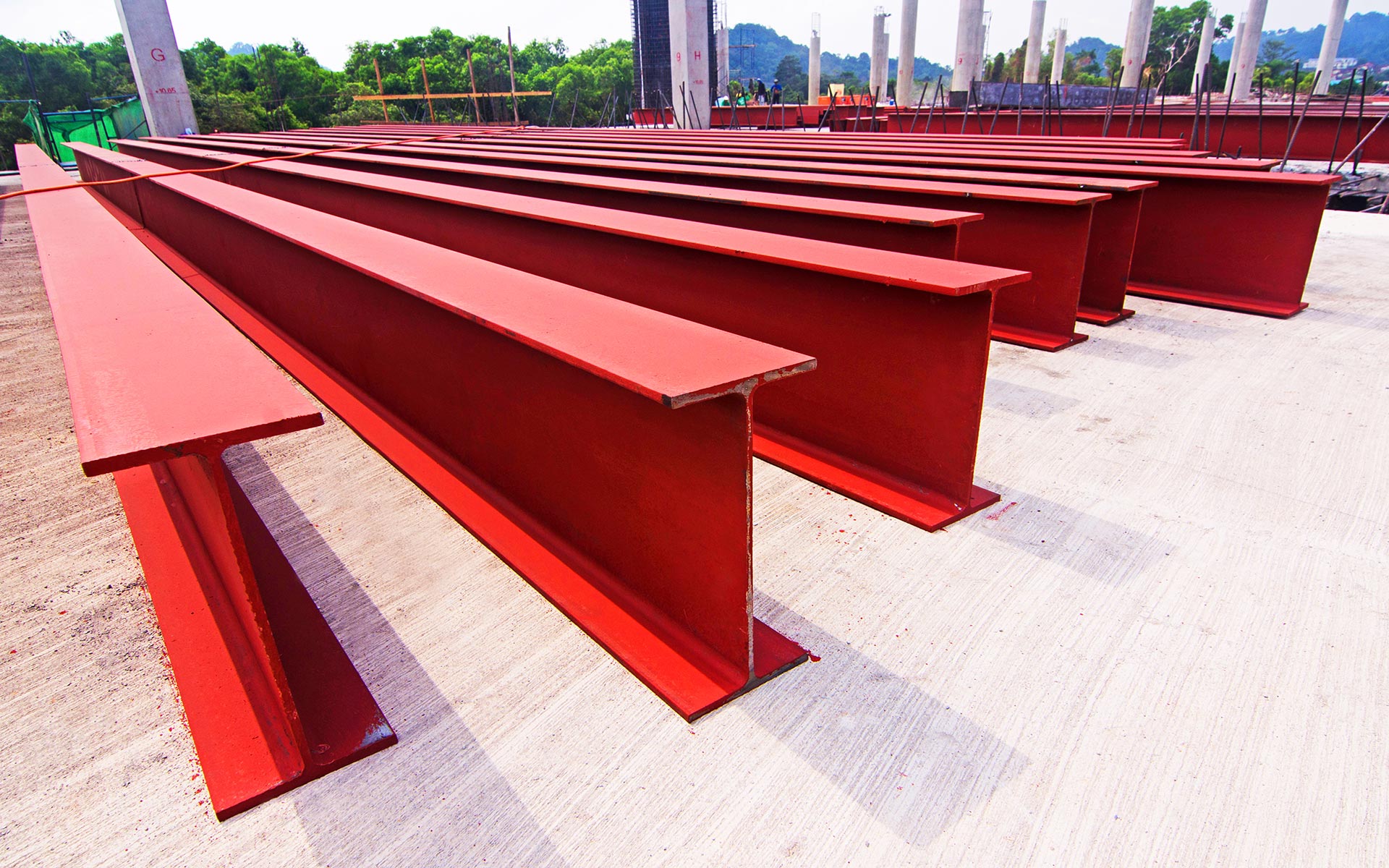
German stockholders’ sales bottom out in Q3
Germany’s stockholding distributors sold a combined 7.356 million tonnes of steel products in the first nine months of the year, around 10,000t less than in the corresponding 2023 period.
The decline has narrowed since mid-year, when it was still 100,000t versus the first half of 2023, Kallanish learns from German distributors’ association Bundesverband Deutscher Stahlhandel (BDS).
The nine-month average sales volume per month was 812,000t, marking a slight but continuous drop from the first two quarters, at 823,00t and 816,000t, respectively. However, it was higher than the third quarter one year ago, when sales averaged 783,000t.
Split by product group, the average monthly sales of flat products shows a declining trend, at 484,000t in Q3, following 522,000t in Q1 and 495,000t in Q2. Long products actually rose, at 252,000t in Q3, after 233,000t in Q1 and 250,000t in Q2. BDS provides no interpretation for the figures.
A slight increase in sections/beams towards Q3 can be explained by production shortages that triggered a buying rush. However, the increase is even more pronounced for rebar, despite the continued lull in construction.
Still, sales figures are altogether weaker in comparison with 2022, when long products sold 265,000t on average per month.
Miscellaneous other products, such as wire rod, accounted for 78,000 t/month, after 71,000t in Q2.
A comparison of the last month of the respective periods shows that total sales in September 2024 were slightly stronger than 2023, at 812,000t versus 779,000t respectively. Looking further back, September 2022 was again stronger, at 856,000t sold.
In terms of inventory tonnage, the monthly average in Q3 was 1.927mt, slightly down y-o-y, with Q3 2023 at 1.961mt.
Until the end of 2022, monthly average inventory was above 2.18mt, with all months normally above the 2mt mark. Since early 2023, only three months, July 2023, February 2024 and April 2024, have eclipsed that mark, by some 1,000t.
Christian Koehl Germany
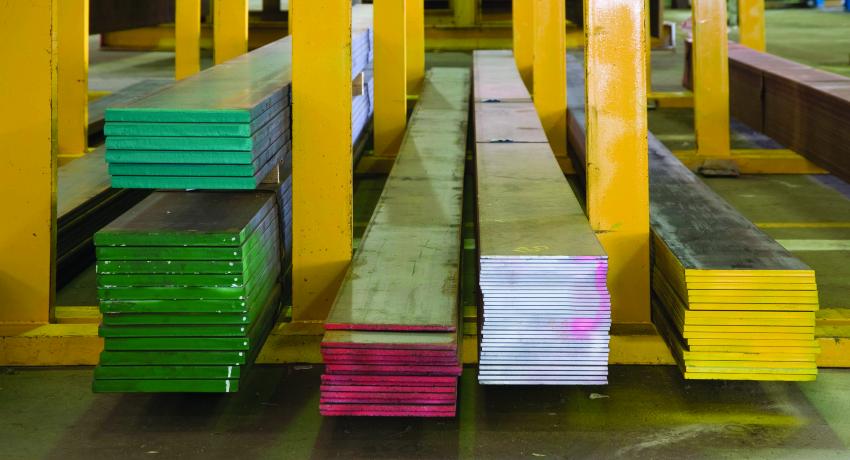
Northern Europe long steel prices steady despite Eurofer’s stark warning on survival of EU steel sector
In the week to November 22, mills attempted price rises in the rebar market; but buyers have so far resisted and somre mills are likely to begin cutting production in a bid to rebalance supply-demand dynamics, sources told Fastmarkets.
But European steel association Eurofer issued a statement on Wednesday highlighting the importance of committing to the green transition to save the industry from irreversible decline and calling for urgent action to be taken the EU and its member states, to avoid the steel and manufacturing sectors becoming obsolete.
But Fastmarkets’ weekly price assessment for steel reinforcing bar (rebar), domestic, delivered Northern Europe, was unchanged at €610-620 ($642-653) per tonne on Wednesday.
Rebar producers were targeting price rises of around €50 per tonne in the week to November 28, but there has been no interest, sources said.
“Offer prices have gone up considerably, with domestic mills asking for up to €50 per tonne or even more, but these prices have not yet been accepted by the market,” a trader source said.
“But there is a very good chance they will be [accepted] in January, when we are back [after the end-of-year] holidays. And some mills will initiate production stoppages for a longer than normal during the coming holidays to get demand in balance with production,” the source added.
And halting production could put upward pressure on prices, Fastmarkets understands.
International scrap prices have fallen as a result of slow steel sales, sources said, and Fastmarkets’ calculation of its daily index for steel scrap, HMS 1&2 (80:20 mix), North Europe origin, cfr Turkey, was $336.95 per tonne on Wednesday – down from $343.01 per tonne on November 20 and down from $360.32 per tonne month on month.
Turkey only booked half the cargoes it would normally, Fastmarkets understands, because slow steel sales mean inventories have been building up and with the end of year fast approaching that is unlikely to change, so production has reduced and less scrap is required.
Fastmarkets’ weekly price assessment for steel wire rod (mesh quality), domestic, delivered Northern Europe, was also unchanged at €600-610 per tonne.
Stark warning
In its statement on Wednesday, Eurofer said that without definitive action, further production cuts, plant closures and a worsening downturn would be the inevitable consequence.
“How many more plant closures, job losses, and stalled decarbonisation projects will it take before the EU and [its] member states wake up? Europe’s de-industrialisation is accelerating, with steel, automotive, renewables and batteries all on the brink,” Eurofer director general Axel Eggert said.
“We urge the new European Commission and EU governments to stop this bloodshed and adopt swift measures on trade, [the carbon border adjustment mechanism], energy and steel scrap, while working on a structural solution to preserve our industry’s competitiveness,” he added.


Market yet to accept higher offers by producers in Southern European steel longs market
Fastmarkets’ price assessment for steel reinforcing bar (rebar) domestic, exw Italy was €560-580 ($591-612) per tonne on Wednesday, stable week on week.
Mills were reported to be targeting offers of €580-590 per tonne in the Italian rebar market, but workable prices were still reported to be in the region of €560-580 per tonne, Fastmarkets heard.
Demand was reported to have improved during the week to November 22, but has since weakened.
“Many mills have raised offer prices to €580-590 per tonne, but this week mills are delivering old orders at lower prices… Demand is weak these days as customers restocked last week at lower prices. But the producers’ intention is to reduce production during the holiday season and then raise prices,” a buyer source told Fastmarkets.
Lower scrap prices could create resistance to the market accepting price rises, sources said.
Fastmarkets’ calculation of its daily index for steel scrap, HMS 1&2 (80:20 mix), North Europe origin, cfr Turkey was $336.95 per tonne on Wednesday, down from $343.01 per tonne one week prior and from $360.32 per tonne a month prior.
Scrap prices dropped this week because of Turkey booking only half the cargoes they would have normally, Fastmarkets heard.
Inventories have been building amid slow steel sales and the approach of the year-end means it is unlikely to change soon so production has reduced and they need less scrap, sources said.
Fastmarkets’ price assessment for steel reinforcing bar (rebar), domestic, delivered, Spain was €580-600 per tonne on Wednesday, unchanged week on week.
Southern European wire rod
Fastmarkets’ price assessment for steel wire rod (mesh quality), domestic, delivered Southern Europe was €600-610 per tonne on Wednesday, unchanged week on week.
Mills attempted price rises in the Spanish wire rod market, but these have not yet been accepted, sources said.
“In Spain, mills are trying to increase prices by around €30 per tonne, but import offers have become very competitive so I am sure that somebody will import and local mills will have to drop offers,” a trader source said.
Import offers of wire rod were reported at $540 per tonne CFR from Indonesia, sources said. Bids were reported as low as $520 per tonne CFR.
IREPAS’ short-range November outlook
European steel association Eurofer highlighted the importance of the European steel industry committing to the green transition to save the industry from irreversible decline, according to a statement issued by the association on Wednesday November 27.
The statement indicated that unless urgent action was taken by the EU and its member states, the steel and manufacturing sectors would become obsolete.
Without definitive action, further production cuts, plant closures and a worsening downturn would be the inevitable consequence.
“How many more plant closures, job losses and stalled decarbonization projects will it take before the EU and member states wake up? Europe’s de-industrialization is accelerating, with steel, automotive, renewables and batteries all on the brink,” Axel Eggert, director general of Eurofer, said.
“We urge the new European Commission and EU governments to stop this bloodshed and adopt swift measures on trade, CBAM, energy and steel scrap, while working on a structural solution to preserve our industry’s competitiveness”, he added.