

Switzerland will not benefit from EU-USA steel settlement
Switzerland and its steelmakers have nothing to gain from the end of the USA-EU steel dispute and an abolishment of Section 232 duties.
The 25% tariff introduced by the Trump administration in 2018 still applies to Swiss products, making them correspondingly more expensive than EU products, Swiss public broadcaster SRF points out.
“Steel and aluminium imports from Switzerland are still subject to the tariffs,” SRF quotes the Swiss State Secretariat for Economic Affairs (Seco) as saying.
For this reason, Switzerland is sticking to its complaint against the US, which it filed at the WTO in 2018 together with other countries such as Norway, China, Turkey and India, Kallanish notes. It will either be made at WTO level, or Switzerland will succeed in forging an agreement with the USA as a supplement to that with the EU.
Of the two steelmaking companies in Switzerland, Stahl Gerlafingen makes plain long products not meant for overseas shipments. Against that, the special bar qualities made by Swiss Steel Group are sold overseas. “Many of these products are specialties that are not manufactured in the USA; [therefore,] only part of the exports are affected,” Swiss Steel says in a statement. “For the other part, we can pass on the additional costs incurred as a result of the tariffs to customers.”
Most mills that today belong to the Swiss Steel Group are actually based in EU countries, like Germany’s Deutsche Edelstahlwerke or France’s Ugine. The group will therefore be able to circumvent many restrictions through its subsidiaries.
Christian Koehl Germany

EU exports receive limited US deal boost: Schneider
The agreement struck between the EU and US governments to abolish the trade barriers for steel introduced under Donald Trump will not mean massive increases in US-bound exports, consultant Andreas Schneider believes. There will not be a significant redirection of volumes from the domestic European market, contrary to some mills using this to justify recent price hikes, Kallanish hears from him.
As of 1 January, 3.5 million tonnes/year of European steel can be imported into the USA duty free, corresponding with the average volumes of 2015-17. In addition, exemptions negotiated under the Trump government will be extended until end-2023, which applies to a volume estimated at 1.1mt.
Despite penalty duties for EU-origin steel imports, trade to the US remained at a high level throughout the Trump years, with exports in 2021 already reaching two thirds of the agreed 3.5mt. Existing business relations and ongoing projects have been continued, by taking into account the extra 25% customs imposed, or by successfully reaching exemptions, Schneider points out. Also, the very favourable price levels in the USA encouraged the intake of EU material in 2021, he adds.
On the basis of current deliveries, the post-trade deal increase would be 500,000t for long products and 600,000t for flat products. This is less than 1% of European steel production, meaning the domestic European market will hardly suffer from volumes going abroad, Schneider concludes.
Christian Koehl Germany
USA: EU steel tariff proclamation pleases SMA
The Steel Manufacturers Association (SMA) is celebrating the recent proclamation made by President Joe Biden formalising a tariff-rate quota agreement for steel imports from the European Union.
In a recent statement obtained by Kallanish following the proclamation, the SMA expressed pleasure with the implementation of a quota agreement allowing with the EU, allowing for up to 3.3 million tonnes of European steel exports into the US tariff-free through 2023.
“As steel imports are increasing and capacity utilisation has dipped in recent months, it is essential that the implementation, administration and enforcement of this new agreement is done in a manner that continues to support American steel companies and workers…We commend the fact that this agreement includes provisions to help ensure that only steel that is melted and poured in the EU will be eligible for tariff-free status,” says SMA president Philip Bell.
Along with providing protection to the domestic industry from tariff-free imports, the SMA celebrated the agreement for its emphasis on reducing global carbon emissions. According to the association, this agreement may help incentivise other countries to follow American steelmakers’ approach to sustainable steelmaking and carbon-reduction initiatives.
Zach Johnson USA
Celsa France begins new rolling mill trials
Celsa has officially produced the first steel bar at its new hot-rolling mill in France, Kallanish learns from the company.
The facility located at the company’s industrial complex in Bayonne commenced trial production on 27 December. The mill will definitively come into operation once the tests are finished in the next few weeks, Celsa explains.
“The start-up of the new rolling mill at the Celsa France complex in Bayonne will allow the Group to further diversify its activity and strengthen its international business to invoice new growth as of next year,” the steelmaker comments. The mill will produce up to 550,000 tonnes/year of long steel. At full capacity, the new rolling mill has an annual revenue-generating capacity of around €300 million ($339.5m).
“Celsa France will be able to access, directly, the market with greater added value products, which will provide greater capacity for return and profitability on the investment. The steel group will improve its access to the French, Belgium and Netherlands markets and even in northern Spain. The company will also improve delivery times and customer service,” Celsa observes.
Celsa France confirms it has signed a strategic alliance with Netherlands-based VMI group subsidiary Intersig France for the purchase of part of its production and to scale up its presence in the domestic wire rod and rebar market.
The investment in the new rolling mill is €65m and will generate around 140 new direct and 420 indirect jobs across France and Spain.
Todor Kirkov Bulgaria
Seaborne iron ore prices end 2021 with uptick
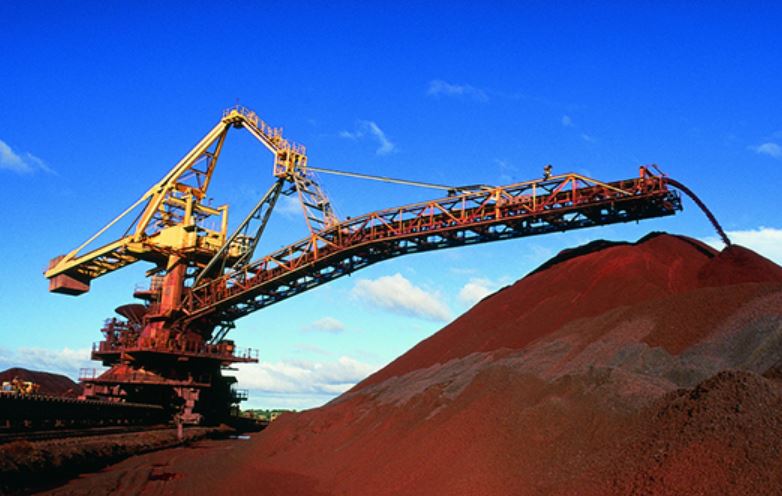
Seaborne iron ore prices gained on the last day of 2021. Inventories are building, however, and the outlook for 2022 is weaker.
The Kallanish KORE 62% Fe index gained $1.87/t on 31 December to $119.01/dry metric tonne cfr Qingdao. The Kallanish KORE 65% Fe index increased $2.07/t to $139.81/dmt cfr, but the KORE 58% Fe index only inched $0.29/t higher to $92.83/dmt cfr. A cargo of 120,000 tonnes of PB Fines and 50,000t of PB Lump sold at a floating price.
On the Dalian Commodity Exchange May iron ore settled flat at CNY 674/t ($106.15/t), while on the Singapore Exchange January 62% Fe futures settled up $2.13/t at $121.07/t. The same contract for 65% Fe and 58% Fe futures settled up $2.44/t at $143.05/t, and down $1.35/t at $93.24/t respectively. Tangshan billet prices were steady at CNY 4,270/t.
Across 35 ports stocks increased by 1.12 million tonnes in the last week of the year to 152.07mt, according to SMM. Even with restrictions easing in January and overall steel output picking up, iron ore markets remain well supplied.
Iron ore had a spectacular year, averaging $159.43/dmt cfr over 2021, up 47.1% from 2020 and marking the second year running of average prices over $100/t. 2022 however is looking very different, with Chinese steel output remaining subdued, risks to steel demand for construction, and the threat of Omicron again disrupting markets in the near term.

European coils market steady; expectations of higher prices from auto return, energy costs
The European coils market was inactive on New Years Eve, with most sources still on holiday and expected to return Jan 3. Despite revelling in the tranquillity of the holiday season, uncertainty still prevailed for next year. Most market participants were optimistic about a potential price increase propelled by a surge in automotive demand, with some OEMs now restarting following a production slump.
Others, however, were still cautious about a price decrease, harbouring doubts about a rapid recovery from the automotive sector and the reality of cheaper import prices come the second quarter of 2022.
There is still much to expect for the steel market in 2022 – the revaluation of steel safeguards in early January, the exhaustion of ‘other countries’ quota in Q2, rising energy costs, magnesium shortages, increased Chinese export duties, and the tumultuous road to achieving green steel.
The revision of section 232 could also spell trouble for Europe, with US prices still fairing a lot better than domestic European steel prices. Mills looking to export sufficient steel quantities could result in another shortage if automotive demand proves to be robust, sources have warned.
The daily Platts TSI US hot-rolled coil index was unchanged at $1,500/st on an ex-works Indiana basis Dec 30, having a $457/mt premium over North European hot-rolled coil.
Plate prices could also see a push upward, with one Italian mill source citing a tradable value at Eur880/mt ex-works Italy, with tendencies towards Eur900/mt growing closer based on a ‘higher energy costs forecast.”
The promise of a bullish Q1 was not a unanimous outlook among UK participants, with one trader concerned about the lack of customer inquiries.
“Not sure what Q1 will bring in all honesty, fingers crossed for an uptake in demand.”
— Amanda Flint

European HRC prices stable amid holiday slowdown
The European HRC market was muted in the lead up to the new year, with participants anxious to know what the first quarter of 2022 could mean for prices and inventories amid murmurs that automotive demand could make a strong comeback in Q1, sources told S&P Global Platts Dec 30.
Another factor affecting domestic prices were low import prices making their way to Europe, with prices heard between Eur750-760/mt CIF Italy ports ex-India, and Eur830/mt CIF Italy Ports ex-Korea, an Italy trader told Platts.
“It’s only Indian producers that are making very low prices below Eur800/mt, but its not reflective of the import market — import prices should be around Eur820/mt CIF Italy Ports,” the trader said.
The source said he agreed about the market chatter surrounding higher prices for Q1, though it was difficult to get a clear picture for now.
“There is a rumour for price increase but quite difficult to understand because of holidays, but I don’t think it will change the trend, they will not increase too much and cannot see how they would decrease. Auto is starting again and buying,” he said.
Half-yearly and quarterly HRC contracts from North western mills were heard to be “floating” between Eur950-1000/mt delivered Europe, a Benelux service center said.
“As long as automotive haven’t fixed their contract the market will remain unclear,” the source said.
German mill Salzgitter was heard to officially propose Eur1100/mt delivered Europe for auto contracts despite being a lot higher than other European contract offers.
“But what can they do? If they go down it will ruin their positions in the talks with automotive,” the same source said.
— Amanda Flint
China Nov steel-related manufacturing production index rises 17 points on month
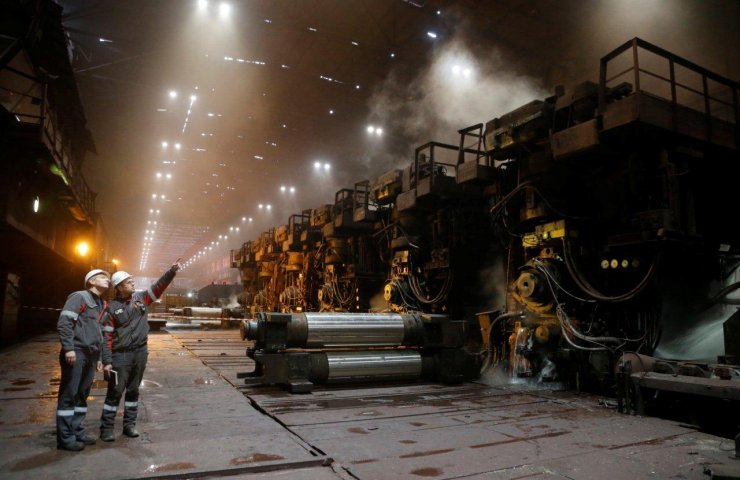
China’s manufacturing production index of steel consumption produced by S&P Global Platts stood at 119 points in November, rebounding from 102 points in October, an uptrend likely to continue into the new year with further domestic stimulus measures on the cards and among expectations of strong overseas demand through the first half of 2022, market participants said.
The production index is based on production data from China’s National Bureau of Statistics for 17 steel-related manufactured goods, categorized into seven sectors and weighted according to their share of steel consumption. The monthly production average in 2018 is used as the baseline of 100.
While the index showed month-on-month growth in November, it was still down seven points year on year.
Only production of ships, power generation facilities and containers saw a year-on-year increase in November, while production of machinery, automobiles, home appliances and railway facilities was lower than a year earlier, although they all improved from October.
H1 2022 outlook
Market sources say they expect China’s manufacturing sector to gain more upward momentum in 2022 as further cuts to the bank reserve requirement ratio, or even interest rates, are likely to be announced in China soon, boosting both consumption- and construction-related manufacturing sectors.
Vehicle chip supply tightness is expected to gradually ease in H1 2022, in tandem enabling passenger vehicle sales and production to increase from current levels, mill sources said.
The China Association of Automobile Manufacturers forecasts China’s vehicle output in 2022 to rise 5.4% year on year to 27.5 million units.
Overseas demand for Chinese manufactured goods is also expected to remain strong for much of 2022, until monetary tightening begins overseas, mill sources in China said.
China’s flat steel market is likely to be supported by recovering demand from its manufacturing sectors, at least in H1 2022, mill sources said.
However, concerns remain around plans for tightening monetary policies in the US some time in the second half of 2022, which would not only weaken overseas demand, but also limit monetary stimulus in China’s markets, they said.
Aperam completes acquisition of recycling group ELG
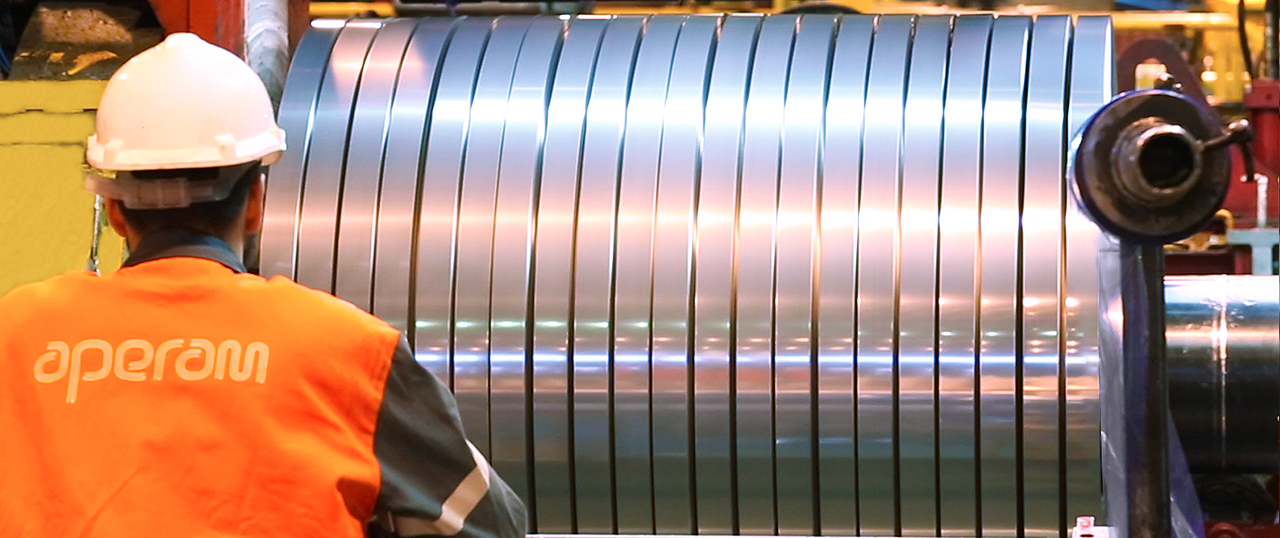
Special and stainless steelmaker Aperam has completed the acquisition of ELG, a global leader in stainless steel and superalloys recycling, the company said Dec. 27, adding that all necessary regulatory approvals required for the acquisition of ELG have been obtained, without conditions.
ELG, which had been acquired for an enterprise value of EUR 357 million (equity value EUR 30 million), collects, trades, processes and recycles stainless steel scrap and high performance alloys, delivering 1.2 million mt of materials annually.
ELG will be fully consolidated into the Aperam Group as of Dec. 31, 2021, under a new recycling segment.
Investing in sustainable recycling will further improve Aperam’s leading environmental footprint and support the company’s CO2 reduction targets, the company said, adding that the acquisition also enables Aperam to improve its input mix and to expand into the supply of raw materials.
“The acquisition of ELG received all necessary regulatory approvals and is placing Aperam at the core of the circular economy,” Aperam CEO Timoteo Di Maulo said. “Including ELG, about 30% of Aperam’s workforce will create value from working in renewable and recycling upstream. We are excited about the potential of ELG within Aperam and look forward to our journey to create value in the global recycling industry,”
Aperam has a production capacity of 2.5 million mt/year of flat stainless and electrical steel in Brazil and Europe.
— Cenk Can
Tubacex sells Tubos Mecanicos to Hierros Anon
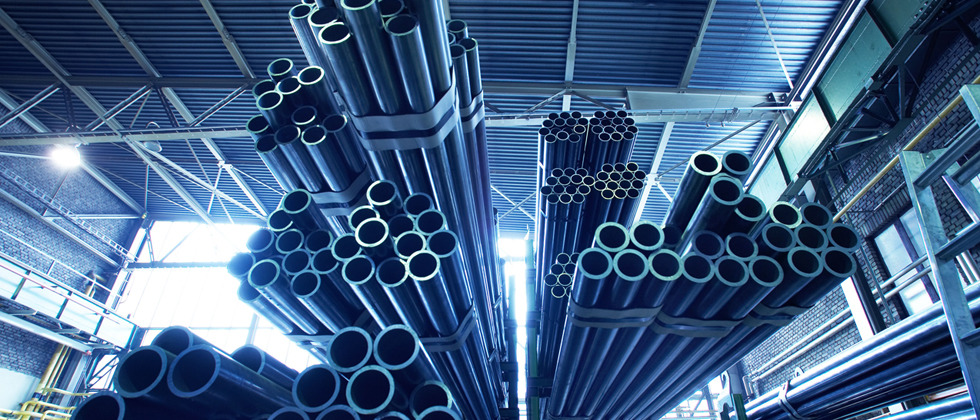
Spain-based stainless steel seamless tube manufacturer Tubacex has sold Tubos Mecanicos to the Galician metallurgical group Hierros Anon for Euro 25 million with final additional adjustments to be included, according to a company statement.
With this acquisition, Tubacex has disinvested in a non-strategic asset to reinforce its balance sheet and address its future growth in line with the energy transition, the Spain-based company said Dec. 23.
This growth is one of the main lines of the new strategic plan that Tubacex will present to the market in early 2022, it said.
“Tubacex’s new strategic plan, which will be presented in the first quarter of the year, is focused on supplying innovative solutions that support the decarbonization process of its clients, or the entry into developing markets,” the company said. “To do this, it contemplates investments in strategic assets that boost its positioning, as well as divestments in those businesses that do not support its new growth cycle.”
Tubos Mecanicos is a distributor of carbon steel bars and tubes purchased from third parties for industrial sectors, with six warehouses in Barcelona, Zaragoza, Alava, Galicia, Madrid and Valencia.
This acquisition strengthens the leadership of Hierros Anon in the distribution of steel products – iron, steel and aluminum- particularly in the national market, it said.
Tubacex is a multinational group with its headquarters in Alava, Spain, and a global leader in the manufacture of stainless steel and high-alloy tubular products. It also offers a wide range of services from the design of tailored solutions to installation and maintenance operations.
It has 20 production plants (in Spain, Austria, Italy, the US, India and Thailand, as well as Saudi Arabia, Dubai, Norway, Canada and Singapore through the NTS Group), worldwide service centers and sales offices in 38 countries.
— Cenk Can