

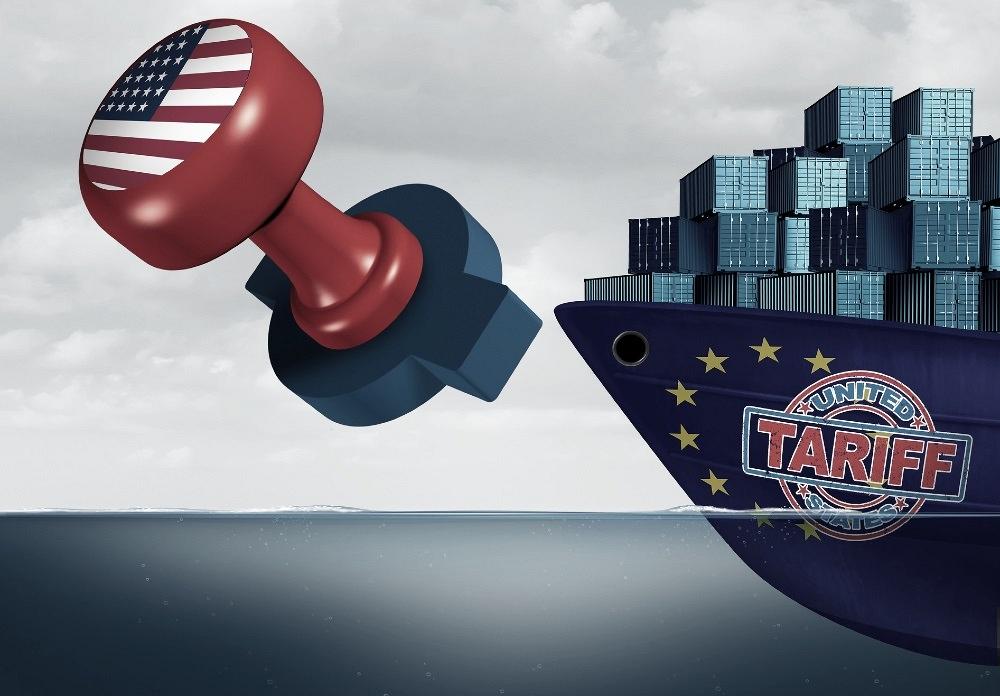
Japan asks for Section 232 deal
Japanese trade minister Koichi Hagiuda has asked the USA to exempt Japan from Section 232 tariffs on steel and aluminium imports, according to the Ministry of Economy, Trade and Industry (Meti). This follows the recent signing of the US-EU trade deal.
US commerce secretary Gina Raimondo will visit Japan, Singapore and Malaysia from 15 November to reaffirm US commitment and strengthen economic ties with allies and key partners, the government said last Sunday. On the same day, US trade representative Katherine Tai will arrive in Tokyo.
It is expected two US officials will discuss with Japanese officials a possible review of the USA’s 25% tariffs on steel imports and 10% tariffs on aluminium imports. These are the so-called Section 232 tariffs introduced by the administration of former US President Donald Trump, Kallanish notes.
Hagiuda says these measures are having a devastating effect, and he has asked the US to take action. The Japan Iron and Steel Federation said on 2 November that the recent agreement between the US and EU will result in a comprehensive relaxation of measures in the form of a tariff-free quota for EU steel. The steel industry of Japan, which he notes is an ally of the US, will be put behind the EU in terms of export competitiveness to the US.
By Kallanish Team

EUROMETAL data confirms distribution dip in September
The latest data issued by European distributors association Eurometal confirms the negative growth trend reported in the segment in September.
After a series of positive months, September shipments of strip mill products from service centres dropped 5.5% year-on-year. Multiproduct distributors saw their shipments decrease by 7% y-o-y.
“All products had a negative trend, except plates, tubular products, stainless steel and other alloy steels,” Eurometal tells Kallanish.
Despite the September downtrend, the figures for the first nine months of 2021 remained positive, with SSC flats shipments up almost 15% y-o-y and stockholders’ shipments up almost 9% y-o-y.
Emanuele Norsa Italy
Klöckner to open second site in Mexico
Distribution group Kloeckner Metals Corp. has announced the ground-breaking celebration for a new facility located in Querétaro, Mexico, to be completed in spring 2022.
Servicing the automotive and other metals-supplied industries, Kloeckner Metals Querétaro will supply hot-rolled pickled and oiled, cold rolled, galvanized and coated steel, ultra-high-strength carbon steel, aluminium, and stainless steel. It will feature a 72-inch slitter capable of processing a thickness range of 0.010”-0.250”. It will be laid out for a maximum coil weight of 80,000 pounds, a maximum tensile stress of 261 KSI (1,800 MPa), and a maximum yield stress of 195 KSI (1,300 MPa).
The facility is built to supply automotive, HVAC, and appliance manufacturers, alongside metal forming stampers and telecommunications and electronics enclosure builders, Kallanish learns from the American unit of German-based Klöckner & Co. Apart from its supply services, the house will also partner with customers on value-added programmes in both processing and the supply chain, Klöckner adds.
After 17 years servicing Mexico out of Kloeckner Metals Monterrey, located in Apodaca, Nuevo Leon, Kloeckner Metals Querétaro will be the group’s second facility in Mexico. Strategically located in the centre of the country, it will benefit from a dedicated rail spur serviced by Kansas City Southern de Mexico, the company notes.
Christian Koehl Germany
US-EU deal could create more trade cases: Irepas
The US-EU trade agreement could boost EU rebar and wire rod exports to the US, although the quotas are unlikely to be large, says the International Rebar Exporters and Producers Association (Irepas). On the other hand, it suggests trade is going to become even more regional.
Potential US-bound shipments could bring relief to EU mills suffering from costly energy but, besides the size of quotas, US-demanded product specifications do not suit EU mills, and high freight costs will restrict shipments, Irepas says.
The deal confirms protectionism is here to stay. “The US and EU are forming a new structure to trade to each other and to leave others out,” Irepas says in its latest short-range outlook sent to Kallanish. The increased regionalisation of trade will affect the whole supply chain. More trade cases, also even for downstream products, can be expected to be filed, the association observes.
Overall, lead times are back to normal, energy and logistics are the main issues affecting steelmakers, and underlying demand in Europe and North America is solid and expected to remain good in 2022, Irepas says. The Chinese market weakness could slow its imports and hit general sentiment.
Congestion in shipping and at ports is also hampering business. “Any contract that was done in the second quarter now faces huge shipping costs, thus making the contract unprofitable,” Irepas observes.
“The outlook for the global long steel market for the next quarter is satisfactory and surprisingly stable. There is a lot of downtime being scheduled for November and December, and important new capacities will be coming on to the market in 2022. It will be critical to see if these new capacities will find new customers,” it concludes.
Adam Smith Germany

Reuter replaces Schnitzer as BIR Ferrous Division president
Denis Reuter has been appointed Bureau of International Recycling (BIR) Ferrous Division president, replacing Gregory Schnitzer of Sims Metal Management.
Reuter is chief operating officer at German scrap merchant TSR Recycling, Kallanish notes.
BIR president Tom Bird says: “I am delighted to welcome Denis to the BIR Executive Committee, and I am certain that he will greatly contribute to BIR’s roadmap for the years to come. Having worked with him on the Ferrous board I am confident that he will prove to be a great asset.”
In a BIR webinar last week McKinsey & Company’s Dr Steven Vercammen said the push to reduce carbon emissions will create a large opportunity to grow scrap’s share in current steelmaking raw materials beyond its 30% average. Scrap prices are likely to disconnect from iron ore and coking coal prices as a result.
Adam Smith Germany

Tata Steel Diskussionsreihe „Let’s talk about the future“

Die Stahlbranche hat in den letzten Monaten relativ unerwartet erhebliche Schwankungen bei Preisen und Nachfrage erlebt. Dass zukünftig immer häufiger das Unerwartete zu erwarten sei und Stahlnutzer daher mehr End-to-end-Transparenz benötigten, waren einige der Kernaussagen bei „Let’s talk about the future“. Zu dieser, in 2021 zum zweiten Mal veranstalteten, Live-Diskussionsrunde hatte Tata Steel wieder internationale Stahlexperten und Vordenker aus unterschiedlichen Branchen sowie erstmals auch Live-Publikum eingeladen.
Im Oktober 2020 war man sich unter den Panelteilnehmern von „Let’s talk about the future“ noch einig gewesen: Die Erholung der Stahlbranche nach Beginn der Corona-Krise wird zwar schneller statt finden als erwartet, es würde aber vermutlich bis zu 24 Monate dauern, das Nachfrage-Niveau von 2019 wieder zu erreichen. Nachdem sich die Stahlnachfrage nun tatsächlich viel schneller erholt hat, drehte sich die Diskussion zum Auftakt der diesjährigen Veranstaltung um die Frage, inwieweit die zukünftige Marktentwicklung überhaupt noch vorhersehbar sei.
Laut Einschätzung von Russel Codling, Director Markets and Business Development von Tata Steel, sei das einzig Vorhersehbare die Unvorhersehbarkeit und Volatilität der Märkte, ein „new Normal“ werde es wohl nicht geben. Gleichzeitig stünden Stahlproduzenten vor der Herausforderung, Stahl umweltverträglicher zu machen und entsprechend umfangreich in nachhaltige Technologien zu investieren. Transparenz über die gesamte Wertschöpfungskette sei daher in diesen Zeiten umso mehr gefragt, vor allem um mögliche Preisentwicklungen für Kunden nachvollziehbar zu machen: „Stahl wird dauerhaft teurer, dafür gibt es viele Anzeichen“, so Codling. „Somit müssen Stahlhersteller weiter in Nachhaltigkeit und grünen Stahl investieren, während sich der Nachfragedruck durch mögliche Investitionsanreize der Regierungen erhöhen könnte. Das Angebot hingegen wird nicht schnell genug nachziehen, davon müssen wir ausgehen. Da Preiserhöhungen immer für Unruhe auf dem Markt sorgen, halten wir es bei Tata Steel in diesen Zeiten für besonders wichtig, mehr Transparenz gegenüber unseren Kunden zu zeigen. Beispielsweise haben wir den CO2-Zuschlag eingeführt, um das Bewusstsein für Klimakosten und die Funktionsweise des ETS in unseren Märkten zu schärfen. Wir beginnen damit, den entprechenden Geldwert auf unseren Rechnungen auszuweisen. Das macht es hoffentlich leichter nachvollziehbar, dass der Weg hin zu grünem Stahl, den wir uns alle wünschen, für uns als Hersteller auch zusätzliche Kosten mit sich bringt.“
Dass die Wirtschaft – neben der Politik und sozialen Organisationen – den Wandel zu mehr Nachhaltigkeit entscheidend mit voranreiben muss, betonte Paul Polman. Im „Sustainability“-Chat stellte der ehemalige CEO von Unilever sein neues Buch „Net Positive“ vor. Darin zeigt Polman auf, wie Unternehmen der Umwelt und Gesellschaft sogar mehr zurückgeben können, als sie von ihr nehmen, was für sie durchaus Vorteile bringt, so Polman: „Unternehmen, die aktiv Verantwortung für Nachhaltigkeit übernehmen, sind nicht nur besser für die Zukunft aufgestellt, sondern werden auf dem Finanzmarkt auch immer häufiger besser bewertet als Unternehmen, die diesen Weg nicht gehen. Die Kosten unseres Nichtstuns sind am Ende höher als die Kosten für unser aktives Handeln.“
Auch bei der Digitalisierung muss die Wirtschaftlichkeit im Vordergrund stehen. Darüber waren sich Kees Gerretse, CIO von Tata Steel, und Laurence Janssens, Manufacturing Lead bei Microsoft, im „Digitalisation“-Chat einig. „Nachdem wir die Digitalisierung 2016 zu unserem strategischen Ziel gemacht hatten, mussten wir schnell erkennen, dass wir Digitalisierung integrierter denken müssen“, erklärte Kees Gerretse. „Investitionen müssen natürlich am Ende rentabel sein, aber uns nur auf die Kosten zu fokussieren, hat uns anfangs einfach blockiert. Wir zählen in der Stahlbranche bereits zu einem Vorreiter der Digitalisierung. Um uns weiter als Innovationsführer zu etablieren, müssen wir groß denken und weiterhin mit starken Partnern zusammenarbeiten.“
Am Ende der Veranstaltung gab es noch eine Live-Schaltung ins nahegelegene Tata Steel Werk in IJmuiden. Dort wurde die offizielle Inbetriebnahme einer neuen, dritten Stranggießanlage im Beisein von Arthur van Dijk, Repräsentant des Königshauses in der Provinz Nordholland, gefeiert. Mit 220 Millionen Euro ist es die bisher größte und wichtigste Investition von Tata Steel in diesem Stahlwerk seit der Jahrtausendwende. Die neue Anlage ermöglicht die Produktion eines noch breiteren Spektrums an innovativen Stählen, einschließlich hochfester und ultrahochfester Sorten. Automobilhersteller können mit diesen Stählen leichtere, kraftstoffeffizientere und sicherere Fahrzeuge bauen. Das Großbauprojekt wurde im laufenden Betrieb umgesetzt.
Über „Let’s talk about the future 2021”
Nach dem Start der Veranstaltungsreihe „Let’s talk about the future” von Tata Steel in 2020 diskutierten nun erneut Branchenexperten der Stahlindustrie und Entscheider aus verschiedenen Anwendermärkten live im TV-Studio und zugeschaltet per Video – dieses Jahr erstmals auch vor Live-Publikum. Neben Moderator und Journalist Emanuele Norsa von Kallendish Commodities waren vier Spezialisten als Talk-Gäste geladen: Dr. James Campbell, Principal Analyst bei CRU, Isobel Sheldon, Chief Stategy Officer von Britishvolt, Laurence Janssens, Western Europe Manufacturing Lead bei Microsoft Empowering, und Paul Polman, ehemaliger CEO von Unilever. Anders als im Vorjahr gab es verschiedene Einzelgespräche, die von Vertretern von Tata Steel moderiert wurden. Beim „Technology“-Talk diskutierten Basjan Berkhout, Electrification Transition Manager von Tata Steel, mit Isobel Sheldon von Britishvolt über Batterietechnik. Im Hintergrundgespräch zum Thema „Digitalisation“ moderierte Emma McKay, Director IT Enterprise Architecture von Tata Steel, ein Gespräch zwischen Laurence Janssens von Microsoft und Kees Gerretse, dem CIO von Tata Steel. Und im „Sustainability“-Chat interviewte Annemarie Manger, Director Sustainability von Tata Steel, Paul Polman.
Alle Mitschnitte von „Let’s talk about the future 2021“ finden sich hier.
Über Tata Steel Nederland
Tata Steel Nederland ist einer der führenden Stahlhersteller Europas. Das Unternehmen liefert hochwertige Stahlprodukte an die anspruchsvollsten Märkte, darunter Bauwirtschaft, Automobil, Verpackung und Maschinenbau. Tata Steel Nederland arbeitet eng mit seinen Kunden zusammen, um neue Stahlprodukte zu entwickeln, die ihnen einen Wettbewerbsvorteil verschaffen. Tata Steel Nederland verfügt über Standorte in den Niederlanden, Belgien, Deutschland und anderen europäischen Ländern und ist Teil der indischen Tata Steel Group, einem der weltweit größten Stahlunternehmen. Tata Steel Nederland hat im vergangenen Geschäftsjahr zum 31. März 2021 einen Umsatz von 4,3 Milliarden Euro erwirtschaftet. Tata Steel Nederland arbeitet daran, bis 2050 kohlenstofffreien Stahl zu produzieren. Dazu wird die Stahlproduktion auf Wasserstoff statt Kohle umgestellt.
Bildtext (1): Tata Steel war in 2021 erneut Gastgeber für die hybride Paneldiskussion „Let’s talk about the future” – dieses Mal auch vor Live-Publikum.
Bildtext (2): Der ehemalige Unilver CEO und Vordenker Paul Polman erklärte, wie Unternehmen „net positive” werden können und stellte sein gleichnamiges druckfrisches Buch vor.
Quelle und Fotos: Tata Steel Nederland
09.11.2021 von Hubert Hunscheidt


Introduction of the OEE key figure with plug&play solution for measuring and visualizing
The acronym OEE (Overall Equipment Effectiveness) originally comes from the automotive industry and refers to overall equipment effectiveness. With the now widely used industrial indicator OEE, operators of production and manufacturing facilities have an important tool at hand to measure and evaluate the availability and performance of technical equipment as well as the quality rate achieved with it. OEE is an important cornerstone for Industry 4.0, as it analyses the losses in effectiveness of production facilities and also shows the waste of resources and resulting effects.
Manufacturing companies can make well-founded decisions at any time on the basis of OEE key figures. Automated recording has the advantage that key figures such as throughput, set-up times or document capacities are always available in real time. An analysis by production units, products, time periods, defect types and sources continuously can generate optimization opportunities that compensate for the loss of time, performance and quality and significantly increase overall plant effectiveness. In the long term, this helps to ensure the company’s own value creation in the face of growing complexity. Efficient use of resources and equipment and optimization of processes make production sustainably profitable.
The introduction of the OEE indicator often fails due to the difficult and time-consuming determination of the necessary machine-specific reference value “specified quantity”. This reference value can now be determined in a short time with the help of digitally supported measuring devices such as the so-called BoosterBOX from KALTENBACH.SOLUTIONS GmbH on the basis of automatically measured process and setup times. The BoosterBOX can be easily connected to machines of all manufacturers via Plug&Play. During operation, it then collects relevant data and displays it in clear graphics. With the associated Timer app, the qualification of good and reject parts is possible directly at the machine and takes place in the further process with two clicks. This means that the OEE figure and the basic parameters of availability level, performance level and quality level are available online at the end of each shift.
Near-term LME scrap, rebar trading volumes surge
Near-term scrap and rebar futures contracts on the London Metal Exchange showed strong backwardation over the week to Nov. 4, while trading volumes surged.
Most near-term scrap futures contracts softened on week. Platts assessed the November contract up $2/mt on the week to $493.50/mt. Meanwhile, the December contract dropped $13/mt on the week to $473/mt. The January contract fell $4.50/mt on the week to $471/mt.
The backwardated structure for the November-December portion of the forward curve strengthened significantly, suggesting that futures traders continue to expect near term scrap prices in the physical market to weaken. The backwardation structure for the December to January portion of the curve softened on week.
Spot prices for physical imports of premium heavy melting scrap 1/2 (80:20) gained 50 cents/mt on the week to $500/mt CFR Turkey on Nov. 4, after dropping to $494/mt CFR Turkey on Nov. 2, as mills accepted higher prices for new bookings.
“The CFR Turkey price has bottomed. I think we will see it creeping up and maybe can see $510-$515/mt CFR as a near-term peak, though that could take some weeks,” a UK trading source said. “Mills might struggle on rebar sales though, and this could squeeze their margin.”
“Turkish mills should take a step back for a while in order to avoid more increases, because finished product demand is not that high,” one mill source said.
Weekly LME scrap futures trading volumes over the week to Nov. 4 totaled 37,030 mt, up from 30,790 mt recorded last week.
In contrast to scrap, most near-term rebar futures contracts saw gains on the week. Platts assessed the November contract up $15/mt to $729.50/mt on the week. The December contract gained $8.50/mt to $713/mt, while the January contract dipped $4/mt on the week to $705.50/mt.
The backwardated structure of the November-December portion of the forward curve strengthened on week, suggesting that futures traders’ expectations of softening near-term rebar prices are still firm. The contango structure of the December to January portion of the curve shifted into backwardation, albeit maintaining elevated levels.
Turkish physical rebar export prices jumped $10/mt on the week to $742.50/mt FOB on Nov. 4, as Turkish rebar exporters tried to stick to higher offers, but persistently low demand made a lasting price recovery questionable.
Raised energy costs for the industry in Turkey coupled with ferrous scrap pricing hitting $500/mt CFR Turkey, pushed Turkish mills to look for $750-$765/mt FOB for their rebar exports, the highest level since May. However, rebar demand did not follow to support the recent hikes in asking prices, multiple sources agreed.
Rebar futures weekly trading volumes this week on the London Metal Exchange totaled 11,150 mt, significantly higher compared to 2,310 mt traded volume last week.
The daily outright spread between Turkish export rebar and import scrap was assessed at $242.50/mt Nov. 4, up $9.50/mt on the week.
Elsewhere, Indian scrap futures weekly trading volumes over the week to Nov. 4 on the London Metal Exchange totaled 210 mt, matching the volume traded over the week to Oct. 28.
A total of 870 mt has traded so far on the contract, which settles basis the Platts CFR Nhava Sheva shredded scrap index, since its launch in late July 2021.
— Rabia Arif


UK steel sector deal needed to support industry: parliamentary committee
The UK parliament’s Business, Energy and Industrial Strategy (BEIS) Committee called on the government to establish a steel sector deal to address long-running challenges to the industry’s competitiveness, including high energy prices and barriers to supplying steel for major public projects.
The deal should be made part of a strategic plan for decarbonizing the industry and protecting jobs, the committee said in a report published Nov. 5.
The UK steel industry is in urgent need of government support with long-standing issues such as electricity costs and improving the use of public procurement, but the government should go the extra mile by bringing forward a steel sector deal to help UK producers compete internationally and transition to a low-carbon future, the report said.
It notes decarbonizing the steel industry – given its significant contribution to greenhouse gas (GHG) emissions – is an important part of meeting the government’s target to bring all GHG emissions to net zero by 2050 and to cut them by 78% by 2035.
However, the government currently lacks a roadmap or overarching strategy for decarbonizing steel, the report said, identifying a range of technologies fit for the task, but adding that the steel sector was holding off from investing in them without certainty and direction from government.
The committee recommends the steel sector deal deliver a cohesive plan for decarbonizing the steel industry which should be announced no later than summer 2022.
This year’s soaring natural gas and power prices prompted Liberty Steel UK, part of metals and energy group GFG Alliance, to run its Rotherham electric arc furnace – one of the UK’s most electro-intensive industrial sites – at night (between 11 pm and 6 am) when energy tariff is lower.
Back in September, steelmaker British Steel said – because of the UK’s high dependence on gas for power generation – spiraling energy bills were putting the UK steel industry at an increasing disadvantage to its European counterparts.
Among other concerns, the report was prompted by the collapse in March 2021 of UK-based Greensill Capital, the main lender to GFG Alliance, and an interrelated cash squeeze felt at a few GFG Alliance-owned companies.
“The systemic issues at the heart of GFG Alliance has highlighted the vulnerabilities of Liberty Steel and its place in the wider steel sector in the UK,” Darren Jones, Chair of the BEIS Committee, said in a statement.
— Ekaterina Bouckley
German steel outlook bullish despite lower output expectations: Platts survey
German steel producers, distributors and traders were found to be bullish on pricing over November, following the BlechExpo fair, where participants left with expectations of higher prices for Q1, though the short term is still expected to be mostly stable, data from the S&P Global Platts monthly steel sentiment survey showed.
As automotive demand continues to weaken, most participants were also in agreement about higher inventories due to more previously agreed automotive volumes now back up for grab, with production therefore expected to be lower as several producers stop their galvanizing lines.
The survey, which is used to compile an index demonstrating pricing sentiment, was conducted at the beginning of this month and showed the overall expectation for steel prices at 59, up 34 points from October, with all participants largely in consensus over the bullish direction.
“It won’t be the higher prices we had in the last 12 months, but they will be firm,” a German distributor told Platts. “Stockholders and end-buyers have been trying to point out some negative trends, but the mills are very strong. You also have the US market opening to a certain extent and protectionism against imports.”
The US and EU decision to replace the US Section 232 tariffs on European steel and aluminum imports with a tariff-rate quota (TRQ) effective Jan. 1 sparked a wave of bullish sentiment. Market sources had been waiting on the outcome of EU-US discussions since the summer, with many buy-side sources fearing higher domestic prices if mills decide to send material overseas.
“Lead times are shorter, and from the Section 232 announcement for European steel into the US, a lot of material will disappear,” a second German distributor warned.
The aggregate yearly import quota volume under the TRQ system is set at 3.3 million mt and is country-specific, coming under 54 product categories.
There was also a hesitancy to buy from imports as foreign producers started increasing their prices, with Russian import prices having risen steadily to Eur910/mt CIF Antwerp this week. Concerns about Turkish material were also apparent, with European buyers weary of additional risks due to a weakening economy and political instability.
European inventories up, production levels dip
European mills have become inundated with unneeded automotive volumes and imports since cleared from over the summer. This coupled with quiet domestic demand has led to larger inventories.
Buyers are in no rush to buy as they look to exhaust the stocks they have built up due to the shortage from several months ago, and lead times having shortened to as little as three weeks.
Some major European mills were heard to be looking for spare warehouse space to accommodate the upwards of 30,000 mt of available HRC not taken by automotive manufacturers.
A Benelux-based buyer source said activity had been very muted due to “capacity problems,” with customers having bought more than they needed.
“For us there’s no reason to buy because the lead times are so short,” the buyer said.
The index for inventory sentiment stood at 55, suggesting a moderate rise in stored volumes, with an index of 50 denoting stability. This was down from the bullish period in October when the index stood at 77. Steel producers were the most bullish on inventory increases for November with an index of 60, while traders stood at 50.
Production outlook for November were bearish with the overall index at 49, suggesting a decrease as mills pause their galvanizing lines due to weakening automotive demand. Most bullish in this category were traders at 58, followed by producers at 40.
Sources told Platts the situation with automotive and rising energy costs was making some European producers reconsider their production plans.
“They [mills] are stopping galvanizing lines for lack of demand,” a European service center source said. “Can see in October production lines were stopped in automotive, there are also electricity issues with zinc smelters.”
— Amanda Flint, Laura Varriale