


India becomes Turkey’s top HRC supplier with competitive prices
Although the gap between domestic and imported hot-rolled coil prices narrowed in Turkey in September, amid the sharp decline seen in domestic mill offer prices on low demand, Turkish buyers continued their imports from foreign suppliers in that month, particularly from India.
According to the latest monthly Turkish Statistical Institute (TUIK) data, Indian mills that were not traditionally one of Turkey’s HRC suppliers, sold significant volume to Turkey with competitive prices again in September.
Turkish buyers imported 120,000 mt of HRC from India in September, although no HRC cargo was imported from India in the same month the previous year. Turkey’s nine-months’ HRC imports from India reached 517,700 mt, up from zero in January-September 2020.
Turkey’s imports of HRC from CIS countries, traditionally Turkey’s largest HRC suppliers, remained strong year on year in September, the latest TUIK data showed. HRC imports from Russia reached 120,600 mt in that month, 87% higher on year, while imports from Ukraine rose by 85% on year to 95,900 mt.
Highlighting that the share of imports in Turkey’s total steel consumption reached as high as 48%, the Turkish Steel Producers’ Association (TCUD) said precautions should be taken to limit these imports, particularly from Russia, Ukraine and India, which were made within the scope of the inward processing regime (DIR) exempting exporters of finished products, such as pipe makers, from feedstock steel import duties.
Turkish buyers’ HRC imports from Japan totaled 24,600 mt in September, sharply down from 64,900 mt imported from that country in the same month the previous year, while imports from China reached 16,700 mt, compared to zero in the same month of 2020.
Turkish buyers also imported 13,700 mt of HRC from Brazil in that month, up from zero in the same month the previous year.
HRC imports from one of Turkey’s traditional suppliers, Romania, reached 12,200 mt in September, up 25% on year, while Turkish buyers’ HRC imports from France totaled 10,800 mt, sharply down from 33,100 mt imported in September 2020, the latest data showed.
— Cenk Can


Brazil temporarily slashes import tariffs on steel products
Brazilian economy ministry has temporary reduced the import tariffs over a variety of steel products, aimed at easing the effects of coronavirus pandemic in the national economy, the ministry said Nov. 5.
The measure – valid until Dec. 31, 2022 – covers from raw materials such as pig iron, ferroalloys, to semi-finished ingots, billets, slabs and flats and long steel products, including tubes & pipes, the ministry said in a statement published in the official gazette. Specialty steels were also cited.
Carbon hot- and cold-rolled coils, rebar and wire rod had their 12% import tariff cut to 10.8%, the ministry said
Industry associations – such as for machinery and equipment, Abimaq; for automakers, Anfavea; and for construction, CBIC – have been seeking the tariff cut or removal since the jump in steel prices in mid-2020 and a period of restricted supply.
Aço Brasil Institute said earlier this year that rising raw materials costs such as iron ore, scrap and met coal were “the reason for the adjustments in steel prices in Brazil and in the world.”
According to the government, the measure does not harms regional agreements, as it was taken due to the urgency situation raised by the coronavirus pandemic.
Brazilian domestic hot-rolled-coil prices have increased 173.85% from January 2020 to date to Real 6,600/mt, ex-works, according to Platts’ Nov. 5 assessment. Before that, the price reached a peak of Real 7,000/mt on May 21.
Brazilian domestic rebar price increased 111.4% from January 2020 to Real 5,000/mt, ex-works, on Nov. 5. The price previously reached a peak of Real 6,050/mt in June 21.
According to national flat products distributors association Inda, a large number of ships is waiting to dock at Southern Sao Francisco do Sul Port, causing congestion and further delivery delays.
Moreover, a high volume of imported material was reported sitting at the port, much of it awaiting customs clearance, according to one trader who said there is no more space available at bonded warehouses.
“A part of this volume may now be nationalized, causing further pressure on domestic prices,” said the trader, estimating a normalization by the end of Q1 2022.
Another importer said that the ministry cut to tariffs would result in very little change, since the final product price will not “even have this 1.2 percentage points of discount in the end. It helps but it is not a solution,” he said. “Only the foreign exchange fluctuation resulted in a 10% raise in the last shipment we brought.”
— Jose Guerra
Iron ore hits lowest since May 2020
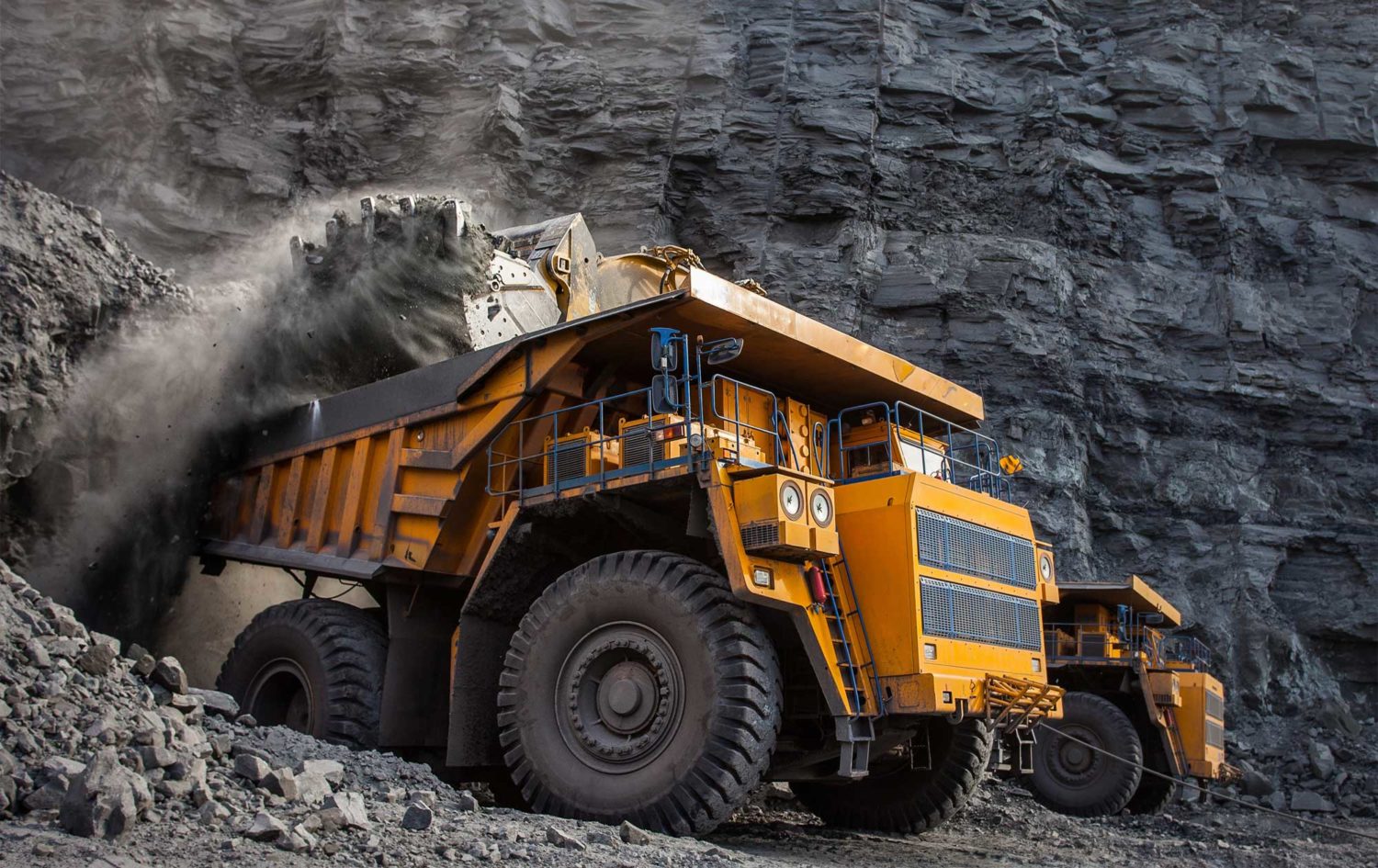
Seaborne iron ore prices slumped again on Friday, with the Kallanish KORE 62% Fe index breaking the $100/tonne barrier and hitting the lowest since May 2020. Prices are still trending lower with sentiment in Chinese steel markets very weak.
The Kallanish KORE 62% Fe index fell $2.99/t to $97.62/dry metric tonne cfr Qingdao. The Kallanish KORE 65% Fe index dropped $3.63/t to $115.90/dmt cfr, and the KORE 58% Fe index declined $2.30/t to $74.53/dmt cfr. 188,000 tonnes of FMG Super Special Fines sold at a floating price.
On the Dalian Commodity Exchange January 2022 iron ore settled down CNY 16.5/t at CNY 562.5/t ($87.89/t), while on the Singapore Exchange December 62% Fe futures settled down $2.46/t at $91.47/t. The same contract for 65% Fe and 58% Fe futures settled down $3.77/t at $109.08/t, and down $2.16/t at $68.64/t respectively. Tangshan billet remains stuck at CNY 4,770/t.
Seaborne iron ore prices fell below levels seen the previous two times that post-pandemic prices broke under $100/t, in July 2020 and September 2021. Prices now look set for a sustained fall under $100/t for the first time since early 2020. Chinese steel market sentiment has weakened to the extent that export traders are short selling material for early 2022 delivery, and domestic traders are expecting prices to fall further by the end of the year.
Chinese port stocks continue to tick higher, but at a slower pace than the previous week. Across 35 ports stocks hit 145.12 million tonnes, up 2.29mt over the week, according to SMM. Drawdown from port stocks, especially in northern China, remains very slow on restricted steel output.


Russel earnings remain at record-high levels
North American service centre chain Russel Metals’ earnings remain at record-high levels in the third quarter, Kallanish learns from the company’s latest performance results.
Russel earned CAD 132 million ($106m) on sales of CAD 1.11 billion in the third quarter, up from record-high second quarter earnings of CAD 118m on sales of CAD 1.07 billion. On-year, the company’s quarterly earnings remain up, above Q3 2020 earnings of CAD 18m on sales of CAD 615m.
According to Russel, metal service centres have experienced an 87% on-year increase in steel selling prices. Q3 steel prices are 19% above Q2, it adds.
“Over the past 15 months, we have significantly repositioned our business portfolio with the strategic objectives of enhancing returns, increasing margins and reducing volatility,” explains Russel ceo John Reid.
Zach Johnson USA
Olympic posts record results on strong shipments, demand
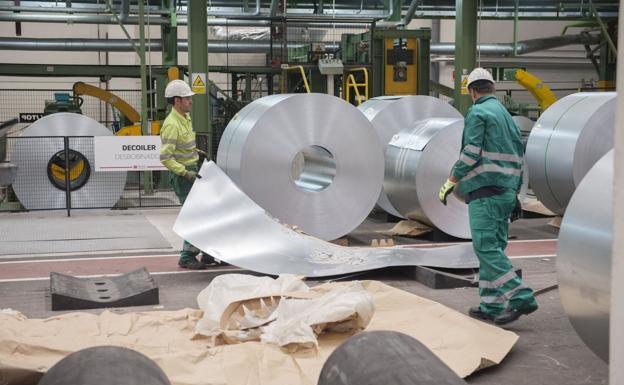
As it reports record quarterly results, service centre chain Olympic Steel says its shipments this year have been outpacing the rest of the industry. Despite supply chain disruptions, the company reports continuing strength in demand and shipping volumes.
Olympic sold 244,519 short tons of carbon flat products and 41,203 st of specialty flats in the third quarter. Compared to Q3 2020, shipments were up 9% and 22%, respectively. The carbon flats division reported a 121% on-year rise in average selling prices to $1,655/st and a 66% increase in specialty flats prices to $3,985/st during Q3.
The company posted Q3 net income of $44.5 million on sales of more than $668m. This compares to a Q3 2020 net loss of $1.52m on sales of $300m.
“Our third-quarter financial results represent the best quarterly performance in Olympic Steel’s history. Sales, net income and Ebitda significantly exceeded our previous records set in the second quarter of this year,” says ceo Richard Marabito in an earnings release reviewed by Kallanish.
During the quarter, Cleveland-based Olympic sold its carbon flatrolled distribution business in Detroit, then acquired stainless distributor and fabricator Shaw Stainless & Alloy. The company says it is continuing to make investments in processing and automation equipment while it also pursues its long-term strategy of diversifying its business.
Laura Miller USA
Russel acquires Boyd Metals
North American service centre chain Russel Metals plans to acquire the southern US metal service centre chain Boyd Metals in a $110 million deal, Kallanish understands.
Boyd Metals has five service centres operating in the southern US with two locations in Arkansas, one location in Missouri, one location in Oklahoma, and one location in Texas.
According to Russel, the recent acquisition is part of the company’s ongoing repositioning efforts to increase both its returns and revenues.
“We believe their culture, experienced management team and business platforms are very much aligned with our existing business as we look to further expand our US service centre footprint. We look forward to having all of the Boyd employees as part of the Russel family,” says Russel ceo John Reid.
Recently, Russel earned CAD 132 million ($106m) on sales of CAD 1.11 billion in the third quarter of 2021 (see related story).
Zach Johnson USA
German crude production reaches 30mt
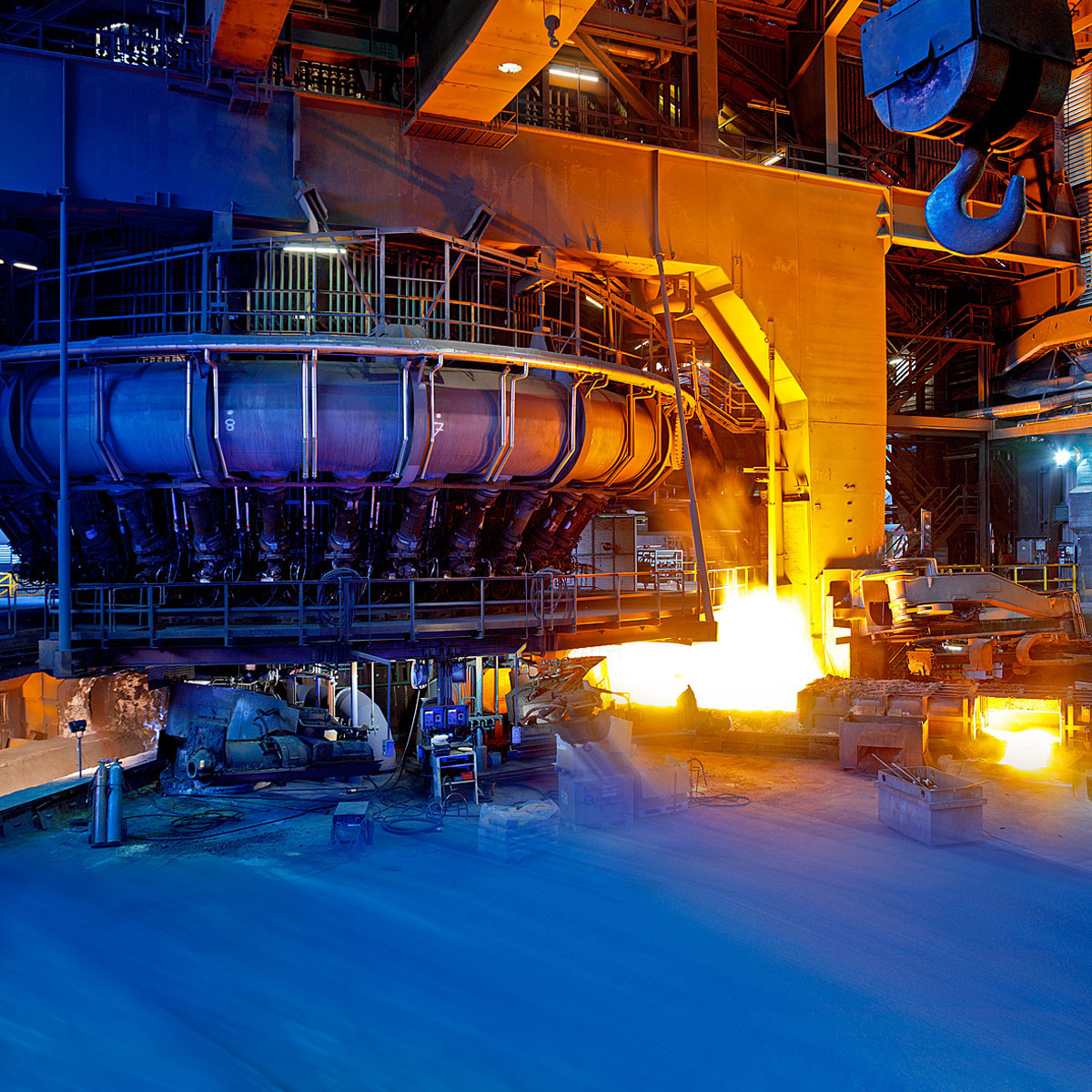
Germany’s mills produced 29.91 million tonnes of crude steel in January-September, Kallanish learns from the latest figures provided by steel federation WV Stahl.
Following the summer months, production in September picked up to 3.34mt, two thirds of which were made by the oxygen route, one third by the EAF route. Apart from summer shutdowns mostly at EAF mills, the three months to September were also marked by a reline of a big blast furnace at thyssenkrupp, which resumed production by October.
Assuming a healthy level of demand from consumer industries, it is therefore likely that output in subsequent months will be altogether higher, and that annual production might reach the mark of 40mt.
Christian Koehl Germany

Acciaierie d’Italia to decarbonise through hydrogen
Acciaierie d’Italia and gas operator Snam will start joint research to develop certified steel products for the safe transport and storage of hydrogen. So says Snam technical business unit hydrogen head Dina Lanzi in a video presentation of the Taranto steelworks decarbonisation seen by Kallanish.
A memorandum of understanding signed between the two firms will involve progressive decarbonisation of the Taranto’s steelworks, moving from natural gas to renewable gases such as biomethane and green hydrogen. Acciaierie d’Italia and Snam will create synergies on their respective research and development centres to develop a system of production, distribution and storage of hydrogen, Lanzi says.
In Taranto, Snam implemented a hydrogen blending test at 10%. Now the company signals a successful test at 30%, a confirmation that the Taranto plant is ready for hydrogen, The two firms will accelerate R&D, “trying to understand which retrofitting actions will have to be implemented on the existing equipment to increase the hydrogen percentage in the blending”, Lanzi says.
The collaboration will also transform the past temporary hydrogen blending pilot projects into permanent applications, Lanzi concludes. Taranto can support the first hydrogen mass production for industrial applications in Italy, she adds.
The plant’s decarbonisation will be financed in part by funds from the European recovery fund, Piano Nazionale di Ripresa e Resilienza (PNRR).
Natalia Capra France
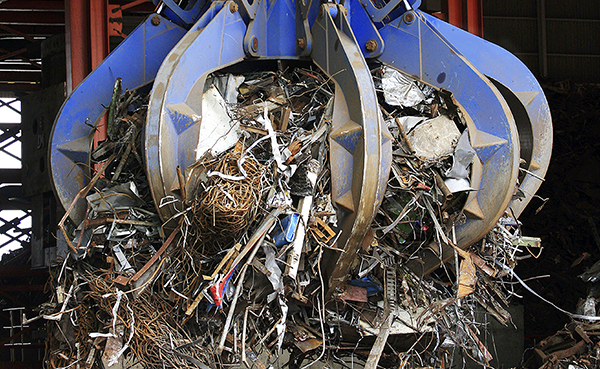
Decarbonisation ‘disconnects’ scrap from raw materials: BIR
The push to reduce carbon emissions will create “a large opportunity” to grow scrap’s share in current steelmaking raw materials beyond its current average of 30%, said McKinsey & Company’s Dr Steven Vercammen in a Bureau of International Recycling (BIR) webinar this week.
The key challenges, added Vercammen, senior knowledge expert at the consultancy, are to extract more scrap from the system and to enhance quality.
Having traditionally followed iron ore and coking coal trends, scrap prices are likely to “disconnect” as a result of “this whole decarbonisation pressure and the importance of using more scrap to be able to reduce CO2 emissions”, said Vercammen.
Prices of value-added scrap will increase, agreed Dr Benedikt Zeumer, McKinsey partner. “Recycled materials will be much more favourable in terms of CO2 emissions and probably also energy intensity,” he contended.
“A few years ago, there was concern that China might become a huge scrap exporting country, with the effect that it would hurt scrap prices around the world,” observed Scott Newell, chairman of US-based Newell Recycling Equipment and vice chairman of China Recycling Newell Equipment.
“The opposite is what is happening. China will need to import scrap rather than iron ore and coal in order to reach the goals of a cleaner environment and more cost-effective steel production,” he added.
Around 630 million tonnes of steel scrap are recycled worldwide every year, preventing nearly 950mt of CO2 emissions and making “a decisive contribution to climate protection”, confirmed BIR Ferrous Division statistics advisor Rolf Willeke. Adding in scrap usage within the foundry sector, annual CO2 emission savings amount to over 1 billion tonnes, Kallanish notes.
Willeke highlighted a 47.1% surge in China’s steel scrap consumption to a world-topping 137.95mt in the first six months of 2021. This reflects the objective announced in China’s latest Five-Year Plan to reduce CO2 emissions in crude steel production through increased steel scrap usage.
George Adams of SA Recycling said mills in the US “continue to make record profits on wide margins between scrap and new steel prices”. Barring unforeseen events, he added, “the US scrap market can be expected to remain steady and range-bound through to the end of 2021 on continued logistical delays and steady new steel demand”, with any bias towards “a slight upside, especially for shredded”.
Scrap prices in Japan have remained “in a rather high range” over recent months whereas exports have been on a downtrend, according to Ted Taya of Shinsei Scrap Co.
Denis Reuter of TSR Recycling in Germany said the outlook appears “difficult” for the remainder of the year, not least because steel production cuts of 15-20% are projected for this period in response to soaring energy prices.
Burcak Alpman Turkey
EC to announce waste regs Nov. 17; EU H1 scrap exports soar 49.3%
The European Commission’s updated European Waste Shipment Regulation – which could affect ferrous and non-ferrous scrap trade – should be announced Nov. 17, a Commission spokesperson said Nov. 4.
However, nothing can yet be shared on its content, the spokesperson told S&P Global Platts in an email. The EU’s Waste Shipment Regulation has been in force since 2006, and has been updated various times, and has again been under review with industry collaborators since 2020.
Publication of the revised regulation will follow months of speculation on the possibility that the EC will restrict regional exports of both ferrous and non-ferrous scrap in order to secure local supplies of materials considered key in the metals industry’s decarbonization process and establishment of the circular economy, particularly in view of a recent surge in ferrous scrap export levels. Scrap-based production typically uses a fraction of the energy used in production using virgin materials.
Any blanket export scrap ban, particularly for ferrous scrap, is considered highly unlikely, due to the high volumes of ferrous scrap generated within the EU, particularly in heavy melting scrap, which wouldn’t be fully absorbed by the domestic EU market.
According to data released Nov. 4 by Brussels-based International Recycling Assn BIR, the EU’s ferrous scrap exports in the first half of the year soared to 11.24 million mt, up 49.3% year on year, maintaining the EU’s position as the world’s top steel scrap exporter despite Brexit – the UK is also a significant exporter of ferrous scrap. Market observers note some concern over what might happen in the revision to higher Fe-yield ferrous scrap grades like shredded, bonus and plate and structural, but usually EU steel mills already pay a premium over what recyclers can achieve in the export market.
Fears of trade distortions
However, any export restrictions risk distorting traditional scrap trade flows as they could push up international market prices at the same time as reducing regional prices within the EU, which might discourage regional scrap collection, industry sources have said. In recent months, prices for regional ferrous scrap exports to Turkey, the world’s biggest ferrous scrap importer, soared to record levels exceeding $500/mt on supply chain disruptions and growing demand from Turkey’s growing electric arc furnace-based steelmaking sector. Ferrous scrap demand is set to grow worldwide in the coming years as steelmakers strive to expand production via EAFs, whose production is less carbon-intensive than from blast furnaces, which use coal and iron ore as raw materials.
Market sources have nonetheless indicated that Turkey, in its role as the largest ferrous scrap importer globally, is unlikely to be affected by the current EU revision. Non-OECD countries, possibly including India and Pakistan, are more likely to be affected, sources have said.
Turkey’s overseas steel scrap purchases in the first half of the year leapt 33.2% year on year to 12.87 million mt, BIR said.
Platts assessed Turkish imports of premium heavy melting scrap 1/2 (80:20) Nov. 4 at $500/mt CFR, up $5/mt on the day.
Around 630 million mt of steel scrap is recycled worldwide every year, preventing nearly 950 million mt of CO2 emissions and making “a decisive contribution to climate protection”, BIR Ferrous Division’s Statistics Advisor Rolf Willeke was cited as saying in BIR’s Nov. 4 statement. Adding in scrap usage within the foundry sector, annual CO2 emission savings are seen to amount to over 1 billion mt.
Willeke highlighted a 47.1% year-on-year surge in China’s steel scrap consumption to as much as 137.95 million mt in the first six months of 2021. According to the BIR official, this reflects the objective announced in China’s latest Five-Year Plan to reduce CO2 emissions in crude steel production through increased steel scrap usage.
Non-ferrous
Possible curbs by the EC on regional exports of non-ferrous metal scrap could reduce international metal recycling rates, running counter to circular economy principles, according to speakers at BIR’s non-ferrous metals division forum this week. Traditional importers of scrap could go short of metal supplies and be obliged to source more primary metal to meet their requirements as a result, BIR officers said.
BIR sources indicated the EC revision of waste export is based on environmental and not trade considerations, with the aim of curb exporting scrap to countries that don’t meet the same environmental standards as EU countries.
— Diana Kinch and Viral Shah