


EU HRC in ‘wait-and-see’ mode with Q1 prices dependent on auto sector
The European HRC market showed further signs of stability Nov. 15, with prices in a stalemate amid automotive contract negotiations and fears of higher energy costs bolstering the bullish sentiment, sources told S&P Global Platts.
Despite the shortfall in automotive demand, European mills were trying to keep production running while also finalizing large volumes for lower prices, though market sources have said this was likely to cease in the new year once the semiconductor issues resolve.
A European mill source said he was already seeing positive signs for next year, with some major original equipment manufacturers announcing full schedules, suggesting greater production for first-quarter 2022.
“OEM schedules are promising – plants are running at full speed and there is a broader sense that the industry is improving,” the mill source said. “On the supply side, mills are willing to take the opportunity to do maintenance now that we’re managing the supply situation. We are optimistic for next year.”
The source said he was confident renewed automotive demand in Q1 would utilize the short-term overstocking many mills and distributors were currently trying to mitigate.
Ongoing problems with transport and packaging logistics, including a shortage of truck drivers in Germany and a scarcity in paper and wood, was also adding to the bullish sentiment as industry manufacturers remained severely hampered by these supply chain issues.
In the Italian market, a steel coils distributor was less expectant of higher prices for Q1, and instead cited prices for CRC and HDG around Eur20/mt lower than the current Italian spot market.
The source said he expected CRC prices to settle at Eur1,100/mt ex-works Italy and Eur10/mt higher for HDG. For HRC, Q1 prices were expected within Eur920-930/mt EXW Italy.
“They’ll be lucky to finalize at Eur920-930/mt for Q1 Italian market,” the distributor said. “We will continue to wait for beginning of next year. I have no confidence in final demand of the markets – there are some inquiries but not so much due to automotive call-offs.”
— Amanda Flint


Primetals sells Technologies Italy, reorganises long products
Primetals Technologies has transferred all its shares of Primetals Technologies Italy S.r.l., Marnate, to Callista Private Equity GmbH, a financial investor based in Munich, Germany.
As part of the transaction, Primetals Technologies Italy will be renamed to Pomini Long Rolling Mills S.r.l. (Pomini). The intellectual property of Primetals Technologies Italy is entirely transferred to Pomini, Kallanish learns. Primetals and Callista Private Equity have agreed to continue collaborating on certain types of long product rolling mills, WinLink plants, and in the field of mini-mills for long products on a project-by-project basis.
The group also announces it is bundling its in-house key product offerings for Long Rolling business under the lead of its two Centres of Competence (CoC). The one in Sutton, Massachusetts, USA, will focus on wire rod mills, bar in coil lines, combination mills including wire rod, bar in coil and straight bar outlet, high speed rebar mills, and nonferrous applications. The other one is the Electrics & Automation for Long Rolling Mills unit in Erlangen, Germany, supported by regional entities in Poland, Russia, India, China, and the USA.
In future, the WinLink technology – which directly links a high-speed caster to a high availability rolling mill for long products – will be owned by Primetals alone. Engineering, research and development, and project management for long rolling mills will be concentrated at Sutton, Massachusetts, the company adds.
Christian Koehl Germany

Tata Steel UK maintenance to spare deliveries
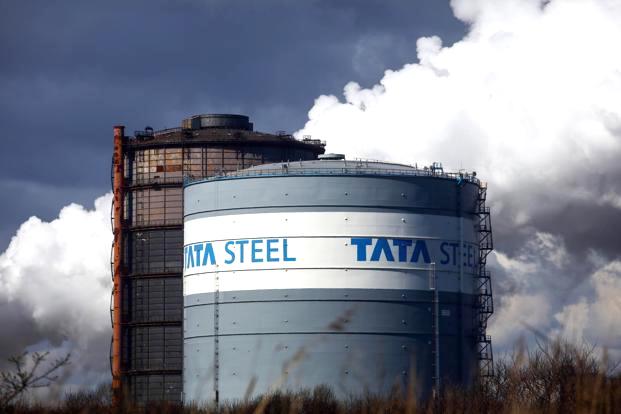
A Tata Steel spokesperson confirms the group is planning to carry out maintenance at some of its UK mills during December, but stresses this will not have an impact on customers.
Sources in the market suggest the maintenance will be carried out at the Port Talbot mill between 3 and 22 December. Kallanish understands two of the mills at the site will be under maintenance during that period, but the company does not expect this downtime to impact deliveries as they are part of planned annual operations.
The integrated Port Talbot site can produce up to 5 million tonnes/year of crude steel.
Emanuele Norsa Italy
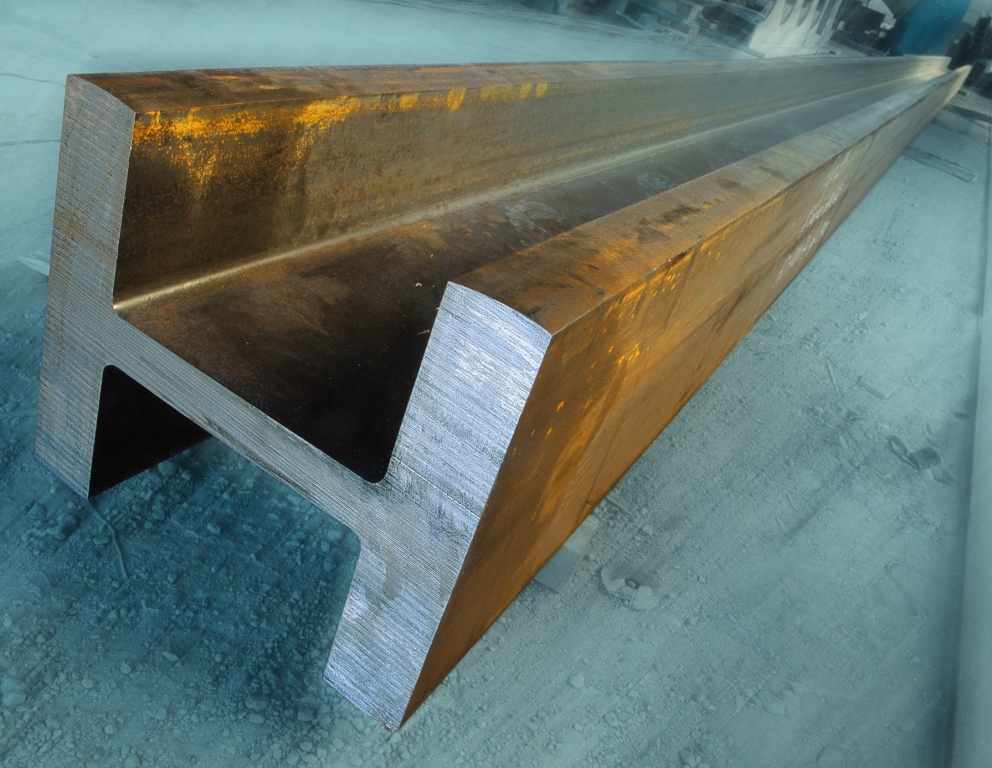
European sections subject to speculation, says Salzgitter
Following high demand for sections in the first half-year, order bookings had markedly decreased by the end of September, Salzgitter observes.
In H1, demand was driven by restocking, but also by speculation about further price hikes. Since late summer, sections mills have had increasing difficulty securing utilisation, Kallanish learns from Salzgitter’s nine-month report. Notably, the company points out that real demand has actually not changed overall.
Salzgitter attributes this to speculative buying patterns, both of the stockholding steel distributors and of end consumers. “Many had assumed that the available volumes would become increasingly scarce, making it difficult to secure supplies, and that prices would continue to rise, prompted by stable demand,” it writes in the report.
This scenario did not play out, however, Salzgitter concludes. The reductions in inventory anticipated in August did not take place, and have not occurred in September either. Instead, inventory turnover remained at a weak level, with all manufacturers producing again after downtime in the summer, and delivering large volumes. This resulted in rising inventory levels at stockholders.
At Salzgitter, sections are combined in a business unit with heavy plate. The unit delivered 458,000 tonnes in total in the third quarter and 1.499 million tonnes in the first nine months. It lifted its revenue to €503 million ($576m), from €306m in Q3 2020, and returned to an Ebit of €19m, against a loss of €39m a year earlier.
Christian Koehl Germany

Chinese real estate confirms worst crisis since 2015
Data on China’s real estate sector in October was the weakest since the major contraction in 2015. Indicators of construction activity and house prices were all weak and the sector is expected to continue to weigh on steel demand, Kallanish notes.
Completed investment in real estate is still up 7.2% year-on-year to CNY 12.493 trillion ($1.98 trillion), according to the National Bureau of Statistics (NBS). That implies however that in October investment was down 5.4% y-o-y at CNY 1.237 trillion. Falling investment has come amid credit tightening and developers being forced to offload apartments at a discount.
Real estate sales by volume were up 7.3% y-o-y at 1.43 billion square metres over ten months, but in October they were down 21.7% y-o-y at 123.9 million sqm. Average prices also fell in October to CNY 9,749/sqm, the third consecutive month of decline and the lowest since April 2020. The NBS survey of 70 cities showed new house prices falling on-month in 52 cities, the most widespread decline since early 2015, when rebar prices fell to less than half their current level.
Weak prices and financing are likely to keep steel demand low for some time. Indicators of construction are all collapsing. New starts year-to-date are now down 7.7% at 1.667 billion sqm, with October new starts down 33.1% y-o-y at 137.92m sqm. Completions meanwhile are still up 16.3% y-o-y year-to-date at 572.9m sqm, as developers rush to market to raise cash to pay off their debts. Despite this, October saw completions drop 20.6% to 62.77m sqm as this strategy starts to run out of steam and developers seek to avoid collapsing prices further.
A very brief rebound in futures prices was triggered last Thursday on reports that China would allow developers more leeway in managing their debts by issuing bonds. China now faces a decision over how hard it can press the real estate sector without triggering a wider economic slump.

Alro plans to build distribution centre in Iowa
Michigan-based US service centre chain Alro Steel plans to build a new $20 million distribution centre in southwestern Iowa, Kallanish understands.
Earlier this month, Alro received approval from the city council of Cedar Rapids, Iowa, to receive tax incentives to build a new 199,200 square-foot distribution centre.
According to the project proposal by Alro, the new facility qualifies under the city’s high quality jobs benefit programme, as the centre will create over 40 new jobs. Under the city’s high quality jobs program, projects that create over 10 or more high wage jobs (over $24.20/hour) can receive a tax rebate, with the standard incentive deal being a 10-year, 50% increment tax rebate on the project’s investment.
“We’re attracting a new business to Cedar Rapids, going along with our big emphasis in attracting large warehousing organisations, and Cedar Rapids is really becoming a hub for warehousing on a national basis. And this is a diversified company that we’re bringing into the area,” says council member Scott Overland in support of the project, during a city council meeting.
The Cedar Rapids council estimates the investment will generate $5.2m in new taxes over a 10-year period.
Zach Johnson USA

US Supreme Court asked to resolve Sec. 232 Turkish tariff dispute
The US Supreme Court is expected to decide by early next year whether to hear the case of a Turkish steel pipe producer impacted by a doubling of US tariffs against Turkey in 2018, according to a Nov. 12 statement by lawyers for pipe maker Borusan Mannesman.
International trade attorneys at Atlanta-based Morris, Manning & Martin (MMM) joined with Borusan and two other plaintiffs to file a Supreme Court petition to review a lower court decision on the Transpacific Steel v. United States case, which challenged the legality of the Trump administration’s boosting of Turkey’s Section 232 tariffs from 25% effective in March 2018 to 50% in August of that year.
The higher tariffs remained in place until May 21, 2019 when they were lowered back to 25% by President Trump.
The US Court of International Trade (CIT) agreed in July 2020 that Trump’s action violated the terms of Section 232 of the Trade Expansion Act of 1962 because he failed to follow the prescribed timeline and procedures established by the Act. But the CIT’s decision was overturned by the Court of Appeals for the Federal Circuit, which ruled that the deadlines in the Sec. 232 provision are not mandatory.
If the Supreme Court hears the case, attorneys for the plaintiffs will argue that Trump’s doubling of the tariffs “was well after the 90-day and 15-day deadlines for action had expired” and that “the deadlines in the statute are mandatory and must be enforced.”
Furthermore, MMM said in its statement that “if the deadlines are held not to be mandatory, then Section 232 is unconstitutional as an unbounded delegation of legislative authority to the President.”
Transpacific Steel, a US importer of steel, demanded in its CIT complaint that it be refunded the additional tariffs it paid after Trump’s action to double the levies for Turkey to 50% while other nations facing the tariff were kept at the initial 25% rate.
— Tom Balcerek
Yildiz to reach 900,000 mt/year galvanizing capacity with new line
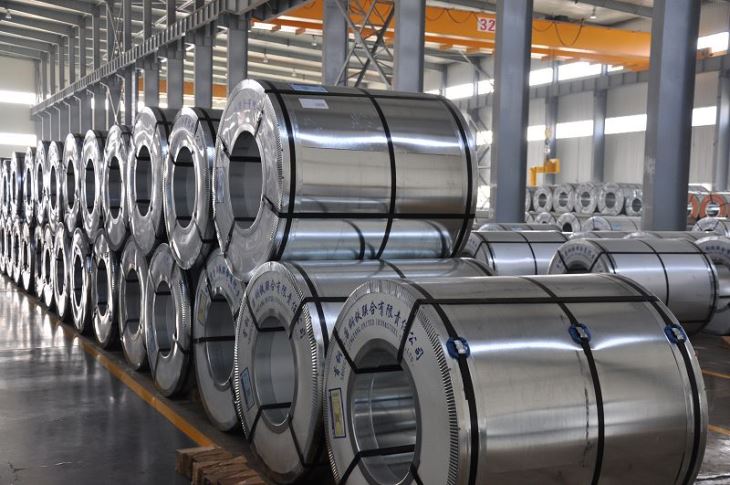
Turkey’s Yildiz Demir Celik, announced that it is targeting to reach 900,000 mt/year of galvanizing capacity with a new line to be started in the first quarter of 2022.
The thickness of the material to be produced will be 0.20-2.00 mm and its width will be 700-1.550 mm. The coating weight will vary at 30-600 g/m², Platts learned from a company statement on its website.
The investment will significantly increase value-added steel production and increase annual turnover by 40%, said Erhan Ozdemir, deputy general manager of the company.
“We are also preparing for the third galvanizing line as our second line investment is currently in the assembly phase. We will increasingly continue our investments in this field,” the manager added.
Yildiz Demir Celik’s cold-rolling mill complex in Kocaeli, has a continuous pickling tandem line capacity of 1.5 million mt/year.
The company has 400,000 mt/year of hot-dip galvanized coil capacity, 150,000 mt/year pre-painted galvanized iron (PPGI) and 300,000 mt/year cold-rolled coil capacity.
Yildiz Demir Celik is targeting to increase its capacity further in the coming years to meet rising demand of the automotive, white goods, panel radiator, general manufacturing and construction sectors.
— Cenk Can
US, Japan to jointly address steel, aluminum overcapacity
US Commerce Secretary Gina Raimondo and US Trade Representative Katherine Tai have started consultations Nov. 12 with Japan to address global steel and aluminum excess capacity and take effective measures to ensure the long-term viability of the two metals industries.
“Secretary Raimondo and Ambassador Tai reiterated concerns about the impact on US industries stemming from global non-market excess capacity driven largely by China,” Commerce said in a statement. “The distortions that result from this excess capacity pose a serious threat to the market-oriented US steel and aluminum industries and the workers in those industries.”
Commerce said the consultations will also seek solutions to “strengthen the democratic alliance” between the US and Japan.
“The two countries accordingly share similar national security interests as democratic, market economies,” the department said. “These consultations present an opportunity to promote high standards, address shared concerns, including climate change and hold countries like China that support trade-distorting non-market policies and practices to account.”
The US and Japan will also discuss issues including the former’s steel and aluminum tariffs and global metal trade flows “with the aim of taking mutually beneficial and effective actions to restore market-oriented conditions and preserve our critical industries.”
After earlier meetings between the two governments, Hagiuda Koichi, Japan’s minister of economy, trade and industry, said he requested a resolution to the US steel and aluminum tariffs that are still enforced on Japanese metal under Section 232, according to a statement issued by the ministry Nov. 4.
— Nick Lazzaro
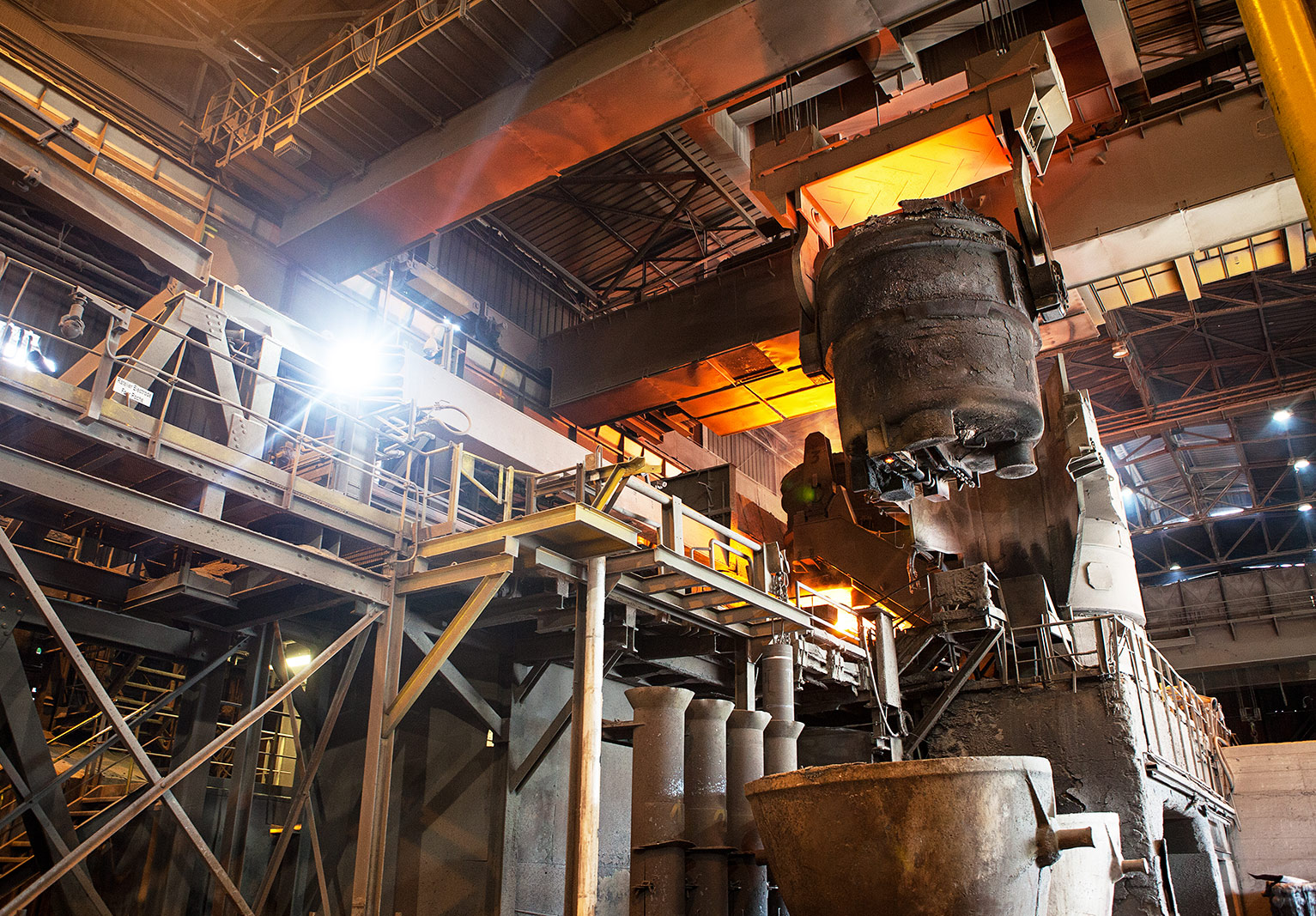
Spain’s crude steel production recovers in September
The Spanish steel sector saw activity continue to recover in September after a slight deceleration observed in the previous three months. Production rose sequentially for the first time since May, Kallanish notes.
According to the Spanish steelmakers’ association Unesid, the local steel industry produced around 1.25 million tonnes of crude steel in September. This was 12.7% more than August’s output of 1.10mt and 26.9% higher year-on-year. If compared to the pre-Covid-19 September 2019, this volume results in 2% growth.
According to Unesid data, crude steel production in September was 101,000t fewer than the 2021-high in May.
During the first nine months of the year, Spanish output reached 10.88mt. Unesid did not disclose an on-year comparison in its latest report, but taking worldsteel figures into account, the growth is estimated at almost 38.3%.
Spain used 1.01mt of ferrous scrap for steelmaking in September, up 18.5% month-on-month. This volume was also 16% and 21% over the same month in 2020 and 2019, respectively. Cumulative scrap usage was 8.57mt, representing 78.8% of total crude steel production in the nine-month period.
Todor Kirkov Bulgaria