

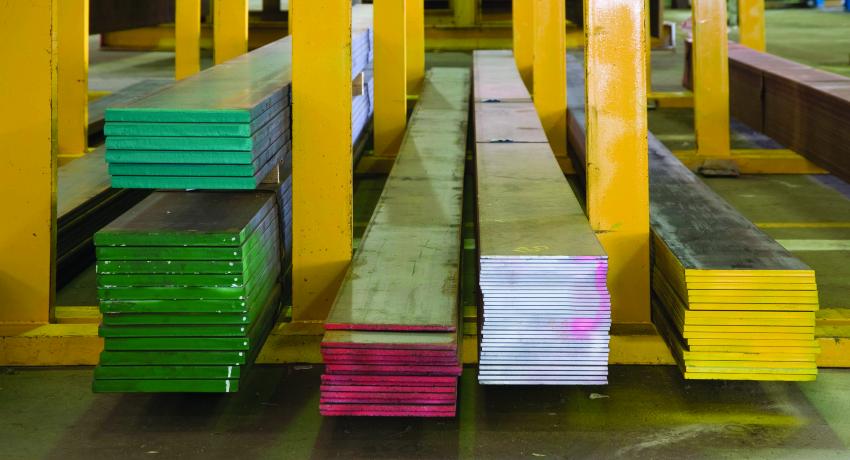
Salzgitter lifts annual guidance again
Salzgitter Group has again lifted profit guidance for the full financial year 2021, and now expects its best pre-tax result in a decade.
Following a strong first half-year, the group’s good performance has continued over the summer quarter. Salzgitter previously assumed a pre-tax profit of between €400 million and €670m ($473-792m). This range has now been lifted to €600-700m, Kallanish notes.
The sustained uptrend in prices and demand is especially reflected in the excellent results of the Strip Steel and Trading business units, Salzgitter notes. In the Plate/Section business, margins improved as well, leading to better results than formerly anticipated.
Christian Koehl Germany

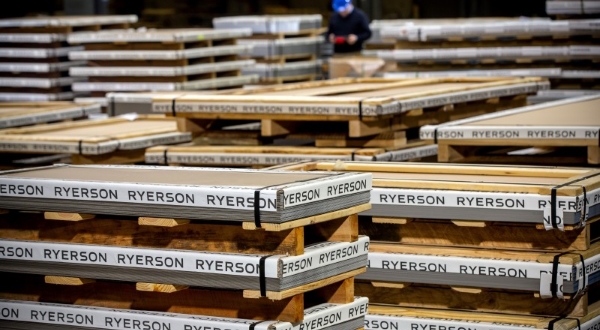
Ryerson acquires Ohio metal processor
US service centre chain Ryerson has acquired Stow, Ohio-based metal processor Specialty Metals Processing (SMP), Kallanish understands.
In a notice, Ryerson announced the acquisition of SMP’s 170,000 square-foot flat-rolled processing facility located in Stow. Specialty Metals hosts 16 processing lines at its facility for various metals, including steel and other metal alloys.
“This strategic acquisition builds upon our value-added capabilities and further strengthens our excellent stainless products franchise while reinforcing our mission of providing great customer experiences across our network of intelligently connected industrial metals service centres,” explains Ryerson ceo Eddie Lehner.
“SMP is renowned for its expertise in flat roll polishing and will enhance Ryerson’s stainless processing capabilities, providing a more complete and integrated value-added experience for our stainless customers,” adds Ryerson coo Mike Burbach.
Zach Johnson USA
EU steel braces for tighter GHG emission curbs in run-up to IED review
European Union steel mills may in the future risk having their operating permits removed if they are unable to restrict their greenhouse gas emissions to certain levels, steel industry representatives warned Sept. 8.
The European Commission is set shortly to review its Industrial Emissions Directive, which licenses steel, metals, chemicals and other basic industries in the EU, in regard to their emissions to air and water. This will be the directive’s first revision since 2010. With the increased emphasis in recent years on climate safety and the circular economy, the IED is expected to be tightened up to make it fully consistent with the EU’s 2019 Green Deal and this year’s “Fit for 55” climate goals, “adding a layer of emissions control,” said Eva Blixt, chair of European Steel Association Eurofer’s Working Group on Industrial Emissions and representative of Swedish Steel Industry Association Jernkontoret.
A proposal for an updated version of the Directive is expected to be made public in January or February 2022, Blixt told S&P Global Platts in an interview. The debate among the 500 or so different steelmaking and processing plants in Europe on the possible changes and the directive’s links with the EU’s Emissions Trading System is however already starting, she noted.
‘Command and control’
According to Blixt, one of the steel sector’s main concerns regards potential changes to the IED’s current Article 9.1, which states that “permits shall not include emission limit values for direct emission of greenhouse gas”; i.e. that the granting of operating permits is not dependent on companies’ GFG emissions levels.
It is however now possible the IED revision may delete or change this article to introduce binding limits on greenhouse gas emissions as a prerequisite to the granting of plants’ operating permits, even though the steel sector’s emissions are already governed by the ETS, considered a market-based instrument, she said.
Introduction of a binding emissions limit would introduce a “command and control” element to the IED, Blixt said. The directive’s revision may also involve new binding requirements on types and levels of energy usage in the sector, she said.
“The steel industry is concerned that GHG emissions limits and other climate clauses will be introduced into the IED (as a condition for) companies getting operating licenses,” she said. The rules are that “if you can’t conform to the IED within four years then you will have to shut.”
The steel industry would like to see leeway in the directive, with a window of longer than the current eight month period given in the legislation for testing new techniques and technologies, Blixt said.
“The EU steel industry is taking the lead to transform to fossil-free steel….. but we may need a longer time to make the transformation happen,” she said.
The IED, which already covers some 50,000 industrial installations in the EU, is also expected to be expanded to cover new sectors including mining, batteries production, textiles and upstream industries, Blixt noted.
All steel plants which produce at least 20 mt/hour of crude steel or hot rolling mills producing 2.5 mt/hour or above need to have an IED permit to operate.
Some speakers in a Eurofer-organized webinar Sept. 8 said that the IED’s inclusion of emissions controls would effectively bring “double regulation” to the steel sector as they would be on top of steelmakers’ current participation in the ETS. Under the ETS, producers need to offset their emissions with the purchase of ETS allowances. A system of free allowances for some companies, including those most at risk of carbon leakage, will be phased out by 2030.
According to EC regulations, to achieve the EU’s overall greenhouse gas emissions reduction target for 2030, the sectors covered by the ETS must reduce their emissions by 43% compared to 2005 levels.
ETS ‘too cheap’ to save climate: MEP
Erik Bergkvist, a member of the European Parliament, said in the webinar that he considered that “ETS is a good system but let’s be clear, it’s not delivering. It’s still too cheap so we have to increase the pace when it comes to raising the prices for emissions in the ETS system and that’s one of the important things when we do the [IED] revision.
“We have a climate that is collapsing and we have to fix that,” Bergkvist said. “The important thing for the IED is to be the pusher, the process that gives us the Best Available Technique to fight climate change.”
Industry needs to focus on the so-called “Best Available Techniques,” for instance on energy utilization and the quality of data rather than the quantity of data available in this area, the MEP said.
— Diana Kinch

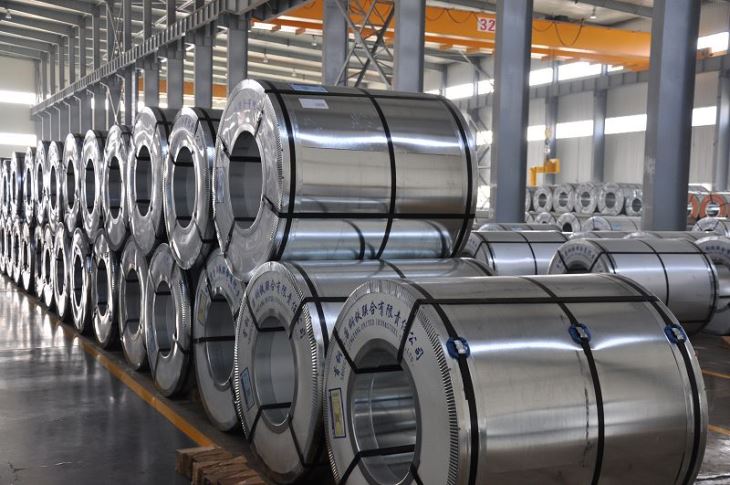
More HDG material available as auto demand winds down, mills do not offer
With automotive demand slowing down, more hot-dipped galvanized steel has freed up in the market Sept. 8, with peripheral sectors once in need now able to get their share of material. Prices were stable, with some in the market fearing falling prices.
Most mills had nothing left to sell for HDG, with prices quoted around Eur1,300/mt ex-works Ruhr and automotive production lower than expected due to the semiconductor and chip shortage.
“Automotive are producing and they have full orderbook so its only postponed — the problem is raw material shortage and semiconductors,” a European mill source said. “Spoke to a customer and he said there would be another two years of this problem.”
Automobile contract negotiations began last week, with the market expecting prices to double from 2021 agreed contracts.
“It’s a lot more than we thought,” the mill source said, with offer prices heard between Eur1,100-1,250/mt.
“It was always good to do automobile business because you had fixed volumes for a stable price, but now volumes are not fixed and it is difficult to get a deal that assures certainty on longer-term pricing contracts,” the Benelux-based mill source said, adding that demand fluctuations had a considerable impact on negotiations.
According to data from the Verband der Automobilindustrie, 193,300 new passenger cars were registered in Germany in August — 23% less than in the same month of 2020.
Automobile manufacturers were scaling back their production, with one Italian company heard to be shortening its production to just five days due to the shortages.
Mills without anything to sell were heard offering HDG at Eur1,400-1,450/mt ex-works Ruhr to prevent further customer inquiries.
“We are at Eur1,400-1,450 with our offers, but I know if I try at this price, I won’t get anything,” a second European mill source said. “We are not making deals; we haven’t concluded any spot.”
— Amanda Flint
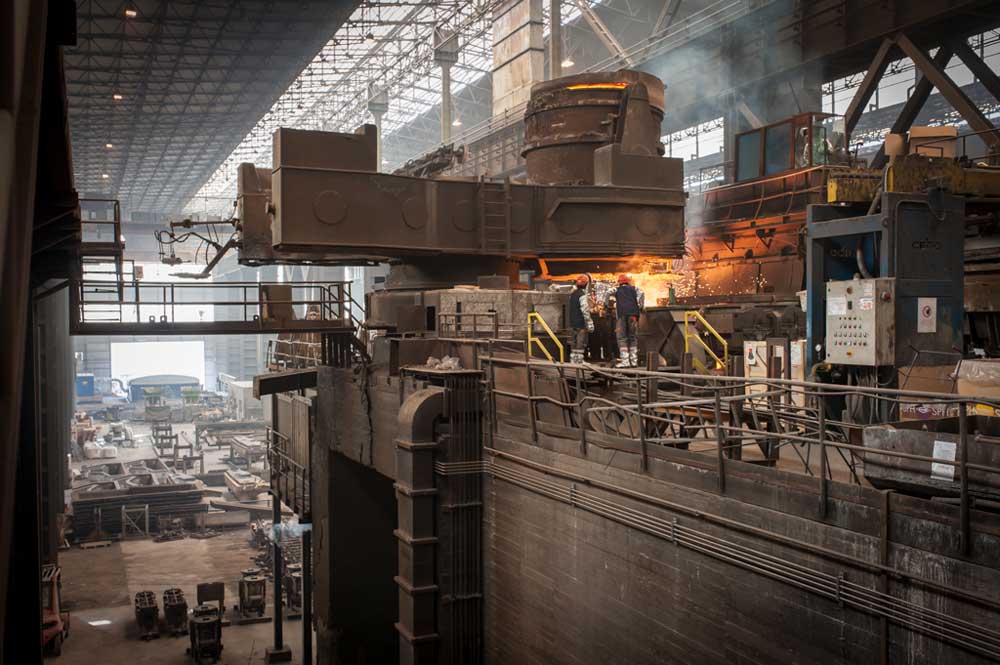
European mills sold out as pricing uncertainty hangs over HRC market
European HRC prices were caught in a stalemate Sept. 8, with mills and buyers hesitant to make any sudden transactional moves so long as pricing uncertainty remains rife in the domestic market.
Automotive demand concerns coupled with cheap incoming imports have had prices teetering after they reached record highs, with fears of an imminent, albeit moderate, correction weighing on buyers’ minds, sources told S&P Global Platts.
Automotive contract negotiations for 2022 also commenced this week, with market chatter pointing toward a doubling in finalized contract prices in place for this year, though sources have yet to confirm those.
Mill offers for auto contracts were heard in the vicinity of Eur1,100-1,250/mt, though one European mill source cited a contract offer as low as Eur700/mt. This, however, was an extension of an existing 2021 auto contract.
“I haven’t had many opportunities to discuss any serious contract negotiations because we are sold out,” the same mill source said. “I am not offering anything as spot, so am not getting the feeling of what customers are ready to pay.”
Pricing uncertainty was also being fueled by the greater availability of steel on the market because of a lack of automotive demand, with the same source adding that the ongoing shortage of semiconductors and the recent restarting of blast furnaces could add more volume to the marketplace.
While European mill were still facing major backlogs and issues with production, the free-up of unwanted automotive volumes has allowed mills to get through their backlogs more rapidly and has eased pressure from the buy-side.
The influx of imports was another factor threatening prices lower, with volumes of Indian, Russian and Turkish material entering the EU — particularly Italian ports — at much cheaper prices.
“The ports are full in Italy,” the same mill source said. “I don’t know how much of that volume will be delivered in the market — it depends on the quotas. It might be that some material needs to stay [at the port] or another quarter.”
The Indian HRC import quota is now exhausted, with the last known allocation having occurred July 6. Turkey’s quota is now considered critical, with just 7%, or 24,167 mt, available of an initial 330,388 mt allowance.
Russia’s quota balance is practically exhausted, with 3,291 mt available from an initial 416,848 mt allowance.
South Korea still has some volumes available for import, with 35% of its quota balance still up for grabs. Close behind was Serbia, with 41% of its quota remaining.
— Amanda Flint
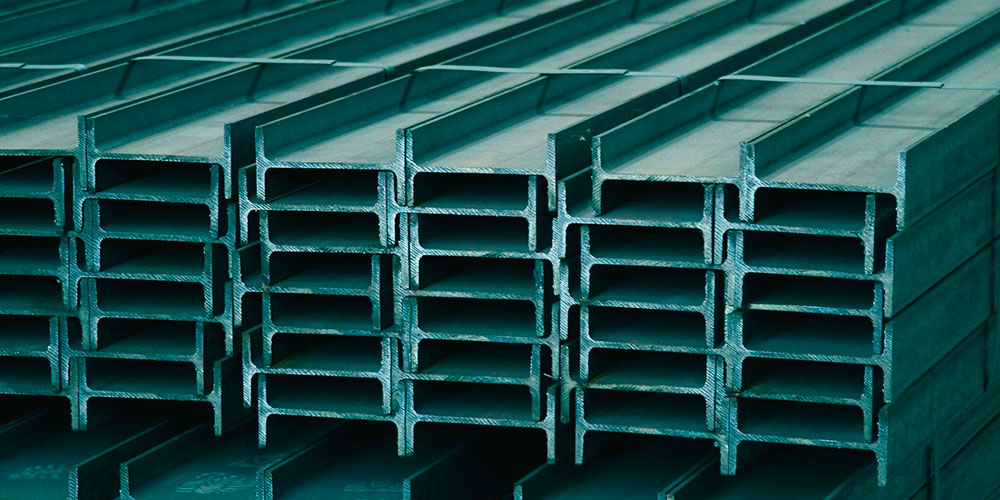
Salzgitter-Konzern erhöht erneut Ergebnisprognose
Nach dem starken ersten Halbjahr setzt der Salzgitter-Konzern auch im Sommerquartal seinen positiven Geschäftsverlauf fort. Die anhaltend gute Preis- und Nachfrageentwicklung spiegelt sich insbesondere in hervorragenden Resultaten der Geschäftsbereiche Flachstahl und Handel wider. Darüber hinaus verbesserte sich die Margensituation im Produktsegment Stahlträger, sodass der Geschäftsbereich Grobblech /Profilstahl höhere Ergebnisse als bislang angenommen erzielt. Folglich heben wir – unter dem Vorbehalt einer trotz latenter Corona-Krise stabilen Marktentwicklung bis zum Jahresende – die Ergebnisprognose für das Geschäftsjahr 2021 abermals an und rechnen für den Salzgitter-Konzern nunmehr mit einem Vorsteuergewinn zwischen600 Mio. € und 700 Mio. € (zuvor: zwischen 400 Mio. € und 600 Mio. €).
Quelle und Foto: Salzgitter AG
08.09.2021 von Hubert Hunscheidt


Italian HRC falls but end-use demand remains strong
Italian hot rolled coil prices are falling compared to the beginning of August by €50/tonne ($59) on average, market participants tell Kallanish. Prices had peaked in July.
Due to low-priced import offers from the CIS region and India, service centres are adopting a wait-and-see attitude. Producers, despite having to accept lower transaction values, remain optimistic about activity, have full order books, and are defending their current asking levels as demand from end-use sectors remains strong.
As HRC delivery stretches to between October and December, sources justify the current price softening as an international “reshaping” of price levels that had reached unsustainably high levels.
Service centres and re-rollers are still not buying from the domestic market as they expect domestic prices to fall further. Their order books however are also well filled and some report lead times into the first quarter of next year.
Italian ports remain congested due in part to arrivals of large tonnages of HRC ordered in June and July when import prices started to decline. Windows of availability for low-tonnage import offers at lower-than-domestic prices are continuing and forecast to remain through September as iron ore and scrap values remain on a downward trend.
Domestic HRC producers are either not quoting or quoting at €1,040-1,070/t base ex-works. These levels will however be hard to achieve in a stagnating market, sources say.
Both Indian and CIS material is offered at as low as €800-830/t cfr Italy. While these prices are challenging for domestic producers, large buyers are shunning these offers as, with import taxes included, values soar to €1,040/t cfr in the case of Indian material.
Domestic material is at €1,070/t for small tonnages and €1,000-1,040/t base ex-works for larger quantities. Sellers lament a “flat, calm” market this week, particularly in the case of service centres.
Natalia Capra France

Italian contractors seek safeguard removal amid port congestion
The Italian government should press for the suspension of EU steel import quotas, Gabriele Buia, president of Ance, the national association of construction companies, says in a note.
The statement, seen by Kallanish, voices concern over the congestion seen in all major Italian steel ports as a result of steel-bearing vessels waiting to be discharged when import quotas are renewed. The heavy port traffic is also a consequence of producers importing large scrap and pig iron volumes, and of vessels of hot rolled coil purchased by service centres and re-rollers in recent months.
“It is necessary for the Italian government to act immediately in the EU asking for a suspension of the restrictions on steel imports,” Buia says. “In this way, we will not give further space to speculation on prices that are already bringing businesses to their knees, and we will guarantee the continuation of the recovery of economic activities.”
While the country is hungry for raw materials, companies are suffering long waits to receive their supply. Over 0.5 million tonnes of steel is blocked at the ports of Marghera and Ravenna due to the EU import quotas. This situation is described by Buia as “an unacceptable paradox”. He also warns of the concrete risk that this represents for the economic recovery.
In July and August steel and raw material sellers to the Italian market from the CIS region and Asian countries suffered delays and commercial issues when delivering material, two sources confirm.
Natalia Capra France

UK Steel welcomes TRA’s safeguard revocation review
UK Steel has welcomed the Trade Remedy Authority (TRA)’s decision to review its previous recommendation to terminate safeguard measures on the imports of nine steel products.
“Such a termination would leave the sector exposed to uncontrolled surges in imports and undermine the effectiveness of the remaining safeguards, threatening the long-term viability the UK’s steel sector,” UK Steel director general Gareth Stace says in a note sent to Kallanish.
“There are strong legal, WTO compliant, grounds for the maintenance of these measures for the full three-year term,” he adds. “Moreover, at a time when the EU and US have maintained their own protections on all steel products, and UK’s steel producers face obstacles to exporting into these markets, it is the only sensible course of action to maintain equal measures for our own producers.”
The TRA also recommended safeguard measures be extended on the other ten products of the 19 that were subject to safeguard measures until end-June. The UK government accepted the TRA’s recommendation but also introduced emergency legislation to extend safeguards on another five of the products for one year (see Kallanish passim).
Half way through the quarter, the UK had exhausted three of its third-quarter steel safeguard quotas. These were hot rolled coil and cold rolled coil from “other countries”, as well as hollow sections from Turkey.
Adam Smith Germany
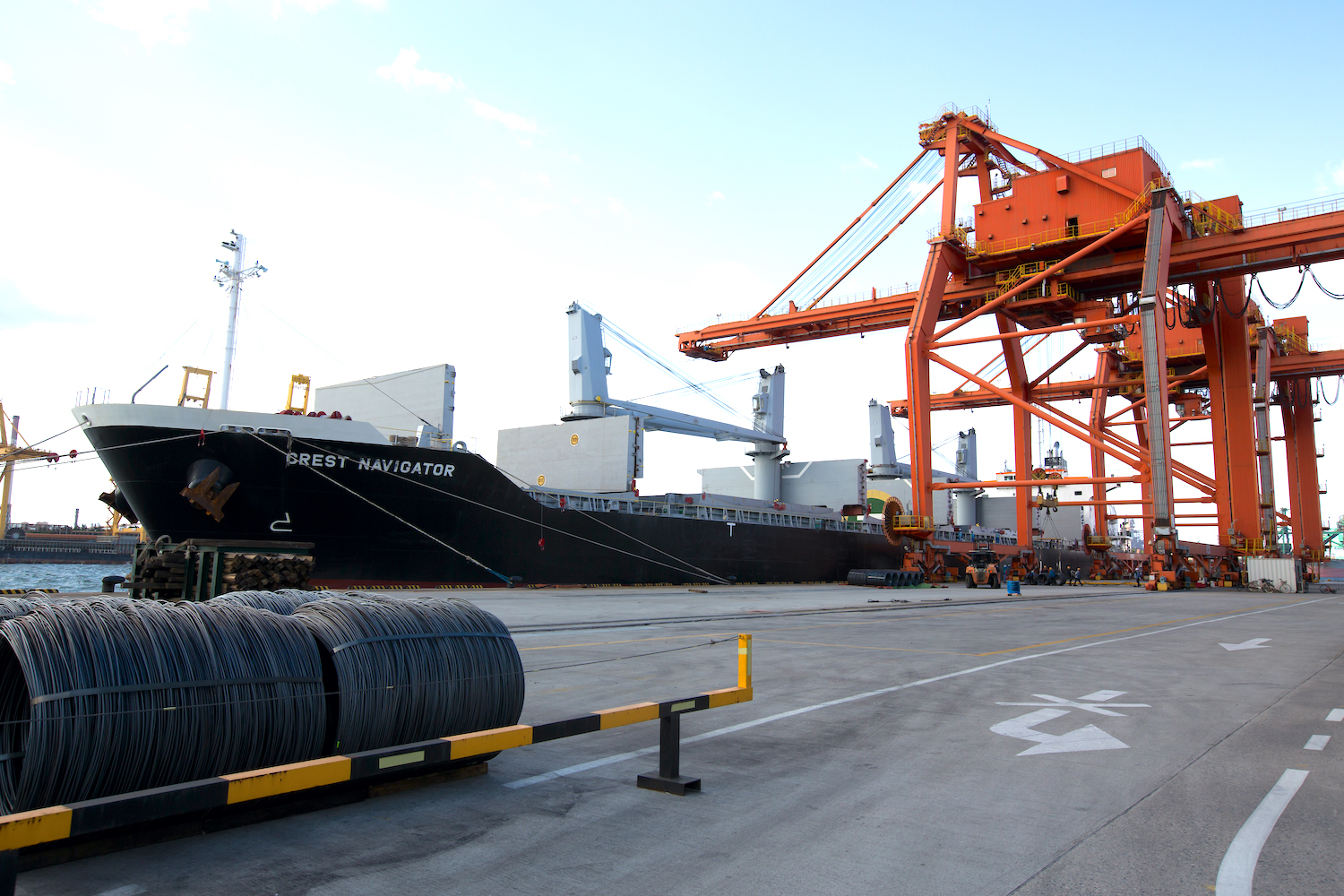
China’s August steel exports fall 11% to 5.05 million mt
China’s finished steel exports reached 5.053 million mt in August, slipping 11% from July, China’s customs data showed Sept. 7.
The country’s steel shipments fell for the second consecutive month as efforts to curb exports gathered pace in the country.
Market participants said they expected the export downtrend to continue for the rest of this year, as overseas demand is seen weakening amid fresh COVID-19 outbreaks.
Another major factor halting export growth potential is widening output cut orders received by major Chinese steelmakers, which have been verbally informed by government authorities to maintain their 2021 exports at par with 2020 levels, according to sources.
Cutbacks in steel exports are part of China’s plans to keep its steel production in 2021 at 2020 levels, as it looks to cap iron ore prices and cut carbon emissions. To discourage steel exports, China also removed steel export rebates in May and July.
Consecutive fall in exports
China’s slower exports in August follow a similar monthly decline seen in July, when shipments plunged 12% from June levels, according to customs data.
August exports were 37% higher on the year, but this was mainly due to a lower base seen in the second half of 2020, when most export markets were facing a series of lockdown restrictions.
Over January-August, China’s finished steel exports rose 32%, or 11.547 million mt, on the year, to 48.104 million mt.
Some major steel mills have largely trimmed export quota to both overseas clients and traders for the rest of 2021, as their exports from January through August have largely exceeded the year-ago levels, according to some traders and mill sources.
If China wants to cap its 2021 steel exports at 2020 levels, exports over September-December must be maintained below 5.567 million mt in total, or 1.392 million mt/month, according to S&P Global Platts calculations based on customs data.
However, China’s finished steel exports were unlikely to drop below 2 million mt/month, which equates to over 8-9 million mt during September-December, due to supply commitments to long-term strategic clients and overseas projects, a market source said.
Fresh COVID-19 outbreaks overseas have dented demand for Chinese steel recently, which have contributed to the decline in steel exports as well, according to some traders. A stronger domestic market has discouraged traders from purchasing material from the spot markets and they have been avoiding re-exports, trade sources said.
Steel imports on rise
Meanwhile, China’s finished steel imports in August were at 1.063 million mt, up 1% on the month, but still 53% lower on the year, customs data showed. Imports over January-August were 22% below the year-ago levels, at 9.46 million mt, due to a higher base in 2020.
As a result, net finished steel exports were 3.99 million mt in August, up 177% on the year. Net exports over January-August were also up 59% on the year, at 38.644 million mt.
Some traders expected billet imports may slightly increase in the following months, but overall steel imports were unlikely to rise significantly as domestic demand is expected to remain soft because of China’s slowing property sector for the rest of 2021.