

Aperam increases alloy surcharges for March
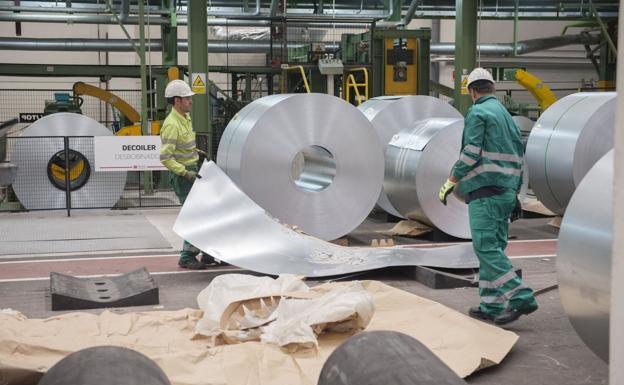
French stainless producer Aperam has increased the March alloy surcharges for its austenitic range of flat stainless steels for Europe by over €100/tonne ($122) compared to last month, Kallanish learns from the company.
The surcharge for grade 304 (1.4301) has gone from €1,713/t in February to €1,846/t effective 1 March. For grade 316 it has gone from €2,419/t this month to €2,629/t next month. Grade 309S, a heat-resistant stainless steel used in high-temperature applications, has increased from €2,311/t to €2,511/t in March. The surcharge for the most popular ferritic grade, 409, has risen from €604/t in February to €635/t next month, the company reveals.
Nickel prices for cash buyers have steadily increased in recent months. Offers for cash buyers were at $18,142/t on 26 January and reached $19,352/t as of 24 February, Kallanish notes.

Thyssenkrupp unit digitalises hot strip treatment
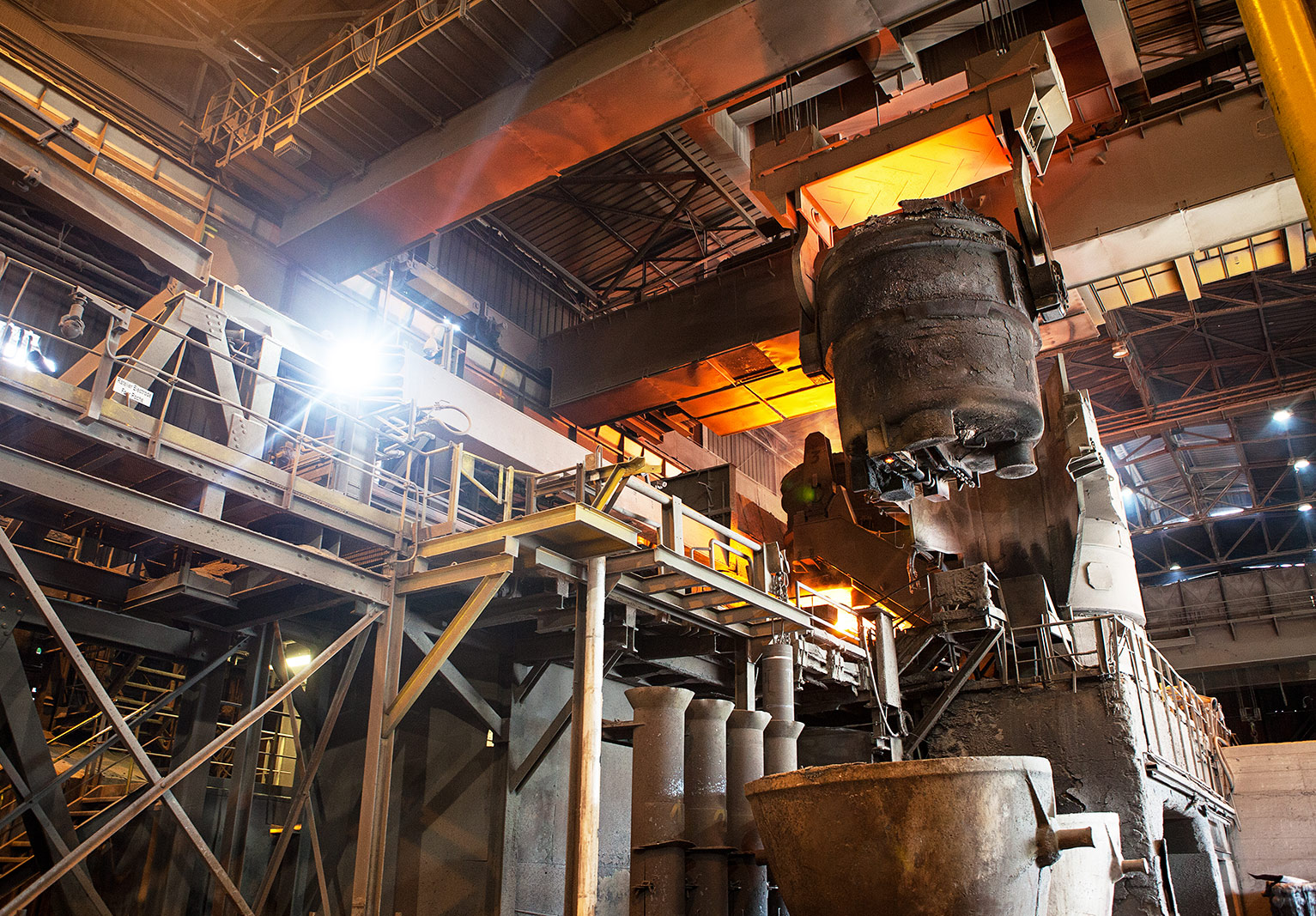
Thyssenkrupp Hohenlimburg has digitalised its shower warehouse for hot strip, which gives the mill faster throughput times, among other things, Kallanish learns from the company.
The Hohenlimburg unit makes medium-wide strip, mainly for further processing by dedicated cold-rollers in the Westphalian region. Now the shower store, in which the coils are specifically cooled before pickling, has been integrated into the existing digital structure. It now exists as a “digital twin”, a mathematical image of the real location, tk explains.
The digitalisation significantly shortens the throughput times, from an average of 72 to only 5-6 hours, the company claims. Quality defects, such as rust scars, can be avoided through controlled cooling. It is also crucial that the coils in the shower store and in the connected pickling pre-store are only cooled down as far as is optimal for the pickling process.
A mathematical model developed in-house is the basis by which each individual coil “knows” when it has reached the optimal temperature. This optimises storage logistics and increases productivity in the processing procedure, tk claims.

Lower demand curbs Spain’s January automotive output
The Spanish automotive industry has seen production fall at the beginning 2021, Kallanish notes. The slowdown in January mainly resulted from the drop in demand in the main European markets.
Meanwhile, the country’s vehicle exports remained almost flat on-year in January, according to Spainish industry body Asociación Nacional de Fabricantes de Automóviles y Camiones (Anfac).
Spain’s automotive production totalled 218,201 units in January, down 9.1% compared to the same month in 2020. Exports nevertheless amounted to 184,679 vehicles, up 0.5% on-year, Anfac confirms.
“The sharp on-year falls registered in key markets such as Germany (-31%), the UK (-39.5%) or Italy (-14%) have been decisive for the decline in Spanish vehicles production,” Anfac says. Domestic demand meanwhile plummeted 51% in January, the association adds.
Sheffield University develops alloy for automotive light-weighting
The University of Sheffield says it has developed a light-weight, high-strength steel alloyed with copper that can be used to reduce CO2 emissions in the automotive industry, Kallanish notes.
The ultra-fine-grained steel can be made to deliver “world-leading mechanical properties”, the university says, meaning a strength of nearly 2GPa with an elongation of 45%. For comparison, a similar unmodified steel alloy has a strength of 710MPa.
“Copper is normally considered a tramp element that must be removed from the steel making process,” the university says in a note. “But copper is increasingly present with recycled steel and unavoidable by steelmakers wanting to include more recycled materials in their production process. It is therefore important to turn this ‘evil’ into a positive, which is exactly what the research team in Sheffield, alongside international collaborators, have done, paving the way for further light weighting in transport, leading to reduced CO2 emissions.”
The presence of copper results in a rapid precipitation of a copper phase when the steel is heat treated during processing. This phase restricts the growth of grains in the material’s microstructure, leaving an ultrafine-grained microstructure which imparts the high strength and superior ductility, but also enhances the thermal stability of the steel, the university continues.
As one way to reduce vehicle emissions, automotive companies have in recent years been looking to source lighter steel components. This has driven the growth of the automotive advanced high strength steel (AHSS) market.

Italian stainless scrap seen increasing in March
Italian stainless steel scrap prices are expected to increase again in new March contracts by over €100/tonne ($122) on average, sellers tell Kallanish.
Demand remains high from local mills as finished flat products are in short supply and prices are skyrocketing.
While, at present, 304 grade is sold at €1,400/t delivered on average, merchants will be asking for between €1,500-1,530/t delivered for March, as they are already paying increases to their suppliers. Grade 316, which has reached €1,700/t delivered this month, is likely to move up to €1,750-1,800/t delivered, sources say.
Meanwhile, offers for nickel cash buyers were at $18,142/t on 26 January. They reached $19,352/t as of 24 February.
Rising EU carbon emissions prices worry steelmakers
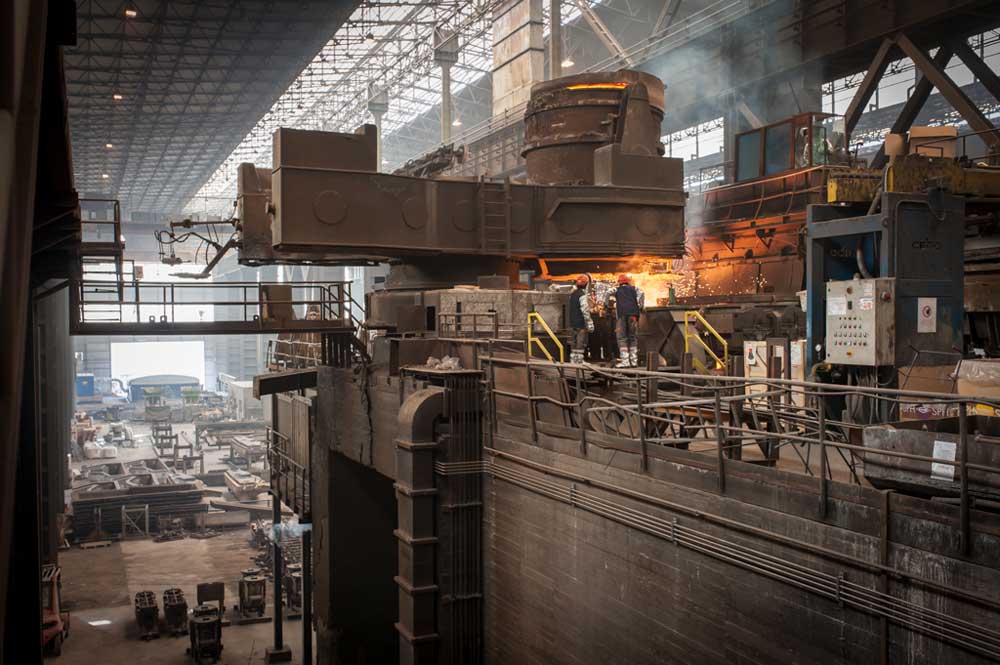
Carbon allowance prices on the EU Emissions Trading System (ETS) reached a new record high last week, reminding the bloc’s steel sector that the costs of decarbonisation will continue to increase, Kallanish notes.
Between 2008 and 2018 carbon allowances remained at below €20/tonne of carbon dioxide, but towards the end of 2018 and increasingly from 2019 prices have started picking up. In 2019 the EU took excess allowances out of the market. The spike has been further fuelled by the decision to limit further allowances in the market to meet the carbon reduction target of 55% in the EU by 2030.
Last week prices reached almost €40/t of CO2 and some analysts believe the cost could double again in the next ten years, as 2030 approaches.
The spike in ETS carbon prices is set to directly impact costs of EU steelmakers, among the largest users of such allowances. This is raising concerns but is also likely to speed up steelmakers’ investments to reduce their carbon footprint and therefore require fewer allowances.
Diederik Samsom, head of cabinet for European Green Deal executive vice-president Frans Timmermans, said during a webinar organised by Eurofer this week that steelmakers in Europe will certainly feel the implications of the increase in ETS allowance prices.
He added nevertheless that the EU is working towards supporting investments in decarbonisation as part of a hydrogen supply strategy, as well as possibly establishing contracts for subsidies for low-carbon steelmaking. He also said the bloc finds itself in the position of already having large funds to invest in the future, and that part of these funds will go directly towards decarbonisation programmes.
Eurofer also expressed its concerns over steelmakers’ need to find viable answers to justify the large investments they are making into decarbonisation. It called again this week for stakeholders to unite to push forward the EU green deal on steel.
Revista InfoAcero Febrero 2021
En el siguiente enlace pueden acceder a la edición de febrero de nuestra revista: INFOACERO FEBRERO 2021
A continuación destacamos algunos de sus contenidos:
- Opinión – D. Enrique Gimeno – Junta Directiva de la UAHE.
- Evolución del Índice de Precios de Productos Siderúrgicos – UAHE.
- Información Asociativa: Ciclo de conferencias organizadas por UAHE.
- Siderurgia: Previsiones 2021-22 sectores consumidores de acero, consumo real y consumo aparente de acero en UE (Informe Eurofer )
- Próximos Eventos: Conferencia Steel Orbis y 84ª reunión Irepas, Hannover Messe 2021

EU steel sections near-term demand expected to rise
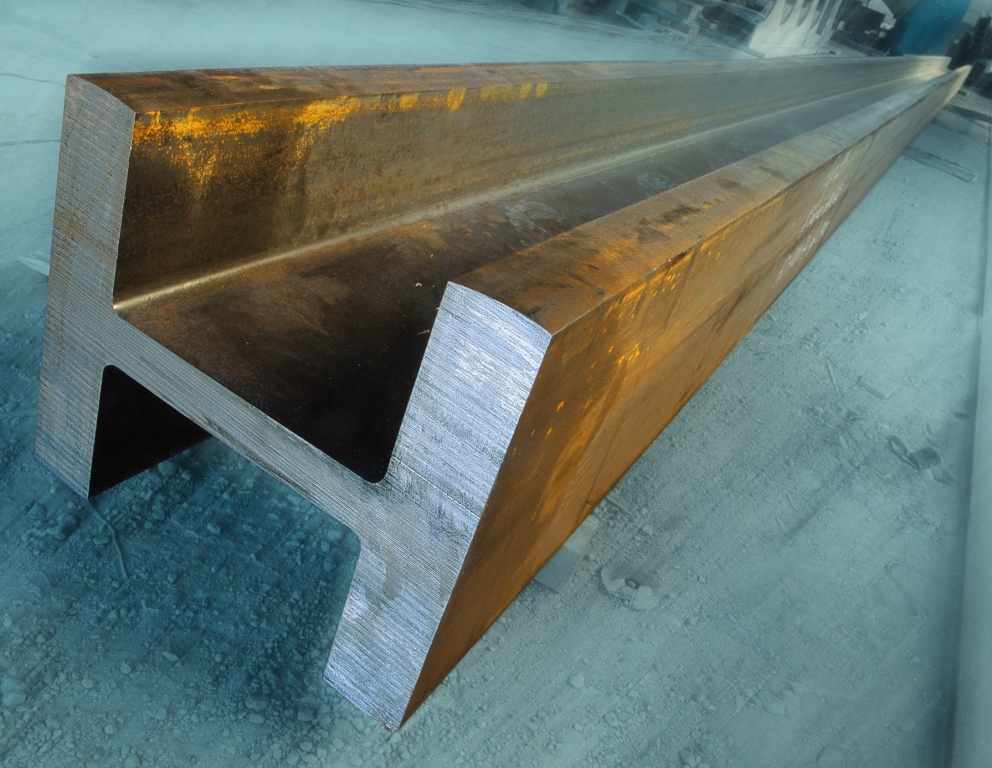
European domestic steel sections market participants expect demand to pick up in the near-term while prices stayed stable at elevated levels Feb. 24
Platts’ European medium sections price (category 1, S235 JR) was assessed at Eur715/mt delivered Feb. 24, stable on week.
One European mill source expects demand to pick up in the near-term, with a possible uptick in prices as well.
“Demand is picking up obviously. Especially with what’s happening with scrap in Turkey, not sure what will happen with scrap in Europe, but demand is coming back.”
The source noted that the market needs to observe what is happening with international scrap prices before gaining any clarity on future prices.
“Demand has been stronger than it has been in the past few weeks,” he told Platts. “I think future price trends will depend a lot on domestic scrap prices and it’s too early to speculate on that. We need a couple of weeks to understand scrap and demand levels. There is room for prices to move up but today is too early to say that.”
The source put a tradable value for medium sections at Eur715-Eur720/mt delivered.
Turkish scrap import prices jumped another day amid strong workable levels. Platts assessed Turkish imports of premium heavy melting scrap 1/2 (80:20) at $450/mt CFR, up $5/mt on day.
One distributor source in the Benelux region noted that the market was observing good demand: “We had a little bit of winter for a couple of weeks, but the weather is better now, which is good for construction.”
The source cited a tradable value for medium sections at Eur720/mt delivered Benelux.
Another distributor source put a tradable value at Eur710-Eur720/mt delivered Benelux.
— Rabia Arif

German firm seeks supply chain communication amid shortages
German steel market observers are calling for better communication among players along the value chain to better harmonise the gaps in supply and demand.
In a move unusual for a distributor, Günther+Schramm, based in Oberkochen and Mannheim, has addressed the issue in an open letter to customers. The company is mainly dealing with special bar qualities (SBQ), which are subject to similar shortages as coil products, partly for the same reasons, like production levels that do not match demand.
In addition, managing director Bernd Seibold mentions an “extreme reduction of transport capacity”, especially in road haulage, plus restrictions for border-crossing traffic due to Covid-19. “Currently, products ready-for-dispatch need two to three weeks from mills in Europe to our warehouses,” he states. Apart from the delay, “this leads to considerable extra costs in the supply chain,” Kallanish hears from Seibold.
He pleads for “intensive communication” with suppliers as well as customers to come to terms with the issues, and to avoid faulty decisions. “And this should be possible for remote working too,” he says.
Seibold is in line with consultant Andreas Schneider of Stahlmarkt Consult, who pleads for “fair solutions worked out in cooperation”. Without naming mills directly, in his blog Schneider criticises suppliers for not delivering the volumes laid down in long-term contracts. “This may not be true across the board, but these are not just singular cases either,” he writes.
Both observers note that many buyers pressure themselves with securing material, which aggravates the situation, so that “inventories cannot be reasonably re-stocked,” Seibold notes.
Thyssenkrupp Steel recently addressed the problem in a circular to its customers. The scheduled restart of its capacities “was complicated by the fact that many customers ordered larger volumes than originally planned”, it said. Because of this highly volatile order structure, the company claims it sees “daily changes in our planning”, and can provide information on delivery dates only with a delay.
Steel users beg Biden to nix 232 tariffs
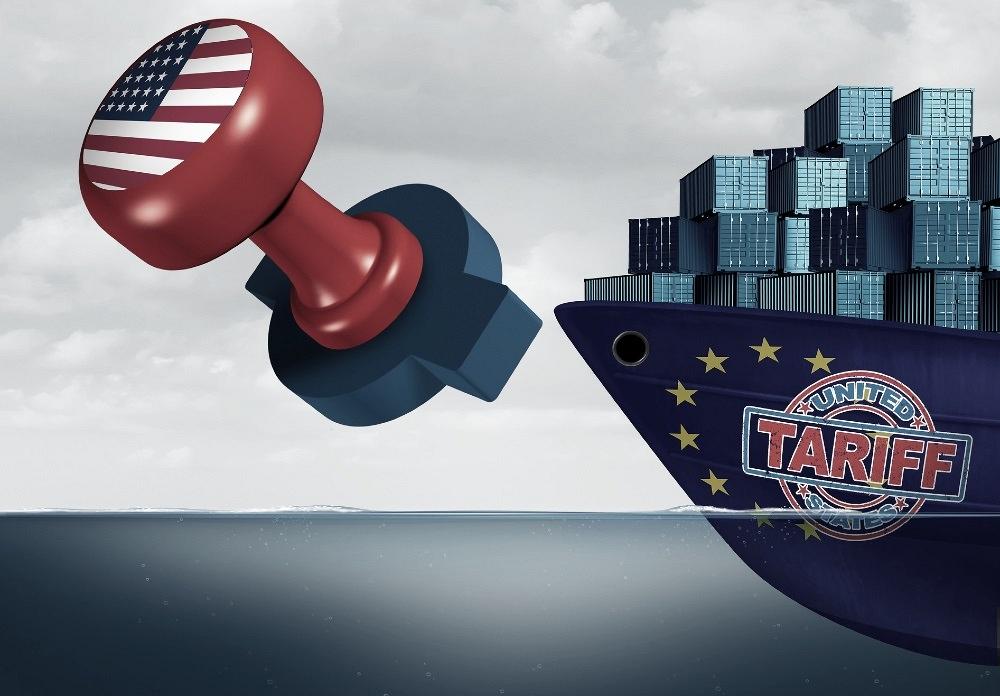
As the White House stays mum so far on the status of the Section 232 tariffs originally put in place by President Donald Trump, a coalition of steel consumers is asking President Joe Biden to do away with them as quickly as possible.
In a letter sent to the White House, the Coalition of American Metal Manufacturers and Users says the Trump tariffs “…have hurt small, family-owned manufacturers and the communities in which they built their businesses, while fracturing relations with overseas trading partners and spurring a frenzy of retaliatory trade measures – with little to nothing to show for it at home.”
The coalition consists of the Associated Builders and Contractors, Hands‐On Science Partnership, the Industrial Fasteners Institute, the National Tooling & Machining Association, the North American Association of Food Equipment Manufacturers, the Precision Machined Products Association, and the Precision Metalforming Association.
“The domestic steel industry, which believes the tariffs should remain in place, fails to understand that, without US steel-consuming manufacturers to buy their steel products, any misperceived advantage derived from the tariffs will be useless if their customers go out of business because of high steel prices and lack of supply,” the letter states.
Current US hot-rolled prices are at an all-time high, hovering around $1,200/short ton. Several buy-side sources have told Kallanish over the past week that sourcing hot- and cold-rolled sheet is difficult, while sourcing hot-dipped galvanized sheet is next to impossible.
“By jeopardising the ability of businesses to access the steel and aluminium they need, the Trump tariffs have made it more difficult for American manufacturers to compete with finished products imported from overseas,” the letter states. “Once this business moves offshore, it can take years for it to return – if at all.”