


Navigation blocked on the Moselle: lock accident halts traffic until Spring
A cargo ship collided with a lock gate on the Moselle River, bringing river traffic to a standstill. Officials do not expect the situation to return to normal before spring.
The incident occurred at the Müden lock in Rhineland-Palatinate, Germany, when a cargo ship struck a lock gate that was not fully open. The collision caused extensive damage, ripping both leaves of the gate completely from their anchorage. The damaged gate and several associated components will need to be entirely replaced.
According to the Waterways and Shipping Authority (WSA) Moselle-Saar-Lahn, navigation on the Moselle will likely remain suspended until the end of March. Currently, about 70 vessels are stranded along the river and unable to proceed toward the Rhine.
While river traffic in Luxembourg remains unaffected, the blockade in Germany has imposed significant restrictions, forcing traffic into a single direction only.
The Moselle, a critical waterway traversing Saarland and Rhineland-Palatinate, serves as a vital artery for cargo transport. The prolonged closure is expected to have a significant impact on regional logistics and steel industries reliant on river shipping.
Authorities are working to assess and expedite the repairs, but the scale of the damage necessitates a lengthy process before operations can resume.
Source: lessentiel.lu

Kloeckner Kaufungen starts high-end laser cutter
Kloeckner Metals Germany’s warehouse in Kaufungen, near Kassel, has started operating a newly-installed laser-cutting machine, Kallanish learns from the company.
With a laser power of 30kW and a working space for parts of up to 2.5 x 6 metres, the machine figures as one of the biggest and most powerful of its kind, Kloeckner claims. It opens “an all-new dimension of highly efficient steel and metals processing,” it says in a press release. The company has long been emphasising its shift from mere distribution to value-added services.
The new installation is therefore “a stepping stone on our way to be a technology partner for our customers for high-value processing and services,” says Felix Schmitz, chief executive of Kloeckner Metals Germany.
The new machine not only cuts sheet and plate precisely along a line, but also allows for variation in depth and thickness. It replaces an existing machine with 15kW power.
Christian Koehl Germany


German fabricator production continues to trend lower
The production volume of Germany’s steel and metals working industries from January through September was 7.2% lower than in the first nine months of 2023, according to industry federation WSM.
Order intake in the first seven months was down 12.8% y-on-y, amid the ongoing economic dip, WSM notes, while utilisation of production facilities was 76.3% in July, Kallanish notes.
September reported a 6.7% year-on-year decrease, a less sharp fall than July’s 10.8% y-o-y decrease.
In August a poll by economic research firm ifo Institute reported 43% of companies in the sector predicted a decline over the next six months from an already modest level of business activity. Half of the respondents expected business to remain flat.
By June, the industry workforce had reduced by 8,700 y-on-y, which is around 2.4% of the former workforce, Kallanish understands.
In early October, WSM reported that 41% of its members would have to lay off further staff.
The federation’s managing director, Christian Vietmeyer continues to call on policymakers to take action against a further industrial deterioration, with a focus on tackling uncompetitive power prices in Germany.
He conceded that the ongoing political situation was also more challenging, after collapse of the current government, with new elections projected for early 2025.
Christian Koehl Germany
BDS: German October steel sales rise 7.4% y-o-y
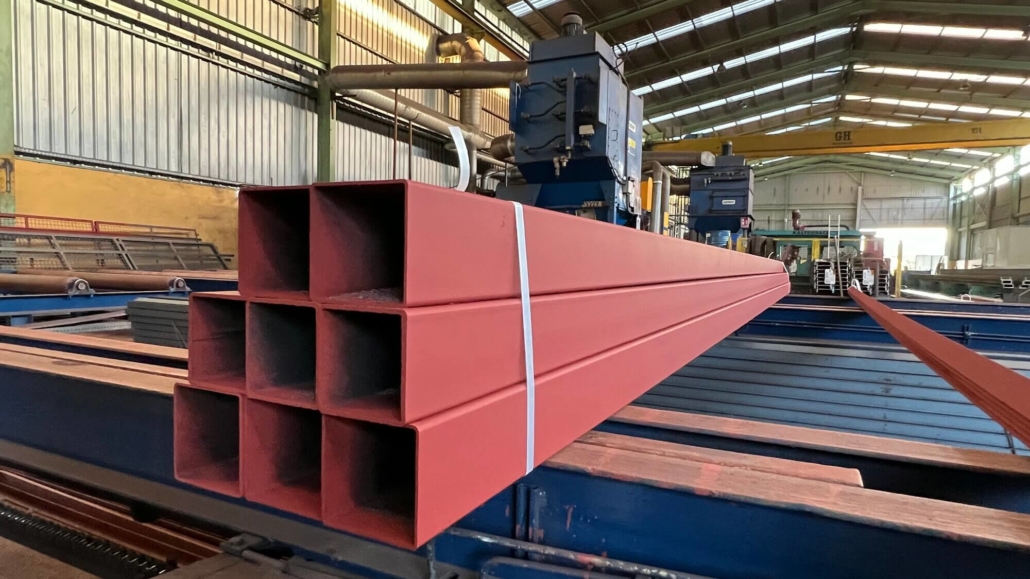
German steel product sales in October climbed 7.4% year over year to 838,042 mt, data from German steel stockholders’ association BDS showed Nov. 29.
Sales were also up and 6.7% month over month.
The majority, or 61.1%, of the sales were from the flat product category at 511,858 mt, rising 6.5% year over year and 10.7% month over month, while long sales rose 5.2% year over year and 1.8% month over month to 250,255 mt, the data showed.
January-October overall sales totaled 8.2 million mt, 0.6% higher year over year. Flat sales were down 2.5% at 5 million mt, and long sales were up 2.5% at 2.4 million mt.
Platts, part of S&P Global Commodity Insights, assessed domestic HRC prices in Northern Europe at Eur550/mt ex-works Ruhr Nov. 28, down 20% since the start of 2024.
Meanwhile, stocks of German steel products totaled 1.9 million mt in October, slipping 2.9% year over year, but up 0.6% month over month, the BDS data showed.
Flat products made up 65.8% of total inventories in October at 1.3 million mt, which was 1.6% lower year over year and down. 0.7% month over month.
Long products stocks totaled 621,608 mt in October, or 32.4% of the total inventory, dropping 4.9% year over year, but up 3.4% from September.

German stockholders’ sales bottom out in Q3
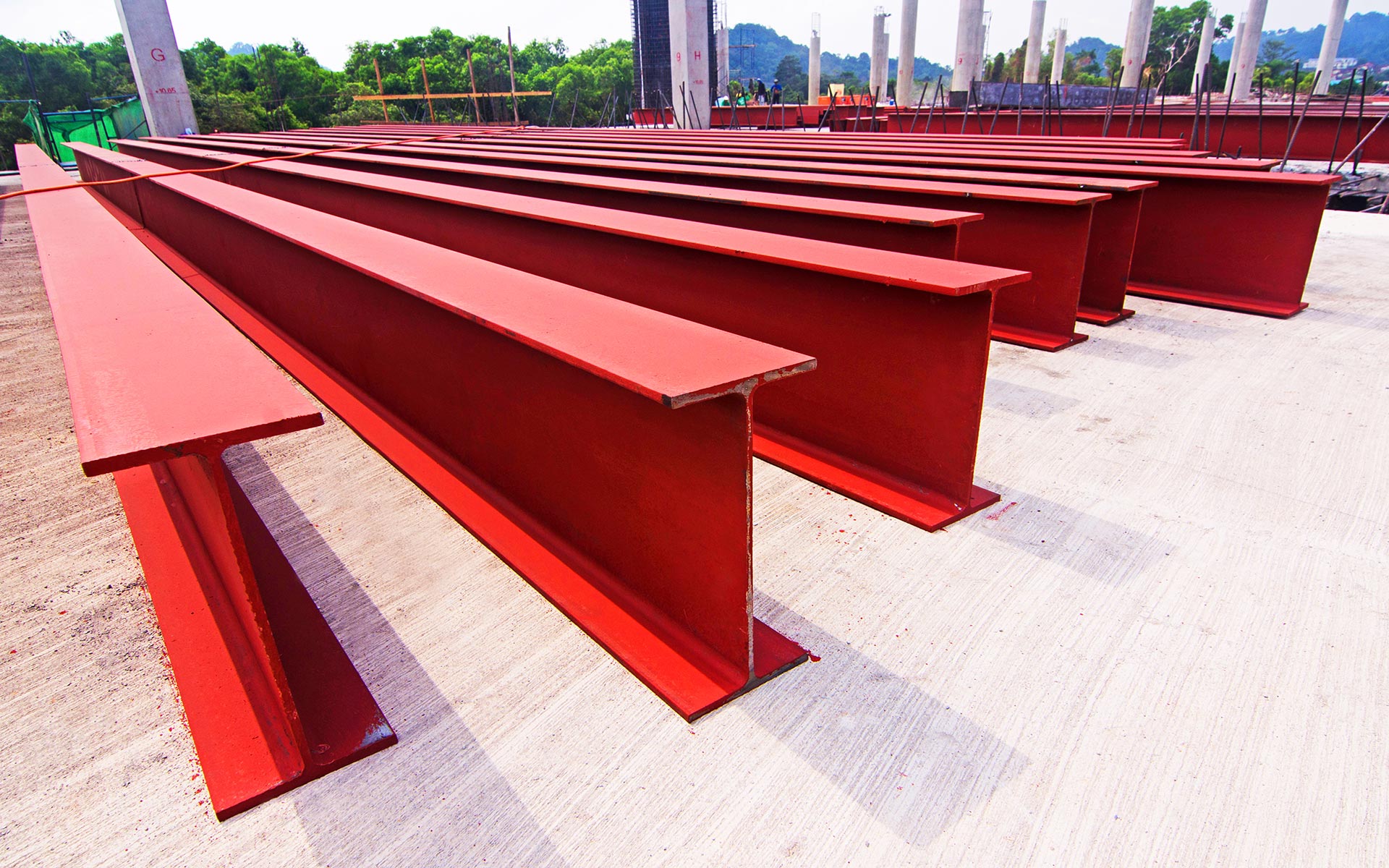
Germany’s stockholding distributors sold a combined 7.356 million tonnes of steel products in the first nine months of the year, around 10,000t less than in the corresponding 2023 period.
The decline has narrowed since mid-year, when it was still 100,000t versus the first half of 2023, Kallanish learns from German distributors’ association Bundesverband Deutscher Stahlhandel (BDS).
The nine-month average sales volume per month was 812,000t, marking a slight but continuous drop from the first two quarters, at 823,00t and 816,000t, respectively. However, it was higher than the third quarter one year ago, when sales averaged 783,000t.
Split by product group, the average monthly sales of flat products shows a declining trend, at 484,000t in Q3, following 522,000t in Q1 and 495,000t in Q2. Long products actually rose, at 252,000t in Q3, after 233,000t in Q1 and 250,000t in Q2. BDS provides no interpretation for the figures.
A slight increase in sections/beams towards Q3 can be explained by production shortages that triggered a buying rush. However, the increase is even more pronounced for rebar, despite the continued lull in construction.
Still, sales figures are altogether weaker in comparison with 2022, when long products sold 265,000t on average per month.
Miscellaneous other products, such as wire rod, accounted for 78,000 t/month, after 71,000t in Q2.
A comparison of the last month of the respective periods shows that total sales in September 2024 were slightly stronger than 2023, at 812,000t versus 779,000t respectively. Looking further back, September 2022 was again stronger, at 856,000t sold.
In terms of inventory tonnage, the monthly average in Q3 was 1.927mt, slightly down y-o-y, with Q3 2023 at 1.961mt.
Until the end of 2022, monthly average inventory was above 2.18mt, with all months normally above the 2mt mark. Since early 2023, only three months, July 2023, February 2024 and April 2024, have eclipsed that mark, by some 1,000t.
Christian Koehl Germany

Thyssenkrupp CEO Miguel Angel López downplays the prospects of renewable energy in Germany
Thyssenkrupp AG chief executive Miguel Angel López has dismissed German government efforts to promote solar and wind power in the country as uneconomical.
“I have not seen any plan that facilitates green electricity in central Europe at competitive costs,” he said in an interview with weekly magazine Focus. Competitive green energy would only be possible on the Iberian peninsula and Scandinavia, where costs would always be lower than in Germany, he added.
“My point is pure mathematics. If you compare the costs in Scandinavia, the Iberian Peninsula, or the USA with those here, and extrapolate them into the future, the result will always be the same,” he is quoted as saying. Billions in public subsidies for solar and wind energy is therefore wasted money, he argues. Solar power will not pay off in Germany, while wind power does not have sufficient available surface area to be rolled out, he added.
The interview appeared prior to the group’s annual press conference on Tuesday, but the topic was not broached then by executives. However, one critical commentator questioned whether Iberian and Scandinavian green energy would be made available to other countries in sufficient volumes. “They might need it for their own projects,” Kallanish heard him say from the conference floor.
In the interview, López made a stand for the strength of Germany’s manufacturing industries, and warned that de-industrialisation has already begun. He rejects public subsidies to strengthen local industry, and instead favours financial incentives that have been successful in other countries. As an example, he cites London, which created attractive jobs by granting temporary tax reductions for wealthy tax payers willing to move to the UK.
Christian Koehl Germany

Germany: September steel product sales edge up 0.8% on year
German steel product sales edged up 0.8% year on year in September to 785,553 mt, which was down 2% month on month, data from German steel stockholders’ association Bundesverband Deutscher Stahlhandel (BDS) showed Oct. 24.
The majority, or 58.9%, of the sales, were from the flat product category at 462,555 mt, down 6.1% year on year and falling 5.1% month on month, while long sales rose 9% on the year and 2.9% month on month to 245,945 mt, the data showed.
January-September sales totaled 7.4 million mt, just 0.1% lower on the year, with flat sales down 3.4% to 4.5 million mt and long sales up 2.2% to 2.2 million mt.
Platts, part of S&P Global Commodity Insights, assessed domestic HRC prices in Northern Europe at Eur555/mt ex-works Ruhr Oct. 23, down 20% since the start of 2024.
Meanwhile, stocks of German steel products totaled 1.9 million mt in September, slipping 0.5% year on year and down 0.5% month on month, the BDS data showed.
Flat products made up 66.6% of total inventories in September at 1.3 million mt, which was 1.8% higher on the year and up 0.8% on the month.
Long products stocks totaled 600,974 mt in September, or 31.5% of the total inventory, dropping 5.1% year on year and down 2.9% from August.

WV Stahl: German August crude steel production up 0.5% on year
German crude steel production edged up 0.5% year on year to 2.9 million metric tons in August, according to data published Sept. 24 by German steel federation WV Stahl.
However, the volume was down 8.6% month on month, according to the data.
This brought January-August crude steel production from German mills to 25.4 MMt, up 4% year on year.
Of the total August volume, 2.1 million was produced from blast furnaces, down 0.1% year on year, and down 9.1% from July.
This brought the total for the eight-month period to 18 MMt, increasing 2.2% year on year.
According to WV Stahl, German crude steel production from electric arc furnaces in August totaled 734,000 metric tons, up 2.3% year on year but down 7% month on month.
Output from EAFs over January-August also increased 8.6% year on year to 7.4 MMt.
Meanwhile, Germany produced 2 MMt of pig iron in August, up 0.3% year on year, but down 7.4% form the previous month, bringing the eight-month volume to 16.55 MMt, up 2.4% year on year.
Output of hot-rolled steel products in August dropped 3.1% year on year and 9.6% from July to 2.35 MMt, with the January-August volume up 2.6% at 21.7 MMt.
Platts, part of S&P Global Commodity Insights, assessed domestic HRC prices in Northern Europe at Eur555/mt ex-works Ruhr Sept. 23, down 20% since the start of 2024.

Kerschgens expands Stolberg site
German distributor Kerschgens is expanding its main site in Stolberg near Aachen, close to the borders of Belgium and the Netherlands.
The enlargement at Stolberg will mean the closure of the sites in nearby Würselen and in Viersen, some 70km further north, all in North Rhine Westphalia state. According to a manager, three houses in and around Viersen are mere distribution warehouses which the company established as hubs decades ago, and that do fit in the company’s current structure.
“It made little sense to invest in new storage technology at sites that do not meet today’s standards any more,” he tells Kallanish. The company is therefore building a new hall of 13,000m² with a modern high-bay warehouse in Stolberg for an overall investment of some €20 million ($22m), he says.
In its announcement of the groundbreaking ceremony last week, Kerschgens highlighted its acquisition of Carlier Blechbearbeitung, a sheet-working company, based in Aachen. Kerschgens says it plans to grow this activity further, and for that purpose needs to expand space. The company is a full-range distributor, with an emphasis on long products.
Following the acquisition of Carlier in 2022, Kerschgens employs 247 people at its sites in Stolberg, Aachen, Würselen, Bitburg and Trier, the latter two some 100km south in Rhineland-Palatinate.
Christian Koehl Germany

Ontras, H2 Energy Europe partner on hydrogen network
German transmission system operator (TSO) Ontras and H2 Energy Europe have partnered to establish a green hydrogen transport network between Denmark and Germany, Kallanish reports.
Under an MOU, the companies will explore options to transport green hydrogen from H2 Energy Europe’s planned 1-gigawatt production facility in Denmark through the proposed German hydrogen core network (HCN). If successful, the hydrogen could be delivered to German industrial customers in Salzgitter, Berlin, Eisenhüttenstadt, Magdeburg and Leipzig-Halle, the companies said in a joint statement Thursday. These will include steelmakers, chemical manufacturers and power generators.
The companies say they could utilise the Ontras Green Octopus Mitteldeutschland pipeline, a roughly 300-kilometre-long pipeline connecting the industrial regions to the HCN. German utility EnBW, the parent company of Ontras, is investing €1 billion ($1.09 billion) to build HCN, which is estimated to come into operation by 2032.
Ontras and H2 Energy Europe plan to assess the technical and commercial transport requirements, as well as potential exit points, to bring green hydrogen from H2 Energy’s Esbjerg plant to Germany. Ultimately, the two companies intend to enter a long-term capacity contract.
“This agreement perfectly symbolises our dedication to creating a comprehensive hydrogen backbone on a European level,” says Ralph Bahke, Ontras’ managing director of controlling and development. “Hard-to-abate industries will be able to substantially reduce their carbon emissions using renewable hydrogen delivered to them through our network from sources such as this ambitious project in Denmark.”
H2 Energy Europe’s so-called Njordkraft project plans to construct a 1-GW green hydrogen production facility in Esbjerg, Denmark. The plant is expected to produce 90,000 tonnes/year of green hydrogen using power from offshore wind farms, with commercial operations planned for 2028.
Cyril Cabanes, chief executive of H2 Energy Europe, adds that connecting the proposed project to Ontras’ gas transport network in Germany, would “contribute to the development of an integrated, reliable hydrogen economy that spans across Europe.”
Reethu Ravi UK