


Thyssenkrupp Materials Services appoints Heather Wijdekop as CEO of Business Unit Processing
thyssenkrupp Materials Services has appointed Heather Wijdekop as the new CEO of the Business Unit Processing, effective July 1, 2025. She will also lead the Operating Unit Processing North America, succeeding Norbert Goertz, who will continue as interim CFO of Business Unit Solutions and oversee Corporate Functions at the North America headquarters in Michigan.
Dr. Wijdekop brings over 20 years of international industry experience, including leadership roles at Tata Steel Europe and Corus Group. Most recently, she served as Director Commercial at Tata Steel IJmuiden, contributing significantly to sales growth and portfolio expansion.
North America remains a strategic growth region for thyssenkrupp, with 70% of its investment over the past five years focused in the region. The Business Unit Processing operates in both Europe and North America, providing customized flat-rolled metal processing and supply chain management, with a strong focus on the automotive sector.
CEO Ilse Henne welcomed Dr. Wijdekop to the leadership team, highlighting her customer focus, global experience, and alignment with the company’s materials-as-a-service strategy.

Stockholding: German steel sales rise 5.6% in March as stocks fall
Steel product sales in the German distribution and stockholding system rose 5.6% year over year to 863,963 mt in March on restocking, as inventories fell 4.7% to 1,886,182 mt , data from German steel stockholders’ association BDS showed April 24.
Sales of long steel products fell to 250,858 mt in March, from 254,763 mt in the same month last year, while flat sales increased to 533,267 mt from 496,755 mt. Other steel products climbed to 79,838 mt from 65,948 mt.
Stocks of long steel products fell last month to 659,410 mt from 646,239 mt reached a year ago, while inventories of steel flat products decreased to 1,189,091 mt from 1,288,941 mt. Other steel products dropped to 37,681 mt from 44,353 mt.
In March Germany produced 3.1 million mt of steel products, falling 11.7% year over year, the third consecutive month of double-digit decline for the country’s steel industry. Germany’s blast furnace steel producers registered the biggest drop in output, down 14.8% year over year to 2.1 million mt. Steel producers using electric arc furnaces produced 3.5% less crude steel in March at 1.1 million mt.
Platts, part of S&P Global Commodity Insights, assessed hot-rolled coil in Northwest Europe at Eur640/mt ($728/mt) base ex-works Ruhr March 31, up from Eur560/mt at the start of the year, with mills cutting production to sustain higher prices.
Platts assessed HRC in Northwest Europe at Eur655/mt EXW Ruhr April 23, up Eur5 day over day, and in Southern Europe at Eur625/mt EXW Italy, stable over the day.
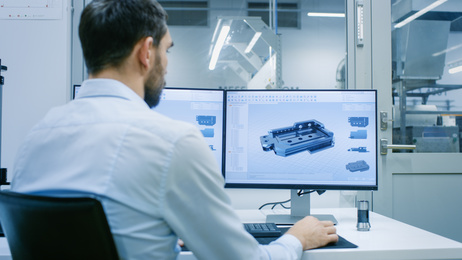
Steel, automotive tariffs cause manufacturing uncertainty
Uncertainty remains over the impact recent US tariffs will have on the steel and automotive sectors, Stephen Phipson, chief executive of Make UK, said during a Business and Trade Committee hearing this week.
“We’re waiting for the full effects,” Phipson noted, highlighting three main areas of concern, with possible direct and indirect impacts on demand and jobs.
“There is a case to be made that some areas, they can probably stand a 25% tariff in terms of the consumer prices, but others certainly can’t. So there would be a direct effect there,” he said.
“There is the indirect effect, particularly around the EU; a lot of our … manufacturers are in the supply chain to EU businesses, which are then exporting final products to the US. It depends on where the EU negotiations end up as to what the effects will be in terms of volumes on UK manufacturing; so, that’s a grave concern,” he added.
For some steel products, he expects buyers to pay the 25% tariff as they cannot currently be sourced domestically in the US.
“With the 25% on steel, which [are] not normal steel products. These are advanced products. These are more specialty steel, specialty components. Now, in a lot of cases, the customers can’t do without those. They’re the single source for those items. So, the consumer will actually end up paying the 25%, but the question … is, does that curtail demand in the process of doing it whilst people re-source, if those tariffs persist for any length of time?”
Stability is also a concern, Kallanish learns from the session.
“We don’t know from one day to the next, whether [US President Donald] Trump’s going to carry on, whether he’s going to suspend, whether he’s going to change; it makes planning your business and your investments extremely challenging,” Phipson said.
“It’s … very difficult to know exactly what the demand reduction will be as a result of tariffs,” he added.
He also highlighted the work manufacturers were doing to mitigate the impact.
“Other manufacturers are … putting in temporary contingency plans at the moment, hoping that in the next month or two we can get some sense, and they don’t have to do the next level, which will be, if you see a demand reduction, scaling back factory capacity.”
He told the committee the manufacturing sector will “absolutely have to” lay off staff if a tariff deal is not done with the US by summer.
“Many of [the] large companies [have] put contingencies in place … [which] gives them maybe three months of gap. So that gives you an order of time scales before there would be a reduction in capacity planned,” Phipson noted.
“For SMEs, they’re living hand to mouth. They want to know day to day whether adding 10% to their product is going to reduce the amount of volume they’re shipping to the United States. And so for them, it’s a much more direct impact; so the larger ones can put this off for a few months, but the smaller ones are going to see it now,” he concluded.
Carrie Bone UK

ArcelorMittal to cut 600 jobs in France amid escalating steel crisis in Europe
Europe’s largest steelmaker announced plans to eliminate approximately 600 jobs at ArcelorMittal France North sites, notably Dunkirk, Florange, Basse-Indre, Mardyck, Mouzon, Desvres and Montataire.
The number of affected jobs, however, is not final and might change.
“At this stage though, it is too early to quantify the number of people who might be affected,” ArcelorMittal said.
The measures are necessary “to adapt [the company’s] activity to the new market context and ensure its future competitiveness,” ArcelorMittal said.
The company deemed market conditions in the European steel market as a major driver behind the decision, Fastmarkets understands.
“As the European steel industry is facing a crisis marked by a 20% drop in demand over five years and a sharp rise in imports, which now account for 30% of the market, ArcelorMittal France North must continuously review its efficiency and competitiveness,” the statement reads.
Affected facilities
ArcelorMittal did not announce any immediate plans to cut production at affected sites when contacted by Fastmarkets on April 24.
There are three BFs at the Dunkirk site with combined capacity for about 6.9 million tonnes per year of pig iron. Only BFs 3 and 4 have been operational recently, however. BF2, with capacity for 1.4 million tpy of pig iron, has been idled since June 2022, Fastmarkets understands. The site can produce 4.6 million tpy of hot-rolled coil.
The Florange site can produce up to 2.8 million tonnes of flat steel products a year, including hot-rolled, cold-rolled, galvanized coil and tinplate.
The Madryk site is equipped with pickling and cold-rolling mill and two galvanizing lines. Estimated yearly output at the site is over 3 million tonnes of flat steel products.
The Desvers site can produce around 400,000 tonnes of galvanized coil per year.
The Basse-Indre site produces tinned and electrolytic chromium steel coils and sheets.
The Montataire site has three galvanizing lines and one organic coating line, with a total capacity of over 1 million tonnes of coated coil per year.
And Mouzon site has two lines to produce corrosion resistant flat steel products.
European steel sector struggles
The European steel sector has been facing rising production costs, increased pressure from low-cost imports from Asia and the ongoing deterioration of the steel demand-supply balance in Europe, sources told Fastmarkets.
ArcelorMittal is not the only one European steel producer who has been planning job cuts recently.
In April 2025, Tata Steel Netherlands announced plans to eliminate 1,600 jobs, Fastmarkets reported.
In November 2024, Germany’s largest steelmaker, Thyssenkrupp, announced plans to reduce its steel output and cut around 11,000 jobs to adapt to the fundamental changes taking place across the European steel market.
The EU steel industry reduced its capacity by 9 million tonnes per year in 2024, while also announcing 18,000 job cuts, according to European steel association Eurofer.
Crude steel production across Europe amounted to 136.30 million tonnes in 2022, down from 152.60 million tonnes in 2021, according to data from worldsteel. The decline was due to massive output cuts that were implemented by European mills in the third and fourth quarters of 2022 amid deteriorating demand and falling steel prices.
Steel output rebounded slightly to 129.5 million tonnes in 2024, compared with 126.3 million tonnes in 2023, according to worldsteel. But the total volume was still below the 159.4 million tonnes recorded pre-Covid in 2019.
Apparent steel consumption in the EU amounted to 127 million tonnes in 2024, down by 2.3% from 130 million tonnes in 2023 and lower than during the 2020 pandemic year, when it stood at 129 million tonnes, data from the European steel association Eurofer shows.
Real steel consumption shrunk by 3.8% in 2024 to around 132.7 million tonnes, from around 138 million tonnes in 2023.
While steel consumption in the EU decreased, the share of steel imports in the European market has been rising, crowding out local supply, sources noted.
Carbon steel imports to the EU in 2024 totaled 26.36 million tonnes, up by 6.4% compared with 24.78 million tonnes in 2023, Eurofer data showed.
In March this year, the European Commission presented a Steel and Metals Action Plan to support the struggling industry, but it remains to be seen how the plan will be implemented and what results it will bring.
One of the plan’s pillars is tailoring trade policies to protect struggling European market from unfair imports.
On April 1, the EU Commission introduced new, tighter, steel safeguard measures to support the domestic steel sector.
And on April 7 the EU imposed anti-dumping duties on imports of hot-rolled coil from Egypt, Vietnam and Japan.
Europe’s steel sector remains at the heart of many regional economies, with approximately 500 production sites across 22 EU member states.
According to EU data, the European steel sector contributes around €80 billion to the EU’s gross domestic product (GDP) and supports more than 2.5 million jobs.


Hydnum Steel secures €60 Million for Spain’s first Green Steel plant
Hydnum Steel has been awarded €60 million in funding by the Spanish Government under the PERTE for Industrial Decarbonisation, part of the EU’s Next Generation EU programme. The funding will support the construction of southern Europe’s first green steel plant, located in Puertollano, Spain.
This pioneering project aligns with the EU’s goals of reindustrialisation, strategic autonomy, and climate neutrality, and represents a major step forward for sustainable flat steel production in Europe.
Hydnum Steel has already secured 75% of its initial production through strategic agreements with key industrial players, including Gonvarri Industries, Thyssenkrupp Materials Processing Europe, and Knauf Interfer.
The initiative also pays tribute to Agustín Escobar, one of the visionaries behind the project, whose legacy continues to inspire the plant’s mission.
The project has been declared a Priority Project by the Government of Castilla-La Mancha and recognised by the World Economic Forum as one of the five leading global projects in industrial decarbonisation.
For more information: hydnumsteel.com

POSCO to invest in Hyundai Steel’s proposed Louisiana steel mill
South Korea’s POSCO Group plans to invest in Hyundai Steel’s proposed 2.7 million mt/year steel mill in the US state of Louisiana, POSCO said April 21.
POSCO signed a memorandum of understanding with Hyundai Motor Group on the same date “for mutual cooperation in the steel and secondary battery sectors,” it said.
Hyundai Motor plans to invest $21 billion in the US from 2025 to 2029 to expand its US auto production and for its steel affiliate, Hyundai Steel, to start up an electric arc furnace steel mill in Louisiana as early as 2029.
“… as the first fruit of the cooperation between the two companies, POSCO Group will participate in the steel investment in the US recently announced by Hyundai Motor Group,” POSCO said without disclosing the value of its investment.
“Through this, POSCO Group will be able to secure a bridgehead for entering the North American steel market, which has been limited by protectionist trade barriers for the past 10 years,” POSCO said.
POSCO’s investment comes after the US imposed a 25% import tax on all steel and aluminum entering the country, effective March 12.
“POSCO … will be able to supply materials smoothly to the US and Mexico through this joint investment in the Louisiana steel mill,” it said.
For the secondary battery materials sector, POSCO will build a stable supply chain with Hyundai Motor.
“… the plan is for the two companies to find sustainable collaboration points in areas such as supply chain construction and next-generation material development by synergizing POSCO Group’s secondary battery material business competitiveness, including lithium and cathode/positive electrode materials, with Hyundai Motor Group’s eco-friendly future mobility technology,” POSCO said.
Currently, POSCO Future M, the group’s battery materials unit, has a joint venture called Ultium CAM with General Motors.
“POSCO Group is building a secondary battery material value chain with the ability to produce and recycle anode and cathode materials based on global lithium salt lakes and mines, as well as a portfolio of steel materials for future mobility such as ‘Giga Steel’ for automotive steel sheets that take advantage of high strength and light weight, battery packs, and electric vehicle drive motor materials,” POSCO said.
By 2030, POSCO projects its global lithium production capacity to hit 423,000 mt/year, with cathode active materials at 1 million mt/year and anode active materials at 370,000 mt/year.
Platts, part of S&P Global Commodity Insights, assessed battery-grade lithium carbonate at $9,000/mt on April 17, unchanged day over day but down $200/mt week over week, and lithium hydroxide at $8,900/mt, up $50/mt day over day but down $200/mt week over week.
Author Clement Choo


Sweden’s Fagersta to invest in a new stainless steel mill
Sweden-based stainless steel producer Fagersta Stainless has commissioned Italian plantmaker Danieli to install a new stainless steel blooming mill with an annual production capacity of 70,000 mt at its Fagersta plant. The mill is scheduled to start operations by the end of 2026.
The mill in question will produce round bars and billets in 35-220 mm diameter, enriching the product mix and operational flexibility at the plant. The mill will allow for three paths of operation. Ingots/blooms will be processed just by the breakdown mill into billets with possible delivery for immediate rolling at the existing wire rod mill without any storage/reheating step, obtaining the highest reduction rates for the finest grain size.
The scope of supply also includes the modernization and certifications of a breakdown mill stand, with Danieli’s automation process control systems.

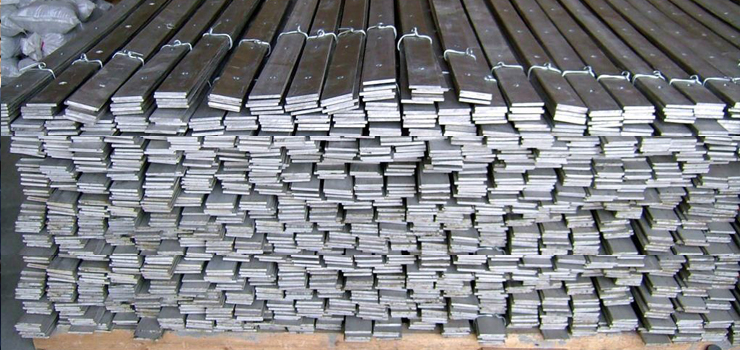
US flat-steel imports become erratic under Trump tariffs
US flat steel imports in 2025 correlate somewhat to the erratic tariff rollout on steel by US President Donald Trump, Kallanish reports.
The president has introduced a series of steel import policies that have confused market participants, who have been stumped by tariff amounts by country, steel item exemptions, and tariff commencement dates.
Final data provided by the US International Trade Administration’s Steel Import Monitoring and Analysis (SIMA) show that in January, the US imported 922,377 tonnes of flat steel products. Some US steel market participants anticipated higher import rates in January as the market braced for the impact of higher prices and constricted supply chains, which were seen as potential market threats (see Kallanish 11 February).
Other sources were less concerned about how tariff threats would affect the immediate US steel market. Distributors in the flat steel market assessed the tariffs as purely a negotiating tactic by the president (see Kallanish 25 March).
Despite efforts from the United States-Mexico-Canada Agreement (USMCA) alliance leaders to persuade Trump against imposing tariff measures (see Kallanish 27 November), on 1 February, he announced that the tariffs would go into effect at midnight on 2 February (see Kallanish passim).
Trump issued 10% tariffs on Chinese imports (see Kallanish passim) in the same executive action, labelling unsanctioned passages of people and fentanyl over US borders as a national security threat. The move applied pressure on the North American allies, persuading them to increase security measures (see Kallanish passim). In the late morning of 2 February, Trump paused tariffs on Mexico for 30 days, and within a few hours granted Canada the same delay (see Kallanish passim). Tariffs on China were not paused.
In February 2025, the US imported 736,460t of flat steel products, the lowest amount since November 2023, when the total was 686,427t, according to the same SIMA data. However, preliminary SIMA data project that US flat steel imports will increase to 749,366t in March.
Trump rolled out additional measures, coined “reciprocal tariffs,” on 2 April, shocking many in the US steel market when they learnt that all steel and aluminium imports already subject to tariffs under Section 232 measures or 301 measures would not be slapped with additional tariffs (see Kallanish passim).
“I wasn’t aware of that. I wonder how much domestic product will be available if mills don’t stabilise,” said a flat steel distributor in the Midwest.
On 9 April, the president announced a 90-day pause on the 2 April “reciprocal tariffs,” except those applied to China. In the subsequent days, suppliers and consumers have scrambled to reconfigure their supply lines and manage costs in the midst of the brewing trade war.
As of 15 April, flat steel imports to the US account for roughly 346,991t, SIMA preliminary data report.
Kristen DiLandro USA

ArcelorMittal supplies plate to Nordlicht 1 wind farm
Wind power plant builder Vestas has selected ArcelorMittal to supply low-carbon-emission steel heavy plate for the Nordlicht 1 offshore wind farm, Kallanish learns from the steelmaker.
Developed by Vattenfall, the Nordlicht wind farm is located off Germany’s North Sea coast, some 85 km north of Borkum island, and is composed of two sites: Nordlicht 1 and Nordlicht 2.
Construction of Nordlicht 1 is set to begin in 2026, with the wind turbines expected to be installed in 2027. The entire wind farm will be fully operational in 2028 and is expected to generate approximately 6 terawatt hours of electricity annually, enough to power 1.6 million German households.
Nordlicht 1 has a capacity of around 1GW. The site will be composed of 68 Vestas wind turbines. The farm will feature turbine towers partially made with low-carbon-emissions steel.
This is the second project between Vestas and ArcelorMittal involving XCarb recycled and renewably produced heavy plate. The partnership was initially founded for the Baltic Power Offshore Wind Project in Polish waters as the first to utilise this steel (see Kallanish passim).
Christian Koehl Germany

Power costs hamper prospects for Eisenhüttenstadt
The high level of electricity prices in Germany is the main hurdle for the transition to low-emission steelmaking, says ArcelorMittal Germany chief executive Thomas Bünger.
A price of €50-55 ($57-62) per MWh “would be the measure of things”, Bünger notes in an interview with broadcaster RBB about the prospects for the group’s Eisenhüttenstadt mill. “That was the price before the energy crisis, and we need to get back there, but we are very far away from it.”
Bünger says Eisenhüttenstadt saw temporary production breaks in December, when spot price for power skyrocketed to a record mark of €850/MWh. “Such interruption deals us a heavy blow, as it brings into question our reliability for timely deliveries to the customers,” Bünger observes. He notes capacity utilisation was high at the time and the interruption harmed production flow. The mill also has enough orders to maintain full utilisation in the first half of 2025.
It is not without irony that the mill’s own power production from off-gases would bring more profit if sold to the market than being used to make steel for sale. Bünger emphasises that this is by no means planned, as the company’s main wish is affordable power prices to facilitate a reliable framework for steel production, Kallanish notes.
“Decorbonisation requires a conversion of the primary steel making route from blast furnaces to electric arc furnaces,” he notes. But no blast furnaces means the loss of in-house generated electricity, whereas EAF operation would put the mill at the mercy of erratic market power prices.
The company therefore expects quick measures from the new German government to initially reduce the power grid fees back to the level of 2023. “This could be arranged in a short time, would not cost much, and would mean a good first step,” Bünger says.
Christian Koehl Germany