


Traders at IREPAS: No reduction in US tariffs expected, trade conditions remain challenging
During the panel session of the SteelOrbis Spring 2025 Conference & 92nd IREPAS Meeting held in Athens on April 27-29, F. D. Baysal from Seba International, the chairman of the traders committee, shared with conference participants the conclusions reached by traders regarding the current situation in certain markets, focusing on the US tariffs.
Regarding the US imposing new 25 percent tariffs on imports from the countries previously exempted from the Section 232 measures, Mr. Baysal stated that, although it seems like an advantage for the countries such as Egypt and Turkey which were already subject to 25 percent tariffs, only 18 percent of total imports into the US was from the Section 232-paying countries and 82 percent was from the exempted countries.
Adding that Turkey still faces antidumping and countervailing duties for most steel product exports to the US, he commented that, although the competition will still be a challenge for Turkey, at least Turkish exporters “will not have their hands tied behind their backs”.
He added that, despite the advantages some countries will gain, there will be no improvement in the market conditions given the economic uncertainties and the general market slowdown. Also, he said he believes that there will be no reduction in the US tariffs.
Regarding the impacts of exchange rate changes on trade, the Seba International official stated that the dollar, which is depreciating due to the uncertainty caused by the US administration’s actions, will give US scrap exporters a better advantage to compete with the EU. He noted that as raw materials are priced in dollars, the weak dollar leads to higher costs for EU producers.
Looking at the EU, he said there have been some reductions in the import quota volumes, resulting in more challenging trade conditions. Considering the increased sales of wire rod and HRC over the past quarter from the ASEAN region to the EU, Mr. Baysal noted that, even though there are some restrictions on certain ASEAN countries, the EU is now more open to those countries compared to its old traditional markets given the free trade agreements between the EU and some Southeast Asian countries.
Regarding China’s steel exports, Baysal stated that the sharp rise in the country’s long steel exports, as opposed to the decline in its flat steel exports, is due to the higher demand in developing countries with new infrastructure projects. He said he foresees no reduction in China’s exports and capacity utilization going forward.

UK publishes draft CBAM primary legislation for technical consultation
The draft outlines the legislative framework for the CBAM tax on certain imported goods into the UK, which will become effective from January 1, 2027.
The tax will apply to direct and indirect emissions embodied in the imported CBAM good.
“This represents continued momentum for the adoption of CBAM mechanisms globally, as countries follow in the EU’s footsteps to use trade as a tool for climate policy. It also helps better align policies in the UK and the EU, smoothing the way to progress linking of the UK and EU emissions trading systems, which will be a topic for discussion at the UK-EU Summit in May,” Stuart Evans, Fastmarkets’ chief economist and head of environmental markets, said.
As it stands, goods imported to the UK are not subject to the UK’s Emissions Trading System (ETS).
The ETS operates through a “cap and trade principle,” whereby the cap is set by the ETS and participants can trade emission allowances as needed.
CBAM aims to prevent carbon leakage in the UK, since imported goods not subject to the UK ETS have also not been subject to a similar carbon price from the jurisdiction they were produced in.
A “CBAM” good is defined in Schedule 1 of the draft primary legislation as:
- Aluminium
- Cement
- Fertilizers
- Hydrogen
- Iron and steel goods
Specific CBAM goods will be subsequently identified by commodity codes.
The CBAM tax rate will be charged “at an amount equal to the sectoral domestic price” of the good and multiplied by the number of tonnes of CO2 embodied in the good.
The “sectoral domestic price” will be calculated by the Treasury for each CBAM sector every quarter.
This would involve using the previous quarter’s average UK ETS auction price.
The importer will be liable to the CBAM cost, but exemptions are available if the good has originated in the UK, it has been returned or the good has been imported outside the course of business.
Registration with His Majesty’s Revenue and Customs (HMRC) will be required if CBAM goods with an aggregate value of £50,000 ($67,033) or more have been imported into the UK over 12 months, or it is expected that this quantity will be met before the end of a 30-day period.
According to the draft legislation, registration must occur within 30 days of triggering the above threshold.
The first accounting period for the CBAM tax will run from January 1, 2027, to December 31, 2027; returns and payments will be due five months after the end of the first accounting period (May 31, 2028) to provide businesses and HMRC sufficient time to adjust to the new system.
From January 1, 2028, CBAM costs are required every quarter and are due two months after the accounting period ends.
Initially the consultation proposal outlined quarterly accounting periods from 2028 with a one-month return and payment window. But after concerns around data availability were raised, this has been amended to two months, to bring greater alignment between CBAM and other UK tax models and provide businesses more time to gather the data required to submit their return.
As part of the submission, the government will allow the use of the most recently verified emissions data, and the most recently verified information to determine the “deductible carbon price.” According to the draft legislation, independently verified data or default values can be used by the importer.
From 2027, the government will proceed with a single default value per good, and the methodology for its calculation and publication will be confirmed prior to the beginning of CBAM in 2027.
The government noted that it is considering moving to an alternative approach from 2028 onward.
Importers can reduce their CBAM liability through a carbon price relief if the embodied emissions of the goods they have imported have previously been subject to a “deductible carbon price.”
This could be either through another country’s ETS or taxation.
In a previous consultation, the government confirmed that only explicit carbon prices that place a price per tCO2e can be used as part of this relief. Other policies, such as fuel duties or carbon regulations, are not allowed to form part of any deductions.
The UK government also proposed an exemption for goods that originated in a jurisdiction with a linked carbon pricing scheme, since carbon leakage risk would be minimal because the ETS prices would converge.
The consultation will end on July 3, and feedback is encouraged from all affected stakeholders.
UK-EU carbon markets relationship
The EU’s equivalent CBAM policy will come into effect on January 1, 2026, which has prompted other countries to look at setting up similar measures and their own ETS.
But the European Commission is planning to review legislative proposals amending CBAM in the fourth quarter this year, Fastmarkets recently reported.
The proposed amendments will be in three directions — to address the problem of carbon leakage for CBAM goods exported from the EU to third countries; to introduce CBAM scope extension to certain steel downstream products, to address the risk of carbon leakage being pushed further down the value chain; and to propose anti-circumvention measures, including those against resource shuffling.
Harmonizing CBAM policies between the UK and EU would provide domestic producers a way to offset associated CBAM costs when exporting to the UK through domestic pricing schemes.
The UK is at risk to lose £3.5 billion-8 billion in revenue from 2025 to 2030 if it remains outside the EU carbon market, since UK ETS allowance prices are lower than those in the EU, a UK Energy report from October 2024 shows.
“The UK Emissions Trading Scheme (ETS) is 10 times smaller, more volatile and, since mid-2022, has been priced lower than the EU ETS… A lower UK carbon price leads to reduced revenues for Treasury and lessens the incentive to decarbonize,” the report reads.
“Analysis by Frontier Economics projects shows that the introduction of the EU CBAM will lead to £800 million being paid to EU member states on export across all impacted sectors between 2026 and 2030,” it continued.
For example, in January 2025, UK ETS allowance prices were just around £32.57 per tCO2e. In contrast, EU carbon emissions allowance prices hovered around €71.52 ($74.06) per tCO2e in Janaury 2025, peaked at over €81 per tCO2e in mid-February, and then dropped below €60 per tCO2e in early April.
The projected average price for the year is around €75 per tCO2e, which is 15% higher than in 2024, according to the outlook for European Union Allowance, the financial instruments within the EU Emissions Trading System.


ThoRe Steel Trading becomes a member of EUROMETAL
ThoRe Steel Trading GmbH, an internationally active steel trading company based in Krefeld, Germany, has joined EUROMETAL as a member.
ThoRe Steel operates across all facets of steel trading and provides comprehensive services – from procurement and logistics to commercial and regulatory support.
Serving as a central interface between customers and suppliers, ThoRe Steel coordinates complex transactions across the entire value chain.
With a strong focus on simplifying trade, ThoRe Steel manages the demands of international business, ensuring smooth and efficient processes for all stakeholders.
The product portfolio encompasses plates, slabs, coil products, surface-coated materials, engineering steel round bars, tool steel and all kind of special steels.
Core markets are Northern and Central Europe, encompassing both international imports and intra-European trade.
Through its established supplier network, ThoRe Steel supplies quality steel products to industries engaged in infrastructure, construction, machine building, renewables, shipbuilding, and mechanical engineering, with processing centers and stockholders also among its key customers.
Through its EUROMETAL membership, ThoRe Steel looks forward to active exchange, shared insights, and contributing to a stronger, more connected European steel community.
Discover more: thore-steel.de

Pipemaker Schoeller resumes power plant business
German pipemaker Schoeller Gruppe is re-entering the power plant business after a five-year hiatus and has led initial negotiations in China and South Korea, Kallanish hears.
The decision to resume supply of pipe to the power plant segment was supported by geopolitical developments, improvements in quality and process stability, and favourable conditions among material suppliers, says the producer of welded stainless pipe.
To actively engage with key markets, members of the sales team travelled to China and Korea to establish and strengthen business relationships, while gaining deeper insights into market trends and ongoing projects.
Over two weeks, meetings were arranged with leading companies in China in the energy and infrastructure sector, and in Korea with businesses specialising in power plant construction, offshore solutions, and heat exchangers. One meeting in China led to a concrete and promising inquiry, the company points out.
“The ‘Made in Germany’ label and the Schoeller brand hold a strong reputation in our target market,” says manager Bernd Jansen. “In cases where projects are internationally tendered, and Chinese suppliers are excluded from consideration, we have a level playing field, giving us a strong competitive advantage,” he notes.
Christian Koehl Germany


EU’s Indonesia, Korea, China steel imports surge: ISSB
While the EU’s overall finished steel imports fell 15.6% year-on-year in February to 1.7 million tonnes amid weak end-user demand and anticipation of tighter trade measures, South Korea- and China-origin intake bucked the trend, according to ISSB.
Indonesia also dramatically expanded its presence in the EU market, with imports of finished steel into the EU increasing five-fold to reach 99,000t in February, Kallanish notes.
Shipments from South Korea surged 28.7% to 303,000t, while Chinese deliveries rose by 10.7% to 169,000t compared to the same month last year, ISSB reports. Both countries had already seen record-high sales to the EU in January.
Meanwhile, preliminary Chinese customs data indicates that Europe continued to absorb large volumes of Chinese finished steel in March. Exports to Europe totalled 256,000t, following 307,000t in February and 277,000t in January. Korean exports to the EU also remained strong, amounting to 268,000t in March after registering 319,000t the previous month, ISSB notes.
The rise in Asia-origin steel imports comes even as key European demand sectors show signs of weakness.
Separately, ISSB notes that in February, the UK’s finished steel imports jumped 27.3% year-on-year to 498,000t, “following the country’s [Tata Steel UK’s underway] transition to electric steelmaking.”
Deliveries from major EU suppliers rose, including Spain and Germany, while Turkish- and Vietnamese-origin imports slumped by 33.2% and 63.4%, respectively. Nevertheless, imports from South Korea and China increased by 16.1% and 5.1% respectively.
On a global scale, China’s total finished steel exports rose 6.3% year-on-year in March to 10.5 million tonnes, even as the total export value declined by 4.8% in US dollar terms.
South Korean finished steel shipments to overseas markets stood at 2.2mt in March against 2.3mt in the same month a year ago.
Elina Virchenko Turkey

Austria’s Pisec files for insolvency amid market pressure
Austrian steel trader Pisec Group Holding and its subsidiary, Pisec Group Austria, have officially filed for insolvency with the Commercial Court of Vienna, citing mounting economic pressures and a sharp decline in market demand.
“Despite promptly initiated discussions with banks and potential investors, no viable solution could be found within the limited timeframe available that would have enabled the continued operation of Pisec Group Holding GmbH and Pisec Group Austria GmbH,” management representative Karl Pisec says in a letter to customers seen by Kallanish. “For this reason, the management was compelled to prepare insolvency filings for both companies, which were submitted … April 17th 2025, to the Commercial Court of Vienna.”
Global disruption in commodity markets has severely impacted operations, he notes. This disruption was compounded by a significant drop in demand across major sales markets, especially in the United States and Europe, critically affecting the group’s financial stability.
According to media reports citing creditor protection organisation AKV, Pisec maintained long-standing strategic relationships with Belarusian steelmaker BMZ. Pisec Group Austria GmbH was responsible for the independent distribution of BMZ products to Western companies. Belarus, similar to Russia, is heavily sanctioned by the West following its involvement in the war in Ukraine.
KSV, another creditor protection organisation, reports that the insolvency of Pisec Group Holding GmbH will affect eight employees and 14 creditors. Debtor information indicates that liabilities are estimated at approximately €109 million ($124m), with about €78.5m consisting of guarantees for bank liabilities of subsidiaries.
Some parts of the group could continue to exist in order to manage the liquidation process, according to Kallanish sources. This refers particularly to the group’s operations in the United States and Poland, although these operations are likely to continue only until inventories are sold off.
Pisec Group Holding did not respond to Kallanish request for comment.
Founded in 1950, Pisec Group was active in trading of raw materials and steel products. According to the company’s website, Pisec Group Austria GmbH, headquartered in Vienna, operated several international sales offices. Its offices in Miami and New York served customers in the Americas with specialty steel products. An office in Katowice, Poland, focused on long and flat steel products sourced globally. Additionally, the group maintained a sourcing office in India.
In 2022, the group expanded further through the acquisition of the ESB Group, strengthening its presence in Central Europe with a focus on flat-rolled products, individually cut to meet customer requirements.
Elina Virchenko Turkey
Liberty Liege declared bankrupt, several buyers show interest
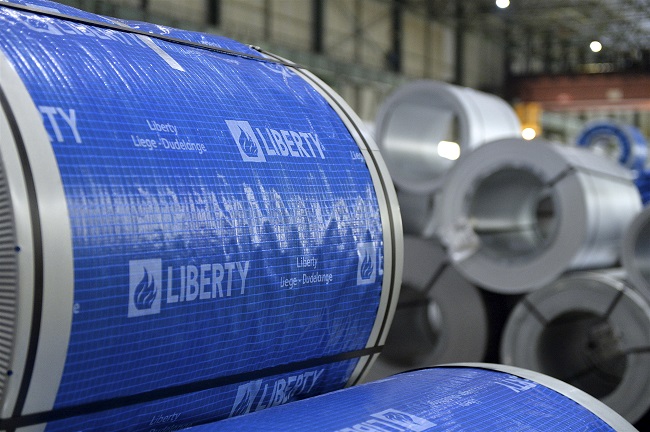
Liberty Steel’s Liège facility in Belgium has been declared bankrupt and already attracted attention from multiple potential buyers, sources familiar with the situation tell Kallanish.
These include NLMK and ArcelorMittal, according to sources, while Tosyali, rumoured to be among the interested parties for Liberty’s Dudelange unit in Luxembourg, may also be in the running.
Neither Liberty, NLMK nor ArcelorMittal provided comment before deadline.
The Liège facility was officially declared bankrupt on 22 April by the Tribunal de l’entreprise de Liège, or Liège enterprise tribunal. Dudelange and Liège have not engaged in any production for over two years. A union source indicates the Walloon region has declined to provide additional funding to the company, and two receivers have been appointed to oversee the sale process.
Liberty plans to divest its operations in Magona, Italy, as well as its facilities located in Liege and Dudelange. The Magona re-rolling facility in Piombino is currently at risk of bankruptcy, as attempts to find a buyer have not been successful (see Kallanish passim). This comes despite reports of interest from several companies.
Unlike Dudelange and Liège, Magona has successfully sustained its production levels and continued operations in recent months. Capacity utilisation is currently varying between 40% and 50%, depending on the supply availability of coils.
Meanwhile, another union source confirmed recently that the sale of Liberty Steel Dudelange is still on hold and there have been no updates given to the workforce on the sale process; however, the prospective buyer has assured the retention of all 140 employees.
In February, the receiver informed trade unions that a decision had been made regarding the buyer for the plant, which is speculated to be Tosyali (see Kallanish passim). The source indicated there is currently no specified date for the conclusion of the Dudelange sale.
The combined rolling capacity of the three Liberty facilities exceeds 2.5 million tonnes/year.
Natalia Capra France

Italian coil prices stagnate as import offers decrease
Italian coil prices have remained stable since the start of the month; however, there is a notable lack of purchasing activity, Kallanish hears from buyers and sellers.
Last week, the Easter and 25 April holidays, along with the restrictions on truck circulation, contributed to a deceleration in activity and negatively impacted sales. This week is anticipated to be relatively subdued, with many expected to take extended leave for the Labour Day holiday.
However, the current market slowdown can be attributed less to the holiday season and more to the anticipation surrounding potential price fluctuations at the upcoming trade show in Milan next week.
Several sources prepared to purchase small quantities state they are waiting for the trade fair, where several Asian traders are anticipated to attend and prices will be more clearly determined.
Several industry insiders expect prices will drop in May due to the impending sharp fall in scrap values, as well as in coil import prices from various regions, including Asia, Turkey and Saudi Arabia.
Recent hot rolled coil import offers from Indonesia and Malaysia are reported in the range of $570-580/tonne cfr, which translates to approximately €502-510/t.
Quotes from Turkey are currently being reported at €570-580/t cfr duty paid and €550-560/t cfr from Saudi Arabia.
Transactions for domestic HRC are reported to be stable at around €630/t delivered.
A mill source reports buyers are adopting a cautious approach; however, material availability remains limited in Europe and northern European lead times are extending.
Natalia Capra France

Polish steel industry: “era of naïve globalisation” is coming to an end
Polish steel industry is urging Prime Minister Donald Tusk to follow through on his recent promise to “repolonise” the national economy, and authorities to publish the eagerly-anticipated national steel plan.
Earlier this month, Tusk said the “era of naïve globalisation” is coming to an end and that the government, rather than observing passively, would take a more active role in supporting the national economy. This will include measures such as mandating state-owned firms and projects to choose domestic contractors and suppliers. It will also mean supporting the conversion of some plants to produce military equipment.
Poland has a high share of state ownership in the economy. One of these assets is now plate producer Huta Czestochowa (HCz), which is in the process of being acquired by the defence ministry. Tusk said the move has been made to rescue the steelworks from the troubled ownership of Liberty, but also so that Poland’s army and defence suppliers have raw materials supply. State-owned assets will focus not only on profit but also long-term public interest and economic security.
Tomasz Slezak, chief executive at state-owned Weglokoks, currently operating Huta Czestochowa, stresses Tusk’s comments do not spell nationalisation of industry but rather mobilising business to act in the interest of national security.
“We know that, as a rule, private businesses are better run [than state firms], so [nationalisation] is not a good direction to go in,” he said during last week’s European Economic Congress in Katowice attended by Kallanish. Prime Minister Tusk simply wants to ensure that Polish businesses benefit.
Globalisation previously served the interests and prosperity of the West but has ended with technology being transferred to the rest of the world and with huge costs for Europe, he added. “I have the impression that everyone in Europe has answered the question, we need industry. Even if it’s due to the threat of war, we need the steel industry,” he noted. In Europe, this push has happened slowly, but it will dictate future economic direction, he added.
Stalprofil chief executive Henryk Orczykowski said repolonisation is a “media slogan”, which in fact means protecting what is Polish and local jobs. He added: “My heart, as well as probably the heart of many businessmen has been filled with hope … Prime Minister, do as you say! Put it into action.” Even if the measures are only 50% effective, there will be relief for business in the form of deregulation, market protection and energy, he noted.
Asked whether HCz can satisfy the needs of Poland’s defence industry, Slezak said it can satisfy a portion and aims to increase this.
Przemsylaw Sztuczkowski, ceo of Cognor, which owns Huta Stali Jakosciowych (HSJ), another steelmaker serving defence, said he was more optimistic, claiming Polish industry can meet defence demand. HSJ already supplies plate for Polish tank production and the Polish army recently placed a new order.
Orczykowski warned of the importance of indigenous steel production to national security. While importing steel components during peacetime is fine, “if war really does break out on our territory, everyone will look after their own – no one will supply that to us,” he said. The state must therefore have an influence over this production, as well as over who builds the critical infrastructure required to ensure society functions, he added.
Since all parties are agreed that steel is critical, measures are now required to support the industry, said Polish Steel Association (HIPH) ceo Moryslaw Motyka. State aid should be extended to greenfield steelmaking projects to, for example, ensure supply of hitherto not produced types of steel for defence. CBAM must be extended to cover steel-containing goods, and an EU safeguard replacement is needed, he added. Energy costs must meanwhile be below €60/MWh.
The Polish government has drafted a national steel plan, which it plans to publish imminently to invite consultation from industry, said Grzegorz Jagielski from the Polish industry ministry’s mining and metallurgy department.
Sztuczkowski, who was involved in drafting the document, urged the government to forget about further consultations and immediately implement the measures outlined. “We drew up … a very good document, in my opinion. A document which absolutely includes all the proposals that should be realised … There is absolutely no time left for consultation.”
Adam Smith Poland

EU steelmakers & distributors demand whole value chain support
Europe’s steelmakers and steel distributors and processors have continued their alliance calling for measures to support the continued existence of the European downstream steel-using industries.
In a joint note, Eurofer and Eurometal warn that processors “face substantial challenges to remain competitive and require stronger, more targeted support.” They add: “A steel industry confronted with a shrinking customer base, particularly in downstream sectors, poses broader risks for the entire European industrial ecosystem, as the same accounts for the European steel customer base that requires a viable steel industry in Europe.”
Just a few years ago, in the pre-Ukraine war and pre-Covid era, such close alignment between producers and distributors on policy issues was a rare occurrence. But rapidly shrinking steel production and demand in Europe, coupled with the geopolitically fragmented world of today mean Europe’s steel value chain must come together to fight for its existence, Kallanish notes.
Eurofer and Eurometal met to discuss collaboration after the European Commission’s Steel Dialogue on 4 March, with Eurometal raising concerns regarding the impact of imported steel derivatives on European distribution, processing, and manufacturing.
Both organisations agree that a robust manufacturing base is “essential for strategic autonomy and involves the entire steel supply chain – including both steel production and processing.” The Steel and Metals Action Plan represents a strong starting point, where the European Union recognises industry challenges and importance, but “this requires concrete translation into effective regulatory frameworks”.
Eurometal represents a significant portion of the intermediate steel processing market in Europe – comprising nearly 50% of deliveries in the EU, the statement adds.
The weakening of this supply chain puts at risk 13.6 million direct jobs across steel processing, intermediate suppliers, and manufacturing sectors in the bloc, and threatens a wider European deindustrialisation, it continues.
“The focus of European policymakers needs to be expanded to the complete supply and value chain of our industry,” says Eurometal president Alexander Julius. Eurofer director general Axel Eggert meanwhile says the organisation “appeals on EU policymakers to support our joint efforts”.
At least as far as trade is concerned, the EU has already promised, as part of the Steel & Metals Action Plan, to extend the Carbon Border Adjustment Mechanism (CBAM) to cover downstream products.
Adam Smith Poland