


Nikos Vettas at IREPAS: Overview of latest developments in global economies with focus on EU challenges
During his presentation at the SteelOrbis 2025 Spring Conference & 92nd IREPAS Meeting held in Athens on April 27-29, Nikos Vettas, general director and founder of the IOBE and professor of economics and business at Athens University, talked about economic challenges globally and in Europe, providing a complete macroeconomic overview and focusing on protectionism, trade flows, political tensions, and the role of demographics and technology in global development.
Global sentiment
According to the OECD, as Mr. Vettas pointed out, global business sentiment in the last four years was steady, but consumer sentiment has been weakening since late 2024, especially in the euro area, driven by the US market. The weakening of consumer sentiment has been reflected in the downwards revision of growth forecasts, but the revisions have been moderate so far.
Global market trends
Public debt growth is a significant indicator of the level of spending that countries are putting into the market, Mr. Vettas noted, stating that after the Covid crisis public debt in advanced economies rose significantly. He went on to state that markets rallied in advanced economies during 2022-24, but stalled in 2025 amid increasing uncertainties in global policies and with oscillations in energy prices. “We are going to be in a world with higher money costs and higher energy costs, and my sense is that this is going to last for the next five years for several reasons,” he said.
When it comes to metal prices, gold has reached historical highs, Mr. Vettas noted, whereas other metals, such as aluminum, copper, iron ore, lead, etc. have eased since their peak in 2022. Following the war in Ukraine, global food commodities also peaked, and inflation had a significant role in this, as global food commodities are a key indicator defining inflation as well. Another fundamental indicator is currency exchange rates. “Foreign exchange rates are notoriously hard to predict, because they are very deep markets and whatever expectations people have are very quickly incorporated into prices. The only thing that appears clear so far is that oscillations will continue, and the weakening of the dollar is not finished yet,” he stated.
International trade
Mr. Vettas next commented that the volume of global trade has not yet decelerated after the shock of the pandemic crisis, but trade policy uncertainty is even higher than that experienced just after Covid. This is partly due to the protectionist policy put forward by the new US administration. So far, however, the announcements of higher tariffs have not been impacting trade or investments a lot, Vettas said, while pointing out that they have been freezing investments because everybody appears to be waiting for more clarity.
US imports have accelerated rapidly in the past few months, Vettas said, reflecting a likely stockpiling strategy of businesses ahead of anticipated tariffs on a broader range of imported goods. In this scenario, he noted, the tariffs imposed by the EU and the US on each other’s imports were among the lowest among their main trading partners: the average tariff rate imposed by the EU on imported products was 2.7 percent, whereas the average tariff rate imposed by the US on imported products was 2.2 percent, until recently.
European challenges
Vettas said that European industry is facing a number of challenges, among which a more static rather than dynamic industrial structure, the green transition, the productivity gap between the EU and the US, the demographic downturn, the lack of digital skills, defense spending and immigration flows.
Vettas pointed out that the productivity gap between the EU and the US measured by GDP per hour worked has widened from 15 percent in 2002 to 30 percent in 2023, and only ten EU member states spend at least two percent of GDP on defense versus the six percent or more for the US. When it comes to demography, he said, the EU population is projected to gradually decrease to 447.9 million in 2050 and to 419.5 million in 2100.
The median age of the EU population is expected to increase by 5.8 years between 2022 and 2100. “We’re getting older and fewer,” said Vettas, adding, “You cannot be a society where half of the people are not producing. If you are, then you have to make sure that the younger generations are empowered with very strong technologies. And since we’re talking about productivity, even though in Europe there is a very broad and high-quality education system.
When you go to the average population – and this is partly because the average population is elderly – you see that in terms of digital skills we’re not doing great.” One last challenge for the European Union is how to manage immigration flows.
According to Vettas, there is significant room for improvement regarding the integration of existing migrants and refugees in areas such as education, political participation, rules on permanent residence and citizenship, basic rights and discrimination, as better integration promotes economic growth, social cohesion, and prosperity.
Speaking of the green transition, he said industries soon realized that it was going to be highly costly in the short term, as the EU’s climate neutrality targets are far more ambitious compared to those of its competitors.
Conclusions
In this scenario, Vettas said that the global economy has had to absorb major crises in the last few decades: the collapse of Lehman Brothers, the debt crisis in Europe which challenged the stability of the euro, Brexit, the Ukrainian-Russian war in Europe, inflation going from almost zero to extremely high levels, more tension in the Middle East, and now what we see coming from the US, which is “perhaps redrafting the whole textbook on global trade”. In spite of all this, he said, the global economy did not experience major downturns.
Vettas said he believes there are two possible conclusions: the optimistic one is that the global economy will continue to be resilient, while the pessimistic one could be that at some point the system will collapse. If it does, this is going to cause a reduction in global trade and a growth in protectionism, while, in his view, the probability of this second scenario is about 10 percent.


Jamie Mcleod at IREPAS: EU is taking steps to simplify CBAM but not weakening it
Speaking at the SteelOrbis Spring 2025 Conference & 92nd IREPAS Meeting taking place in Athens on April 27-29, Jamie Mcleod, director at consulting firm Crowe U.K. LLP, talked about the EU’s Carbon Border Adjustment Mechanism (CBAM) which is in its transition period right now, stating that in January 2026 the definitive period starts, imposing a levy on carbon-intensive goods imported into the EU, with steel being the most affected good.
Mr. Mcleod said that the transitional period is only the reporting phase and the 5th quarterly report is due to be submitted in April, marking the third report requiring actual emissions data, as default values are no longer permissible for the rest of the transition period.
He underlined that obtaining reliable and complete actual emissions data remains a significant challenge. If actual data is unavailable, CBAM declarants must demonstrate that they have made all possible efforts to obtain it.
Regarding the CBAM, Mr. Mcleod stated that, apart from the obvious results, another practical result of the mechanism is that it will generate billions of revenues for the EU.
The EU is taking steps to simplify the CBAM but is not weakening it. He went on to say that the EU is proposing a mass-based threshold of 50 mt per importer per calendar year, meaning that, if an importer imports 50 mt for the whole year, they will be exempt from CBAM obligations. However, he noted, most steel importers will be over that threshold.
He warned that, from 1 January 2026, only authorised CBAM declarants can import CBAM goods into the EU.
If you are supplying to EU, you need to be authorized and applicants must have a strong compliance history, no customs debts, sufficient financial standing to meet their CBAM obligations, and suitable internal processes to demonstrate adequate CBAM management.
While EU importers are directly responsible for CBAM reporting and charges, the CBAM impacts the whole supply chain, the Crowe U.K. official pointed out.
Touching upon the UK’s CBAM, Mcleod indicated that it will come into effect in 2027 and that there will not be a transition period, adding that alignment between the UK and the EU could mitigate trade impacts for trade of CBAM goods between the parties.

Trade policy panel at IREPAS: Steel trade under pressure from tariff war
Summarizing the actions of the Trump administration, Matthew Nolan, counsel at ArentFox Schiff LLP, stated that the exemptions from the Section 232 tariffs have been lifted and duties have been almost doubled.
He also pointed out that the announced reciprocal tariffs have been postponed except for the 10 percent duty that every country has to pay. Stating that the US duties on Chinese products will result in some US companies running out of inventories, Mr. Nolan said it is going to be the downfall of the US economy. Saying that the chances of the US fully implementing reciprocal tariffs are very low, he said he believes that the US will sign agreements with some countries, leading to much lower tariff levels.
Regarding the non-tariff barriers and the challenges that companies face, he highlighted the ‘melted and poured’ rule in the US and the restrictions regarding Russian material.
He recommended that exporters navigating the current uncertain trade environment should be patient and added that he does not think the current extreme volatility will last forever and that the US will have to find another way to make its measures sustainable.
The next speaker, Nikolay Mizulin, partner and co-leader of International Trade at Mayer Brown, stated that the trade barriers reflect that the steel markets are increasingly becoming fragmented. Recalling that the EU has also postponed its counter measures against the US, he stated that the negotiations between the US and the EU are continuing, though, in his view, an agreement is unlikely.
He highlighted that the main problem is not the lack of an agreement between the parties but the diversion of steel from the US to the EU from other countries. Pointing out that the current EU safeguard measures will expire in June 2026, Mizulin noted that, as mentioned in the Steel and Metals Action plan, the European Commission will come up with a new protectionist tool, which is planned to be more effective, to replace the current measures in the face of the overcapacity problem.
Stating that the EU has also introduced a ‘melted and poured’ rule, he also added that the CBAM will also play a significant role in the EU’s trade going forward, affecting trade flows.
Meanwhile, regarding developments in the EU steel industry, Bülent Hacıoğlu, managing partner at Trade Resources Company, stated that exporters to the EU will not have a break from tariffs given the new protectionist measures planned.
Saying that the European Commission will no longer wait for actual material injury to occur to implement investigations, Hacıoğlu also highlighted that dumping margins will be much higher as zeroing and lesser duty rules in the EU no longer apply.
Looking at the US, he stated that both the Trump and Biden administrations focused on Customs and Border Protection and added that the current US government will prioritize making sure that all tariffs or duties imposed are collected.
Noting that currently two thirds of all nations in the world have larger trade volumes with China that with the US, he said that the US needs to figure out another way not to experience a recession.

Hydrogen-based steelmaking’s adoption will depend on competitiveness: report
A research paper into the best use of hydrogen has suggested that its role in steelmaking should only be considered if it is the most competitive option for decarbonisation, Kallanish notes from the report published in the science journal Nature.
The paper highlights that research has begun to clarify sectors where hydrogen is unlikely to be competitive, such as home heating and light vehicles, and develop areas in which hydrogen has better prospects, such as hydrogen-based green steelmaking.
Available evidence suggests that support for clean hydrogen should be prioritised in unavoidable applications, such as petroleum refining and fertiliser production, and other competitive applications including steelmaking, long-haul heavy transport and long-duration energy storage. It adds that hydrogen strategies should prioritise and support these areas to achieve the greatest impact.
“Hydrogen’s versatility means that it can power many applications; however, clean hydrogen should be strategically deployed in areas where it seems likely to have greatest potential for cost and sustainability benefits compared with alternatives such as direct electrification with clean power sources,” it says.
“In the short term, renewable electricity could achieve greater emissions abatement if used directly to displace fossil fuels in power generation, heating or transport, instead of being used for green hydrogen production. In the longer term, hydrogen could instead facilitate renewables uptake by integrating excess generation into power systems,” it adds.
While the paper sees a rapid transition towards renewable electricity and battery electric vehicles, vital progress is slower in sectors where electrification alone cannot mitigate emissions, particularly in industry, shipping and aviation.
However, other options should be explored first, it notes. Technology-neutral policy designs, such as supporting clean steel or low-emission transport, should be adopted where possible, favouring hydrogen only when it has the potential to become the most competitive decarbonisation option.
It also highlights that while hydrogen holds potential in industry, long-duration energy storage and long-haul transport, its competitiveness depends on large-scale deployment yielding substantial cost reductions.
The paper adds that the climate impact of hydrogen production is uncertain, with production from electrolysis or methane gas with carbon capture potentially increasing system-wide or upstream emissions, alongside water scarcity and persistent organic pollution.
“Future research must resolve these uncertainties, with strategic focus on deploying hydrogen in priority areas where it is most competitive,” it says. It also notes uncertainty over which sectors will see the highest uptake of hydrogen with conflicting assessments of where it is best suited.
Carrie Bone UK

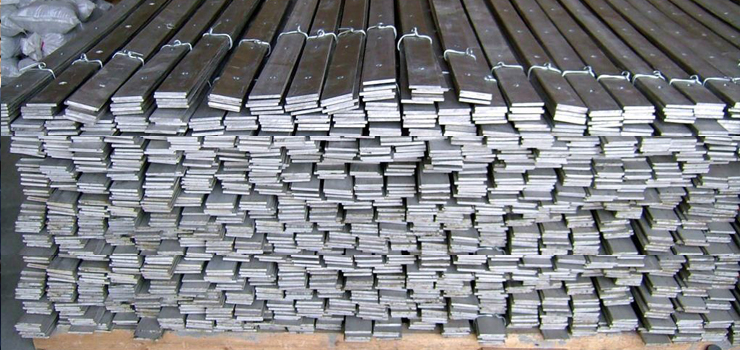
Germany faces zero growth in 2025
Germany’s economy will continue its flat development this year before possibly seeing growth of 1% in 2026, the German economy ministry says.
This means a downward correction from the modest 0.3% growth previously forecasted for 2025 and will make this year the third in a row without any growth, Kallanish notes. Export-driven German industries are suffering most from erratic US customs duties announcements and their global repercussions. The insecurity over international business relations comes on top of a lull in demand and lack of competitiveness due to high domestic production costs.
“The German economy faces great challenges, but it has stood that test before,” says outgoing economy minister Robert Habeck. “We have been in a crisis mode since 2020 – through Covid, the Russian aggression on Ukraine, energy prices and inflation. Now our next challenge is the unpredictable trade policy of the United States.”
The big task of the moment is finding a solution between the EU and US to settle the trade conflict. The EU must take a clear stance and not give in easily, and be prepared to impose effective counter measures, Habeck adds.
Private investment in Germany will remain subdued for now, but start recovering over the course of the year, possibly encouraged by the framework of the new government, the ministry says.
Christian Koehl Germany

Assofermet sees no recovery for service centre sales
Italian service centre sales of coil derivatives are not forecast to recover in April following a subdued March, Italian trade association Assofermet says in a market note seen by Kallanish.
Since April, the EU’s safeguard amendments have been enacted, which, in conjunction with both new and existing anti-dumping duties, are considered a considerable barrier to steel imports.
This will compel service centres to redirect a significant portion of their coil purchasing volumes towards EU producers, establishing the conditions for a rise in coil prices.
“However, it is important to ask whether the downstream sector, specifically the steel end-users, can sustain these elevated prices in light of the relatively weak demand, without compromising their competitiveness in international markets,” the association comments.
The ongoing trade conflict, especially between Europe and the United States, is generating significant apprehension. The potential impact could lead to a notable deceleration in the already complex recovery of steel consumption.
Confindustria, the association representing Italian industrialists, recently revised its economic growth projections for Italy, lowering the estimate to 0.4% for 2026 following 0.6% growth in 2025, Assofermet reveals.
The distribution sector remains under a cloud of uncertainty.
The performance of all steel product categories is predominantly negative, with the exception of seamless tubes. This product, however, accounts for a negligible portion of the sector’s sales volumes.
In March, sales of both flats and long products experienced a double-digit decline year-on-year.
However, welded tube demand has demonstrated resilience, with prices trending upward.
The tariffs implemented by the US administration are likely to negatively impact the investment strategies of end-use sectors, particularly in agriculture and mechanical engineering, Assofermet concludes.
In a recently released position paper on the enhanced protectionist policies by the US, Assofermet stated the trade war could potentially lead to significant market distortions for Europe. The execution of US policies may lead to an important redirection of global steel exports to the EU, potentially prompting it to consider countermeasures aimed at Asian countries.
Natalia Capra France
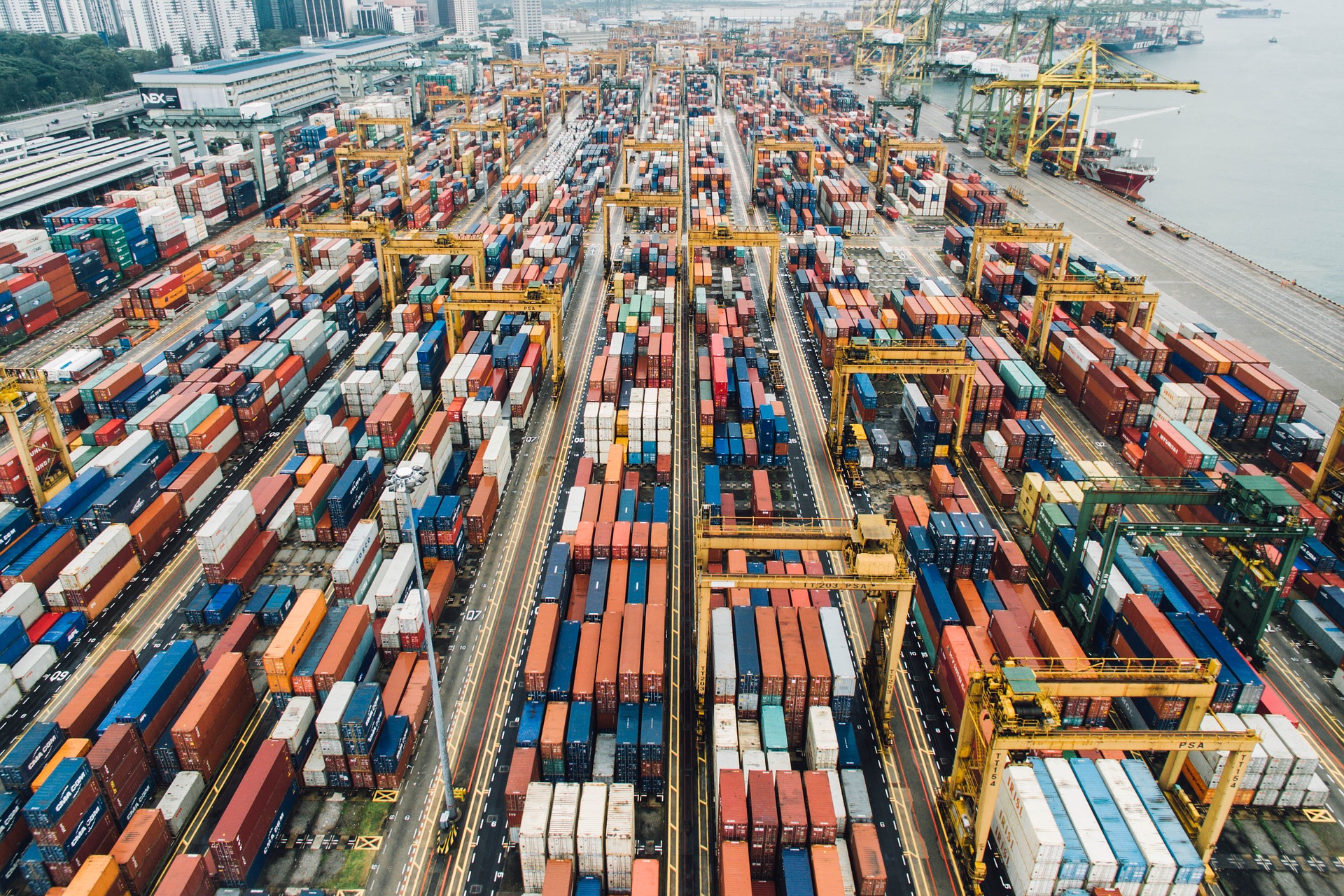
EU end-users need protection, industry firmer action: conference
EU protection against imports must be extended to downstream steel-using goods to avoid the collapse of Europe’s end user industries, while the government, although now finally taking steelmaking seriously, must move immediately to save the industry, concluded Polish industry representatives during Friday’s European Economic Congress in Katowice.
Opinion was however mixed on whether governments need to nationalise the steel industry to support it through hard times.
While EU safeguards curtailed imports of steel, countries changed tack and started to supply steel-containing end products to the EU, such as telecom towers and nails, with most of these coming from China, Polish Steel Union of Distributors’ (PUDS) chief executive Iwona Dybal said at the meeting attended by Kallanish. 2024 data show Polish end-use production dropped due to these imports, “and this is just the beginning”, Dybal warned, pointing to the risk of US tariff-induced trade diversion.
Grzegorz Jagielski from the Polish industry ministry’s mining and metallurgy department said that while government has had its finger on the coal market pulse for a while, it has only recently started closely consulting with steelmakers. The focus on defence has made the industry even more critical. Authorities are preparing a plan that will define a national industrial policy to support steelmaking, he added.
Despite running a first-class business, distributor Stalprofil is “helpless” against the environment it finds itself in, high energy costs and “unfair” steel imports, all factors which lie in the control of government, said the firm’s ceo, Henryk Orczykowski. With a war on, the government must act with military efficiency to save industry, he demanded.
Although US President Donald Trump is not a good example in all cases, “when it comes to the speed of making a decision, and effectiveness, we really have to go with the geopolitical current that is currently happening,” Orczykowski asserted.
The proposed melt and pour rule for EU trade defence instruments (TDIs), while not solving everything, will help increase effectiveness of trade, having implications for TDIs, for Russian sanctions and for the carbon footprint of imports, said Polish Steel Association (HIPH) ceo Moryslaw Motyka.
Carbon capture, utilisation and storage (CCUS) will undoubtedly be part of the EU steel industry’s future, with ArcelorMittal Poland (AMP) planning to install a unit later at its “very heavily invested into” blast furnace, said ceo Wojciech Koszuta.
Asked about whether and how the state should intervene in private business in today’s difficult economic conditions, Cognor ceo Przemyslaw Sztuczkowski said that although he is a liberal at heart, “globalisation has been broken for a simple reason – we’ve been tricked.” Globalisation only works when all players operate under the same conditions, which is not the case with subsidies for the steel industry in countries like China, he added.
This process has led to the election of Trump and will likely also lead to big changes in the EU, he continued. The EU was very careful for years not to give any state aid to industry. “Now we’ve totally lost control – that’s the drama of globalisation,” he asserted.
“Nationalisation is not the solution to all problems,” pointed out state-owned Weglokoks ceo Tomasz Slezak. It will not change energy prices or demand on the market. The current trend is a recognition by governments of the importance of certain sectors for national security, he added, after the moderator had brought up the recent example of British Steel being taken over by UK government. There is a parrel between this and Weglokoks which recently took over Huta Czestochowa in Poland.
The state does not necessarily need to own industrial assets to ensure their survival, said Polish coke producer Koksownia Czestochowa Nowa ceo Marek Serafin. Trump has shown it is possible in the US to have certain control over regulation and resources, to dictate the direction of the economy, without state ownership, he added.
Adam Smith Poland

EUROFER and EUROMETAL convene to support the European Steel Supply Chain
In April 2025, EUROFER and EUROMETAL leaders convened to discuss potential collaboration areas for strengthening messaging and initiatives to support the European steel and steel-using industries.
This initial exploratory meeting was prompted by the Steel Dialogue on 4 March 2025, hosted by the European Commission, during which EUROMETAL raised concerns regarding the impact of imported steel derivatives on European distribution, processing, and manufacturing industries.
Both EUROFER and EUROMETAL acknowledged that a robust manufacturing base is essential for strategic autonomy and involves the entire steel supply chain — including both steel production and processing. The Steel and Metals Action Plan represents a strong starting point, where the European Union recognizes industry challenges and importance, but this requires concrete translation into effective regulatory frameworks. Sharing knowledge and perspectives across the value chain will enhance the design and implementation of such policies and measures.
EUROMETAL represents a significant portion of the intermediate steel processing market in Europe — comprising nearly 50% of deliveries in the EU. These processors face substantial challenges to remain competitive and require stronger, more targeted support. A steel industry confronted with a shrinking customer base, particularly in downstream sectors, poses broader risks for the entire European industrial ecosystem, as the same accounts for the European steel customer base that requires a viable steel industry in Europe.
The two associations underscored that the weakening of this vital supply chain puts at risk 13.6 million direct jobs across steel processing, intermediate suppliers, and manufacturing sectors in the EU. The consequences go far beyond economics — this situation threatens a wider European deindustrialization, with the relocation of R&D capacities, loss of innovation hubs, and increased dependence on external markets.
The meeting marked an excellent beginning for further analysis and discussions and will be followed up in due course.
Axel Eggert, Director General of the European Steel Association (EUROFER), stated: “Both EUROMETAL and EUROFER have a strong interest in a vibrant European steel value chain at the benefit of the EU’s economic resilience and strategic autonomy as well as investment, innovation and quality jobs in Europe. We therefore appeal on EU policymakers to support our joint efforts.”
Alexander Julius, President of EUROMETAL, commented: “The EU steel using and steel making industries are at stake. The focus of European policymakers needs to be expanded to the complete supply and value chain of our industry. Joint efforts of EUROFER and EUROMETAL will form a solid basis approaching this important topic sustainably.”
 Joint Statement –

Czech-based Třinecké Železárny postpones steelmaking decarbonization plans
The Czech Republic’s largest steelmaker Třinecké Železárny has announced that it is postponing the completion date of the largest decarbonization investment in its history with completion now expected no earlier than 2030 instead of the previously announced 2028.
This investment would lead to a gradual reduction in carbon dioxide emissions by 55 percent compared to 1990.
The postponement includes key changes in steelmaking, including the construction of an electric arc furnace and infrastructure. Until the completion, it will actively negotiate with the government of the Czech Republic and the European Union to secure adequate support for the successful implementation of the project.
The main reasons for the delay in the implementation of the electric arc furnace are the lack of public support, uncertainty about the future direction of Europe in the rules related to the Green Deal, the current negative situation in the steel market, and unclear rules for protecting the market from imports from countries with lower steel production costs.
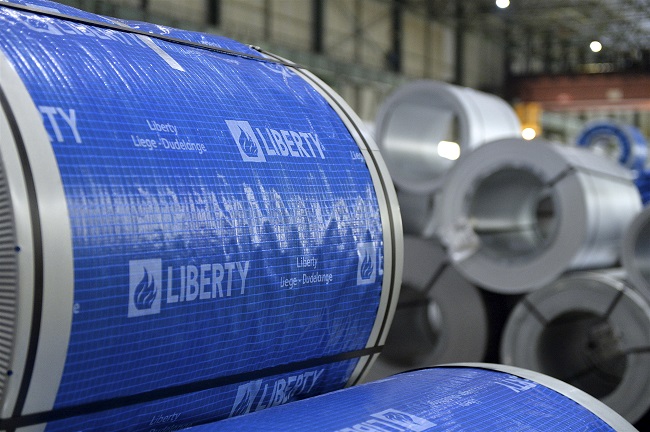
Liberty Liège declared bankrupt by court
Belgium-based steelmaker Liberty Liège, a subsidiary of Romania-based Liberty Galati, has officially been declared bankrupt by the Liège Business Court due to the inability to raise the necessary funds to maintain its assets during the silent bankruptcy proceedings, according to local media reports.
In the coming days, 520-550 employees, who had not been paid for several months, will be laid off and access unemployment benefits.
The new administrators appointed a few days ago will try to find a potential buyer for the company, which had been shut down for two years.