


European HRC steel producers still bullish despite subdued real demand
In the Benelux area, transactions for HRC lots of 1,000 tonnes were reported at €630 ($654) per tonne ex-works for April-May delivery.
In Germany, deals were reported at €620-630 per tonne ex-works.
Buyers’ estimates of tradeable values for HRC across Northern Europe were heard at similar levels of €620-630 per tonne ex-works on Monday.
Market sources noted that the uptrend was expected to persist in the coming weeks, despite a lack of real demand.
“Customers are complaining [about HRC price increases] but they are still ordering. New safeguards are coming [from the EU authorities], so very few buyers dare to book imported coil,” a supplier in the region said.
“It is clear that if you don’t book [HRC] today, tomorrow you’ll have to pay more,” a buyer source in Germany said.
As a result, Fastmarkets calculated its daily steel hot-rolled coil index, domestic, exw Northern Europe, at €627.92 per tonne on Monday, up by €1.09 per tonne from €626.83 per tonne on Friday.
The Northern European index was up by €9.17 per tonne week on week and by €36.67 per tonne month on month.
Meanwhile, in Southern Europe, Fastmarkets’ daily steel hot-rolled coil index, domestic, exw Italy, was calculated at €616.25 per tonne on Monday, up by €3.75 per tonne from €612.50 per tonne on Friday.
The index was up by €6.25 per tonne week on week and up by €28.75 per tonne month on month.
In Italy, buyers’ estimates of achievable prices were reported within the range of €600 to €625 per tonne ex-works on March 3. Some sources, however, pointed out that the lower end of that range was no longer achievable.
European suppliers were offering May-delivery HRC to Italy at €660 per tonne delivered.
An Italian mill was hoping for €640-660 per tonne delivered for April-May delivery HRC, trade sources said. Trading activity has improved recently, but was “far from booming,” they added.
“Everyone buys hand-to-mouth. There is too much uncertainty around safeguards, and real demand is still not supportive of huge price rises,” a buyer in Italy said.
“Real demand for steel remains subdued, but apparent demand has picked up due to the situation with [the safeguards review on] imports, and expectations of a continued uptrend,” a second buyer in Italy said. “The market [for HRC] is very speculative now.”
Regarding imports, offers to the European market were still limited.
Asia-origin coil with April-May shipment was offered to Italy at €560-570 per tonne CFR.
Turkish suppliers were offering coil at €590-600 per tonne CFR, including anti-dumping duty/
More clarity on the situation regarding imports was expected by the end of March, when the current review of the European Commission’s steel safeguards was expected to be completed.

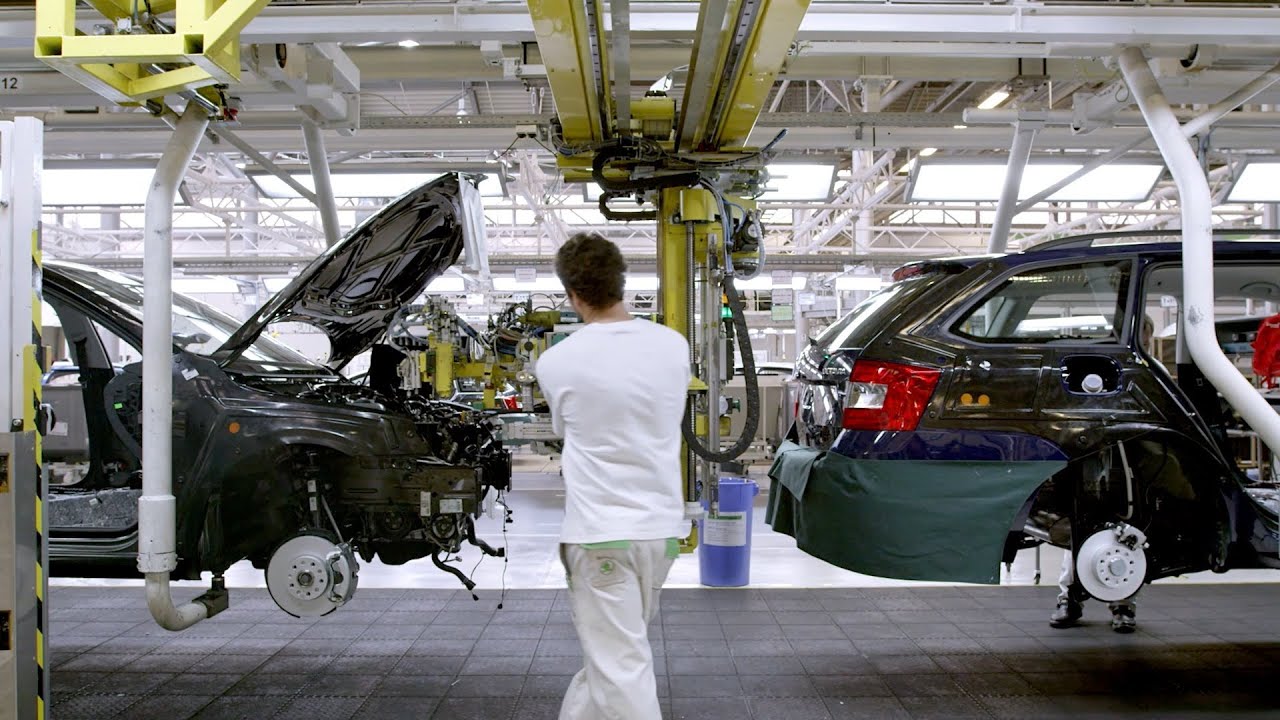
Pending tariffs will boost US car prices, ‘fortify’ US industrial base
The ultimate impact “all depends on the extent to which those tariffs are expected to remain in place, or possibly be adjusted, in the renegotiation of the USMCA [United States-Mexico-Canada Agreement],” which comes up for renewal in the first quarter of 2026, Rakoto told Fastmarkets in an interview.
“We know that, for example, the Section 232 tariffs on steel and aluminium from the first Trump administration remained in force during the Biden administration. As these new [pending] tariff measures apply for a durable period of time, we can expect positive effects in the long term,” the consultant said.
To the extent that the tariffs can impact consumer purchasing activity, they can also impact demand for key steel product sectors, such as cold-rolled coil, galvanized sheet and special bar-quality steel, according to industry analysts and market participants.
“The challenge [for US automakers] will be navigating the transition to those tariffs, and the scope of freedom for action that automakers and their suppliers have to maneuver around that or work with it,” Rakoto said. “During that period of time, we might see some short-term issues and price increases.”
“We know that Section 232 tariffs on steel and aluminium, if applied, will result in higher prices for automobiles because over 60% of the weight of the car is in steel or aluminium,” the consultant said. “So if you tax the aluminium and steel coming from just Canada and Mexico, that can create a price increase of 5-8% per vehicle, if tariffs costs are passed through to the consumer.”
Rakoto noted that “some of the higher cost can be avoided by reshoring production and materials within the US, but we know US production of steel and aluminium is not sufficient to meet all the needs of US automakers.”
“The question is, who is going to apply that cost to the final price of vehicles and who is going to absorb it? Because we know that suppliers say they might look into ways to absorb the extra cost; others say they’re going to pass this through,” Rakoto said. “So tier one suppliers will pass it through to OEMs [original equipment manufacturers] and the OEMs to the consumer. So, there’s that risk [that tariffs can push up car prices],” the consultant said.
Shifts in currency exchange rates may also be a factor.
“Currency has always played a role for automakers. In some years we’ve seen currency issues driving profitability at some automakers. Tariffs can also drive changes in currencies,” Rakoto said.
In the North American market, materials and parts go back and forth across the border, and that will create pressure to absorb the tariff within the supply chain, the consultant said.
“About 80% of aluminum for US automakers comes from Canada, so whoever is buying the aluminum in the US is going to pay that tariff. Therefore, it depends on the vehicle and how much of it is imported.”
The cross-border activity “means the impact of a 25% tariff has more of an impact, and thus the advantage of a domestically produced product or part is usually short lived,” Rakoto said. “The local products will tend to increase their price as well; not to same level of 25%, but we know there’s going to be some price correction effect.”
Additionally, potential reciprocal tariffs — expected to go into place on April 2 — will cover not just steel and aluminium, but also consumer goods as well, Rakoto explained.
Finally, President Donald Trump has also said he intends to impose a potential 25% tariff on imported automobiles.
“We will know more about that on April 2. We don’t have much detail so far,” the consultant said.
Rakoto said he did not expect the automobile tax to be added to the reciprocal tax that the US might impose, given the automobile tax itself is likely to be much higher than expected reciprocal tariff charges.
If there is a price increase on US automobiles as a result of the tariffs, “of course it will mean less consumer demand for new cars,” the consultant said
Automakers might try rebates or other financing arrangements to help reduce the overall cost of the car, but with current high interest rates, it’s likely that the market will slow down in total production from the previous year, he said.
“We know that President Trump likes to use tariffs as a negotiation tool, so we can hope and expect that a lot of those tariffs will not come into effect,” Rakoto said.
Initially there will be a delay in reshoring production into the US, the consultant said.
“The decision automakers and suppliers make [on reshoring] will depend on whether target rates are applied without exemption, and whether the tariff targets are likely to stay,” Rakoto said. “You don’t make decisions overnight to produce or change production. For some small companies that might be easier. But for large companies, they need stability, so they will wait for the outcomes of all those discussions before they make a move.”
Automakers and suppliers can take some temporary measures to limit imports, but those are likely to be limited, the consultant said.
“When you make major changes, you need to hire people. You need to make sure you have enough room or capacity to do so. Every automaker has a little bit of agility to make changes, but it can only be done to the measure of what’s available in terms of bandwidth in one factory or another,” he said.
“You cannot move overnight the production of one version of a pickup truck from one place to another location and say it’s going to be fine. There are too many logistical and supply chain issues to do that on a major scale in a short time,” the consultant said
“Automakers will need to see which tariffs will stay, and then strategically adjust over a period of years to get the best results,” Rakoto said.

UK initiates developing country safeguard exclusion review
The UK’s Trade Remedies Authority (TRA) has initiated a tariff rate quota (TRQ) review, to consider whether certain developing countries should no longer be excluded from the safeguard measure on steel, Kallanish notes.
The TRA has reviewed trade data which indicate there may have been a change of circumstances, namely that import levels from certain developing countries have changed since the application of the measure. The threshold to initiate a review under regulation 35B(1) of the Regulations has therefore been met.
The period of investigation for this review is 1 January 2024 to 31 December 2024.
TRA will consider whether the amount or allocation of the TRQ is appropriate for domestic market conditions, as well as the desirability of maintaining, as far as possible, traditional trade flows.
Anyone interested in taking part in the review can register their interest until 23:59 on 14 March.
The Statement of Intended Final Recommendation is due for publishing on 28 March, while the Final Recommendation is scheduled for 30 June.
Adam Smith Poland


UK’s All Steels says price escalation now ‘unavoidable’
UK-based trader AllSteels says an escalation in prices is now looking unavoidable amid a slew of inflationary factors, including US President Donald Trump’s tariffs, potential government demand and an expected reduction of safeguard quotes, Kallanish learns.
Lawrence McDougall, managing director, notes in a market evaluation sent to customers that the impact of globalisation and geopolitical tensions on the steel industry is set to be more pronounced than ever in the year ahead.
“President Trump’s decision to impose substantial steel tariffs on nearly all nations has far-reaching consequences, which will only intensify as other countries introduce similar retaliatory measures. The inevitable outcome of this scenario is a resurgence of inflation and rising steel prices,” he says.
The statement notes the gap between UK steel production and consumption, highlighting the country’s reliance on imports. For long products; structural sections, merchant bars and hollow sections, 86.16% of these imports come from the EU and Turkey.
McDougall says there have already been £20-30/tonne ($25-38/t) price increases by most European longs producers but notes this is only the first wave of such hikes.
“In the US, protectionist measures have already enabled domestic producers to raise steel prices on certain products by $165/t during February 2025 and the US scrap producers are wasting no time in taking a slice of this increase as well as enjoying the uptick in local demand.”
It notes upward movement in Kallanish’s North American hot rolled coil price during February, as an indicator of the price trend.
The firm has observed the impact of Trump’s tariffs on ferrous scrap, especially for Turkey, the biggest buyer of US scrap. It notes Turkey can either pay a premium for US scrap now, or buy from alternative markets.
“The latter scenario is already tightening scrap availability in Europe; as this supply and demand balance switches, prices are naturally increasing.”
In the coming months, McDougall expects a cut to both UK and EU safeguard quotas, dramatically heightening the risk of 25% import duties on long products.
This is in addition to the introduction of CBAM, which he sees as a standalone event will create one of the biggest upshifts in UK steel prices.
Therefore, as of 3 March, the company has increased its stock items by £20-30/t.
It also notes that stocks are very low across the supply chain, meaning demand is likely to jump quite quickly as buyers make their moves to beat price increases.
He also believes government infrastructure spending is imminent and will improve demand.
“We are at that turning point where we all need to be prepared for price escalation that now looks unavoidable,” he adds.
Carrie Bone UK

Tariffs on Canada, Mexico definitely start Tuesday
Indicating that the time for negotiations on tariffs with Canada and Mexico is over, US President Donald Trump on Monday said he will proceed with the 25% tariffs on the two countries on Tuesday, Kallanish discovers from the White House press briefing.
Trump told reporters that there is no room for Canadian or Mexican officials to negotiate a reprieve from the levies.
“Tariffs, 25% on Canada, and 25% on Mexico … will start tomorrow,” Trump confirmed during the press gathering. “So they’re going to have a tariff, and what they have to do is build their car plants, frankly, and other things, in the United States, in which case you have no tariffs.”
Mexican President Claudia Sheinbaum on Monday said she was waiting for Trump to make a decision about tariffs and that she might talk with him before the deadline. “Everything is possible,” she said.
John Isaacson USA

EU countries ramp up steel action plan pressure
Multiple EU nations have put pressure on the European Commission and other member states to work closely together on the anticipated “Steel and Metals Action Plan”, to boost clean industry while preserving competitiveness.
Representatives from Italy, France, Spain, Belgium, Luxembourg, Romania and Slovakia made the plea last week during a summit hosted at the French Ministry of the Economy, Finance and Industrial and Digital Sovereignty in Paris.
The Commission is scheduled to announce its long-awaited Steel and Metals Action Plan in the spring.
“The effects of this crisis are already being felt: for the past years, EU steel producers saw continued low production and had to idle capacity to adjust to depressed demand and increasing import penetration … In the short term, we must continue making full and efficient use of the EU trade defence toolbox,” the nations say in a joint statement obtained by Kallanish.
“Regarding the major issue of overcapacities, we must keep in mind that the steel safeguards will expire in June 2026 … By 2026, the economic context is expected to significantly deteriorate for the steel industry with the anticipated rise of global excess capacity (+27% from 2023 to 2026 – from 275% of EU capacities to 350%), according to the OECD and the Global Forum on Steel Excess Capacity,” it continues.
“For flat steel from blast furnaces, for instance, the price gap our steelmakers cannot bridge is estimated to amount to about €55/tonne of steel, in addition to the extra cost of CO2 (also €55/t of steel, in 2026, and assuming an ETS cost of €85/tonne of CO2),” the statement reads.
Among the urgent measures proposed, a rapid deployment of anti-dumping and anti-subsidy mechanisms is required, as well as the rapid enhancement of the current safeguard measure. After current safeguards expire in mid-2026, a new steel sector defence mechanism should replace them, addressing existing flaws, overcapacity, and EU demand fluctuations.
To carry out decarbonisation and provide clarity for steelmakers, structural measures like the Carbon Border Adjustment Measure (CBAM) need to be improved. “Further work is needed between now and 2026 to tackle the anticipated risks, particularly as regards the risks of carbon leakage, on both the downstream and export sides. In particular, to avoid resource shuffling, default emission values for steel products could be applied as soon as possible,” the statement continues.
Officials from various countries are advocating the Commission to maintain competitive energy costs at the EU level, guarantee access to raw materials while keeping scrap within the EU, and establish a framework that fosters the growth of green product markets, potentially through public procurement initiatives.
Spanish steel association Unesid called for similar measures following its participation in the meeting last week.
The Strategic Dialogue On Steel will be held today, chaired by Commission President Ursula von der Leyen.
Natalia Capra France
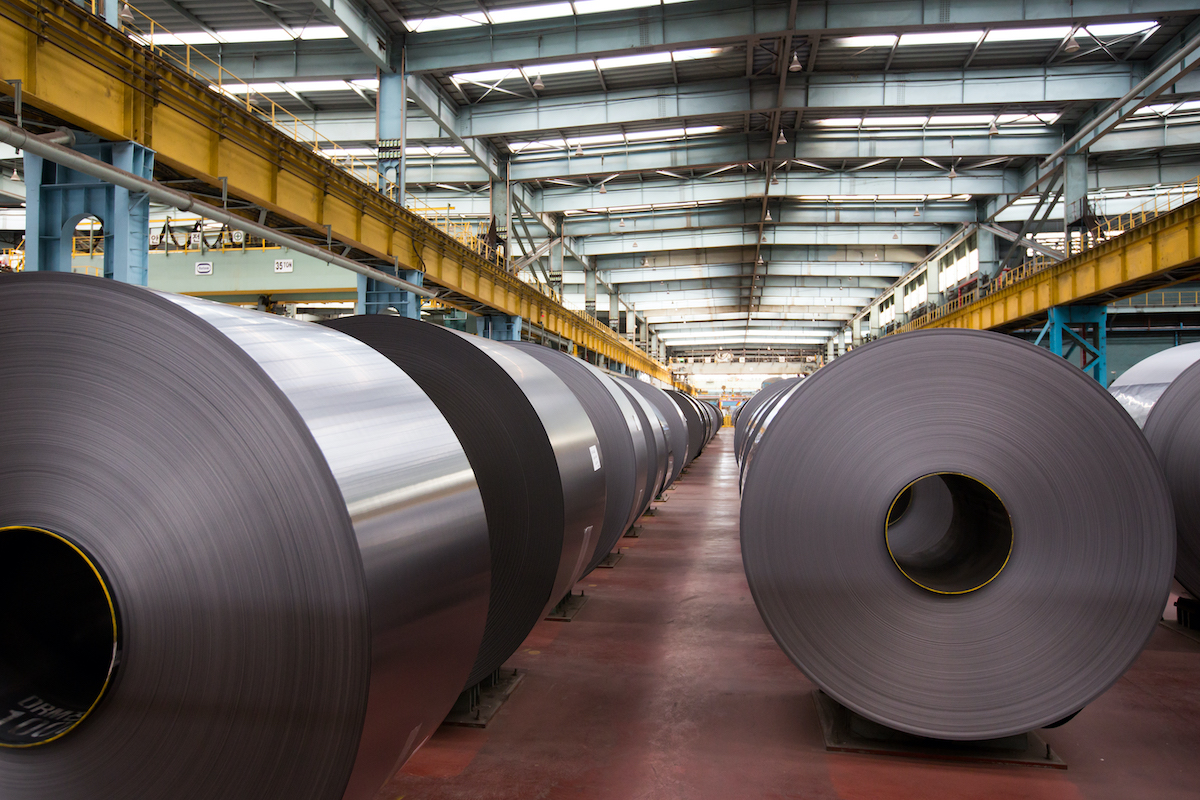
EU HRC prices inch higher amid safeguard review anticipation
European domestic hot-rolled coil prices saw a modest uptick on Feb. 28, with market participants closely monitoring the upcoming EU safeguard review, which is widely expected to impact import volumes and pricing dynamics.
A North Europe-based mill source reported tradable values for 1,000-2,000 mt at Eur620/mt ex-works Ruhr, while offers in the region were heard at Eur640-650/mt ex-works Ruhr.
Sources noted that some mills had withdrawn lower offers earlier in the week and were preparing to reenter the market with price increases of at least Eur20/mt.
In Southern Europe, the Italian market saw tradable values at Eur600-610/mt ex-works Italy, with offers for orders exceeding 1,000 mt starting at a minimum of Eur600/mt.
Despite an overall cautious approach from buyers, a mill source emphasized that the market remained active, with no possibility of booking domestic material below Eur600/mt.
Import pricing remained a focal point for buyers assessing competitiveness against domestic supply.
Turkish-origin HRC offers were reported at Eur600-610/mt CIF Italy, duty paid, with tradable values slightly lower at Eur580-590/mt.
Meanwhile, lower-cost options were available from Indonesia and Malaysia, with offers at Eur550/mt CIF Italy.
A Germany-based distributor highlighted an improving market sentiment, with apparent consumption picking up and optimism growing among buyers.
“Not all mills are very busy, but they are withdrawing offers with the intention to return with higher pricing,” the source said.
The distributor also pointed to rising US prices, which, despite the 25% tariff, may not significantly deter EU exports, as US buyers appear willing to absorb the additional cost.
With the safeguard review announcement expected imminently, market participants remain focused on potential changes to quota allocations and procedural adjustments.
One trader suggested that the review could introduce measures to tighten regulations and close loopholes, further shaping the import landscape.
Platts assessed HRC in Northwest Europe at Eur612.50/mt ex-works Ruhr, up Eur2.50 on the day. In Southern Europe, HRC was assessed at Eur605/mt ex-works Italy, stable on the day.
Platts assessed imported HRC in Northwest Europe at Eur550/mt CIF Antwerp, and at Eur545/mt CIF South Europe, both stable on the day.


Accelerated push for EU-India free trade agreement raises concerns for European steel industry
Sources within the European steel industry have expressed concern at the announcement by European Commission President Ursula von der Leyen that India and the EU are aiming to finalize a free trade agreement by the end of the year.
Speaking during a Feb. 28 joint press engagement in New Delhi with Indian Prime Minister Narendra Modi, von der Leyen affirmed that a closer alliance with India would be “a cornerstone of Europe’s policy in the years and decades to come,” built on enhanced cooperation on trade, technology, security and defense.
“A free trade agreement between the EU and India would be the largest deal of this kind anywhere in the world. I am well aware it will not be easy. But I also know that timing and determination counts, and that this partnership comes at the right moment for both of us,” von der Leyen said. “This is why we have agreed with Prime Minister Modi to push to get it done during this year. And you can count on my full commitment to make sure we can deliver,”
India and the EU resumed talks on a free trade agreement in 2021 after negotiations collapsed in 2013.
The EU wants India to lower tariffs of more than 100% on imported cars, whiskey and wine, while India seeks greater EU access for its drugs and chemicals producers.
India is also strongly opposed to Europe’s Carbon Border Adjustment Mechanism, which levies a carbon tax on certain exports into the EU including steel, aluminum and cement.
The CBAM is in a transition phase that started Oct. 31, 2023, and will phase in from 2026 through 2034. The iron-steel industry is expected to be sector most severely by the implementation of the CBAM.
The EU has significantly stepped up its efforts to sign trade agreements with third countries since the reelection of US President Donald Trump, announcing trade agreements with the Mercosur bloc – pending ratification – as well as with Mexico and Malaysia.
On Feb. 26, US President Donald Trump stated that he plans to place a 25% tariffs on all EU-produced goods, claiming the that bloc was established to “screw the United States.”
For her part, von der Leyen said, “It is time to be pragmatic and ambitious. And to realign our priorities for today’s realities.”
Sources within the European steel market expressed concern at the potential concessions the EU could offer as part of any free trade agreement with India.
“Von der Leyen opening [trade negotiations] with India is worrying,” a source within the Italian stainless steel scrap industry told Platts. “The Indian market is so aggressive, if they cancel [European] safeguarding measures then it could be a disaster for Italian steel works. I worry because the Indian market can get cheap raw materials from Indonesia, so when they export to Europe they can offer material at a lower price, it could undercut the European market.”
Steel imports from India is currently subject to a series of EU reviews and investigations.
The European Commission announced Aug. 8 an anti-dumping investigation for certain non-ferrous products originating from Egypt, India, Japan and Vietnam. The announcement, published in the Official Journal of the European Union, said that European Steel federation Eurofer lodged a complaint alleging that the imports of certain hot-rolled flat products originating from these four nations were being dumped into the market and, therefore, causing economic damage to the bloc.
In addition, the EC is currently conducting a review of the safeguard measures applicable to imports of certain steel products to reassess the allocation and management of tariff rate quotas to ensure they align with current market dynamics and stakeholder interests. India is one of the countries affected by this measure as it has a substantial interest in exports of stainless steel bars to the EU.
European domestic hot-rolled coil prices saw a modest uptick on Feb. 28, with market participants closely monitoring the EU safeguard review, which is expected to impact import volumes and pricing dynamics.
Platts, part of S&P Global Commodity Insights, assessed HRC in Northwest Europe at Eur612.50/mt ex-works Ruhr, up Eur2.50 on the day. In Southern Europe, HRC was assessed at Eur605/mt ex-works Italy, stable on the day.
Platts assessed imported HRC in Northwest Europe at Eur550/mt CIF Antwerp, and at Eur545/mt CIF South Europe, both stable on the day.

Aurora to construct distribution facilities for Blastr’s green steel plant
Norwegian decarbonized steel developer chas announced that it has reached an agreement with Finland-based Aurora Infrastructure for the latter to build electricity distribution facilities for its green steel plant under development at Inkoo, Finland.
Accordingly, Aurora will undertake the design, construction, operation, maintenance and financing of the distribution facilities, allowing Blastr to advance its green steel project.
Additionally, Blastr will also explore the option to outsource its electricity networks to Aurora Infrastructure.


New car registrations in EU down 2.6 percent in January
In January this year, new passenger car registrations in the EU fell by 2.6 percent year on year to 831,201 units, according to the European association of car manufacturers ACEA.
In the given month, three major markets, namely, France (-6.2%), Italy (-5.8%) and Germany (-2.8%), posted decreases, while in Spain new car registrations went up by 5.3 percent, all year-on-year basis.