


EU HRC prices move sideways, sources point to increasing activity
European hot rolled coil prices remained stable Feb. 14, while sources shared increasingly optimistic outlooks on price trajectory amid lingering uncertainty.
Market participants pointed towards recent news of US tariffs, and upcoming elections in Germany as increasingly bullish factors in the market, as import interest continued to remain poor.
“Demand is restarting everywhere but in Germany, which is seeing a lot less activity,” a mill source said. “German buyers want to postpone big bookings until after the election, but with the news [sanctions] from the US, there is a good argument for higher prices.”
A seller source also pointed to an increase in activity into the second quarter.
“We are seeing activity for inquiries and our bids are moving closer to our asking prices. Momentum is building,” he said.
Platts assessed the Northwest European domestic HRC price at Eur600/mt ex-works Ruhr, stable Feb. 14, and the South European domestic HRC price at Eur595/mt ex-works Italy, also stable day over day.
“I see a big improvement in business, but customers are nervous about what is happening,” a mid-stream buyer said. “There has been a big price increase, and due to hardly any imports mills expect prices to climb further in the coming weeks, and that there will be shortages when the import duties take effect.”
Platts assessed import HRC prices at Eur545/mt CIF Antwerp and Eur545/mt CIF Italy, both unchanged day over day, as offers remained too high to spark buying interest.
Other sources cited stable fundamentals, arguing that demand drivers have not shifted significantly despite higher mill offers in recent weeks.
“Sentiment remains bullish despite demand still being relatively week,” a distributor said.
The market also saw further debate surrounding the upcoming Carbon Border Adjustment Mechanism, following a conference in Paris organized by the European Commission Feb. 13.
Following the event, the European Steel Association, or Eurofer renewed calls for “major improvements” to CBAM, or the legislation will “fail to provide adequate protection against carbon leakage.”
In a statement published Feb. 13, Eurofer’s list of suggested changes included extending CBAM’s scope to steel-intensive downstream products and a structural solution to preserve European exports.
S&P Global Platts assessed Northwest European hot-rolled coil carbon-accounted at Eur670/mt ex-works Ruhr Feb. 14, stable on the day. Although spot demand for carbon-accounted material has remained low, seller sources reported significant volumes and growing interest for material in long-term contracts.
Platts is part of S&P Global Commodity Insights.

Italian plate demand picks up
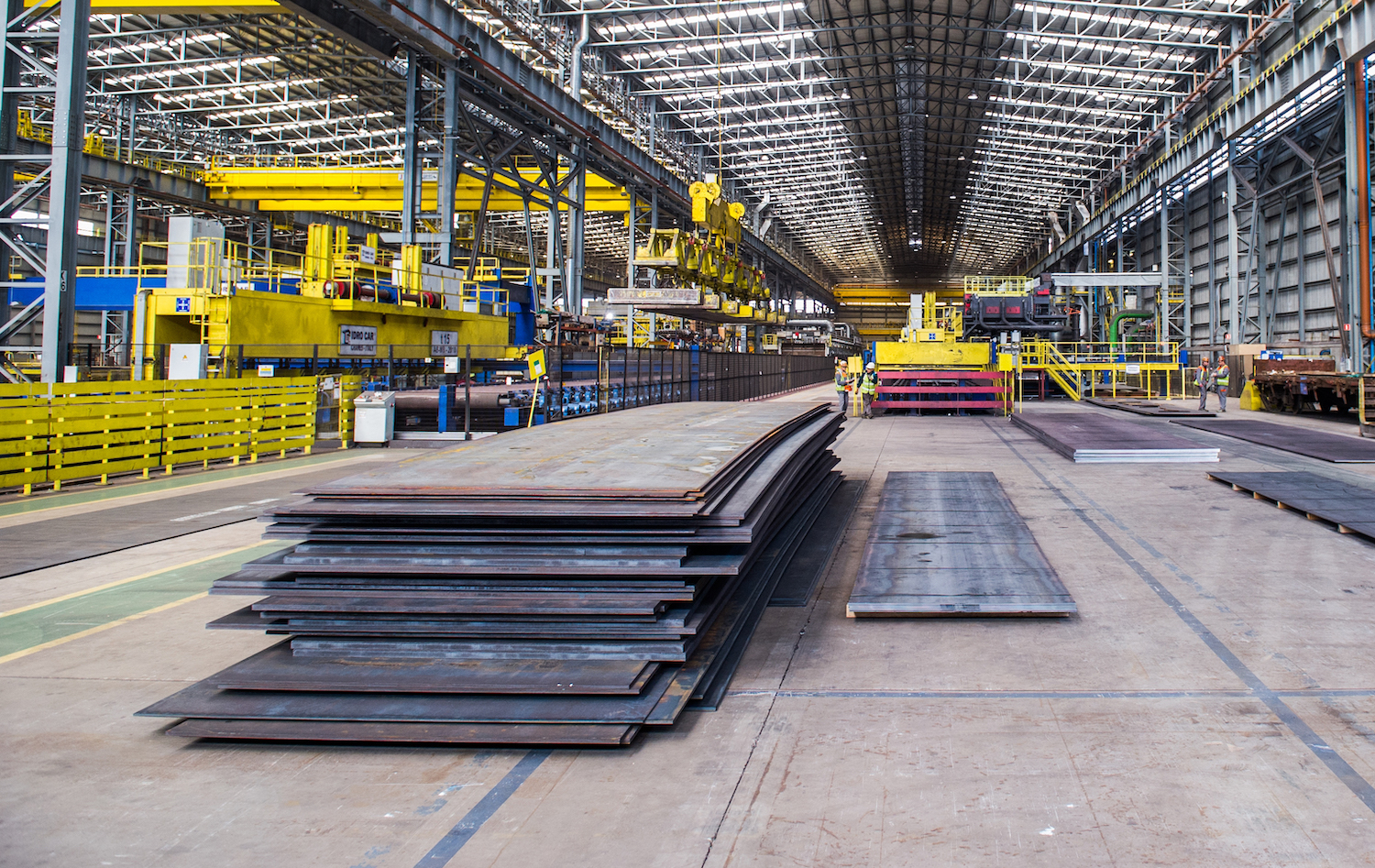
Italian heavy plate consumption is showing a modest improvement, as reports from two mill sources indicate an increase in order intake. Orders are still being executed for relatively small volumes and lead times remain short in February, Kallanish notes.
Import sales are limited amid elevated, uncompetitive pricing. Large buyers are expected to maintain their global purchasing strategies despite potential EU duties. By contrast, mid-sized buyers are showing reluctance to source material from the Far East due to the looming CBAM regulation and risk of retroactive duties. The EU is assessing the application of 15% quarterly safeguard quotas for each country of origin.
Despite the decrease in import transactions, European overcapacity and slow economic growth continue to be significant concerns. S275 grade transactions are occurring within the range of €630-640/tonne ($660-670) ex-works, or €650-655/t delivered, relatively stable week-on-week, while S355 is trading at a premium of €20/t above that. The current asking pricing from mills is set at €650-660/t ex-works for S275, while S355 is priced at €680/t.
Although the two mill sources indicate a gradual improvement in demand, a distributor reports that activity remains average. “Depending on the product, we are working at 30% to 40% less than we did last year across all of our long and flat products. The year 2024 was unremarkable; while we avoided losses, our earnings were also disappointing,” he comments. Margins declined last year and the performance in 2025 has been underwhelming so far, he adds.
Considering current processing costs and imported slab prices at $530-540/t cfr Italy, one mill has indicated it will continue to implement gradual price increases.
Natalia Capra France


Northwestern Europe coil market stays slow
Coil buyers in northwestern Europe confirm that ArcelorMittal this month launched another attempt to increase coil prices, but they do not expect that they will cause a leap forward on the market.
Essentially, steelmakers are trying to bring the price for hot-rolled coil over the mark of €600/t ($628) ex-works. They do achieve it at times, Kallanish hears, but prices below that for transactions still occur in Germany and Benelux. Scandinavian prices tend to be clearly above that level.
ArcelorMittal now asks for €20-30/t more for delivery in the second quarter, nominally aiming towards €650/t. Similar moves are heard from other mills, with one German mill asking for even €50/t more, according to a trader who says he has not replied with a bid on that yet.
One Swiss-based trader says he does not see much potential for new prices to pass through, citing high stocks at service centres and some capacities reopening in Italy and eastern Europe.
“Our customers are very reserved with buying, which is frustrating for the mills as they cannot make long-term plans,” a French-based trader concurs.
A German buyer finds that prices are definitely strengthening, largely because of potential EU measures against imports. But still, “demand is not growing much, so price increases will not be dramatic,” he comments. “It remains to be seen how the mood on the market is developing, especially in Germany after the elections, and if measures against imports are successful. Then we might be able to tell if there is headroom for more price hikes – or if we fall back into a grey stagnation.”
Christian Koehl Germany
French steel prices increase in slow market
French steel prices have shown an upward trend since January with European producers currently implementing moderate increases of €5-15/tonne ($5.2-15.7/t), Kallanish notes.
The move comes amid US President Donald Trump’s renewed protectionist policies and the anticipation of a response from the European Commission regarding more stringent safeguard measures.
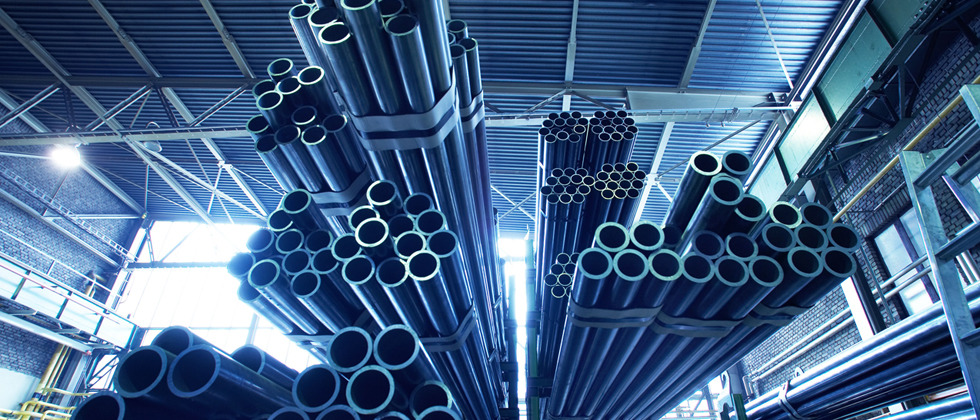
Price increases on products such as welded tubes, sheets, and beams have been accepted, while other proposed increases remain uncertain, with buyers often reluctant to accept them as they are unable to transfer them downstream.
Multiple production and distribution sources indicate that downstream demand is not showing signs of improvement. The forecast for the upcoming months appears bleak, particularly as sectors such as construction and automotive are either in recession or facing a significant downturn.
In France, beams have experienced an increase of approximately €15/t, attributed to the scarcity of material. The current pricing for the first category of beams is positioned between €770-790/t delivered.
Domestic merchant bar prices in France are flat month-on-month, maintaining a range of €240-250/t base delivered. The prevailing effective levels, including size extras, are set between €660-670/t delivered. Producers are indicating potential increases for new contracts. The current average price for rebar stands at €610/t delivered, sources suggest.
The product showing the highest increase is sheet, with prices elevated due to rising values of hot rolled coil, now reaching approximately €600-610/t delivered in France. The current pricing for hot rolled black sheet is between €670-680/t inclusive of delivery. Despite the increases, the market is perceived as relatively stagnant, characterised by limited-volume sales.
While ArcelorMittal is reduces its investments in France and the rest of Europe due to the steel sector’s slump, recession is hitting the French construction industry. The crisis worsened in 2024, especially in the private residential sector, which was undermined by reduced new construction and the non-residential sector, French construction federation Fédération Française du Bâtiment (FFB) says in a report.
“After an erosion of activity in 2023 (-0.9%), the construction sector entered full recession in 2024,” FFB comments.
The industry, encompassing all segments, experienced a 6.6% decrease in volume last year. The number of building site openings for new construction saw a significant decline of 14.2%, following a substantial decrease of 24.9% in 2023, resulting in a historic low of 253,000 units.
FFB notes such levels have not been seen since 1954.
Natalia Capra France

European HRC prices continue to recover despite subdued real demand
Fastmarkets calculated its daily steel hot-rolled coil index domestic, exw Northern Europe at €603.75 ($629.30) per tonne on Friday, up by €0.42 per tonne from €603.33 per tonne on Thursday.
The Northern European index was up by €4.58 per tonne week on week and by €30.42 per tonne month on month.
In Northern Europe, market sources noted improved buying activity in the first half of February, compared with very low levels observed throughout January.
“There are more inquiries, more deals being closed. It’s no longer possible to book [HRC] below €600 [per tonne ex-works],” a mill source told Fastmarkets.
“Apparent demand did improve – there is restocking going on. But the major driver for [HRC’s] price recovery is the import situation; real demand is still subdued,” a buyer source said.
A review of existing steel safeguard measures was launched by the European Commission on December 17 and is expected to be concluded by the end of March, with any changes taking effect on April 1.
Offers from German mills for April-delivery coil were reported at €620-630 per tonne delivered (€610-620 per tonne ex-works).
Italy-origin coil with April lead times was offered to Germany at €650 per tonne delivered.
One supplier in the Benelux area was aiming for €620-640 per tonne ex-works, and a re-roller was aiming for €610 per tonne ex-works, according to sources.
In the week to February 7, ArcelorMittal announced higher offers for April/May-delivery HRC in the European market, reaching €660 per tonne ex-works or delivered, depending on the destination.
Buyers estimated achievable prices at €600-605 per tonne ex-works on Friday.
Meanwhile, in Southern Europe, Fastmarkets’ daily steel hot-rolled coil index domestic, exw Italy was calculated at €595.42 per tonne on Friday, up by €1.85 per tonne from €593.75 per tonne on Thursday.
The index was up by €2.92 per tonne week on week and up by €25.42 per tonne month on month.
Italian buyers remained cautious about making bookings, so traded volumes in the spot market were low.
Local suppliers were heard offering April-delivery HRC at €600-630 per tonne delivered, which would net back to €590-620 per tonne ex-works.
A major European supplier was offering HRC with second-quarter lead times to Italy at €650-660 per tonne delivered.
Buyers’ estimates of tradable prices stood at €590-600 per tonne ex-works on Friday.
The market for imported HRC remained quiet in the week to Friday, with few offers available.
Most overseas suppliers were offering end-March-April shipment, according to sources.
Indonesia was heard offering HRC to the Italian market at €540-560 per tonne CFR, Fastmarkets understands.
Material from South Korea and Japan was on offer to Italy at €580 per tonne CFR.
Turkey was heard offering HRC to Italy at €590-600 per tonne CFR, including the anti-dumping duty.


Northern European rebar market depressed amid weak demand
Northern European rebar prices widened upward, as customers in the Netherlands and Austria accepted small price rises amid high input costs. But, in Germany, unchanged prices were reported amid ongoing weak demand.
As a result, Fastmarkets’ weekly price assessment for steel reinforcing bar (rebar), domestic, delivered Northern Europe was €620-660 ($643-685) per tonne on Wednesday, widening upward by €20 per tonne from €620-640 per tonne on February 5.
In Germany, workable prices for rebar were reported around €620-640 per tonne. Meanwhile, in the Netherlands and Austria, higher prices of €630-660 per tonne were reported.
“The rebar market is very quiet at the moment, and there is minimal activity and very little appetite either for domestic stock or for imports,” a buyer source told Fastmarkets.
Meanwhile, tradeable prices for rebar import deals were reported at €560-580 per tonne CFR, while offers were reported at much higher levels — €590-600 per tonne CFR.
Bullish scrap costs put further pressure on mill margins, Fastmarkets heard.
International scrap prices continued to increase amid a bullish outlook in the US domestic scrap market, following Donald Trump becoming president and his push for a protectionist agenda.
International scrap prices further increased as a result of improved consumption for domestic rebar in Turkey putting additional upward pressure on domestic scrap prices, Fastmarkets heard.
As a result, Fastmarkets’ calculation of its daily index for steel scrap, HMS 1&2 (80:20 mix), North Europe origin, cfr Turkey was $353.17 per tonne on Wednesday, up from $347.28 per tonne on February 5.
Fastmarkets’ corresponding weekly price assessment for steel wire rod (mesh quality), domestic, delivered Northern Europe was €610-625 per tonne on Wednesday, narrowing week on week from €600-635 per tonne.
Deals for wire rod were reported at higher prices — €610-625 per tonne.

Matthieu Jehl appointed president of Outokumpu’s Stainless Europe Business Line
Outokumpu Corporation has announced the appointment of Matthieu Jehl as President of its Stainless Europe business line. He will also join the Outokumpu Leadership Team, with his tenure set to begin no later than May 26, 2025.
Jehl brings extensive international experience in the steel industry, with a strong background in the European market. Prior to joining Outokumpu, he held various leadership positions at ArcelorMittal across multiple European locations and also served as President of the Energy division at John Cockerill.
Outokumpu President and CEO Kati ter Horst welcomed Jehl’s appointment, emphasizing his industry expertise and leadership skills.
“Matthieu has significant international experience and a deep understanding of the European steel market. His industry knowledge, combined with strong leadership capabilities, will be valuable to Outokumpu,” ter Horst stated.
Jehl expressed enthusiasm about his new role, highlighting Outokumpu’s position as a leader in sustainable stainless steel production.
“Leading the Stainless Europe business line is an exciting opportunity. Outokumpu’s commitment to sustainability and low-carbon stainless steel production is particularly meaningful to me. I look forward to contributing to the company at this crucial time for the European steel industry,” Jehl said.
In his new role, Jehl will report directly to ter Horst and will be based at Outokumpu’s office in Krefeld, Germany.
Source: outokumpu.com and marketsteel.com


Challenges remain in European steel market as tariffs can put further pressure: thyssenkrupp
The second largest European steel producer, thyssenkrupp, said on Feb. 13 during its Q1 of the fiscal year 2024-2025 (period from October to December) that the market environment remains challenging due to uncertainties about future global economic growth and US new steel tariffs imposed by President Trump adding potential further headwinds.
In today’s press call CFO thyssenkrupp Jens Schulte, said that there could be secondary effects if, as a result of the US tariffs, cheap steel from other countries, such as China, were to be pushed onto the European market. “This would further increase price pressure in Europe. However, a reliable estimate of this effect is not yet possible, as the newly announced tariffs have not yet come into effect,” Schulte said.
As things stand at present, the tariffs announced on imports to the US would have only a very limited impact on thyssenkrupp’s business. This applies in particular to the announced tariffs on steel, which the company confirmed to S&P Global Commodity Insights in a separate e-mail reiterating what was said in the analyst’s call.
“Europe is the main market for thyssenkrupp’s steel. The export of steel products from thyssenkrupp Steel Europe to the USA is negligible and mainly concerns high-quality products with a good market position. The majority of thyssenkrupp’s sales in the US come from the trading business (tk Materials Services) and the automotive supply business (tk Automotive Technology). In principle, thyssenkrupp is well positioned in these businesses in the US with a significant share of local manufacturing for the local market. Much of the production for US customers takes place within the US. This focus on local production minimizes the risk of possible tariff risks and similar regulatory changes,” the company said adding that it continues to monitor developments very closely and is constantly analyzing possible scenarios of import tariffs and their impact on our businesses.
In Q1 the steel division reported a decline in sales by 11%, attributed primarily to lower spot-market price levels across all customer segments. Shipments decreased significantly, particularly in the automotive and industrial sectors, although there was some offsetting demand in packaging steel and grain-oriented electrical steel. The overall topline was negatively impacted, yet the division benefitted from significant positive effects, including compensation for electricity prices and further cost advantages, particularly in raw materials.
the company did not disclose the shipment and the crude steel tonnages in details when asked. In the fiscal year 2023-24 thyssenkrupp produced 9 million mt of crude steel, sightly below the 9.4 million mt produced in FY2022/2023.
The company is finalizing its business plan for Steel Europe and sees a 50/50 JV with EPCG as the logical next steel to the independence of Steel Europe.
Green transformation is being implemented with the 2.5 milion a year DRI plant under construction and with the company that signed a MoU with Volkswagen for the supply of CO2-reduced bluemint Steel from the planned DRI plant.
During the call with analysts, the Ceo underlined again the current company view which is the need to start production of the DRI using natural gas. “For the time being, the cost of green hydrogen is not competitive so there is a clear indication that we need to start the whole thing, as I said, with gas,” he said. “Of course, we are very committed to this project. But of course, it needs to be also monetized, and it will be then effective if we are using gas in the beginning as long as we have not competitive pricing for the green hydrogen,” the Ceo said.
Platts, part of Commodity Insights, assessed hot-rolled coil in Northwest Europe at Eur600/mt ex-works Ruhr February 12, up Eur5 on the day, since the beginning of the year HRC prices moved up by Eur40/mt. In the last quarter of 2024, HRC prices moved sideways to Eur550-560/mt base ex-works to the lower level of 2024.
Italian re-rollers increase prices on expensive coils
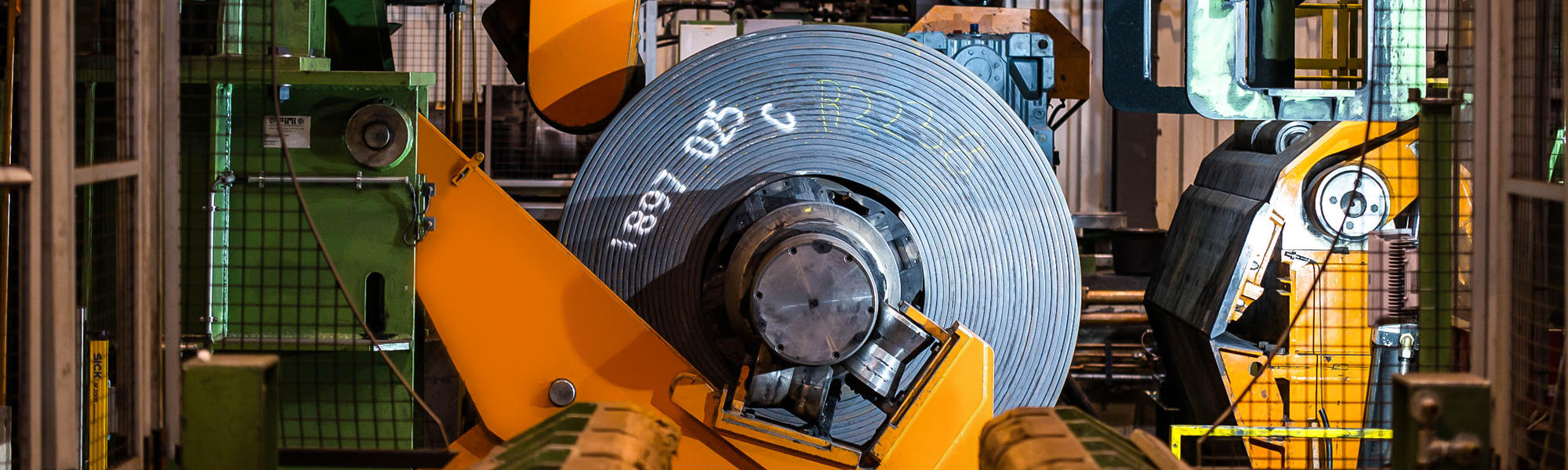
Italian re-rollers are cutting back their discounts and planning to halt sales in response to recent price hike announcements from European hot rolled coil producers, according to industry sources.
In Italy, tube discounts are starting to decline. According to one re-roller, he is at 45 points and unwilling to go below this level. Nonetheless, the level of 47 points is still available in the market. A number of tube suppliers, steelmakers and service centres who spoke to Kallanish agree that HRC, tubes, and sheets will see significant price increases in the near future.
Europe is anticipated to strengthen its defences by granting some of the most recent safeguard review requests from Eurofer following the recent US tariff announcement.
“Now, a new phase is beginning,” a re-roller source remarks, “we must embrace it and learn to control the new macrotrend that will involve higher steel prices and a new management of the supply chain that will be strongly impacted by the additional protectionism.”
Ports will be filled with material starting on 1 April. In order to avoid paying duties, some re-rollers and service centres confirm they will continue to leave material in consignment at the port. Because there will be fewer coils available in Europe, prices will rise and businesses should be prepared to handle their supply chains in a different way in order to adjust to increased pricing and decreased volumes, the source comments.
Prices for European HRC are predicted to rise to €650/tonne ($676.3/t) base delivered in the upcoming weeks.
In light of the present high cost of coils and related processing expenses tube discounts are set to drop to 40 points in the coming weeks. According to another tube seller, “40 points will not even suffice to return to profitability. With the prices we have today, nobody can afford to buy coils at €650/t.” He adds that the commodity grade tube of 40x40x3mm should reach 37–38 points, exceeding €800/t when HRC prices hit €650/t.
Despite the anticipated price rises for all flat products, projections indicate that demand and consumption will likely remain constrained, resulting in subdued volumes for the year.
Natalia Capra France

Poland declares Huta Czestochowa a strategic asset
The Polish cabinet has approved the classification of Huta Czestochowa as a strategic company, which means its acquisition will not be possible without the approval of the Polish government.
Bankrupt plate producer Huta Czestochowa, formerly owned by Liberty Steel, is being leased by state-owned Weglokoks. The tender for its sale will take place on 17 February, with the starting price set at PLN 226.95 million ($54.7m). Right of first refusal will go to Weglokoks. According to media reports, Metinvest and a Middle Eastern firm will also take part in the tender.
The mill is of great importance to Polish national security as it is the only unit in the country capable of producing hardened plate for the defence sector, the government points out. It also has one of the largest production halls in the EU, which allows for the renovation of military equipment, it adds. Following the cabinet decision, the mill will come under the control of Poland’s defence ministry.
The firm’s EAF has a 700,000 tonnes/year crude steel capacity, while the plate mill is 1.2 million t/y design capacity. However, after a year of being idle and with current staff numbers, plate production capability is currently at around 40,000 t/month. Besides defence, the mill is expected to supply plate to the growing wind power industry.
Adam Smith Poland