


US manufacturers confirm steel tariff-driven operational impediments
Operational upheaval caused by the recent bloat in US domestic steel prices and government tariff policies is seen as detrimental to various US businesses reliant on steel, Kallanish reports.
US farm equipment manufacturers, fabricators and automakers contend that President Donald Trump’s trade measures will impede growth and productivity in their respective industries.
Agriculture and construction equipment advocacy group Association of Equipment Manufacturers (AEM) unequivocally renounces any perceived benefits to those two sectors. Any significant increase in steel prices has a ripple effect, and the cross-border nature of steel and agricultural commodities and inputs means that everyone in the supply chain would be hit with higher costs, AEM argues.
“The fact remains: Tariffs are a tax paid by Americans, and their broad-based application will stifle economic growth and undermine the competitiveness of the United States,” AEM senior vice president Kip Eideberg says in a statement.
A Northern California-based agriculture original equipment manufacturer (OEM) tells Kallanish that the complications involved with the tariffs are farther-reaching than he initially expected. His projected growth plan for the business may be stifled.
“When everyone starts panic buying and we can’t get quotes on steel that’s already like 20% higher than when I quoted my customers, there’s no choice but to get steel and pay the tariffs. Some of the components and parts we use are only made outside the US, so that will cost more than before too,” the OEM owner comments. “That raises base product prices on machines that are six-figures, plus if I go to export a machine, it’s gonna cost a Canadian customer even more. Why wouldn’t someone just open their own business there? These machines should last more than 30 years, so how many am I gonna sell in just the US?”
Service centres and distributors across the US note that most domestic flat-steel mills closed order books and pushed lead times into in April. Nucor’s published price for hot-rolled coil has shot up to $820/short ton, an increase of $70/st just since early January. SSAB Americas increased all steel prices by a minimum of $100/st last week. On Friday, Cleveland-Cliffs increased its HRC base price to $900/st after maintaining a consistent $800/st level since December.
Service centres seem “a little apocalyptic,” states the co-owner of an Oregon-based custom metal fabrication studio focused on structural and ornamental steelwork for residential and commercial projects.
“We already changed our agreements to five-day guarantees because that’s all our reps guarantee us. We have to charge a lot for the jobs we do and now customers don’t know if they want to pause or try to book us now and hope they can still afford the job when it comes time to start. It can take more than five days for them to even decide. Now, if I can’t even get steel, I don’t know what we will do. It’s very stressful. If we shut down then that’s less steel sold to anyone. Probably isn’t what anyone thought was going to happen but that is what will happen to us,” says the fabricator.
US automakers including Ford Motor and General Motors (GM) have voiced concerns about increasing costs to manufacturing and the uncompetitive pricing they may be forced to impose on consumers. At an automotive conference last week, GM chief financial officer Paul Jacobson floated the potential of relocating some of the company’s facilities.
“Those are questions that just don’t have an answer today, because (what) I can tell you is, as much as the market is pricing in a big impact of tariffs and lost profitability, we think about a world where on top of that, we’re spending billions of dollars in capital. So we can’t be whipsawing the business back and forth,” Jacobson stated bluntly.
Kristen DiLandro USA


Salzgitter lays cornerstone for green hydrogen plant
Salzgitter has laid the cornerstone for what it says is one of the largest production plants for green hydrogen in Europe, Kallanish notes.
Starting from 2026, the plant will generate around 9,000 tonnes/year of green hydrogen to be used for the production of carbon-reduced steel. This will mark the start of the industrial use of hydrogen in the company’s SALCOS – Salzgitter Low CO2 Steelmaking – project. The 100 MW electrolysis plant will be supplied by Andritz.
A contract between the two companies was signed in September 2023 (see Kallanish September 2023). The engineering involves partner company HydrogenPro. The partner’s pressurised electrolyser stacks are particularly suited for large-scale industrial application, according to Andritz executive Domenico Iacovelli.
Separately, the steelmaker announces its plate-making subsidiary Ilsenburger Grobblech has signed a contract with wind turbine manufacturer Siemens Gamesa for the delivery of around 25,000t of heavy plate.
These will be used for the construction of 36 wind towers of Siemens Gamesa’s “GreenerTower” type. The special feature of this tower is its CO2eq emissions of less than 700 kg per tonne of steel, Salzgitter notes.
The CO2eq-reduced tower has been part of Siemens Gamesa’s product portfolio since 2024. The first use of the towers will be in the “Thor” offshore wind farm in the Danish North Sea. This is planned to be completed by the end of 2027 and have a capacity of more than 1,000 MW.
Christian Koehl Germany
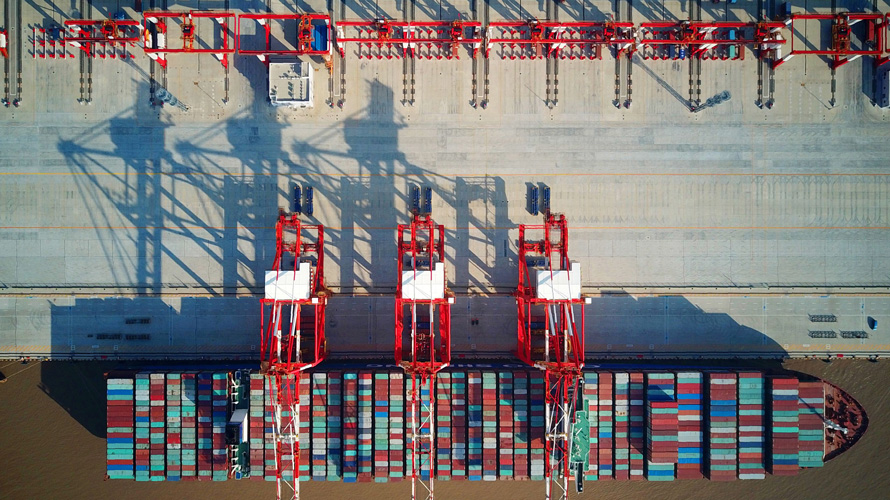
European HRC prices hold firm as market eyes quota decision
European hot-rolled coil prices remained largely stable on Feb. 20, with sources pointing to a combination of cautious buying and expectations of further increases amid ongoing discussions on safeguard quotas and import restrictions.
Market sentiment was mixed, with mills and traders closely monitoring developments on the European Commission’s safeguard measures, expected to be announced later this week, some sources noted. While some market participants remained confident that the quota adjustments would help stabilize domestic prices, others were concerned about persistently weak demand.
A mill source highlighted the uncertain demand outlook. “We have taken the projection that there will be no growth in Europe,” the source said. “Real demand is still concerning, and many buyers remain risk-averse. That being said, restocking later in the quarter could provide some support.”
Despite these concerns, domestic mills continued to push for higher prices. Tier 1 mills in Northwest Europe were reported to be offering HRC at a minimum of Eur600/mt ex-works Ruhr, with tradable values ranging at Eur600-630/mt for specialty applications. Meanwhile, in Iberia, tradable values were reported at Eur610-620/mt ex-works.
A trader noted that higher import costs had limited the competitiveness of non-EU suppliers, helping to support European prices.
“Imports aren’t very attractive right now due to quota risks, taxes, and uncertainty around arrivals. That should continue to prop up domestic prices,” the source said.
Offers for imported HRC into Northwest Europe were heard at Eur550-560/mt CIF Antwerp from Indonesian suppliers for June arrival, while in South Europe, Turkish material was reported around Eur600/mt CIF Italy, duty paid.
In addition to the safeguard discussions, sources also cited supply-side factors as a key influence. “Some mills are stepping back from the market as they look to return with higher prices,” a distributor said.
Meanwhile, carbon-accounted HRC offers were heard at Eur200/mt, although volumes in this segment remained small.
Platts assessed HRC in Northwest Europe at Eur605/mt EXW Ruhr, stable on the day. Platts assessed HRC in South Europe at Eur610/mt EXW Italy, up Eur10 on the day.
Platts assessed imported HRC prices in Northwest Europe at Eur550/mt CIF Antwerp and South Europe at Eur550/mt CIF Italy, both stable on the day.


German monthly steel sales rebound from Dec slump
Monthly German steel sales reached 814,862 mt in January, down 0.9% year over year but rebounding 76.3% month over month, data from the German steel stockholders’ association BDS showed Feb. 21.
The month-over-month gain was fuelled primarily by sales of the flat steel product category which increased 80.8% from December to 508,120 mt. Despite the monthly bounce, flat steel sales were 5.1% lower year over year.
Monthly sales of long products were reported at 228,249, up 67.6% monthly and 11.9% year over year.
Other products followed a similar trajectory, increasing 76.3% monthly and 14% year over year to 78,493 mt.
Market participants surveyed by Platts point toward recent news surrounding US tariffs, and upcoming elections in Germany as increasingly bullish factors in the market. Some sources also cited stable fundamentals, arguing that demand drivers have not shifted significantly in recent weeks.
Platts assessed the Northwest European domestic HRC price at Eur605/mt ex-works Ruhr, Feb. 20, stable day over day and up Eur5/mt week over week.
Meanwhile, German steel product stocks totaled 1.895 million mt in January, rising 6.4% year over year and down 0.6% from December.
Flat products made up 63.8% of the total inventories in January at 1.209 million mt, which was 1.1% lower year over year but 8.8% higher month over month.
Long products stocks totaled 651,346 mt in January, or 34.4% of the total inventory, increasing 0.8% year over year and 2% from December.

Tosyali emerges for Liberty Steel Dudelange facility
The bankrupt Liberty Steel Dudelange facility’s receiver has communicated to trade unions that a decision has been reached on the buyer for the plant, informed sources tell Kallanish.
The prospective buyer is a Turkish steelmaking group that shares the same objective as the Luxembourg government – a commitment to finalise the transaction promptly to facilitate the resumption of production, according to sources.
The buyer could be Tosyali, which was reported last month to be seeking to acquire a European steel producer, citing the challenges faced by EU-based mills reliant on coal-based production. The company’s strategy involves supplying semi-finished products to downstream manufacturers rather than competing directly with final products in the EU market.
Tosyali did not respond to request for comment before deadline on Friday.
The Luxembourg government aims to maximise financial recovery to address Liberty’s outstanding debt, with the government itself among the creditors due to various employee-related expenses incurred by the previous owner. The government maintains ownership of the land and is expected to grant new concession rights to the prospective owner.
The asset will be sold instead of being transferred without compensation. The facility is said to be in good condition, as some personnel have worked to ensure maintenance. The equipment remains up-to-date and production tests have been successfully executed.
Theoretically, after all paperwork is signed, the buyer will be able to quickly resume production thanks to minimal bureaucracy. The selection made by the receiver must undergo validation by the judge responsible for overseeing the sales process. A source indicates this process may require a few days to complete. Following the state’s approval of the judge’s and receiver’s ruling, the facility will be transferred.
Dudelange currently has approximately 140 employees following a reduction in staff. The facility has remained inactive for more than two years, with the exception of a production test conducted in July 2024.
The Luxembourg commerce tribunal declared the Dudelange facility bankrupt last December (see Kallanish 4 December 2024). In addition to Dudelange, Liberty plans to divest its Magona facility in Italy and its Belgium-based Liege plant. The three businesses combined possess rolling capacity exceeding 2.5 million tonnes/year.
The Magona facility is currently operational following the procurement of hot rolled coil feedstock, while Liege is said to be on the verge of bankruptcy.
Natalia Capra France , Elina Virchenko UAE

CE Capital withdraws from HKM takeover talks
Prospective Hüttenwerke Krupp-Mannesmann (HKM) buyer Capital Partners has broken off talks on the acquisition, Kallanish learns from HKM shareholder thyssenkrupp Steel.
Thyssenkrupp Steel holds 50% of HKM while Salzgitter owns 30%. The third owner, Vallourec with 20%, announced last year that it would sell its stake. The larger shareholders however have no interest in taking over Vallourcec’s stake in the Duisburg-based mill.
In fact, thyssenkrupp Steel has made it clear that it also wants to divest its stake. The company recently held talks with equity investor CE Capital Partners, whose name had not officially been disclosed till now.
“We deeply regret this development,” tk Steel says in a statement about the end of the talks. “It was and is our primary objective to sell the shares in HKM in order to give the company and its employees prospects for the future.”
The steelmaker emphasises that it remains open to discussions with other potential buyers. “We will now promptly evaluate the situation with our co-shareholders,” it says.
Christian Koehl Germany

EU may further limit steel imports following US tariff decision
The European Union is considering further limiting quotas on steel imports to protect its domestic steelmakers, following the US decision to impose 25 percent additional tariffs on steel imports from all countries without exceptions and exemptions, according to Reuters.
Leopoldo Rubinacci, deputy director-general for trade at the European Commission, stated that a review of the safeguard measures had begun, and it is planned to conclude it by the end of March this year. Mr. Rubinacci also added that the European Commission will explore the option to extend the safeguard measures or to adopt an alternative mechanism after mid-2026.
Under the World Trade Organization (WTO) rules, the safeguard measures can only be applied for a period of a maximum of eight years. In this case, the EU’s measures will expire during US President Donald Trump’s second term in mid-2026.
In 2018, the EU had introduced a quota system per quarter and country to prevent a flood of steel products from entering the region and damaging the domestic industry.


European HRC prices rise in recent trades; sentiment remains positive
European HRC buyers were partially accepting higher offers in recent trades, sources said.
“Buyers are still cautious with volumes and instead of buying, for example, 5,000 tonnes [of HRC, they will] book 2,500. But inquiries did improve,” a mill source in Northern Europe said.
First-tier suppliers in Northern Europe were offering HRC with April-May lead times at €630-660 ($659-690) per tonne delivered (€620-640 per tonne ex-works).
Transactions were reported at €615-620 per tonne ex-works in Germany.
Italy-origin HRC with April lead times was offered in Germany at €640-650 per tonne delivered.
As a result, Fastmarkets calculated its daily steel hot-rolled coil index domestic, exw Northern Europe at €618.13 per tonne on Friday, up by €7.25 per tonne from €610.88 per tonne on the previous day.
The Northern European index was up by €14.38 per tonne week on week and by €40.63 per tonne month on month.
Industry sources expected the uptrend to persist in the upcoming weeks – supported by restocking and limited availability of imports.
But several buyers sources expressed concerns about the viability of the further price increase, considering slow end-user demand.
“This entire [HRC] price recovery cannot be entirely based on the import situation. There is no major recovery in sight for steel-consuming industries: construction, automotive, etc,” a buyer said.
“It’s difficult to say [if the price recovery will continue]. Maybe we will see a slight [demand] improvement in the second quarter, but will it be enough?,” a second buyer said.
Sources previously said they expect more clarity regarding new safeguards measures next week.
Meanwhile, in Southern Europe, Fastmarkets’ daily steel hot-rolled coil index domestic, exw Italy was calculated at €607.08 per tonne on Friday, up by €7.08 per tonne from €600.00 per tonne on Thursday.
The index was up by €11.66 per tonne week on week and up by €33.33 per tonne month on month.
In Italy, buyers estimated achievable prices at €600-610 per tonne ex-works on Friday.
Italian producers were offering April-delivery HRC at €620-640 per tonne delivered (€610-630 per tonne ex-works).
In the week to Friday, import HRC offers were broadly stable.
Most overseas suppliers were offering HRC to Europe with lead times in the second quarter, making imports increasingly risky since new safeguard measures are expected to come into effect in April.
From Asia, offers were reported at €550-570 per tonne CFR to Italy. Offers from Ukraine were reported within a similar range.
HRC from Turkey was on offer to Italy at €590-600 per tonne CFR, including the anti-dumping duty, sources told Fastmarkets. Several sources said that for big volumes it was possible to achieve €570-580 per tonne CFR. Several sources reported deals within the range €570-580 per tonne CFR from Turkey to Italy during the assessment week, but no further details were available at the time of publication.

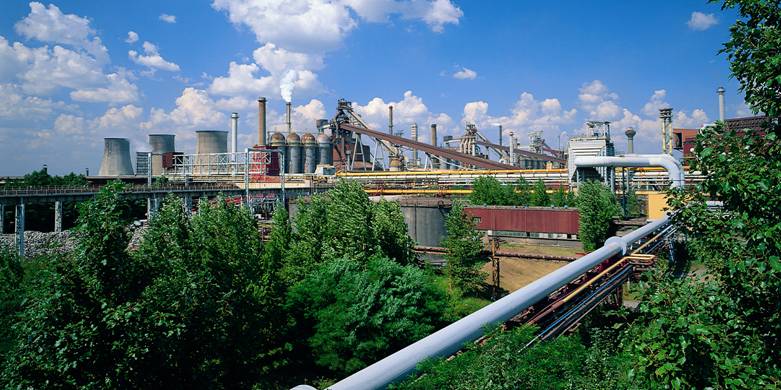
Polish rebar, wire rod prices increase on bullish sentiment among producers
But buyers shared mixed expectations about the future market development.
Rebar
Polish mills were heard offering March production rebar at 2,700 zloty ($677) per tonne CPT during the assessment week. This is also largely the level at which the material was offered in the previous week.
Industry sources told Fastmarkets that mills were quite firm on their offers, willing to grant some discounts by just 20-30 zloty per tonne.
“With these offer levels, local mills are trying to compensate for the high scrap and energy prices in the domestic market,” a distributor source told Fastmarkets.
According to industry sources, the Polish market for domestic scrap has become more active recently with some rebar producers needing to replenish their stocks. Besides, the steel slab and plate producer Huta Czestochowa has resumed operations recently and has also started to purchase scrap more actively.
This increased the demand in the domestic market and pushed the local scrap prices higher by 90-100 zloty per tonne compared to the previous month.
Fastmarkets’ sources estimated the workable market level for rebar at 2,650-2,670 zloty per tonne CPT, with the lower end of the price range considered achievable for bigger volumes.
As a result, Fastmarkets’ weekly price assessment for steel reinforcing bar (rebar), domestic, cpt Poland, was 2,650-2,670 zloty per tonne on Friday, up by 20-30 zloty per tonne from 2,620-2,650 zloty per tonne on February 14.
But industry sources shared mixed opinions on how the market will develop.
“It seems that the sentiment has improved, and most market participants expect that rebar prices will be stable to slightly higher in the short run,” the distributor source told Fastmarkets.
Prices were also supported by slightly better demand.
“Even in Germany, there is not such a big increase in rebar prices,” the source added.
A producer source confirmed that demand was “not low” and “much better now” than in January.
But a second distributor source was more pessimistic.
“I think the prices will fall again by mid-March. The demand will improve more significantly in May/June, when [more] money from EU funds [are expected to enter the Polish economy],” the second distributor said.
In terms of imports, German mills were heard offering rebar to Poland at €630 ($659) per tonne delivered.
Wire rod
Prices for Polish low-carbon drawing quality wire rod also increased during the assessment week, supported by bullish sentiment among producers.
Polish mills were officially offering the material at 2,900 zloty per tonne CPT.
Fastmarkets’ sources estimated the workable market level at 2,800-2,850 zloty per tonne CPT.
One buyer source told Fastmarkets that for small volumes Polish mills would even insist on 2,900 zloty per tonne CPT.
Fastmarkets’ price assessment for steel wire rod (drawing quality), domestic, delivered Poland, was 2,800-2,850 zloty per tonne on Friday, up by 30-50 zloty per tonne from 2,750-2,820 zloty per tonne on February 14.
Regarding imports, offers for mesh-grade wire rod from Ukraine to Poland were heard at €620 per tonne delivered Poland.
Offers of low-carbon drawing quality wire rod from Italy to Poland were heard at €660 per tonne delivered, but according to sources a discount of €10 per tonne could be achieved in negotiations.
The Czech Republic was heard offering low-carbon drawing quality wire rod to Poland at €660-680 per tonne delivered.

Eurofer: Global HRC quota could be workable
A global hot-rolled coil (HRC) quota managed on a monthly basis could be a viable measure adopted by the EU steel safeguard review, according to steel association Eurofer.
The idea of a global quota was proposed to the European Commission by Hyundai Steel and the Korean Iron and Steel Association, according to documents obtained by Argus.
In a 13 January submission to the commission Hyundai Steel said a global quota allocated monthly would “help ensure smoother trade flows and better supply chain management, preventing distortions that could arise from uneven utilisation of the quota”. The fact some countries quickly exhaust their 15pc of the other countries quota risks a “sudden influx” that can flood the EU market, Hyundai said. South Korean mills have their own quota, which typically only fills or goes critical towards the end of the quota period; it went critical earlier in this quarter, however, going critical in the second half of February.
The Korean Iron and Steel institute echoed the views of its member Hyundai, suggesting there should be monthly restrictions or increasing tariffs on volumes above the quota level.
In a submission to the commission earlier this month, Eurofer said this solution could be workable and prevent “gaming” of the system if accompanied by a first in-first out duty regime — meaning no pro-rata of duties on the first days of a quota — and if its earlier adjustments were adopted.
In a 10 January submission Eurofer requested that the flat steel quota should be cut by 50pc to better align quotas with current demand, and that if this was not possible other measures could be taken to reduce import penetration. These measures included the introduction of individual quotas for China and a melt-and-pour rule that means any steel produced using Chinese substrate could come under this quota; this would have most impact on cold-rolled and hot-dip galvanised coil imports produced using Chinese HRC.
Eurofer also asked for an increase in the 25pc duty where quotas have been filled; the introduction of first-in first-out, meaning all material pays the fully duty where quotas have been filled; the expansion of 15pc caps to other residual quotas, and the reduction of the HRC residual quota cap to 7.5pc. It also said there should be no carryover of leftover quota between quarters, that more country-specific quotas should be introduced, with a corresponding reduction in residual quotas, and that liberalisation of the quota should be removed.
While Eurofer and some importers seem to see eye-to-eye on the idea of a global quota, it is likely that they hold varying views on how much tonnage should be included duty-free.

Source: argusmedia.com