


Slow start to 2025 adds more uncertainty: Assofermet
January has reflected the market slackness that existed before the year-end production halts, Italian trade association Assofermet says in a market note seen by Kallanish.
In Asia, despite the weakness of the Chinese steel market, few production stoppages have happened, while India ended November with a 5.8% on-year production increase. These elevated production levels in Asia represent a significant area of concern for the global steel sector.
In response to higher production costs, European steelmakers have announced price hikes on finished longs and flats, even in the face of subdued demand, particularly from the white goods and automotive sectors. The recent coil increases are supported by the diminished interest in importing material from third countries, attributed to restrictive safeguards, anti-dumping, and anti-subsidy measures.
Market participants are closely monitoring the initial actions of the newly elected US president, Donald Trump, who has repeatedly indicated intentions to enhance customs barriers as a means of safeguarding the domestic market.
“The ghost of US tariffs promised by the next occupant of the White House significantly undermines the prospects for this first quarter… Furthermore, there is great interest in the future of Acciaierie d’Italia for which the appointed Commissioners have received purchase proposals from foreign groups and national consortiums in recent days,” the note states.
In 2024 flat products experienced the most substantial declines in volume, whereas long products observed a more pronounced decrease in average pricing. Uncertainty continues to loom over Europe, especially concerning the outlook for significant economies such as France and Germany, Assofermet concludes.
Natalia Capra France


EU safeguard measures review brings steel imports uncertainty
Steel importers in the EU are braced for the effect of revisions to the European Commission’s import safeguard measures, which it aims to implement from April 1.
The Commission announced its intention to review the current quota-based system on December 18, following an application from 13 EU member states. It said that their request had been prompted by challenges faced by the EU steel sector, which had been exacerbated by increasing global overcapacity and a continued decrease in EU steel demand.
Among the potential changes is the extended application of the 15% cap on individual countries’ use of the “other countries” category’s quarterly quotas, which are currently applied to hot rolled coil and wire rod. MEPS understands that this was among suggestions made by the European Steel Association (Eurofer).
The 15% cap was introduced in July last year. At the time, MEPS reported that imports from Vietnam, Japan and Taiwan – the three largest suppliers of Non Alloy and Other Alloy Hot Rolled Sheets and Strips into the EU in 2023 – would be increasingly exposed to 25% above-quota duties.
Diversified supply chain
Import data published on January 6 showed that the three countries’ quarterly tariff-free quotas (each of 138,766 tonnes) had been exceeded; Vietnam by 9%, Japan by 56% and Taiwan by 13%. However, other countries’ quotas remained underutilised, leaving scope for importers to diversify their sources to maintain supply.
MEPS analysis indicates that many importers have already been able to diversify their supply chains. Hot rolled coil import volumes have increased since the introduction of the 15% “other countries” cap. This apparent uptick, revealed by ISSB data, helped to maintain downward pressure on hot rolled coil prices recorded by MEPS in the second half of last year.
Throughout the six-month period, MEPS research contacts reported that low-cost imported material could be readily acquired from EU ports, with tightening storage capacity a growing issue in certain locations. Against a backdrop of oversupply and heavily subdued demand across the continent, the MEPS Europe Average hot rolled coil price declined by 11.4% between July and December, from EUR643 per tonne to EUR570 per tonne.
Increased tariff rate proposed
An increase in the above-quota tariff rate, from 25% to between 32% and 41%, is among other potential changes to the current EU safeguard measures. These elevated levels were first cited in the European Commission’s modelling for the quota-based system ahead of its introduction in 2018. At the time, the Commission said that a tariff of 32% would allow 10% more imports than in 2015-2017. A tariff of 41% would, it said, serve to maintain imports at their 2015-2017 level.
The 25% above-quota tariff ultimately adopted would, the Commission stated in 2018, facilitate traditional trade alongside a 10% increase in imports. It said that this represented “a cautious approach”.
Since 2018, however, EU steel production has declined by 16%, to 126m tonnes. EU steel consumption, meanwhile, has declined by around 22%, to 127m tonnes.
Imports now account for 27% of EU supply. Furthermore, Eurofer has estimated that global steel overcapacity would exceed 560m tonnes in 2024, with OECD data forecasting that an additional 157m tonnes of carbon-intensive capacity will come online by 2026.
Despite the risks posed by global overcapacity, the European Commission will not be permitted to cut its safeguard measures’ quota volumes. WTO rules state that quota volumes must be liberalised – or increased – in each year of their application.
The Commission is expected to conclude its safeguards review on March 31. Until it reveals its conclusions, importers face uncertainty over the tariff rates they will incur in quarter two and beyond.


European sites at risk of closure, according to former EUROMETAL President
“All European steel plants are at risk” of closure by 2025 if nothing is done to protect the European steel industry, ArcelorMittal France chairman Alain Le Grix de la Salle told a parliamentary hearing in Paris on Wednesday.
“The steel industry in Europe is in crisis… I cannot today make the slightest commitment… The sites, as they are, are all at risk in Europe, and therefore in France too,” declared the head of the company before the French National Assembly’s economic affairs committee, in response to an MP who asked him if he could make a commitment that no other ArcelorMittal plant would be closed in France by 2025.
“The steel industry in Europe, and therefore in France, has entered a major and serious crisis. Global overcapacity is a structural phenomenon that is here to stay. These overcapacities currently represent 550m to 600m tonnes of annual production, i.e., four to five times Europe’s production,” he told Agence France Presse. “China alone exported 100m to 120m tonnes last year. That’s the equivalent of all European consumption,” he added.
“The United States is doing everything it can to protect its industry. That leaves Europe. Steel travels. We are not against imports. We are asking that they be limited and that they not have a devastating effect on our industries, as is currently the case. We are asking for fair conditions of competition, particularly with regard to the cost of CO2,” he added. “If Europe does not decide to protect its market from unfair competition, whole swathes of our industry will disappear in the very near future. This is not doom and gloom, it is, unfortunately, pure and simple reality.”
“The list of major restructurings and closures in Europe is growing,” he warned, citing in particular the German group Thyssenkrupp, ArcelorMittal’s competitor, which plans to cut “11,000 jobs by 2030, i.e., 40% of its workforce.” ArcelorMittal suspended its decarbonisation investment plans in Europe at the end of 2024.


Dillinger and Vattenfall sign MOU on wind projects
Platemaker Dillinger and energy group Vattenfall Europe Windkraft have signed a declaration of intent to accelerate the use of CO2-reduced steel in future wind projects.
For Dillinger, creating early demand for CO2-reduced steel is crucial to advancing investment in this technology and the decarbonisation of the steel industry, Kallanish hears from the steelmaker.
“We are investing around €4.6 billion ($4.8 billion) in the decarbonisation of our German production sites with the support of the federal and state governments,” says Stefan Rauber, Dillinger ceo.
“The fact that Vattenfall wants to implement its ambitious climate targets with this steel indicates to us the demand for CO2-reduced steel and gives us momentum for our Power4Steel decarbonisation project.”
“The use of CO2-reduced steel, especially in our offshore wind farms, is an important lever in achieving our sustainability goal,” says Samira Barakat, vice president of partnerships and business transformation at Vattenfall.
Christian Koehl Germany

Tosyalı expands investments in Africa and Europe
The chairman of Turkish conglomerate Tosyalı Holding is highlighting trends such as steel overcapacity, consumption disparities, and the impacts of climate change, emphasising the importance of adapting to global economic shifts.
Speaking on the sidelines of the World Economic Forum in Davos, Switzerland, Fuat Tosyalı discussed the company’s expanding investments in Africa, focusing on sustainable energy and local markets. He describes ongoing projects in Turkey, Algeria and Libya aimed at strengthening Tosyalı’s position as the leading steel producer in the Mediterranean, Kallanish understands.
“Because the main rule of sustainability is to have energy first, then the market,” Tosyali tells Bloomberg HT. “We are steel producers. Africa has many underground mines. The issue that concerns us is sustainability. First of all, the energy needed in the process of transitioning from mine to steel, and being able to consume the product produced in the closest geography. We are the strongest steel producer in the Mediterranean basin. On the one hand, we have investments in Turkey, and on the other hand, we have investments planned in Algeria and now in Libya.”
Noting an acquisition made in Spain last year, Tosyalı reveals plans to acquire a new asset in Europe worth approximately $500 million.
“Our steel production capacity has reached a point where we now need to make new investments that will deliver our products to the end consumer,” he comments. “This purchase will be a major investment, potentially reaching approximately $500 million in Europe.”
Tosyalı is also chairman of Turkey’s electric car producer Togg’s board of directors. He states that, after taking over Togg’s management, the leadership decided to increase production rapidly and plan to double production this year compared with last.
Elina Virchenko UAE

EU announces funding for steel, coal innovation
The European Commission has announced a €175 million ($182m) budget for the 2025 Research Fund for Coal and Steel (RFCS), aiming to advance innovation and facilitate the transition in these sectors.
The funding includes two major calls, or “big tickets,” set to launch in February. The steel sector will receive €100m for projects focused on breakthrough technologies, such as carbon capture, storage, and usage, process intensification, and CO2-neutral iron ore reduction.
Meanwhile, €35m will support coal sector initiatives, including the re-purposing of closed mines, waste treatment, methane monitoring, and the recycling of critical raw materials.
An additional €40m annual call covering both sectors will open in June. Beneficiaries of the funding will include universities, research centres, and private companies.
The RFCS programme aligns with the European Green Deal’s goal of achieving EU climate neutrality by 2050, emphasising clean technologies and just transition in coal mining regions, Kallanish notes.
Elina Virchenko UAE

Moselle river lock to be repaired by February
The repair work on the lock on Germany’s Moselle river has proceeded faster than anticipated, so that ship traffic can return to normal as of 1 February, according to the local waterways authority WSA.
On 8 December, a vessel carrying steel scrap collided with the lock’s gate at point Müden, and damaged both wings to the degree that they needed to be exchanged. Ship traffic has since been interrupted, which affected scrap transports to nearby mills Dillinger, Saarland and ArcelorMittal Luxembourg, but also outgoing transports of mainly Dillinger’s plate and ArcelorMittal’s sections.
WSA originally expected that the waterway would not be back to regular traffic operation before March, but repair work has proceeded faster than planned, Kallanish understands. According to the authority, the concrete works at the lock will be completed this week. The new gate wings have been completed by a regional fabricator, and their installation will take approximately one week, so that test transits can be carried out by 31 January.
In a statement earlier in January, Dillinger said that its supplies of raw materials by rail and road were secured, so that production continued at a normal level. The driving ban for trucks on Sundays and public holidays has been suspended by the state governments of Saarland and Rhineland-Palatinate, thus ensuring a permanent flow of transport, the steelmaker wrote.
Christian Koehl Germany
European buyers still reluctant to accept higher HRC offers
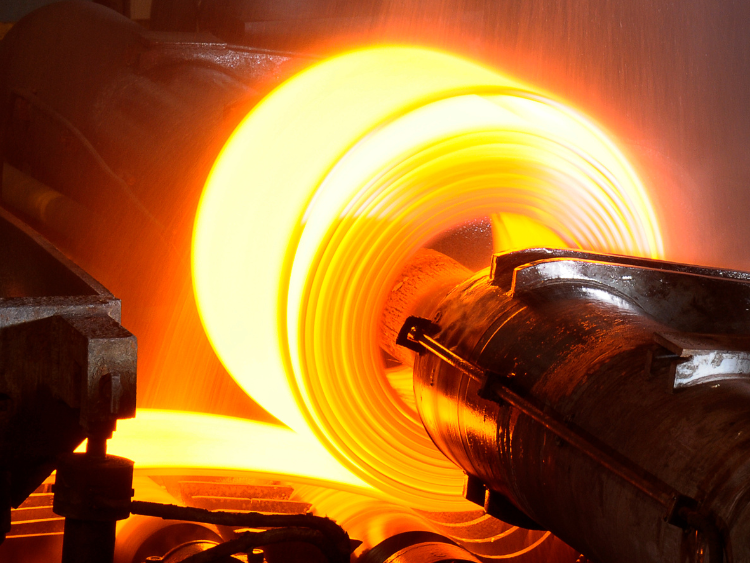
In general, offers from other integrated mills in the region were heard in the range of €620-630 ($642-652) per tonne ex-works or delivered. Most producers heard to be offering April lead times already, however, several buyer sources said that some producers still could do March deliveries.
Market participants pointed out that domestic HRC prices have recovered from the lower levels observed in the fourth quarter of 2024, but mills target offers were “unrealistic” considering subdued demand.
Most sources estimated the tradable market level to be at €570-590 per tonne ex-works on Tuesday.
“Demand is still not strong enough to back up €600 + [HRC] prices. The mills have to reduce output to make [a price increase] work,” a buyer source told Fastmarkets.
Market sources told Fastmarkets that the price rise mills were pushing for was not demand-driven, adding that mills were hoping that the EU’s trade policies will support domestic markets.
“We have safeguards in review right now, we have [an] anti-dumping probe, we have Trump in the US [presidential] office and [we are] bracing for even more protectionism globally. Importing steel gets increasingly inconvenient – you don’t know what the cost will be,” a second buyer said.
Fastmarkets calculated its daily steel hot-rolled coil index domestic, exw Northern Europe at €577.50 per tonne on Tuesday, up by €2.50 per tonne from €575.00 per tonne on Monday.
The index was up by €4.17 per tonne week on week and by €12.50 per tonne month on month.
At the same time, Fastmarkets calculated its corresponding daily steel hot-rolled coil index domestic, exw Italy at €573.75 per tonne on Tuesday, up by €3.75 per tonne from €570.00 per tonne on Monday.
The index was up by €3.75 per tonne week on week and by €13.75 per tonne month on month.
Offers in Italy were heard at €610-620 per tonne delivered, which nets back to around €600-610 per tonne ex-works.
But these offers have not been accepted by buyers so far.
Market participants estimated the tradable market levels for HRC in Italy in the range of €570-580 per tonne ex-works.
Import offers of HRC to both Northern Europe and Italy remained limited on Tuesday. According to sources, this was due to the pending safeguard measures review.
From Turkey, one supplier was heard offering €580-590 per tonne CFR. But for tonnages of 10,000 tonnes and higher, it was possible to get €560-570 per tonne CFR, several sources said.
From Asia, offers were heard at €560-570 per tonne CFR for HRC arriving in April.


Italian plate market stagnates
Italian heavy plate prices are currently stagnating, due to weak demand and a sluggish beginning to the year, sources tell Kallanish.
Transactions are occurring for smaller volumes, while larger clients have yet to resume their buying activities. Both the mill and distributors agree that activity is lacklustre in January.
A mill source suggests that when evaluating 2024, there was a notable slowdown in the second half. However, the results for the full year remain satisfactory as the company has not incurred any losses.
Currently, contracts for the Italian domestic market show a level of stability when compared to the end of the previous month. S275 grade transactions are currently taking place within the range of €630-640/t ex-works, with S355 trading at a premium of €20/t above that range.
Mills are attempting to uphold the price point of €650/t ex-works for S275.Booking prices for Asian-origin slab are approximately $530-540/t cfr.
The primary challenge for domestic plate producers remains the availability of Asian material at competitive prices. Monthly imports of plates from Asia into Europe have remained stable at approximately 180,000t/month last year.
A mill source indicates that domestic demand is being met by Asian producers who have established an efficient distribution network in Europe, facilitating the sale of vessels containing both small and large orders of material.
Asian producers have effectively shifted the quotas they lost on coils to plates, subsequently boosting their plate exports to Europe at competitive pricing, according to the source.
“We are unable to compete with their low pricing structure. Our processing costs are at a minimum three times greater than those of Asian steelmakers” he states and anticipates that developments will occur this year, as the European Union is expected to announce a safeguard review by the conclusion of the first quarter.
Natalia Capra France
Another German mill pauses due to power-cost spike
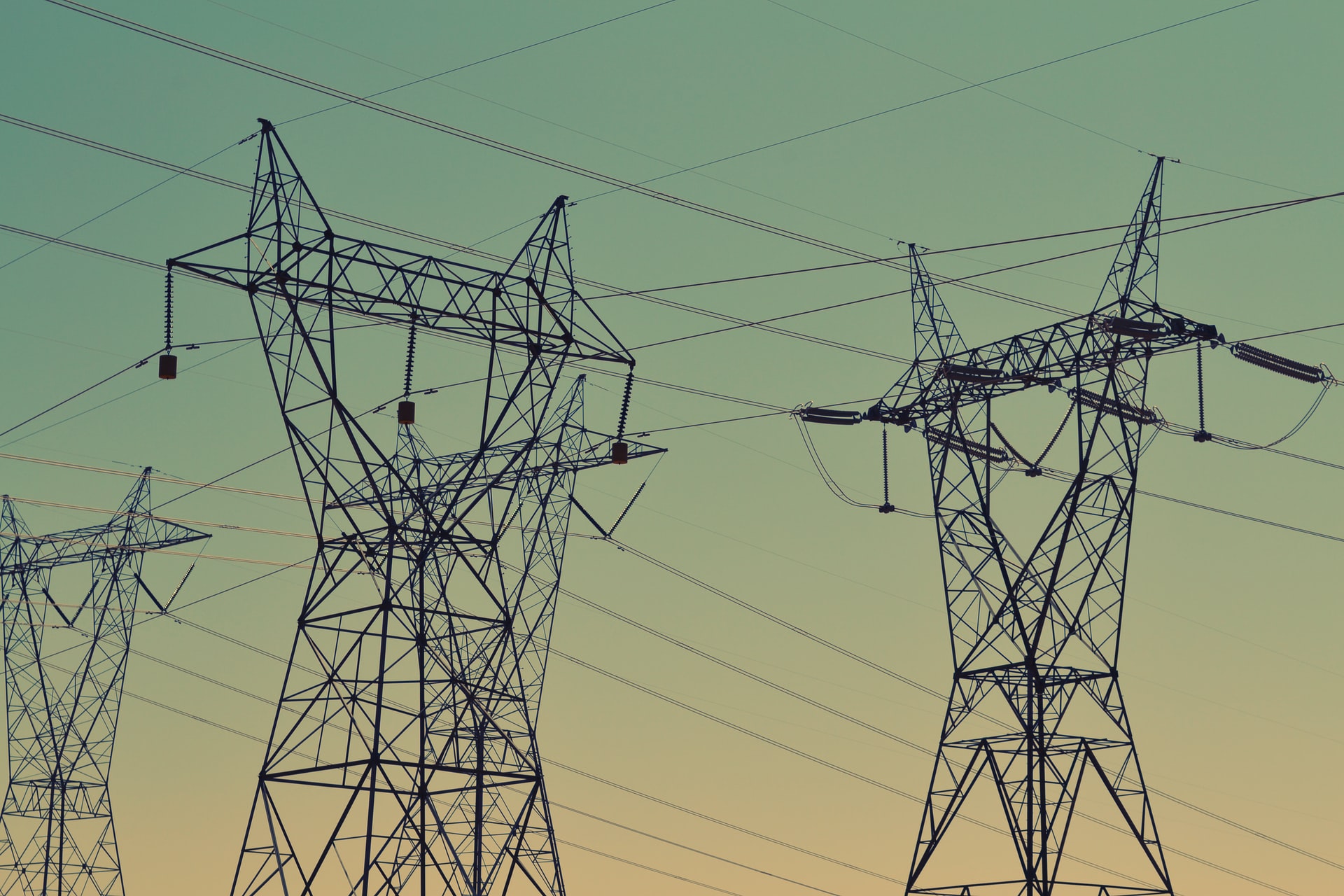
A sudden surge of power prices in Germany has caused special bar quality mill Georgsmarienhütte to suspend production, Kallanish understands.
In a post on LinkedIn, managing director Anne-Marie Grossmann writes that production had to be stopped Monday morning. The day-ahead electricity price that morning had reached €432/MWh ($449). By comparison, sudden peaks prior to 2019 would never go beyond €130/MWh, Grossmann notes. She expresses outrage about “a failure of energy policy in Germany – the land of engineers and innovators” and how it falls behind other countries that have lower energy costs.
GMH is not the first steelmaker that stopped production this winter because of power price peaks. In December, Feralpi’s rebar mill in Riesa suspended output for two days amid a sudden surge in power prices that compounded the difficult market situation (see Kallanish 16 December). Back then, the power prices on the spot exchange climbed as high as €900/MWh.
The surges are attributable to a low in wind and solar power production after a long period of overcast skies with little wind. Such occasional “dark lulls” (“Dunkelflaute”) are becoming symptomatic in Germany, which is trying to change its energy supply towards renewables, mainly wind and solar energy.
Hence, Grossmann especially attacked the political trend of abolishing nuclear and fossil power generation too quickly before a stable supply from renewables can be relied on. According to Berliner Zeitung, GMH already adjusted its production rhythm of its electric-arc furnace to shorter shifts in early January. The newspaper cites company sources as saying that the mill is nevertheless maintaining its capacity to guarantee deliveries to customers.
Christian Koehl Germany