


European heavy steel plate market restarts on quiet note; prices hold
In Italy, the market restarted on a quite note after winter holiday stoppages, sources said.
“The past two weeks the market was on pause. We’ve just came back from holidays, and so did the customers,” a mill source in Italy told Fastmarkets. “The real negotiations [for plate sales] are only about to start.”
Italian plate producers were trying to increase prices for new rolling and were targeting offers of €650 ($671) per tonne ex-works for first-quarter production.
Buyer sources estimated tradeable values at €630-640 per tonne ex-works in the week to Wednesday, while mill sources claimed that €640-650 per tonne ex-works was “the minimal level that were ready to sell at, considering high input costs,” Fastmarkets heard.
As a result, Fastmarkets’ weekly price assessment for steel domestic plate, 8-40mm, exw Southern Europe was €630-640 per tonne on Wednesday, unchanged since December 18, 2024.
“Even the most aggressive suppliers [of plate] were seeking higher prices, because of the high costs of slab and electricity,” a buyer source said.
In Italy, electricity prices in January were around €138 per MWh, up from a monthly average of €135 per MWh in December 2024 and €130 per MWh in November 2024, according to Italy’s exchange for electricity and natural gas spot trading, Gestore Mercati Energetici (GME). In January 2024, electricity prices in Italy averaged €99 per MWh.
Slab, the key feedstock for plate production, was offered to Italy in a range of $505-530 per tonne CFR from Southeast Asia and China.
Fastmarkets’ weekly price assessment for steel slab import, cfr Italy was $480-530 per tonne on January 3.
In the week commencing January 6, sources reported no fresh offers from Russian suppliers, which usually represent the lower end of the price range.
Northern Europe
Trading in the spot plate market in Northern Europe was also slow, and industry sources expect more clarity in the coming weeks, when more customers return to the market after a holiday break.
“The market has not fully restarted yet. We expect no major changes until end-January,” a German buyer said.
“The market is as sleepy as before the holidays,” a second buyer said.
As a result, Fastmarkets’ weekly price assessment for steel domestic plate, 8-40mm, exw Northern Europe was €650-680 per tonne on Wednesday, unchanged since December 4, 2024.
Buyer estimates of the achievable price for commodity-grade heavy plate were heard at €650-660 per tonne ex-works against the offers of €670-680 per tonne ex-works from German suppliers.
A re-roller in the Czech Republic was offering S275 grade plate at €670 per tonne ex-works, but mainly to locations in Central Europe, compared to €630-650 per tonne before the winter holidays.
Bulgarian producers were aiming for €670-680 per tonne ex-works for the same material, compared to €650 per tonne ex-works last month.


Prices rise in Northern European rebar market; wire rod prices stable
Fastmarkets’ weekly price assessment for steel reinforcing bar (rebar), domestic, delivered Northern Europe was €640-645 ($661-666) per tonne on Wednesday, narrowing upward by €30 per tonne from €610-645 per tonne week on week.
Mills raised their rebar offer prices in Northern European after reopening following Christmas closures. The market largely accepted these price rises, Fastmarkets heard.
Meanwhile, international scrap prices edged downward on a weekly basis but increased month on month, Fastmarkets heard.
Fastmarkets’ calculation of its daily index for steel scrap, HMS 1&2 (80:20 mix), North Europe origin, cfr Turkey was $338.31 per tonne on Wednesday, down from $348.12 per tonne a week earlier and up from $325.00 per tonne a month ago.
The corresponding Fastmarkets’ weekly price assessment for steel wire rod (mesh quality), domestic, delivered Northern Europe was at €610-620 per tonne, stable week on week.

European green flat steel premiums hold steady; Nordic countries drive demand
Fastmarkets’ methodology defines European green steel as “steel produced with Scope 1, 2 & 3 emissions at a maximum of 0.8 tonne of CO2 per tonne of steel.”
During the assessment week, leading European suppliers maintained the premiums for such steel at €200-350 ($206-361) per tonne.
These offers have been broadly stable during the course of 2024, but tradable values for the spot market were lower, sources said.
“When it comes to deals, especially for bigger tonnages, some discounts can be achieved – depending on supplier,” a buyer in Germany said.
Buyer sources estimated achievable premiums for green steel with such levels of emissions to be at €80-150 per tonne, but the lower end of that range was not considered to be workable by mill sources – at least for the mentioned specifications.
As a result, Fastmarkets’ weekly assessment of the green steel domestic, flat-rolled, differential to HRC index, exw Northern Europe, was €100-200 per tonne on Thursday, stable since December 12, 2024.
Market participants said there is a lack of projects across Europe requiring green steel and that demand from the key consumer – the automotive industry – has recently been slowing, in line with the general downturn in steel sales.
Consequently, demand for such steel remained subdued and highly regionalized, sources said, with Nordic countries deemed “champions” in green steel procurement.
“In Scandinavia there are many public projects requiring green steel procurement. There is an actual market for green steel,” a mill source in Europe said.
“So distributors and trading companies there are more keen to buy green; they know they can pass these costs [of green steel] down to the end user,” the mill source added.
Two other supplier sources echoed that view, and told Fastmarkets that they were selling most of their volumes of steel with reduced carbon footprint in the Nordic states.
A deal for 17,000-18,000 tonnes of green heavy plate, produced via electric-arc furnace (EAF), with cardon emissions content below 1 tonne of CO2 per tonne of steel, was reported from Bulgaria to Denmark in late December.
The premium for such steel was reported to be €150 per tonne.

EUROMETAL submission to the European Commission: Key Updates
On 10 January 2025, EUROMETAL officially submitted its response to the European Commission as part of the ongoing functional review of the EU Safeguard Measures on Steel Imports.
This submission reflects EUROMETAL’s commitment to representing the interests of members and stakeholders in shaping policies that impact the European steel industry.
In response, the European Commission has provided important updates and clarifications on the review process:
Deadline Extension Granted
EUROMETAL raised concerns about the tight deadline for submitting questionnaires, originally set for 10 January 2025, considering the holiday season and its impact on data collection efforts. The European Commission granted a three-day extension, moving the submission deadline to 13 January 2025. This extension, while limited, provides stakeholders additional time to prepare and submit their responses. EUROMETAL encourages all members and steel users to utilize this opportunity to ensure their voices are heard.
Clarification on “Union Users”
In response to EUROMETAL’s request for clarification, the European Commission provided the following definitions:
Union Users: these are companies that use the steel products subject to the safeguard measures in their downstream production processes.
Traders, Service Centres, and Stockholders fall under the category “Interested Parties” due to their objective link with the products under investigation.
The Commission has invited all interested parties, including traders, service centers, and stockholders, to register on TRON.tdi and submit their views in the form of written submissions as outlined in Section 4.3 of the Notice of Initiation.
EUROMETAL continues to advocate for its members and the broader Steel Distribution industry. In our submission, we highlighted several key priorities:
- Extension of the Questionnaire Submission Deadline.
- Harmonization of Customs Rules Across Member States.
- Clarification on the Definition of Union Users and Interested Parties.
- Support for the Proposal to Organize a Steel Summit.
These priorities underline the critical role of steel distribution in safeguarding European manufacturing and ensuring sustainable steel supply chains.
Tata Steel Nederland reports higher production, deliveries
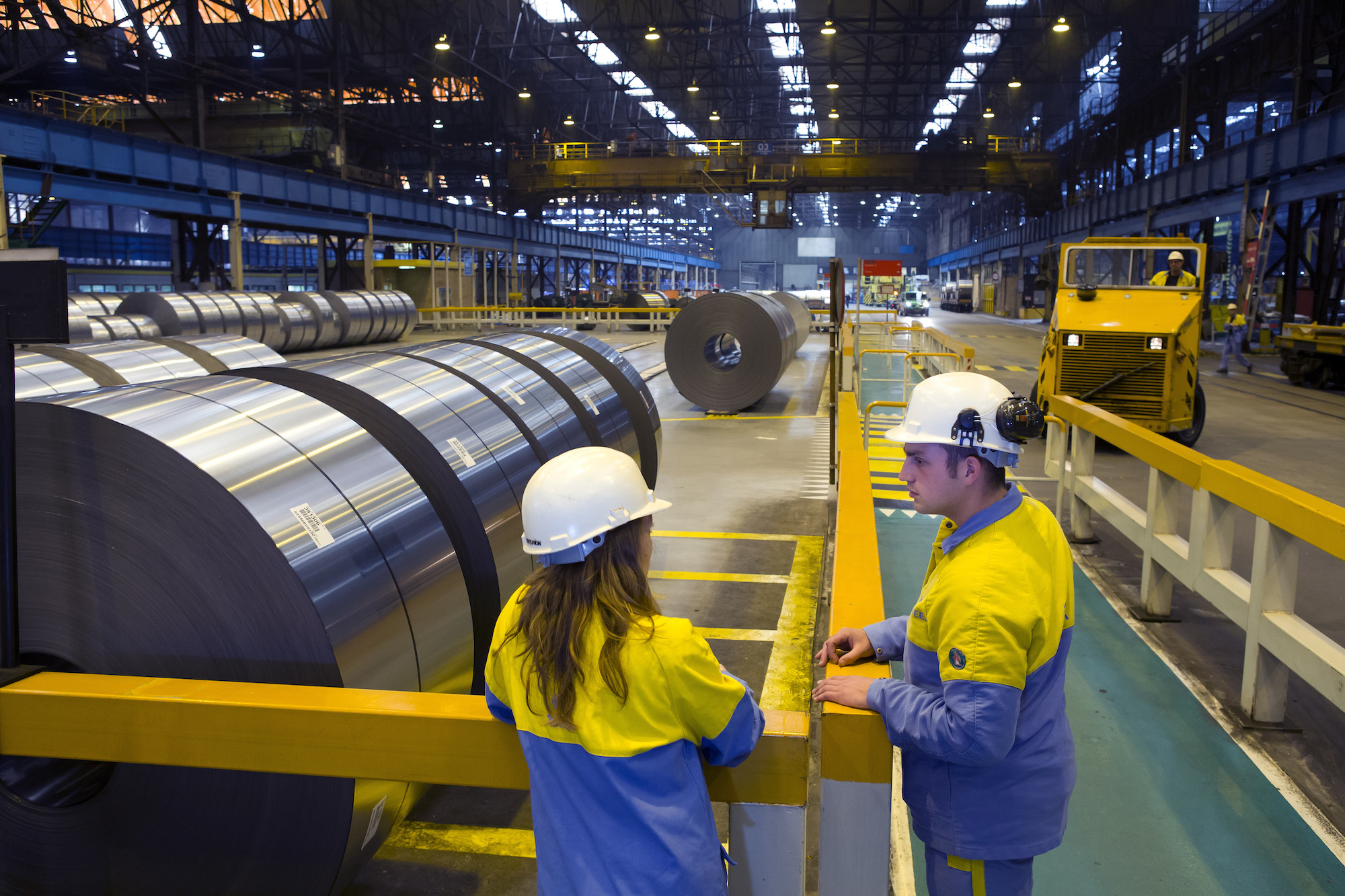
Tata Steel Netherlands has reported a rise in steel production and deliveries in its third fiscal quarter and nine months of the 2025 fiscal year (FY25), Kallanish notes from its provisional results filing.
Liquid steel production for the Netherlands was at 1.76 million tonnes in the third, December quarter (Q3), up quarter-on-quarter from 1.66mt, and year-on-year from 1.19mt. Delivery volumes saw a small increase to 1.53mt, from 1.5mt the previous quarter, and y-o-y from 1.3mt.
Its nine-month production volumes were at 5.12mt, up 54% from 3.32mt for the same period one year earlier, while deliveries rose to 4.5mt from 3.89mt. Tata says the 16% y-o-y increase is primarily due to the higher production.
Tata Steel notes its Netherlands delivery figures include volumes shipped to Tata’s UK operations of 120,000t.
For Tata Steel UK (TSUK), production and delivery volumes were heavily impacted by the closure of steelmaking at Port Talbot on 30 September, reducing Q3 liquid steel output to zero.
“Following closure of the blast furnaces at the end of 2QFY25, TSUK has successfully reconfigured its supply chain to continue servicing customers via downstream processing of purchased substrate,” the firm says in the filing.
Q3 deliveries stood at 560,000t, down q-o-q from 630,000t and y-o-y from 640,000t.
Nine-month production amounted to 1.07mt, down y-o-y from 2.33mt in the same period of FY24, while deliveries were at 1.87mt, slumping from 2.11mt one year previously, which the company says were adversely impacted by subdued demand dynamics.
TSUK is to construct an electric arc furnace as part of its £1.25 billion investment in the Port Talbot site, £500 million ($626m) of which comes from a grant funding agreement with the UK government.
Carrie Bone UK


Rebar import pressure offsets CMC Poland cost cuts
CMC Poland’s earnings should remain fairly even sequentially in the February fiscal quarter as cost management offsets a weak market environment. This comes after imports depressed margins in the November quarter, offsetting improving Polish demand in certain end market applications and regional supply discipline, says US parent CMC.
CMC Poland’s shipments fell 9% on-year in the November quarter to 343,000 short tons, with merchant bar and other products down 7% to 206,000st and rebar falling 12% to 107,000st. Average selling price inched up 1% to $639/st, Kallanish notes.
Cost of ferrous scrap utilised also rose 1% to $370/st, meaning metal margin was up $1/st to $269/st. Net sales fell 7% to $209.4 million and adjusted Ebidta was down 34% to $25.8m. Still, this gave a respectable Ebitda margin of 12.3%.
Rebar imports into Poland from Germany in January-October 2024 reached 410,863st, up 43% on-year. They accounted for 65% of all rebar imports into Poland versus 56% in 2023 – and 36% in 2022 – CMC points out.
Poland’s residential construction market is recovering; new housing permits and the number of units under construction have rebounded, CMC notes. The expected release of €65 billion ($67 billion) to Poland from the EU Recovery and Resilience fund should boost activity.
Adam Smith Poland

European HRC Market faces uncertainty amid weak demand, inventory overhang
Domestic European hot-rolled coil prices remained largely stable Jan. 8 as participants grappled with subdued demand and elevated inventory levels. The market’s cautious sentiment is reflected in the mixed pricing signals and the ongoing hesitancy among buyers.
A trader source observed a lack of engagement in the HRC market, where offers around Eur630/mt ex-works Ruhr have been reported, though these figures remained largely unworkable across the broader market.
“The market is constrained by weak demand and substantial inventories, which are dampening transactional activity,” an Austrian source said.
A Germany-based distributor source expressed skepticism regarding the current HRC offer levels from domestic mills, suggesting that realistic, workable prices are closer to Eur540-550/mt, influenced by the persistent low demand.
Platts assessed North European HRC prices at Eur560/mt ex-works Ruhr Jan. 7, stable on the day. Similarly, Southern European domestic HRC prices held steady at Eur560/mt ex-works Italy.
Interest in imports remained weak, with the source noting that import offers are not generating significant interest, as buyers remain cautious about committing to new bookings.
Imported HRC prices in Northwest Europe increased Jan. 8 to Eur535/mt CIF Antwerp, while prices in Southern Europe remained stable on the day at Eur530/mt CIF Italy.
Discussing the market interest in carbon-accounted steel, participants continued to report a wider range of offer levels in the market, depending on carbon content. A range of offers for carbon-accounted HRC was heard on the day, with the most competitive at Eur60-70/mt, CO2e content below 0.8 mt, scopes 1-3, for mass-balanced material.
Higher offers were also heard in the market at Eur120/mt with CO2e content below 0.8 mt across scopes 1-3 and at Eur300/mt for CO2e content around 0 mt across scopes 1-2, but using mass-balancing approach, However, sources remained skeptical that these price levels were workable for the wider market, instead citing that due to both higher prices as a result of the lower carbon content, the material would only attract niche buyers or be required for special projects applications.
Platts assessed Northwest European hot-rolled coil carbon-accounted at Eur620/mt ex-works Ruhr Jan. 8, stable day on day.

European long steel markets return stronger post-holiday
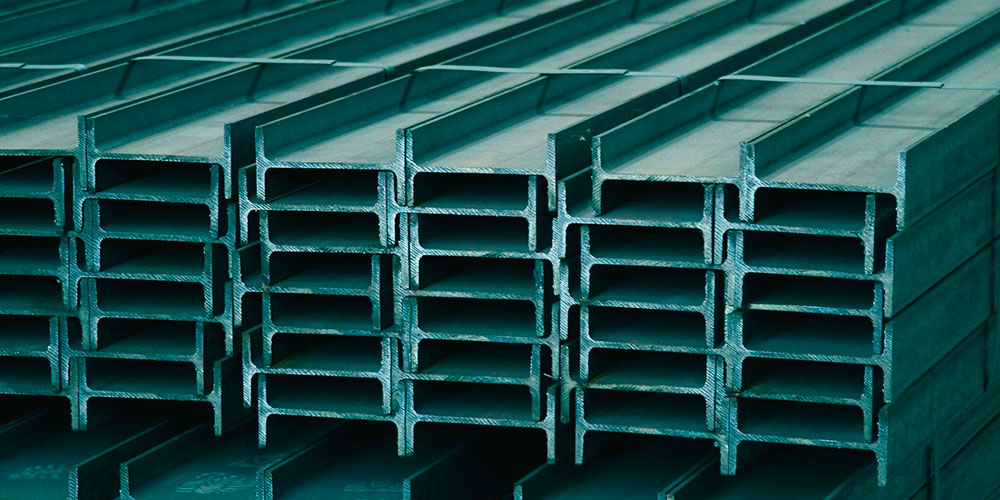
Domestic European long steel prices rose in the week ended Jan. 8, even as market participants awaited clearer signals on demand following the holiday season.
The market’s cautious sentiment was reflected on mixed pricing expectations and ongoing hesitancy among buyers.
A distributor source said that it was still too early to predict the demand trajectory for the first quarter, as many had just returned from holidays.
“We will have to wait and see how the first quarter demand will be,” the source said. “People have just come back from holidays, and it is to early to say what will happen.”
A trader source echoed this sentiment and reported that domestic rebar prices in the EU were at Eur610-615/mt delivered, with limited upward movement expected.
Another trader source highlighted a lack of active discussions with customers regarding European rebar, as mills have indicated potential price increases but have yet to formalize offers. This uncertainty contributed to a wait-and-see approach among market participants.
“For Northwest rebar, I have not really spoken to customers yet,” the source said. “Mills say they will increase prices but no official offers yet.”
Platts assessed Northwest Europe rebar at Eur595/mt ex-works, up Eur10 week over week.
Tradable values were reported in a range of Eur590-635/mt delivered Benelux.
Platts assessed European medium sections at Eur785/mt delivered Benelux, up Eur15 week over week.
Tradable values were reported in a range of Eur780-805/mt delivered Benelux.
For green steel, premiums were reported in a range of Eur50-60/mt for CO2e content around 0 mt, under scopes 1-2. However, sources reported lackluster demand for green steel, citing the fact that long steel is produced through the low-emissions electric arc furnace route, as compared to the blast furnace route for other products.
Platts assessed both rebar and medium sections carbon-accounted premiums at Eur45/mt, stable week over week.

Van Merksteijn, Badische Stahlwerke to merge
The Netherland’s Van Merksteijn and Germany’s Badische Stahlwerke, part of Südwest Beteiligungen (SWB), plan to merge their reinforcing steel businesses in 2025, the companies have informed customers in a joint letter seen by Kallanish.
The proposed merger is currently under review by competition and market authorities. As soon as Van Merksteijn and SWB receive approval, the parties intend to establish a joint holding company in spring – Reinforcing Steel Europe B.V – headquartered in Almelo, the Netherlands.
“In recent years, the reinforcing steel sector has faced numerous challenges: the Covid-19 pandemic, changing environmental legislation, limited availability of raw materials and unpredictable energy prices,” the companies note. “However, challenges also offer new opportunities and we have taken advantage of these to position our company even better for the future. The planned merger will strengthen our position as a major producer and processor of reinforcing steel in the EU.”
The firms’ geographically diversified presence will allow them to be even closer to customers across Europe, they add.
“For Van Merksteijn, it means that we will be assured of sustainably produced wire rod for our processing plants,” the message says. “In turn, Südwest Beteiligungen will be able to better exploit the capacity of their steel mills in Kehl and Trier. We are convinced that this proposed merger will lay the foundation for a strong and lasting partnership, and we confidently look forward to a successful future together.”
Van Merksteijn is a major wire rod processor in the reinforcing steel sector in Europe. The group has three additional production sites in Belgium (Intersig) and France (Intersig France and VMI Atlantic). The family-owned company, with about 725 employees, generated a turnover of €620 million ($638.5m) in 2023.
Südwest Beteiligungen GmbH produces, processes and distributes reinforcing steel and reinforcement products for the construction industry in Europe. With around 1,800 employees, it generated sales of around €1.2 billion in 2023. It includes Badische Stahlwerke (BSW) in Kehl and Moselstahlwerk (MSW) in Trier. BSW is one of the most modern electrical steel plants in Germany.
Svetoslav Abrossimov Bulgaria

European HRC prices largely flat; market remains quiet
The market slowly restarted after the Christmas and New Year holiday lull, but trading remained almost non-existent.
Fastmarkets calculated its daily steel hot-rolled coil index domestic, exw Northern Europe at €566.25 per tonne on Wednesday, up by €0.42 per tonne from €565.83 ($587.92) per tonne the previous day.
The index was up by €1.25 per tonne week on week and by €2.08 per tonne month on month.
Not many producers have followed the move of ArcelorMittal, who announced an increase in its HRC offers by €30 per tonne across Europe just before the holidays, Fastmarkets understands.
Offer prices from ArcelorMittal with lead times in February-March were heard at €630 per tonne ex-works or delivered in Northern Europe.
“We have offers from the [Northern European] mills at €580 per tonne ex-woks. And even at these levels, the traded volumes are low. Demand remains very dull,” a buyer source based in Northern Europe told Fastmarkets.
The source added that mills could easily accept €570 per tonne ex-works for larger volumes.
A second buyer source also cited an offer from a producer based in the Benelux region at €580 per tonne ex-works.
“If you are insistent, you can get a discount of €20 per tonne ex-works,” the second buyer source said.
According to this source, the workable level for HRC in Northern Europe could be even lower, at €540-560 per tonne ex-works.
No major deals were heard in the market.
In terms of imports, India was heard offering HRC with March shipment at €540-550 per tonne CFR Antwerp.
And Turkish HRC was on offer at €560 per tonne CFR Antwerp.
These offers were considered not workable, however, because of long delivery times and the small difference with the domestic prices.
“If the European prices do not move up, it will be difficult to import any volumes,” the first buyer told Fastmarkets.
Fastmarkets calculated its corresponding daily steel hot-rolled coil index domestic, exw Italy at €562.50 per tonne on Wednesday, unchanged from Tuesday.
The index was stable week on week, but up by €2.08 per tonne month on month.
The HRC market in Italy was also very quiet after the holidays.
“I have not heard any fresh offers from the Italian suppliers so far. We should probably wait until next week to spot some activity,” an Italy-based buyer source told Fastmarkets.
Tradable values were estimated by buyers at €560-570 per tonne ex-works, depending on the supplier.
The market for imported coil was muted.
Import offers of HRC to Italy similar to those reported for the Northern European market were heard.
Buyers estimated tradeable values for imports at €520-530 per tonne CFR, but no such offers were available in the market.