

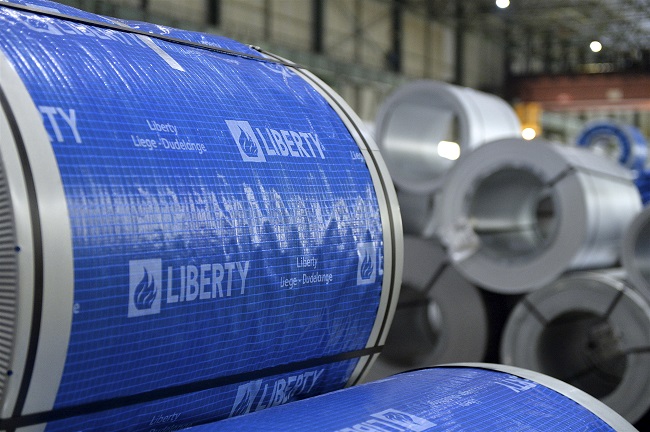
Authorities speed up Dudelange sale
Multiple companies have expressed interest in Liberty Steel’s Dudelange facility, according to informed sources speaking to Kallanish.
The primary goal of the government and the receiver is to find a potential buyer. A source suggests the Luxembourg government estimates the Dudelange plant’s bankruptcy procedure will take approximately three months. The receiver, Olivier Wagner, will negotiate a potential price in collaboration with the presiding judge overseeing the case, with assistance from the government. The latter holds ownership of the land and is expected to grant new concession rights to the prospective owner.
According to rumours, Italian service centre Eusider has shown interest in acquiring Dudelange, alongside other prospective buyers. Eusider and Liberty declined to comment.
Last month, the OGBL and LCGB unions urged the Luxembourg government and the European Commission to take immediate action aimed at securing the long-term viability of the site.
Since Liberty Steel did not fit the requirements set by the Luxembourg state to be eligible for temporary layoffs, the government has not supported Dudelange until now. As a result, Liberty Steel took on the responsibility of covering all wages and costs. In October and November, the group did not fulfil its obligation to pay salaries to its workforce.
Last week, the Luxembourg commerce tribunal declared the Dudelange facility bankrupt. The plant has experienced a period of inactivity spanning approximately two years. A union source indicates that the 147 workers at Dudelange had been anticipating the tribunal’s decision.
Another union source indicates the state will now assume responsibility for salaries. In addition to Dudelange and its Belgium-based Liege plant, Liberty plans to divest its Magona facility in Italy. The businesses combined possess rolling capacity exceeding 2.5 million tonnes/year.
Natalia Capra France


SSAB inks Snop deal, receives funding for transition
SSAB and automotive supplier Snop have entered into a long-term partnership for future deliveries of fossil-free steel, Kallanish learns from the Swedish steelmaker.
The Groupe Financière SNOP Dunois (FSD) is a privately owned major tier-one automotive supplier with established relationships with all European OEMs. It is divided into three divisions – Snop, Smom and Balconi – and employs over 8,200 people in 12 countries at 36 production sites and four technical centres. Groupe FSD supplies body structure stampings, roll-formed parts and assemblies for cars and commercial vehicles, as well as stamping dies and automatic presses.
According to SSAB, the partnership will help Snop to meet its target to reduce CO2 emissions by 30% by 2030. The partners did not provide details on tonnages or supply duration.
SSAB also says it will be granted SEK 1.45 billion ($133 million) under the EU’s Just Transition Fund (JFT). The funding will contribute to the transformation to fossil-free steel production at SSAB’s operations in Luleå.
The funding from the EU involves the Swedish Agency for Economic and Regional Growth, and “is a clear signal about the importance of our transformation”, says SSAB chief executive Johnny Sjöström.
The JFT focuses on industries and regions with high carbon dioxide emissions. In Sweden’s national programme for the JFT, the eligible sectors are the steel, metals and cement industries.
Christian Koehl Germany

Tata NL steps up transport by train, vessel
Tata Steel Nederland and Deutsche Bahn (DB) Cargo have signed a contract to transport steel coil by trains powered by green electricity, the steelmaker tells Kallanish.
Every year, 1.2 million tonnes of steel goes by train from IJmuiden to the production sites of Tata Steel Nederland, and to customers in the Netherlands and the rest of Europe. This is largely done via DB Cargo’s wagons. “One freight train pulled by an efficient electric locomotive replaces at least 50 trucks,” says DB Cargo Nederland chief executive Nanouke van ’t Riet.
More than 80% of the transport by train that DB Cargo carries out for Tata Steel Nederland is CO2 free, the company claims.
Tata Steel Nederland has also entered a collaboration with transshipment company RCT Stevedoring and inland shipping cooperative PTC for its subsidiary Tata Steel Duffel, a maker of laminated packaging steel. Steel coil has hitherto been transported by truck from Duffel to IJmuiden for final processing.
In future, the steel coils will be transported by inland barge. This results in a 91% reduction in truck transport between Duffel and IJmuiden, eliminating 1,400 to 1,800 truck movements and reducing road travel by 320,000km, Tata notes.
“This logistical adjustment is not only beneficial for the climate but also for other road users,” says Martin van der Meer, director of Outbound Logistics at Tata Steel Nederland. “The trucks used to travel daily via the Antwerp, Rotterdam, and Amsterdam rings, through the Velsertunnel to IJmuiden. This has now come to an end.”
Christian Koehl Germany
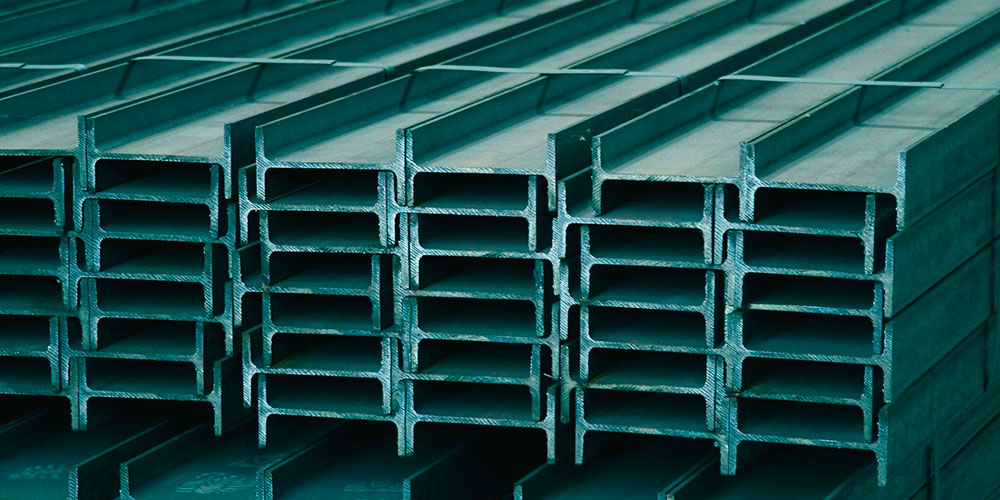
French longs mills seek increases
French long steel prices for deliveries scheduled in December and January are rising notably. Mills are increasing quotes for nearly all products by €20/tonne ($21.1), effective immediately. The move is driven by elevated production costs, high energy prices, and compressed margins, Kallanish hears.
All transaction prices remain stable; however, moderate increases are anticipated this week. Construction firms and a purchasing group indicate demand is persistently low. November saw a significant decline in sales, and projections indicate that December may reflect similar underperformance.
No restocking has occurred prior to the start of the winter holiday period. Distributors point out business is back-to-back, with little visibility and no indications of recovery in the construction sector. There is however some demand stemming from infrastructure projects in major urban areas.
A purchasing group reports that, in a year-on-year comparison, volumes have decreased by approximately 3%, while margins have dropped significantly. Domestic rebar deals are closing at €600/t average delivered. However, for December delivery, new asking prices have increased to €620/t.
Market participants show a reluctance to accept price increases, with some saying that if prices are elevated, their sustainability will be questionable.
Currently, domestic merchant bar prices are also stable month-on-month, maintaining a range of €240-250/t delivered. Including size extras of €420/t, effective levels range between €660-670/t delivered. Clients are being informed of price increases of €20/t.
The initial category of sections has stabilised month-on-month at around €760-770/t delivered. A producer raised values by €20/t last month; however, the move did not yield the desired result.
Natalia Capra France

ArcelorMittal Germany to close warehouse in Olpe
ArcelorMittal Stahlhandel Deutschland, the German distribution unit of ArcelorMittal group, says it intends to close its warehouse in Olpe, in the Siegerland region of North Rhine Westphalia, due to weak market conditions.
The closure is to be completed by the middle of next year and the 63 employees at the site were informed in a meeting last Tuesday, the company tells Kallanish. The decision has been made on the basis of weak market conditions in southern Westphalia, where customer demand is subject to a structural decline, ArcelorMittal explains. Since 2017, the market in the region has shrunk by 30%, it says.
ArcelorMittal’s announcement is another big blow to the Siegerland/southern Westphalia region within a short time. In November, thyssenkrupp announced the planned closure of its coating site in Kreuztal, with several hundred employees affected.
Olpe and Kreuztal are both located northwest of Siegen. The region used to be a centre of steelmaking and processing due to its iron ore reserves in previous centuries. It is still home to many companies in the sector, including the mills of Deutsche Edelstahlwerke and BGH. Its inland location, with access mostly by trucks and motorways, has become a clear disadvantage after closures of outdated bridges in recent years.
Christian Koehl Germany

Another executive resigns from thyssenkrupp
The chief financial officer of thyssenkrupp AG, Jens Schulte, has asked the company’s supervisory board to terminate his contract by mutual consent, Kallanish learns.
Schulte wishes to join the DAX-listed Deutsche Börse AG group as cfo, thyssenkrupp clarifies. It says the supervisory board will in the near future debate this request and a date for the possible termination of his appointment. Until he leaves the company, Schulte will perform his duties as cfo, a statement says.
Schulte took office at thyssenkrupp only in June this year. He is also due to assume the role of human resources chief as of February 2025.
“We respect Mr. Schulte’s wish to seize the opportunity to join the executive board of a DAX-40 company, although we very much regret his departure,” says Siegfried Russwurm, chairman of thyssenkrupp’s supervisory board. The conglomerate itself is no longer a DAX-40 company, after it moved down to the stock market’s mid-cap segment some years ago.
Still, Schulte’s departure after barely half a year with the company has raised some eyebrows against the backdrop of numerous thyssenkrupp executives departing in recent months, mainly at the tk Steel division.
Christian Koehl Germany

European HRC market awaits clarity on future developments; price lacks clear direction
Buyers were expecting to see how negotiations on long-term contracts between automotive original equipment manufacturers (OEMs) and steelmakers would develop for the first half and full year of 2025.
The outcome of the negotiations is expected to set the tone for trading in the spot market, according to industry sources.
Buyers were hoping to achieve a discount of around €100 per tonne for first-half and full-year 2025 contracts, while mills are targeting a more minor reduction of €50 per tonne or a price rollover in some cases, Fastmarkets understands.
Although one producer source told Fastmarkets that they had already managed to sign some contracts with the automotive OEMs and the achieved price was described to be “just a two-digit decrease,” negotiations were still continuing.
According to industry sources, the negotiations would be fully completed in January.
January is also expected to bring more clarity regarding imported volumes of HRC, most of which will be customs cleared in the first month of 2025, a buyer source told Fastmarkets. Thus, there would be more transparency in the market on HRC availability.
Import offers of HRC to Europe remained uncompetitive, which was expected to support domestic prices, the buyer added.
Meanwhile, mills in Northern Europe continued to offer HRC for delivery in the first quarter of 2025 at €600-620 ($633-654) per tonne ex-works, according to industry sources.
Mills were not willing to give significant discounts on their spot market offers due to the continuing negotiations with the automotive OEMs, Fastmarkets understands.
Buyers’ estimations of the workable market level were lower, at €550-570 per tonne ex-works.
However, trading remained limited, and no major deals were heard in the market.
Fastmarkets calculated its daily steel hot-rolled coil index, domestic, exw Northern Europe at €564.17 per tonne on Friday, up by €4.17 per tonne from €560.00 per tonne on Thursday.
The index was also up by €4.17 per tonne week on week and up by €5.42 per tonne month on month.
In Southern Europe, Fastmarkets calculated its daily steel hot-rolled coil index, domestic, exw Italy at €560.42 per tonne on Friday, down by €2.08 per tonne from €562.50 per tonne on Thursday.
The index was up by €2.09 per tonne week on week and up by €8.75 per tonne month on month.
Trading in Italy was also slow on Friday, Fastmarkets understands.
One Italian supplier continued to offer HRC for the first quarter of next year at €600 per tonne delivered, which would net back to €590 per tonne ex-works, Fastmarkets understands.
But a second supplier was heard to be accepting bookings at €550 per tonne ex-works.
Buyer estimations of the workable market level were at €550-570 per tonne ex-works.
No fresh import offers were heard in the market.


Polish rebar producers test market with higher prices
The new offer prices were reported to be at 2,580-2,600 zloty ($637-642) per tonne CPT, and in some cases even reaching 2,650 zloty per tonne CPT.
In comparison, at the start of November, Polish rebar was on offer at 2,550 zloty per tonne CPT. But mills in the nation were hungry for orders and agreed on some discounts.
As a result, prices in deals dropped to 2,530 zloty per tonne CPT, and for larger volumes of more than 1,000 tonnes, transactions were concluded at 2,500 zloty per tonne CPT.
“There is a very strong conviction among all [Polish] mills that such low prices are not acceptable,” a distributor source told Fastmarkets.
“Polish producers say that they are fully booked for December,” a second distributor source told Fastmarkets.
Local mills are planning long closures for the upcoming Christmas holidays, starting from the middle of December until January 6, 2025, the source added.
This is also expected to have some impact on Polish rebar availability, Fastmarkets understands.
The second distributor added that local mills had sold good volumes at the lower price levels over the past few weeks and no longer have a strong incentive to offer significant discounts.
No deals were heard at the new price levels.
“Buyers will wait to see what will happen in January,” the second distributor source said.
According to industry sources, some material for prompt delivery could still be negotiated at 2,550-2,570 zloty per tonne CPT.
One buyer source estimated the workable market level even lower at 2,500 zloty per tonne CPT.
Reflecting the new higher offers and buyers’ estimations, Fastmarkets’ weekly price assessment for steel reinforcing bar (rebar) domestic, cpt Poland was 2,500-2,580 zloty per tonne on Friday, widening upward by 70 zloty per tonne from 2,500-2,510 zloty per tonne on November 29.
In terms of imports, no fresh offers for the first quarter of 2025 were heard in the Polish market.

Small price rises in Italian rebar market; wire rod stable despite higher mill offers
Mills increased their rebar and wire rod offer prices, but the higher wire rod prices have yet to be accepted, Fastmarkets understands – although mill sources said they were optimistic the higher levels will be implemented before Christmas closures.
In Spain, meanwhile, rebar prices remained unchanged, with market participants holding out against any higher offers.
Fastmarkets price assessment for steel reinforcing bar (rebar) domestic, exw Italy was €570-600 ($591-612) per tonne on Wednesday up by €10-20 per tonne from €560-580 per tonne week-on-week.
The minimum level in Italy was up by €10 per tonne week on week, source said.
“The prices have increased so far this week and are still [rising],” a buyer source told Fastmarkets. “But some producers stopped production due to the high cost of electricity and scrap [and] we are closer to the Christmas holidays and, in a few days, mills will [start to] close until January.”
A second trader source said that demand was good last week and had not been so bad so far this week.
“The rebar price is now at €580-590 per tonne, but customers are still receiving material ordered last week at €560-570 per tonne,” the second trader source said.
“Maybe producers will increase prices again before the Christmas closures,” the second trader source added.
International scrap prices, meanwhile, have remained steady compared with last week, although they are down month on month because of slow steel sales, sources told Fastmarkets.
Fastmarkets’ calculation of its daily index for steel scrap, HMS 1&2 (80:20 mix), North Europe origin, cfr Turkey, was $333.00 per tonne on Wednesday, down from $336.95 per tonne a week earlier and from $361.37 per tonne in the first week of November.
Elsewhere in Southern Europe, Fastmarkets’ price assessment for steel reinforcing bar (rebar), domestic, delivered, Spain was €580-600 per tonne on Wednesday unchanged week on week.
“The Spanish market has not changed, but we hear that German mills have increased their offer prices. Once the new levels are accepted in Northern Europe or Italy, the Spanish producers will [also] increase [their offers],” a producer source told Fastmarkets.
Southern European wire rod
Fastmarkets’ price assessment for steel wire rod (mesh quality), domestic, delivered Southern Europe, was €600-610 per tonne on Wednesday, stable week on week.
Mills increased offers by €10-20 per tonne in Southern Europe, but workable prices remained stable at €600-610 per tonne, sources told Fastmarkets.
“Mills want to increase prices but, so far, I am seeing a rolling over of November prices” a trader source told Fastmarkets. “We shall see if such increases will be achieved and, if yes, how long it will last.”
A second trader source said: “There have been pushes for increases, but no actual deals yet,” a second trader source told Fastmarkets.
And a wire rod producer source said there were reasons to be optimistic.
“We are facing a weak market, but we are seeing a willingness among customers to accept small price rises compared with November. This is probably because December is a period when it is more difficult to source supplies compared with other times of year when supplies are more abundant. So if the market continues to show positive signs, we will implement further price rises,” the source said.

Spot market for European green flat steel still in limbo; distributors look to long term
Willingness to pay premiums for steel with reduced carbon emissions content was still limited among European buyers, however.
There was a lack of projects across Europe requiring green steel, market participants said, and demand from the key consumer – the automotive industry – has recently been slowing in line with the general downturn in the European economy.
“We can’t reverse the green steel transition,” a distributor in Germany said. “The market is moving in that direction and the demand will come – it’s just a matter of time. But in a recession, sustainability becomes a secondary problem for buyers.”
A buyer once again pointed to a lack of clarity and standards for green steel in Europe, which was slowing its uptake across supply chains.
Fastmarkets’ methodology defines European green steel as “steel produced with Scope 1, 2 & 3 emissions at a maximum of 0.8 tonne of CO2 per tonne of steel.”
And Fastmarkets’ weekly assessment of the green steel domestic, flat-rolled, differential to HRC index, exw Northern Europe, was €80-200 ($84-210) per tonne on December 5, stable week on week.
During the assessment week, leading European suppliers kept the premiums for such steel at €200-350 per tonne.
Buyer sources estimated the achievable premiums for green steel with that level of emissions at €50-150 per tonne, although the lower end of that range was not considered workable by mill sources.
Bids were reported at €80 per tonne during the week for steel that was carbon neutral for Scope 1 & 2 emissions. But a market source said that such bids were rejected by the seller.
One mill source estimated achievable values at €100-200 per tonne for steel produced with Scope 1, 2 & 3 emissions at a maximum of 0.8 tonne CO2 per tonne of steel.
Wider market
The European market was taken aback by recent news of ArcelorMittal’s announcement that it would postpone a final decision on several investments in direct-reduced iron (DRI) modules across Europe due to challenging market fundamentals.
Meanwhile, despite the challenging times, some buyers continued to invest in green steel and raw materials purchases, expecting demand for steel with reduced carbon emissions content to rise exponentially in the years to come.
GreenIron-Scandinavian Steel
Scandinavian Steel, a leading distributor of metals in the Nordic region, and GreenIron, a Swedish green iron startup, signed a collaboration agreement on December 2.
Under this agreement, Scandinavian Steel will become the exclusive distributor of GreenIron’s fossil-fuel-free iron, which is to be produced in Sandviken, Sweden.
“The agreement covers a regular delivery of hydrogen [produced] DRI, which will be offered to the Nordic and European markets,” a press release read.
GreenIron was expected to begin commercial production of green DRI in Sandviken in 2025. The DRI plant there will have capacity for 28,000 tonnes per year and will use hydrogen as a reducing agent.
Blastr-Interfer
On November 28, Nordic green steel startup Blastr and German steel trader Intefer Edelstahl Group signed an offtake agreement for supply of 150,000 tonnes per year of ultra-low carbon emission steel products.
Deliveries were expected to commence in late 2029, Blastr said in a press release at the time.
Blastr expected to produce hot-rolled coil-grade steel with carbon emissions of less than 500 kg of CO2 per tonne of steel, including Scope 1, 2 and 3.
Blastr and Interfer will start discussions on a binding agreement early in 2025.
Established in 2021 with the aim of becoming an integrated low-CO2 steel producer, Blastr planned to produce around 2.5 million tpy of hot- and cold-rolled steel.
Final investment decisions on both a DRI plant and a steel plant were expected by early 2026.