


Thyssenkrupp sells Italian stainless plant AST to Arvedi
Thyssenkrupp (tk) has agreed to sell its Italian stainless steel mill, Acciai Speciali Terni (AST), to Italy’s Arvedi. The deal includes the associated sales organisation in Germany, Italy and Turkey.
AST currently employs around 2,700 people and generated sales of around €1.7 billion ($2 billion) in fiscal year 2019/2020.
The parties have agreed not to disclose the purchase price, and the closing of the transaction is expected in the first half of 2022, Kallanish learns from thyssenkrupp. The German company notes it is examining a possible minority shareholding in AST.
“We are pleased to have found a new owner for AST in the Arvedi Group, which will drive the development of the company with investments and innovations,” says thyssenkrupp’s Volkmar Dinstuhl, the current chairman of AST.
“This transaction is strategic for the whole Italian economy and represents an initial step towards new exciting developments,” says founder and president of Arvedi, Cavaliere Giovanni Arvedi. He adds that “we are very pleased that tk is considering a potential minority shareholding in AST”, which he says is proof of tk’s trust in the company.
For thyssenkrupp, the sale means the end of a process lasting many years, after it decided to part with its tradition of making stainless steel, and divested most activities to Outokumpu.
Earlier this summer, four companies were reported shortlisted for acquiring AST. Apart from Arvedi, these were Marcegaglia, Posco and Baosteel, according to union sources.
Christian Koehl Germany

Italian sections prices hold up despite scrap falls
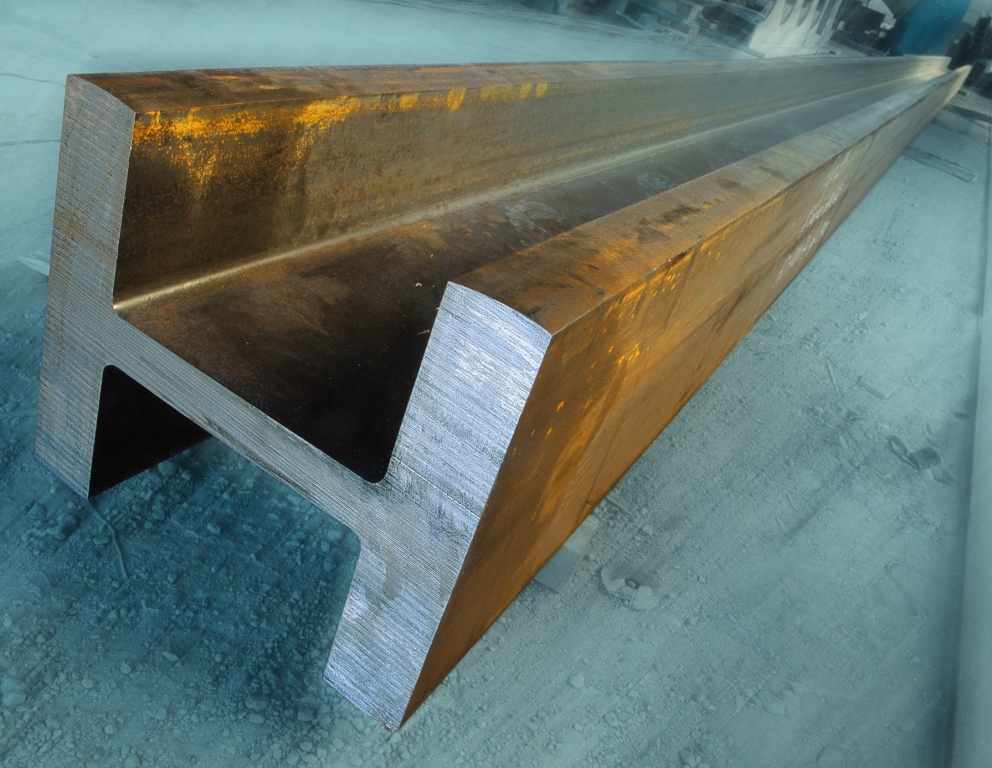
Italian beam and merchant bar prices remain stable compared to the beginning of the month despite the declining values of rebar and scrap, Kallanish notes.
Demand in the country has slowed due to buyers adopting a wait-and-see attitude in light of the wave of price falls registered in recent weeks. Some buyers believe values for beams and merchant bars will decline but producers are holding their levels and do not intend to decrease. At present, apparent demand is lacking, but real demand remains lively, with large end-users’ order books well filled for the coming months.
Sections producers also have full order books, with good orders from end-users and some distributors, despite incursions of Spanish material offered at €20/tonne ($23) below domestic prices.
Market sources say merchant bar is still traded at August prices of €460-490/t base ex-works despite slower activity. Including €420/t average size extras, local merchant bar remains at €880-910/t ex-works, sources suggest.
Sections values also remain at high levels of €600/t base ex-works for the first category and €630-640/t ex-works from distributors. In Italy, including €380-390/t average size extras, the first category of beams is at €980-990/t ex-works. Prices increase by €20/t for each subsequent category, sources say.
Natalia Capra France
EU dumping probe pulls down demand for Turkish HDG exports
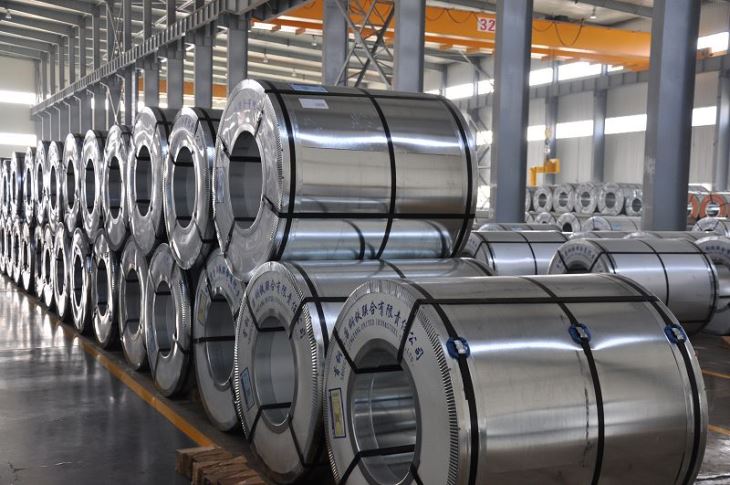
The European Commission (EC), which announced on June 24 a dumping investigation into hot-dip galvanized coil imports from Turkey and Russia, may announce the preliminary findings of the investigation in the first month of 2022, a Turkish coated coil mill manager told Platts Sept. 16.
Highlighting that they submitted information to the EC in recent weeks, the manager also said that after hearings and the preliminary determination an announcement of definitive measures might not come until mid-2022 or even later.
The probe covers calendar year 2020 and will determine whether the products under investigation are being dumped and if dumped imports have caused injury to EU producers. In addition, the EC said the examination of trends relevant for the assessment of injury will cover the period from Jan. 1 2017 to the end of the investigation period.
Another coated coil producer manager told Platts Sept. 16 that the EC is expected to announce the result of the investigation at the end of December and the provisional measures, if any, will enter into force at the end of January.
“We have submitted the files and we will answer the questionnaires that came from the EC until [Sept. 23]. The result will probably be announced in late-December,” the manager said, adding that EU customers have already begun to ask if they can share any dumping duty amounts to facilitate December sales.
The investigation has already started to affect Turkish mills’ HDG export volumes to the EU in recent months, as it raised European buyers’ cautiousness about a possible duty.
Lower demand from Turkey’s main HDG export destination has also raised the pressure on Turkish mills’ HDG pricing. Some Turkish mills’ 0.50 mm thick HDG offer prices have fallen as low as $1,200-$1,250/mt EXW in recent days, depending on coating thickness, amid slow demand in the domestic market as well. Offers for the same grade HDG were as high as $1,350-$1,400/mt EXW in June.
In April the EC imposed definitive anti-dumping duties of 4.7%-7.3% on imports of hot-rolled coil from Turkey.
A Turkish service center manager said that when an investigation is opened by the EC, it generally results in a dumping duty. “However, the rates of the AD duty are important. I don’t expect Turkish mills will face high rates at the end of the HDG investigation,” he said.
— Cenk Can

Salzgitter supplying green steel to white goods maker BSH
German steelmaker Salzgitter struck a supply deal with Germany-headquartered white goods manufacturer BSH Hausgerate for the delivery of low carbon emissions steel as BSH is decarbonizing its value chain, Salzgitter and BSH said in a joint press note Sept. 16.
The steel, with a first load shipped out in September, will initially be used for mounting brackets in washing machine production at BSH’s Lodz plant in Poland, reducing BSH’s carbon footprint by 66%.
A Salzgitter spokesperson told S&P Global Platts that the shipped volumes to BSH were test volumes and the initial tonnages would be in the two-digit range.
Salzgitter told Platts that further volume increases would depend on market development dominated by customers’ purchasing strategies.
“The maximum possible production is less limited by equipment performance but rather the more challenging production logistics. That’s why we can’t give a specific maximum production capacity at the moment,” said the spokesperson.
Salzgitter said the aim is to produce 2 million mt of low carbon emissions steel by 2025.
According to the press release, BSH’s development and manufacturing processes at its worldwide locations have been CO2 neutral since the end of 2020.
Race to reduce CO2 footprint under Scope 3 by 2030
“In comparison with 2018, we want to shave 15% off our Scope 3 CO2 footprint generated by procuring raw materials and parts, as well as through household appliance usage,” said BSH Chief Operations Officer Silke Maurer.
“We are now looking very carefully at areas where we have less of a direct impact, such as the production of raw materials and the recycling of products, for instance,” Maurer added.
BSH’s brand portfolio includes appliance brands such as Bosch, Siemens, Gaggenau and Neff.
Salzgitter’s EAF-based subsidiary Peiner Trager produces a range of long steel and special products and has supplied EAF-based slabs to Salzgitter Flachstahl for producing lower-emissions flat steel.
Salzgitter’s overall crude steel capacity is 7 million mt/year and plans to gradually replace blast furnaces from the middle of this decade through 2045 with DRI plants, initially fueled by natural gas and later hydrogen.
Going forward, hydrogen production and new EAFs are to be operated exclusively using renewable power, allowing carbon emissions from steel production to be reduced by 95% by 2045.
— Laura Varriale

European hot-rolled steel coil market seeing continued buying hesitancy
Buyers are continuing to meet steel mill offers with hesitancy across the European hot-rolled coil spot market amid bearish sentiment, sources told S&P Global Platts Sept. 15.
Trading remains quiet with only sporadic opportunities arising for mills to sell small volumes on the spot market.
A Northern European mill said they were seeing Eur1,180/mt EXW as the bottom price on the spot market and that they were achieving it at times.
Buy-side sources, however, put the widespread market value at Eur1,100/mt EXW Ruhr.
“There is more availability in the market, more import offers, material coming in, lack of auto intake,” said a German stockholder, adding that they are trying not to increase stock levels as inventory levels were growing faster than sales volumes going out to their customers.
Market participants remain bearish throughout Europe although – taking lower volume take up by the automotive industry aside — overall steel demand has not dropped at customer markets.
“Demand is not so bad, but prices are decreasing and every day we watch a little jump down…probably due to import from countries with free quota,” said an Italian service center source, referring to import sources from Asia and Northern Africa that have not reached the current quota limit.
The usual September uptick that occurs when the market returns from the summer holiday has failed to appear on the market so far and market activity on the spot market has been reduced to inquiries and observing the market while long-term contract negotiations are taking place.
“Everyone is back in the market, sentiment is the same as everywhere, so not very positive and buyers hesitant. I would say it is cautious but not softening and for the time being no chance for increase,” said a European trading source, putting indicative workable levels for Italy at Eur1,100/mt EXW and Ruhr at Eur1,100/mt EXW.
Other sources put tradable values for Italy at Eur1,030/mt EXW.
— Laura Varriale, Amanda Flint

EUROMETAL Director General at PUDS General Assembly
Daniel Guinabert, Director General of EUROMETAL, participated in the Polish Union of Steel Distribution (PUDS) General Assembly 2021, organized on September 15, 2021.
The Director General of EUROMETAL spoke about the European steel market situation which is not only affected by the pandemic that is not over yet, but also challenged by many uncertainties.
Daniel Guinabert was invited to the general meeting along with ArgusMedia editor Colin Richardson.

EU safeguards support mills’ low-carbon transition: sources
The extension of EU safeguard measures on steel imports caused uproar among many industry participants, especially buyers, but the move may be of strategic importance to the bloc’s climate plans, Kallanish notes.
Consultant Andreas Schneider called the extension “scandalous” in a commentary piece written shortly after the announcement in June. The European Commission (EC) totally disregarded the interests and the troubles of steel-using industries, a sector ten times larger than all steelmakers taken together, Schneider noted. As a consequence, “this is a rare case that a decree from Brussels has encouraged the party concerned [mills] to bring up prices immediately,” he stated.
With extended safeguard measures in place, “you cannot make decent [business] planning”, a German service centre buyer tells Kallanish. Domestic mills “prefer to keep the market climate uncertain”, a status that has been sustained by the Commission.
Another manager says he is “outraged” and “speechless”. He asks: “How can you act this way at such a time and assist in blowing up prices?” But he points out that in the conflict of interests between steelmakers and buyers, the latter group had to do without the bargaining force of the strongest players in the game. Carmakers have lately preferred to remain low- key in public political debates. “Since the diesel scandal, carmakers seem to have lost reputation and lost influence. And they prefer to keep quiet,” the manager believes.
But there is yet another and more substantial explanation as to why the Commission acted like it did. The steel sector plays a key part in one of the mega challenges of the 21st century, the transition of all industrial activity towards zero carbon emissions. Major European mills have made this their declared target, and have assumed a global vanguard role in this game.
A Dutch industry observer says: “The last thing the EC would want in this endeavour are falling steel prices. That would make it very difficult for European mills to finance the transition to a more environmentally friendly way of making steel.”
Christian Koehl Germany
European mills risk not affording green transition: report
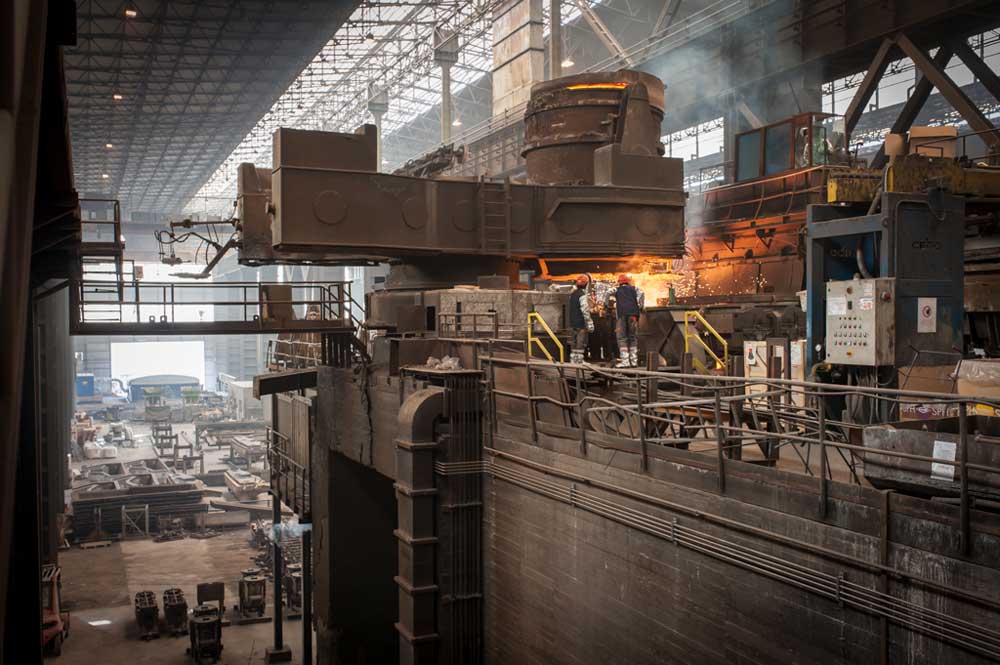
There is little room to extend the life of primary steel production through blast furnace technology within the European steel sector, says UK-based research house Industry Tracker in a report published this week. Producers’ current balance sheets and free cash flow yields cannot meanwhile carry the cost of the transition to green hydrogen steelmaking.
Only a quarter of 2050 emissions budget remains among Europe’s top ten steelmakers. Of the companies with the largest share of their 2050 emissions budget remaining, only two – ArcelorMittal and Evraz – have more than the global average for blast furnace-based steel production, Industry Tracker observes.
The transition cost to green hydrogen steelmaking is estimated at $4-34 billon depending on asset base size. Companies will need subsidies, direct public funding and partnerships, Industry Tracker says. Six companies have secured public funding for projects to support developing and scaling early-stage technologies, covering on average 44% of project costs. “Public sector support will be key to the deployment of alternative low-carbon steelmaking,” the research firm comments in the report seen by Kallanish.
Just two companies – ArcelorMittal and Metinvest – have room to reline more than one blast furnace. This is largely a function of them owning more blast furnaces, which reduces the influence that one furnace has on their total emissions budget.
“Five companies – Tata Steel, Metinvest, Evraz, Severstal, and ArcelorMittal – must decide within the next five years whether to lock themselves into European capital assets of high transition risk,” Industry Tracker says.
In the firm’s ranking indicating exposure to the financial impacts of transition, SSAB scored best with 73/100, followed by ArcelorMittal and voestalpine with 66/100 and 60/100 respectively. Erdemir scored worst with 30/100, followed by Metinvest and Severstal with 35/100 and 36/100 respectively.
Companies based in the CIS region and Turkey lag behind their European counterparts in governance metrics such as scenario planning, target setting and climate related remuneration, Industry Tracker observes.
“European steel companies face increasing regulation with a more effective carbon pricing signal as allowances are phased out of the Emissions Trading Scheme (ETS) and a potential Carbon Border Adjustment Mechanism (CBAM) is introduced,” the firm comments. “There is also an opportunity for de-commoditisation of steel and end markets to develop for zero carbon steel products.”
Adam Smith Germany
Eurofer reiterates call for EU ‘steel green deal’
European steelmakers’ association Eurofer has reiterated its call to European Commission President Ursula von der Leyen to meet steel industry executives to negotiate a “European Green Deal on Steel”. This would include access to affordable low carbon energy, investment support for clean technologies and effective carbon leakage protection.
This comes after von der Leyen gave her State of the Union address on Wednesday. She set out the Green Deal as a major achievement and a cornerstone for the future of the EU. But the steel industry’s decarbonisation ambitions will be successful only if the EU’s Fit for 55 Package puts the right conditions and incentives in place, Eurofer points out.
“This is a make-or-break moment for Europe’s leadership; we must get it right in order to make the green transition economically and socially viable for everybody, including the steel sector,” Eurofer director general Axel Eggert says in a note sent to Kallanish. “The pandemic has shown that strategic autonomy is paramount in all industries: only with a steel sector in good health, can the EU pursue its geopolitical, climate, economic and social goals.”
The new Carbon Border Adjustment Mechanism (CBAM) should be applied until 2030 with the currently used EU Emissions Trading System (ETS) benchmark-based free allocation and indirect cost compensations throughout the EU, Eurofer says. This in order to support companies focusing on low carbon investment and to assess the CBAM effectiveness over time.
“Higher climate ambition and rising carbon prices – which doubled in the last year and tripled in the last two years – require strengthened carbon leakage protection as long as international competition doesn’t face comparable carbon constraints, if any at all,” Eurofer adds.
“We should not put European steel at risk by mistake or as an unintended collateral damage of other policies, as this could put the State of Union itself at risk in the coming years,” Eggert concludes.
Adam Smith Germany
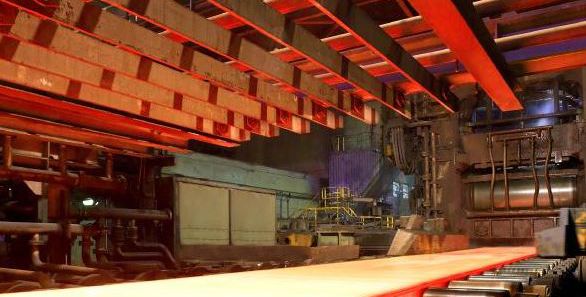
Italian state to invest in JSW’s Piombino mill
The Italian government will invest in JSW Steel’s Piombino steelmaking facility through its financial arm, Invitalia, vice-minister for economic development Alessandra Todde said at a city hall meeting in Rome this week.
A source close to the matter says Invitalia and JSW are expected to sign a binding agreement in the coming weeks. Due diligence will follow in order to quantify the investment and the value of the Piombino mill, Kallanish notes.
A new industrial plan will be submitted thereafter, involving the revamp of all the mills’ equipment, Todde said at the meeting attended, among others, by union representatives, regional authorities and the Piombino city council.
Meanwhile, the economic development ministry will also meet “shortly” with the management of Liberty Steel’s Italian facility, Magona, also located in Piombino, to discuss state financial support. Authorities intend to relaunch the entire Piombino steelmaking and re-rolling cluster to support its competitiveness, Todde added.
Invitalia is also buying a majority stake in Italian steelmaker Acciaierie d’Italia, formerly known as ArcelorMittal Italia (see Kallanish passim).
Natalia Capra France