

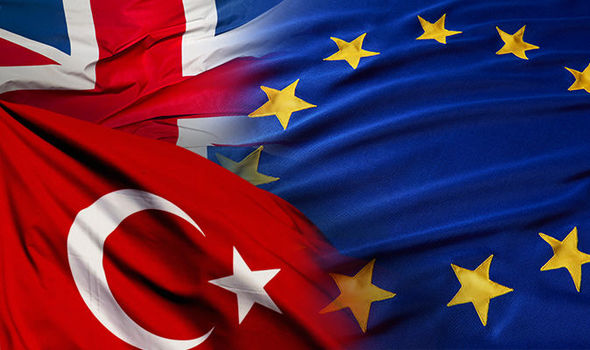
European Commission skips Turkish HRC provisional anti-subsidy duties
The European Commission says it has decided not to impose preliminary anti-subsidy duties on Turkish-origin hot rolled coil imports, Kallanish learns from an official statement.
The Commission launched the anti-subsidy probe into Turkish HRC last June (see Kallanish passim). The investigation will now continue with the aim of establishing whether to impose definitive measures by the beginning of the third quarter.
Last month the Commission imposed provisional anti-dumping duties of 4.8-7.6% on Turkish HRC imports, in a separate investigation. The decision to skip preliminary anti-subsidy duties, therefore, is set to be welcomed as a relief for EU importers and Turkish exporters, who are hoping to avoid further restrictions to their trade.
In 2020 Europe imported slightly more than 1.7 million tonnes of Turkish HRC, the lowest level since 2016. In 2018 and 2019 imports surpassed 2.7m t/year, according to Eurofer data.


Aperam sees challenging months ahead
French stainless steel producer Aperam says the coming months will remain challenging for the sector but it expects better results this year compared to 2020, Kallanish learns from the company’s 2020 financial report.
Last year sales decreased by 14.5% versus 2019 to €3,624 million ($4,404m), mainly due to lower shipments and lower prices. Steel shipments in 2020 also decreased by 6.1% to 1.6 million tonnes.
Ebitda stood at €343m in 2020, compared to €357m in 2019. This is due to lower demand that also resulted in a very competitive pricing environment in Europe, and a negative inventory valuation, Aperam says.
However, thanks also to its “Leadership Journey” cost reduction programme, performance greatly improved in the fourth quarter. The combined benefits of a strong mix in Brazil, tight cost control and some economic improvement in Europe enabled the company to achieve “the best fourth quarter result since the 2017 peak despite still challenging market conditions”, the report continues.
The company’s Q4 sales increased to €916m versus €841m in Q3. Volumes benefitted from seasonal factors and the economic recovery in Europe while Brazil was seasonally weaker. Steel shipments remained stable at 431,000t in Q4 compared to Q3 as volumes in Europe picked up. The improvement was based on a better mix in Brazil, higher capacity utilisation in Europe paired with slightly higher prices, inventory valuation gains and cost improvement.
German machine tool industry foresees 2021 rebound
After two difficult years, production in the German machine tool industry is expected to recover in 2021, with revenue to rebound by 6% year-on-year to €12.6 billion ($15.3 billion), Kallanish learns from federation VDW.
The automotive industry, in particular, the largest customer for machine tools, is benefiting from the upswing in China, VDW notes. Electronics, food processing, logistics and parts of the medical technology sector did good business during the crisis anyway. In Europe, too, investments are expected to rise again by 10% after a hard slump, chairman Heinz-Jürgen Prokop states.
In 2020, orders fell 30% due to the coronavirus crisis, following a decline of the same magnitude a year earlier. All other key figures also slipped deep into the red in 2020: production was down 31%, exports down 29% and domestic sales down 33%.
In 2019, capacity utilisation was still more than 88%, but fell to below 72% in 2020, comparable to the level of the financial crisis in 2009. The hoped-for upward movement for the current year is thus starting from a low level, Prokop cautions.
VDW notes that business against Asian competitors could become more difficult in the future. “Member companies are reporting great price and time pressure from Chinese clients,” Prokop says. In addition, intra-Asian trade is to become more permeable with the recently concluded RCEP agreement. This will intensify competition with Japan and South Korea in the Chinese market.
As the Chinese government is striving for greater independence from technology imports, many VDW members have established subsidiaries in China at an early stage.

New hydrogen-fueled DRI steel plant in Sweden
H2 Green Steel and EIT InnoEnergy will develop a “giga-scale” green hydrogen-fueled steel production facility in northern Sweden, with sales targeting large European automotive manufacturers, the companies said Feb 23.
Production will begin in 2024 and by 2030, with annual production capacity of 5 million mt of CO2-free flat steel products, the companies said.
The plant will produce steel though the direct-reduced iron method, an H2GS spokeswoman told S&P Global Platts.
The site will be located in Sweden’s Boden-Lulea region, which offers ready access to cheap renewable energy, high-quality iron ore, a port and expertise in metallurgy and steel production, the companies said in separate statements.
Green hydrogen refers to hydrogen derived from renewable energy sources.
The H2GS Initiative is the first flagship project of the European Green Hydrogen Acceleration Center, spearheaded by EIT InnoEnergy with the support of Breakthrough Energy. EGHAC aims to developing an annual Eur100 billion green hydrogen economy by 2025 that could create half a million direct and indirect jobs, EIT InnoEnergy said.
“The H2 Green Steel initiative has the scale, ambition, innovative business model and implementation team to become a flagship of Europe’s position at the forefront of the transformation of energy-intensive industries,” EIT InnoEnergy CEO Diego Pavia said.
Carl-Erik Lagercrantz, H2GS and Northvolt’s chairman, said the plan is aimed at accelerating the transformation of the European steel industry.
“Electrification was the first step in reducing carbon dioxide emissions from the transportation industry,” Lagercrantz said. “The next step is to build vehicles from high-quality fossil-free steel.”
Henrik Henriksson, currently CEO of Swedish commercial vehicle-maker Scania, will lead the company. By investing in and partnering with H2 Green Steel, Scania is advancing towards emissions-free products across the whole value chain, that company said.
“A Scania truck weighs about six tons and five of those are steel, which today unfortunately is produced with a substantial carbon footprint,” said Anders Williamsson, that company’s executive vice president and head of purchasing.
H2GS is in the process of closing its series A equity financing of Eur50 million from investors including EIT InnoEnergy, Vargas, Scania, SMS group, BILSTEIN GROUP, Cristina Stenbeck, Daniel Ek, Altor Fund V, and IMAS Foundation, H2GS said.
The total financing for the first phase of the project amounts to approximately Eur2.5 billion, which will be raised through a combination of equity and green project financing. Morgan Stanley, Societe Generale and KfW IPEX-Bank, are acting as financial advisors to H2GS. Sweco is advising in the engineering and permit process, H2GS said.
An important source of inspiration for the initiative is the groundbreaking HYBRIT project and its founders SSAB, LKAB, and Vattenfall, H2GS said.
The global steel industry accounts for 7%-8% of the planet’s CO2 emissions.
— Annalisa Villa

Italian crude steel output ticks up in January
After recovering in December, crude steel output in Italy ticked up in January by 0.7% year-on-year to 1.8 million tonnes, according to data issued by local steelmakers association Federacciai.
Italian flat product output also increased, by 2.8% to 932,000t, while longs production rose notably last month, by 5.3% to 933,000t, Kallanish notes.
In full-year 2020 Italian crude steel production was 20.4mt, down 11.9% compared to 2019. Long output fell by 9.5% to 11.1mt. Flats production fell by 15.9% to 9.5mt, Federacciai says.
Dillinger supplies plate to Dutch wind park
Last week saw the official completion of sections II and IV of offshore windfarm Borssele located about 22km off the coast of Zeeland province, the Netherlands. Construction involved MHI Vestas and Sif, with plate supplied by Dillinger, Kallanish learns from the German steelmaker.
The operator consortium is Blauwwind, which consist of Shell, Eneco, Van Oord and Mitsubishi subsidiary Diamond Generating Europe.
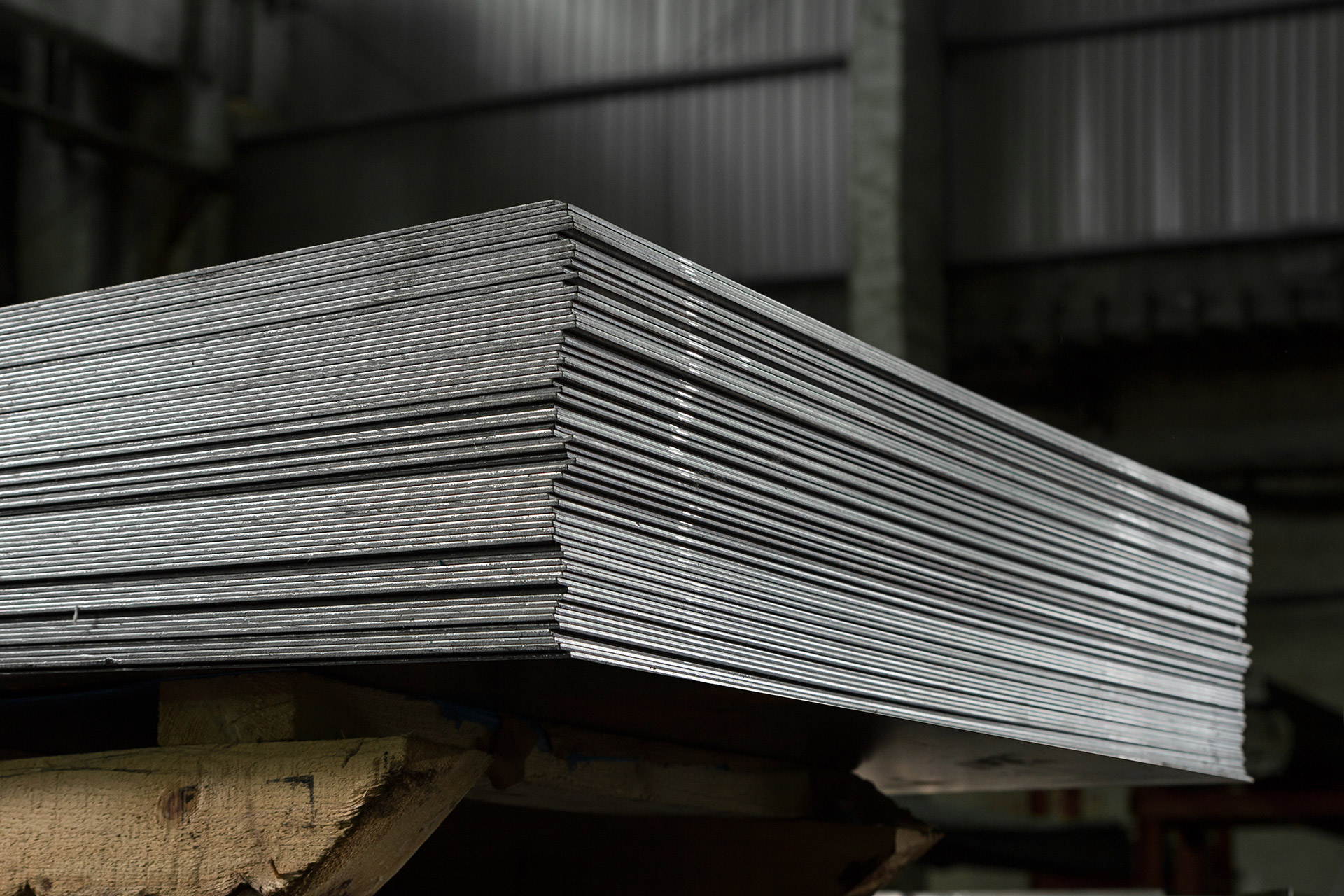
Dillinger supplied around 70,000 tonnes of thermos-mechanically rolled heavy plate for the monopile foundation structures, with plate thicknesses ranging from 12.7-88mm. Some of the slab reached record weights of more than 42 tonnes, Dillinger notes.
The 77 wind turbines of Borssele III and IV have a capacity of 730MW and will supply approximately 825,000 Dutch households per year with environmentally friendly electricity, the operators say. The four sections of Borssele form a 122km² wind farm zone. With a total capacity of around 1.4GW, it is the largest wind farm zone in the Netherlands to date.
Russia invests $8.1 billion in regional infrastructure
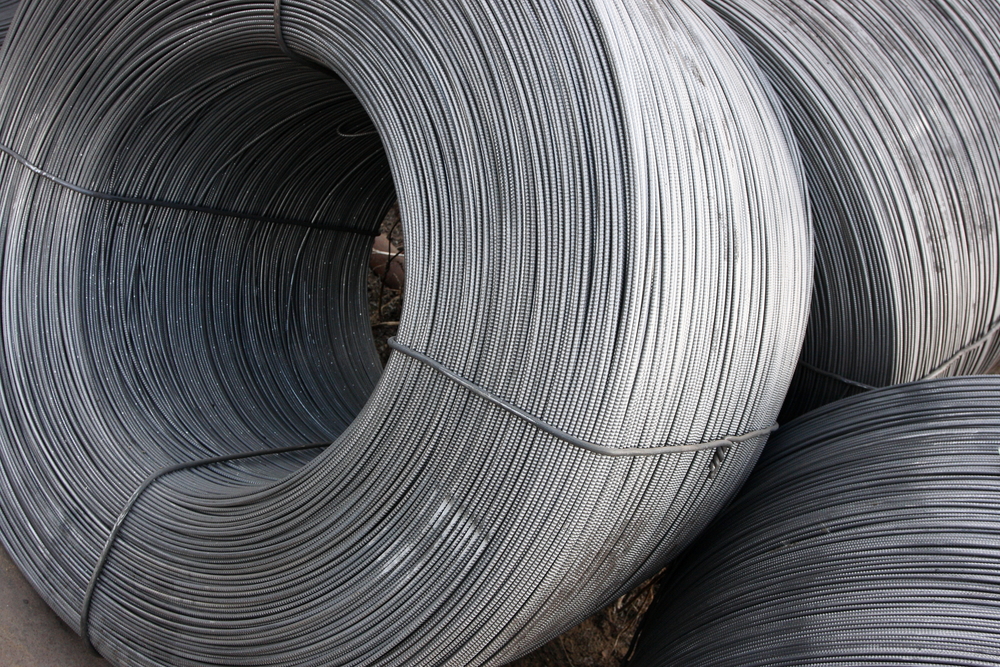
The Russian government is implementing over 150 infrastructure investment projects worth more than RUB 610 billion ($8.1 billion) in 26 regions, according to deputy prime minister Marat Khusnullin.
In October 2020, the government approved a mechanism that allows regions to write off debt on budget loans. At the expense of the freed funds, the regions will build infrastructure for new investment projects. Last week, during a meeting of the government regional development committee, a list of such investment projects was considered.
“Most of the projects will be implemented in different industries, as well as housing construction, agriculture and logistics,” Khusnullin says.
The largest number of projects were submitted by the regions of the Central and Volga federal districts. Among the leaders are also the Novosibirsk, Omsk region and Krasnodar region. The selection takes into account the ratio of private investment and budget funds allocated for the projects, as well as the number of new jobs created.
Earlier, the Russian government announced it will invest RUB 28 billion into the construction of social infrastructure like schools, hospitals, kindergartens and other significant social and engineering infrastructure (see Kallanish passim).
Russia also foresees big investments into the construction of residential real estate by 2030. Overall investment here will be about RUB 50 trillion.
Construction accounts for over 50% of global steel consumption and over 70% in Russia, according to Russian market participants.
Before the Covid-19 pandemic, market sources predicted that by 2030, the annual consumption of steel by the construction industry in Russia may grow to 39 million tonnes.
Russian steelmaker Evraz expects that domestic construction steel demand should increase by 3-5% in 2021, driven by rebar after its consumption fell in 2020.
EU coil buyers lose patience with mills
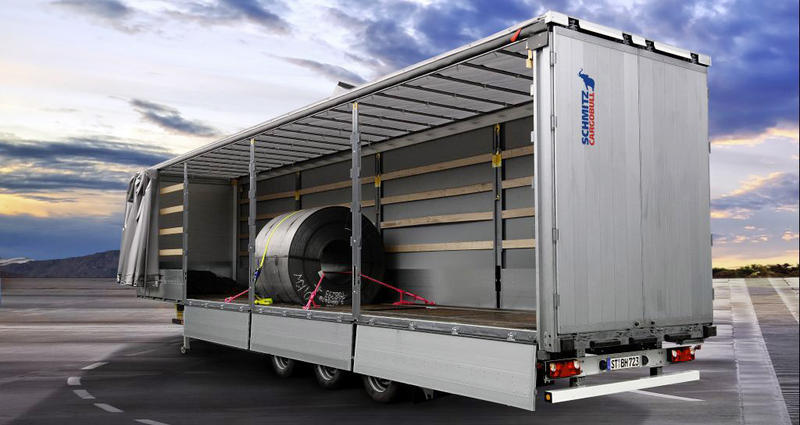
Coil distributors and processors are becoming impatient about the prices being pushed by European mills, and yet more so about a material shortage which is not understood, they tell Kallanish.
In particular, buyers have little sympathy with the reasons given by mills for the supply shortage, considering since autumn most idled blast furnace have come back on stream.
“The mills’ performance is surprisingly poor, even the premium mills,” says one German buyer. “Why is that so, when the books are full?” Quite recently, high water on some rivers and a cold winter period in northern and eastern Germany were cited by mills as obstacles. Because of that, Salzgitter declared force majeure, and thyssenkrupp Steel’s management wrote “a really wild letter”, as the buyer puts it. “But then, those periods lasted for little longer than one week, so how could it come that far?” he asks.
A Dutch manager uses the word “shrewd” for what he deems to be the mills taking advantage of the current shortage and trying to maintain this situation. He adds that stoppages at some mills will contribute to the shortage, citing current repair work at Belgian rolling mill NLMK until March, and maintenance announced by Turkey’s Colakoglu for May.
He fears that mills may furthermore go for summer maintenance plans despite the current shortage. In fact, one major blast furnace revamp in that period has already been announced by thyssenkrupp Steel.
LIBERTY, Paul Wurth and SHS to deliver first French DRI and hydrogen plant
LIBERTY Steel Group, part of GFG Alliance Group, has signed a memorandum of understanding (MoU) with technology provider Paul Wurth and SHS-Stahl-Holding-Saar (SHS) to assess the construction and operation of an industrial-sized, hydrogen-based steelmaking plant which, if developed, would be one of the first operations of its type in France, the companies stated in a joint press note on Feb 22. The companies will team up on a project to incorporate a 2 million mt/year direct reduced iron (DRI) plant, with an integrated 1 GW capacity hydrogen electrolysis production unit, next to GFG’s ALVANCE Aluminium Dunkerque site in France.
According to the press release, the DRI plant will initially use a mix of hydrogen and natural gas as the reductant to produce DRI and hot-briquetted iron (HBI), before using 100% hydrogen once the electrolysis production unit is complete. The DRI/HBI produced will primarily be used in the electric arc furnace of LIBERTY special steel producer Ascoval in France but any surplus will be used at LIBERTY’s Ostrava and Galati integrated steelworks as well as the SHS-group’s Dillinger and Saarstahl plants in Germany.
LIBERTY has been working with Paul Wurth and SHS on the technical and economic viability of the project since early last year. The MoU covers two phases: Phase 1 is expected to take around 12 weeks and will improve the accuracy of the project’s commercial and technical feasibility and Phase 2 will deliver the level of detail required for the effective implementation of the project.
“This project will realize the potential of steel and hydrogen working together to solve each other’s problems. Our industry needs to reinvent steel production fast, as the need to cut our emissions gets ever more pressing against a backdrop of rising global demand for our products and legislative pressure to become carbon neutral..,” said Sanjeev Gupta, executive chairman of GFG Alliance and LIBERTY Steel Group.
LIBERTY declined to comment on the investment envisaged for this project when asked by S&P Global Platts.
— Annalisa Villa
Turkish merchant bar remains stable despite costlier billet
Due to demand slowing on-week, Turkish merchant bar producers kept their prices unchanged last week despite the increase in billet prices.
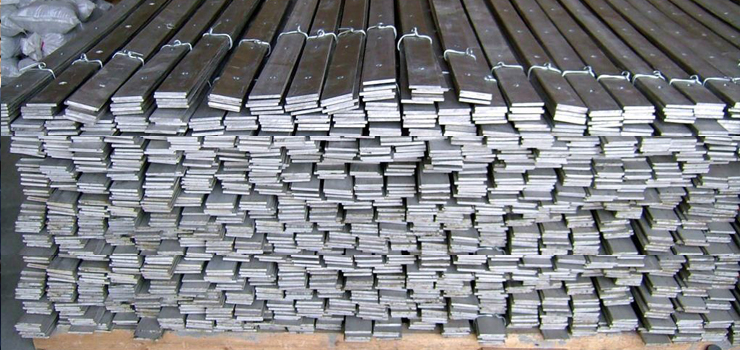
On Friday, Turkish producers’ quotes stood at $660-680/tonne fob Turkey for angles, $670-690/t for IPN-UPN sections, $680-700/t for flat bars, and $670-690/t for IPE sections.
Although they concluded sales to Latin America, Africa, the Middle East and EU, Turkish merchant bar producers failed to reach the sales volumes of the previous week.
A Turkish merchant bar producer told Kallanishon Friday: “Buyers were cautious this week. Even though we have seen an increase in scrap and billet prices, they initially wanted to wait for China’s return. I am expecting to see stronger demand next week.”
Turkish merchant bar producers expect better market conditions in the coming week and are preparing for higher price offers.
Billet prices, meanwhile, have increased to $585-590/t ex-works in the Turkish domestic market, while CIS offers stand at $575/t fob Black Sea.